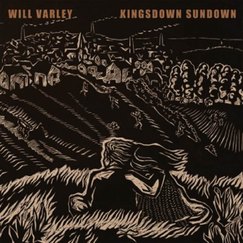
Will Varley. Kingsdown Sundown. Xtra Mile Recordings

will-varley

Will Varley is one of those “finger pointing” musicians singing the types of song that Dylan renounced around the time of My Back Pages. Of course, Dylan has pointed his finger at various injustices since those days and folk music has a powerful tradition of protest ranging from simple sloganeering to well-crafted lamentations on injustice and the human condition. On Kingsdown Sundown Varley certainly falls into the latter camp with the album a stark meditation on several woes, the environment, US politics and daily striving all featuring.

Varley’s vulnerable husk of a voice and his intricate guitar skills are the bare bones of the album with an occasional muffled percussive boom punctuating several of the songs. In the main acoustic but with electric guitar buried in the mix on Let Your Guard Down and then growling throughout We Want Our Planet Back, a strong environmental protest. Along with the opening song To Build A Wall there’s a strong sense that much of Varley’s ire is directed at the goings on in the US and although obviously recorded before this week’s election result listening to them is a reminder that the struggle, despite setbacks, must go on. To Build A Wall joins a long list of songs that allude to the possibility of a new Berlin like wall being built in the USA with Varley delicately reminding the listener of the consequences of such an action.  He’s more direct on the Dylan like Something Is Breaking which is like a clarion call from the sixties while When She Wakes, a dark puddle of a song with lyrics which weave urban squalor into a folk like lament has sparks of guitar which recall the likes of Bert Jansch.

Dipping into an almost surreal netherworld on Let Your Guard Down and waxing poetically on the wintry and bucolic February Snow Varley is an excellent exemplar for those who support the argument that lyrics can be literature as realised by Dylan’s recent prize. Varley rails against injustice throughout the album but he does so in a beguiling and ultimately disarming fashion.
website


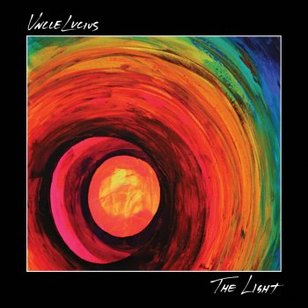
Uncle Lucius. The Light. Thirty Tigers Records

31980718_350_350

From Austin Texas Uncle Lucius are a five piece band who have a busload of talent on board, various members writing and singing lead on their songs which are steeped in the South and feature inventive keyboards and sly guitar. Sound familiar? It’s tempting to compare them to The Band, especially when the horns kick in on the soulful organ push of The Age Of Reason, the second song here. It’s a comparison that can be deadly as it’s unlikely that we’ll ever get another collision of talent as existed in The Band but on their own terms Uncle Lucius deserve at least  to be considered along with further comparisons to the likes of The Allman’s and even Barefoot Jerry and Little Feat.

From the opening title song which moves from an acoustic strum into a full barrelled piano romp to the closing full tilt boogie of Someday Is A Far Cry the band roam through a series of thought provoking songs. At times the lyrics are positively existential as on Nothing To Save’s, “Reality’s a battle when fought in the mind, mind is a tool best used to measure time, time is a concept, a construct of man, man could very well be wrong again.” Heady stuff indeed but it’s delivered over a hypnotic and powerful swirl of Stax like balladeering and throughout the album the band manage this mix of swampy rock and questing lyrics.  For those who want to indulge in the words there’s a lyric sheet included which will provide hours of scrutinising but overall the band deliver a fine set of invigorating songs  that sway mightily, the cool melt of tom toms and swirling guitars on Flood Then Fade Away perhaps the highlight here.

The band are currently on tour in the UK and play in Glasgow on Sunday 6th November at The Hug & Pint.

website


John Paul White. Beulah. Single Lock Records

album-cover_sq-88f2b826935bd901dda577257b4a2e5fbc8b2346-s400-c85

One half of the Grammy Award winning duo The Civil Wars, John Paul White returns to the fray two years after the shock ending of his musical partnership with Joy Williams. For a while he concentrated on his record label (Single Lock Records) producing the sublime Donnie Fritts album Oh My Goodness. Beulah doesn’t directly address the issue of the band’s split but it contains several songs described by White as ones he “tried to avoid but I realised the only way I was going to get rid of them was if I wrote them down,” the title refers to William Blake’s concept of the subconscious; the source of poetic inspiration and of dreams.

It’s an album that pokes into dark spaces, even on a creamy country love song such as I‘ve Been Over This Before (with harmonies by The Secret Sisters) there’s a tale of desertion and heartbreak. With simple acoustic based ballads and fuller arrangements that betray White’s love of Southern rock he alternately sounds angry and desolate, the opener Black Leaf a delicate recrimination with White’s acoustic picking to the fore backed by a sensitive keyboard and horn arrangement. It’s followed by the abrasive and swampy What’s So with White almost howling at times, pained by “the difference between what should be and what’s so.” White remains on this path for much of the album. There’s an almost Nick Drake like sound to The Once And Future Queen, apparently written for his daughter, while I Want To Make You Cry is simultaneously creepy and tender, the baroque folk backing adding to the sense of displacement here.

While songs such as I’ll Fight For You and The Martyr veer dangerously close to stereotypical “radio friendly angst rock” White can yank out a tremendous heartfelt apology on the lyrical folksy lament Hate The Way I Love You and he closes the album with another winner on the breathy close miked I’ll Get Even, a song whose lyrics are open to discussion.

John Paul White plays Manchester and London on the 7th and 8th November, details here


website