
 Blue Rose Code is the shape shifting ensemble chosen by Ross Wilson to deliver his songs, the vehicle for “that fusion of folk and jazz and where it intersects with song writing,” as he said in an interview with The Herald. Since coming to prominence in 2014 when his second album, The Ballads Of Peckham Rye, was nominated for the Scottish Album Of The Year Award, Wilson has blazed a trail across the country, constantly touring, the band swelling from three to ten or so members depending on who is available and where that night’s gig is. This musical caravan has picked up many fellow travellers along the way and on The Water Of Leith, the fourth album from Blue Rose Code, Wilson has assembled a fine array of them to assist him on what is probably his most assured piece of work so far, the album an almost transcendental journey into the hinterlands of his Hibernian soul.
An exile from his native Scotland for several years, Wilson returned home in 2015. Despite his years away there was always a “hameland” aspect to his songs while he has always used his mellow Scots burr when singing (a perfect example; True Ways Of Knowing from The Ballads Of Peckham Rye). The Water Of Leith is a culmination of this prodigal son’s return with much of the album rooted in a Celtic twilight vision while elements of two of his musical heroes, Van Morrison and John Martyn, loom large. Morrison, after a six year absence from his native Ireland, recorded his wondrous stream of Irish consciousness, Veedon Fleece, following a rest and recuperation holiday in the south of the island. Martyn, originally a folkie, increasingly immersed himself in improvisation, adding free jazz drummer John Stevens to his live shows for a period of time, the results a spontaneous explosion of musical exploration. Here Wilson follows in their footsteps, the album a hymn to his native land while it is, at the same time, sonically adventurous. His plaintive ballads surrounded by sweeping epics with string arrangements and horn and wind charts. An Odyssey of sorts charting a newfound domestic comfort and the pull of a mystical land of glens and lochs, a land of seers and Kelpies; the sweep of the album is just majestic.
The album opens with just Wilson and piano gently introducing the concept of being home again on Over The Fields, the song gently swelling as female harmonies (from Beth Nielson Chapman and Eliza Wren Payne) join in along with a very delicate band and string arrangement. It’s difficult to describe just how powerful an emotional tug this song is. Suffice to say that Wilson sings wonderfully, the Morrison comparisons, as on his emotive Listen To The Lion, surely fitting here. Dedicated to the late John Wetton who played bass on Peckham Rye, it’s a magnificent song. The warm tones of Bluebell follow, the band inhabiting a fluent mix of jazz and folk as Wilson delivers a belated love song soaked in memories, good and bad, the band soaring towards the end while the vocals again recall Morrison’s Celtic scat murmurings. Ebb & Flow rides on a more formal horn section blowing like a soul band on a jauntier number which, and apologies for bringing up the name again, recalls Morrison’s lighter numbers such as Cleaning Windows.
Wilson absents himself allowing the haunting Gaelic voice of Kathleen MacInnes, astride acoustic guitar, accordion and fiddle, to paint a gentle evocation of the Scottish hinterland on Passing Places which then flows gently into Wilson’s masterful pastoral impression of boat journeys along the west coast islands on Sandaig. Here Wilson breathes new life into an old kailyard tradition, his words transforming stereotypical Scottish scenes into a hopeful new future, a clarion call for a bold new country. Pushing the boat out Wilson offers several songs and instrumentals that are impressionistic. The ten minutes of The Water, another occasion where he absents himself, allows James Lindsay on double bass, John Lowrie on piano and Colin Steele on trumpet full rein to inhabit a fine mixture of Debussy like piano and Miles Davis Lift To The Scaffold jazz noire while To The Shore, the twin song to The Water, aches with Wilson’s hopes for the future, a new life on the way after a tumultuous voyage. An 18 minute song suite combined, the two numbers are an audacious assault on the three minute pop song but the tumultuous Hispanic jazz leanings on the latter song (another nod to Miles Davis?) complement the noirish tones of the former.
Julie Fowlis pops up on the fiddle fuelled folk remedy of Love Is… while On The Hill Remains A Heart is an energetic swirl enlivened by the whistles and pipes of Ross Ainslie as Wilson sings of war widows, both examples of Wilson’s canny ability to write a fine melody with some heft to its heart. He closes the album with the affecting Child. Another straight from the heart song, similar to Pokesdown Waltz, with a heart in the throat like wallop. Here Wilson hunches over his piano like a Scottish version of Randy Newman, a true humanitarian singing from the depths of his soul.
 A recent article in Billboard magazine seemed to think that “UK Americana” was a new trend, citing artists who had played at the recent Americana Fest in Nashville. And while it’s perhaps true to say that the UK division of Twang has been getting its act together (principally via AMA-UK) over the past few years, Blabber’n’Smoke can testify to a much longer tradition going back to the seventies while Americana UK has been on the go since 2001. Anyway, thinking about this we were reminded of Red Moon Joe’s recent album, Time & Life. It’s their second release from their first reincarnation – the band originally convened in 1985 but split in 1993 – and it’s proof that some of us on this side of the pond have had the bug for quite some time.
 Texan Jesse Dayton has a CV that looks as if he made it up in a hurry on his way to a job interview, snatching random names from a hat in order to say, “I did that!” Well, sure enough, it’s not made up. He has played guitar with, written with, produced, filmed (and starred in the movie) with Willie Nelson, The Supersuckers, X, Johnny Cash, Glen Campbell, Waylon Jennings and Rob Zombie, to name a few. He’s also a successful solo artist, his first album, Raisin’ Cain, was released in 1995 and he’s continued to record in between his other duties on a regular basis with The Revealer being album number eight.
 One of the joys of attending a music festival is the unexpected discovery, an act, perhaps one you’ve never heard of, that just knocks you out. OK, it doesn’t happen that often but when Blabber’n’Smoke was at Kilkenny Roots earlier this year we did have such an epiphany when we popped into a hotel to see what the action was. On stage was a classic country line up playing classic country songs, the singer, well, his voice was immediately compelling, worn and wearied at times but able to soar and even yodel at times. It was Prinz Grizzley of course and it was something of a surprise when it transpired that the guys had travelled from Austria to play several shows over the weekend. It seemed to be a weekend well spent as Blabber’n’Smoke weren’t the only ones impressed with the band the most talked about act and even getting some PR representation from the jaunt.
 Back in March 2016 Blabber’n’Smoke raved slightly over an
  When North Kentuckian, Jeremy Pinnell, released his first album, OH/KY, a few years back I reviewed it for Americana UK saying, “The ten songs here are all exemplars of Country tradition be it Hank or Merle or Waylon.” Ties Of Blood And Affection reaffirms my thoughts back then as Pinnell spins nine songs with each and every one of them a stone cold killer, steeped in a tough country tradition and elevated at times by some killer lyrics. In his songs he inhabits badlands, honky tonks and whorehouses. His spirit is defiant and proud, past sins are to be accounted for but in the meantime there’s a life to be lived and his characters live pretty full lives.
 Richard Thompson’s decision, back in 2014, to record some of his back catalogue with just him and his acoustic guitar (
 “It’s misery at The Glad Cafe,” quipped Dean Owens, as he described the contents of Run Boy Run, a song about slavery. It’s one of the songs Owens has revitalised from a book, The Penguin Book Of American Folk Songs, edited by Alan Lomax, which was given to him as a gift some time back. To accommodate his reimagining of the songs Owens has teamed up with Scots fiddler, Amy Geddes, the pair forming Redwood Mountain, a perfect vehicle for these songs from the past with Geddes’ fiddle the perfect transatlantic bridge connecting the Celtic roots of many of the numbers with the high lonesome sounds of the Appalachians and the plains.
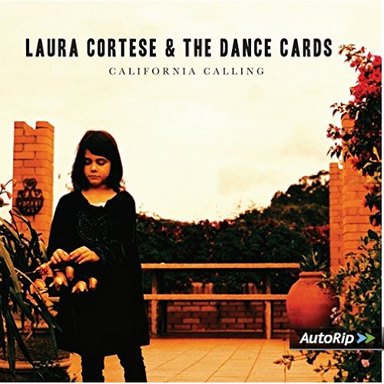 Boston’s Laura Cortese steps up a mark with this excellent album recorded with her all female band, The Dance Cards. It’s an adventurous disc, a mutant string band venture with fiddle and cello to the fore but adorned by an adventurous use of percussion and sympathetic synthesized sounds. It’s not avant garde nor is it downhome bluegrass. Instead, it’s a richly multilayered tapestry of sonic adventure underpinned with a strong sense of pop nous and Cortese’s lovely honeyed voice. The use of marimba, glass harmonica, synth bass and various keyboards add a touch that’s not so much exotic as adventurous with the resulting sounds recalling artists who were redefining the art of the singer songwriter back in the day such as Joni Mitchell, Paul Simon, The McGarrigles and The Roches and even, at a stretch, Tom Waits. It’s bold and invigorating while still rooted in a folky and woody Americana vein.
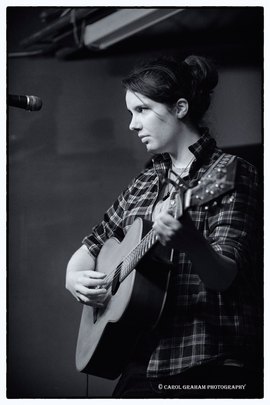 There’s a fair chance that if you’re a regular attendant at shows in the central belt then you’ve probably already encountered Roseanne Reid. The Leith born singer/songwriter has rapidly established herself as a rising star in the Scots folk/roots firmament to the extent that she seems to be the person to go to to add some local colour when major artists are hitting town. Now she’s ready to really step out on her own, a debut album on the cards with a plan to run a Kickstarter campaign over the month of October in order to fund the recording.