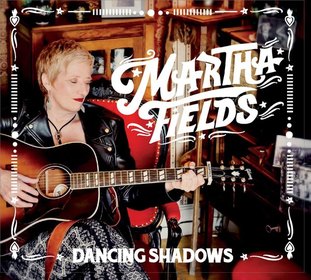
 She may be an adopted Texan who spends much of her time in southern France but Martha Fields grew up in the shadows of the Appalachian mountains and there’s a rich stream of southern soul running through her veins. Her first album, which saw her billed as Texas Martha, was a rollicking collection of honky tonk songs which barrelled along although there was a hint of her family roots in the menacing Do As You Are Told, a song which, tellingly enough, reappeared on her next album, Southern White Lies. Here she ditched the Texas Martha moniker as she delved into her roots, familial and musical, with the music a rich loam of powerful picking suffused with a burning sense of anger over the fate of what politicians often dismiss as poor white trash.
Dancing Shadows continues musically in a similar vein to Southern White Lies as Fields, with her excellent band, well road tested as they roam across Europe playing here, there and everywhere, also roam around various roots styles. Able to turn their hand to bluegrass, country rock, rockabilly and southern rockers, the band guide the album through its highways and byways. Fields meanwhile casts her net somewhat wider than on the previous album although at the heart of the disc she’s still delving into her history while there’s also a pronounced element of the exile commenting on news from home.
The album kicks off with the earthy punch of Sukey, the band in a muscular bluesy mood allowing Fields’ rich and emotive voice to ring out as she sings of a troglodyte Cherokee ancestor and recalls visiting her cave and watching her own shadow cast on the walls. Fields has always celebrated strong women, within and without her family, and here she maintains this while she goes on to celebrate other survivors as on the slinky Forbidden Fruit, which sees the band summoning up a mighty fine approximation of Little Feat syncopation. On Maxine a put upon daughter kicks off in delightful style as does the band on an energetic bluegrass influenced number and on Forbidden Fruit they again delve into swampy blues as Fields kicks out at aeons of masculine domination.
Fields addresses her position as an exile of sorts on several of the songs the most prominent being Exile where she sings of being a stranger in her own land. Paris to Austin is a delicate and tender number where she tries to reconcile her French sojourn with the realities of home, eventually settling for the idea that her music can bridge the oceanic gap while West Virginia In My Bones is a gutsier approach to her situation. Oklahoma On My Mind is more wistful with a sense of mortality about it as Fields just about sums up the ties which bind one to their homeland with lyrics evocative of John Ford westerns and Cormac McCarthy novels as the band lay down an excellently muted filigree of gentle guitar picking and atmospheric organ.
If the above paints Dancing Shadows as a “message” album, so be it as Fields surely has a message for this age but there’s tons to enjoy without getting too involved in the words. Demona is a high-spirited high plains morbid love song which has a wonderful coda where the band strike up a martial beat. Last Train to Sanesville harks back to the honky tonk romps of Texas Martha while Fare Thee Well Blues could have easily have been an original Carter Family song. Hillbilly Bop does just what it says on the tin as the band sashay and swing and Fields lets rip on the vocals (and having seen the band play it live it’s a definite crowd pleaser). Again, it has to be said that the band, all French dudes by the way, are just so good and Said And Done is a perfect example of their dexterity and ensemble playing in bluegrass style with solos coming fast and furious. The album closes with the wonderful Lone Wolf Waltz which finds Fields tying together Patti Page, Larry McMurtry, Steinbeck and Dorothea Lange as she wallows and waltzes through dust laden buffalo graveyard memories. Just wonderful.
On Dancing Shadows Martha Fields forges on as a fiery writer and performer who is fuelled by tradition and fired up by injustice. That she carries it off so well is testament to her and her band mates and they surely deserve more recognition.
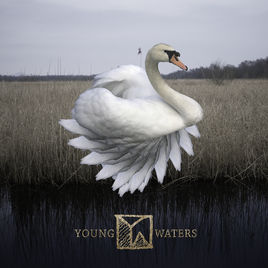 A five piece acoustic band from Bristol, Young Waters were previously known as Snufkin, a name which to our mind is perfect for a folk group who cite The Incredible String Band and Fairport Convention as influences. However listening to this excellently played and well mannered collection of chamber folk music it’s probably for the best that they underwent the name change. Indeed there’s little here which would remind one of the aforementioned bands as Young Waters seem more enamoured of the tight song structures one recalls from Pentangle (without the jazz and blues influences) and leaning more towards Renbourn rather than Jansch in the guitar stakes.
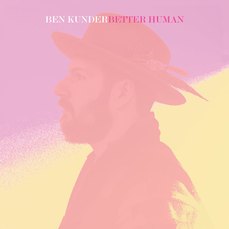 This second album from Toronto based songsmith Ben Kunder is an enjoyable slice of breezy pop inflected songs which comes across at times as if a more upbeat than usual Ron Sexsmith was the scribe and performer. Kunder’s attractive tenor voice rides over some very sympathetic settings with some arrangements recalling the heyday of LA balladry as practised by Jackson Browne ( as on Fight For Time) while the fizzy Jessi is enlivened by electric keyboard and a cheesy synth zipping around over the rock steady backbeat.
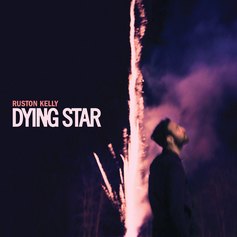 Best known for his marriage to country star Kacey Musgraves and for having written hits for the likes of Tim McGraw, Ruston Kelly’s debut album Dying Star indicates that he has the potential to become a star in his own right. He can write songs which recall the musings of Steve Earle or Ryan Adams and sing them in a finely grained voice with an attractive lack of polish. In addition, the songs are delivered for the most part in classic California country rock with keening pedal steel (played by Kelly’s father). They are bathed in melancholia and regret, stained with a faded grandeur as they surround you.
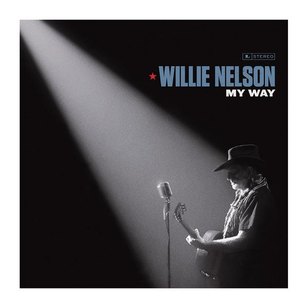 Lest we forget, it was Willie Nelson’s album of standards, Stardust, released back in 1978, which saw him becoming a household name. Of course by then he had a chequered career, writing huge country hits for Ray Price and Patsy Cline (with what is perhaps his most famous song, Crazy) in the early sixties before becoming a country star himself and then fading out somewhat towards the end of the decade. He reinvented himself in the seventies, abandoning Nashville for Austin, Texas, releasing albums which eschewed the Nashville sound and signing up to the Outlaw Country movement with buddies Waylon Jennings, Tompall Glaser and Jessi Coulter. 1975’s Red Headed Stranger was the pinnacle of his wayward battle with Nashville but it was the following year’s Stardust, a 10 song collection of standards, which saw him burst into the pop charts.
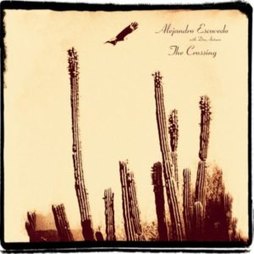 Sometimes a record just accords with the times and so it is with this sprawling and epic collaboration between Alejandro Escovedo, a Mexican-American who was named by No Depression as the Artist of the Decade at the end of the nineties, and Antonio Gramentieri, AKA Don Antonio, the Italian leader of the awesome Sacri Cuori. Both outsiders of sorts who manage each in their own way to capture the spirit of American music while retaining elements of their native culture, the pair teamed up last year when Gramentieri supplied the live band for Escovedo’s European tour and having hit it off they repaired to Italy to record The Crossing.
 First up, here’s another album added to the list of contenders for best of the year when we start to tally up soon. In addition, we have to add Carson McHone, from Austin, Texas, to the list of female artists who have really injected some fire into the Americana scene of late. McHone, who was playing in Austin bars at the age of 16 has had two previous releases (an EP and an album) but Carousel is her first fully fledged outing which captures in several of the songs an Austin honky tonk sound but in others shows that she is straining at the leash to catapult herself into the top echelons of singer/songwriters working in a country vein.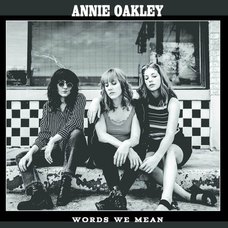
 When a band says that they take their inspiration from pre-war country music, The Carter Family, and the psych-cowboy music of Lee Hazelwood, then the results are either going to be a mess or something a wee bit magical. Thankfully, in this case it’s the latter as this London based trio (who expand when required) turn in a grand listen on their debut album. Truth be told we can’t find too much evidence of The Carter Family here but there are oodles of Hazlewood styled melodramas with an added ingredient of spaghetti western fuzzed guitars to spice it up a little. They also cite “hillbilly noir” writer Daniel Woodrell (author of Winter’s Bone) as an influence with the result that many of the songs are deliciously dark examples of gory gothic Americana not too dissimilar from that of The Handsome Family.
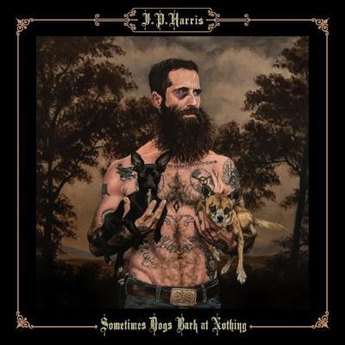 JP Harris modestly describes himself as a carpenter who writes country songs. On his third album, Sometimes Dogs Bark at Nothing, he has indeed carved an excellent benchmark by which the remainder of this year’s releases should be measured. A colourful (and heavily tattooed) character, Harris has lived an itinerant life since leaving eighth grade class in Alabama, riding the rails and hitching lifts for a decade or so picking up labouring jobs for a spell and then moving on. This lifestyle informs several of his songs which he delivers with a raw authenticity whether they be hard driving honky tonkers or gritty ballads and on this album he even tackles some sweet Nashville countrypolitan sounds.