 You have to admit that Glasgow’s Daniel Meade has several strings to his bow. Run through his back catalogue and you’ll find country, country blues, rockabilly, hillbilly, boogie woogie, honky tonk and good old fashioned rock’nroll all rubbing shoulders. A compulsive (and very talented) songwriter, Meade also has an eclectic approach to recording with some of his albums being entirely home made one man band productions while others have entailed trips to Nashville and collaborations with the likes of Old Crow Medicine Show, Diane Jones and Joshua Hedley. What we can say with some certainty is that all of the albums are well worth grabbing a hold of, while we can also say (again with some certainty) that if Meade has a natural element to be in then it’s when he’s onstage with his regular band The Flying Mules. Of his seven albums there’s only one credited to Meade and The Mules but anyone who has seen this band live will know that their high-energy rockabilly/skiffle approach allows Meade’s songs to leap out. In addition, in guitarist Lloyd Reid, Meade has the perfect foil as Reid’s mastery of his Hofner guitar adds an excellent touch to the songs channelling the likes of Barney Kessel and Les Paul.
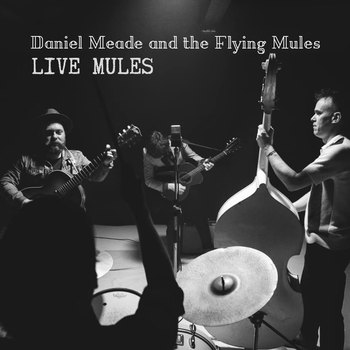
There’s a degree of serendipity in this live album from Meade and The Flying Mules. They were playing in Shetland back in 2016 and the sound engineer was trying out a new rig so he recorded the show. Fast forward to last year and Meade was rummaging through some stuff and came across the recordings and reckoned they were good enough for a “warts and all” guerrilla release, a quick smash’n’grab affair perhaps but anyone buying this is not going to complain. It’s a short show (just over 30 minutes, they were the support band that night) but it’s well recorded and a grand document of the band in their live glory. There’s a swagger about them as they run through ten songs with a delightful sense of energy and glee, the audience cheering them along throughout with Meade’s laconic Glasgow wit on show in the introductions. They swing mightily, the rhythm section of Mark Ferrie on double bass and Thomas Sutherland on drums, loose and tight (as Meade says), driving the songs while Reid rips out several scintillating solos.
Take a listen to the opening bars of Back To Hell and try to tell us that this is not the sound of Sun Studios back in the Memphis glory days as the band pick up a head of steam while Long Gone Wrong is surely summoning up the ghost of Lonnie Donegan. Meade has a knack for excellent song titles with There’s A Headstone Where My Heart Used To Be one of the best and they do it full justice here. Let Me Off At The Bottom takes the foot off the throttle slightly allowing Meade to come across in a jaunty Hank Williams style while Please Louise rumbles mightily with slightly risqué lyrics recalling the pre bowdlerised days of rent parties and juke joints. While the sources of much of Meade’s music is American he successfully transports the idiom to Glasgow’s Sauchiehall Street on the energetic bash that is What You Waiting For which paints such a vivid portrait you can almost smell the vinegar wafting from The Blue Lagoon. However his roots are to the fore on Rising River Blues, a tremendous hucklebuck which harks back to the numerous songs commemorating river floods in the American south while the band close with a cover of a Sonny Terry and Brownie McGhee song, Hooray, Hooray. The fact that it fits in perfectly with the rest of the set shows that Meade is indeed rooting around in the same fertile ground as these blues pioneers and keeping alive a precious tradition.
As live albums go this is top deck, immensely entertaining and vibrant. It allows Meade to showcase The Flying Mules on several songs he recorded without them and they certainly rise to the occasion. If you have seen the band live then this is a tremendous souvenir. If you haven’t, then this is a tremendous introduction.
This isn’t from the album but was recorded by the BBC around the same time.
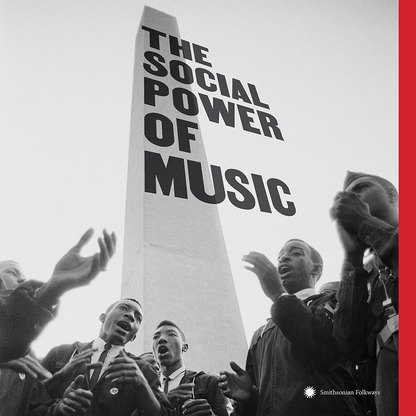 For all its shortcomings, the USA administration has one definite shining point, the mighty archives of The Smithsonian Institution. Irrespective of governments of whatever hue the Smithsonian has endured and within its Center For Folklife And Cultural Heritage it curates a massive collection of roots music from across the world. Smithsonian Folkways, set up following the donation of Moe Asch’s Folkways recordings to the Smithsonian, have an enviable reputation, releasing current recordings (such as the Rhiannon Giddings’ project, Songs Of Our Native Daughters), and important collections such as this one, The Social Power Of Music. It’s a four-disc set with extensive liner notes documenting what they choose to describe as, “the vivid, impassioned, and myriad ways in which music binds, incites, memorializes, and moves groups of people” or, more succinctly, “The song can be mightier than the sword.” Has any song ever changed the world you might ask? Probably not but again one of the essays states, “Has a song ever changed something for the better? Probably not, but groups of people do. A good song can change people’s understandings of something and motivate them to take political action.” Taking the long view, there’s no doubt that many of the issues addressed in songs here either have been overcome or are now socially unacceptable so perhaps if we all continue to sing together we can eventually affect change. If nothing else, the set is a reminder of the indefatigable spirit of humankind, even when mortally threatened there’s a song to be sung.
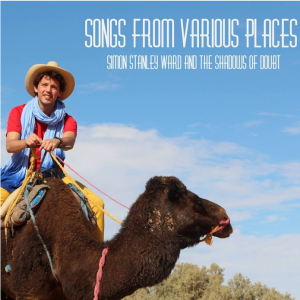 Long a mainstay of the London pub gigging scene Simon Stanley Ward released a fine
 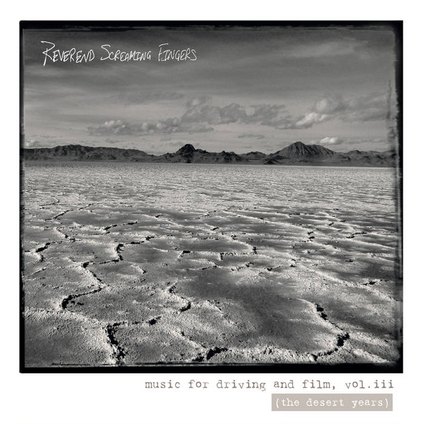 Someone just knew that we here at Blabber’n’Smoke have a soft spot for music that is dry and dusty and reeks of gulches and sand storms. Sure enough, we’ve reviewed plenty of albums which can fit into that bill, ranging from the “erosion rock” of Giant Sand to the monumental shifting sandscapes of 3hattrio, and so when we were sent this superb slice of cinematic instrumentals, hewn from the mystical Joshua Tree National Park where the Rev. currently resides, it fit right in.
 Fred Neil is probably most familiar as the writer of Everybody’s Talkin’, the song from Midnight Cowboy which was a smash hit for Harry Nilsson. Some folk might recall other songs from his heyday as perhaps the premier singer/songwriter of Greenwich village in the wake of Dylan while some might know that Neil just about retired from music in the seventies to spend his time on dolphin conservation in Florida, playing live occasionally in Coconut Grove. Neil died in 2001 but his reputation grows and this tribute album, featuring many who knew him, is a fine salute to the man.
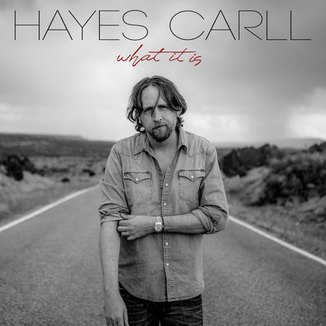 After the introspective ruminations of Lovers And Leavers, his 2016 album, Hayes Carll seems to have recovered his sometimes impish sense of mischief for his latest album, What It Is. Lovers And Leavers was of course a “break up” album and they’re not generally noted for being upbeat but here Carll is certainly on a bounce with several of the songs good old-fashioned Texan red dirt rockers while the quieter numbers are a fine indication of where his head is at right now. Co-producer (and fiancé) Allison Moorer has certainly settled his heart but he’s not so settled when it comes to the likes of racism and the fate of veterans, both the subject of songs here.
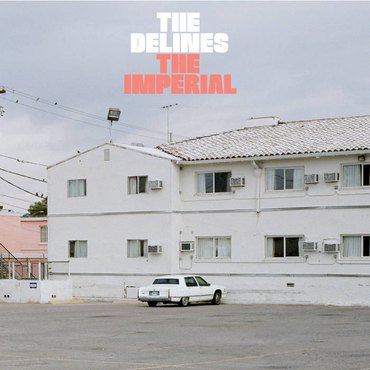 The story of The Delines (so far) could almost be the plot line of one of their songs. A band gets together, records an album of slow burning hangdog songs and then, just as they’re about to record a second, the singer is terribly injured when struck by a car. End of story? Except that the story doesn’t end there. Singer Amy Boone received severe injuries in the incident and is still recovering her full mobility but, three years on, she has recovered enough to record with and tour with the band who have just ended a triumphant UK tour.
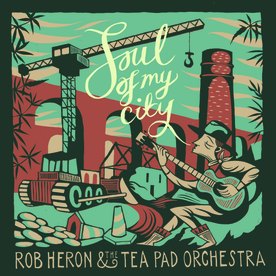 We’ve always been partial to
  History is much more interesting on record than in a dusty museum and it seems that recently there’s been a slew of discs which reach back into the past in order to enlighten and entertain us. It’s certainly the case with Riverland, this trio’s collection of songs inspired by Mississippi, the state and the river, described in the liner notes thus, “Mississippi is a broken place. It is America’s Eden, if instead of banishment, God chose to flood the garden and wipe flat every last splinter that Adam and Eve ever erected.” It’s certainly central to much of the history and culture of the States, a state of mind as much as a place of mud, floods and slavery, and Brace, Cooper and Jutz do the legends and stories justice on this fascinating listen.
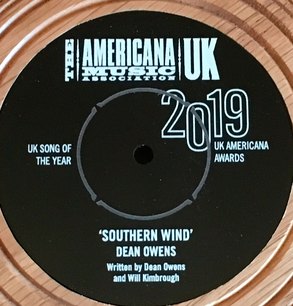
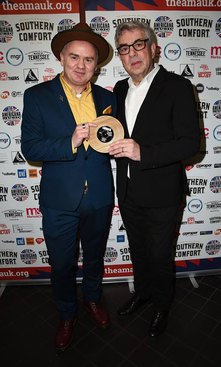 Last week The Americana Music Association UK (AMA-UK) held it’s fourth annual awards ceremony. Over those four years it’s become a big deal attracting stars such as Robert Plant, John Oates, and the recipient of this years Lifetime Achievement award, Graham Nash. The MC for the occasion was the “godfather” of UK Americana and country, Whisperin’ Bob Harris. So it’s great to relate that the winner of the UK Song of the Year was Scotland’s very own Dean Owens, a lad from Leith who is now the owner of a much coveted “Woody,” a handcrafted wooden facsimile of a 7″ disc, commemorating his win.