
The Tenementals. Glasgow: A History (Vol. I of VI). Strength In Numbers

Here’s a radical idea. Take a bunch of academics (garnered from Glasgow University) and marry them to a hotchpotch of Glasgow musicians to launch a band which seeks to portray the oft hidden underbelly of Glasgow’s radical history in song. Such is the idea behind The Tenementals, their name a tribute to the grim but also handsome stone terraces which housed the majority of Glaswegians until the modernist clearances of the 1960s.

Fuelled by a history of rebellious rock and the sloganeering of groups such as The Situationists, The Tenementals hark back to numerous antecedents. Spanish Republican songs, protest songs of the 60s and the agit punk rock of the 70s are all brought to mind here. Front man David Archibald, whose day job is Professor of Political Cinemas at the University of Glasgow, states that “While our project has academic roots, it lives and breathes as a rock band, turning fragments of the city’s radical past into provocations for radical futures. We hope the songs operate as thought bombs, provocations to think and act in a radical way.” It’s a bold claim but it’s one which is largely delivered on their debut album. The subtitle, Vol. I of VI, hints at more to come but in essence it’s kind of an in-joke, referring to Foucault’s Histoire De La Sexualité which was supposed to be followed by several other volumes.

So far, so heady. Add to this the information that the opening song, The Owl Of Minerva was partially inspired by a passage from Hegel and we’re in danger of wandering into the intellectual ivory tower from which the 1980s NME fired its barbs, when a familiarity with Derrida and Barthes was required to comprehend their singles reviews. Fear not however. From the opening blast of The Owl Of Minerva, riffing like Iggy & The Stooges in their prime, The Tenementals never forget their primary aim, to entertain. While Archibald might have Hegel’s owl in mind, the song was inspired by the fact that Glasgow’s Titan Crane (featured on the album’s cover) is sited at the end of Minerva Street. From there, he takes a flight of fancy, a bird’s (owls) eye view of Glasgow, howling out the words as he flies north, south, east and west, delivering a pyschogeographical map of the city. It’s incredibly clever but it’s also exhilarating, best listened to with the volume at 11.

While other songs share this raw and raucous approach there is a fine degree of light and shade on the album, reflected in the next song, A Passion Flower’s Lament. Sung by Jen Cunnion, it’s a gentle, Spanish inflected acoustic number as Cunnion sings from the perspective of Isidora Dolores Ibárruri Gómez otherwise known as La Pasionaria, a statue of whom resides on the banks of the Clyde in Glasgow’s city centre. Her Spanish Republican war cry, No Pasarán! is reflected in the song’s lyrics which commemorate the 65 Glaswegians who died as members of the International Brigade.

An earlier and more local rebellion is at the heart of the driving rock harmonies of Peter Pike Or Pink, the titular character being one of those who was executed for his participation in the Radical War (or Scottish Insurrection) of 1820. That his name is unsure on his memorial finds the band wondering about his life and his reasons for becoming a rebel along with a pondering on why this insurrection is not more celebrated. A more well kent rebel is at the heart of Universal Alienation (We’re Not Rats) which is about the celebrated union leader Jimmy Reid who led the Upper Clyde Shipbuilders sit in and who was elected as Rector of Glasgow University. The song features a sample of his famous inaugural speech (“a rat race is for rats, we’re not rats, we’re human beings) and opens with a grand line about his appearance at the august institution as he is described as “Robed In Ermine, seventies sideburns magisterial”.

Whether the band are inhabiting a post punk, almost Nick Cave like vibe on Pentimento, growling about the Glasgow Council’s addiction to becoming a Hollywood set on Post Production or turning a trip to Victoria Park’s prehistoric Fossil Grove into a groovy folk rock number with intimations of how short our life spans are in comparison to these 11 petrified stumps, there’s no doubt that the history, the radicalism and, indeed, the lifeblood of Glasgow’s past and present is present throughout the album.

They close with an anthem of sorts. People Make Glasgow is a slogan of course. If you approach the city centre from the south it’s hard to avoid seeing it emblazoned on the high rise building which used to be the Glasgow College of Building and Printing. The slogan was placed there when Glasgow hosted the Commonwealth Games back in 2014 although the building has been unoccupied since before then. It’s fitting then that it kicks off this litany of Glasgow history delivered with a cool yet angry rock’n’roll attitude, a fitting end to the album.

Whether Vol. 2 (or 3-6) ever appears, The Tenementals are to be congratulated for their revival of a radical Glasgow spirit. For this writer, listening to the album reminded one of the times when we named streets after Nelson Mandela and The People’s Palace was considered by Glasgow’s Tories as a hotbed of left wing subversion.

Glasgow: A History (Vol. I of VI) is available on vinyl and digitally. A CD release is in the offing. The band launch the album at Glasgow’s Oran Mor on 27th November. It’s a free gig but ticketed, you can apply for tickets here.
Website

Ags Connolly. Your Pal Slim: Songs Of James Hand

ags

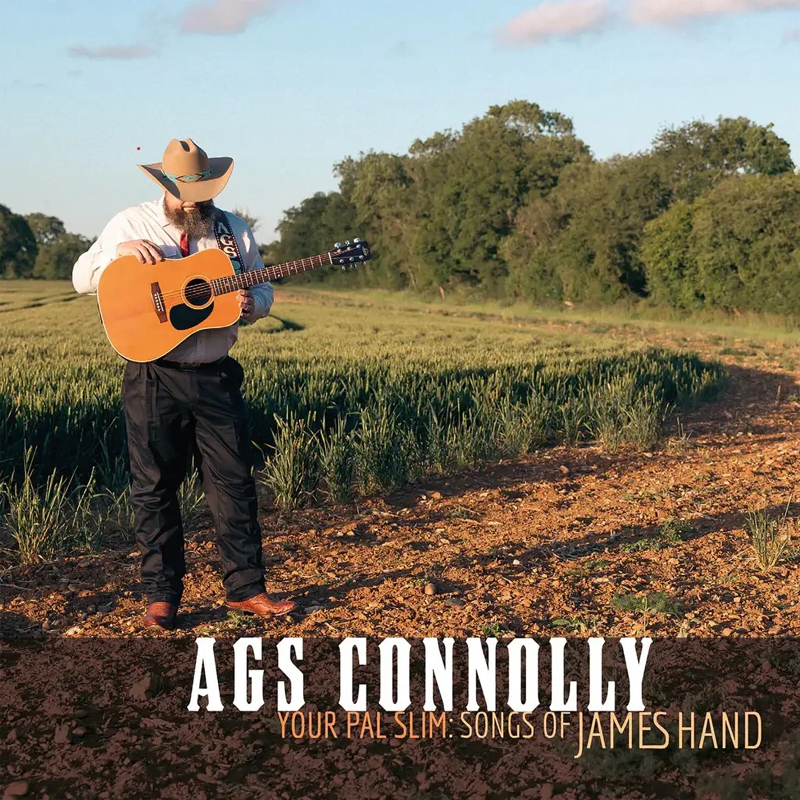
From the very start of his career, Ags Connolly has made no secret of his admiration for the late James Hand. Connolly’s debut album (released in 2014) featured a song he’d written called I Saw James Hand, a song which has remained in his set list to this day, always introduced with the tale of how Ags played the song at a gig in Nashville, expecting to have Hand in the audience only to find that his hero was running late and missed the song.

Hand died, aged 67, in 2020. By then he and Connolly had become acquainted, to the extent that they had planned to write some songs together. Alas, that never transpired. Instead, we have this lovingly crafted tribute to Hand, a collection of 11 songs garnered from Hand’s six albums and recorded by Connolly along with musicians who played with Hand. A twelfth song, Corner Of The Street, was written by Connolly in expectation of taking it to Hand for their proposed collaboration.

So, who exactly was James Hand? A Texan, he played music from an early age becoming a local star on the honky tonk circuit while tackling various jobs including being a horse trainer and a truck driver. His natural reticence and humility kind of held him back with one writer saying of him, “James is even uncomfortable selling you a CD after a show. He thinks that if you give him $15, he should come over and mow your lawn.” He didn’t record an album until he was in his forties and his unrequited allegiance to the grand tradition of old fashioned country music won him few fans outside of Texas. He did garner some famous fans, Willie Nelson and Kris Kristofferson included but, to the end, he remained, as one article described him, a hidden Texas Honky Tonk treasure. It’s of note that, prior to Connolly’s homage, Charlie Crockett, another huge admirer of the man, recorded an album of Hand’s songs, Lil’ G.L. Presents: 10 For Slim – Charley Crockett Sings James Hand (sharing three songs with Connolly’s album).

It has to be said that Connolly takes to Hand like a duck takes to water. The songs are tailor made for a singer who revels in what has come to be called Ameripolitan, a movement to reclaim traditional country from the tosh which populates the country charts these days. From the opening bars of In the Corner, At The Table, By The Jukebox we’re in a bar room heaven, the ghost of Hank Williams sitting side by side with Hand as pedal steel and fiddle adorn the song. Baby, Baby Don’t Tell Me That sashays with the verve of the early Sun Records forays into country music while Shadows Where The Magic Was finds Connolly using the Johnny Cash chika boom rhythm on a song which displays Hand’s writing at its best on a song which has an almost biblical fear built within it as he revisits his past. Topping that is Connolly’s delivery of Lesson In Depression, here given a slight border sway with its luxurious pedal steel.

The album closes with Connolly’s sole write here, Corner Of My Street, originally penned as a possible collaboration with Hand. That was not to be but this hangdog country lament serves as a fitting close to the legend of Hand and to Connolly’s affection for him.

Website

Ghostwriter. Tremulant. Subexotic Records

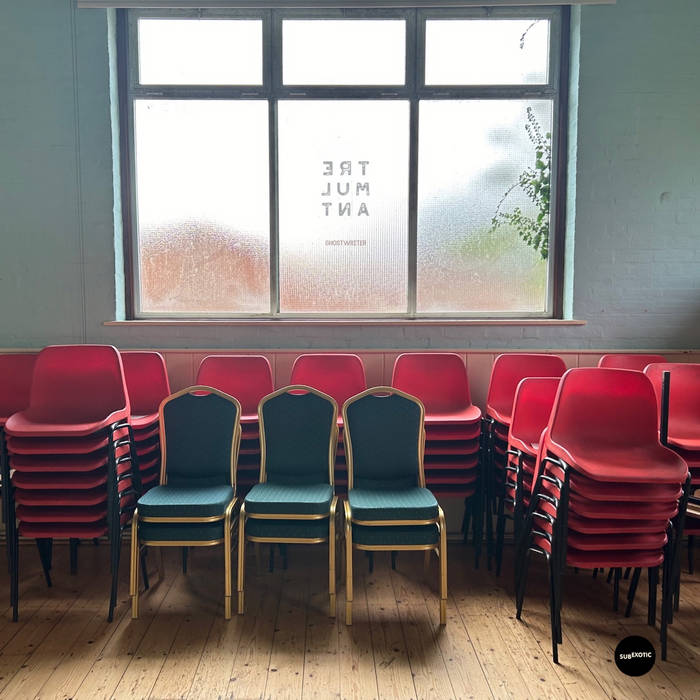
It’s not often that church music (other than that of the American south gospel variety) reaches out to us but when we listened to the five songs (or meditations perhaps) which constitute the latest release from Ghostwriter we were somewhat spellbound. Helmed by Mark Brend (who plays most of the instruments) and featuring the assorted talents of My Darling Clementine’s Michael Weston King, folk singer Suzy Mangion and Anglican Bishop Andrew Rumsey, the disc is an immersive dive into a dread fuelled world, the heavy hand of God and the fear of Hell manning the tiller. Brend’s skilful mix of wheezing organs and ambient sounds provide the vaulting heights of awe and wonder one experiences when visiting a grand gothic cathedral while much of the settings remind one of the heydays of the more esoteric shores of freak folk.

While memories of such as The Incredible String Band, along with a whiff of Robert Wyatt, are evoked, the song which most  came to mind when listening to Tremulant was the brief  Fairport Convention number, The Lord Is In This Place, from their 1969 album What We Did On Our Holidays. Musically they are miles apart but they share a mood.

The album opens with Weston King singing Satan, Your Kingdom must Come Down, a song most folk here might associate with uncle Tupelo. Here, it comes across with the power of a slavery era spiritual wail. It’s followed by the lengthy pipe organ hymnal I Stand Amazed, drawn from a 1905 hymn which celebrates the death of Christ on the Calvary Cross and his resurrection. There’s a hushed and reverential mood here as the song, oh so slowly, treads a path between old English folk idioms and church rituals. It’s a calming presence, a balm for the soul if you are ever in need of one.

There’s a brief instrumental aside (which most reminds one of the aforementioned Fairport Convention number) on Here before the ambient sounds of Often Forfeit tumble out, the introduction eventually leading into another wheezy organ filled ancient hymn with a coda which seems to owe much to the eccentric sounds of Harry Partch. The disc ends with another lengthy song on The Anchor. It opens with Weston King in vicar mode, blessing his ship faring congregation before the most conventional folk sounds on the disc briefly appear. Thereafter, it’s a collage of sounds and songs all blended within its 16 minutes with Mangion delivering a hauntingly beautiful interlude. Harking back to Fairport Convention, The Anchor, while not resembling it in any way, reminds one of their seafaring adventure on A Sailor’s Life in that both songs take a tradition and cast it anew, albeit in drastically different directions.

It’s not an album you would bring to a party but Tremulant is certainly food for thought in these troubled times. Even the most secular listener should find some calm within its grooves, stick it on a playlist to follow on from Gavin Bryars’ Jesus’ Blood Never Failed Me Yet.

Website

Felix Hatfield. House Of The Artist

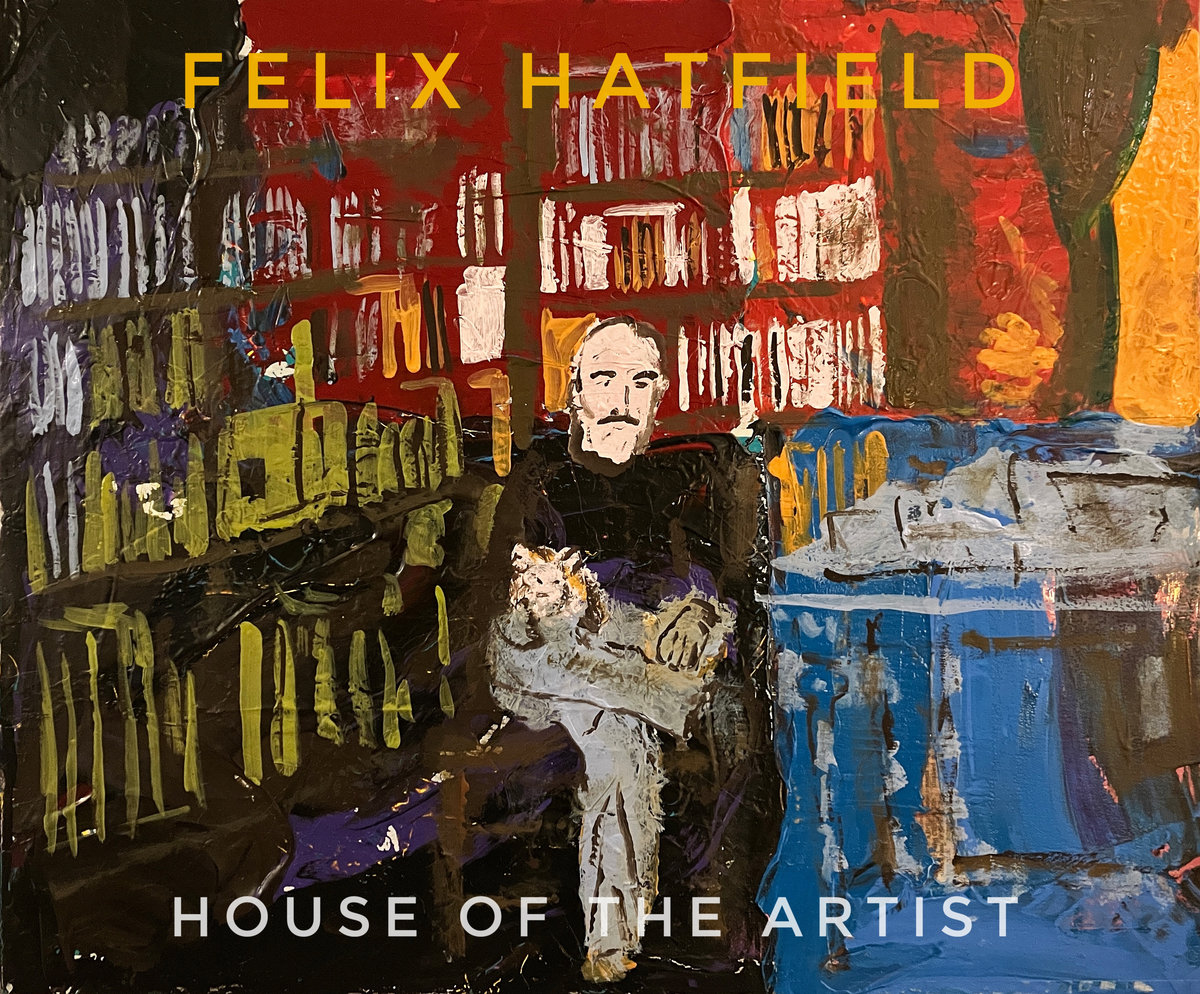
Released back in August, Felix Hatfield’s third album, House Of The Artist, recently came to the top of our pending pile and it’s a shame that we didn’t get our act together at the time to salute it. Having said that, he’s not touring the album and it’s as available now as when it was released so, have a read and then go out and buy it. You won’t be disappointed.

Hatfield is probably best described as an “outlier” these days. He paints and makes films alongside his music, music which might be considered as “primitive” given its home made patina and the somewhat ramshackle approach to melody and rhythm. He’s akin to the likes of Michael Hurley, another songwriter who also paints and who finds inspiration in the old time music of America. In addition, Hurley and Hatfield can conjure magic in the most humdrum of affairs, witness Hatfield’s song T-Shirt on this album. It’s almost a dirge, the instruments wheezing and puffing as Hatfield drily relates the fallout from a broken relationship, “I’ve been there, I’ve done that, I’ve got the T-Shirt” he sings.

He opens the album with the croaky homespun wisdom of Somethin That I Know, a song which goes around in circles, alluding perhaps to gossip. Whatever it is that he or they know and don’t know is never explained. Lemon Rinds is more straightforward, albeit in a strange and quizzical way, as Hatfield, an outsider from the start (I left the theatre during E.T., I couldn’t handle the corn scene), offers advice to those who find the world not easy to take, adopting the late Oregon blues player Eagle Park Slim’s motto, There Ain’t No Time For Hope and ending with “I think we can agree that life is pink and purple with strife.” This sense of optimism is then replaced by the desolate Weepin Willow, an intimate wail of a song.

Hatfield, amidst his primitivism, has always been acute when writing about relationships and this is brought to the fore on the halting, and quite lovely, lost love song, You Said You Loved Me. Sounding like Jim Reeves coming across the ether via a Ouija board this is miserabilism at its best. Bound To Lose (Sleep) finds Hatfield in thrall to a partner with whom he made love to after tripping out on Hieronymus Bosch books, the pair of them revelling in their garden of delights. A rudimentary and scratchy guitar rings throughout a portrait of a formidable companion on Joan, a woman who “doesn’t give a fuck”  while the closing, title song, comes across as possibly autobiographical as Hatfield describes his safe space as “a workshop…the house…a graveyard of visions where heartbreaks reminisce.”

Despite the off kilter approach here, Hatfield’s songs are immersive and quite moving, akin to the likes of Will Oldham, Vic Chesnutt and the aforementioned Hurley. Do yourself a favour and have a listen.

Website