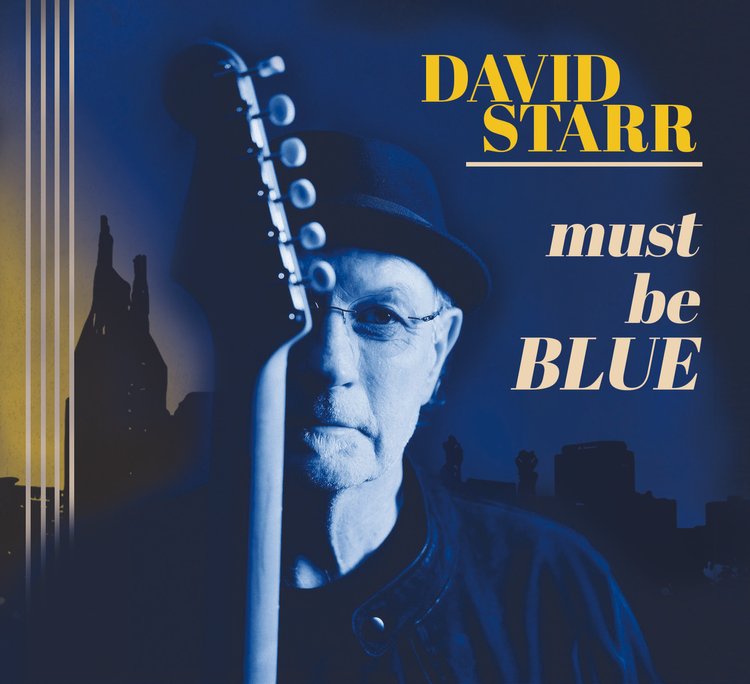
Colorado based David Starr has gained a lot of fans here in the UK with his annual tours and an array of albums which have found him firmly in the singer/songwriter orbit. Love & Sabotage was a country rock album in the sense of 70s luminaries such as Poco while the more expansive Beauty & Ruin (based on a book written by his grandfather) dug into timeless themes in a manner reminiscent of the Eagles’ Western album Desperado.
On Must Be Blue Starr takes a sharp left, heading into blues territory. He explains in the album’s liner notes that, as a youngster in Arkansas, he was exposed to the blues in the gritty little clubs he frequented and they’ve remained a touchstone ever since. Here he revisits his youthful affiliation turning in a soulful album of originals and covers delivered with nods to his more recent output, playfully terming it Bluesicana. Whether that term will catch on remains to be seen but overall Starr delivers the goods here.
Starr’s version of the blues owes more to antecedents in the 70s as opposed to the gutsy raunch of Chicago style veterans such as Muddy Waters and Howling Wolf. Instead, Bobby Blue Bland, The Fabulous Thunderbirds and Robert Cray spring to mind while covers of J.J. Cale, The Cate Brothers, ZZ Top and The Allmans cement the notion that Starr, like many of his generation, were swept up in the third generation of the blues. The songs here are weighted with sweeping organ, female harmonies and soaring guitar solos; there’s no desolate “woke up this morning” lamentations.
The album opens with Hole In The Page, a gripping number with a sinuous riff before Starr whips up the boogie on his version of J.J. Cale’s Bringing It Back, one of the most exciting songs on the album. Lonesome Train rattles along with some verve, the addition of Erik Stucky’s mandolin an example of Starr’s Bluesicana ideal but it’s the scintillating slide guitars which catch the attention. My Favourite Color, midway through the album, all but abandons the blues concept as Starr weighs in with a song which harks back to Beauty & Ruin with Stucky this time more than holding his own amidst the growling guitars.
Ezra Came To Call is quite superb, the lyrics have a biblical bent and the band are quite swampy as the song creeps along, a snakelike guitar solo the icing on the cake. ZZ Top’s Just Got Back From Baby’s is another slow burner with a southern soulful sound at its heart. He closes the album with a valiant delivery of The Allman’s Whipping Post, a brave move but Starr turns in a more than decent version with the instrumental break quite exciting while his vocals (as throughout the album really) are quite impassioned.
Back in the 60s there was the adage, can white men sing the blues? On this reckoning, David Starr can, while giving it a new twist.