The Poppermost. Hits To Spare

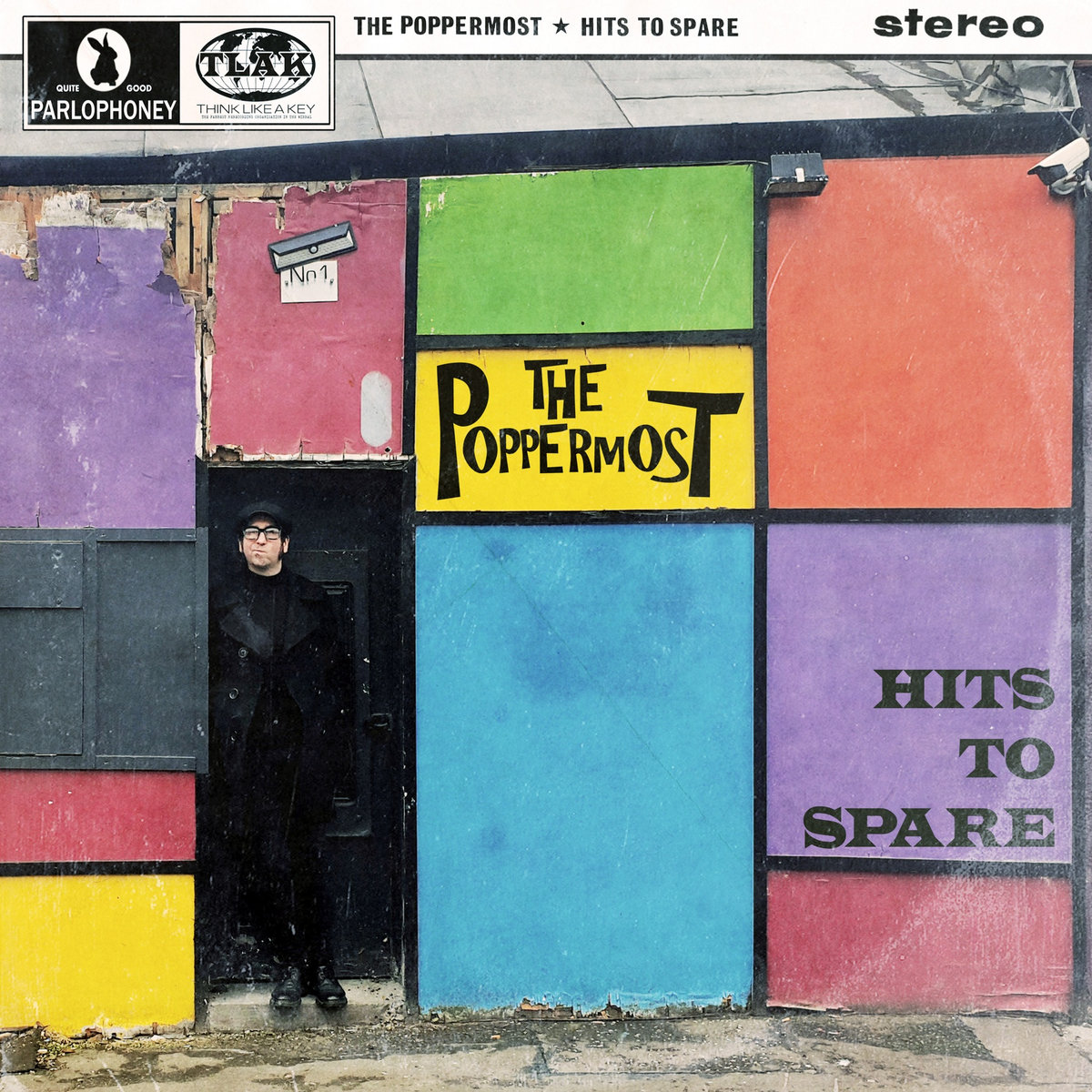
If you’ve got any old Beatles’ wigs or plastic sixties paraphernalia stashed in your attic, then get them out and get in the mood for this FAB album. Hits To Spare is a fantastic (and loving) tribute to John, Paul, George and Ringo, played, quite amazingly by one man. Glaswegian Joe Kane is essentially The Poppermost and he recorded the album in his own studio (Fabbey Road, fact fans!) using his collection of vintage instruments (many as used by the band themselves). Unlike, say, The Rutles, Kane doesn’t attempt to ape the moptops’ career, preferring instead to concentrate on the early times from The Cavern days to Help! He does however share with The Rutles’ Neil Innes, the uncanny knack of writing songs which capture the essence of The Beatles while also being able to stand on their own two feet. In addition he’s not’s above taking a pop at them as on the humorous One Of Those Gerrllss which is a skifflish number featuring Lennon’s Scouse accent and which actually sounds like Freddie And The Dreamers singing a Beatles’ cast off.

The album opens with Egg & Chips (which could be a title on the Rutles album); a nod to George’s supposed favourite food. It’s a lovingly ramshackle (take 78 according to the spoken intro) foray into primitive rock’n’roll although there are glimpses of their familiar harmonies featured. It serves to remind us that The Beatles were once four fresh faced lads in love with rock and soul who were having fun in the studio. Yes It’s True is much more solid with Kane nailing the sound of With The Beatles, their second album, while Can’t Take That Away is more akin to their first album and much of the remainder of the disc hovers within this time frame. Call To Me and What A Wonderful Love are romances of the type which had teenage girls screaming in the aisles while Goodnight Georgia Peach is a McCartney like rocker which, appropriately enough, pays tribute to the late Little Richard.

The album is essentially great fun and Kane really hits the button on more than one occasion. Cry For Another is a stone cold Merseyside belter and yet again, a reminder of how The Beatles swept into the nation’s conscience in the early sixties with similar well-crafted pop extravaganzas. The title song is another punchy number with its lyrics alluding to the habit of lesser pop stars riding on the coat tails of the fab four while the most brazen number here is the amusingly titled Park And Ride which is a hair’s breadth away from Ticket To Ride. Hits To Spare closes on a high note with the excellent Well I Will which, simply put, is simply thrilling as Kane’s version of The Beatles soar over an excellent garage band backing.
website

Don Gallardo. All The Pretty Things

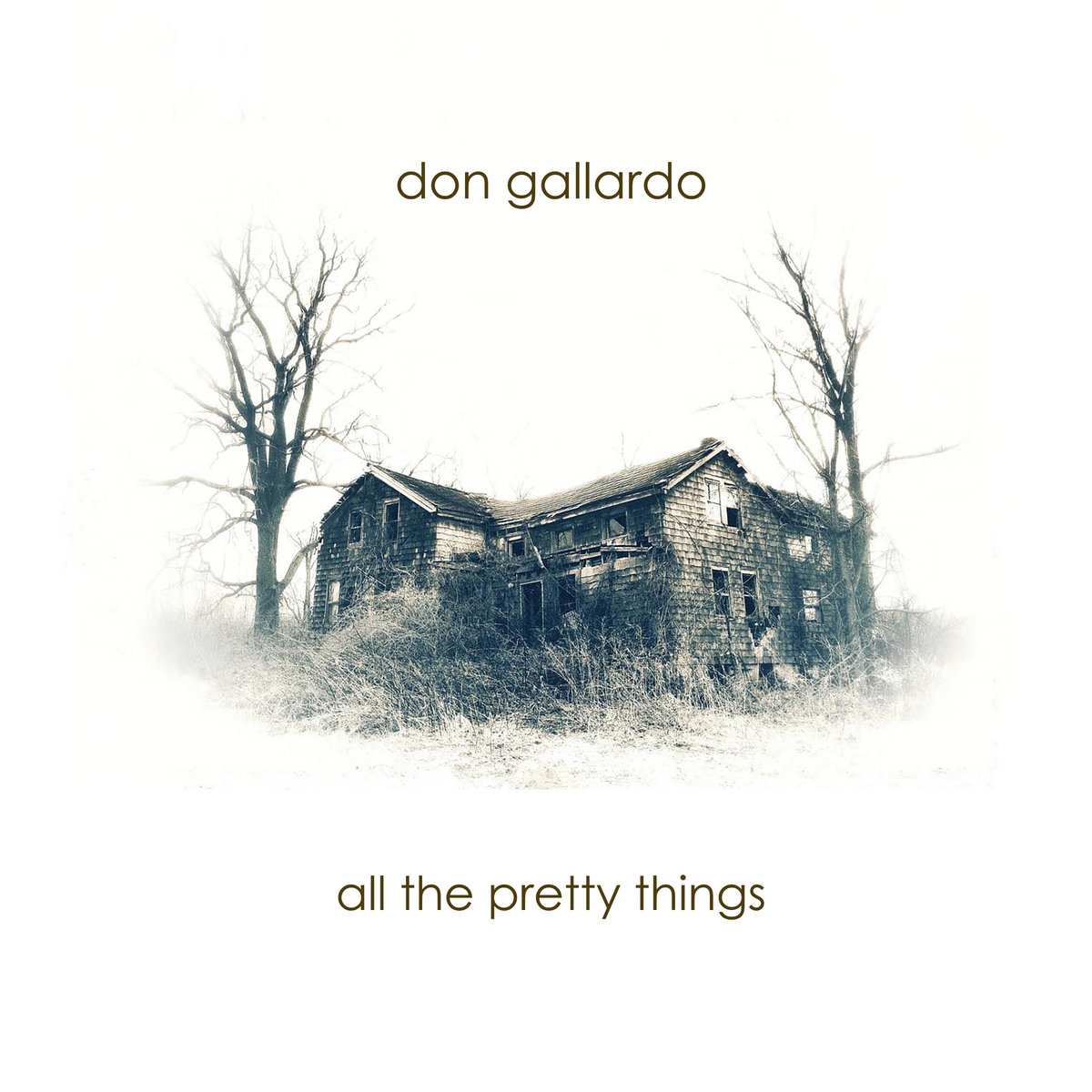
Back when Covid hit, Don Gallardo was in the eye of the storm, frantically looking for flights back to the USA after a short tour of European countries. He got back but caught Covid on the flight and was ill for a couple of weeks while isolating in his cellar home studio. Next, as for all of us, there was a long stretch of enforced distancing and (as with all musicians) no gigs to play. Gallardo has used that long stretch to record an album which relates to his experience.

All The Pretty Things began as a series of songs written by and recorded by Gallardo in his home studio but, with time on his hands, he reached out to some friends remotely to spruce the recordings up. Chief of these was Andrew Sovine (grandson of Red Sovine) who has added all manner of instrumentation to the album while Darren Nelson’s vocals weave around, over and under Gallardo’s voice. The result is a gorgeous and laid-back listen which has Gallardo musing on the effects of the virus and, ultimately, offering some hope that life can get back to normal.

He tops and tails the album with two songs which portray the uncertainty which gripped the world as it shut up shop. “All right, here we go…” he says, when Lost Hope launches the album with its gossamer like frailty as he goes on to sing, “I wonder who I am these days.” The closing song, Gypsum – a cover of a Virgil Shaw number – while written well before the pandemic, acts as a parable of sorts for that time when we were all somewhat driftless amidst the miasma of conflicting scientific and political claims. Midway through the album, The Urgency, a truly cosmic swoon of a song with a slight Beatles touch to it, finds Gallardo advising all to relax, that what goes down can also come up. The title song, a breezy Wilco like number, echoes this sentiment while Dear Friends is Gallardo’s love letter to his fans and friends abroad as he sings about all he misses on his continental jaunts and it has a fine old Grateful Dead American Beauty like lilt to it.

It has to be said that Gallardo, Sovine and Nelson gel wonderfully throughout the album. The Dreamers Of the World, which is kind of like a Covid dream song, is quite sublime with its multilayered vocals and filigreed tapestry of ornamental keyboards. Time’s Not Lost On You is truly in cosmic country territory as Sovine lets rip a glorious fuzzed guitar solo midway and Stuck On Love, a song which alludes to Gallardo’s flight from the virus back to home, hearth and family, is quite affecting in its yearning quality. Altogether, the album is perhaps the most mellow disc Gallardo has recorded but it’s infused with warmth and a healthy regard for the human spirit.

Website

Various Artists. Snockument – Songs by Michael Hurley. Blue Navigator Records

Long rumoured to be in the works, an album of Michael Hurley songs performed by others has finally emerged, blinking, into daylight. For those not aware of him, Hurley is one of the surviving links to, as Greil Marcus has it, that Old Weird Americana. From his first recordings in 1965 for Folkways, up until the present, Hurley has inhabited a domain where country, blues and folk collide and he has peopled it with an amazing array of characters, some grim and doomed such as his famed werewolf, others, cartoonish, bawdy and, at times, lascivious – check out Boone and Jocko. Above all, Hurley allows us to view his world via some stunningly beautiful songs. Some are raw, gnawed from his hinterland, while there are several which have a rich groove and then others which are just quite achingly tender. It’s no surprise really that such a unique artist has rarely troubled the mainstream but, equally unsurprising, he has gathered a cult following which has included a good number of musicians over the years.

Many of those musicians have paid tribute to Hurley on their respective albums, covers of his songs abound, especially amidst the weird folk movement pioneered by Devandra Banhart. Snockument, punningly named after one of his many alter egos, is however, the first bona fide collection of cover songs. It has Hurley’s stamp of approval, an important issue as previous attempts at delivering such an album were nixed by him. As he declared of one of the earlier submissions, “He didn’t have the melody, he didn’t have the words, so what did he have…? I didn’t want the song represented that way. I figured, ‘This is one of my best songs and I want it out there in the public like it is’.” So, the album gathers some songs from those previous attempts which did make the cut along with a couple of previously released covers and some recorded specifically for what we might call “Snockument – Take 3.”

Despite such disparate origins, the album is a joy to listen to and it flows wonderfully. Hurley has selected the songs and sequenced them such that there are no joins to be heard between sessions recorded back in the 1990’s to the present day. The 10 songs here are but a dip into Hurley’s immersive world but they will be more than familiar to fans and all are delivered with what appears to be a great sense of affection and connection with the man. There’s reverence and ribaldry here, quite fitting.

Cat Power’s version of Werewolf is probably the song which most folk will gravitate to immediately. Plucked from her 2003 album You Are Free, it is suitably spooky while Power deftly switches the werewolf’s gender so that it is a she who “loves the young man as I tear off his clothes.” If this sends folk back to Hurley’s stunningly crepuscular original version then the album has done its job. There are other familiar names on board. A 2004 Calexico offer a finely laid back Rue Of Ruby Whores which slides down the neck as easily as a glass of Knockando while Yo La Tengo transform Polynesia into a shimmering languid dream state and Cass McCombs, with guitarist Steve Gunn in tow, follows the original template of Sweet Lucy quite faithfully.

As befits Hurley’s underground reputation however, several of the acts involved here are hardly household names. Little Sue, a Portland singer, captures Hurley’s old time essence in her version of  Somebody To Say Goodbye To and another Portland outfit, The Hackles, hack excellently into Hurley’s sense of wonder on Oh My Stars. The Chicken Chokers give Watertrain a fine string band delivery and Chicago’s Vernon Tonges packs some punch vocally into his bracing and slightly lop sided version of I Still Could Not Forget You Then. Perhaps the most imaginative cover comes from Manchester’s Daniel Bridgwood-Hill, recording as dbh. He takes Hurley’s saw fiddled Hog Of The Forsaken (as heard on TV’s Deadwood) and transforms it into a guitar, fiddle and whistled Antebellum lament which reminds one of Jay Ungar’s Ashokan Farewell. It’s just lovely.

So there we have it, finally. Snockument comes in vinyl, dressed in a sleeve featuring a Hurley painting and with an illustrated gatefold booklet. There may be a CD release in the near future which might include an expanded set list but in the meantime, this handsome and very desirable limited edition is available from Dublin’s Blue Navigator Records

Michael Hurley

Martha Fields. Headed South

It’s been a while since we heard from Martha Fields, Texas Martha to her friends, a fine songwriter who, strangely enough, manages to conjure her Appalachian and southern soul influenced songs while ensconced in France where she is ably aided and abetted by her very own continental version of Emmylou’s Hot Band.

Headed South is the latest in a series of albums Fields has recorded in France which have no hint of their provenance, it’s as if she had transported Nashville to Bordeaux. Her band are well versed (actually, expert) in picking and swinging on all sorts of stringed instruments which would normally be found lying around on the Opry stage and, if you’ve had the opportunity to see them live, they do indeed, kick ass. Fields herself is a fiery performer and her gutsy qualities transfer well to disc as when she and the band rock into the rollicking honky tonk  come country swing of Laveda’s Lounge, the third song here and one which you could imagine Phil Alvin’s Blasters having a go at.

The album opens on a much mellower note with the sweeping title song which finds Fields once again examining her southern roots as the band lay down a soulful country glide. Next, there’s a deep dive into that southern territory as she heads for the swamplands on the spooky Let The Phoenix Rise. A later number, Hillbilly Babylon, is akin to her earlier songs regarding her family heritage such as Do As You are Told and is delivered with a tremendous sense of verve as it progresses from its mountain fiddle and martial drums opening to a limber guitar solo and a bustling country rock ending. Meanwhile, there’s a fine ribald edge to the sinewy In My Garden which recalls the late Dan Hicks with its gypsy fiddle and sinuous Dobro and slide guitars.

There’s a fine sense of light and shade to the album. Aside from Laveda’s Lounge, there’s the menacing strut of Death Rattle Of Love with its fiery guitars while High Shelf Mama is an old-fashioned blues boogie with Fields channelling the likes of Big Mama Thornton. Set against these is the yearning ballad Yellow Roses and the soul searching reminiscing of Souvenir, a tremendous song on which the band excel as organ and guitar gradually swell towards the end. Do More Right is a high flying string band skirl which finds Fields railing against our current overlords and there are more contemporary comments on the mannered side step into vaudeville which is Bad Boy.

There’s a wonderful surprise at the end of the album as Fields offers her version of J’entends Siffler Le Train, a hit by the sixties French pop star, Richard Anthony. He in turn, borrowed his version from the great American folk canon where the song is generally known as 100 Miles. Fields sings the song in French and English and she and the band lay it down in a manner not too dissimilar from that of the late Gene Clark. It’s a cool end to a great album.

Website

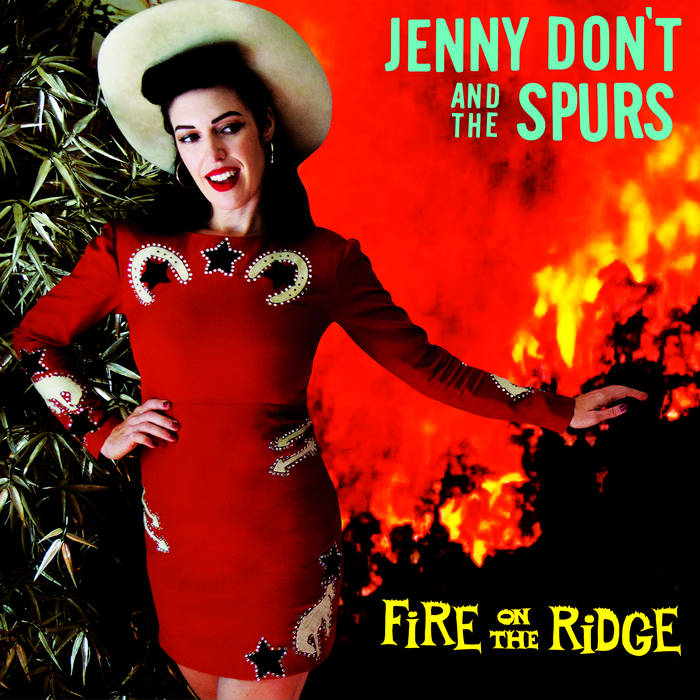
Jenny Don’t And The Spurs. Fire On The Ridge. Fluff and Gravy Records

OK, this album has been percolating in the inbox for several weeks having been released back in June, so apologies to the delightfully named Ms. Don’t for being somewhat tardy with this review. What to say? It’s a belter. Chockfull of twang, country and swing with spoonfuls of rockabilly and spaghetti western sounds to help it go down, Fire On The Ridge is an album which will surely delight any fans of Commander Cody or Asleep At The Wheel. Moreover, at its heart, there’s a cowpunk drive to the album which should attract those attuned to the likes of Jason & The Scorchers or The Blasters.

Hailing from Portland, Oregon, The Spurs were founded back in 2012 by Jenny Don’t and bassist, Kelly Halliburton with Sam Henry joining in on drums shortly after. Their background was in garage punk and thrash but the addition of guitarist Christopher March in early 2017, added his experience of years playing on the Northwest Country, Rockabilly, and Honky-Tonk circuit. Their chops certainly shine throughout the album with Henry’s drums pummelling and driving the band forward while the guitars smoke and burn. Astride this wild ride sits Ms. Don’t who sings with a prairie purity, at times coming across like Patsy Cline, sometimes like Neko Case, elsewhere yodelling gleefully.

The album kicks off forcefully with Fire On The Ridge, an almighty racket and rumble of a song which evokes the open vistas of the wild west with tribal drumming and acres of twanged and reverbed guitars amping up the tension. California Cowboy, a sweet country laced lost love song is a brief respite before the turbo charged Blasters’ like Be The Only One rushes in. One of the disc’s many delights is in the band’s ability to rock and then relax somewhat. We get the light footed western swing of Restless Heart and Foolish Lies with the band in a delicate and playful mood, followed by the short rockabilly skiffle of Train Ticket (reminiscent of The Knitters) and then, on the one occasion where they apply the brakes, the swoonful tear stained ballad, Friday Night.

They pull out all the stops towards the end of the album. Johnny Vagabond glistens with mystery and romance as Don’t sings of her absent lover and the band beam in as if they were playing in a Martian wild west saloon. There’s echoes of John Leyton’s Johnny Remember Me and Peggy Lee’s Johnny Guitar somewhere in this song’s DNA. Queen Of The Desert goes the whole hog western spaghetti route with its clip clop beat and dramatic guitars allowing Ms. Don’t to ride victoriously into the sunset. Quite wonderful.

Website

JP Harris’ Dreadful Wind & Rain – Don’t You Marry No Railroad Man. Free Dirt Records

Noted as one of the best purveyors of amped up country mayhem in recent years, JP Harris puts away his telecaster and tube amps on this collection of pared to the bone traditional folk songs, partnered by an old chum, Chance McCoy. In his informative sleeve notes, Harris expresses his interest in old time banjo (to the extent that he learned how to build them) and his love of what he calls the repetitive archaic sound of old time music. We know it as the music of that old weird America (as Greil Marcus called it), songs tilled from the earth, dark and filled with portents of death and doom and first collected on the Harry Smith Anthology Of American Folk Music.

Don’t You Marry No Railroad Man finds Harris, on banjo and vocals, and McCoy, on fiddle and backing vocals, dive headlong into Harry Smith territory. Recorded in a “a hundred year old sharecropper’s shack, deceptively well-equipped with some world-class gear inside” the pair laid down these ten songs, all plucked from tradition and memory. Most will be familiar to aficionados of the genre via numerous archive recordings but the liner notes allow Harris to explain his own connections to the songs and the versions he knows. In essence, that world-class gear the pair employed not only allows the songs to shine but carries them back in time to paradoxically create a timeless album.

Prior to his music career, Harris was a carpenter and he includes two carpenter songs here. The hardy perennial, House Carpenter, opens the disc and sets the scene with its mournful and mystical content and goes some way to proving that the devil has the best tunes. Harris and McCoy claw and scratch at the song as they fall under its spell. Later on there’s The Little Carpenter, another sepia stained lament laden with portent and mystery. In the notes, Harris mentions that he took to it due to his being a carpenter, and recalls hearing it first on an Alan Lomax field recording of Blind James Howard of Harlan, KY, from 1933. The primitive picking and fiddling continues apace on Mole In The Ground and on an excellent rendition of Barbry Ellen, a song Harris learned from a Jean Ritchie recording. This gathers together so many strands of what eventually became American folk music – the Child Ballads, Scots and Irish traditions- indeed, Samuel Pepys refers to the song in his diary dated January 2, 1666!

There’s some hardscrabble jauntiness on the outlaw song, Otto Wood and Closer To The Mill rocks (in an old time square dance way) but two songs here really reach out. Wild Bill Jones is a murder ballad delivered by Harris and his banjo which is quite spellbinding. Old Bangum meanwhile, reminds us of a time when the folk revival was reaching out to all sorts as Harris first heard this on a Seeger Family album aimed at children. Harris here retains the wondrous naiveté and nonsensical sounds which Pete and Peggy Seeger excelled at. We were certainly too young to hear Blind James Howard but this song pricked our conscience and reminded us of earlier and simpler days.

All in all, Harris and McCoy have delivered a modern update on a classic sound which will surely be seen, in time, as an essential link in the chain of American folk music. Real time old time weird Americana indeed.

Website

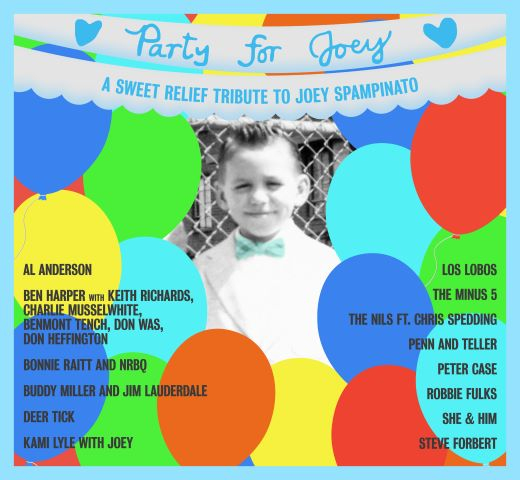
Party For Joey. A Sweet Relief Tribute To Joey Spampinato. True North Records

100_7

Those with long memories may recall two excellent albums, released in 1993 and 1996 respectively, Sweet Relief – A Benefit For Victoria Williams and Sweet Relief II – Gravity Of the Situation. The purpose of these albums was to raise funds for the charity organisation, Sweet Relief, who offered assistance to musicians in the US who were struggling to make ends meet while facing illness, disability, or age-related problems. The charity was set up by Victoria Williams after she was diagnosed with multiple sclerosis and the first album was a collection of her songs recorded by a fantastic line up of artists (ranging from Lou Reed to The Jayhawks to Pearl Jam) with all proceeds going to the charity. The follow-up centred on the late Vic Chesnutt and again had quite a spectacular queue of acts lining up to contribute (including REM, Cracker and even Madonna).

Party For Joey follows that template. Joey is Joey Spampinato, bass player and founding member of the legendary NRBQ who is currently recuperating from cancer treatment. For those not in the know, NRBQ (or The New Rhythm & Blues Quartet) were an incredibly tight and hugely engaging bunch who, from 1969, drew on R’n’B, rockabilly, powerpop and jazz amongst a host of other influences, earning them the unofficial title of “The best bar band in the world.” Their famous fans are legion but unfortunately the paying public didn’t seem to catch on and the band never made it into the big league. And while Terry Adams, on keyboards, is considered by most to be the quintessential pivot point of NRBQ, Spampinato was no slouch in the song writing stakes while his bass playing remains much admired.

Party For Joey, for anyone not familiar with NRBQ, is simply a terrific album, chock-full of great songs delivered by another excellent line up including Los Lobos, The Minus 5, Robbie Fulks, Peter Case, Bonnie Raitt, Steve Forbert and Buddy Miller with Jim Lauderdale. For those familiar with the band, it’s quite fascinating to hear these new takes on a bunch of old favourites. Several of the songs adapt the “NRBQ” sound – piano led boogie with whip smart taut guitar and oh so tight rhythm section – with ex member, Al Anderson, leading the charge on an electrifying take of You Can’t Hide. Bonnie Raitt (recording with a current NRBQ line up) revisits her earlier cover of the song Green Lights while Deer Tick offer an uncanny approximation of the dizzy rhythms utilised in That I Get Home (from 1980’s album, Tiddlywinks). Peter Case meanwhile, shuffles in with a groovelicious rendition of Don’t Knock Off my Door, just after a mini supergroup (Ben Harper with Keith Richards, Charlie Musselwhite, Benmont Tench, Don Was and the late Don Heffington) roll on down the line quite wonderfully on a fantastic version of Like A Locomotive, from Wild Weekend, sounding for all their worth as if this was a Taj Mahal song plucked from his Giant Steps album. Los Lobos, a band who are not too dissimilar from NRBQ in their command of R’n’B and slippery rhythms, easily adopt Every Boy Every Girl.

The gifts keep on coming. The Minus 5 (with both Peter Buck and Mike Mills in tow) stomp through Don’t She Look Good with a rockabilly swagger while Buddy Miller and Jim Lauderdale adopt an Everly Brothers approach to How Will I Know. Kick Me Hard’s Chores is given a hillbilly remake by Robbie Fulks but the most surprising inclusion is the Penn And Teller rendition of Plenty Of Somethin’, a song from 1997’s You’re Nice People So You Are. This pair of magicians somehow seem to capture the unique oddness and oddball humour of NRBQ in this delightful ditty.

Party For Joey is a grand listen and a purchase goes to a good cause. Really, there are no losers here so go ahead and join the party.

Buy Party For Joey here.

I can’t find any online renditions of the songs from the album but here’s Keef warbling on about Joey

For more information about Sweet Relief Musicians Fund visit www.sweetrelief.org

John Murry. The Stars Are God’s Bullet Holes. Submarine Cat Records.

For a man who has seemed to have spent much of his life clinging to a lifebelt in extremely choppy emotional waters, John Murry, when he comes up for air, generally comes up with the goods. He has one undeniable classic album under his belt, his solo debut, The Graceless Age, a glorious and beguiling hazy summation of his life up to that point. The follow up, A Short History Of Decay, was a much more stripped back affair, recorded in just five days in Canada with Mike Timmins of The Cowboy Junkies in the producer’s chair. Both albums were somewhat claustrophobic, The Graceless Age almost suffocating within a miasma of LA smog while A Short History Of Decay sounded as if Murry was rattling the chains which bound him, exemplified by his cover of Afghan Whigs’ What Jail Is Like.

Now, Murry resurfaces with his third album, The Stars Are God’s Bullet Holes, an album which might be considered, sound wise, as midway between its predecessors. Producer John Parish expands on the grungier aspects of Decay while whiffs of pedal steel, Memphis guitar licks and inventive keyboards allow some of the songs to approach the narcoleptic sumptuousness of The Graceless Age, while small eruptions of electronic noise are added, much like static on a radio. Murry, meanwhile, remains his enigmatic self, a dark rider whose songs dig deep into the soul with erudite nods to classic literature and his favourite (mostly existentialist or nihilistic) philosophers. There’s a sort of perverse pleasure to be had in connecting the dots between the album’s opening song, Oscar Wilde (Came Here To Make Fun Of You), the album’s title and Wilde’s famous aphorism that “We are all in the gutter, but some of us are looking at the stars.” For Murry, those stars are not wondrous but are evidence of the ultimate futility of it all as the almighty takes pot-shots at us. Einstein was only half right, God doesn’t play dice with the universe, instead he’s set up with a sniper rifle aiming to fuck up your life, a concept encapsulated here in the coruscating title song.

There may or may not be six degrees of separation between Oscar Wilde and Timothy McVeigh but Murry joins the dots in the opening song with initial scenes of the Oklahoma bomber gathering the materials for his deadly operation as the ghost of Oscar Wilde smirks at the current state of the union. For Murry fans the song will be familiar, having been previously released in various guises on two limited edition EPs. Here, it has its Sunday clothes on as Murry and Parish dress it in a distressed country rock fashion. Pedal steel features, but the drums are robotic and there’s no twang in the guitars, rather, short staccato stabs intrude towards the end of this dystopian vision. Perfume & Decay is another song previously released but here it has a more propulsive drive as Murry’s relationship accelerates into a train wreck with a cruel sense of inevitability, amplified by its sudden ending. Several songs are in thrall to Murry’s past. Di Kreutser Sonata, sonically, is closest to the template forged on The Graceless Age. A hallucinogenic electronic fuzz with faint bursts of whistling, creamy pedal steel and fractured guitar, it doesn’t exactly float, It’s more like a pestilential mist descending, as Murry invokes Tolstoy’s novella about a fractured family. Ones + Zeros is a piano led threnody which features what might be Murry’s favourite subject, death, while Time & A Rifle rattles along as if Murry was riding with the horsemen of the Apocalypse dealing death and justice, armed with a fiery fuzzed guitar.

A cover of Duran Duran’s Ordinary World adds depth and menace to a pop confection as Murry delivers it in a fashion more akin to post punk doomsayers such as The Blue Orchids or The Comsat Angels and I Refuse To Believe (You Could Love Me Like That) adds a hint of faded glam rock to the mixture. Aside from a hidden track (a loose limbed and fuzz fuelled blend of The Seeds, Love and Hendrix) Murry closes the album with a song which, in emotional terms, approaches the cathartic heft of Little Colored Balloons. Yer Little Black Book is infested with sonic snippets and more of that robotic drumming with Murry freewheeling the lyrics in a manner not dissimilar to that of Molly Bloom’s soliloquy at the end of Ulysses. It’s a fine close to what is, in essence, a triumph for Murry.

The Stars Are God’s Bullet Holes is an album which is dark and decadent, an immersive listen which confirms that Murry, in the words of The Guardian, is one of the great existential pop poets.  

Website

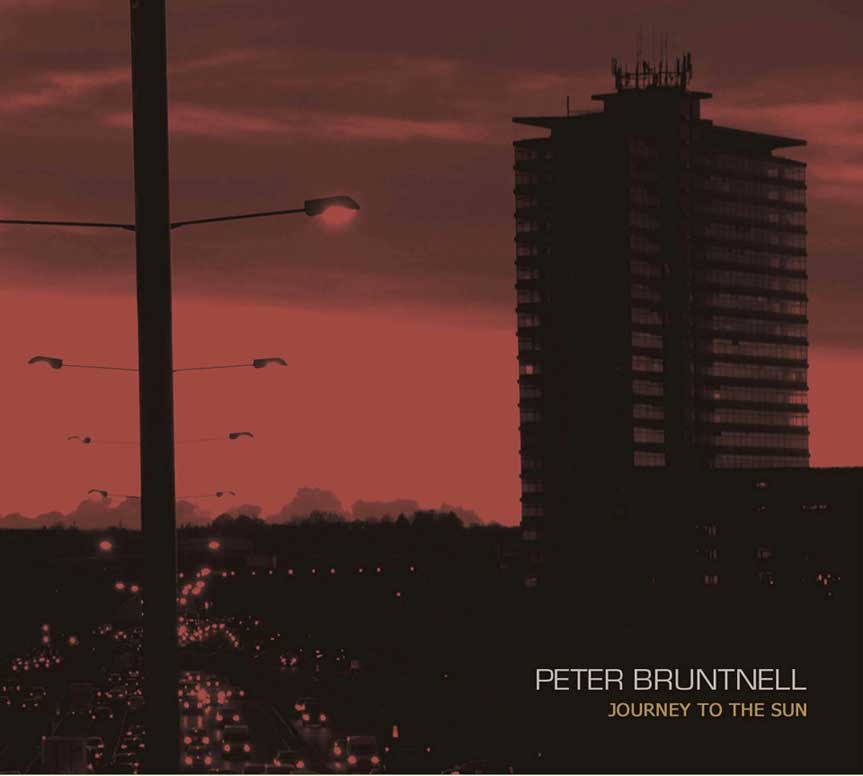
Peter Bruntnell Journey To The Sun

journeytothesun-cover

It’s getting to be ubiquitous to declare that an album under review is a “pandemic recording” but, so it goes, and Peter Bruntnell’s latest offering goes to show that he, along with several others, have certainly risen to the occasion. Journey To The Sun finds Bruntnell ensconced in his basement, a proud possessor of newly purchased accoutrements, namely, a bouzouki, a synthesiser and a drum machine – I mean, we’ve all been all over Amazon while locked up – and he employs these throughout. Aside from some vintage keyboard additions from Peter Linnane, transmitted from Boston, and pedal steel from Iain Sloan on one song, it’s a truly solo album.

The album certainly leans more to the melancholic side of Bruntnell as he casts aside his ability to produce star spangled rock’nroll. Having said that there are some jangled outings with Lucifer Morning Star featuring  a burbling synth bubbling along with Bruntnell’s guitar while Runaway Car is a rather glorious rush reminiscent  of Steve Stills or The Lemonheads. But, for the most part, the album is quite autumnal with echoes of Nick Drake here and there. The ebbs and flows of the opening song, Dandelion, from its stark acoustic opening (Bruntnell getting his money’s worth from that bouzouki) to the sombre bass and whispers of synthesiser which close it, sets the scene perfectly. Here, Bruntnell inverts what should be a bucolic summer scene, his whispered voice speaking of decay and death with legions of blindfolded angels surrounding him, high on a hill, as dandelions run wild. The song shares that odd mix of horror and blandness which can be found in some of the films of Ben Wheatley.

Bruntnell’s new synth and some lockdown listening to Brian Eno’s album, Another Green World, leads to him including two space age instrumentals into the mix. Both are short with The Antwerp Effect leaning to Philip Glass minimalism while Moon Committee finds Bruntnell  picking his guitar over a soft sonic bubble of sounds. The latter recalls the likes of Steve Hillage’s Rainbow Dome Musick and both are pleasant inclusions but when Bruntnell injects some synthesised sounds into several songs it gets more interesting. You’d Make A Great Widow heaves into view with dizzying sound effects before a robotic drum kicks in and the sound opens up to display a song which is quite quintessentially Bruntnell ,with echoes going all the way back to Normal For Bridgewater. Dharma Liar is also introduced with some synthetic squeaks and burbles before they retreat somewhat into the background allowing Bruntnell, Linnane and Sloan to deliver this gorgeous eight minute dreamlike confection. It’s the pinnacle of the album, a glorious song suffused with melancholy but quite uplifting with its shifting patterns and Brian Wilson like arrangement.

Elsewhere, Bruntnell delivers more of what we expect from him as on the luscious strum of Heart Of Straw which has a heart of political darkness within its lyrics. There’s a version of Wild Mountain Thyme which, given that it’s Bruntnell singing it, sits up there with the likes of The Byrds. But, given that he can deliver such a song as Merrion, a tale which could sit as easily on an archival collection of dustbowl blues as it could on an Uncle Tupelo album, it is a wee bit redundant. There’s some more soothing sonic soupçons along with weathered keyboards on Waiting For Clive, a fine slice of ennui, and the album closes with Bruntnell closeted within the wonderful confines of Mutha. It’s an elegy of sorts, a mournful farewell to a mother, given a wonderful kitchen sink scenario as he offers support and succour to the bereaved. It’s a hefty hump on which to close but Bruntnell, intentionally or not, here hits the button which can open the floodgates of oh, so many, who have lost loved ones in these pestilential times.

Website


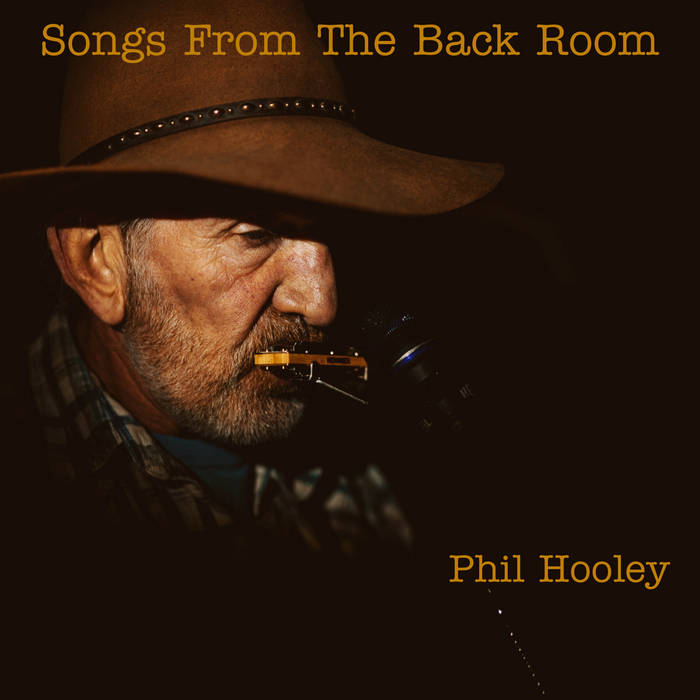
Phil Hooley. Songs From The Back Room.

When one thinks of Scarborough, it’s end of the pier stuff – amusement arcades, fish and chips and trying not to shiver on the sands. It’s certainly not the place you would anticipate would birth an album chockfull of warm Americana styled songs delivered in a fine relaxed fashion. Songs From The Back Room is the solo debut of veteran songwriter Phil Hooley, front man of The Woolgatherers, a band who have plied their enjoyable mix of country, folk and swing at festivals and pubs the length and breadth of the country. Ensconced in Scarborough in lockdown, Hooley happened upon Nashville drummer and producer Justin Johnson, who, for some reason, was also holed up in the seaside resort, they gelled and, several months later, here’s their baby.

For the most part, Songs From The Back Room is a very laid back affair. Guitars glisten and pedal steel does indeed swoon, but the primary focus is on Hooley’s well-grained voice which is like a finely aged malt whisky. Johnson’s production is sympathetic, allowing Hooley to effortlessly croon his words over the finely crafted arrangements. The opening song, Learning To be Still, sets out their stall as Hooley recalls Mark Knopfler vocally while there’s also a hint of Dire Straits in the guitar parts. That Same Old Song follows with a slight skip in its step due to a jauntier melody and some sly Dobro playing as Hooley displays his affection for writers such as Guy Clark. Midasville then arrives with a fine billow of dusty Western tropes as Hooley duets with Liverpool’s Rob Vincent on a grand tale of a frontier town becoming a ghost of its former self – a story as old as the hills perhaps but oddly topical given the recent MAGA baloney. Anyhow, it’s a brilliant song and the band pull it off with some élan.

Aside from the brash pub rock of Pour Me A Drink, a rollicking number which perhaps betrays Hooley’s early introduction to Brinsley Schwartz, and the finger popping sophistication of Maybe Later, Hooley sticks to his winning ways on the piano and fiddle ballad, River Of Dreams which flows wonderfully and is reminiscent of early Jackson Browne. Trust Your Heart has a warm-hearted chorus which is a balm for these unsettled times. Here, the band perform wonderfully with a fine tapestry of fiddle, guitars, pedal steel and mandolin woven into the song. Closing the album, Hooley harks back again to the likes of Guy Clark on the moving and spare It’s Time We Said Goodbye. It’s a lovely song, suffused with love and regret, and a perfect end to what is a very good album.

website