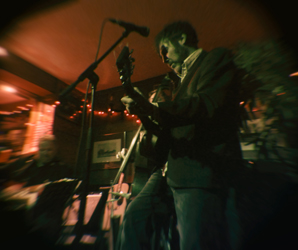
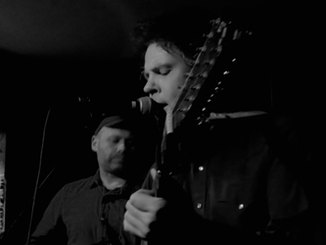
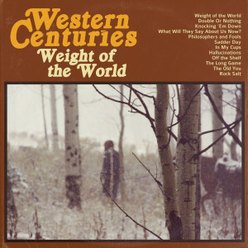
Western Centuries head over to the UK and Ireland for the first time later this month with 18 shows penned in over a four week stretch. Exciting news given that their album Weight Of The World was a fixture in many of last year’s top ten lists with this fine quote summing them up quite neatly.
“If it seems crazy to compare any band today to giants like the Band and the Flying Burrito Brothers, then call me crazy, but Western Centuries is the country supergroup we’ve been waiting for: three first-rate lead singers, each of whom writes solid, heartwarming and heartbreaking country songs, together in one band.” —Kristin Cavoukian, Exclaim! Magazine
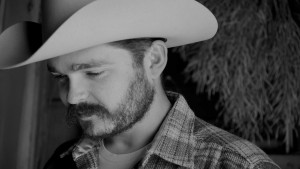
Comprised of Seattle-based country musician Cahalen Morrison, jam band veteran Jim Miller (co-founder of Donna the Buffalo) and bluegrass-by-way-of-punk rock songwriter Ethan Lawton, Western Centuries grew out of a solo project of Morrison’s called Country Hammer. Having enjoyed both the Country Hammer album and Weight Of The World Blabber’n’Smoke was glad to be offered the opportunity to speak briefly with Cahalen Morrison as he was preparing for a show in North Carolina last week.
Acclaimed as one half of acoustic roots duo, Cahalen Morrison and Eli West, Morrison’s solo debut Country Hammer, released in 2014, surprised many given that it was a full blown country album with a band in tow. Regarding this apparent change in direction Cahalen explains, “That’s music I’ve played really since I was a kid and when I was in bands back home in New Mexico we played country music. I felt it was just a fun thing to change from an acoustic set up to rock and roll a bit”. While Country Hammer was a solo project with all songs written by Morrison, Jim Miller played on the album and sang two of the songs and pretty soon it evolved. “Well Ethan was in the band as well playing drums and singing and we started bringing in tunes that both Ethan and Jim had written. So we decided to change the band name so it didn’t look like it was me and my band with some other folk just sitting in and singing some stuff. With Western Centuries it’s equal duties for the three of us.”
There’s a great deal of variety on Weight Of The World with honky tonk songs, beer stained laments and cosmic cowboy observations all jostling for space. With three singers and songwriters on board reviewers have often made comparisons with The Band particularly with regard to Miller’s songs. Asked about this Cahalen replied, “I can see the comparison and it can be useful for people to hear that and get a hold of it and say, “Well I like The Band so maybe I’ll like these guys.” And we all love The Band and that kind of vibe of three writers and three singers all sharing and collaborating so I’d say that the comparison is pretty accurate. It makes the show great fun for us. To get to do all this different stuff, to be able to sing lead then have a break and sing harmony and then I’ll jump behind the drums and Ethan will get up on guitar and sing his songs and throughout the show we all switch around on electric and acoustic guitars”. As for other influences that reviewers have mentioned such as seventies country rock bands including The Burritos and The Nitty Gritty Dirt Band he stated, ” it’s hard to say what has influenced us because we’ve all heard bands like those. But we all listen to George Jones and things like that so it just all kind of seeps in and happens.”
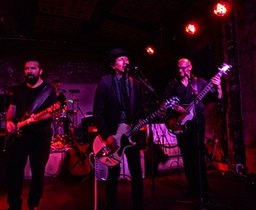
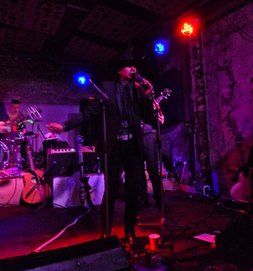
When Blabber’n’Smoke reviewed Weight Of The World I mentioned that Philosophers and Fools was perhaps the first country song to mention the dating app Tinder thinking it to be a cunning pun that fitted in with the song’s imagery about love burning out but this theory was blown out of the water when I asked Cahalen about this. “I didn’t realise it when I wrote it but it does work out to be a funny little thing that accidentally happened. So I wasn’t singing about the Tinder app but it’s a funny coincidence”. And while some of Morrison’s lyrics are meaty such as “I’ve seen the weight of the world crumble with an easy equation. I’ve seen the weight of a man gone to hell, cryin’ he don’t understand,” (he draws from writers such as Gabriél Garcia Marquez, cowboy poet Waddie Mitchell, and Cormac McCarthy) they’re delivered with an undeniable sense of good time freewheeling fun so I asked Cahalen what the live shows are like. “We generally have a lot of dancers and most of the places that we play they’ll clear the chairs for a dance floor. We definitely have a good time on the stage and I sure hope the audience does too. They seem to.” As for the band’s debut visit over here, Cahalen is looking forward it. “I’m excited to be coming over with the band. I’ve been over so many times with Eli and I’ve got lots of friends that I’m excited to be seeing again. I really love Scotland, it’s my home away from home so to speak and I’m really excited about playing at Kilkenny Roots, I’ve heard really fun things about the festival. We’ll have Leo Grassi from Nashville on pedal steel and Travis Stuart from North Carolina on bass playing with us.”
We ended our chat with Cahalen talking about future plans, “In August we plan to be recording in Louisiana for a new album which will probably come out next year. It should be fun, we’ll be down in Cajun country and I reckon some of that will rub off on the music.”
Western Centuries’ tour commences on 19th April in London and will include two shows at Kilkenny Roots Festival and five Scottish dates. All tour information is here.
Tonight was a welcome (and much overdue) return to Glasgow from Texan Alejandro Escovedo who is touring on the back of his acclaimed (and much overdue) album Burn Something Beautiful, his first in five years. A fascinating character and one who might conceivably be worthy of the accolade “legend” Escovedo straddles the worlds of punk, Americana, Latin and Mexicana music. His first band, the Nuns, were the support band in San Francisco for the final Sex Pistols gig and with Rank and File and True Believers he was a prime mover in the rootsy alt country scene of the eighties. Solo albums commencing with Gravity (in 1992) were critically acclaimed with No Depression magazine declaring Escovedo “Artist of the Decade” at the end of the nineties. A struggle with hepatitis in the new century threw a spanner into the works but with the assistance of some earnest fundraising from his musical community and beyond he returned to recording and live appearances. He has collaborated with numerous artists familiar to these pages including Chuck Prophet, Peter Buck, Carrie Rodriguez and for this tour Sacri Cuori’s Antonio Gramentieri.
So it can be reasonably argued that the packed crowd tonight were expectant, memories of previous shows in King Tuts and the Arches bandied about, expectations high and for the most part they were not disappointed. Escovedo, now in his mid sixties but as dapper as ever threw us a show that was high on energy; primal slabs of rock’n’roll with chest clenching bass notes rumbling away this was the Escovedo who briefly appeared on the bar band grooves of his 1997 side project Buick Mackane where he explored his inner Iggy Pop. The opener Can’t make Me Run was a slow burning inner city groove with guitar squalls and a squalid sax solo with the closing refrain of “Don’t give up on love” overwhelmed by a cacophonous sax introduction into the raw rock riff of Shave The Cat which welled into a ferocious wall of noise, visceral and pummelling. Taking no prisoners they then slammed into Beauty of Your Smile quickly followed by an old favourite, Castanets, a mutant child of Chuck Berry with some glorious guitar riffing from Gramentieri.
Time for a breather and as Escovedo strapped on his acoustic he said hello and offered some observations on Austin over the years which led (naturally) into a song he co wrote with Chuck Prophet, Bottom Of the World, with the versatile band turning down from 11 on the amps to deliver some sweet sounds. Sensitive Boys, which followed, was a slice of autobiography and a touching tribute to fellow musicians, some now fallen by the wayside. Sally Was A Cop opened with some inventive percussion as it sparkled into sight, the dramatic lyrics woefully resonant of our times before the slam-dunk guitar onslaught of Horizontal followed.
Curfew time approached but this was cast to the wind as Escovedo paid tribute to his backing band (which he had only met the day before the tour), his encounters with Bruce Springsteen (and the scary Little Steven) and of his friendship with tonight’s promoter, Kevin Morris, whose wedding Escovedo attended in Austin a few years back. The encores commenced with the panther like prowl of Everbody Loves Me before he discarded his guitar for a dub like version of Leonard Cohens’ A Thousand Kissed Deep followed by Dylan’s Just Like Tom Thumb’s Blues. With the band departed he then played a request, I Wish I Was Your Mother, reminding us that he’s as capable of pulling the heartstrings as pummelling us into submission. A satisfying end to a very satisfying night.
As good as Escovedo was several in the audience were equally excited to see Don Antonio, AKA Antonio Gramentieri of Sacri Cuori unveil his new album which was released today. A wizard on guitar Gramentieri is also a master of texture and style, a rock’n’roll Morricone who grafts American music and cinematic Italian pop and rock creating a fairly unique sonic experience. As American culture conquered the West in the latter half of the last century, various nations devised their own versions with Italy being perhaps the most noteworthy especially in the sixties and early seventies when Italian cool was as hip as Hollywood cool and resonated worldwide for a while before the world moved on. Gramentieri plugs into this vibe with his music populated with dashes of Morricone and Rota along with a slew of Italian pop composers including artists such as Riz Ortolani, Armando Trovajoli and Piero Umiliani, composer of the song forever associated with the Muppets, Mah Na Mah Na.
As Don Antonio, Gramentieri was accompanied by Denis Valentini on bass (and sublime whistling), Franz Valtieri on saxophone and keyboards and Matteo Monti on drums and percussion. The quartet were later to prove more than ample as a shit kicking roots rock band as they laid down the law with Escovedo but for their own set they roamed across a fine palette of musical colours and textures, the percussion and keyboards especially inventive and intriguing. From John Barry like spy riffs to Morricone soundscapes and mondo Hollywood twist extravaganzas they were just jaw droppingly good. In between songs and tunes Don Antonio took us on a tour of what he called Italiana (“not Americana” he insisted). Explaining that as he grew up he and his peers all wanted to be Americans but finally decided that their tongues were more suited to delivering their own Adriatic version of the fabled land. The show was a through a kaleidoscopic sonic tour of his Italy and he was witty as he acknowledged that songs by the likes of The Scorpions and Simple Minds were not going to cut in the Romagna rock’n’roll circuit.
They opened with the tingling Lontana, an immediate leap into Cinecitta sounds with sinister vocals, whistling and prowling sax as Don Antonio summoned up some dreamscape guitar. Coffee can percussion and amplified slaps on the sax led into a throbbing, almost psychedelic instrumental with shards of guitar splintering throughout which eventually morphed into a Dick Dale like groove with Valtieri allowed full rein on a shrieking sax solo. Sunset, Adriatico was a glorious swoon of a tune which recalled Brian Eno’s vision of astronauts listening to alien country music in space. We were brought back to earth with a bump de bump on the thrilling Baballo, a parped sax fuelled dance frenzy, a mutant variation of the twist which owed as much to Alan Vega as it did to Tin Pan Alley.
An all too short set but a thrilling glimpse into the many-mirrored worlds of Don Antonio and his excellent band and judging by the audience’s reaction one opening set you really don’t want to miss.
Andrew Combs‘ 2015 album, All these Dreams, catapulted him to the forefront of modern Nashville pop music. Away from the turgid embrace of the country bro’s he was mining a rich seam of sixties melodicism inspired by the likes of Roy Orbison and Jimmy Webb. His follow up, Canyons Of My Mind (a nod perhaps to Bob Lind’s mid sixties hit, Elusive Butterfly), is a more complicated affair, a heady mix of his tried and tested melodies with strings along with a tougher, punchier approach. This is evident from the beginning as Heart Of Wonder opens the album in dramatic fashion as his wavering voice proclaims, “I have run through the valley, I have stormed the shore” over a portentous beat. Like a storm cloud the song darkens, Combs glowers like an old testament prophet as a gnarly electric guitar starts to crackle before bursting into an angry solo over a insistent jangled piano. Riding the waves the song dips and rises before bowing out with a fierce sax solo leaving the listener somewhat exhausted.
It’s a bold start, an indication that Combs has something on his mind and it turns out that much of the album is inspired by his readings of the likes of Charles Wright and Jim Harrison, poets who have hymned the American wilderness. So while there are moments of countrypolitan bliss as on the free flowing Rose Coloured Blues (which recalls Glen Campbell) much of the album is darker, informed by ecological concerns and the current state of his nation. The lead single from the album, Dirty Rain exemplifies this as Combs sings of, “Poison River, muddy water…plastic people stacked in towers with nowhere to go.” That he sings the song in a plaintive voice over a building sweep of strings is dramatic, the end result like Roy Orbison singing a lyric by JG Ballard. Blood Hunters is a cold glimpse into a feral dystopia, the song fuelled by jagged shards of guitar while Bourgeois King is a parable which rails against the bourgeois king who wants to build a wall to keep us safe and promises to make the country great again. No prizes for guessing who this is about but Combs delivers it with a huge sonic palette starting the song out as a jagged bluesy wail before it descends into a smorgasbord of unleashed strings and flute recalling the free jazz of the sixties.
These diatribes sit within a brace of songs that continue in the vein of the previous album. Aside from the aforementioned Rose Coloured Blues there’s the Sixties gaslight romance of Hazel, part Greenwich Village, part Parisian chanson. Lauralee is unabashedly romantic recalling the sound of David Gates’ Bread while What It Means To You is a good old-fashioned country styled waltz. There’s a further twist as Combs slips in two songs, Sleepwalker and Better Way, which have a fine full bellied band sound with a prominent bass sound, the latter in particular indebted to the sound of Joni Mitchell circa Hejira. All together they add to the variety on offer but Better Way especially might nod to another direction this eclectic artist might follow.
Canyons Of My Mind is unquestionably a move on from its predecessor, a songwriter flexing his muscles and casting his eye around. Given the results Mr. Comb is shaping up to be considered in the same breath as the likes of Jackson Browne if he continues to forge ahead.
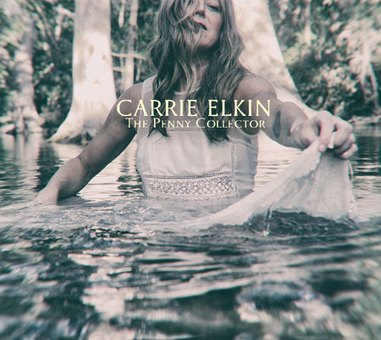
Carrie Elkin’s first solo album since 2011’s Call It My Garden is as diametrically opposed to its predecessor as one could possibly imagine. While Call It My Garden was full of chuckles and the sheer joy of playing The Penny Collector is a sometimes sombre affair. Written within a tumultuous year that encompassed the joyful delivery of her first child and the sorrowful passing of her father Elkin has delivered a meditative collection of songs with a wonderful production from Neilson Hubbard. Paying tribute to her father on several songs along with ruminations and memories, pain and loss and joy intermingled, the album gives full rein to Elkin’s glorious voice while red dirt Austin country gives way at times to an almost chamber folk sound filled with cello, violin and viola. The arrangements throughout are excellent as are the players. Producer Hubbard wields drums and percussion to great effect while Will Kimbrough on guitar is at times spectacular. There’s a heady mix of yearning ballads (at times reminiscent of Emmylou Harris’ best work), evocative American vistas and in the midst of these some sparkling, invigorating and punchy rock.
The album opens with the impressionistic Americana of New Mexico as a plaintive acoustic guitar is enhanced by Kimbrough’s atmospheric sunset squalls, the stage set for Elkins to embark on her voyage from birth to death as she sings, “I can feel the heart beat in everything around me,” her voice echoed by the harmony vocals of her husband Danny Schimdt. There’s a circle of sorts as Elkin closes the album with a similar sonic feel on the crepuscular Lamp Of The Body , the guitars again ethereal and the voices almost hymnal. In between Elkin revisits her youth on the excellent Tilt-A-Whirl which tilts indeed between quiet passages with Elkin recollecting the past and a defiant chorus suffused with the joy of youth. Live Wire is a tale of teenage rebellion with “daddy’s little girl” running off only to find it’s a wicked world and running back home. With an urgent pulse as the song progresses the band capture perfectly the restlessness and confusion of adolescence, the drums propelling the song, lyrical guitars slowing the flow mid song. My Brother Said rings with more confusion amidst an angry beat that is sweetened by a tremendous confection of keyboards and mandolin before a ferocious fuzz fuelled guitar erupts towards the end.
Elkin address directly the grim reaper on the sweeping ballad of And Then The Birds Came, a song suffused with imagery that captures the emotions of bereavement, a moment of loss but also leaving space for those defiant saviours, memory and hope. It’s a sense that’s carried into the next song, Crying Out, which finds Elkin surveying her situation, hanging on to the blessings in her life, a man to hold, a baby on its way but still able to express her grief safely ensconced in her family.
The Penny Collector is an album of beauty. Wonderfully arranged and played, the songs nuanced, a mature reflection on the mortal coil. The album title came about as Elkin’s father was a coin collector and on his passing the family found his hoard of 600,000 pennies, all lovingly collected and preserved. As she says in the liner notes, “My dad had a way of finding value and delight in the tiny things that other people might walk past,” and Ms. Elkin has immortalised him with this excellent album.
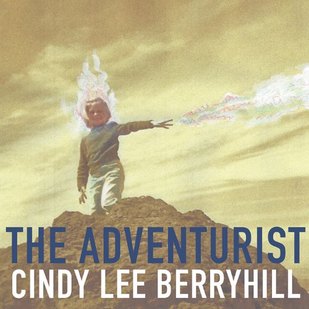
Cindy Lee Berryhill was a founding member of the “anti folk” movement in New York in the 1980’s before moving to California and delivering two albums that delved into the genius and naiveté of Brian Wilson. Garage Orchestra and Straight Outta Maryville married her quirky songwriting to an equally quirky use of percussion, woodwind and strings not dissimilar to Tom Waits’ discovery of Harry Partch. The Adventurist is her first release in a decade, a decade in which much of her time was dedicated to her husband, the famed rock writer Paul Williams as he succumbed to an early dementia before dying in 2013. As is often the case and hurtful as it may seem a release from dementia frees loved ones to carry on, no longer the agony of trying to tease out a sense of recognition from the afflicted, a graceful end to a cruel disease. And so it was with Berryhill who, after Williams’ passing slowly returned to live performance and ultimately was able to record The Adventurist, dedicated to her late husband (and lovers everywhere) and which is a collection of songs described by her as “songs that reflected the love I had for him.”
The album revisits the Garage Orchestra era, the songs simple at heart but adorned with a variety of sounds, some exotic (strings, vibraphone, marimba, horns and glockenspiel), some mundane (including a dishwasher and a wall heater) but throughout Berryhill offers some fabulous melodies while her excellent vocals are often enhanced by some fine harmonies from friends such as Syd Straw. The lyrics deserve delving into, opaque as they are in not being simple love songs or memories apart from the fairly direct realities of caring for a loved one on the sting driven baroque pop of Somebody’s Angel. There are glimpses of the early rush of a new relationship within the lush guitars of Contemplating The infinite (In A Kiss) while the title song is a heady tumble into the unknown as Berryhill delivers an almost surrealistic fantasy that’s half sixties spy story and half safari, all contained within a dizzying spiral of strings and things, hammered plucked or picked.
There’s so much here to explore and the album repays repeated listening. There’s an immediate attraction to the opening song, American Cinematography, with its Beatles’ like guitar refrain (although the piano gets wackier as the song progresses) and I Like Cats/You Like Dogs is a glorious slice of crunchy pop folk pumped up with magnificent scrabbled guitar dashing through the horns towards the end. Less immediate but ultimately as satisfying is the seductive swell of Deep Sea Fishing which floats on a fuzzy keyboard riff and the towering Gravity Falls which is like slo mo grunge. Towards the end Berryhill strips her feelings down on the orchestral pop of An Affair Of The Heart, a melancholic yet defiant song which can be read as a farewell to her husband which pulses with the heartbeat of LA writers such as Gene Clark. The album closes with an instrumental revisit of Deep Sea Fishing retitled Deep Sea Dishing with Berryhill’s guitars set above the repetitive cycle of a dishwasher that mimics the sound of surf, a fine nod to one of her heroes and a reminder that at times The Adventurist recalls the minor classic that was Brian Wilson and Van Dykes Parks’ collaboration on Orange Crate Art.
The Adventurist ultimately is a triumphant return to the arena for Ms. Berryhill. It’s multilayered, challenging and exciting, her personal story transformed into art. A catharsis perhaps but it’s an album that would be worthy of the forensic pen of Paul Williams, the doyen of rock writing and a very fine memorial.
With a band name that could have featured in Oh Brother, Where Art Thou? The Sweet Water Warblers are actually a concoction of three excellent Michigan singers; Lindsay Lou may be familiar to many here as the singer with Lindsay Lou and The Flatbellys (who wowed their crowds at Celtic Connections earlier this year). Completing the trio, Rachael Davis and May Erlewine may not be as well known over here but a swift Google search reveals critical and popular acclaim for both in the American folk and bluegrass communities. Here all three stand as equals and it may well be said that the sum is greater than the parts as this brief disc is astounding.
With Erlewine writing two songs and Lindsay Lou and Davis one each (the writer taking the lead vocals on each) and one traditional number (with Davis on lead vocals) the EP is a truly collaborative effort. Lindsay Lou plays bass, Erlewine guitar, keyboards and fiddle and Davis guitar and banjo and the music is an engaging mixture of folk, soul and blues but the standout element is the entwined harmony singing from all three on all of the songs here. Despite the variety on the EP (which reflects each writer’s individuality) the harmonies knit the disc together recalling the likes of Sweet Honey In The Rock and The Roches at times.
Lindsay Lou’s Sing Me A Song opens the EP. An acapella showcase for their voices it digs deep into the Gospel, spiritual and hymnal roots of American music with a slight sugaring of doo-wop at times. Erlewine’s Too Soon is a delicate salute to late night fun as the sun comes up while the band still plays. Her voice is a delight here, slightly reminiscent of Maria Muldaur, as are the harmonies. Her other contribution, With You, is a magnificent ballad dripping with graceful piano and guitar and it brims with a romantic yearning.
Davis’ contribution, Lazarus, is a rootsier affair with an Appalachian air as she sings of a mother swept away by a biblical flood and hoping her bones will return home. With aching fiddle from Erlewine it’s spine chilling. The one traditional number here is actually a mash up (if one can use that term when writing of roots music) of Amazing Grace set to the Animals’ arrangement of House Of The Rising Sun and for the most part it works. Davis wails with a bluesy abandon and riffs away on electric guitar but again it’s the harmonies working their magic that lifts the song.
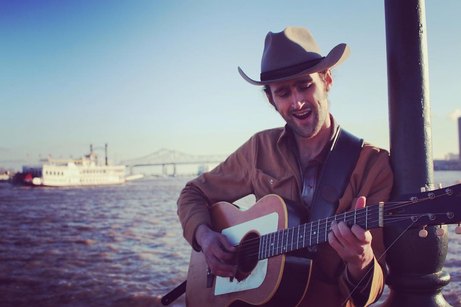
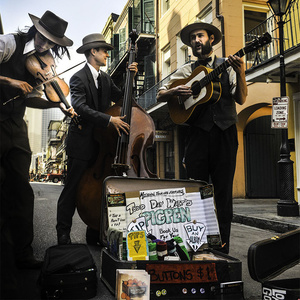
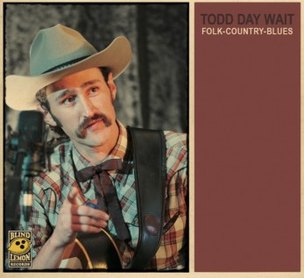
At the tail end of last year I heard this album from a guy from New Orleans called Todd Day Wait. It was an unassuming listen, no flash or fandango, just some very fine folk, country and blues which, incidentally, was the name of the album. There wasn’t that much info on Todd on the old interweb thing but lots of video of him and his band, Todd Day Wait’s Pigpen, busking around America. I described the album in a review as ” a bit of a gem in the vein of a down home Leon Redbone or a pared back Pokey LaFarge with its roots in the pantheon of American roots legends” and it’s been on regular rotation over the months. The album, Folk-Country-Blues, was released on a German label, Blind Lemon Records, which indicated some European interest and sure enough Todd announced a couple of months back that he was swinging through the continent over March and April. Strangely enough I heard about that via Ags Connolly, a good friend of Blabber’n’Smoke and who turns out to be a buddy of Todd so when I eventually was able to talk to Todd on a day off in Vienna the first thing I asked him was how he knew Ags.
I met Ags when he and Jack Grelle did a tour in the States a year or so back. They came to New Orleans and stayed at my house, Ags is really good, he’s got a great voice and great songs, he nails it. And then when I was in the UK last year I played a couple of shows with him.
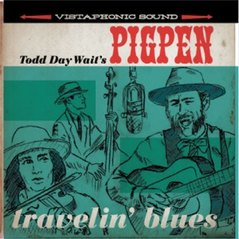
I was really taken by your album Folk-Country-Blues and thought that it was your debut but looking at your website I see that you have an earlier mini album, Travelin’ Blues available.
Yeah, that’s six songs I did in Georgia with upright bass and fiddle, no overdubs, just a couple of mics, the bare bones but I like to just capture the performance. Before that I had some demos I used to sell at shows but I’ve stopped printing them now I’ve these two discs.
So you recorded your first official disc in Georgia but then went to Germany to record Folk- Country-Blues?
Yeah, the owner of Blind Lemon Records saw me playing in North Carolina a few years back and after the show he came over and asked if I’d like to go to Germany to record an album so I said, “Sure, if you pay for it” and he said, “Of course!” And then at the start of this tour before we got on the road we went back into the German studios and recorded four songs which we’re planning to put out as a 45. And then when I get back to the States I’m going to record some more songs and again release them on vinyl so by the end of the year I’m hoping to have two 45s out.
You capture a fine old time feel and you mention folk like Jimmy Rodgers, Charlie Poole and Lefty Frizzell as inspirations.
I really like stuff going back to the 1920’s when you had people like Jimmy Rodgers and Riley Puckett. You know white guys playing blues stuff and black guys playing white stuff and then there’s folk like Bob Wills and his Texas swing and then you go into the 1930’s and there’s Ernest Tubb and Floyd Tillman and I think that they all kind of started out from the same place and a lot of it goes back to Jimmy Rodgers.
So when did you start listening to music like that
I’m not really sure. My grandma played piano in the church and her aunt was a travelling vaudeville musician. So my grandma learned stuff from her and would not only play church tunes but would also play songs from the old days so I heard a lot of songs through her. The first show I went to was a Willie Nelson show in the nineties back when he was doing a lot of shows in farming communities as a part of Farm Aid. He played a show next to my grandma’s property and I really liked him and if you like Willie Nelson then you can backtrack with him into Texas music until you hit those singers like Tubbs and Frizzell and again back to Jimmy Rodgers. And through liking Willie I heard Merle haggard and that took me into the guys from the sixties. And listening to them I wondered what they liked, what they were listening to and so I looked into their influences. So really how I got into this music was really just backtracking.
When did you start playing?
I started playing guitar in my early teens but I remember writing little songs when I was just a kid. I remember singing little songs and writing them down and showing them to my sister and her then making fun of me. I’ve always thought that music and songs are a cool language, you know, writing your thoughts down and singing them and adding a melody. I’ve always loved doing that since I was young.
I read that you were living in Missouri but in 2009 you just decided to up sticks and go on the road so you just put all your possession on the kerbside and left.
Yeah. I’d been playing music for a couple of years by then. I’d quite often just travel. You know, jump in a car with my guitar and just go some place and I’d been doing that for several years but in 2009 I kind of just realised that I had to jump in all the way. There was no point in doing it just halfway so I just said that’s it. I took everything out of my house, put it on the kerb and within like five hours people came and took it away and I was ready to leave.
So did you have like a yard sale to get enough money to get up and go?
No, I just gave it away; it was just old furniture and stuff. I didn’t think about selling it but now you mention it maybe I should have. I’d saved up about $1200 but just a week before I was set on leaving I saw a Fender Rhodes piano on sale. It was $600 so I spent half my money buying that and I went from Missouri to California with the 600 I had left. I had an old white Chevy van and I loaded the piano, an amp and some other stuff and went off. I had a buddy who came along for a little bit. We went to California, spent some time out there and then I headed down to New Orleans.
So why New Orleans?
Well I went there in 2006 and then another couple of times before 2009 and I realised that you could make some money just playing in the streets in New Orleans, you don’t get harassed or arrested. And there’s just so much music there. Coming from Missouri, OK, there’s music there but nothing like what was going on in New Orleans. There’s music in the streets, all the nightclubs, and I realised I could live there pretty cheap. First year I was there I lived in my buddy’s kitchen. He had an apartment which was one room and a kitchen and a bathroom and he let me sleep underneath his kitchen table.
I’ve seen several videos of you busking. Do you have a regular group of people you play with or is it just whoever turns up?
I knew what I wanted to do but it’s kind of hard to convince other people to do it for basically no money so what happens is when I’m in New Orleans I use people who live there, when I’m in California I use people who live in California. I’ve just developed this thing where I can claw people in when it works for them. It’s a lot easier for someone in New Orleans to just play locally rather than ask them to travel all over the mid west for next to no money.
What about this tour you’re currently on? You’re going through Germany, Italy, France, Austria and Switzerland. Have you brought a band with you on that?
Yes. This is my fifth time over here and I’ve brought a fiddle player (Lyle Werner) and a steel guitar player (Nikolai Shveitser). We’re using local upright bass players for some of the shows and then for the last two weeks we’ve got a bass player from Italy. So some shows as a three piece but most as a four piece.
The pictures I’ve seen on Facebook look as though the shows are going well.
Well I just love playing Hillbilly music and we throw in some country, jazz and swing. I mean basically it’s all the same stuff and we’re playing songs from the twenties through to the fifties, songs with lots of lyrical content and then ones you just want to dance to. So I think that if you’re young or old, no matter what your background, you can come along and enjoy the show.
On the album you have two cover songs, one by Jimmy Rodgers, and one by Gus Cannon. How did you go about picking those?
Well I just love playing Jimmy Rodgers’ songs so there had to be one of those and the Gus Cannon song, well, Thomas had heard us play it and he wanted it on the record and if the boss man says he wants something I guess we gotta do it. It’s always good to have the boss man on your side.
And as you said earlier it was Thomas Schlieken who heard you play in a bar in the states and invited you over to record the album.
Yes, you never know how this crazy world works you know. Some of the biggest opportunities I’ve had have been in the most unlikely circumstances. I met the producer of my first disc at a farmer’s market in San Diego. His name is Mark Neill (producer of The Black Keys and Los straitjackets amongst others) and he’s helped me out ever since. It was just the sort of place where you’d never expect to meet someone like that. We were playing on a Thursday afternoon at this crappy farmers market. I’d found out that you could make some money just playing these farmers markets across the country, some are good and some not so good but this one was really terrible, we were standing in the glare of the sun in the dirt and sand and Mark saw us, you never know how this world works.
Serendipitous indeed. You must make a good impression if these guys just happen across you and say, “Hi, let’s make a record”.
Well I’m a big baseball fan and I just grew up knowing you can’t hit the ball if you just sit and wait. You got to get up to the plate and take your swing and you never know how it will work but you just need to give it your best swing and then you never know. So that’s what I’ve been doing. I was playing on my own and then as a duo, a trio and now there’s four or five in my band and the more people who see you play and then maybe book you allows you to get more money to hire more people for the band and play more places. And people seem to like country music, the reason I’m in Vienna right now is that last time I was over here someone saw me and said, “I want you to come to Vienna next time”.
Any plans to come back to the UK anytime soon.
I’d love to. I plan to come to Europe at least once a year and I know that folk like Jack Grelle have a great time when they’re playing in Britain so I’d hope to come back hopefully next year. I’m hoping that these singles we’re bringing out get a few spins and spread the word. They’ll have a digital download code but I’m hoping people will like the singles themselves. That’s the way I listen to music, I don’t have a CD player so I listen to records and I think that more and more people are doing that. It’s a great experience, having your friends over and they go through your collection, to me that’s an ideal Friday night, let’s listen to records. It’s so much more tangible, singles, ten inchers and albums, I think people just like them.
So you’ve got a couple more dates in Europe and then it’s back to the States.
When we get back we’re going up to Cincinnati to play a Merle Haggard tribute and then it’s back to the west coast for a six-week tour so it’s a busy time of the year coming up.
We left Todd there but followed his tour adventures including two sold out nights in Paris. Hopefully he’ll make it to our shores in the not too distant future and there’s always the prospect of a couple of cool 45’s to look forward to.
I presume that there’s a gender imbalance in Americana Music, after all there is everywhere else. For every Lucinda Williams there are ten males who will hog the limelight but it seems that recently there has been a welcome upsurge in female artists who are making waves. Courtney Marie Andrews and Margo Price especially come to mind and on the evidence of her second album Karen Jonas should jump to the front of the queue. From Fredericksburg, Virginia, Jonas, like Price (and Sturgill Simpson) grabs a traditional country sound and drags it squealing and bleating into the present. She has the Bakersfield Sound with some honky tonk chops down to a tee while she’s also able to turn in a yearning ballad. She sounds great, sometimes sultry, sometimes sassy and her lyrics range from her thoughts on Dwight Yoakam’s tight fit jeans to a country rendition of Shakespeare’s Hamlet.
The album opens on a highlight as the honky tonk strains of the title song sashay into ear sight with fiddle and twangtastic guitar to the fore as Jonas sings about her entree into the world of beery sad songs. It’s all down to her boyfriend leaving her apparently as she needed her heart good and broken before she could sing along. The dim fellow then gets compared to Buck Owens and Dwight Yoakam with Yoakam singled out for wearing his jeans tighter than Jonas does. It’s a magnificent song, somewhat tongue in cheek but Jonas delivers it perfectly. The following Keep Your Hands To Yourself is a rip snorting warning to another dastardly guy with Jonas well in control of the situation as the song speeds along while Ophelia is a guitar fuelled Bakersfield filed romp which finds Jonas advising womenfolk not to let their double dealin’ men drive them crazy. There’s more country rumble on the The Fair Shake which twinkles with pedal steel and soulful organ over a doleful twang guitar before erupting into an angry outburst.
It’s not all vibrant country strutting. The Garden shimmers with graceful guitar, pedal steel and piano as Jonas recalls a long ago tryst, “I was 17, you were 21″ she sings amidst images redolent of a teenage romance idyll whilst she also harbours a thought that eventually she and her lover will be reunited in the titular garden. The one quibble here is that a squalling guitar solo bursts out midway through somewhat spoiling the mood, a rare misstep from Tim Bray who otherwise is spot on throughout the album. Wasting Time is a ballad with crossover appeal, just ripe for the plucking while Wandering Heart harks back to the likes of Patsy Cline as does the country torch of Why Don’t You Stay. There are echoes of another Country heroine on Whiskey and Dandelions where Jonas taps into Dolly Parton territory on a song about a woman who dreams about getting enough money to, “buy a little house where we both could live” but is actually content with her lot and her relationship singing, “Don’t buy me roses and bring me wine, I like cheap whiskey and dandelions”.
Jonas closes the album with the sly and slightly louche tale of Yankee Doodle Went Home, her voice a smoky delight, the band in a late night soul jazz groove, a fine end to what is a great album.
Blabber’n’Smoke doesn’t normally post press releases but this is so good we just had to share it.
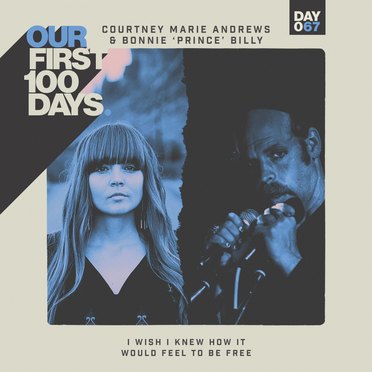
Started in conjunction with Secretly Group and 30 Songs, 30 Days, Our First 100 Days aims to raise funds for organizations supporting causes that are currently under threat by the Trump administration. Today we’re happy to be able to share the new duet from Courtney Marie Andrews and Bonnie ‘Prince’ Billy’s Will Oldham. Andrews and Oldham trade vocals on Simone’s civil rights anthem, the hope seeping into every lyric and flourish. You can check it out on Consequence of Sound and head over to Bandcamp for the whole list of artists including and here for information on the project.
Andrews and Oldham had this to say about choosing this specific song to fit our times:
Courtney Marie Andrews says “”I Wish I Knew How It Would Feel To Be Free” is an amazing gospel tune that the incomparable Nina Simone covered and it became an important song for the civil rights movement in the 60s. A lot of these issues are still relevant today and I wanted to sing a song that had a palpable voice for those issues. I’ll never know what it was like to walk the rocky path that Nina did, but her power and unyielding strength was and is something to aspire to. “
“We figured to make a song that would keep folks’ minds, tongues & fingers in motion. James Baldwin: ‘This is not the land of the free. It is only very unwillingly & sporadically the home of the brave.’” – Bonnie ‘Prince’ Billy
For more information on 30 Songs, 30 Days, Our First 100 Days see here
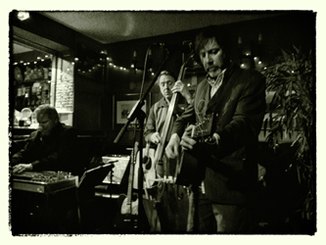
At times, it seems like life is just one big shit storm, the past year a steady downpour of blows against the empire of anyone in their right senses. So any rays of sunshine are to be welcomed and one such was the welcome return of Peter Bruntnell (a cult hero according to The Guardian to Glasgow just a few months after his last visit to the city. Back in September Bruntnell and his band tore the roof off as the guitars gyred and gymbled with some ferocity. As that Guardian article pointed out Bruntnell is not only a psychedelic guitar warrior but also a master of the perfectly crafted pop song. Tonight this side of his coinage was expected to be at the fore as he proffered the UK debut of The Peter Bruntnell Trio; Bruntnell on acoustic guitar, Scots string wizard Iain Sloan on pedal steel and veteran Danny Williams (ex Black Grape and St Etienne) on double bass.
The trio, packed into a corner of the tiny room with a capacity audience just inches away didn’t disappoint. The opening Clothes Of Winter was a winsome reminder that Bruntnell follows in the footsteps of writers such as Nick Drake, a sense reinforced by the following Sea Of Japan while Tin Streamer Song was suffused with memories of a lost way of life. The songs were delivered with a creamy melancholic air, Williams supple on bass, Sloan winding his way through the melodies and they turned in magnificent versions of Here Come The Swells and an awesome By The Time My Head Gets To Phoenix. So far so sublime but the trio (despite this being their first time together) expanded their sound with Sloan picking up his telecaster and Williams proving to be quite adept at coaxing sounds from his bass with his bow with the first murmurings heard on John, a song that pays tribute to Mr. Cash that had some stormy guitar from Mr. Sloan. They ventured further into the hinterland with a stunning delivery of Cold Water Swimmer as Williams bowed a low droning backdrop before Bruntnell and Sloan added some fractured psychedelic haziness as the song slowly segued into the summery bliss of Domestico, tonight given a tougher approach than on the recorded version.
Allowing his compadres a breather Bruntnell played End Of The World solo which was quite mesmerising, a quiet moment equal to the best of McCartney as on Blackbird. With the band back on St. Christopher flowed sweetly while Have You Seen That Girl Again dipped into power pop territory. The crowd were loving this but all too soon the curtain dropped allowing the one encore which surprisingly saw Bruntnell dipping into the catalogue of another English songwriting genius as he performed Roy Harper’s Another Day. A wonderful end to a fantastic show.
The evening opened with Norrie McCulloch, Stirling based singer/songwriter who has recently released the excellent Bare Along The Branches. I saw Norrie play a very fine album release show a few weeks back but have to say that tonight topped that. Playing a 12 string acoustic for much of the show added resonance to his playing which was further aided by the electric guitar of Dave McGowan who came on stage for several numbers. The opening Calico Days (from second album These Mountain Blues) positively skipped with joy and celebration. It’s a song that increasingly reminds me of Fairport Convention’s Come All Ye, not sounding similar but a fellow jubilant hymn to comradeship. From the new album the languid Little Boat floated on McGowan’s liquid guitar fills, Frozen River rippled with a folky lilt and Around The Bend satisfied all with its down-home Neil Young like honeyslide harmonica intro. Best of all though was the closing song which was a tremendous performance from McCulloch and McGowan of Beggar’s Woods, a song soaked in memories and tonight glowing with McGowan’s silvery playing.
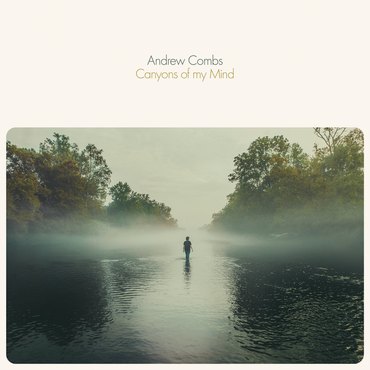 Andrew Combs‘ 2015 album,