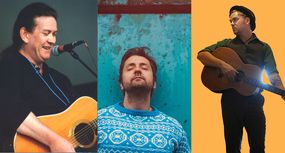
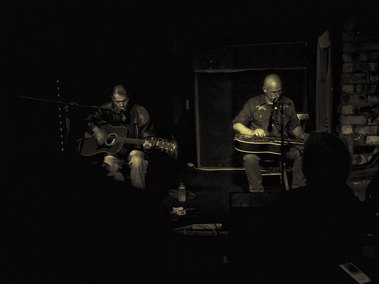
Malcolm Holcombe and Jared Tyler. The Hug & Pint. Glasgow. 18/5/16

P1050108 copy

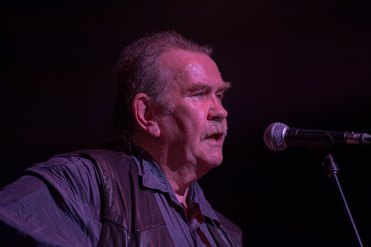
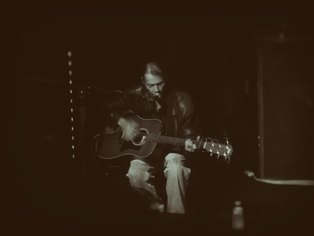
Malcolm Holcombe, on a return visit to Glasgow,  showed once again why he is considered by many to be a living connection to the age old Appalachian tradition, the front porch musician picking away  and plucking inspiration from the land, the folk around him, the music wiping away, if only for a moment, the cares and worries of the day. Holcombe, from North Carolina, is a primitive of sorts, his music unpolished, his voice rough and ready, his presence, enveloped in oversized jacket and jeans, with sunken cheeks and lank hair, the antithesis of show biz. Yet this is a man who has Steve Earle and Emmylou Harris turning up on his records, records which portray him as a master purveyor of powerful blues country and folk songs while live he can seem like the last in a line that includes Son House, Mississippi John Hurt, Dock Boggs and Doc Watson, his visceral performance riveting. There’s a quote from Ray Wylie Hubbard saying, “He scares the living bejesus out of me, as he writes from a place only a true poet knows, and channels ancient mountain tones from dark overgrown hollows where ghosts and spirits moan and plead their cases to the devil.” Well, tonight he did just that.
P1050107 copy

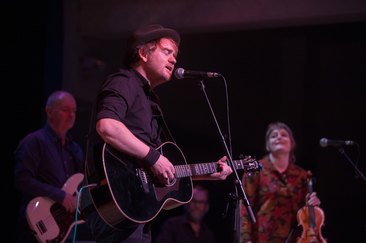
Curled up on his chair, rocking back and forward at times, his guitar cradled in his lap, Holcombe was a force of nature. He seemed to attack his guitar at times, flailing against the strings, wringing out dramatic chords and flashes of picking, his manic rhythms counterpointed by the excellent Dobro playing of his long standing comrade, Jared Tyler. There were gutbucket rushes and creepy excursions into deep dark territories, songs for the working man such as Papermill Man and backwoods poetry as on Savannah Blues. There was a bruised tenderness on For The Mission Baby and a burning anger on Another Black Hole. In between several of the songs Holcombe proved to be a wellspring of somewhat gnomic advice as he recounted events from his past including  a paranoid encounter with a neon bikini clad woman on Malibu beach culminating in the sublime, “If your dog tells you what to do and his lips aren’t moving, don’t do it”.  More seriously, he left the audience in no doubt where his political alliances lay, gouging into the Bushes and offering support for immigrants most pointedly on his encore of A Far Cry From Home. On this song, Holcombe pointed out the connections between North Carolina and the Celtic homelands (mentioning Maura O’Connell who recorded the song with him) before reminding the audience that his family were immigrants back in the days and that he would welcome those who flee from the horrors of Baghdad.

He might look like a hobo but there’s a heart of gold here and an acute sense of justice. Holcombe is a treasure.
P1050104 copy.jpg

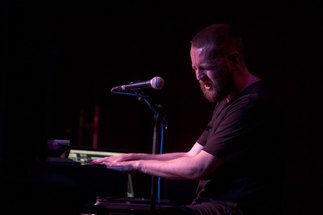
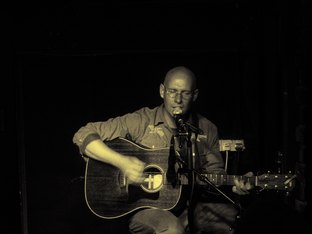
Jared Tyler, Holcombe’s producer and sidekick offered a fine set of songs before the main man came on stage. A fine picker he has a soulful feel to his songs that at times recalled Curtis Mayfield and Ritchie Havens. He offered up a fine take on a Holcombe song, The Door (from Down The River) while a song dedicated to an old Tulsa friend was quite affecting.  Local musician John Alexander opened the evening but unfortunately Blabber’n’Smoke arrived too late to catch him and we apologise for that. Word was he was well worth catching.


Fraser Anderson. Under The Cover Of Lightness. Membran Records

utcol-300x300

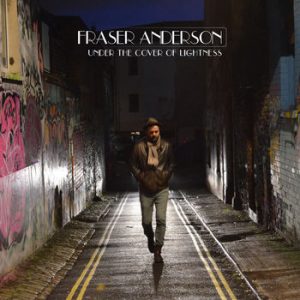
Blabber’n’Smoke first encountered Scots musician Fraser Anderson when he reissued his album Little Glass Box back in 2014. That album featured the legendary Danny Thompson on double bass inviting inevitable comparisons to the late John Martyn. True, Anderson had some of Martyn’s blend of folk jazz and blues about him but his songs raised him far beyond any such comparison.  At the time of recording Anderson was living in France with his family but in 2014 he relocated to Bristol and set about recording Under The Cover Of Lightness. The result is an album that sees him travel further into the tenebrous world of folk jazz; burbling bass, woody cello and supple guitar work all entwined with keyboard, accordion and violin adding colour, his voice with a slight Scots accent an instrument in itself. There’s less of a pastoral feel this time around, the songs darker at times, Anderson reflecting on life love and loss.

Some of these songs are truly beautiful but Anderson quests further throughout the album exploring other avenues,  his new life in Bristol reflected perhaps in the Portishead like reverie of Beautiful Eyes and the street rap of With You All motored by an insistent urban beat. This exploration reaches its apogee on the techno beats of Go On Wide (Part 1), a jarring explosion of keyboards and synthed percussion with Anderson’s vocals reverberating. It’s an audacious number in relation to its neighbours (in particular the languid liquid guitar work of Go On Wide (Part 2) which follows), the two songs a yin and yang pairing of a tumultuous relationship perhaps.

It’s a presumption of course but the album seems to chart Anderson’s life, the opening sumptuous horn and organ fuelled Simple Guidance a young lover’s dizzying ascent into romance, hindsight allowing that perhaps it happened all too soon but the singer has no regrets. Beautiful Eyes is a Parisian dawn tale, the heroine wandering home to listen to Piaf dreaming of her time to come with the beautiful people.  As Anderson narrates, the chorus, sung wonderfully by Bex Baxter, is dreamlike, buoyed by swooning keyboards and trippy effects. Please Let This Go is starkly wonderful. Pizzicato violin underpins Anderson’s pained recollections of failed love before a limpid rhythm and string section draw the song to a close. There’s some healing in the lovely The Wind And The Rain, another string driven threnody that opens with a fragility that’s eventually supplanted by a soulful organ as Anderson reflects and gathers the strength to forge on ahead. Feel is darkly claustrophobic, a menacing blues cluster with savage guitar work (from Ali Ferguson) that recalls John Martyn on I’d Rather Be The Devil. Anderson rushes through the words, his voice billowing like Tim Buckley’s.

As the album approaches a conclusion Anderson bares his soul on the exceptional spoken word With You All. A Beat poem with a naked soul, Anderson recalling Jackie Leven and even Renton’s Choose Life rap from Trainspotting in his delivery as he describes the photographs he took of his first born son and recalls the highs and lows of his life. The final three songs are contemplative reflections, Anderson returning to the chamber folk of Please let This Go peppered with some electronic burblings which add to the atmosphere. Crying From My Heart weeps majestically, the instrumentation simply superb. Five Days is gossamer thin, dappled with spare guitar, Anderson’s supple voice suffused with emotion. The closing song, Rising Sons, rises from an electronic morass growing into a tender salute to his children, now grown but still close to his heart as Anderson closes the disc singing, “I’d choose broken bones over broken homes, I’m here for you my boy”.

There’s an emotional heft to this album that raises it well above the bar. Anderson recalls his peer, Blue Rose Code’s Ross Wilson not only in their shared explorations of the hinterland of jazz and folk (and their expeditions into dance and rap) but also in the ability to convey hurt and loss with an aching beauty. Under The Cover Of Lightness is not, despite the lushness of some of the songs, an easy listen but will reward the earnest listener well.

website

Keegan McInroe. Uncouth Pilgrims.

upalbumcover

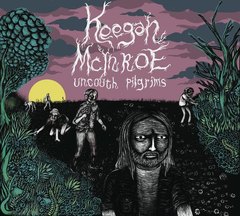
Anyone with a hankering for some good old-fashioned Texan singer/song writing in the fashion of Michael Murphy or Terry Allen would be well advised to check out this fourth album from Keegan McInroe. McInroe has a knack for producing simple sounding songs that are melodic and memorable, honed by years of solo troubadouring through the States and Europe. Simple sounding perhaps but lyrically he garlands them with acute observations and well-crafted tales with much of this album inspired by events on his travels (the album title is a nod to Mark Twain’s European travelogue The Innocents Abroad).  He may be an old-fashioned solo troubadour on the road but here there’s a band of fellow travellers well able to summon up a fine rootsy folk feel or dive into a soulful swampy groove. It’s a lengthy cast list so suffice to say that fiddle, pedal steel, harmonica, mandolin, Dobro, ukulele and keyboards are all added to the basic guitar bass’n’drums set up. Overall the set up works but there’s a dichotomy here with some songs veering well away from the well-travelled folksinger mode.

McInroe nails his colours to the mast with the opening Country Music Outlaw, a witty number in which he maps out his life in terms of his heroes while admitting that he’s just another “shaggy singer of songs”.  Tonight is reminiscent of Terry Allen (particularly in the piano playing) and introduces a theme of sorts to the album, the transient romances common to travellers with Begona, a lovely pedal steel infused song, and Verona, with Dobro and accordion adding colour, continue in a similar manner, the latter alluding to the Shakespearean connections enjoyed by Verona.

McInroe offers up a fine story in a Townes Van Zandt style on the lengthy Woody & Ruth and on Give Me The Rain he recalls Randy Newman both in the melody and delivery. For the remainder of the album McInroe dips into a beefier sound which overall is less successful than the folkier offerings. I Got Trouble works well, a jagged bluesy guitar and gospel chorus and organ combine to create a sense of panic, late nights and drink fuelled paranoia, a theft in Barcelona. There’s more menace in Nikolina, a late night spiked trip down a blowsy jazz ridden blues that could be Tom Waits in his cups. Here McInroe is as far removed from his folky image as can be imagined but he pulls it off, the song quite powerful. The title song however is a pounding jackhammer blues effort that just jars in comparison to its siblings.

McInroe concludes the album with another summary of sorts on the jaunty Lay Down where he details his own travels, no need for heroes here, just him and his guitar, city to city, looking for some love.

Keegan McInroe embarks on another European tour this month with some UK dates included, see here.

website


The Men From Leith: Blue Rose Code, Dick Gaughan, Dean Owens. Queens Halls Edinburgh, May 6th 2016

the_men_from_leith_6-5-16_web_show_info

First off an explanation of sorts regarding this show for those who might not be familiar with Leith. Until 1920, Leith was a separate borough from the neighbouring Edinburgh and even today some Leithers will consider Edinburgh to be a separate entity. This sense of pride in what was a fiercely working class area ( home to the docklands, infamous as the main location of Irvine Welsh’s Trainspotting and still possessing a distinct character from the net curtains of Morningside despite two decades of attempted regentrification), was the thread that ran throughout the show. All three artists have their roots in Leith and tonight they offered up a tribute of sorts to the area in song and words be it the reminiscences of Gaughan, the regrets of ill spent times from Blue Rose Code or the celebration of the working class spirit from Owens. It was a slender thread perhaps but there was a palpable sense of celebration and memory throughout, reinforced by the MC, John Paul McGroarty, Artistic Director at Leith Theatre.

The Men from Leith

Blue Rose Code (Ross Wilson) – appearing at The Men from Leith concert Queen’s Hall, Edinburgh 06 May 2016 Picture by marc marnie WORLD RIGHTS

With three headline acts on the bill the sets were necessarily somewhat shorter than one might ordinarily expect, not a bad thing as such as the audience were treated to concise, almost “greatest hits” shows from the two bands. That’s not to say this was a run of the mill exercise, the first act, Blue Rose Code choosing to open with the extended suite In the Morning, a bold move. One of the many pleasures of seeing Blue Rose Code, the vehicle for Ross Wilson‘s talent, is that it’s a fluid enterprise, he can be solo or a four, five or even 11 piece set up, his words and melodies and his emotive vocals the nucleus around which the players revolve. Tonight it was a four-piece band well able to conjure up the mists and airs of Wilson’s Celtic romanticism as on the opening number and his setting of Robert Frost’s Acquainted With The Night. Wilson’s introspective ballads, the heartbreak of Pokesdown Waltz and a new number, another paean to lost love called Nashville Blue, tore at the emotions. Ghosts Of Leith, a song of regret recalling Wilson’s time caught in the throes of drink was played with Wilson later apologising for the song and explaining that he then wrote his wonderful salute to Leith (and Edinburgh), the song Edina, as a riposte before launching into it to a hugely appreciative audience.

The Men from Leith

Dean Owens & The Whisky Hearts – appearing at The Men from Leith concert Queen’s Hall, Edinburgh 06 May 2016 Picture by marc marnie WORLD RIGHTS

While Wilson and Blue Rose Code offer a poetic folk jazz tinged Celtic freewheeling spirit Dean Owens, tonight supported by his excellent band, The Whisky Hearts, is a more robust affair. Owens is as much rooted in the USA as he is in Leith with the result an exultant mix of Celtic Americana, the stirring opener Dora giving notice that Owens and his band are able to provide a punchy, almost Richard Thompson like clarion call. Fiddle and accordion add a “raggle taggle” folk feel to some of the proceedings while guitarist Craig Ross can bend his strings in best Clarence White fashion. While songs from Owens’ latest album Into The Sea formed the majority of the set (including his warm memories of his late sister on Evergreen) there was of course a huge response from the audience for the song that lent its title to the night, Owens’ Man From Leith. An anthem of sorts, the song transcends its familial origins (having been written by Owens for his father) as it captures the pride of the working man. Tonight’s rendition was powerful, the audience singing along with the chorus. There was a first live airing of Owens’ latest single, the Civil War tale of Cotton Snow given a fine chunky alt country feel while Up On The Hill proved that Owens has a gift for writing memorable and rousing melodies. Throughout the set one was reminded of Owens’ song writing prowess, the songs stirring and emotive and instantly memorable with the closing number, Raining In Glasgow, the proof of the pudding.

The Men from Leith

Dick Gaughan – appearing at The Men from Leith concert Queen’s Hall, Edinburgh 06 May 2016 Picture by marc marnie WORLD RIGHTS

Sandwiched between Blue Rose Code and The Whisky Hearts was Dick Gaughan, the fulcrum for the evening. Despite being born in Glasgow Gaughan epitomises much of what folk imagine of Leith and its working class traditions. Recovering from illness Gaughan doesn’t cut the powerful figure he once did but any loss of vitality was more than made up for by his venerability and he stamped his authority with a ferocious rendition of No Gods and Precious Few Heroes, a fitting song for the day after a parliamentary election which saw a resurgence of the Scottish Tory party. His Leith tale lay in the middle of his song Why Old Men Cry, again, a call out to past generations not dissimilar to Owens’ nods to the past.  A lengthy spoken preamble to his closing song saw Gaughan recalling his early days in Edinburgh’s folk scene and his discovery that there was no shame in singing and speaking in Scots despite his teacher’s disapproval. This led to his spine chilling rendition of Freedom Come All Ye, a song written by his mentor, the late Hamish Henderson and a fine end to his brief set.

The show, part of Edinburgh’s Tradfest (yeah, another Edinburgh festival), was a tremendous success, the only murmurings heard on the night being some questions as to why it didn’t actually take part in Leith itself. A fully refurbished Leith Theatre, currently in the offing, would be an apt space for a return show.

All pictures courtesy of Marc Marnie.


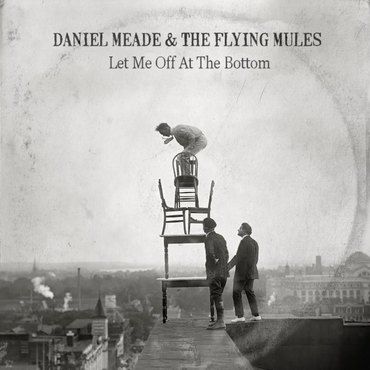
Daniel Meade and The Flying Mules. Let Me Off At The Bottom. At The Helm Records

ath19848

Time then for Daniel Meade, Glasgow’s own hillbilly hell raiser, to raise the bar with his third official release and the first album to feature his wingmen, The Flying Mules. The Mules (Meade – guitar and piano, Lloyd Reid – guitar, Mark Ferrie – double bass, Thomas Sutherland – drums) are well kent faces locally with several regular slots in city bars and are veterans of tours with Pokey LaFarge and Sturgill Simpson. Indeed, they appeared as Simpson’s band on his latest Glasgow date, the US chart topper unsure about appearing before a Glasgow audience on his lonesome at the cavernous O2ABC. Meade himself has recently toured supporting and then playing alongside Diana Jones with several of the songs here making their first appearance. Now, hot on the heels of five packed shows in four days at the Kilkenny Roots Festival in Ireland last weekend, The Mules are set to unleash Let Me Off At The Bottom on the world.

Equally at home with Jerry Lee Lewis styled rockers and George Jones like laments Meade has the ability to take country music clichés and turn them into rockabilly poetry, the honky tonk hell raisers and beer stained weepers delivered with a Glaswegian gallusness. There are some fine examples in the rollicking There’s a Headstone Where Her heart Used To Be with Meade explaining, “Well I met lots of women on this rocky road, I love them whether long short or tall. Some for a weekend some twice as long but I still love them all.”  Of course he’s derailed by a femme fatale, a merry widow whose lips taste of candy, laughing with his friends as he looks on from beyond. It’s delivered with a vengeance, Meade’s honky tonk piano driving the song with an excellent guitar solo from Reid that’s half Les Paul, half Chet Atkins.

There are several hi-octane belters here, The Mules firing on all cylinders, the rhythm section tight as the proverbial duck, bass supple and slapping while the traps are expertly deployed. Back To Hell opens the album with a locomotive energy, Meade introducing one of the album’s themes, the demon drink, from the beginning. It’s a breathless dash from start to finish, again Reid throws in one of his seemingly  effortless solos, the notes curling from his guitar sweet as honey. Ghosts and Crocodiles has a jug band like infectiousness to it while Please Louise is a guaranteed crowd pleaser as Meade tries to back pedal from a shotgun marriage, his lyrics delivered expertly over the barrelhouse keyboards and fretboard wizardry, a Jordonaires type chorus the icing on the cake. He hasn’t learned his lesson on the avaricious rocker Lock Up You Daughter and it’s back to the drink for the closing The Bottle Called For Me, a saloon bar knockabout that ends with a good old rabble rousing chorus.

As infectious as these songs are (and a good indication of how superb the band are live) The Mules have other strings to their bow. As evidenced on his last album Meade can turn his hand to old time country songs and waltzes (as on his duet with Diana Jones on Help Me Tonight) and there’s a brace of these sadder tear stained moments on the album. Meade has an acute grasp on the topics that engaged George Jones and Hank Williams (heartbreak mostly), while his voice can convey the hurt just as well as the good times. He Should Have Been Mine laments with a fine plaintive piano and Poison Dart lopes along with some sweet guitar curls and a lonesome prairie feel. Best of all is the powerful confessional of Leave Me To Bleed, Meade, superbly accompanied by Siobhan Wilson on harmonies, reaching into the darker recesses of country music, his bride dead before the wedding, guilt and faith confused, the music a back porch funereal.

Midway twixt the light and dark there’s an excellent country ramble on Count The Roses which delves into George Jones territory with some style while the title song recalls the Everly Brothers with its harmonies. Like Pokey Lafarge, Meade has the ability to write songs that seem to have been around forever and here he’s forged a set of songs that cover a panoply of half a century of rockabilly and country music. The album’s a whirligig of rabble rousing honky tonk and forlorn laments all delivered with some panache.

Let Me Off At The Bottom is released on May 27th on At The Helm Records. There’s an album launch in Glasgow at The Rum Shack on the Southside on the 28th May.

website

At The Helm Records


Joana Serrat. Cross The Verge. Loose Music

joanaserrat_crosstheverge_1500-300x300

It’s a fair bet that readers of Blabber’n’Smoke will be familiar with Loose Music, the record label that’s been a cornerstone of the UK Americana scene since 1998, their roster packed with major US acts, home to Danny and The Champs and of course, the springboard for Sturgill Simpson’s world domination. Joana Serrat is their first Spanish artist and for Cross The Verge she has ventured from her Barcelona home to Montreal to record this vibrant slice of shimmering soundscapes soaked with some vibrant guitar work

Able to whip up a Calexico like storm on Desert Valley, Serrat can also sound like The Cocteau Twins or Julee Cruise, her voice melting into atmospheric keyboards and spiralling guitars as on the enchanting Lover. While the album as a whole veers more towards brash guitar driven Americana the opening song, Lonely Hearts Reverb is a Twin Peaks like calling card, Serrat sounding as tender and vulnerable as Cruise as guitars scintillate, keyboards swell and heavenly choruses erupt. There’s no evidence of Catalonian sunshine on the frosty slow drift of Oh, Winter Come, a delicate finger picked guitar ballad while the closing song, Your Gold Could Be Mine is another simple effort with a solitary acoustic guitar supporting Serrat’s vocals which here recall The Cowboy Junkies’ ice queen, Margo Timmins.

There’s a fine old fashioned country rock strut on Saskatoon (Break Of Dawn) and on I Follow You Child, the latter with a turbo charged thump as banjo and pedal steel whip up a storm over some clattering percussion. A lonesome pedal steel introduces Solitary Road which sashays with some style into an old fashioned waltz time emboldened with some twangy guitar fills. Elsewhere Serrat picks up some vocal partners. Neil Halstead joins her on the effervescent country pop of Cloudy Heart, the pair harmonising well on a song that is peppered with vibrant guitar and pedal steel breaks. Ryan Boldt (Deep Dark Woods) turns up on the dark melodrama of Black Lake as churning guitars and a sluggish rhythm recall the darker works of Will Oldham.

A welcome addition to the Loose roster, Serrat delivers an album that will surely appeal to those who like their Americana delivered with an air of mystery and sang froid, an approach best heard here on Flags, a song that marries a warm buttery pedal steel sound , guttural guitar and her delicate voice, a dreamlike cosmic American music.

Ms. Serrat is touring the UK in May with a Glasgow date on the 10th at Broadcast. Tour dates here

website

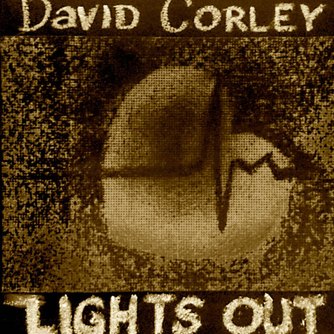
David Corley. Lights Out.

a0500688826_16

David Corley erupted into view at the beginning of 2015 with his tremendous debut album Available Light. An astonishing record, his deep voice carrying years of experience (53 years in fact), the music reminiscent of Southern soul and swampy blues, Available Light was an immediate hit with the roots music community in the UK, Ireland and the continent leading to Corley and his band touring Europe. Disaster struck however when Corley’s history of cardiac problems caught up with him, collapsing with a heart attack on stage in Groningen. Fortunately prompt attention and then medical care in Groningen’s University Medical Centre allowed a full recovery and now, after some rest and recuperation, Corley returns to the fray with this EP and will be touring again in May.

With seven songs and running at around 35 minutes Lights Out was recorded following Corley’s illness, some of it on Wolfe Island, Ontario and in Brooklyn with his band, The Wandering Stars, while three songs were recorded in The Netherlands with local musicians, keyboard player and Corley’s producer Hugh Christopher Brown on hand at all of the sessions. Most of the ingredients that contributed to Available Light’s success are in evidence, not least Corley’s voice, more stentorian than ever but there’s a bite here, an urgency that was not in evidence on the album.  While there are some languid reflections on a life lived there’s also some punk like ferociousness and soulful funk. His brush with the Reaper is alluded to on the artwork, a blurred heart with a cardiograph on top of it.

Watchin’ The Sun Go opens the disc in fine style. Spare guitars slowly mesh together over a restrained keyboard before Corley (here sounding somewhat like Springsteen) sings and the rhythm kicks in. There is an E Street feel here with organ swells on the chorus while other keyboard sounds add an off kilter edge to the song but overall the effect is uplifting with Corley seeming to sing about his “resurrection”. Under A Midwestern Sky revisits Available Light territory, its sinuous guitar and organ winding like the Mississippi as Corley dips into his finest rough baritone boosted by a gospel like chorus. The song meanders wonderfully, like Dylan’s Slow Train Coming the band coil around the words, the guitars snaking in and out creating something of an epic. Pullin’ Off The Wool dives deeper into soul music, Corley here sounding like a secular Solomon Burke, his words half spoken, his voice stained with experience and emotion as he investigates what true love means. His impassioned pleas here are superbly supported by the excellent Gospel tinged harmonies from Kate Fenner and Sarah McDermott while the band hit a gorgeous Muscle Shoal type soul beat. Mickey Raphael turns up on harp on the parable that is Blind Man with Corley and the band taking up the reins of early Kris Kristofferson on a rusty tale of love gone wrong, the protagonist blinded in so many ways by his lover, well aware of his fate but unable to do anything about it. Corley waxes poetic here as the band tumble along slowly, a wild bunch playing sad saloon music.

Given his heart problems one fears for Corley’s health as he launches into the frantic rant that is Dividing Line. With the band pile driving into a ferocious garage punk riff he rails mightily over snarly guitars about love and hate, “don’t stop this train, of thought“, wailed throughout. There’s a grand shift in the middle of the song when the grunginess is briefly replaced by a brash acoustic thrash. Wonderful. Lighting Downtown meanwhile is a whip smart slice of funk, Corley funnelling Prince and Curtis Mayfield. Down With The Universe is a fine sign off. It opens as another slow Southern groove, organ and slide guitars setting the scene as Corley again seems to reflect on his near death, observing himself from above, recalling tender moments  such as “I liked you best when you took off your dress” but eventually surrendering to a universal que sera sera, a dreamlike sitar infused ending fading into oblivion.

Mr. Corley says that Lights Out is “a bit of a departure…conceived during a stay in a hospital”, promising a full new album later this year. However there’s no sense here of this being a stop gap. Indeed it’s more proof, if proof were needed, that he is a writer and performer of the first order, poetic and passionate. You can catch him on tour here including two dates at the Kilkenny Roots Festival, Kilkenny seeming to have adopted Corley as a native son.

website

Buy the EP here for EU customers, here for US and Canada


Lera Lynn. Resistor.

leralynn_cvr

While some folk might have caught a glimpse of Lera Lynn at Celtic Connections when she supported Sturgill Simpson most will probably know her through her work on the television series, True Detective. Just as season one of the series raised the profile of The Handsome Family when their song, Far From Any Road, was used as the theme music, Lynn has benefited from her association with the show. Several of her songs (some co-written with Roseanne cash and T Bone Burnett) appeared throughout the episodes while she also appeared as a “shadowy” bar singer. Folks expecting however a rerun of the languid country tinged songs that populated her last album, 2014’s The Avenues, might be somewhat surprised by the direction she’s taken here.

Resistor features Lynn and co-producer Joshua Grange playing most of the instruments on a set of songs that creep from the speakers, a bit like that Japanese ghoul from The Ring. There’s an emphasis on percussion and reverbed guitars creating an atmosphere that rumbles and roots around in that dark American hinterland; neon lit motels, dark highways and ghosts on the highway. There are moments that recall Twilight Hotel (the duo that featured Brandy Zdan), a whisp of the doomed romanticism of Chris Isaak and, on the opening Shape Shifter, a nod to bands like The Breeders.

Shape Shifter actually does the album a disservice. It’s a fair enough song with a fine guitar solo midway through but its robotic rhythm and routine verse/chorus shoehorned into a radio friendly groove doesn’t really cut it. The following songs fall into the same trap. What You Done with its lead bass line and Goth like darkness, Drive’s would be highway drama and Cut + Burn’s melodrama are songs that just don’t quite cut the mustard.  Things look up with Run The Night, the instrumentation is enhanced with some acoustic guitars in the mix while the percussion is more restrained, enhancing the song as opposed to dominating it and from here on in the album just gets better.

For The Last Time is a well paced and fully realised version of Lynn’s noirish dreamsongs. Her vocals are allowed to ride above the song and the guitars coil around her with a fine degree of menace. Fade Into The Black approaches that juncture where Roy Orbison and David Lynch intersect while Slow Motion Countdown is a dream like slow waltz tinted with an old time veneer reminiscent of The Walkabouts’ Prague wanderings. Scratch + Hiss continues in a similar vein, Lynn a chanteuse here, simpering over an opalescent backdrop of shimmering guitars.

Overall the album shows that Lynn isn’t one to rest on her laurels, some of her choices here somewhat daring in their refusal to go down a gravel road that would see her as just another singer wanting to sound like Lucinda Williams. However some of the songs lack passion while others show some promise. You can make your own mind up as she is touring the UK in May, all dates are here

website


Fernando. Leave The Radio On. Fluff and Gravy/Decor Records

cd_leave-the-radio-on

Fear not, this review is ABBA free. This Fernando is Fernando Viciconte, born in Argentina but commencing his musical journey in LA with Monkey Paw, a hard rock band, before moving to Portland, Oregon in 1994. Since then he’s released several solo albums which have variously visited his Latin roots, alt-country and “gauzy, narcotic songs with Latin and country-folk accents”.  A health scare a few years back threatened his voice but he has thankfully recovered and recorded Leave The Radio On, the first of his albums (I think) to get a full UK release.

It’s getting so that Portland is the happening place to be in the States (actually, it may have been for some time and we’re just behind the curve here). Anyway, while fans of The Holy Modal Rounders will know of goings on eons ago, for the past decade or so it’s been a magnet for musicians, Peter Buck of REM the latest drawn to live there. We mention this as Fernando has a dream list of Portland musicians on the album. no surprise really when you consider that Willie Vlautin of Richmond Fontaine is on record as saying that Viciconte is “one of my all time favourite singer-songwriters”. Vlautin doesn’t appear here  but Daniel Eccles and Freddie Trujillo from RF are both onboard along with Paul Brainard, Scott McCaughey and Mr. Buck himself who variously plays guitar, sitar and mandolin on eight of the 11 songs. In addition there’s another “unsung” Portland musician here in the shape of Lewi Longmire on guitars and keyboards. A long time associate of Fernando, Longmire also has a history with various Rounders and the esteemed Michael Hurley, so, nice to see him in here.

The album itself is a polished affair. Viciconte’s voice is high in the mix, his tremulous vocals recalling at times Bowie and Lennon.  There’s little of his dusty Americana background although there’s a fine laid back vibe to the wonderful pedal steel and mandolin whorled Kingdom Come while the spectral White Trees oozes with a mysticism heightened by the simple ritualistic percussion, shadows gathering in the gloomy bass and subdued organ. Instead, we get the dark psychedelic soundscape of The Dogs, surely indebted to The Pretty Things in their lysergic days and the kaleidoscopic guitar tumblings of The Freak, a song that roots into Bowie’s 70’s paranoia (turn this one up loud). Buck’s presence isn’t flag posted throughout the album but it’s tempting to think that the churning guitar charge of Burned Out Love, a fantastic slice of power pop is a nod to him and Minus Five chap McCaughey. Turns out that the guitar here is handled by Fernando’s co-producer Luther Russell but it certainly hits the heights, a glorious addition to the canon of sun kissed guitar pop. Fernando certainly knows his way around a hook, the opening and closing songs here both memorable slices of dark melodic rock with shades of The Dream Syndicate and The Church lurking in there. Finally, there’s the odd seeming combination of Fernando sounding like Bowie on El Interior. Here, glistening guitars lead one into a twilight zone, an infra red desert, the singer stranded, his thoughts clouded by the intrusive Mariachi band. Whether Fernando intended this or not the song is a fine summation of the gin sozzled Thomas Jerome Newton damned in New Mexico. A wonderful song.

Good news is that Fernando is appearing near you soon as he is supporting Richmond Fontaine on their farewell tour.  Dates are here.

Website


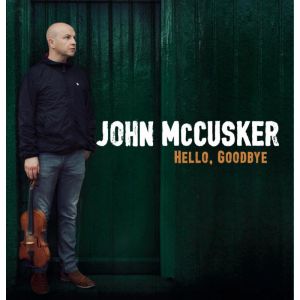
John McCusker. Hello, Goodbye. Under One Sky Records

1e3be8bb35afc3b89c7f0566df440215

Since he first came to attention as a 17 year old prodigy invited to join The Battlefield Band back in the early nineties John McCusker has become a cornerstone of the UK folk music scene. His fiddle playing has graced many an album while his production and arrangement skills have seen him work with numerous artists and ensembles, one off projects, television and film work. Regularly nominated for (and often winning) all sorts of folk awards he is as often to be found working with rock and pop musicians and regularly tours as part of Mark Knopfler’s band.

Hello, Goodbye is his sixth solo album and it features a fine cast list including James Mackintosh, Ewen Vernal, Ian Carr, Michael McGoldrick, Andy Cutting, Tim O’Brien, Phil Cunningham, Jarleth Henderson and McCusker’s partner Heidi Talbot (heard briefly as the album opens). Coming 13 years after his last solo effort it’s the first to be recorded at his new home studio, a converted bothy next to his Borders home and is a welcome return to the frontline for this folk Renaissance man.

Aside from a (very) brief sung part as the album opens, it’s all instrumental with all of the tunes written by McCusker. Having said that the album is as traditional as the hills, jigs, reels, waltzes and laments all represented, sounding as if McCusker has grasped them from the very air, melodies of the ages, reshaped by each generation. There are modern elements in there, the funky bass line of FooFog for example or the nod to the American duo The Milk Carton Kids on the same titled tune, a fiddle lament with acoustic guitar gracings.  Throughout the album McCusker duets with various musicians on more fiddle, mandolin, guitar or flute as the rhythm section skip merrily along defying the listener to sit still. From the titles of the tunes it’s apparent that he’s written these almost as a musical diary, the titles reflecting life events, his own or of friends. It’s A Girl, The Wedding, A Trip To Roma, Molly’s Waltz/Heidi’s Waltz  and Tune For Nana probably all resonate strongly with McCusker and his family and friends but there’s no sense here of exclusivity. Instead it’s indicative that, despite his impressive CV, McCusker has kept close to his roots, as happy to write a reel to celebrate a friend’s wedding as he is to share a stage with Bob Dylan. A cert to be on the lists of top folk albums by the end of the year.

website