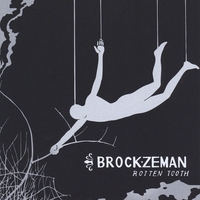
Brock Zeman. Rotten Tooth. Busted Flat Records

Rotten_Tooth

Blabber’n’Smoke liked Canadian Brock Zeman‘s last offering, Me Then You back in 2012 with its taut and sinewy rock with a hint of blue collar Steve Earle in the tales it told. We also noted his production and playing on the magnificently doomed Tom House released on Zeman’s label, Mud Records. Now he’s back with Rotten Tooth, an eleven song self penned collection which, while no great departure from its predecessor other than a hint of influence from the boho bawling of Tom Waits which colours a few of the numbers, Zeman himself says

“I learned an awful lot from recording Nashville singer/songwriter Tom House over the last few years and it’s led me to some unexpected places and given me some brand new eyes and ears.”

House’s album was a frank journey into a booze driven American underbelly and it may be that his words have spurred Zeman into being somewhat more visceral on some of his songs, most notably the opening title song which starts off with a sample of a dental instruction on how to extract a tooth. Pretty soon Zeman growls into view over a savage acoustic blues riff before the band hammers in. Gnarly as hell Zeman sings

“I’m the only rotten tooth in my family’s mouth/Take more than pliers just to pull me out/I’m on the shady side of my family tree/That crooked little branch that wouldn’t grow straight
The little grease fire that you can’t put out/Ya, I’m the only rotten tooth in my family’s mouth/Black clouds fill the sky wherever I travel/My footsteps sound like a judge’s gavel/
Hell spit me out and heaven don’t want me/Because I’m mean as a rattlesnake and twice as ugly/Won’t you write this on my stone before they lay me down/That I’m the only rotten tooth in my family’s mouth.”

OK, there’s a thousand songs out there about black sheep but Zeman delivers this with a ferocity that is breathtaking and it’s begging to be placed on the credits of some hillbilly murdering tale on HBO. Zeman runs with this bad blood throughout the album. Neighbour fights, murder, the Lord’s retribution all feature with Zeman and guitarist Blair Hogan playing some fine gutbucket blues. This grimness is leavened musically with some songs delivered in a lighter style with cello employed on occasion such as on the convoluted murder ballad Where Words Mean Nothing as the vaulting tune belies the blood stained lyrics. Overall we’re looking at Americana Noire.

The Waits influence is at its height on two songs. Dreamland Motel is a wordy squall describing the titular no star abode

“I ain’t ever stayed in a place like this before/The toilet is talking to the sink about the blood on the floor/And if I make it through the night I swear on my skin/That it’s Travel Lodge baby from now on in.”

Sending Strange Weather takes the Waits’ model and adds some Jim White to the mix as Zeman warns of the coming Apocalypse with hoodoo guitar and strangled voices. It’s a tremendous cut and with songs like these Zeman deserves to be better known. Suffice to say that if you think Robert Mitchum’s Rev. Harry Powell could strap on a guitar then this might be an album he would make.
website

Red Pine Timber Company. Different Lonesome

red pine

We mentioned Perth band Southpaw a few reviews back and almost as if by happenstance what should pop through the post but this album featuring Southpaw singer Gavin JD Munro fronting a big band with a big sound that straddles classic folk rock and fat back horn fuelled grooves, a weird coupling indeed but one that definitely works for the most part. This nine piece crew lilt magnificently on countrified waves with mandolin rippling while pedal steel weaves in and out as the brass adds a Southern soul or gospel feel, the end result coming across almost as if one were being treated to a revue as opposed to a single band. The imagery, particularly on the striking video for their song Hurricanes, is American Gothic summoning up a rustic backwoods sentiment which is reflected in the music. They eschew any sense of parched desert rock. Instead the landscape they inhabit is the enervating green lushness of the swamps and bayous , thick blooded, slow to react but dangerous when aroused. One could imagine them playing in a shack in Walter Hill’s movie Southern Comfort, dripping sweat as they offer up some swamp and mountain music. They don’t play Cajun but the fiddles and airs cut through to American folk music’s antecedents in misty Scottish Highlands and Irish glens giving the album an attractive Transatlantic connection.
Aside from the closing song, the traditional Oh Sinnerman, all of the songs are written by Munro and he proves to be a fine wordsmith summing up predicaments and dilemmas in classic style, spare but telling all you need to know such as on Different Lonesome

“She pours out the coffee, and we start the day, everything is faultless, we designed it that way. How can I rewrite the words I should have said, It’s a different kind of lonesome when the love’s not dead.”

Munro sings as if he’s inhabiting the souls of the luckless characters here, tired, worn out, resigned to their fate. His melancholic voice (along with some of the melodies) are reminiscent of Gene Clark in his prime and he’s ably assisted on harmonies by Kate Burgoyne who provides a fine foil to his hurt. The band meanwhile offer an empathetic backdrop with electric guitars by Aaron Brake and Stewart Methven curling and occasionally snarling over the strummed acoustics and sympathetic rhythm section. Lonesome harmonica tops several of the songs. The title song, Sweet Seville, Save My Soul, Hurricanes and No Direction are all superior wearied ballads that glow with a Tupelo honeyed light while the brass section adds a tumescence that is quite daring. While Munro’s melancholic side is given full rein on these the band show that they can kick the proverbial shit with some up-tempo numbers that gives the album some variety. The opening song, Lonely Days are Gone is a sparkling jangled riposte to The Boxtops song The Letter while Sermon On The Street has a mid sixties Dylan kick especially in the harmonica playing. They also get down and dirty with The Way It Was which has a Stones’ like swagger and strut.

Website

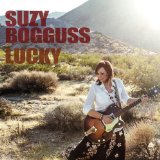
Suzy Bogguss. Lucky. Proper Records

bogguss

Last time we encountered Ms. Bogguss she was delivering a primer for kids on the American Folk Songbook . She sounded great then but now it’s the adults turn as she offers up an album’s worth of Merle Haggard covers that hum and buzz with a fine honky tonk spark. A tribute album one might say but Bogguss is adamant that she never meant to go down that route. Instead she was hunkering back to her country roots and just about fell into singing old Haggard songs (her first release was a Haggard cover) in the studio and it was going so well she saw the project through. You want a tribute album? Check out Tulare Dust on Hightone Records , in the meantime here’s an album of Merle Haggard songs sung by Suzy Bogguss, perhaps dreaming his dreams.

Anyway, It almost goes without saying that the songs here are all excellent. Tear stained laments, beer drenched wallows, mournful love songs with some fighting and jail time, that’s Haggard territory after all. Bogguss captures most of these exceptionally well with a variety of styles. Outright Honky Tonk on Let’s Chase Each Other Through The Night, rockabilly roustabout on The Runnin’ Kind, Southern slinkiness on I Think I’ll Just Stay Here and Drink. There’s a magnificently boozy and woozy Tonight The Bottle Let Me Down with Boguss sounding as sassy as hell. Hearing this reminds Blabber’n’Smoke of hearing Haggard’s songs for the first time courtesy of Emmylou Harris and, trawling back, The Burritos and Gram Parsons. Back then his songs stood out as honest and earnest and it’s as true now as it was then. It must be difficult to produce a bad cover of a Haggard song and Ms. Bogguss delivers a classy set that entertains in its own right and hopefully might lead some who listen to go back to the originals.

Website

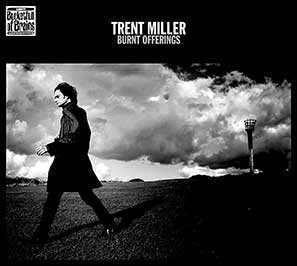
Trent Miller. Burnt Offerings. Bucketfull of Brains Records

miller

It’s funny how you think you have your finger on the pulse when it comes to what’s happening in your end of the music scene and then something comes in with a great pedigree but it’s news to you. So it was when this album from Trent Miller, his third it appears, popped through the post and floored us. Imagine if you will an artist who has the romantic lyricism of Gene Clark, the LA voodoo of Jeffrey Lee Pierce and the retrospective roots appreciation of Richard Hawley. Picture a young Italian musician feverishly devouring tales and music of far away heroes as he scraps around for a living before eventually coming to London where he spends several more years scrapping around before some discerning folk lend an ear.

That’s essentially the story of Trent Miller. From Turin, he couldn’t fill a phone box in his native land and it was only after several years of itinerant jobbing in London that he was able to release a home recorded album, Cerebus, which led to his signing by Bucketfull of Brains who fitted him up with a band and released Welcome To Inferno Valley in 2012 leading to critical acclaim. A raw boned collection of country tinged folk, Welcome To Inferno Valley had Miller’s sinewy voice set over a primarily acoustic band setting. Burnt Offerings continues in this vein for the most part but his voice sounds more assured while the music is less rustic and more arranged with a greater emphasis on electric guitar and pedal steel.

Miller has an affinity with Gene Clark and the former Byrd’s spirit casts deep shadows on this album. Songs such as the title track and Pictures From A Different World have the literacy of Clarks’s song poems while the musicians hark back to the dappled sunlight picking of his late sixties forays into folk rock. Your Black Heart harks back to the sumptuous arrangements of Clark’s spell with the Gosdin Brothers while Sands Of Time sounds like a lost nugget from ’65. If this were all then one could dismiss the album as simply a (very fine) simulacrum of one of Miller’s heroes but he soaked up more than Clark in his dog days and he amalgamates his influences well here. Burnt Offerings opens the album with a loping rhythm and spectral guitar swoons that recall Lee Hazlewood as Miller sings of cathedrals in the desert. It’s hypnotic and beguiling. Lupita Dream sinks deeper into this dreamscape, lush and intoxicating it sounds like Jeffrey Lee Pierce wandering, stoned and immaculate as the guitars slide ecstatically by. The harmonica on Hearts On A Wire grounds the dream bringing it back to a back porch kitchen sink drama but before the listener has time to wallow in the comfort of the singer’s despair All These Violent Years slams into view. A metaphysical take on life and love with driving guitars, thumping drums and soaring vocals it’s somewhat of a tour de force leaving the listener exhausted afterwards. Sorrow Knows Better recalls another of Miller’s favourites, Guy Kyser of Thin White Rope with a sludgier sound and piercing guitars he almost steers into a piratical heavy metal shanty. Finally Miller dips a toe into the current guitar based psychedelic smorgasbord as epitomised by Israel Nash Gripka on On The Stone Beach which has the mystical Clark vibe and some very sweet fat guitar shining throughout the song.

Miller might be a product of his influences but the whole is better than the parts. It’s an album that will thrill those aware of the antecedents and beguile those who aren’t. The album is released on 14th April, you can order it here

Website

Peter Mulvey. Silver Ladder. Signature Sounds.

mulvey

Originally from Milwaukee, Wisconsin, Peter Mulvey appears to be a musician who has definitely paid his dues. A spell in Dublin busking back in 1989 was followed by a decade or so in Boston and the release of several albums. His busking continued with his 2002 album Ten Thousand Mornings being recorded live on a Boston subway platform and for the past few years he has travelled by bicycle on his annual Fall tour entertaining along the way.
Over the course of around 17 albums Mulvey has proved to be a wry commentator on the human condition and an adept collaborator with other musicians including Jeffrey Foucault and Kris Delmhorst. A fine singer and excellent acoustic guitarist his 2006 release, The Knuckleball Suite, remains a favourite here at Blabber’n’Smoke.
Silver Ladder is somewhat of a departure for Mulvey. Following “a turbulent stretch in his personal life” Mulvey sought solace in his writing. By the time he had enough for an album he contacted an acquaintance, none other than chuck Prophet whom Mulvey had met once before and Prophet agreed to produce the album. The result is a tougher sound than one has come to expect from Mulvey with Prophet and fellow Mission Express member James DePrato playing guitar, David Kemper (from Dylan’s tour band) on drums, Tom Fruend, upright bass and Aiden Hawken on keyboards (including Celeste, Chamberlin and Mellotron). Sara Watkins of Silver Nickel added some harmony vocals and played violin. While it’s not a rock album the well drilled crew deliver some punchy moments from the start with Lies You Forgot You Told stepping sprightly over a taut rhythm section as the guitars and keyboards decorate the melody. You Don’t have To Tell Me is propelled by driving acoustic guitar with a slight rockabilly jaunt reminiscent of Nick Lowe when he had a spring in his step, Prophet weighs in on backing vocals and there are some tasty guitar breaks. Sympathies continues in a similar vein with accordion added to the mix along with a memorable hook and melody that places the song close to the brash vitality of Prophet on Temple Beautiful. While these opening songs are brisk and confident lyrically there’s a thread of loss and betrayal running through them and the next number, the country stained lament Remember The Milkman (a duet with Watkins) is a break up song through and through and one wonders if Mulvey’s turbulence was due to the end of a relationship. What Else Was It reinforces the sense of loss. A denser, multi layered song which owes something to Mulvey’s Irish connections as his voice approaches a brogue, it’s dark and brooding and in the end reproachful. Trempealeau follows with its simple acoustic guitar and keyboard backing allowing Mulvey to appear wounded and vulnerable however he turns in his best performance here on what is a beautiful song. Sara Watkins returns to duet on the restrained ballad Where Did You Go with the pair singing wonderfully together as they apologise for their lost love. Tasteful guitar breaks with an understated hint of Bakersfield twang adorn the song which would not appear out of place on the recent my Darling Clementine’s The Reconciliation? album.
Up till now the album is a winner but over the course of the final five songs it seems to lose its footing somewhat with a mixture of styles vying for attention. Josephine harks back to Mulvey’s previous quirky delivery and style although Back In The Wind rewinds to the beginning of the album and the Nick Lowe/Elvis Costello model of brisk power pop. Copenhagen Airport is an oddity. Acoustic guitar scrubbings and soaring electrics over a throbbing bass line dominate until, close to the end Mulvey ponders the beauty of the women in the titular airport complaining that none of them are on his flight. Someone needs to ask him about this one. If You Shoot At A King You Must Kill Him is a surrealistic delve into Mulvey’s dreamworld with his vocals rushed as he delivers a song poem with atmospheric sound effects. It’s like a psychodrama and perhaps cathartic for the singer as he strives to finally cast off his emotional shackles. It’s telling that he’s borrowed the title from Ralph Waldo Emerson in the sense that the album will close the door on the episode and allow him to move on without retribution. Speculation of course but otherwise the song remains unexplained.
Despite the quibbles over the final third of the album overall Mulvey is triumphant with Prophet’s production taking him in a new direction. Some lucky folk will get the chance to see him in action as he is touring the UK in March and April although there are no Scottish dates penned, a pity as I’d love to see him performing Marty and Lou where it’s all about the monkeys.

website

Tour dates

Peter Mulvey’s Kickstarter introduction to the album

Paul McLure. Smiling From The Floor Up. Clubhouse Records

Rutland singer/songwriter Paul McLure seems to have built a small but dedicated following from his time spent with acoustic roots duo, The Hi and Lo, who released one album on Clubhouse and were featured in the label’s famed Nebraska sessions, a live reading of all the songs from Springsteen’s album of the same name. Now flying solo, Smiling From The Floor Up is primarily a one man affair with occassional assistance from Clubhouse labelmates Alex and Hannah Elton- Wall (The Redlands Palomino Company) and Joe Bennett (The Dreaming Spires) with McLure describing it as

“a collection of songs recorded without the trappings of a band or orchestra, lightly textured layers with occasional touches of colour here and there; a harmony here, a piano there, a sympathetic slide guitar draped across the shoulders of another.”

It has to be said that the album reflects the description. Standing naked as it were with only his guitar (or in one case a ukulele) to hide behind McLure sits in the tradition of the likes of Loudon Wainwright 111 and says that many of the songs are drawn from personal experience. There’s none of Wainwright’s confessional self flagellation however with McClure sticking to sorry songs of love lost or eulogising the opposite sex as on For You, a lovely and tender song. There’s a frailty and a fatalism to these songs, none more so than on Song 6, inspired by Louis Theroux interviewing a “lifer” in the US penal system as McLure sounds as beaten and defeated as the prisoner. The title song is a dreamlike swoon with lazily picked guitar that recalls Tim Buckley or Fred Neil and halfway through a mournful pedal steel does indeed drape the song adding to the dolorous feel. While McLure solo is beguiling it has to be said that the addition of the other musicians does raise the level of enjoyment when listening to the album. The ukulele strum of Lola-Rose has some mock trumpet while the ramshackle piano and percussion backing to Any Number You Like (As Long As It’s Four) brings to mind a sepia toned pub knees up. The catch of the day here is the excellent Pollyanna which adds banjo, percussion and steel guitar, all somewhat off kilter in a Tom Waits way adding a fine tipsy feel on this excellent tale of a femme fatale who is every “barfly’s dream” who will take you all the way and leave you there.

website

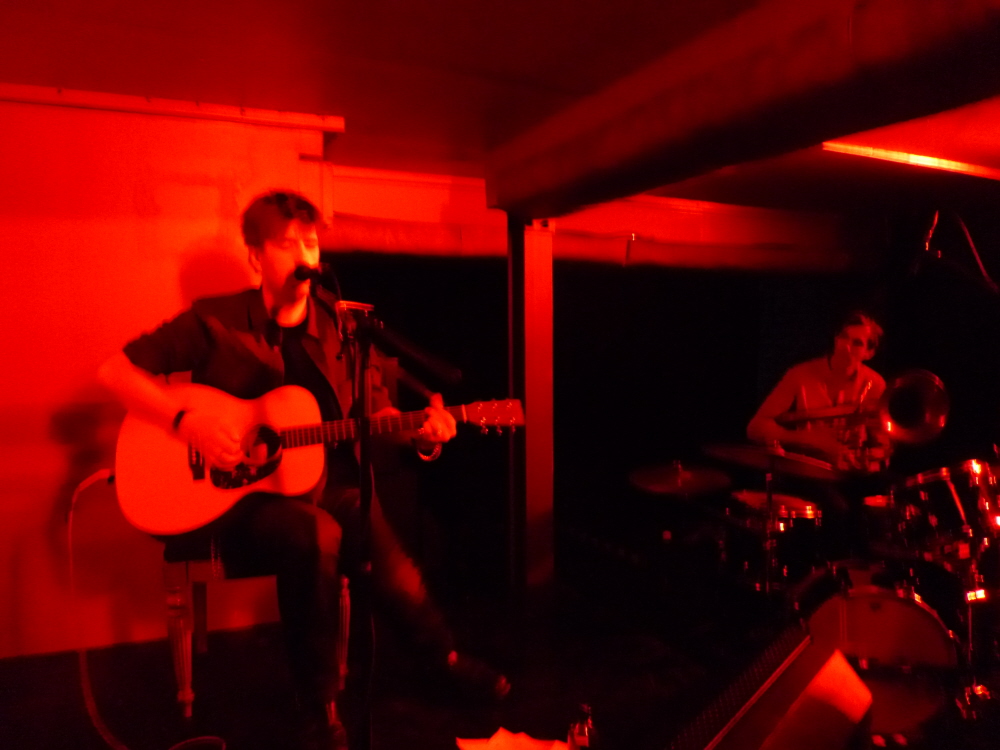
John Murry. Broadcast, Glasgow. 25th February 2014

murry

John Murry’s 2012 album The Graceless Age has gathered an impressive pedigree since its initial release here in the UK. With staggered worldwide licensing and with a limited two disc version available it’s appeared in end of year top lists in the UK for two years in a trot. Recorded during Murry’s “lost years” when he was in the grip of an addiction it remains a startling and powerful listen, redemptive despite the harrowing tales it tells. Murry himself appears to have a love/hate relationship with the album with tales of emotionally wracked live renditions alternately confounding or amazing audiences.

Glasgow had a brief glimpse of the live experience last year when Murry and his band played at Celtic Connections. However the venue selection of Kelvingrove Art Gallery proved to be ill conceived as the cavernous galleries swallowed up the sound and regurgitated it with booming echoes making it almost impossible to listen to. Tonight was a different story. The cramped (and packed) basement bar allowed Murry and his accompanist Will Waghorn the intimacy to directly confront the audience with his psychodramas which proved to be emotionally wrenching, for him and the audience, with several of the songs from the album mesmerising. Murry’s voice ached and broke as he relived his traumas while his guitar playing and foot stamping added a sense of urgency to his need to confess. Waghorn on drums added colour with a delicacy that was very impressive and it’s clear that the pair have a bond that’s been forged on the road. While much of the show maintained Murry’s burning intensity he leavened the night with a wry sense of humour and a fine line in self deprecation that at times had the audience in fits of laughter. Playing to the gallery he regaled a tale of a lost passport then announced that he’d rather play some covers and asked the crowd to vote for their favourites from Neil Young, Neil Finn, John Prine or Bruce Springsteen. Arguing over the result, in the end he played a song by each of them. He also paid tribute with covers of songs to Mark Linkhouse of Sparklehorse and Tim Mooney, the late producer of The Graceless Age.

The set opened with a new song, co-written with Chuck Prophet, called Glass Slippers that continues in the vein of songs like Photograph with Murry totally enveloped in the delivery. Another new song, The Stars Are God’s Bullet Holes was a lyrical delight and was propelled by some fine propulsive percussion. The meat of the evening however were the songs at the core of The Graceless Age. Photograph featured some visceral guitar playing while Ballad of The Pajama Kid, stripped of its narcotic fuzz, blazed with Murry’s vocals ragged and powerful. California (introduced as a happy song compared to its predecessors and spelled out as KKKalifornia) built to a powerful climax as did Senor Malverde as Murry delved into his past mistakes and misadventures. Little Colored Balloons, the centre piece of the album and the most naked of his songs ended the show. With Will Waghorn managing percussive rolls while playing a restrained Euphonium Murry poured his all into this cathartic tale of his overdose and resuscitation. In its recorded state it’s an arresting song but live it seems almost as if the mournful horn is a funereal accompaniment to Murry’s death and rebirth as he wrenches the words out riveting the audience. Astonishing and electric in its delivery Murry conspires with the audience in his pain here and it might seem hyperbole to pronounce this as one of the best performances this writer has witnessed but then, you had to be there. Fortunately for us all he’s survived and while able to invite us into his world, his own personal Calvary, hopefully with the new songs he’s able to move on and news that he has an EP in the works will allow us to listen to a great songwriter who has turned his life around.

Sturgill Simpson/ Daniel Meade. The Admiral Bar. Glasgow. Sunday 23rd February.

simpson

Glasgow’s premier Americana promoters, The Fallen Angels Club celebrate their tenth anniversary of bringing top class acts to the west of Scotland this year and they kicked off the celebrations with Sturgill Simpson, a star in the ascendant who’s riding high on the back of the UK release of his superb album High Top Mountain. Simpson, from Kentucky but now living in Nashville has been touted by all and sundry as “the next big thing” in country music here and in the States as High Top Mountain pumps a shot of adrenalin into the flat lifeless chest of Nashville music. Whether he makes it big remains to be seen but there’s no doubting that he can rip it up with the best of them and then add a George Jones like mournful ballad straight after.

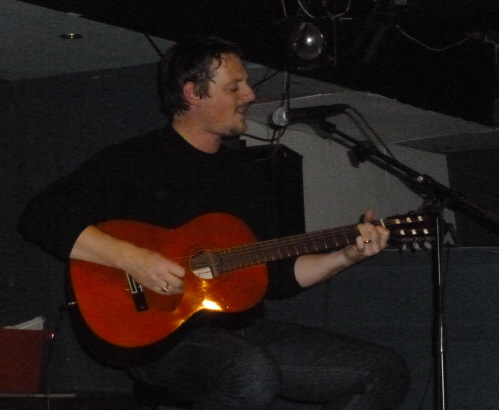
Tonight it’s just him and his guitar and he’s drawn a sizeable crowd for a wintry Sunday night. Announcing that he’s going to play a bunch of songs he wrote and a bunch that he didn’t he proceeded to deliver several songs from High Top Mountain that, stripped of the country rock trappings, highlight his “hillbilly” leanings while his covers were for the most part a dip into classic country with selections from Lefty Frizzell, Carter Stanley, Willie Nelson, Charlie Moore and Bill Napier along with Steve Fromholz and Jimmy Martin. As Simpson said, he has hundreds of these songs in his head and currently he plucks them out at random. He may choose them at random but he proved to be well versed in their delivery with his voice capturing the slight nasal mountain style that goes hand in hand with Appalachian songs while his guitar playing is fluid, deftly picked and strummed with several of the songs featuring breaks that recalled bluegrass picking. Sad Songs and Waltzes Aren’t Selling This Year, I’d Have To be Crazy, I Never Go Round Mirrors, all plucked at the heartstrings the way they’re supposed to with Sturgill sounding as if he’s lived these songs all of his life.

Achieving an easy rapport with the audience Simpson explained the provenance of several of the covers and had us laughing as he described the “laundry list” conception of his collection of Nashville clichés that constitutes You Can have The Crown. He’d done his homework as well even venturing a joke about the local football rivalries but the highlights of the evening were the songs from High Top Mountain. You Can have The Crown was given its full title (King Turd of Shit Mountain) and the solo delivery allowed for the humour of the lyrics to stand out. However it was the songs that relate to those heartstrings and the sad tales that excelled with Water In A Well, Time After All and in particular the story of a mining community left high and dry in Old King Coal all getting fine deliveries. The Storm, a powerful brooding number on the album, was transformed into a reflective introspective piece while Life Ain’t Fair and The World Is Mean retained its jaundiced punch.

In the midst of this Simpson announced that he has a new album poised for release in a few months (High Top Mountain had a belated UK release) and offered us a peek with Living The Dream, a bittersweet reflection at the end of a career in music which bodes well for his next release. If its half as good as High Top Mountain then it will be well worth getting.

Simpson had some solid support on the night from local picker, Daniel Meade who regaled us with several songs that ranged from talking blues to ragtime to folky songs with a Guy Clark feel. Several songs from his album, As Good As Bad Can Be, Hard To Hear and If It’s Not Your Fault (I Guess It’s Mine) were all well above par. You can listen to the album (and buy it) here.

The New Madrids. Through the Heart of Town.

It was a sad day for Scots music when Perth based Southpaw called it a day a few years back. Their take on classic Americana was of the finest order with their album Buffalo Mansions one of the better UK country rock albums of recent years. So it was welcome news indeed that the nucleus of the band had regrouped under the moniker The New Madrids with a new singer/guitarist Ian Hutchison fronting the solid rhythm section of Calum Keith and Maurice McPherson while Donny McElligott and Owen Nicholson man the guitars with Hutchison and McElligott sharing lead vocal duties. With the new name comes a tougher sound and while at heart they remain a country rock band there’s a sinewy swagger to some of the songs here recalling the peacock strut of the Stones in the early seventies with hints of Free and Little Feat. Indeed on one song, Shake, they import horns and deliver a classic blue eyed soul song that drips with passion as it builds to its climax. McElligott rivals Frankie Miller in the vocal department, the guitar solo is an exemplar of understated Southern cool and the pedal steel swathes all in honeyed regret as the towering horns (by Bruce Michie) burst with a Stax like majesty. Very impressive.

The album opens with the free flowing country ripple of Wrapped Up which has Nicholson’s pedal steel curling throughout like a whippoorwill reminding one of the likes of Buddy Cage or even Jerry Garcia’s fluid work with the New Riders. You strides into syncopated blues rock territory with the band tight as hell, corkscrew guitars snarling across the beat in best Little Feat fashion although Hutchison’s vocals are just a wee bit too frenzied. Hey Christine is a fine twang fuelled ballad with lashings of pedal steel while Shine A Light revisits soul territory with Michie’s horns again employed to great effect as the band channel a Muscle Shoals country soul feel that recalls the likes of Donnie Fritts, sublime.

Big Fun does what it says on the tin. A loose limbed rocker calling out for more cowbell it swings with a youthful swagger as McElligott’s vocals capture the hoarse urgency of early Eagles songs, the harmonies swell on the chorus and the guitars become more turbo charged as the song progresses. Long Is The Way also recalls the seventies highpoints of country rock although here it’s the acoustic variety as guitars are strummed and the vocal harmonies shine. The addition of fiddle (Hannah Fisher) adds to the impression of Laurel Canyon hippies sitting around a campfire waiting for Asylum Records to sign them and again the New Madrids carry this off with aplomb on what currently is the highlight here. Mountain Of Trouble starts off promisingly but veers off into later Eagles boogiedom. Exhausted perhaps they turn in Alaska which is a beautifully restrained vocal duet with Brennen Leigh as the cold hearted protagonist who drives her lover to murder. Acoustic guitar and plaintive fiddle adorn this stark tale which surely will have audiences in rapt attention live.

As the band sign off with the gumbo rock of Need A Friend, another nod to the Little Feat school of slow burn shuffle with Hutchison’s voice showing that the band have two excellent soulful singers, it’s apparent that they’ve moved on from their previous incarnation, taken some vitamins and worked out. The result is a well toned and muscular crew who can burn with the best of them with McElligott and Hutchison well able to offer up songs that are inspired by the likes of the those whose LP covers adorn the album’s liner notes while stamping their own personality on the results.

website

Sons Of Bill. The Gears E.P. Blue Rose Records

Sons Of Bill from Charlottesville, Virginia made a bit of a splash back in 2012 with their third release, Sirens. Produced by Cracker’s David Lowery it showed the band growing into their skin as worthy successors to the likes of Son Volt and the Drive By Truckers. In the midst of recording the follow-up, this time produced by Ken Coomer (Uncle Tupelo, Wilco) they’re taking a break to swing through a lengthy European tour which includes several UK dates including two in Scotland where they will be supported by their new Blue Rose label mates, our very own Wynntown Marshals.

Obviously it’s useful to have some new product on hand when you’re sloshing through six countries (Germany, Austria, the Netherlands, Belgium, England, and Scotland!, five if you’re a no voter!) so the Sons and Blue Rose have delivered a seven song E.P. to accompany the tour. Only available via the Blue Rose website or at their gigs The Gears EP offers a sneak preview of three songs from the forthcoming album (to be called Love & Logic) along with acoustic versions of two songs from Sirens and two live cuts.

Of the three new songs Brand New Paradigm finds the band swerving from the sound of Sirens with the vocal harmonies more polished and a mild nod to classic Mercury Rev. It’s a sumptuous confection of sound with chiming guitars and soaring vocals. Road To Canaan is primarily acoustic with finger picked guitar and a female singer duetting with James Wilson. Mallets softly propel the song with occasional percussive flurries adding dramatic effect while atmospheric guitar gimmickry evokes the wintry road from Nebraska, a beautiful song. Bad Dancer however rips it up in fine fashion as the guitars slash and burn and Wilson celebrates the cool kids who hang apart, who don’t dance but know what’s hip as they slouch in corners at parties.

The acoustic version (with steel guitar) of Santa Anna Winds (the opening song from Sirens) strips away the rock trappings and allows the song’s nihilism to ring clear and is much improved for that while Radio Can’t Rewind is another stripped down version of a song from Sirens which in this version is a heart-warming Dobro infused doldrum and again it unveils a greater heart than the previously issued version. As for the live cuts, Turn It Up was the centrepiece of Sirens and here it translates into a fine example of turbo charged country rock with guitars centre stage while the cover of Neil Young’s Unknown Legend adds a bit of fire in the engine room compared to Shakey’s version.

The EP is a great introduction to the band and it might be prudent if you wish to see them (and given the likelihood that Marshalls fans will pack the venues) to book tickets now. Sons of Bill and The Wynntown Marshals appear at Stereo, Glasgow on Sunday 9th March and then the Voodoo Rooms in Edinburgh on Monday 10th March. The other dates are on their website . If you need any further evidence of the live power of Sons of Bill there’s a free download only live album available here.

website

Blue Rose Records online store