It’s that time of year again when we shake off the post festive blues with some energetic gig going. Blabber’n’Smoke will be attending several shows for a feature on americanaUK, if you’re interested you can read last year’s write ups here and here.
Celtic Connections has a habit of imprinting some artists onto the public’s collective consciousness especially if they get the chance to appear on the extensive television and press coverage that accompanies the festival offering these choice acts a fine opportunity to build their audiences up when they return under their own steam. So over the next few days we’ll look at a few bands and acts and here’s hoping that some of that Celtic Connection luck rubs off on them.
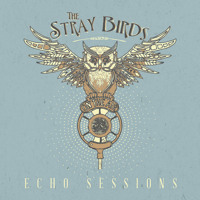
First up are the very fine Pennsylvania based The Stray Birds, a trio whose debut album has been gathering praise since its release at the tail end of 2012. An acoustic trio featuring primarily banjo, guitar, fiddle and double bass they convey a relaxed sound that harks back to traditional country and folk although on the album they wrote all of the songs. All three sing and harmonise excellently with the song Wildflower Honey (which does feature some stinging telecaster work) being the highlight of the album. It’s a song that stands up well against the likes of Sandy Denny and the Fairports. My Brother’s Hill meanwhile features their harmony singing and listening to it you could be mistaken for thinking that the Eagles had got their Mojo back and delivered on the promise of their first two albums. All well polished and good but the band conjure up older and darker spirits with the instrumental Give that Wildman A Knife/Bellows Falls where the twin fiddles of Maya de Vitry and Oliver Craven are chilling and sinister. Capping it all is de Vitry’s song Wind & Rain which ventures into Gillian Welch territory and comes out a winner. If these are any indication of their live show then we’re in for a treat. With a new covers E.P just out (featuring songs by Townes van Zandt, Susanna Clark, Ira and Charlie Louvin, Jimmie Rodgers and Nanci Griffith) they are appearing at St. Andrews In The Square on 25th January.
From the opening line, “I’ve got a pistol in my pocket so don’t you fucking move and don’t you say a word,” you know that you’re not in for a smooth ride with Dan Baker. His delivery, a tortuous wail (that the unkind might call tuneless) adds to the sense of menace. In two minutes Baker paints a picture of a hold up in a liquor store with spare brush strokes. The remaining words are “put the money in the bag, get down on the floor” with the response “Don’t shoot, please don’t shoot.” Story over. With a delicate acoustic guitar intro before drums crash in and a piano takes up the threadbare melody the song hums with danger. A great start with more to follow.
Baker is from New England and Pistol In My Pocket is his third album. Recorded live in an old Masonic Temple converted into a recording studio the sound is harsh and vibrant giving his skeletal blues wails the sense of urgency that Tom Waits achieved on Mule Variations while Baker’s voice makes full use of the 60 foot vaulted ceiling reverb sounding like a man who is howling with the ghost of electricity. His band (Rob Flax, violin, Chris Enright, keyboards, Karl Grohmann, percussion and Alan Uhler, double bass) handle the frenetic workouts and the gentler numbers with equal aplomb while Baker’s guitar can scream or caress as required. Threw Me Down the Well recalls The Bad Seeds and The Violent Femmes in its dark procession describing the dark deed of the title while What I’m Looking For is a Waits like grotesquerie with some stompingly good guitar work. Baker and the band’s triumph however is the superb Down In the Canyon, a song that follows the topography of Calexico, Morricone and Hazlewood with a script from Cormac McCarthy. Beautifully paced, the excellent percussion, guitar, keyboards and violin coalesce into a shimmering whole that is breathtaking.
Aside from the full frontal attack Baker proves himself a dab hand at the more introspective songwriter model with the band switching into simpatico mode. Never Alone nods to the melody of The Battle Cry of Freedom as Baker declares his freedom from a straight jacketed home. Up On The Roof employs the studio’s echo to convey a sense of space as Baker, supported by piano and bass, sounds like the last person on earth looking down and asking for an Amen to his Hallelujah. One Of Them sounds like a disembodied John Prine while Coming Home is a majestic ballad that weaves together elements of John Murry’s wounded grandeur and Van Morrison’s early impressionistic portraits as the protagonist waits and waits. Fine stuff indeed.
Flying the flag for offbeat and eccentric Americana ( a mantle inherited from one of his heroes, Terry Allen), Joe West has released a stream of albums stained with a New Mexico patina buoyed up by his self deprecating sense of humour. Here he heads The Santa Fe Revue, a revolving collection of Santa Fe musicians and although it’s very much his album it offers space to several other vocalists and switches styles as it goes along. With recent moves into television and film soundtracks it’s no surprise that many of the songs here have a cinematic quality about them as the album wanders around in search of a theme. In fact at times I was reminded of Dan Hicks’ oddball imagined soundtrack, It Happened One Bite although the one style West doesn’t cover is western swing. Instead there’s some crunchy rock, spooky sci-fi (in a David Lynch fashion), spoken word and good old fashioned country rock and folk.
The straightforward songs are scattered throughout the album. It’s All Over opens with the wind behind it as the band breeze through a fine death song with some fine guitar and fiddle driving the song. The Blues is a throwback to power pop crunchiness while I Got It All (with vocals from Lori Ottino) is a fine and blowsy blues work out with gut bucket guitar. Paradise is a wonderful tale of a woman scrabbling to survive in a grim world, it’s passionate and brims with an anger and sorrow exemplified by the wheezing accordion. Don’t let Them Get You Down which follows is a banjo driven riposte urging pride in the face of adversity. West maintains this pugnacious attitude in the Celtic tinged biography of Hometown Shit Beer which while engaging is the one let down here.
All the above add up to an engaging listen but West adds some oddities to the mix with Pink Nun telling the tale of a, well, pink nun who wants to play in a band and travels looking for an answer. West delivers this in a weary fashion with laid back guitars and piano before he adds a chorus of Song Sung Blue to the mix. Weird? Frank’s Time Travel Experiment harks back to West’s album Time Travelling Transvestite but this time the delivery is more mechanic. Death in Santa Fe is a short fable of an encounter with Death but The Glory Days of Dona Dillenschneider is the epitome of West’s montage method. The eponymous Dona relates a sordid tale of guns and violence much in the style of true crime stories on TV with atmospheric musical background before the band launch into a cock eyed version of that old Mary Hopkins chestnut, Those Were The Days, which recalls Tom Waits’ Russian beaverings on Black Rider.
What to make of this melange? Best just to sit back and enjoy the album. West fans will love it while it’s well recommended for anyone sitting on the fence.
An American artist domiciled in Austria, Chuck Lemonds is a new name to Blabber’n’Smoke although The Rivers Call is apparently his ninth album. Originally from St. Louis, Missouri, Lemonds has an interesting back history, detailed on his website, which anticipates a dyed in the wool old time feel to his music but instead he inhabits a world where poetry and lyricism marry fluid and supple instrumentation with a light, airy, almost Joni Mitchell feel. Billowing bass lines, rippling acoustic guitars with occasional electric solos, heavenly harmonies and meandering melodies feature throughout as Lemonds’ laid back and unhurried vocals brush against the microphone.
It’s all very reminiscent of an earlier and more innocent age when songwriters were planting the first seeds of post psychedelic American music, examining folk, blues, gospel and country and coming up with a modern indigenous music. So the likes of Neil Young, Ritchie Havens, Tim Buckley and Tim Hardin are all in here along with a smattering of Van Morrison’s sunkissed California days and given the prominence of acoustic double bass (played with some excellence throughout the album by Peter Herbert, veteran of Woody Shaw, Art Farmer and Paul Simon sessions) there’s a fair bet that Lemonds has listened to the numerous recordings featuring the doyen of double bass, Danny Thompson).
The gospel feel is apparent immediately on the opener, Let’s Go Down Stream, a song co written with his late father that oozes the blue eyed soul feel of the early seventies with Mary Gaines taking the place of Claudia Lennear. There’s a Ronnie Lane jaunt to Bringing Mary K Home with mandolin galore while To Bee or Not To Bee (poor pun mind you) features an awesome bowed bass solo introduction that is woody and organic and sets up the bucolic nature of this paean to the humble bumble bee. The title song has some sly lap guitar from Arkadiy Yushin along with some booming bass work and again it recalls the rustic Ronnie Lane skipping down country byways. The Joni Mitchell influence is apparent in The Letter Home, an adaptation of two poets, John Weir and Petra Schaller as the bass burbles and percussion splashes as Lemonds sings a song of regret for lives lost needlessly. There’s some more southern slinking with Gottfried Gferer on National steel guitar on Put A Good Word In For Me, another song that recalls early seventies excursions into swamp blues and a very fine instrumental featuring Lemonds on guitar with just bass and piano that recalls Ry Coder’s film work before Lemonds wraps it up with his solo rendition of Patty Griffin’s Top of the World.Top of the World is a song that has amassed a weight of interpretation through its authors’ and The Dixie Chicks renditions. Here Lemonds lays it down straight with just the right amount of pathos with no need for any other instrumental embroidery. A stark classic to end a fine album.
I succumbed to the idea of a top ten for the first time last year and if nothing else it’s been useful looking back at it over the past few days and comparing it to the list below. Was it a good year for music? I don’t know. Has there ever been a bad year? All I can say is that I’ve enjoyed listening to music this year as much as the last one and the year before that and so on. Many of last year’s list still get regular plays here so at least I liked them and the number one, John Murry’s Graceless Age has had a second wind with its eventual release Stateside. It may seem odd to have an artist with two entries in the list but both albums by Michael Rank & Stag are simply superb examples of what Blabber’n’Smoke would define as Americana; rooted in the country with a frontier outlook and a fierce regard for the common folk. And a happy coincidence to have two works from Howe Gelb mentioned also as he continues to plow his singular field. Both albums have striking images of Gelb threatening to turn him into an Americana icon, part Mt. Rushmore, part Dorothea Lange, for Blabber’n’Smoke, he’s a hero. Anyway, here’s what rocked our boat over the past twelve months.
1. Doc Feldman & the LD50. Sundowning At The Station. This Is American Music
Soiled songs and dusty ballads sounding like a wounded Crazy Horse. A triumph for label of the year, This Is American Music.
And here’s the man himself
2. Michael Rank and Stag. Mermaids. Louds Hymn
Wracked and raw country folk and rock from North Carolina’s Michael Rank. In the space of two years he’s delivered three albums (one a double disc set) that in a fit of hyperbole we said it sounded as if Keef had left the Stones in ’69, joined The Band and recorded with Neil Young frying honeyslides in the kitchen. At the very least it comes close.
3. Israel Nash Gripka. Israel Nash’s Rain Plains. Loose Music
Guitars weave and wander with a ferocity and lyricism that defies description and he repeats this throughout the album and there’s a moment in the title song where the guitars fizz and burn just like the best firework you’ve ever seen.
4. Cam Penner. To Build A Fire. Independent
“Ukuleles, guitars, banjos were strummed. Floors were stomped. Kick drums were kicked. Feet stumbled. Thighs, knees, hands, slapped, clapped. Voices strained and bent. Fingers gripped, grabbed, picked. Arms and hands flung. Skin wrapped tight strained and stretched. Body and sound thrown against wood and metal.”
5. Michael Rank & Stag. In The Weeds. Louds Hymn
No apologies for the second appearance from this tall, stick thin North Carolina rock’n’roll ragamuffin. The sonic slurry he conjures up is nothing less than mesmerising.
6. Sam Baker. Say Grace. Independent
Baker’s wounded heart goes from strength to strength
7. Diana Jones. Museum of Appalachia Recordings. Proper Records.
She’s not well known but whenever we mention her there’s a flurry of activity from folk who recognise Jones’ ability to sound as old as the hills and bang up to date, the thinking man’s Gillian Welch?
8. Birds of Chicago. Birds of Chicago. Independent.
JT Nero makes an honest woman of Allison Russell as they formally pair up for a laid back celebration of harmony singing and some Tupelo honey.
9. Dead Flowers. Midnight at The Wheel Club Hee Haw Records
Dark and deep, vocally and lyrically, a trip through North America and the soul.
Local heroes, The Wynntown Marshals survived some turbulent years with band members coming and going. With new crew on board they came up trumps with a bigger, more layered sound and another fine songwriter in the shape of bassist Murdoch McLeod who penned the amazing Tide. Topping off a great year for them the band were snapped up by the very discerning blue Rose label.
Honorable mentions
Howe Gelb. The Coincidentalist
Howe Gelb. Dust Bowl
Mark Collie & his Reckless Companions. Alive At Brushy Mountain State Penitentiary.
J. R. Shore. State Theatre.
The Coals A Happy Animal
Benjamin Folke Thomas. Too Close to Here
Slaid Cleaves. Still Fighting The War
Thriftstore Masterpiece presents Lee Hazlewood’s Trouble Is A Lonely Town.
The Quiet American. Wild Bill Jones
Amanda Pearcy. Royal street
Heidi Talbot. Angels Without Wings
Jim Dead I’m Not Lost
Rachel Brooke. A Killer’s dream
Great Peacock E. P.
Nudging the years end this album probably does itself a disservice as it hasn’t enough time to bed itself in the memory of all of those top ten compilers who are right now beavering away at their lists (present company included). A pity as it’s a strong contender for inclusion with some sublime moments especially for those who like melodic Americana laced with powerful guitar playing and handsome harmony singing.
Freeman (on lead vocals, acoustic and electric guitars, mandolin, drums, organ and piano and brother of Hobbit actor, Martin, trivia fans, ) and the Agreement (Abigail Downs, backing vocals, Jessica Spengler, bass guitar, Jonathan Hirsch, electric guitar, banjo and Dobro and Joe Ellis on drums) are a tight unit, well able to conjure up a muscular melody as on Scrabble From Afghanistan which drives along with a powerful beat as the guitars chime gloriously. It’s Your Lucky Day is another guitar driven corker , this time adding a jangled haze to the mix while the venerable B.J. Cole guests on pedal steel for the soaring Steel Away which is a contender for song of the year. Joyful in its delivery despite its subject matter of a woman wanting out of a relationship it captures the spirit of pioneers in country rock such as Gene Clark and latter exponents like The Jayhawks. Swirling organ, chunky guitar and Cole’s ethereal steel playing coalesce as if under a California sun while Freeman is joined by co writer, the very fine Brandy Zdan (of Twilight Hotel) on vocals with the pair of them in perfect harmony, a superb song. Alas Zdan’s appearance here is her sole contribution to the album but Freeman is well served on the other cuts by Rachel Davies who adds some tremendous harmony and backing vocals throughout the album. Steel Away might be sublime Americana music but for much of the album Freeman steers a course between America and his homeland. The opening song, The Knight is graced by the presence of Larkin Poe sisters, Megan and Rebecca Lovell on lap steel and mandolin but the lyrics and driving mandolin are evidence of the influence of Richard Thompson. Even stranger, Key of Me harks back to the mysticism and power chords of Pete Townshend back when he was trying to capture the “vibrations” of music on his ill fated Lifehouse project. Nevertheless Key Of Me is a powerful song with some fine gospel like wailing from Davies. Elsewhere Freeman utilises English folk song with Message From Limbo a simple acoustic guitar led rendition of a poem by Amy Tudor (who also wrote Scrabble From Afghanistan) but there is a return to Americana sounds with Hey Mama sounding like an old Gospel song although it addresses a modern issue while I’ll Never Be The Same Again has some rippling mandolin along with the guitar chimes. So far Freeman has managed to straddle the Anglo/American divide but towards the end he dives in headfirst with the rockabilly strut of Two Sugar Baby which features some fine picking from Richard Smith and harmonies from The Good Lovelies and it will set your brothel creepers a tappin’. Annie Ran Away winds up the album with a windswept Ghost Riders in the Sky type pitch, heavenly harmonies included. Finally, and perhaps inspired by Zdan’s dark musings with Twilight Hotel, Freeman offers a blood soaked tale in Hey Hey Indianna! which is American Gothic in delivery and explains the album art.
A short note to recommend that you watch the video for Fox and the Bird’s video for their song Wreck of the Fallible from their upcoming album Darkest Hours. Far as we can see they’re a pretty good old fashioned crew using banjos, accordions, ukuleles & fiddles as they delve into that old Americana sound. Hopefully we’ll get a chance to hear the album when it arrives but in the meantime here’s that video.
Everyone reading this will know of Crazy Horse. Neil Young’s very own bone crunching band whom he wheels out when he needs to let his hair down. There’s no denying that they’ve been involved in some of Young’s most memorable moments and with their partnership going back over 40 years they are invariably caught up in Shakey’s story. Plucked from an LA band called the Rockets, Billy Talbot, Ralph Molina and Danny Whitton became Crazy Horse for Young’s Everyone Knows This Is Nowhere before adding Nils Lofgren and Jack Nitzsche to produce their own album, one of the finest debuts ever. And for most folk that’s the end of the Crazy Horse story apart from their regular gig with the man.
Lofgren and Nitzche went their separate ways and Whitton OD’d and was written into musical history via Young’s Tonight’s The Night. With Young zooming towards fame with Harvest Talbot and Molina scrabbled together a new line up releasing Loose, an album that soon cluttered up cut out bins in record stores with Robert Christgau calling it “the most disappointing follow-up in memory.” Undeterred the Horse again regrouped adding brothers Rick (vocals, rhythm guitar, banjo) and Michael Curtis (vocals, piano, organ, guitar and mandolin) and Greg Leroy (vocals, lead guitar, bottleneck guitar) and recording At Crooked Lake which was released on Epic Records in 1972 to general indifference. Normally they shoot horses past their best but this one was pardoned when Talbot, Molina and new guitarist Frank Sampedro were recruited by Young for his Zuma album. Rejuvenated they even produced a cracker of an album, Crazy Moon with Young playing guitar all over it. Again it sank like a stone but is well worth checking out.
Anyway, this is all a fairly long winded way to say that At Crooked Lake is being reissued by Retroworld allowing folk who want to delve into the Horse to avoid exorbitant prices for previous out of print copies. “Is it any good?” we ask. Well our answer is a qualified yes. Anyone looking for the Whitton/Nitzsche brilliance of the first album will be disappointed and there’s none of the pile driving thunder demanded of Young. In fact apart from the presence of the Talbot and Molina rhythm section it’s probably best to ignore the brand name and approach this as an opportunity to hear another unearthed example of early seventies west coast rock. With the majority of the songs written by either the Curtis brothers or Leroy ( all of whom faded into history although Rick Curtis dallied with the fledgling Fleetwood Mac LA version) there’s a definite sense of the pot pourri music of the time as they dip their toes into country rock, FM friendly rock boogie and CSNY like harmonies. It has to be said that if you crank this up it does transport the listener to the early seventies with the band coming across as a blend of Poco and Grin. The opener, Rock and Roll Band, nails their colours to the mast with fine harmonies and guitar duelling, the type of music the fictitious Stillwater played in Cameron Crowe’s Almost Famous movie. It’s an invigorating start. Love Is Gone dapples acoustically with some fine acoustic slide while We Ride channels Steve Stills and Dave Crosby to a tee. There’s a couple of gurney country romps present with Outside Looking In sounding like a rough and ready Ringo Starr while 85 El Paso’s floats away on a boozy country vibe. Don’t Keep Me Burning unfortunately falls into generic boogie territory while Lady Soul is packed with clichés that don’t really hold sway these days. Don’t Look Back is a tub thumper of a song (although again the lyrics show their age) with some savage guitar licks but the overall beauty here is the simple acoustic ballad, Your Song which is graced by the pedal steel of Sneaky Pete Kleinow.
Overall a minor entry in the seventies soft rock canon but a welcome opportunity to grab a small piece of the Neil Young jigsaw for those inclined.
Dunfermline, a Scots town in Fife has a small claim to fame in rock circles with Nazareth and Big Country springing from its loins while Ian Anderson of Jethro Tull was born there. Stevie Agnew, son of Pete Agnew, bassist for Nazareth, now stakes his own claim to fame with this excellent collection of blue collar tinged tales that , like another son of Dunfermline, Andrew Carnegie, looks to the new world for inspiration. Agnew might have grown up with a bona fide seventies rock star dad but there’s no pretension or nepotism on show here as he eschews the hard rock path and instead explores the highways and byways of American songwriters with particular nods to Springsteen and Dylan while the likes of Steve Earle, John Mellencamp, Tom Russell and Johnny Dowds all seep in.
Although Wreckin’ Yard is his debut album Agnew has knocked around a bit playing for several years on the local circuit. The catalyst for the album was his meeting with producer, drummer and co-writer of the album, Chris Smith. Together they’ve forged as good an Americana album to come out of Scotland in the past few years that burns with a respect for the working man, be it a squaddie or muck encrusted labourer and marries this with some memorable and at times very commercial sounds. Wrecking Yard opens (and closes in an extended version) the album, a very smooth and polished medium paced rocker with sweet guitar tones that recall Mark Knopfler it’s tailor made for radio as the tale of a cuckolded labourer whose wife has left him for his boss dreams of vengeance. It’s an impressive song but more impressive is Agnew and Smith’s decision not to clone this airbrushed radio rock with the remainder of the album more dependent on acoustic instruments allowing Agnew’s very fine husk of a voice space to tell their tales. Pretend That You Love Me Tonight is Dylanesque (circa Blood on The Tracks) as Agnew seeks solace from a hooker while All That I Can See pairs Agnew with singer Kirsten Adamson (daughter of the late Stuart) on a country jaunt with Adamson sounding for all the world like a young Dolly Parton while Agnew sounds much older than his years. With banjo, Dobro, pedal steel and harmonica creating a fine backdrop it’s hard to imagine that this song originated in the Kingdom of Fife. Winter Rain is a wordy and spare backed narrative that recalls Steve Earle with Adamson again adding some sweet vocal harmonies on a grim and cold tale of a widower consoling himself with booze as he recalls his wife’s dying days, taking her to hospital and then taking her home with “her hair falling out into her hands and poison in her bones” and waiting for her to die. It’s a spectacular song that captures the protagonist’s pain without falling into sentimentality and its delivery is just as spectacular with the chorus reaching out to the listener. Agnew has another duet on Paid My Dues (Loving You) later on with Beth Malcolm replacing Adamson and again it’s a wonderful tale as two young lovers recall what went wrong. The Pugilist is another narrative, this time about a battered and bruised fighter reduced to vagrancy. Again it’s delivered well and is reminiscent with its Celtic tinge of Ron Kavana. The one caveat here is that the melody is very reminiscent of John Lennon’s Working Class Hero. Sub Prime however struts out on its own two feet with sleek Dobro and slide guitar driving this finger pointing song against the bankers along and Agnew continues to deliver the goods for the remainder of the album in much the same vein although he does deliver a mean and dirty blues stomp on the vicious Sixteen Years which you can imagine his dad’s band might have had some fun with. Mention should be made of the stark Heavy Duty. Dedicated to a soldier friend killed in Afghanistan it avoids finger pointing but does point out that “the old wage wars for the young to die in” and is a reminder of the situation where many young men might see a career in the forces as the way out of unemployment with little thought of the possible outcome.
Taken from the forthcoming new album Strangers, set for release through Team Love Records in the UK on March 24th, Simone Felice returns with the record’s opening single, Molly-O! Draped in the additional vocal talents of Wesley Schultz & Jeremiah Fraites of The Lumineers, the song is described by Felice as “a song where we get to go off the rails a bit”. Of the single and album he says;
“Isn’t it wild how, when it comes to matters of the heart, we can start out so fanatical, so certain, only to end up as strangers in the end? Remote even to ourselves over time, strangers in the mirror…
Molly-O! is a bit of a tongue-in-cheek salute/requiem to the itinerant panhandler I was as a kid, an exercise in not taking one’s early sins or one’s current self too seriously. In the studio we had the core band as well as my brother James on accordion and harmonies, and were lucky to have a friend Zach Alford (Bowie, Springsteen) on the kit (I play drums on most of the album but sometimes you just have to give up the seat), as well as a drunken horn section. I want it to be a song where we get to go off the rails a bit, as we all seem to posses the need to lose ourselves from time to time by whichever vehicle: Love, pills, technology, booze, lust, music… pick your poison.”