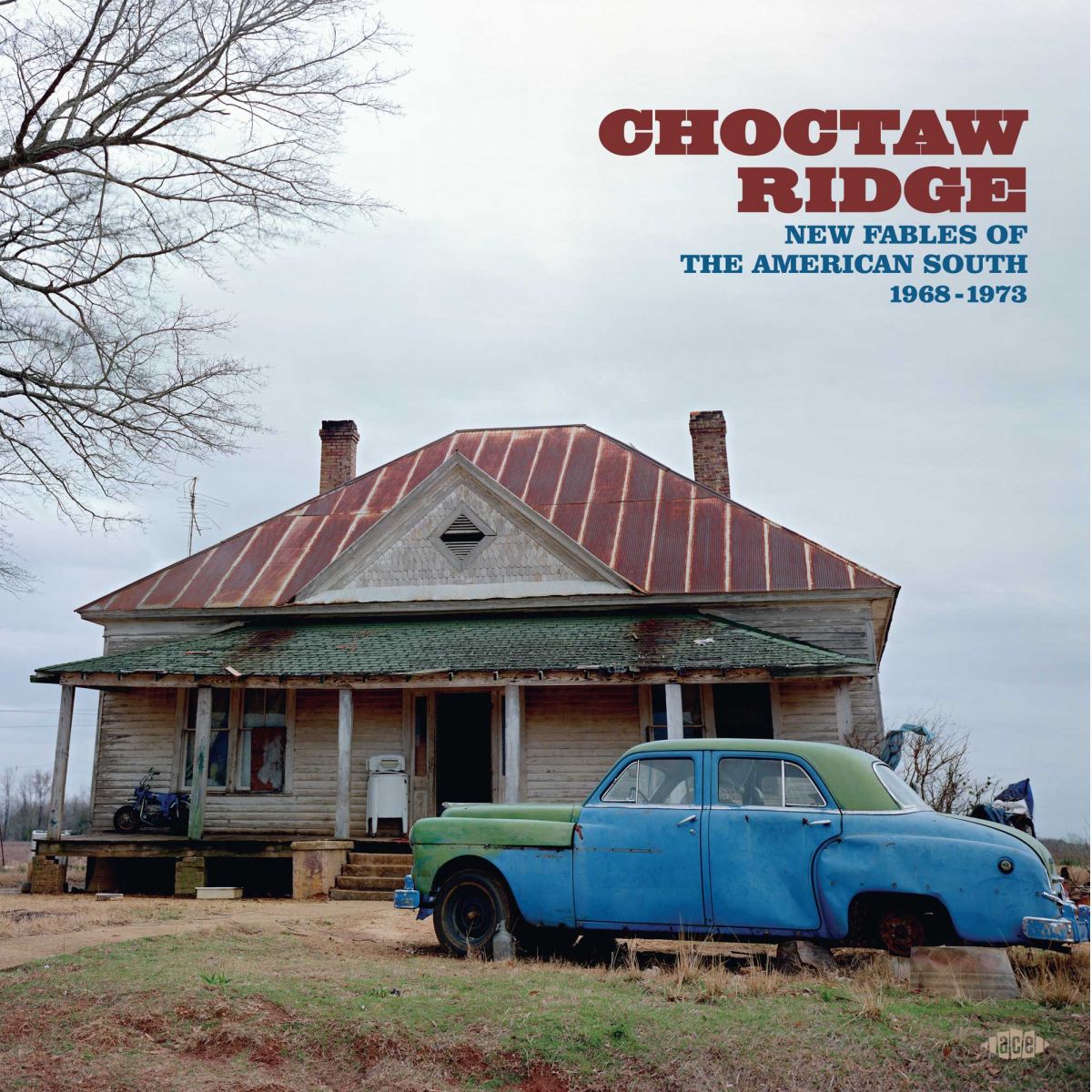
Bobbie Gentry’s Ode To Billy Joe, a massive hit in 1967, is the template for this compilation of storytelling songs of the American south, all of them released in the following five years, a fairly tumultuous period in The States. The album is the latest to be compiled for Ace Records by Bob Stanley and Martin Green (both with a fine pedigree in dredging up fantastic songs from the past) and Choctaw Ridge is a fascinating listen whether you are au fait with the period or just intrigued by the approving mentions of it on social media in advance of its release.
Ode To Billy Joe itself isn’t present but Gentry does appear on Belinda, a banjo driven tale of a lonesome bar room dancer, and it’s snapshots such as this which pepper the album. Well-known names such as Dolly Parton, Mike Nesmith, John Hartford and Kenny Rogers all appear but lesser known artists such as Rob Galbraith, Sammi Smith and Henson Cargill can startle with their contributions. Aside from Gentry, Lee Hazlewood gets credit for originating this amalgam of country and pop and he has two appearances here while Jim Ford and Tony Joe White provide some swampier moments.
The album is a rich tapestry of adventurous styles, intricate arrangements, and songs some of which, at the time, ventured into territory rarely spoken about never mind being played on the radio. It’s a fabulous listen.
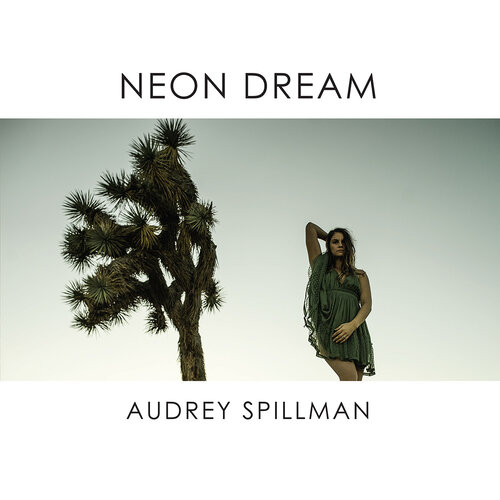
Until Neon Dream dropped through the letterbox, Audrey Spillman was somewhat of a mystery to us here at Blabber’n’Smoke. We’d heard (and seen ) her as part of the Buffalo Blood collective (featuring her husband, Neilson Hubbard along with Joshua Britt and Dean Owens) which, in itself was something of an offshoot of Hubbard and Britt’s Orphan Brigade. Due diligence reveals that Spillman has a couple of albums and EPs already under her belt and had also acted in an independent film, Wheeler, alongside Stephen Dorff and Kris Kristofferson. Having heard Neon Dream, it’s fair to say that we’ll be checking out those past releases as we have truly succumbed to Spillman’s bewitching songs on Neon Dream.
The album opens with Austin Motel which contains the lyric providing the album’s title, a title which is quite apt as much of this album is a dreamlike reverie with Spillman’s voice somewhat spellbinding. Her hubby Hubbard, Will Kimbrough and Dan Mitchell are the musicians who provide the ingredients and they are perfect dream weavers, the delicate arrangements perfectly suited to the voice. Austin Motel is a perfect example as the song undulates between swooning guitar and percussive pops and fully fledged Neon lit Americana. Beyond The Blue is delivered in similar fashion with its fusion of pop and roots reminiscent of Neko Case on albums such as Blacklisted.
Elsewhere, Spillman digs a little deeper into her own voyage with Red Balloon an intimate recollection of a child’s relationship to her father while Little Light Of Mine is a delicate song to her infant son, sweetened immensely by the superbly restrained and cosseting guitars. On a darker note, Go On And Fly is an eulogy to her late stepmother but it has a universal touch.
A cover of Summertime, the Porgy & Bess chestnut, might seem surprising but Spillman and crew actually manage to breathe new life into it, their resurrection is wonderfully languid and limpid. Stretching across to the Buffalo Blood project, there’s also Spillman’s take on White River which adheres, for the most part, to the original but with glistening guitar murmurings adding to its quiet majesty.
Following on from his successful “back to the roots” album, If You Don’t Mind, recorded with long-term guitar partner, Lloyd Reid, Daniel Meade returns to his one-man band set up for his latest opus. Ever Wonder Why You Get Out Of Bed? is a disc which sees him continuing to pursue a fuller sound while retaining much of the spirit which has inhabited his recent releases.
It’s evident from the beginning, as the title song opens the album with a whistling wind behind Meade’s lonesome voice and strummed acoustic, before swelling into a grandiloquent mix of synths and fiery guitar, that Meade is aiming high. He paints a dystopian picture, a wail of despair really which includes a litany of life’s losers and villains. His words and the delivery are quite reminiscent of Pete Townshend’s work circa Who’s Next. Townshend comes to mind again when Sometime The Rain Don’t Get You Wet erupts into view with its guitar power chords, although, as it powers along, the presumably synthesised horns threaten to overpower what is in essence a cracking slice of power pop which is just begging for some 12 string Rickenbacker jangle. It’s a fine double whammy to open the album but thereafter Meade dials it down (slightly) and begins to roam, which is where the fun really begins.
By The Book comes across like Jerry Lee fronting Booker T & The M.G.s with its turbo charged guitar while Watcha Doin’ To Me roots around in garage band exuberance, joining the dots between the Sir Douglas Quintet and the sneering punk ridden Costello & The Attractions. Meanwhile, planted at the piano, Meade rips through the exuberant rockabilly roustabout of I’m Too Tired To Sing The Blues. He dresses this song up with snatches of found sounds and radio excerpts but, at root, it’s a grand showcase for his exceptional keyboard skills, up until and including the final trill. There’s more roustabout piano (along with a soaring guitar solo) on the amped up vocal duet with Cara Rose on Look No Further which simply rips along, just awaiting its turn to be picked up by some enterprising film director looking for the perfect song for his Scots road movie, a follow up to Restless natives perhaps?
There’s a loose limbed Stones cum Faces’ like rumble on Now I Laugh but heading back into his roots, Meade offers the clap along strum of The Choices That You Make which makes more sense of the Scots male psyche than any number of learned papers. Topping these however is the glistening ode which is To The Lovers, a glorious glitter ball swirl of sounds with a wonderful air of resignation in its refrain.
The album is available on CD and vinyl and download, see here.
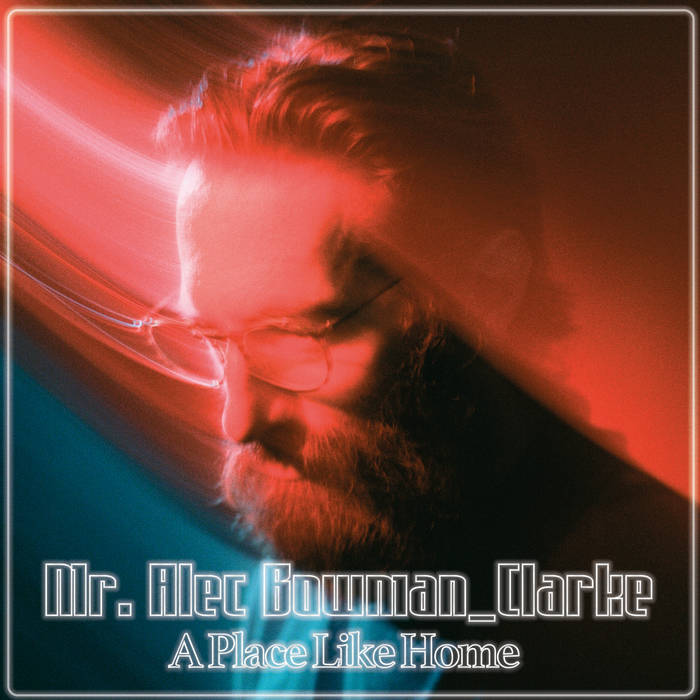
When Blabber’n’Smoke reviewed the then Mr. Alec Bowman’s album, I Used To Be Sad & Then I Forgot, we said, “It’s a brave album. It’s dark, but then without dark we wouldn’t have any light. And beyond the darkness, the songs, arrangements and performance are quite superb.” Light and shade continue to colour his music on this five song EP which was recorded in three days with Bowman_Clarke accompanied by his now wife Josienne Clarke (who produced and played on I Used To Be Sad & Then I Forgot) along with Lukas Drinkwater, both of them playing several instruments. The EP is not dissimilar to the previous album with Bowman_Clarke’s voice still somewhat world wearied, dispassionate almost. Comparisons to Cohen remain tempting but here there are also moments when the likes of Syd Barrett and Lou Reed come to mind.
Were he just a sound-alike, singing bedsit songs to cast out his demons, Bowman_Clarke would still be worth a listen, but he ventures forth here with a quite glorious set of songs which almost limp from the speakers, bruised and friable, on the verge of falling apart. Josienne Clarke adds her voice, saxophone and clarinet to the mix, providing some colour to the overall sense of chiaroscuro, but this is downbeat music with a capitol D.
A sound effect, we think of an old-fashioned film splicer, opens and closes the first song, Deleted Scenes. Here Bowman_Clarke searches for meaning within the mundane – the discarded memories and cast offs which constitute one’s experience as we hurtle from cradle to grave in what is essentially an existential soul search. The abrupt end to the song might be seen as high comedy – the editor wearied of Bowman_Clarke’s murmurings, cutting him off and discarding him – or a nod to the fact that, search as we may, the end can come out of the blue.
The Ghost Of Mistakes recalls the folkier elements of I Used To be Sad & Then I Forgot with its simple melody and breathy clarinet, as Bowman_Clarke burrows into domestic bliss and its precarious harmony. It’s a path riddled with past mistakes which have to be delicately managed but overall, it’s gently optimistic. Speaking Of Guns is the starkest song here with the guitar quite scabrous and slashing away as Bowman_Clarke dissects his song writing with a reference to Checkov’s principle that, if you mention a gun in a story then you should end that story with the gun being used. That aside, the song comes across like Lou Reed singing a seriously sad Syd Barrett song.
A Red Light In A Darkroom revisits some of The Ghost Of Mistakes territory, carrying forward that slight hint of light at the end of the day, and the disc closes with the title song which is decidedly Leonard Cohen like, especially with its hotel reference at the beginning. Sounding like a subdued out-take from Death Of A Ladies Man, it’s a song of solitude and longing, the singer insomniac and stranded, his lifeline the phone and the promise of home comforts. It’s a terrific close to what is a very impressive set of songs. Not your regular moon in June type by a country mile but an intriguing insight into the current state of mind of Bowman_Clarke and a fine retort to Dorothy’s belief that there’s no place like home.
Return Of The Idle Drones was initially conceived as a follow up of sorts to Matt Hill’s 2012 live album, Greedy Magicians, released under his previous moniker, Quiet Loner. Of course, Covid intervened, leading him to describe it as “a live album without the audience.” Undeterred, Hill and multi instrumentalist James Youngjohns went ahead and recorded anyhow in a studio based in a 19th Century Mancunian mill. Greedy Magicians was, in essence, a political album and its successor is very much in the same vein as Hill delivers a set of songs inspired and occasionally disgusted by contemporary events and historical injustices.
Hill has been ‘songwriter-in-residence’ at the People’s History Museum in Manchester and two of the songs here (Strike and Build Us Something More) were written during that sojourn. They are typical of the subjects which interest Hill, the first being a song about the match women’s strike in 1888 and their role in the creation of the trade union movement, the latter, a celebration of the post war mood which saw the creation of the NHS and the welfare state. Much of the album is in similar territory as Hill topples social media mobs, the super rich and our current wave of populist (and dishonest) politicians as if they were pigeon crap encrusted statues.
Reading the above you might imagine that Return Of The Idle Drones is full of spittle specked angry rants but that’s not the case. Hill knows who the enemy is and presumes that his audience do too. Hence he might point fingers but he doesn’t come out and call Blowjob Johnson a bastard on Born To Rule. He doesn’t need to when he can sing lines like “privileged and titled, superior and cruel, there’s not a shred of doubt, he was born to rule.” He uses satire and sarcasm excellently and at times offsets the darkness within the songs with decidedly upbeat and melodic music. Hill cites Randy Newman as a song writing inspiration and says that 60’s singers, Scott Walker and Glen Campbell were sources for some of the sounds on the disc. We’d add that there’s more than a hint of a youthful Elvis Costello lurking here also, especially on Talking It Out. In addition (and maybe this is where Walker comes in) there’s a sense of European balladry on several of the songs, in particular, on the jaunty The End Of The World Is Here.
Hill is accompanied throughout by JamesYoungjohns who plays guitar, harmonium, lap steel and percussion along with Adam Gorman who plays piano. This provides plenty of light and shade on the album but it has to be said that the closing song (aside from two bonus tracks) Build Us Something More pretty much eclipses all which came before it in its aching beauty.
Return Of The Idle Drones is available as a download and as a limited edition CD, only from Bandcamp. Hill states, “I am not releasing the album to platforms like Spotify, Deezer, iTunes etc. I have to pay them for the privilege of having my music on there and in return they pay miniscule rates of return. Instead the only place you will find it is on Bandcamp -a platform that gives a fair deal to the artists it relies on. For some artists this could be commercial suicide but I believe that my small but committed band of supporters will not be phased by it.” For those who buy the CD, it contains two bonus songs including what Hill calls his Brexit song, Pound Shop Albion. Another Costello influenced number, it’s well worth going for the CD as opposed to the download.
Something of a labour of love, The Wanderer is a two disc tribute to the late Jackie Leven, curated by Michael Weston King on the tenth anniversary of his friend’s passing. Calling on a wide range of Leven admirers, Weston King has compiled 22 songs, all Leven covers bar his own self-penned tribute to the man along with songs by Levi Henriksen & Babylon Badlands and Liam Carson with Knut Buen.
As with most tribute albums there’s a wide variety of takes on Leven’s styles on show and some are more successful than others while we reckon it’s fair to say that what the album is really missing is Leven himself, given that he was such a unique and powerful character. Weston King is perhaps (and somewhat ironically) the one who gets closest to Leven on The Final Reel which captures some of his Celtic vagabond ways. Meanwhile it’s Scots crime writer Ian Rankin (who collaborated with Leven on several projects), accompanied by Dean Owens, who sounds most like Leven on the spoken word Edinburgh Winter Blues, one of our favourite moments on the album.
The two discs are subtitled Gentle Man and Hard Man, reflecting the conflicting dual personality which most folk attribute to Leven, but aside from a couple of more raucous numbers on disc 2, there’s little to distinguish them from each other. What they do portray is what a fine songwriter Leven was. Leven’s partner, Deborah Greenwood, offers a beautiful version of Universal Blue, and is quite touching on this extremely tender and aching song. Almost as touching is Boo Hewerdine’s plaintive delivery of A Little Voice In Space and Kathryn Williams proffers an ethereal and dreamlike version of The Crazy Song. Two sublime songwriters offer up sublime readings of Leven in quick succession as Arksong (Marc Pilley) and then James Yorkston delicately pick their way through Honeymoon Hill and Empty Square In Soho respectively. Meanwhile the other half of My Darling Clementine, Lou Dalgleish is quite majestic on her solo piano delivery of One Long Cold Morning.
The Hard Man disc opens with Andy White’s rocked up Standing In Another Man’s Rain which wrestles with fuzzed guitar and bagpipe like squirls, emerging sounding like The Go-Betweens on amphetamine. That said it does recall Leven’s version of “the big music” trumpeted by The Waterboys, that widescreen Celtic sound. Tom Robinson tries something similar but with less success on his version of Classic Northern Diversions but for a truly left field take on Leven it’s hard to beat Johnny Dowd’s unhinged robotic Farfisa fuelled romp through Farm Boy – it’s classic Dowd and one reckons that this might have been Leven’s favourite number here were he to have heard it. The Membranes hark back to Doll By Doll days on their splenetic delivery of More Than Human but Henry Priestman calms the waters with his boho delivery of Paris Blues which sounds like a beatified busker on a Paris Boulevard. There’s a theatrical heft to Eliza Carthy’s Brechtian take on The Garden but several of the artists simply take a song and deliver it in their own style. Jeb Loy Nichols’ laid back Caribbean vibes on The Working Man’s Love Song is a joy to hear while fellow Fifer, Rab Noakes, drills into Leven’s roots on the docudrama which is Poortoun with Noakes handing in a gloriously handmade performance, fleshed out with acres of acoustic guitar and double tracked vocals. Another Scottish act, Dogtown Roses are in excellent form on the banjo driven Elegy For Johnny Cash which seems to have been hewn from Appalachian rock with flashes of dark Americana Gothic.
Weston King has certainly honoured the memory of Jackie Leven well with this tribute which serves in its own right as a highly enjoyable listen. If it inspires folk to explore Leven’s own albums then all the better, and with a “best of” collection, Straight Outta Caledonia, recently released along with a forthcoming reissue of his first solo album, The Mystery Of Love Is Greater Than The Mystery Of Death, due in November from Cooking Vinyl there’s no better time to do so. In addition,proceeds from this album will benefit the Westminster Drug Project (WDP) a charity that continues the work of Jackie’s own charity, The CORE Trust.
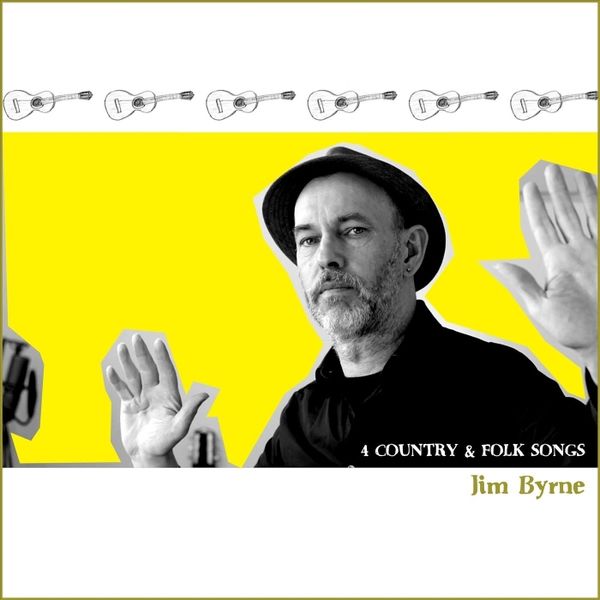
Glasgow’s Jim Byrne is something of a musical chameleon. Over the course of four solo albums and a couple of EPs as a member of The Bearpit Brothers, he has rooted around various pop, folk and tin pan alley styles while he will be fondly remembered locally for his fledging years in Clydebank playing punk and garage rock, including a stint in The Primevals. So far he has been firmly in the independent camp when it came to his recordings but for 4 Country & Folk Songs, he finds himself on the roster of Fox Star Records, a situation which allows him to proudly (somewhat tongue in cheek) proclaim, “59 year old songwriter signs his first record deal.”
Following in the footsteps of musicians as varied as Dan Hicks and Richard Hawley, Byrne delves into past sounds and reinvigorates them. Be it on the fragile and broken down country waltz of The Yellow Clock or the twanged telecaster thrums on The Holy Ghost, he sets the scene and then peoples it with his fine baritone croon and keen lyrics.
The four song EP opens with an eerie fiddle introduction to The Yellow Clock, a haunting song which inhabits the thoughts of a daughter returned home from her mother’s funeral. Surrounded by mementos, she surrenders into a reverie, almost hypnotised by the ticking clock. With rustic fiddle (by Kurt Baumer) and harmony vocals from Lesley O’Brien, Byrne paints a perfect miniature of grief and loss. This Heart Of Mine Is A Blind Blind Fool, in contrast, is quite jaunty as Byrne looks to Hank Williams and his ilk for inspiration, adding in a mild Jambalaya of swampy Cajun sounds with O’Brien again joining in on vocals.
Tell The Devil I’ve Stole His Crown Of Pain is a grand melodrama which neatly sits within murder ballad and Child ballad idioms. The culprit here is a shadowy and somewhat supernatural figure who is “born with the devil’s charm,” the type of character you’d be well advised to avoid never mind entering into a contract with him. It’s wonderfully realised with a lonesome fiddle providing the melody over a repetitive guitar rythym while Byrne comes across like Nick Cave channelling Johnny Cash. Cash comes to mind again, along with Lee Hazlewood, on the concluding song, Holy Ghost. It’s cinematic, almost widescreen, as it boils down religious symbols, spaghetti westerns and an old fashioned love story into one great pot boiler. If Quentin Tarantino is still on the lookout for songs to put on his next pulp film, then he’d find some salvation here.
Woody Guthrie famously had a sticker on his guitar which stated, “This guitar kills fascists.” Of course, he never actually hit a Nazi over the head with the thing or garrotted one with an E-string but I guess we all know where he was coming from. Nathan Bell might have a baseball bat at home which he calls his Nazi thumper but again, it’s doubtful that he’ll crack anyone’s skull with it. However, he’s certainly in the same ball park as Woody when it comes to his songs.
Bell’s late blossoming as a songwriter and performer of note began with his “Family Man” trilogy which saw him singing about the hard pressed everyday folk of America. His empathy, observations and acute insight raised the bar for so-called “blue collar” folk music and he was an immediate hit in the UK when he started to perform over here back in 2017. This coincided with the election of a tangerine toned oaf to the high office of President of The United States, a travesty which outraged Bell and which led to his spectacular album, Love > Fear (48 hours in Traitorland). This was the tip of an iceberg of populism which saw several countries around the world elect (or being duped into consolidating) demagogues into office. The warning signs were apparent and the subtitle of Bell’s latest album makes it clear that, despite the demise of Trump, we’re still in a dangerous place.
It Can’t Happen Here is a 1935 novel by the Nobel prize winning American author, Sinclair Lewis. It describes the election of a popular demagogue to the White House who soon begins to institute fascist laws (strangely enough it started to sell again in early 2017). Bell changes Can’t to Couldn’t, indicating that it’s too early to say that this will never happen. The album title is a warning shot, a reminder that all need to be vigilant although the disc itself is a more rounded affair, much more nuanced than had it consisted of “finger pointing songs.” There’s a great deal of anger enveloped within its grooves but there’s also a great deal of love and respect.
The majority of Bell’s albums have been acoustic affairs so it’s a bit of a jolt to hear the Pete Townshend like guitar crashing in at the beginning of Angola Prison. It’s the muscle of the piece, jolted by the sinewy and melodic acoustic guitar which underpins the song as Bell tears into the cruel punishments meted out to mainly black prisoners in this infamous jail. It’s a powerful opener and Bell opts for full band workouts on several other songs such as on the slippery bar room blues of Wrong Man For The Job (“If I was the President I’d start another war. Wouldn’t care who we were fighting or what we’re fighting for. I’d take all your money and slip out the back door…”) and the Stones’ like back alley scrabbling which is Mossberg Blues. Meanwhile, Running On The Razor, a song Bell wrote in response to a documentary on a Southern family which he describes as poverty porn, is a deliciously dark slice of voodoo blues which has Aubrey Sellers adding her soulful voice to Bell’s gruff delivery. It’s quite magnificent but it’s not going to played on the radio anytime soon so you’ll need to buy this motherf***er in order to hear it.
There’s an electrifying electric version of Retread Cadillac, a song about Lightnin’ Hopkins which first appeared on Bell’s 2019 release The Right Reverend Crow Sings New American Folk And Blues. Here, it’s Regina McCrary who generates the power as she sashays, moans and testifies, transforming the song. It’s McCrary again who adds the vocal oomph to Mossberg Blues and clearly Bell is having a ball with these stellar vocal sparring partners as he also has Patty Griffin sing on three of the songs here. These are more reflective, and in two cases, more personal songs, allowing Griffin to entwine her voice with Bell’s in the grand manner of Parsons and Harris. American Gun is contemplative as Bell simplifies America’s approach to the world which weirdly enough boils down to Mao’s infamous dictum that “all political power comes from a barrel of a gun.”A Lucky Man finds Bell writing about his travels overseas and reflecting on his mortality, with the song dedicated to his late father while To Each Of Us is an achingly beautiful love song.
There are many facets to this fascinating album which was recorded in 2019 but held over due to the pandemic. Some of the songs foreshadow, not the pandemic, but the political mess we remain in with Bell calling out those who pull the levers, not to benefit others but themselves. He can pull at your heartstrings but he can also raise your pulse as he rails against injustice. Maybe this album can kill fascists.
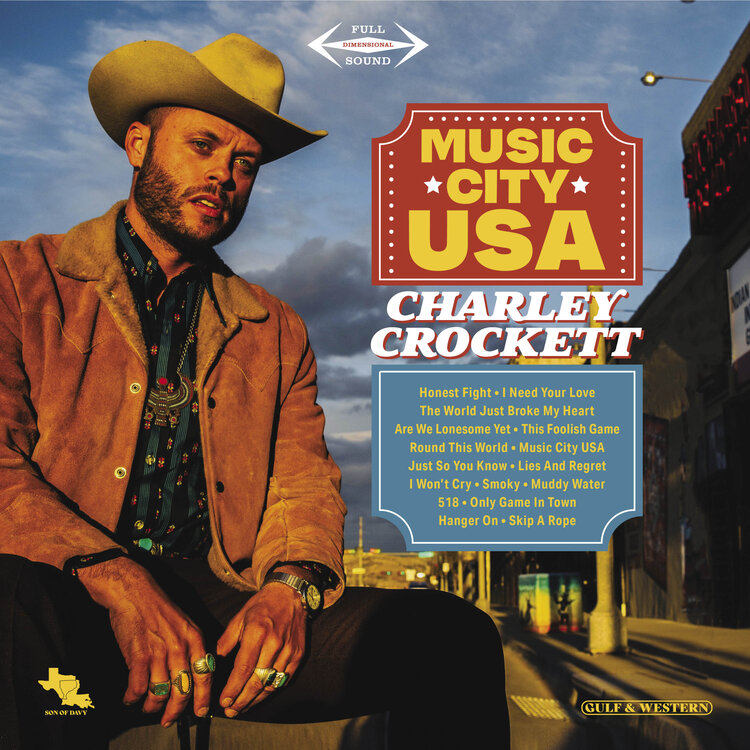
Far from being locked down, Charley Crockett seems to have been incredibly busy over the past year. August 2020 saw the release of his excellent album, Welcome To Hard Times and then his tribute to the late James Hand came out earlier this year. On a roll then and here comes Music City USA, a glorious collection of songs on which Crockett roots around country, soul and rockabilly with some abandon, ably supported by his band The Blue Drifters. One might assume that the title alludes to Nashville but Crockett roams further afield allowing that many cities in the states have their own claim to music fame, although it’s fair to say that he is rooted in the south and south west on what he calls his “gulf and western” album.
Compared to Welcome To Hard Times there’s more variety on show here and while many of the subjects remain the same, Crockett seems to have a more personal investment in several of them. Songs of outsiders hoping to be discovered relate to his busking years and, on a wider canvas, he takes aim at the dismal situation we all find ourselves in these days. Despite the sometimes grim topics the songs are all gussied up and presented quite wonderfully. The ghosts of Hank Williams, Buck Owens, George Jones and even Doug Sahm and Solomon Burke may haunt the record, but it’s vibrant and colourful, as is the excellent artwork on the cover which is quite evocative in its Kodachrome intensity and retro design.
Honest Fight opens the album in a charming and disarming way as Crockett adopts an everyman pose, toiling to get by and standing up for himself. It’s similar in style to many of the songs on Welcome To Hard Times with its straightforward country feel and several songs such as The World Just Broke My Heart, Are We Lonesome Yet, Smoky and Just So You Know follow suit. Crockett knows his stuff and he ranges across a variety of so-called country genres. There’s a Bakersfield touch to Lies And Regret while Buck Owens comes to mind on the title song and there’s surely more than a hint of George Jones in the apologetic Hanger On while Round The World is a helter skelter banjo driven ride. The title song, a wonderfully upbeat countrypolitan number, finds Crockett slyly railing against the corporate side of Nashville. These are all original songs couched perfectly in their various idioms but he also delivers two covers which drive home his knowledge of and love for these classic songs. Muddy Water is a delightful outlaw song, originally recorded by Stonewall Jackson and given here a Cash like delivery. Skip A Rope however is a horse of a different colour. A mid 60s song by Henson Cargill, it’s in a similar category to Porter Wagoner’s Rubber Room, that is to say it is quite unbalanced and ripe for revival as the deceptively jolly playing belies the description of a dysfunctional family who bring up a racist kid.
While Crockett rides imperiously across these varied country genres, he also swoops into the melting pot of his gulf and western musical gumbo. He fronts a horn section on the pleading I Need Your Love and totally nails the sound one associates with Muscle Shoals, a feat he repeats on I Won’t Cry which could have come from the pen of Dan Penn or Spooner Oldham. Acknowledging that blend of blues, soul and country which flourished in the late 60s, he then delivers the wonderful This Foolish Game which should delight any fans of James Carr. However, the highpoint of the album is when Crockett swivels back to dark country sounds on the gutbucket country thump of 518, a song that sounds like Hank Williams backed by The Bad Seeds. Quite exquisite. All in all Crockett gets you to thinking that Music City USA is not so much a place, more a state of mind.
Ms. Ungerleider will be better known to most readers as Oh Susannah whose debut album Jonestown has long been well respected. Her name change is in part due to her increasing awareness of the racist and “minstrelsy” associations of the original Stephen Foster song which she had adopted for her stage name. She goes on to say this also represents a personal decision allowing her to feel more comfortable as herself rather than hiding behind the moniker. The proud, almost defiant title of this album certainly does seem like a relaunch of sorts but nestled within the album cover is a sweet selection of songs which display that Ungerleider certainly continues to be an excellent song writer and performer, fragile while, at times, quite powerful.
The album is perfectly produced by Jim Bryson who allows Ungerleider’s voice and the muted, mainly acoustic, trappings of the songs plenty of room to breathe. It’s dreamlike at times although on occasion these dream can be unsettling. Two songs, Baby Blues and Disappear, inhabit the mind of a child who is witness to disturbing scenes but they are counter balanced by a pair of delightful love songs to her own child on Summerbaby (which relates the kid’s premature birth) and Hearts. Alongside these there is a song co written with bass player Bazil Donovan about his own daughter which is the poppiest number here.
The album opens with Mount Royal, a wistful account of youthful hopes and aspirations set in Montreal as the protagonist aims to shoot for the moon and the stars but is gradually disillusioned. It’s a wonderfully descriptive song composed of little vignettes while the arrangement is superb as a gentle backing of whispered keyboards gradually emerges before a final flourish. Pumpkins finds Ungerleider recalling the sweet but icy tones of Grace Slick on an autumnal song which gently glows as it shuffles along with tender accompaniment. The disillusion alluded to in the opening song is evident in the rueful North Star Sneakers where teenage rebellion has been tamed by marriage and children although the memories remain vivid. The album closes with a song which also alludes to earlier offerings. Ships seems to find Ungerleider seeking to help a survivor as she asks “what did you see when you were young what made you hide your face and bite your tongue,” offering to break into their “box”, not to “steal but to reveal, to dress wounds and heal.”