Blabber’n’Smoke first became aware of Tami Neilson back in 2015 when we reviewed her album Dynamite! The exclamation mark in the title was well placed as the disc was an excellent slice of revved up rockabilly and hard-core country honky tonk. Chickaboom! really deserves two exclamation marks as it further revs up the energy.
Bequiffed with a tremendous beehive, Neilson is unashamedly retro. The songs here sneak around the likes of Etta James, Mavis Staples (indeed, she pays tribute to the Sister on Sister Mavis), Wanda Jackson and Patsy Cline although she can also deliver an excellent slice of voodoo rock’n’roll in the manner of Screaming Jay Hawkins on the gutsy You Were Mine.
Call Your Mama sets things rolling, its title recalling of course Etta James’ Tell Mama and Neilson does come across here like Etta fronting The Cramps. And that’s part of the beauty of the album, the fifties and sixties styles driven with a riveting studio gloss, the guitars swathed in reverb and twang, recalling the rockabilly revivals of the eighties and onward.
Neilson is a force of nature on the ballsy Ten Tonne Truck as she adds a lascivious laugh to the choruses and 16 Miles Of Chain allows her to bellow magnificently over some fabulous junkyard blues. Queenie, Queenie meanwhile adopts the Dixie Cups’ Iko Iko rythym and her tribute to Mavis Staples is rollicking and slapping rockabilly deluxe. She steps out from her comfort zone in the early sixties romance of Any Fool With A Heart which has an Everley’s touch to it while the closing song, Sleep, is a lullaby with a light touch with a slight sense of Santos And Johnny to it along with a Disney like naiveté.
With ten songs all blasted out in half an hour, Chickaboom! is tremendous fun. Do join in.
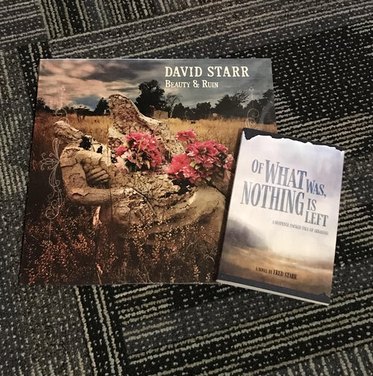
Colorado musician David Starr has been steadily building a following in the UK over the past five years. A trifecta of well regarded releases (Love And Sabotage, The Head And Heart and South And West) alongside his annual touring posited him as a deeply romantic and yearning singer songwriter, well schooled in the attractions of classic American song writing, in particular, the seventies heydays of California’s sun blistered troubadours. A fine guitarist and an excellent raconteur, Starr uses this heritage to grand effect on disc and in performance but on Beauty & Ruin, his most ambitious project to date, he delves into his own past for what must surely be considered as his best album of his career.
Beauty & Ruin is a homage to Starr’s grandfather, Fred Starr, a teacher, politician and novelist, who died in 1973. His last novel, Of What Was, Nothing Is Left, tells the tale of an Arkansas youth, indentured to work for a veteran of Teddy Roosevelt’s Rough Riders who fought in the Spanish American wars. The book spans his decades with ‘The Cap’n’, dealing with love, loss, treachery and death, with echoes of Steinbeck and Charles Portis in it. Starr had fond memories of his grandfather but had avoided reading his books until, a few years ago he decided it was time to right this and his reading of Of What Was, Nothing Is Left, sparked his creative spirit. Starr gave a copy of the book to his chum, John Oates, who was equally taken by the story and the pair decided to gather a select group of friends together and ask them to read the music and write songs inspired by it. Jim Lauderdale came on board as did Doug and Telisha Williams (of The Wild Ponies) along with Dana Cooper, Wood Newton, Irene Kelley and Shelley Rae Korntved. Together they crafted the album (with several of them appearing on it) and with Oates producing.
Beauty & Ruin is not a concept album, it doesn’t follow the book’s narrative and can be listened to and enjoyed without any knowledge of the book. However, the songs do pertain to places, people and incidents in the narrative so the disc and the book are definitely companion pieces and for those thinking of reading the story, this review is spoiler free.
Beauty & Ruin is much more expansive than Starr’s previous albums, the music provided by a swarm of players and backing singers. It opens with a simple Starr love song, Laura, for the female protagonist in the book, the cause of much heartache. With its gliding pedal steel over rippling guitars and superlative percussion it’s a reminder of Starr’s love of classic singer songwriter days and this style reappears on the darker title song and then on Road To Jubilee, a song co-written with Jim Lauderdale, which traffics in the narrative songs of Jackson Browne while Fly By Night recalls the Eagles. There’s a more direct country rock influence on Laurel Creek which features Dobro as Starr sings of one of the more devastating events from the book while Irene Kelley provides excellent accompanying vocals. Bury The Young (written by The Wild Ponies) is in a similar vein as it flows as gently as a mountain stream but with a heart of darkness. Americana gothic indeed.
At the centre of the album are two songs on which Starr and company pull out all the stops. Of What Was, Nothing Is Left has a Jackson Browne tilt to it initially with the rhythm section punching it beneath a grand melee of guitars and pedal steel. As the song progresses, Starr’s voice becomes more strident and soulful till, by the end, he’s wound tight as a spring, ready to snap. It’s a powerful song and it’s followed by another highlight on The Cracks Of Time. It’s a gentle but ominous song which opens with pattered hand percussion and mandolin before a glowering electric guitar prowls into sight eventually slithering into a solo which is quite intoxicating. The darkness abides on the night time prowl of My Mother’s Shame which almost growls with an old testament sense of destiny and on which, the guitars are elementally evil as they slouch towards the narrator’s demise.
As in the contradiction of the title, there’s darkness and light here and Starr manages both with equal aplomb. He’s not cutting edge Americana but that’s probably not where he wants to be. Instead, he’s a craftsman with his finger on the pulse of what, for a great many people, was the high point of American song writing. That he does it so well is to be applauded and in Beauty & Ruin he has perhaps crafted his masterpiece. We’re sure his grandfather would be proud.
The album is available on CD and vinyl (which really shows off its striking cover) and Starr has republished his grandfather’s book. All available on his online store. Meanwhile, Starr will be touring the UK in May, all dates here.
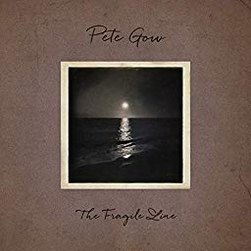
Pete Gow’s debut solo album, Here, There’s No Sirens, was one of the UK’s best albums from last year and fans who attended his short run of shows to promote the disc had the opportunity to buy The Fragile Line, a companion disc, limited to tour dates only. Now, the good folk at Clubhouse Records have released the album digitally (with an additional song tacked on) so if Sirens rocked your boat, here’s a chance to get more from the pen of Gow.
Recorded by the same team as on Sirens (Gow with drummer Fin Kenny and producer Joe Bennett on keys), The Fragile Line is more dynamic than its companion with a punchier rock touch to several of the songs. Tourniquet, for example, rushes by in a tour de force, and Gow explains that many of the songs were written to allow a more dynamic flow to the live set, saying that, “the songs on Sirens made a great track listing, but a pretty depressing set list, so we wanted to get lots of light, shade and balance into the live shows.”
Thus we have the punchy soul groove of Let’s Make War Happen, the aforementioned Tourniquet and the closing remake of Case Hardin’s Poets Corner (from Colours Simple) which retains its funereal drumbeat but adds strings and loses the original guitar soloing while Gow’s voice dominates more so than on the original. The digital addition, Storm Surge, could easily have sat on Here, There’s No Sirens as Gow delves once again into a gloomy and solipsistic doomed romance as piano and strings weigh in with a resigned forlornness. The title track is perhaps the best on the disc, stripped back, with cello adding a wonderfully sad timbre. There’s a cover of Warren Zevon’s Lawyers, Guns And Money sat in the middle of the disc which, in the live shows, was apparently a highlight. Here it’s slightly out of place and slightly awkward. It’s, of course, a great song and Gow performs it well, but to this reviewer’s mind the strings and things just muddy the waters here. That said, The Fragile Line is a must buy for anyone who dug Here, There’s No Sirens.
Currently weathering the storms battering the UK as he tours, Gill Landry’s latest release is perhaps the best of his career. Skeleton At The Banquet is a gorgeously dark and delicious album, deeply grained with Americana tropes – Dylan like troubadouring on Angeline, western vistas on The Wolf, badlands existentialism on Nobody’s Coming and drunk in the gutter romance on The Refuge Of Your Arms. With Landry’s fine baritone voice oozing throughout along with grand guitar and excellent arrangements, it’s a winner from start to finish.
Landry describes the album as, “a series of reflections and thoughts on the collective hallucination that is America” and it’s true that the songs are not narratives per se. Rather, Landry summons up a mood which is reflective but also rather lost. The Place They Call Home, a song best heard in a low light, glimmers with an almost apocalyptic despair as weeping violin accompanies this series of snapshots, the characters almost ghostlike. However, Landry dresses all of this musing in immensely listenable melodies and arrangements such as on the lush neon-lit noir of I Love You Too and the gypsy rhythms of Trouble Town. All in all, quite magnificent.
To paraphrase Ms. Austen, “It is a truth universally acknowledged, that a fan of Byrds styled jangle rock will love Dropkick” and on their latest release, Dropkick simply confirm this universal statement. To The Byrds we’d also add that anyone who enjoyed the debut album by Bennett Wilson Poole or are aware of the myriad glories of Peter Bruntnell will also take to The Scenic Route like a duck to water.
Much, or indeed, all of the album will be no surprise to anyone who has followed this band. The wispy vocals, the jangled guitars and driving rythyms, the sunny disposition are all intact. The ten songs are all compact, most of them around three minutes in length and the band stick to their signature sound throughout closing with a couple of finely wrought minor key songs.
The album opens with a bang on the jubilant crashing guitars of Feeling Never Goes Away, a chime fest indeed and the most buoyant number here although it’s over almost before it starts. Catching On follows and it’s a bona fide classic Dropkick number with its gliding rhythm and glorious harmony vocals ending in a slight smorgasbord of feedback and sonic gobbledegook. Disappearing is announced by grumbling guitars and sweeping organ as Andrew Taylor guides the band in a Bruntnell direction which they follow again on the muscular For Too Long with its exuberant guitar solos.
Despite the sunny disposition, several of the songs deal with loss and rejection. A Matter Of Time has a resigned air to it with the lyrics recalling the late Gene Clark and that sense of unrequited romance is maintained on the mournful Home Early but hopes springs eternal as the band spark into the naive optimism of Tomorrow. Broken is the ballad of the album which has a McCartney like air to it before burgeoning into a glorious and soaring guitar solo and the band wind things up with the homely You’ll Always Be There, a tender concoction of laidback guitars over a shuffling beat as Taylor sounds wonderfully hopeful and vulnerable.
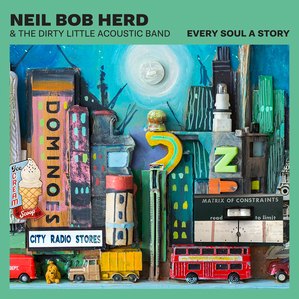
Previously mentioned on Blabber’n’Smoke as part of Sid Griffin’s Coal Porters, Neil Bob Herd has, after years of dabbling in various combos (at one point described as the Scottish Billy Bragg!) and almost becoming a stand up comic, gone and brought out his debut under his own name. Every Soul A Story is an engaging and enjoyable album although it is a bit of a mongrel, its pedigree stretching from pub rock to Scots’ folk and western swing, but, as we all know, a cute little cur is much more fun than a fussy well-bred pooch and so it is with this album.
Much of the album does remind one of previous acts who have wandered through similar fields. Plucking a few names here, we came up with Nick Lowe, Hank Wangford and Danny Adler (all superb by the way) while Herd, his Scottish roots on show, even manages to come up with a song, Light A Single Candle, which is reminiscent of Jackie Leven. The band adapt to each song with ease, whether rocking up a rumble on Best Song, racing down the highway on the rockabilly Bad Land or weighing in like a seasoned bunch of folkies on the shanty like The Colour Of History.
Ok, there’s no reinventing the wheel here but we’d defy anyone not to enjoy the snappy and well dressed As Much As I Need To which sounds like Nick Lowe singing a Buddy Holly song or groove along to the sweet swing of Everyone’s Got A Book Inside Them with its twangy guitars and excellent fiddle (by Gemma White rivaling Bobby Valentino). The most intriguing number is the slinky and swampy Dobro fuelled Well Well which is a sci fi like dystopia with the band stomping along in their best fashion. Hugely enjoyable.
A new year and a new artist to open 2020’s expected cornucopia of delights. Elaine Lennon is a Glasgow based singer songwriter who has only recently embraced her creative muse, waiting until seeing both her kids safely off to start their schooling before she commenced her own classes. Having been a passionate music fan, Lennon decided she would take the plunge and write her own songs, attending writing workshops and eventually taking her first tentative steps into live performance at the tail end of 2018. Her hard work paid off as she almost immediately won a Danny Kyle award at Glasgow’s Celtic Connections and then went on to be noted as “One to watch” by the Nashville Songwriters’ Association International. All in all a pretty impressive start which has been reinforced by a steady flow of live shows across Scotland which have all been critically well received.
And so, it’s debut album time and Lennon fulfils all the promise noted by her audiences (and those Nashville folk) as she turns in a tremendously accomplished set of songs which have her warm vocals and delicate keyboards to the fore over some very sympathetic band arrangements. With support from Creative Scotland she’s aided and assisted by some of Scotland’s best talent. Findlay Napier produces and plays guitar with Euan Burton on bass while Iain Sloan adds pedal steel and Patsy Reid manages the strings. Back in the old days this would have been called a bedsit album, a set of soothing ballads with some whispers of blues and good times, best listened to when needing cheered up after a break up, the sort of album Janis Ian used to do. There’s no doubt that Lennon does indeed raise memories of those confessional singer songwriters of yore who wrote songs which sounded like sad Christmas carols without ever mentioning Christmas, artists as diverse as Lesley Duncan and Dory Previn. More up to date, she’s obviously been a keen watcher of the likes of Gretchen Peters and it’s interesting to note that one of her more vocal supporters is Ben Glover, a man who has collaborated with Peters and as host of others.
The album opens and closes with two excellent songs. Next Friday Night pulls at the heartstrings as Lennon sings of a couple’s lifelong love story, her piano rippling away alongside a plaintive violin, her vocals here the best on the disc. By Your Side is in a similar vein, a song pledging undying love, which soars wonderfully with the piano and strings somewhat haunting. These are the type of songs in which Lennon excels and there are several here including Only Love Can break Your Heart which could have been a power ballad full of melodrama but her restrained vocals and , again, a minimal although lovely arrangement allows the song a quiet majesty. You And Me is another delicate ballad infused with hope while Fear (Breakup Song) is the one song here which is somewhat feisty in its lyrics while remaining true to the tried and trusted arrangements which suit Lennon so well.
Lennon breaks the mould on a couple of numbers. Trouble has a slight gospel blues touch to it, a Nina Simone feel if you will, and having seen Lennon play it live with vigour it has to be said that this cut is just a bit too restrained although the middle eight allows the band to swirl excellently. The throbbing bass and growling guitars on This give the song a dark Americana patina while Lennon pays tribute to a relative who played in Glasgow jazz bands back in the ‘60s on the entrancing In Songs We Live On, singing in a vampish manner over a scratchy original recording of his. There’s also one cover song on the album, a version of Hank Cochran’s She’s Got You which Lennon recrafts into another heartworn ballad with Iain Sloan adding some lambent pedal steel.
One can only salute Ms. Lennon on her drive, ambition and talent. The album is a most assured debut, and if luck remains on her side, some of the songs here would surely beg to be heard on the nation’s airwaves. In the meantime, she has an album release show under the aegis of Celtic Connections at Glasgow’s Glad Cafe on January 24th.
Those of us somewhat long in the tooth may remember The Kissing Bandits and their lead singer, Ronnie Costley. The Bandits were majot players in Glasgow in the 80’s, playing a grand mix of garage rock, post punk and power pop with Costley a commanding presence on stage with a hint of Lux Interior present. Despite being signed to WEA, the Bandits never hit the big time and they went their separate ways with Costley locating to Ireland where he still lives. He continues to make music and Blabber’n’Smoke, alongside deejays such as Iain Anderson, were impressed by his album, Souvenirs & Scotch Mist, his recollections of growing up in the west of Scotland which came out a few years back.
Matter Of Time (as was Souvenirs & Scotch Mist) was recorded with many of Costley’s compadres in the Glasgow music scene and here he offers us a countrified collection of four songs, all distinct from each other and all, in their own way, quite entrancing.
The EP opens with the title song as a zippy acoustic slide guitar glides into this rippling slice of upbeat jangled celebration. Costley here achieves the almost impossible task of recalling Gene Clark as he sings, “When rhyme and reason seem impossible to find and dreams are shackled to the past, you have to realise it’s just a state of mind and you can let it go, no need to make it last.” Allied to these Zen like words of wisdom is some fantastic playing as the song is buoyed along on a welter of acoustic guitars and banjo along with some whip smart electric guitar solos. No Money Coming In is a much simpler song which recalls the early work of Gerry Rafferty (especially on his debut album, Can I Have My Money Back) with Costley singing of the monetary woes of being a working musician. We were especially intrigued here by the opening farmyard birds squawking as a lonesome piano played some bars from Rally Round The Flag.
Away from the farmyard, Costley then launches into the eminently danceable Hey, You Want To Dance With Me which lurches magnificently with full-blown mariachi horns over groovy organ and licktastic guitar. It’s short, over almost before it begins, but it captures some of that joi de vivre which The Mavericks do so well, and if, god forbid, it gets out into the wild, could be the wedding song of next year. It’s a pity there’s only four songs here but the last one certainly leaves the listener with some puzzlement. How’s The World Treating You is an odd conglomeration of tin pan alley, syrupy country and gonzo rock with a dash of The Kinks thrown in. Aside from Costley’s acute capture of a lonesome drunk there’s creamy pedal steel guitar buttering his lyrics along with a demented guitar solo midway which is allied to a heavenly chorus. Odd indeed but strangely addictive.
Whenever she tours here in the UK, Texan singer songwriter Libby Koch is greeted with enthusiasm by the select band of followers who know of her. Live, she’s a treasure – warm and friendly, slightly sassy and with real red dirt roots – while her song writing is not to be sniffed at. Much of this is captured on Redemption 10, a live album (recorded in Blue Rock studios with an invited audience) which is essentially a remake of her first album recorded 10 years ago when she was still working as an attorney at a law firm in Houston. That album was a tentative toe in the water moment for Koch who has now released four studio albums, and while it might be egging the pudding to say it was a Damascene moment for her, its reception led to her swapping the courts for a life on the road.
Redemption was a stripped back affair, Koch, her guitar and harmonica, that’s all. Here, with a five-piece band behind her, it’s instructive to compare the discs. On the debut the songs sing out but Koch is somewhat restrained whereas here her voice has filled out and swings with her Texan accent, listen to way she now manages the undulations of How Long with a consummate ease as opposed to her more formal studio recording. Meanwhile the addition of the band gives the songs a great lift, a Technicolor scheme as opposed to the monochromatic original.
Opening with the sweet pedal steel and fiddle laced Houston, Koch sweeps through the album with aplomb. Just The Way has a Dylan (circa Desire) arrangement to it and Can’t Complain, a hardscrabble tale of red dirt living is quite magnificent, a song to rival many of Koch’s more famous peers and it’s followed by another excellent song, Redemption.
Time here to mention the stellar playing on fiddle by Javier Chaparo, guitar from Bill Browder and pedal steel wizard Patterson Barrett, all three concocting a swinging and smooth country rock backing. Barrett gets behind the piano for a raucous delivery of Down, unrecognisable from its parent album as Koch comes across as feisty as Linda Gail Lewis. Closing the album (as on the original) with Johnny Cash’s I Still Miss Someone, Koch and the band sound superb, leaving one wishing that someday Ms. Koch might be able to bring such a line up over here. In the meantime, the album’s an essential addition to any Koch fan’s library.
This second album from Hope In High Water (who amusingly describe their music as “Mountain music from the flatlands of Milton Keynes”) expands somewhat on the simpler guitar and banjo songs which populated their debut from a few years back. Josh Chandler Morris’s guitar and Carly Slade’s banjo are aided and abetted by Luke Yates on violin and percussion with Darren Camp on drums but the primary difference is that the pair have dug deeper into the well of American music. There’s more soul and grit in these grooves, not in an old fashioned R’n’B sense but picking up on vibes cast by the likes of The Band and old folk hands such as Karen Dalton.
The Band come to mind on the opening song, Healed, a song heralded by Morris singing, “Started to feel comfort in my own skin, it took a healthy dose of psilocybin” over a fine and syrupy rootsy rhythm which could have come from an album such as Cahoots. Slade then takes the driver’s seat on the banjo led It’s Over Now proving that she has some grand vocal chops which have a hint of Maria Muldaur to them. The song rolls along in fine style with its old time, almost music hall, sing-along chorus bound to be a live favourite, somewhat at odds with its subject matter which concerns surviving childhood abuse, meanwhile, an accordion allows the song to have a slight anglicised whiff to it in the manner of Richard Thompson.
While not wanting to set the pair to feuding, it’s Slade one looks forward to hearing as the album moves along. Morris has an attractive strained husk to his singing and the pair do fantastic harmonies as on the title song. However, Slade excels on several numbers. She returns to the subject of abuse on Stronger Than You Know, a much starker number than It’s Over Now, with her voice dredged from the depths while her plaintive banjo has the air of Greil Marcus’s old weird America. She gets weirder (in a good way) on the haunting Alone, a song which is worth the price of the ticket in itself as the band throw in some excellent dark folk stylings, while Something Unnamed has the unadorned simplicity which characterises the best of American folk music. Overall, very nice.
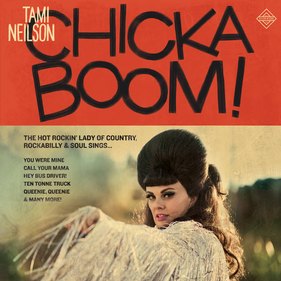 Blabber’n’Smoke first became aware of Tami Neilson back in 2015 when we reviewed her album Dynamite! The exclamation mark in the title was well placed as the disc was an excellent slice of revved up rockabilly and hard-core country honky tonk. Chickaboom! really deserves two exclamation marks as it further revs up the energy.
 Colorado musician David Starr has been steadily building a following in the UK over the past five years. A trifecta of well regarded releases (
 Pete Gow’s debut solo album,
 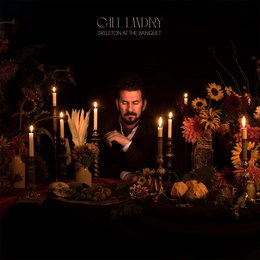 Currently weathering the storms battering the UK as he tours, Gill Landry’s latest release is perhaps the best of his career. Skeleton At The Banquet is a gorgeously dark and delicious album, deeply grained with Americana tropes – Dylan like troubadouring on Angeline, western vistas on The Wolf, badlands existentialism on Nobody’s Coming and drunk in the gutter romance on The Refuge Of Your Arms. With Landry’s fine baritone voice oozing throughout along with grand guitar and excellent arrangements, it’s a winner from start to finish.
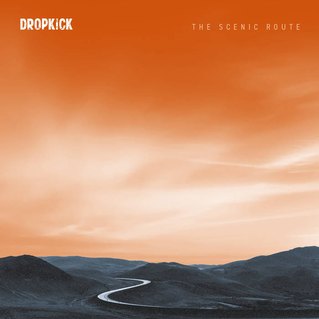 To paraphrase Ms. Austen, “It is a truth universally acknowledged, that a fan of Byrds styled jangle rock will love Dropkick” and on their latest release, Dropkick simply confirm this universal statement. To The Byrds we’d also add that anyone who enjoyed the debut album by Bennett Wilson Poole or are aware of the myriad glories of Peter Bruntnell will also take to The Scenic Route like a duck to water.
 Previously mentioned on Blabber’n’Smoke as part of Sid Griffin’s
 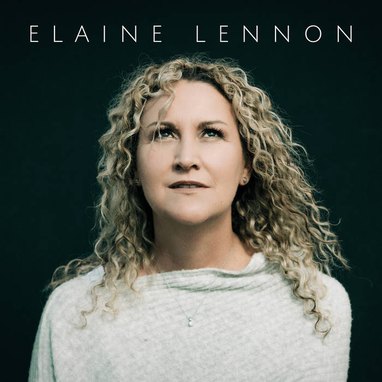 A new year and a new artist to open 2020’s expected cornucopia of delights. Elaine Lennon is a Glasgow based singer songwriter who has only recently embraced her creative muse, waiting until seeing both her kids safely off to start their schooling before she commenced her own classes. Having been a passionate music fan, Lennon decided she would take the plunge and write her own songs, attending writing workshops and eventually taking her first tentative steps into live performance at the tail end of 2018. Her hard work paid off as she almost immediately won a Danny Kyle award at Glasgow’s Celtic Connections and then went on to be noted as “One to watch” by the Nashville Songwriters’ Association International. All in all a pretty impressive start which has been reinforced by a steady flow of live shows across Scotland which have all been critically well received.
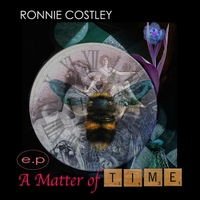 Those of us somewhat long in the tooth may remember The Kissing Bandits and their lead singer, Ronnie Costley. The Bandits were majot players in Glasgow in the 80’s, playing a grand mix of garage rock, post punk and power pop with Costley a commanding presence on stage with a hint of Lux Interior present. Despite being signed to WEA, the Bandits never hit the big time and they went their separate ways with Costley locating to Ireland where he still lives. He continues to make music and Blabber’n’Smoke, alongside deejays such as Iain Anderson, were impressed by his album,
 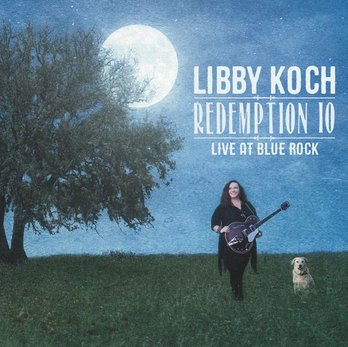 Whenever she tours here in the UK, Texan singer songwriter Libby Koch is greeted with enthusiasm by the select band of followers who know of her. Live, she’s a treasure – warm and friendly, slightly sassy and with real red dirt roots – while her song writing is not to be sniffed at. Much of this is captured on Redemption 10, a live album (recorded in Blue Rock studios with an invited audience) which is essentially a remake of her first album recorded 10 years ago when she was still working as an attorney at a law firm in Houston. That album was a tentative toe in the water moment for Koch who has now released four studio albums, and while it might be egging the pudding to say it was a Damascene moment for her, its reception led to her swapping the courts for a life on the road.
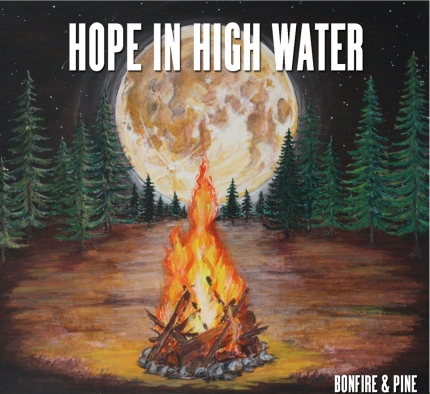 This second album from Hope In High Water (who amusingly describe their music as “Mountain music from the flatlands of Milton Keynes”) expands somewhat on the simpler guitar and banjo songs which populated their debut from a few years back. Josh Chandler Morris’s guitar and Carly Slade’s banjo are aided and abetted by Luke Yates on violin and percussion with Darren Camp on drums but the primary difference is that the pair have dug deeper into the well of American music. There’s more soul and grit in these grooves, not in an old fashioned R’n’B sense but picking up on vibes cast by the likes of The Band and old folk hands such as Karen Dalton.