
Dumb Instrument. Doubt. Bad Tool Records

a3786848051_16Back in 2014 when the Scottish referendum debate was at fever pitch, there was an oasis of calm within its midst. For sure, it was quite a surreal oasis but Dumb Instrument’s Suffering From Scottishness, a wonderfully absurd and deadpan hymn to the nation was, for a while, the unofficial Scottish anthem. It’s too soon of course to say whether another bid for independence is on the cards but Dumb Instrument have gone ahead and released their third album, tired of waiting perhaps?

Anyhow, it’s great to be able to say that on Doubt (the title and album cover a joke in itself), Dumb Instrument remain stoically Scottish and singer Tom Murray’s humour is as pawkish as ever. The band, a seven-piece outfit led by co -founder Mikey Grant on piano and supplemented by a string section, provide some excellent ornamentation for Murray’s vocals. They delve into a breathtaking Latin styled workout on LadeDa and on Backwards Is The New Ways Forwards they’re next door neighbours to Robert Wyatt while That’s The way To Do It is an exhausting Klezmer like knees up full of parping horns and melodramatic keyboard flourishes sounding as if they were lifted from early Hollywood cliff-hangers.

Above all however, it’s Murray’s words which draw the listener in. Many of the songs are vignettes, some spinning into a tenement version of magical realism as on the driving opening song, High Jumper which is stuffed full of musical references in the lyrics amidst worrying references to skyscrapers and window ledges while the music is dizzying enough to induce a sense of vertigo. Backwards Is The New Forwards comes across as if one were reading James Kelman’s How Late It Was How Late backwards and Drunk In The Playground is an excellent capture of an incarcerated father imagining he’s waiting for his child as the bell rings. Perhaps the best of all on offer here is the excellently named, That Stupid Wee Lassie From Elderslie, an incredibly imaginative song. Here the protagonist is haunted by and goaded by a plooky wee schoolmate who wasn’t worthy of attention then. Almost in the same league is the simple guitar and vocals of Venus In A Cardigan which could be a mash up of Billy Connolly, Ivor Cutler and The Incredible String Band.

It’s important to say that Dumb Instrument are not doing comedy. There’s dark humour aplenty here but overall Doubt is an immersive experience, the music’s great and Murray has a winning way with his lightly spoken vocals. They don’t sound at all similar, but imagine if you can, if Ian Dury and The Blockheads came from the west of Scotland rather than Billericay or Upminster or where ever Dury pretended to be from, and then consider Dumb Instrument.

Doubt is available now and there is an album launch show on Saturday 19th October in Glasgow’s CCA where Dumb Instrument will unveil the album in conjunction with Doghouse Roses’ own album release.
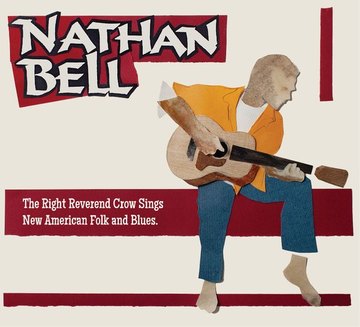
Nathan Bell. The Right Reverend Crow Sings New American Folk and Blues

bell-right-reverend-coverTaking some time out from his superlative run of Family Man themed albums which salute the American dream and excoriate the mess it’s become, Nathan Bell has taken a feather from Hank Williams’ cap for this eight-song disc. Williams adopted the pseudonym, Luke The Drifter, for a series of songs which were not his usual honky tonk jukebox fare. In a similar manner, Bell becomes The Right Reverend Crow as he indulges his love of country blues and folk.

He opens with a tribute to that irascible Texas bluesman, Lightnin’ Hopkins, the subject of one of Bell’s usual on stage interludes. Retread Cadillac (Lightnin’) copies Hopkins spooky spoken word style along with his slyly brilliant walking blues guitar as Bell offers a condensed history of Hopkins’ career. Another Texas bluesman, Johnny Winters, features next as Bell delivers a magisterial solo performance on a series of vignettes all ending with him driving down the highway as Johnny Winter plays the blues. There’s some grand piedmont guitar picking on the jaunty New Cocaine Blues while Rolling Blues mucks around in early Muddy Waters before he became all electrified.

Bell’s on more familiar territory as he moves on to the folk side of the Right Reverend, the songs here not dissimilar to those which have seen him mentioned as a worthy successor to Guthrie, Van Zandt and Springsteen. Poisonous Snake inhabits the weird world of Pentecostal snake handling with Bell delivering it in true southern gothic style as if he were singing a short story from Donald Ray Pollack. The Ballad Of Bill Spaceman Lee has some Dylan like harmonica rasping from Bell on a song which has classic stamped all over it with its capture of youthful aspirations and their eventual dimming. The album closes with a retread of The Big Old American Dream, originally released on  Love>Fear which serves to remind us that Bell can write a grand narrative in the grand tradition of writers such as Guy Clark and imbue it with a true sense of from the ground up nobility.

Nathan Bell hits the ground running this week for a short trip around the UK and an appearance at Rambling Roots Festival in Utrecht. We shouldn’t need to say that if you are anywhere in the vicinity of a gig then you should go as you’ll be blown away. In addition, Bell will have the first copies of The Right Reverend Crow Sings New American Folk and Blues on sale at the shows along with a very limited edition 7” single featuring two new songs, Heavy As A Talent (Billy Shakespeares’s Blues) and
To Each Of Us (A Shadow).

Website

Amy Speace. Me And The Ghost Of Charlemagne. Proper Records

as.ccdcoverprintListening to the title song which opens Amy Speace’s latest album, one could be forgiven for thinking that this is a newly discovered relic from the heydays of singer/songwriters, that halcyon time when Joni Mitchell, Laura Nyro and Judee Sill were really at the cutting edge. Me And The Ghost Of Charlemagne is a starkly beautiful piano ballad with a striking string arrangement, written when Speace was in the city of Aachen where the bones of the emperor are entombed. It’s a magnificent capture of road travel weariness, the comedown after the gig, asking ultimately the question, why?
Aside from the singer/songwriters mentioned above, the treatment of the song recalls the baroque folk of Judy Collins who is credited with discovering Speace many moons ago and this album confirms once and for all that Collins is a talent spotter par excellence, remember, she “discovered” Leonard Cohen. Anyhow, Me And The Ghost Of Charlemagne, coming after a string of excellent albums from Speace, is perhaps her pinnacle. Recorded in the final days of her first pregnancy (she dedicates the album to her son, “In my belly as I was recording”) it is at times quite intense as she rails against various injustices or soul searches, while there are also some sublimely tender occasions, some of those however having a sting in the tail. Listen to the initial 60’s folk like naiveté of Pretty Girls which finally erupts with crashing guitars as Speace obliquely comments on this Instagram age.

There’s a defiant grandeur in the wonderfully recorded pulsations of the “protest” song, Standing Rock Standing Here, her commentary on the long standing Native American tribe’s struggle with the US government at Standing Rock. Back In Abilene strips back the music to just acoustic guitar and sparse piano in a snapshot of the days following the assassination of JFK. Meanwhile there are more intimate moments as when Speace uses words written by Emily Dickinson on This And My Heart Beside to create a pastoral love letter while the closing song, her version of Ben Glover’s Kindness (described by Speace in the liner notes as, “the most beautiful lullaby I’ve ever heard”) probably touched her then unborn child’s heart as much as it will you, the listener.

Produced by Neilson Hubbard and with contributions from Will Kimbrough, Beth Neilson Chapman, Ben Glover and Eamon McLoughan, Me And The Ghost of Charlemagne is the work of an artist who is at her prime. Mature, thoughtful, engaging, and it sounds wonderful.

Website


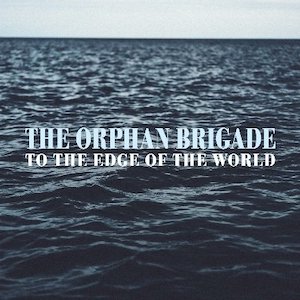
The Orphan Brigade. To The Edge Of The World.

orphan-sleeveAs if they were following some musical ley line, The Orphan Brigade – Neilson Hubbard, Ben Glover and Joshua Britt- have, since their formation, recorded in the field in various locations. They inhabit a location, drink in the associated history and legends and transform these into singular songs, leaving their mark and adding to the legend. To date they have dwelled in a supposedly haunted civil war plantation house for their first album, Soundtrack To A Ghost Story (and taking their name from the  Confederate troops stationed there) and gone all troglodyte in ancient caves situated under a small Italian town on Heart Of The Cave. There was also a slight detour when Hubbard and Britt joined Dean Owens and Audrey Spillman to record Buffalo Blood in the native American heartlands of New Mexico.
To The Edge Of The World finds this intrepid trio perched on the briny coastline of Antrim in Northern Ireland, Glover’s homeland. As is their wont, they burrowed into the local scene, the rugged locations, the stories told over the years and set down to writing their impressions before recording the album in a 15th century church. As with the previous albums they haul in collaborators although here, there are fewer celebrities. Aside from John Prine and The Henry Girls, they turn to local musicians and even a primary school choir to garland their songs, giving the album a firm sense of its birth land with Hibernian undertones pulsing throughout The Brigade’s take on this mystic Irish coastland.

They set the scene immediately as a brief snatch of an Uilleann pipe tune wafts in from the mist before a clattering Bo Diddley beat leads into the driving Madman’s Window. A glorious amalgamation of rootsy American thrust and skirling Irish pipes,  Glover recounts the tale of an Irish youth who remained at the location of his sweetheart’s drowning for the rest of his life. The song was written at the actual location where this supposed tale occurred and several other songs on the album are tied into stories and places they visited. Under the Chestnut Tree sprang into life as the trio visited The Armada Tree, the burial place of a Spanish nobleman, drowned as the doomed Spanish Armada came to grief in the Irish coastline as they fled after defeat. Again, the band deliver a rousing blend of bustling mandolin driven Americana with a whiff of Celtic mysticism and it’s this winning combination which gives the album much of its drive. The title song is a muscular and pulsating modern folk rock song with echoes of Nick Cave while Banshee swings with a junkyard beat as if Tom Waits were wandering through an Irish graveyard. Fairhead’s Daughter, inspired by a location used in Game of Thrones, thrashes around somewhat excellently with big Townsend like guitar bashing.

While these rambunctious offerings are quite exhilarating, there’s a welter of songs here which, while just as stirring, cleave more to a folk idiom. Captain’s Song (Sorley Boy) finds John Prine adding his voice to a dirge like shanty and Isabella is blessed with some wondrous harmony singing as they bring the Appalachians to Ireland. On a similar note, St. Patrick On Slemish Mountain rings out an with old time Americana sound but it’s the closing song, Mind The Road, which really hammers home the band’s affiliation to the Celtic muses they encountered on this road trip. It’s a breathy and whispered confection of fluttering flute over a bustling double bass with rippling guitars and mandolin dipping in and out. It’s reminiscent of Van Morrison’s glorious Veedon Fleece and as such, sets the seal on The Orphan Brigade’s immersion into the myths and legends of this rugged and untamed historic coastline.

Website

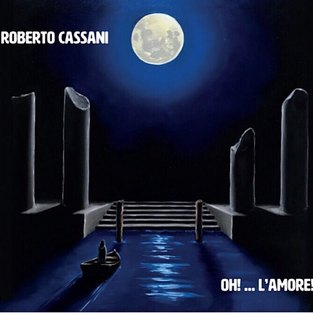
Roberto Cassani. Oh!…L’Amore!

a19ff59c-74cb-4519-bf7a-adbaa9ff2dd8The Perthshire based, Italian born, double bassist and arch humorist, Roberto Cassini, has certainly tickled our ribs over the years. Aside from being spectacularly funny on stage, he has penned numerous songs which manage to achieve what many “novelty” songs fail to do, that is, they are humorous and also listenable, to the extent that you can actually enjoy the musicianship involved. Cassani is usually accompanied by some fine musicians, in particular he has forged a fine relationship with the maverick Scots guitarist Owen Nicholson, but on Oh!…L’Amore! he plays all the instruments himself on an album which, in the main, eschews the humour as he delves into autobiography. The album does contain its fair share of Cassani’s impish words and light-footed playing but he does address some serious issues which have impacted on him including illness, migration and bereavements. He says that while he was somewhat reluctant to bare so much of his soul, he was encouraged to go for it by the legendary Danny Thompson whom Cassani worked with for some time last year.
So, Oh!…L’Amore is Cassani’s voyage from childhood in Milan to reflections on his current state of mind having buried his father. He opens with The Moon (La Luna) which includes some doo wop harmonies (alluding to the Marcels perhaps?), the silvery night time disc something of a talisman, comforting this “quite weird” child as it has accompanied him throughout his travels. He then drops in some cod reggae on Milano, Estate 1998, singing here in Italian much of the time on an effervescent little number before the downbeat Goodbye To Mamma allows Cassani to inject some pathos into his story. Over fractured guitar and a booming double bass, Cassani bids farewell to his adolescence and to his mother as he takes off for a new life in the UK which is represented initially by the brisk variété styled Kyer, 70 Maybank, set in Birmingham. It’s in Birmingham where he meets his wife to be and he recounts their romance on And I’m In Love, the one song here where Cassani’s tendency to joke overcomes the song.

With only nine songs on the disc, it’s obvious that Cassani can’t give us a blow by blow account of his years so he fast forwards somewhat for the remaining four numbers. I Found My Eyebrows On My Pillow addresses a cancer diagnosis he received and here his humour is perfectly placed. Dark, obviously, but pugnacious, as he rages against the illness and finds an upside as his family gather round radiating love. He celebrates his daughter on Lullaby For Ruby, a lovely song which manages the difficult job of sounding as if it came from a Disney film without any of the associated mawkishness (a whole album of songs such as this would surely be a great kids album). As the album grows in stature with these latter songs, Cassani delivers a wonderful salute to his late father on Ale’ Marino which seesaws between grief and joy. There’s the solemn description of the funeral (although Cassani still slips in some one liners) accompanied by a lively knees up as he imagines dad having a party in heaven boasting to St. Peter of his family as he opens bottles of prosecco. Cassani keeps the best for last as he delivers a summary of sorts on the title song. Here, he’s straightforward, no jokes, just an honest ode to life and love. If Cassani had a grittier voice, one could imagine this was a song by Paulo Conte.

Bravely personal, played with some brio and, at times, quite affecting, Oh!…L’Amore! deserves to be heard beyond the confines of the novelty songs Cassani is best known for.

website


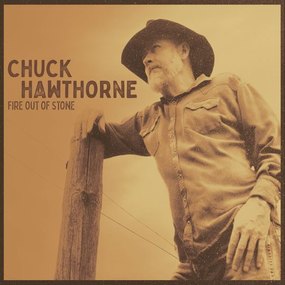
Chuck Hawthorne. Fire Out Of Stone. 3 Notches Music

fire-out-of-stone-album-cover-w-borderA couple of years ago a record producer got talking to an imposing ex Marine from Texas, carrying a guitar case, while both were waiting for a flight in Chicago. The end result was Chuck Hawthorne’s impressive debut album, Silver Line, produced by Ray Bonneville, a fine instance of happenstance. Since that album came out Hawthorne has toured the UK twice, building up a fan base with his John Prine like delivery of folk Americana and finally he delivers a second album which will not disappoint those who have been waiting in expectation.
The opening song, Such Is Life (C’Est La Vie) pretty much sets the tone for what is to come as Hawthorne plants his feet firmly in the grand tradition of Texan singer songwriters, the song opening with this vivid portrait, “He smelled like marijuana, two finger cologne, he smoked his regal cigarettes through an ancient saxophone.” Rolling on to tell the tale of a biker’s last stand it’s Guy Clark, Kris Kristofferson territory for sure and Hawthorne inhabits this territory comfortably throughout the album. Bonneville sits out production duties this time although his impressive harmonica playing graces several songs, sounding for all the world like Mickey Raphael. Listen to his playing on Hawthorne’s tremendous elegy to war veterans, New Lost Generation, and just wonder at his playing.

New Lost Generation might be the most striking example also of Hawthorne’s songwriting but throughout the album he proves that he can capture a time, story or emotion in three minutes with unerring excellence. Amarillo Wind sends shivers up the spine as Hawthorne evokes a free frontier spirit while Arrowhead & Porcupine Claw, (spoken and sung in a similar manner to Guy Clark’s Texas-1947) is somewhat magisterial in its description of a native American’s rite of passage. Sara’s All The Way is a grim tale of an Austin woman in the gutter but still looking for stars, its forlorn delivery contrasting with the spritely fiddle laced Broken Good which gathers together a cast of “salty and sweet” ne’er do wells.

Graced with subtle backing from pedal steel, Dobro and fiddle and with Libby Koch adding some excellent harmony vocals, Hawthorne’s songs and words hit home time and time again. He chooses however to close the album with a cover of I Will Fight No More Forever, written by Richard J. Dobson. A member of the original outlaw country scene, Dobson passed away in 2017 and Hawthorne’s cover serves as a fine epitaph as Dobson’s elegiac song influenced the writing of Fire Out Of Stone.

Website

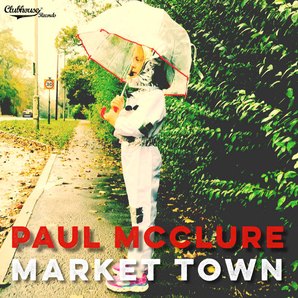
Paul McClure. Market Town. Clubhouse Records

a1605324111_16An old Blabber’n’Smoke favourite, The Rutland Troubadour, AKA Paul McClure, returns to the trenches with a third album which is chockfull of carefully considered and artfully delivered songs. There’s less of his old troubadour style and Americana leanings here, instead, as one listens to the album, artists which come to mind include Elvis Costello and Nick Lowe and even Paul McCartney. There’s a new producer (Joel Payne, who plays keyboards in McClure’s occasional band, Local Heroes and here plays keys, guitars and percussion) and a sense of maturity in several of the songs with McClure celebrating family life and domesticity  although there are still some more rambunctious moments and even some cod calypso on A Long, Long Time Ago.
The albums opens with possibly the strongest song on the collection, The Morning And My Love, with McClure pouring his heart out over a forlorn piano on a tremendous love song. It’s moving and perfectly arranged with speckles of electric guitar and a brief swell of vocal harmonies towards the end. McClure revisits this sombre mood on the delicate How Did You Know and the lengthy and powerful  Sing With Me, both love songs of a sort as McClure summons up the frailties, hopes and dreams of relationships.

Sing To The Stars is an earthy folk like and angry narrative which relates the tale of a wage slave who regrets missing his children growing up. Family life also features in the affecting Daddy Will You Hold My Hand, a McCartney like ditty (with some excellent slide guitar from Ally McErlaine of Texas) while the mild Caribbean lilt to A Long, Long Time Ago almost disguises McClure’s reminiscences of growing up and his present day domesticity. He also knocks off some more childhood memories on his solo rendition of Grandad’s Pants which closes the disc and he celebrates the wonders of ordinariness on the title song which is the most upbeat number on the album. Finally, the folky rocker, This must Be What They Mean (When They Sing About The Blues) is a grand loose-limbed jaunt with wheezy harmonica, bar room piano and Beach Boy/Beatles harmonies all thrown in.

Website

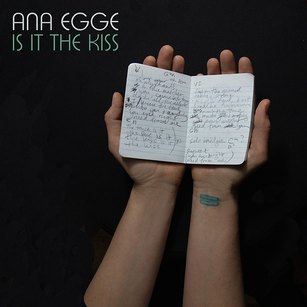
Ana Egge. Is It The Kiss. StorySound Records

is-it-the-kiss-coverIs It The Kiss could be the album which finally lifts Ana Egge, a Brooklyn based songwriter of Norwegian descent, into what counts for the Americana big time. Followers will know that her previous albums are all excellent but she excels here, especially in the song arrangements which drape her wonderfully relaxed and warm singing. At times she reminds one of Joni Mitchell’s first forays into expanding her sound, folk songs becoming populated with jazz and blues influences.
The album starts off quite conventionally with Egge’s tribute to that great wave of singer songwriters who bounced out of Texas in the 70s. Cocaine Cowboys even sounds like a Willie Nelson song (and he really should cover it) as Egge sings, “They raise your spirits up and I hope they do, they make you feel less lonely if you’re feeling blue. cocaine cowboys turning rhinestones into diamonds with a song, cocaine cowboys keep you dancing and drinking all night long.”  Midway through, this simple song then grows wings as a string section burbles in, a harbinger of things to come. What Could Be is simply sublime as it kicks off on a slow soul shuffle with Egge sounding like Lucinda Williams before a chorus which sounds so much like early Mitchell comes in. There’s also a middle eight featuring a muted horn section, reminiscent of some of Court & Spark, and those spare and inventive horns adorn some of the best songs here. Oh My My adds some achingly sweet pedal steel to the mix although one’s ear is drawn to the walking bass which guides the song  as Egge’s feather light vocals are quite spectacular.

In the midst of this sonic bravado, Egge clings firmly to her storytelling skills. Teacake And Janey is essentially a murder ballad couched in mystery while James, a song adorned by odd bustles of percussion and strings, is an elegy for a gifted yet strange child. Chasing Rabbits In The Sun meanwhile is an oblique portent of violence delivered with an awesomely delicate balance of guitar, pedal steel and mournful horns which picks up menace when a heavy drumbeat is introduced. In a more conventional manner Egge offers up the laidback chug of Hurt A Little and the odd mix of baroque and Dixieland on Stay The Night while she gets quite rootsy on the fiddle laced country cover of Diana Jones’ Ballad Of The Poor Kid  on which she is joined on vocals by none other than Iris Dement.

Is It The Kiss is a perfectly formed album with Egge’s undoubted talents bolstered by the inventive and intriguing arrangements and is well worth investigation.

Website

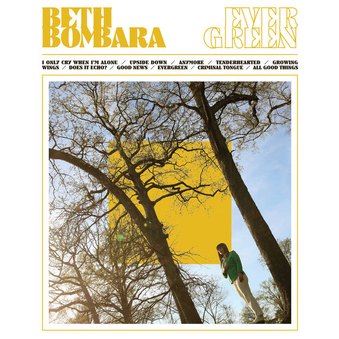
Beth Bombara. Evergreen.

a2227776830_16Reading that this album was composed in the main in a secluded log cabin in the Canadian Rockies, we were expecting a soul searching acoustic laced forlorn collection of laments. Instead of that we find that Beth Bombara, after a lengthy bout of touring, took the time out to recharge her batteries and having done that, headed to the studio and plugged into the mains. Sharing the voltage with Bombara is her excellent road tested band along with co-producer John Calvin Abney on keyboards. They’re a versatile bunch and add a lot of oomph to Bombara’s fine songs with some of the songs delivered with the finesse of bands such as Little Feat or even The Band while Bombara  recalls the likes of Kathleen Edwards or Aimee Mann.
The album kicks off with the punchy I Only Cry When I’m Alone which is girdled with some excellent sinewy guitars and a pulverising beat as Bombara admits to her insecurities. Upside Down follows in a similar manner although the guitars are crunchier and the solos somewhat snarlier while Anymore opens with Bombara’s plaintive guitar stutterings before swelling into a wonderful example of that good old cosmic American music with guitars growling and gliding  as her voice soars. She then dives into the most country sounding song on the album on Tenderhearted which in style recalls Courtney Marie Andrews although Bombara comes across as made of tougher stuff as she recounts the rough edges of her tender hearted lover while the band dig into a muscular country rock groove. Talking of the band, they really take flight on Does It Echo. Opening with ominous percussion, guitars and electric piano, Bombara then weighs in with her portents of doom before a wonderful instrumental coda, which is quite blissful in the manner of David Crosby’s If I Could Only Remember My Name, closes the proceedings.

Invoking the Stones on the ballsy Good News and getting real sleazy on Criminal Tongue, Bombara and the band show they can rock out but the title song shows that there’s a power pop pulse also beating within. The album closes with Bombara accompanied only by piano and strings on a proper log cabin song at last. However, instead of an introspective breast beating exercise, she seizes here an opportunity to deliver a quietly understated comment on the current political climate in the USA. One leaves the album with the thought that it’s people such as Bombara who have the power to  make America great again and that there’s an army out there. Hopefully they will start to tune in.

Website

3hattrio. Live At Zion. Okehdokee Records

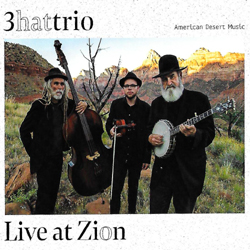
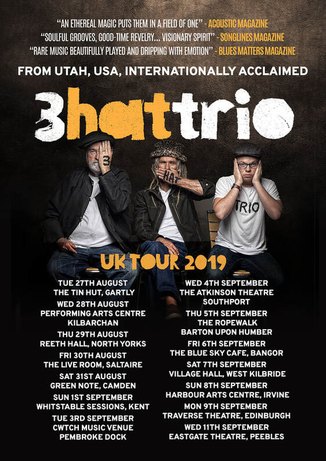
3hattrioThis live album from the premier purveyors of American Desert Music is not officially released until November. However, with 3hattrio commencing a UK tour this week, they have brought the first run of discs with them allowing those who attend their shows to be the first on the block to own this excellent recording.
Over the course of four albums 3hattrio (Hal Cannon, Greg Istock and Eli Wrankle) have emerged with not only a unique sound but as keepers of the traditions and history of Zion National Park with particular reference to Utah’s desert lands. Inspired by the arid landscape and influenced by the numerous settlers over the ages including Southern Paiute Native Americans, the trio have an almost magical ability to transport the listener into what, at times, seems an alien world.

As evocative as the albums are, they don’t really prepare you for the emotional impact of experiencing the band live. With just a guitar, banjo, fiddle, double bass and rudimentary percussion they conjure some fabulous sounds, at times eerie and shamanistic, elsewhere evoking frontier sounds carried from the old world and bearing the trails through Appalachia as played around desert campfires. When your reviewer was fortunate enough to experience them live we reported that there was a circularity to the songs on the night, one all enveloping aural experience, and so it is on Live At Zion which the band describe as, “A single piece of music, a desert symphony rising out of our home in Zion Canyon.”

Recorded in a pre civil war church in their hometown of Virgin, Utah, Live At Zion finds the band playing to friends and neighbours and expertly captures the live experience. With a mixture of songs from the albums along with new pieces, it’s a magnificent listen from start to finish. Hal Cannon’s evocation of the mighty winds which have carved the shape of much of the desert landscape sets the scene before Istock’s impressionistic Thelma & Louise creeps into view. Propelled by his driving double bass as Wrankle’s fiddle twists and turns, the song is powerfully evocative as Istock scats and mumbles before the trio soar off into uncharted territory and then return to the primary riff. It’s desert music with a whiff of Coltrane’s extrapolations thrown in and is just astounding. Cannon grounds the band with his salute to their homeland on Zion Song and much of the album repeats this trick as the trio alternate between atavistic sound explorations and down home folklore. At the centre of the album is a number, called here Desert Triptych, which is an amalgam of three songs (Rose, Night Sky and Lord Of the Desert) which is just astounding. Ranging from the spacey opening (which would surely astonish any prog rock fan) to Cannon’s invocation which is reminiscent of a stoned cold and immaculate Jim Morrison tripping in the desert, it has to be heard to be believed.

The trio continue to paint vivid sound portraits on the wailings, slick banjo and sonic fiddle exploration (and closing humour) of Texas Traveller, while the percussive intricacy of Crippled Up Blues and then Cannon’s banjo led riparian song, Flight, showcase the trio’s magnificent interplay. Throughout the album Wrankle’s playing astounds while Istock’s mastery of his bass and percussion remains a mystery as it seems impossible for any human being to do what he does here.

Live At Zion captures this unique band in full flight and bodes well for the upcoming UK shows.

Website

3hattrio-2019-online-all-dates