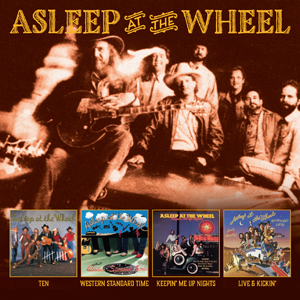
Asleep At The Wheel. Ten/Live & Kickin’/Western Standard Time/Keepin’ Me Up Nights. Retroworld

1566Asleep At The Wheel are a fine example of how musical fashions come and go. They kicked off in 1969 when many bands were coming down from their psychedelic highs and discovering their roots with even The Grateful Dead featuring pedal steel. Asleep At The Wheel, with Ray Benson at the helm, played Western Swing with Bob Wills their guiding light and the hippies loved them. Along with Commander Cody & The Lost Planet Airmen they conjured up good times with beer, whisky and trucking their drugs of choice.

Punk and New Wave kind of took the wind out of their sails with resultant  line up changes but country punk and the nascent alt country scene of the late 80’s allowed the band to grow their audience once more as they themselves grew into an institution of sorts. Their tributes to Wills (which gathered the old guard and young upstarts together) and their collaboration with Willie Nelson are essential listening and they are the recipients of nine Grammy Awards.

This release is a two disc CD containing four albums Asleep At The Wheel recorded from 1987 to 1990 and, it has to be said, it’s a bargain. The first, Ten, from 1987, commenced  their renaissance as they delivered their usual good time Western Swing and applied it to writers such as Billy Joe Shaver, Joe Ely and Guy Clark while there was an audacious cover of Huey Lewis’ I Want A New Drug which knocks spots off of the original. Western Standard Time was recorded the following year and it delved deep into their Western Swing Roots kicking off with an excellent version of Chattanooga Choo Choo with Willie Nelson sharing vocals with Benson. Their big band sound (horns, pedal steel, piano, fiddle  along with guitar, bass and drums) really swells into its own here and there’s a thumping great version of Hot Rod Lincoln while Ernest Tubbs’ Walking The Floor Over You is a textbook example of homage. 1990’s Keepin’ Me Up Nights does pale somewhat in comparison but its 12 songs still swing with Boot Scootin’ Boogie and Beat Me Daddy (Eight To The Bar) quite feisty while Dance With Who Brung You, a Ray Benson original, is yet another Western Swing gem.

Live & Kicking, as its name suggests, is a live recording from the late 80’s in their adopted homeland of Austin, Texas and it’s a perfect capture of the band in full swing. Rowdy and boisterous they rip through standards such as Route 66, Jambalaya, Choo Choo Boogie and Ain’t Nobody Here But Us Chickens. Let loose from the studio the band let fly with the piano, fiddle and horns given free rein to extemporise. Again it’s Bob Wills who provides the inspiration for the best performance here as the band parlay an excellent take on Take Me Back To Tulsa/Stay All Night with Benson at his best, a laconic master of ceremony.

Website


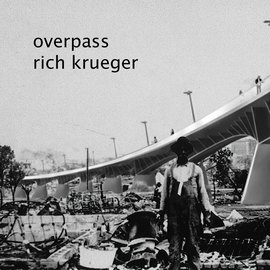
Rich Krueger. Overpass

Krueger coverWe do love our mavericks here at Blabber’n’Smoke, folk who approach music from a slightly different angle and Rich Krueger seems to fit that bill. He was a member of The Dysfunctionells (who described themselves as “THE Butt-Ugliest Band in Chicago”) and who recorded at various times with Peter Stampfel and Michael Hurley, so, a good maverick pedigree there.

Krueger, who works as a neo natal doctor in Chicago, is readying two solo albums for release and this EP is a foretaste of what’s to come. Recently he was a finalist in the New Folk category at The Kerrville Folk Festival and Overpass opens with the fine fiddle fuelled A Short One On Life, a song about a female barfly who picks up strangers in bars. With gritty lyrics, Krueger describes her hard life, nights spent with, “one night wonder(s) with a heart of gold and a name for his cock that no thinking person would ever even name a dog” before some slide guitar from Seth Lee Jones adds some muscle to the song. In Between, Kingfish is a powerful song about homelessness with Krueger weaving Huey P. Long (AKA The Kingfish) and Sam Walton (founder of Walmart and born in Kingfisher, Oklahoma) into the tale, contrasting their respective philosophies. Over a lachrymose fiddle and weeping accordion (played by John Fullbright) Krueger achingly highlights the plight of the underprivileged and ends the song with a surreal vision of Long and Walton sitting in an abandoned car beside a derelict Walmart with Woody Guthrie and Franklin Roosevelt for company. A potent symbol for the death of the New Deal.

Next up Krueger takes a sharp turn on Yesterday’s Wrong (Green) which is coloured by tablas, sarangi, tanpura and kanjira giving it an undeniable Indian sound. It rambles for over six minutes in exotic fashion as Krueger seems to lament the loss of innocence that permeated the sixties and the ecological nightmare we all face. Recalling Donovan or The Incredible String Band it’s hypnotic. What Are We is perhaps the most straightforward song here in terms of its delivery as Krueger offers up a Randy Newman like piano song with soulful vocal backing. Here he sings of Nero setting Rome alight and suggests similarities with his present day President. A hidden song at the end, Kerrville, Oh My Kerrville, written back in 1991, finds Krueger with acoustic guitar identifying with his idols, musical and otherwise, on a humorous take on the festival which is somewhat tongue in cheek but stuffed full of arresting images.

It’s a tremendous listen and it bodes well for the forthcoming albums. You can buy the EP here

website

Ian Felice. In The Kingdom Of Dreams. Loose Music

sl-117323The Felice Brothers are renowned for their ramshackle update on the kind of sounds The Band were making in the early seventies, recording in chicken coops and barns, a rough and ready bunch indeed. This reputation however has at times obscured how good a band they are and in particular, what a great writer Ian Felice is. Now he’s taken a leaf from his brother, Simone’s, book and delivered a solo album. Unlike Simone who left the band to forge a solo career, In The Kingdom Of Dreams appears to be a side project for Ian; he has the band play on the album and brother Simone returns on production duties. In comparison to The Felice Brothers the album is sparse and reflective, Ian’s voice tethering it to the Felice’s but it’s ultimately a more personal project, a result, says Felice, of basing the songs on, “Memories of my past…the pull between reality and unreality and also how time affects memory.” And while some of the songs are pulled from memories of growing up (In Memoriam recalls the death of his stepfather) others reflect his anxieties on becoming a father while there are some observations on the current state of America.

Aside from a brief convulsion on Road To America with its percussive drive, the album is a spare affair, Felice’s acoustic guitar and keyboards the main instruments. The opening title song sets the scene with a bizarre assemblage of arresting images (At the moonscape hotel the walls feel like hell and I don’t feel well/ I don’t like the moon when it’s a blood red balloon/ in this kingdom of dreams) which have an almost nightmarish quality about them. Like Eef Barzaly, Felice conjures up a surrealist dreamscape, a labyrinth that leads to one’s deepest fears. Will I Ever Reach Laredo is, on the face of it, more straightforward. A traveller, again under a “strangely tinted moon” yearns to get to his destination but is seemingly unable to move on; instead he ponders the possible hues of the moon while glimpsing the glimmering light of a distant city he has to pass by.  This stasis is again a dreamlike evocation, a Borgesian fable with no end in sight and the subtle throbbing guitar motif reinforces this sense of an endless cycle, an oroburus. 21st Century is an absurdist take on the current state of the nation in the States with Felice imagining an alien invasion while playing banjo as if he were on a 19th Century plantation as something like a Theremin hovers ominously. He returns to this topic on the animated Road To America which is stuffed full of plastic American icons such as Disney’s cartoon characters and, “politicians and businessmen placing bids/high as the pyramids,” a Dylan like word poem which contrasts the plastic dream with the realities of the Okies featured in The Grapes Of Wrath.

Amidst this fractured viewpoint Felice hones in on reality with Water Street almost like a diary entry as he sings of his wife and child and his daily chores while In Memoriam conjures up an idyllic past peppered with old ideals (I was walking down the tracks where the communist bees relax …). This mundane reality, his mother watching daytime TV as his step dad collapses and dies is given a delicious gossamer thin fragility in the playing as Felice invokes feelings of loss, personal and universal. Elsewhere, Felice delivers a brace of songs that are bittersweet indeed, fragile ballads that totter on the edge but always pull through. Signs Of Spring is an achingly beautiful love ballad while Mt. Despair is a beguiling threnody that recalls both the work of Tom Rapp from Pearls Before Swine and the stark narratives of Willie Vlautin. Ten To One again recalls the oddness and alt folk leanings of Pearls Before Swine; a mutant folk song of sorts. The closing song, In The Final Reckoning, has a Leonard Cohen  like combination of biblical imagery and bloody knives with Felice in full command of his narrative.

In The Kingdom Of Dreams is one of those records which are idiosyncratic and beguiling. A cult album in the making perhaps but you can get ahead of the future queue by getting it now.

Website

Scotland’s celebration of Americana and Roots Music, Southern Fried, is ten years old.

Southern Fried, the premier Scottish festival of Americana roots music celebrated its tenth birthday at the tail end of July. Held annually in the fair city of Perth, sometimes called the gateway to the Highlands, it’s what one might call, a bijoux affair, although there has been a fair bit of expansion especially over the past two years. Now a four day event, there’s no camping or standing in muddy fields, good news for those who have experienced a typical Scottish summer. Instead, it’s based around a series of stellar indoor concerts – held in the celebrated concert hall – and a late night club affair which invariably sells out well in advance. In addition, there’s a wealth of free music. Two full days of music outside and in with the outdoor stage featuring full band set ups while there’s an indoor acoustic stage, both featuring UK and international acts. With open mic sessions in local pubs, an all day rockabilly event (with a classic car cavalcade) and an opportunity to sit with, listen to and discuss a classic Americana album (on vinyl) with the likes of Jim Lauderdale, there’s enough going on over the four days to satisfy even the most satiated fan.
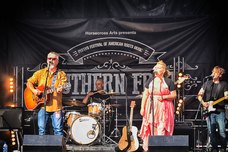
DSC_0081.JPGThe outdoor stage is essentially a showcase for the best of Scottish “Americana” if we can say that such a thing exists. In any case, aside from High Plains Jamboree (from Texas) and GD Sweeney & The Undercover Cowboys (originally Irish but now based in England) all the acts were homegrown. The full depth and breadth of roots based music (and more besides) was on show with blues, folk, country and gritty rock’n’roll all featuring. Local heroes the Red Pine Timber Co. limbered up the crowd with their good time take on just about all of the above with their horn section adding ballast to the energetic cavorting of the eight piece band who have a new album ready for release. The Sunshine Delay and The Wynntown Marshals proved that there’s plenty of jangle in their version of Edinburgh rock and vintage garage rockers, The Primevals (whose peer group included The Gun Club and The Cramps back in the days) powered their way through their set, the first time in all these years that I’ve seen these guys play in daylight. Their psychedelic tinged garage rock seemed to take the crowd by surprise at first but with their wave of sound blowing away the threatening clouds the majority stayed and were baying for more at the end of the set. Crowd favourites over the weekend seemed to be two bands with deep roots in primal American rock’n’roll. The Beat Poets, an instrumental garage rock/surf band combo (who share two members with The Primevals) energised everyone with their rousing versions of tunes ranging from Link Wray to John Barry. Meanwhile, Lord Rochester, a Bo Diddley themed trio (and excellently kitted out in tartan jackets) proved that you can’t sit still when that old shave and a haircut hambone beat hits you.
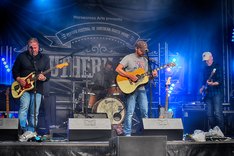
DSC_0139

We need to mention the opening acts on the outdoor stage on both days, the Southern Fried Rock Shop. A longstanding feature of Southern Fried it showcases young musicians who have attended workshops in the run up to the festival and offers them the opportunity to appear in this very public setting. Nerve wracking I’m sure but the two combos who appeared coped well as they performed, in the main, covers of well known songs, hopefully giving them the encouragement to carry on. Some graduates of the rock shop, now a band called Longstay, actually were on the bill for the outdoor stage and while they are still learning they performed well with enthusiastic encouragement from the audience. It’s a fine example of the commitment from Southern Fried to support local talent and encourage awareness of roots music.DSC_0221.JPG
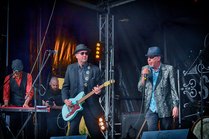
Indoors at the same time as the outdoor stage was the acoustic stage, again this year in the main UK acts with the exception being Hannah Aldridge. Aldridge, a scion of the legendary Muscle Shoals swampers, was as good as expected. Gutsy and soulful, she sang several songs from her latest album Gold Rush with the small hall packed out. However, she was well matched by several of the other performers. Roseanne Reid, a nominee for BBC Radio 2’s Young Folk Awards, showed why she is highly touted with her careworn take on dusty Americana tales while Redwood Mountain, a duo of Dean Owens and fiddler Amy Geddes, played their interpretations of songs plucked from Alan Lomax’s Book Of American Folk Songs. Red Pine Timber Co’s Katie Whittaker, always a fine singer, was a revelation as she sang her powerful and emotive refugee song, Welcome to Life, a Gospel like plea for humanity and a song which led Billy Bragg to offer her a slot at his Glastonbury gig.

With two stages going on at the same time it was impossible to see all that went on but we caught Glasgow songwriter Steve Grozier’s set which included an impressive tribute to Jason Molina and we have to mention the acoustic stage’s compere, Roberto Cassani. He’s an Italian transplanted to Perth and he played a short set of his own, wickedly humorous songs backed on guitar by Owen Nicholson (who, for those in the know is one of the best guitarists in Scotland). Anyway, Cassani had the audience in stitches with his ribald humour while he also managed to stick in some fine jibes against our current government’s austerity policies.P1070385
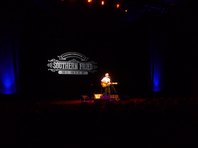
The impressive concert hall hosted the big names. Nick Lowe returned for a second year running after appearing with his occasional trio set up with Andy Fairweather Low and Paul Carrack last year. This time it was Lowe songs all the way as he delved into his 40-year career for a greatest hits set although he did add a glorious version of Elvis Costello’s Alison. Loudon Wainwright (aided by Chaim Tannenbaum on banjo and David Mansfield on fiddle and mandolin) was a delight, his humour undimmed despite some recent surgery. As with Lowe he rooted through his back catalogue going back to Schooldays, the opening song from his debut, along with the ever popular Swimming Song and Dead Skunk. The other concert hall set pieces were tribute nights and we were unable to attend the opening Thursday concert dedicated to the late Chuck Berry. Helmed by Andy Fairweather Low with his eight piece band, The Hi Riders, the reports we heard were all positive with Steve Gibbons (who had a hit with Tulane in the 70’s) in particular praised. The closing event, North Star: Scotland Sings Canada, was a star studded event which tied in with Canada’s 150th celebrations and of course, the wealth of music which has come from there. Some of the cream of the Scottish music scene sang their favourite Canadian’s songs with Joni, Neil and Leonard featuring heavily but there was space for many others. These included Gordon Lightfoot, Bruce Cockburn, Ron Sexsmith, Haydon, Arcade Fire and Paul Anka. Sung by Justin Currie, Rab Noakes, Jim Grant and Dean Owens among others the songs were reinterpreted in various ways with a genuine love of them shining through. Honorary Scot for the night, Canadian Cyndi Cain reminded us that Canada is not just about white singer songwriters as she paid tribute to Bobby Taylor of Bobby & The Vancouvers (who had sadly passed away the previous week) with a superb Does Your Mama Know About Me while she also sang a gutsy Ohio based on The Isley Brothers’ arrangement with James Grant adding funky wah wah.  Of course, The Band featured heavily and the night ended with all gathering on stage to sing The Weight. Highlight of the night however was the heart-rending rendition of The McGarrigles’ Talk To Me Of Mendocino, sung acapella by Emma Pollock and Karine Polwart. It was simply beautiful.P1070411 copy
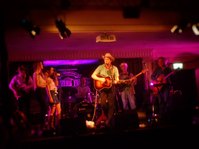
The late night sessions are where Southern Fried breaks loose and lets its hair down, there’s even dancing involved. A wristband allows access to all of the shows with the quieter songwriter sessions offering three acts while the downstairs room has two bands on. Held in the historic Salutation Hotel it’s a rare opportunity to see some great acts close up and it invariably sells out well in advance. The most anticipated act this year was Chuck Prophet and he didn’t disappoint as he and The Mission Express delivered a tutorial in how rock gigs should be; electrifying and loud, the songs played with glee and the audience caught up in the excitement from the start. Prophet’s been on a roll these last few years and songs such as Temple Beautiful, You Did (Bomp Shooby Dooby Bomp) and Bobby Fuller Died For your Sins are just dynamite in his hands. The communion between the audience and the band however was there for all the acts, the intimacy of the room removing any reserve, so that Doug Seeger’s honky tonkings and Sam Outlaw’s update on the Bakersfield sound (with Jim Lauderdale, a presence on several stages over the weekend, joining in) were received just as raucously as Prophet’s set. Cyndi Cain meanwhile supercharged the impulse to dance with her update on classic Stax and Motown floorstompers. Upstairs and away from the fray if you desired, there were some elegant performances from Peter Bruntnell, Danni Nicholls, Sean Taylor and Rachel Harrington, all top class acts which would attract an audience anywhere they were playing but all part of the late night package. Canny timing allows the undecided to catch snatches of all the acts over the two nights but depending on where your head is at you can dance the night away or bask in the warm and intimate embrace of some acoustic music into the late hours.P1070453 copy
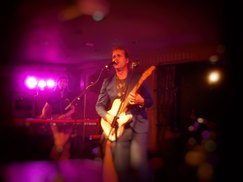
On its tenth anniversary, Southern Fried excelled itself with its line up and there were several shows that we just couldn’t make it to including performances from Doug Seegers, Ags Connolly, Angaleena Presley, Jill Jackson and Rab Noakes. While it has expanded over the past four years with the addition of the free outdoor and indoor stages and, this year, a full Thursday programme, it remains compact and it’s a unique opportunity to spend a long weekend experiencing the best of international and local Americana artists. While the Edinburgh Fringe and Glasgow’s Celtic Connections continue to dominate Scotland’s cultural calendar Southern Fried is a bit of a hidden gem.
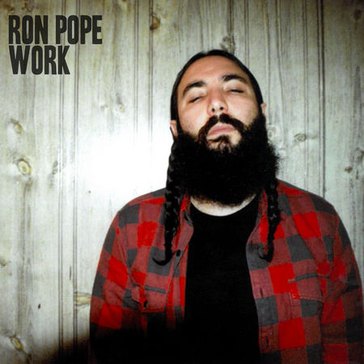
Ron Pope. Work. Brooklyn Basement Records

450x450bbFrom Atlanta, Georgia but based in Nashville, Ron Pope has amassed some incredible statistics over the years since he started recording. His Spotify listens and digital downloads number in the millions and he regularly sells out his shows in the States. His previous album (with his band, The Nighthawks), released in 2016, was the first to make waves over here in the UK and with Work he’s sure to cement his reputation. A fiercely independent artist, Pope has forged his way without any major label assistance and Work is released on his own imprint. It finds him straddling two styles – funky Southern rock and a rootsier countrified sound. That he manages both with some aplomb is a credit to him and the album is a very fine and varied listen.
Pope describes the album as almost a biography, the opening songs reflecting a rambunctious youth who could have ended up on the wrong side of the law before knuckling down to hard graft and learning about love and life. He opens with a horn section riffing away on the infectious Bad For Your Health which rocks like Little Feat used to rock as Pope sings of youthful rumbles and an encounter with a youthful femme fatale. The following Let’s Get Stoned is even more akin to Little Feat with a sinewy rhythm and New Orleans backbeat as Pope recalls more lascivious youthful encounters. Can’t Stay Here is another rocker although this time it’s Springsteen who’s the lodestone as the singer starts to encounter the reality of growing up. A tremendous triple whammy to kick off the album, these songs set up an expectation that the album will be a balls to the wall rocker but Pope dials it back for the remainder with the result that the end result is a more satisfying listen than if it had just continued in this vein.

The title song is a pared back acoustic number with Pope recalling Steve Earle on a song that one suspects is the most autobiographical here. He sings, “I had a teacher, she told my mother that she better find me a trade because boys like me well, we all grow up to be long term guests of the state” as he matures from a youth who liked to hang with his friends and have a smoke. Adulthood and relationships beckon and Pope has a jaunty country romp, Last, which is speckled with a banjo as he sets out on his amorous endeavours while his mortality his reckoned with on the country waltz of someday We’re All Gonna Die. Thereafter Pope roams around various styles with Partner In Crime the weakest link on the album with its E Street sheen just not hitting the target but Dancing Days is a fine raggedy jangle of a song with saloon piano and a Faces’ like sloppiness. The Weather has Pope and singer, Molly Pardon, harmonising a bruised and plaintive lament with fiddle and pedal steel embroidery and Pope ends the album with a solo offering, Stick Around, a love song that is bold and confessional. Here he professes his love despite any obstacle from either side and lays bare his failings in the hope that he can, in the fullness of things, stick around.

Work is an excellent piece of work which is well recommended.

website


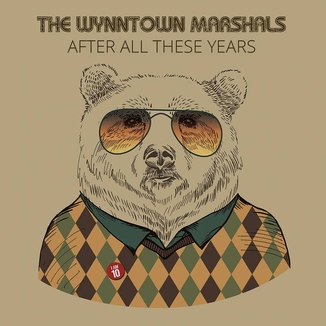
The Wynntown Marshals. After All These Years.

a2597450969_16

“In my opinion, the best Americana band not actually from North America hail from our own capital city.” So wrote Alan Morrison of The Herald when he included The Long Haul in his list of the top 50 Scottish albums of 2015, placing it at number 10. Back then we concurred (although we’d have bumped the album into the top five) but then Blabber’n’Smoke have been big fans of The Wynntown Marshals ever since we first heard them ten  years ago. Yip, ten years. If The Marshals were a married couple this would be their tin anniversary but instead of us buying them a gift they’ve offered one to us in the form of a retrospective album – 16 songs, 13 culled from their three albums, assorted EPs and singles along with three previously unreleased songs.

Rising from the ashes of The Sundowns (a fine band in their own right with their 2006 album Calabasas getting a 10/10 review from Americana UK), their first recording, a self-titled six song EP was a startling debut, confident and full of swagger. Their epic song about the ‘The Muckle Spate’ of 1829, 11:15, was an immediate classic and evidence that the band were able to sing about their Scottishness amidst any amount of pedal steel and twang guitar. Since then there has been three full albums and several EPs with After All These Years cherry picking from these and while the songs aren’t in chronological order it’s a fascinating opportunity to track their progress. While they have always acknowledged their debts to the likes of Uncle Tupelo and The Jayhawks, the various musicians who have populated the band over the years have left their mark as influences as varied as hair metal bands and more left field Americana acts such as The Weakerthans have inveigled their way into what ultimately is a Wynntown Marshals sound. Much of this is down to the one point of singularity throughout the records, singer Keith Benzie who has been there from the start and who was the band’s only songwriter in the early years. His voice identifies the band and it’s little changed from the early years, his relaxed and slightly worn vocals always winning (just listen to Being Lazy and be convinced).

Although The Marshals can be considered (on paper at least) to be a bit of a moveable feast with members coming and going, in reality there’s been a healthy heartbeat throughout with only occasional surgery required. Guitarist Iain Sloan was on board for the second album, Westerner, while bassist Murdoch MacLeod was well embedded by the time The Long Haul came out. Both added not only their instrumental talents but, along with Benzie, wrote songs with the result that The Long Haul was a major step up from Westerner while the trio along with newly added keyboard player, Ritchie Noble, and drummer Kenny McCabe achieved their summit (so far) with the excellent The End Of The Golden Age. By then the band had garnered enough accolades to be signed to the premier European Americana record label, Blue Rose, a significant salute.

To the album then and it’s notable that from the start The Marshals are fully formed. From Westerner, Snowflake is a cracking country quickstep while Thunder In The Valley is a fine example of Benzie’s narrative tales and a harbinger of things to come with the addition of keyboards. Of note is their reinterpretation of LA Guns’ Ballad Of Jayne which is transformed into a very fine slice of yearning country rock, the band fully cocked, guitars squirreling around sweet pedal steel and a sturdy rhythm section. Much of this was carried onto The Long Haul, the sound more fleshed out with more democracy in the writing and it’s MacLeod’s Tide which takes the accolades here as The Marshals roam around a carousel swirl of dreamlike guitars on an impressionistic tide of sound. It’s a live favourite and deservedly so but the snappy chiming guitar rock of Canada, the churning Low Country Comedown and the magnificent Curtain Call, a tale of Victorian magic gone wrong suffused with melancholic strings, attest to the mature nature of the album.

From The End Of The Golden Age, Red Clay Hill buzzes and burns with sizzling guitars as Benzie again salutes the local landscape turning a coal bing into a romantic destination and the title song is just a joyous slice of power pop with sublime harmonies that’s as good as anything Teenage Fanclub have turned out. Meanwhile the wistful Being Lazy floats on a bed of acoustic guitars, sublime pedal steel and gilded keyboards as Benzie emotes quite wonderfully.

If the above isn’t enough to pull you in The Marshals offer up three unreleased songs. Different Drug is a reworking of a song from the first EP and an opportunity to see how the band have evolved from a country rock combo into a more organic creature, the guitars more tantalising as the keyboards add colour and warmth.  Your Time  is in a similar vein to the songs from The End Of The Golden Age, guitar and organ to the fore as Benzie turns his hand to another fine (and perhaps autobiographical) tale. Finally, Benzie and the band offer up a sumptuous tale of unrequited love on the glorious Odessa replete with ecclesiastic organ and a restrained but emotive guitar solo.

So, 10 years of The Wynntown Marshals, encapsulated. To go back to the opening sentence here, they are the best Americana band in the land although they transcend that genre (especially as no one seems able to define it). Simply put, The Marshals have matured into a thrilling rock band able to spin an excellent tale over their multilayered sound – in fact they sound just like, well, The Marshals. Here’s to the next ten years.

There are two gigs to celebrate their tenth anniversary and the release of After All These Years. The Voodoo Rooms in Edinburgh on September 1st and then at The Hug & Pint in Glasgow the following night. The album is available to order here.

Website

Russ Tolman. Compass & Map.

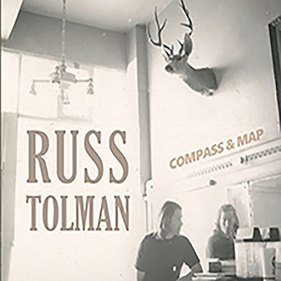
tolman-cd-450x450Mention the so-called “Paisley Underground” and folk will wax wonderfully on The Dream Syndicate, The Rain Parade, The Long Ryders, Green On Red and The Bangles. Whether or not this was an actual movement or just some bands lumped together geographically (LA for the most part) is still moot and several of the main actors actively disavow the term these days. Anyway one of the bands lumped in here was True West, a name rarely heard these days, who released two albums and who at one point seemed poised to break into the big time. Despite touring with REM, noted by Prince, front page on the music weeklies and lined up for an Old Grey Whistle Test TV slot while on a UK tour (nixed due to work visa issues) unfortunately that didn’t happen and they disbanded in the mid eighties.
Key to True West’s sound was guitarist and songwriter Russ Tolman who quit the band in 1985 to pursue a solo career which kicked off strongly with several impressive albums released between 1986 and 2000 before everything kind of petered out. There were a couple of single releases while Tolman beavered away in producing and occasional live dates including a short lived True West reunion. Now, 30 years after going it alone, Tolman has geared up again with an avowed intention to get back to recording and touring and his opening salvo is this handsome retrospective plucked from his back catalogue, 20 songs in all. It’s a welcome reminder for those who have followed him and an excellent introduction for anyone new to him as it follows his trajectory from grungy desert rock to synthesized LA country music.

Handsomely packaged with informative liner notes by Pat Thomas and Tolman himself the album avoids a strict chronological delivery of the songs but broadly speaking it opens with earlier and snarlier cuts before settling down somewhat into the late nineties before ending with latter day songs (although it closes with a 1994 number). This allows one to follow Tolman’s progress including his vocal delivery (he states in the liner notes that when recording the first album, “I was deathly afraid of singing – I’d never done it before).  Despite his misgivings, his voice is always intriguing, on the early songs perhaps betraying a tendency to delve into a punkish sneer (no bad thing) before settling into a fine approximation of Lou Reed and Lloyd Cole, a cool laidback narrative voice. Song writing wise however he springs fully formed from the womb and the compilation is a strong argument that he be considered in the same vein as contemporaries such as Steve Wynn, Chuck Prophet and Howe Gelb.

From his first album, Totem Poles & Glory Holes, Looking For An Angel is a punk like thrash of guitars with Tolman sneering away and the song not a million miles away from early Dream syndicate or Giant Sand. Down In Earthquake Town, represented here by two songs is richer in its textures with Planes, Trains And Automobiles a sublime mixture of exotic percussion and Spanish guitar as Tolman offers a flyblown tale of lost love with a wonderful twang in his semi-spoken delivery. By the time of Goodbye Joe (1990) Tolman is really at the top of his form with Marla Jane as exhilarating as Chuck Prophet’s recent offerings, a thunderous riff topped with some delicious guitar curls it stomps along with a fury. The opening lines to Blame It On The Girl (Ah fuck it, just throw it away…) lead into a spectacularly dynamic slice of rock’n’roll that beggar’s belief, the hip vocals and squalling guitars the equal of any Tom Petty song.

As he sashays into the nineties Tolman settles down somewhat and the brace of songs here find him fronting a melodic jangled rock as he becomes more comfortable with his voice. Something About A Rowboat and Sleepin’ All Alone do recall Lloyd Cole’s Commotions particularly with the vocal delivery but then again there’s the snarling That’s My Story And I’m Sticking To It which returns to the Paisley Underground days with organ jabs and tortured guitar  reminiscent of Green On Red. 1998’s City Lights album offers the delightful Monterey with its sweet delivery disguising the acerbic lyrics and the laid-back country rock of Salinas which again belies Tolman’s fine digs at the picture perfect scene one might expect. More up to date there’s one song from New Quadraphonic Highway, a visionary album that had Tolman experimenting with synthesizers  to create his notion of cosmic cowboy music as he amalgamated them with pedal steel (played by Tom Heyman). Most recently, there’s Los Angeles, a digital only single from 2013 which, after several years of inactivity, was the first blooming of his rebirth and which sweeps along with a multilayered guitar, organ and keyboards swirl and another song which should ring bells for anyone into any of the acts we’ve already mentioned.

The album closes with a 1994 song, Dry Your Pretty Eyes, a song that somewhat apes The Velvet Underground but is a fine encapsulation of Tolman’s talent as he has evolved into an excellent singer and an acute songwriter. As Pat Thomas, the author of the album’s liner notes remarked on the Paisley Underground, it was a “marriage of classic rock and punk” and on Dry Your Pretty Eyes Tolman proves that he can do that in spades.

Summing up, if you have any interest at all in Steve Wynn, Chuck Prophet et al then you have a duty to listen to this. Hopefully there’s more to come.

Website

Richard Thompson. Acoustic Classics II. Proper Records

58Richard Thompson pleased a great many people with his 2014 release, Acoustic Classics, where he handpicked several of his songs and delivered them solo stating at the time,  “I really wanted something that would reflect the acoustic shows but we didn’t have anything like that, Just some old, slightly scratchy recordings of solo sets that I wasn’t really happy with.” It seems that he was happy with the result as he’s gone and done it again with this second volume where he again goes through his extensive back catalogue coming up with 14 gems and this time he’s included his Fairport Convention days with three of the songs taken from that period.

He opens the album with the acerbic She Twists the Knife Again which is perhaps the least successful of his renditions here although his staccato guitar runs reflect the jagged lyrics.  The Ghost Of You Walks which follows is more representative of the album as a whole as Thompson settles into his familiar melancholic mood while his guitar playing is expressive and tender as is his singing. The first of the three Fairport songs, Genesis Hall, follows suit with Thompson reining in the Fairport waltz arrangement unveiling it as a modern folk classic with the words (written about a raid on squatters with Thompson’s police officer father participating) allowed to ring free. Jet Plane In A Rocking Chair and A Heart Needs A Home, both from his partnership with ex wife Linda, follow with the latter particularly affecting.

It’s of note that Thompson can invest songs that were originally recorded with full rock band arrangements with as much power and drive using just his acoustic guitar. Here Pharaoh and Gethsemane (from Amnesia and The Old Kit Bag respectively) pack a punch with Pharaoh in particular stern and glowering, its message undimmed and particularly apt for these benighted times. Guns Are The Tongues, another powerful protest song is the one song here that has added instrumentation with a mandolin added to the guitar and again Thompson invests it with a powerful dignity.

He goes all the way back to one of his earliest and best known songs when he tackles Meet On The Ledge and while the original can probably not be beat it’s great to hear Thompson sing this. The biggest surprise on the album is with a song of similar vintage, Crazy Man Michael. Originally released on Liege & Lief when Fairport were digging deep into folk music it proved that Thompson and co-writer Dave Swarbrick were able to deliver songs that reeked of tradition and here Thompson is just perfect as he maintains the eerie folk magic that informed the original.

It’s another triumph then for Thompson and a must for his many followers. And for those wanting more there’s another disc of Acoustic Rarities available via his Pledge Music Page here.

Website


William The Conqueror. Proud Disturber Of The Peace. Loose Music

william_the_conqueror_-_proud_disturber_of_the_peace_-_vjlp232There’s been a bit of a buzz in the blogosphere regarding this debut from Cornish band William The Conqueror, partly due to an impressive appearance at last year’s Americana Fest in Nashville and a nomination for best song at this year’s UK Americana awards. A listen to the album however begs that age-old question, what is Americana? (Answers on a postcard please) as it draws from and reflects so many other genres. Appearing on Loose Music helps as they are rightly considered purveyors of quality “Americana” music but Proud Disturber Of The Peace is quite idiosyncratic, grungy, folky, lo-fi and even soulful at times, it’s really a trip into a singular vision. The closest equivalent I can think of is the music that emanated from the early days of The Fence Collective, a bunch of folk who tore up the rule book back at the tail end of the nineties.
The trio (Ruarri Joseph, Harry Harding and Naomi Holmes) recorded the album live with few overdubs or post production resulting in an up close band sound, the instruments piling on top of each other. The opening song In My Dreams hurtles in resembling the jangled frenzy of The Velvet Underground and the street busking bustle of The Violent Femmes while the following Tend To the Thorns is a trip into the epic “big music” sound of The Waterboys with some Echo And The Bunnymen thrown into the mix. Third song, Did You Wrong,  is another thrash in the instrumental department although here Joseph adopts a laconic and cool vocal delivery. Thereafter however they settle down somewhat with the remainder of the songs less frenetic.

Pedestals builds on Joseph’s talkin’ blues style (which again is rather laid back although impassioned) as the band vamp along with some horns adding atmosphere. Keeping the horns they plunge headlong into street r’n’b territory on the slippery rhythms of The Many Faces Of A Good Truth which recalls Gill Scott Heron while Cold Ontario continues in a similar vein. Mindful of Joseph’s previous stint as a folk singer Mind Keeps Changing recalls early folk rock a la Greenwich Village with echoes of Tim Hardin although it builds into a muscular keyboard driven rock song by the end while Manawatu, which closes the album, has classic folk harmonica amidst its thrusting instrumental climb to a rousing climax. Best of all perhaps is the title song which gathers much of what surrounds it on the album as the band ride tempo changes, guitars burst into bloom and the rhythm section busks away with some fervour. Over this Joseph almost croons with a cool authority which reminds one of Morphine’s Mark Sandman’s beat vocals.

I guess that looking back on the litany of comparisons up above then William The Conqueror are certainly to be considered in the world of alt whatever. What matters is that the album is a great listen that pushes the envelope somewhat. Give it a shot.

Website


The Primevals. Dislocation. Triple Wide

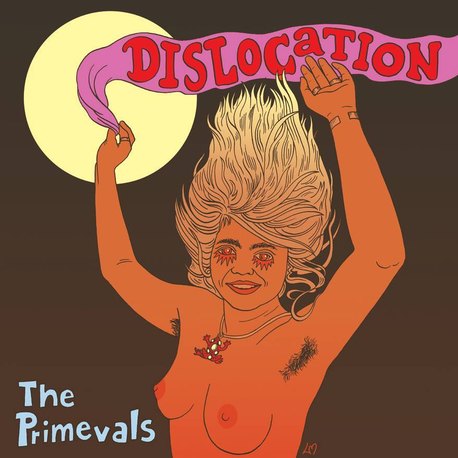
Primevals DislocationVeteran Glasgow rockers, The Primevals, have been hellbent for over 30 years in their quest to keep the heart of garage band rock’n’blues pumping, a task with which they have been spectacularly successful as they maintain their renaissance which began with 2011’s Disinhibitor after a fallow period at the beginning of the century. While their early contemporaries such as The Gun Club and The Cramps have gone the way of all things, Disinhibitor saw a revitalised band roar back into form and it was quickly followed by Heavy War and Tales Of Endless Bliss, both again superb slices of sound that, to coin a phrase, were groovetastic. Psychedelic swirls, evil slide guitar and hypnotic riffs all bundled into one very fine trip.

Dislocation is no disappointment as it sets its sights firmly on its antecedents with the band firing on all barrels. The twisting snarly slide guitar that kicks off the opening song Fever Zone serving notice that we’re back in Swampland on a classic Primevals’ song with singer Michael Rooney raving towards the end over the rushed beat and psychedelic organ. I Got Strong speeds along with a Seeds like velocity, the band pumping like adrenalized muscle tissue while Boho Baby is a Doors’ like seedy walk on a wild side, a vampish twilight zone of sputtering guitars and panther like stealth. All three songs are excellent and delivered with such a freewheeling ease that one imagines that the band and Rooney (who writes all the songs) could probably knock them off in their sleep, so ingrained in their musical DNA is this primal urge. However one of the delights of The Primevals is their ability to switch gears mid song, jump from garage rock to free jazz, localise a song or just freely associate and all of these come to play throughout the album.

East Campbell Street Breakdown opens with a brief lofi blaxploitation soundtrack soundalike before they go into a burnished speed riff not too far removed from Blue Oyster Cult as Rooney hones in on the plight of Glasgow’s homeless community.  Cuckoo Clocks, Chocolate And LSD manages the task of wedding Orson Wells, Forrest Gump and Albert Hoffman in a paranoid welter of scrambled vocals and razor sharp guitar scything. Meanwhile The Jump From Real To Weird adds trumpet from Robert Henderson over a pummelling riff as Rooney riffs on the lyrics almost scatting. Throughout the album the guitars of Tom Rafferty and Martyn Roger slash and burn but it’s in the frenetic Pleasures Past that they really excel as, apart from a short solo burst from one of them, they buzz and swarm like a pack of hornets. Slow Drip (a Rooney/Rafferty co-write) allows Rooney’s harmonica to add a crazed Yardbirds like R’n’B frenzy to the middle eight over some neat wah wah guitar and they close the album with another co write (with Richard Mazda) on another mighty example of Primevals music, a huge slab of noise, the guitars feral with Rooney in the throes of spiders in his bed hallucinations.

All in all Dislocation blasts the cobwebs from your ears  with the band again staking their claim to be the prime purveyors of swampy garage rock and the album is dedicated to the late Stewart Cruickshank who did so much to promote Scottish rock bands. The Primevals have an album launch gig this Friday at Glasgow’s Hug & Pint and it’s bound to be a great night of hi-octane sweaty rock’n’roll.

website