Petunia & The Vipers. Dead Bird On the Highway.

deadbirdhighway-300x300

Joy indeed to have the third album from the oddly named and even odder sounding Canadian outfit Petunia & The Vipers as Blabber’n’Smoke was somewhat enamoured of the two previous releases which we reviewed here and here. Dead Bird On The Highway sees Petunia continuing to wander into the more esoteric byways of popular music while still retaining the core mixture of Western Swing, Blues and Rockabilly which are the foundations of his sound. Although there is yodelling to be found there are songs by Otis Blackwell, Ike Turner and a stunning version of Little Willie John’s I’m Shakin’ along with several numbers that have African roots. All in all a very eclectic mix but if you’ve been following Petunia’s career this should come as no surprise.

Petunia’s reedy vocals in themselves are a joy to listen to as he croons, scats and yodels with a zest that is at times exhausting while The Vipers can lay down a vampish beat, rock like hell and kick the gong around as easily as you switch car gears. At times they do this within the space of a song as on Gonna Put On My Suit where they switch from a bluesy opening into tom tom fuelled guitar blizzards and then tumble into a jazzy Slim and Slam interlude which is then interrupted by pedal steel coming down the tracks. On paper, this seems like a train wreck but it’s an exhilarating ride, the twists and turns coming so fast that by the end the listener is dizzy but satisfied.

The opening song, Blue Yodel Blues, a tremendous mash up of western swing and Jimmy Rogers doesn’t prepare the listener for what’s to come as it’s one of the most straightforward numbers here, straightforward that is for Petunia. As they proved when they played here back in 2013 The Vipers are a deadly force when it comes to delivering hi octane rock, rhythm and blues and they do so here on several occasions. Oh What A Wonderful Time, an Otis Blackwell number finds the band in a viperish mood, all Cotton Club and Cab Calloway swing as Petunia comes across all lascivious, My heart Cries Out For You skitters along like a mutant Buddy Holly number while Bloom, Bloom, Bloom is like Tav Falco with a nervous tic. Throughout the album Petunia takes on familiar styles and mutates them, Chained is a frantic dash that resembles a Merrie Melodies cartoon soundtrack that marries Eastern melodies and hard boiled gangster film noir grit and Put Yourself On The Market (AKA Why Don’t You Do Right or Weed Smoker’s Dream) out Waits Tom Waits with its junkyard jackhammer blues.  We reach the outer limits on the surf guitar fuelled  Asaw Fofor, a  cover of a Ghanaian song from the sixties by Ignace de Souza which finds Petunia switching between English and Swahili over a tremendous groove and on the crowning achievement here, the spooky netherworld of Death Himself. Shimmers of guitar and a rain slicked noirish sheen glower over a slow beat that breathes menace, a shadow in the dark stalking the living. Petunia casts himself as a torch singer, lapsing into French in a danse macabre although he can’t help himself from comparing the man with the scythe to a lumberjack, the Canadian in him coming out I suppose. In any case it’s shivering in its cold beauty.

While it’s not your normal country folk rock blues fodder Dead Bird On The Highway is firmly rooted in supremely listenable roots music as it challenges and provokes the listener to delve and explore but best of all it’s huge fun.
Website


BJ Barham. Rockingham. At The Helm Records

rockinghamcoverjpg-758x758

Sometimes an album comes along that just packs a punch, a visceral jolt to the emotions. One such is Rockingham, the first solo outing from American Aquarium’s front man BJ Barham. A carousing alt country rock band American Aquarium gained plaudits for their last release Wolves as Barham, reported at one point as a heavy drinker, was by then sober and married, settling down as he approached his 30s. Apparently he had been mulling over doing some solo songs but it was back in November last year when, marooned in Holland in the panic following the Paris terrorist attacks, he began scribbling the songs that ended up on the album, songs that reach back to his formative years.

Barham grew up in Reidsville in Rockingham County, North Carolina, a tobacco town that prospered until the American Tobacco Company shut up shop in the mid nineties. On Rockingham he delivers eight songs which he describes as “fictional narrative in a very real place,” You might consider it to be a hardscrabble equivalent to Lake Woebegone, the latter’s small town whimsy replaced by fly on the wall reportage of hard times. He forsakes the alt country rock of his band for a stripped back approach that only on occasion approaches a full band sound. Instead, his dirt stained voice is backed by his acoustic guitar, accordion, banjo, Dobro and spare keyboards and percussion, his narratives akin to those of Kris Kristofferson or John Prine.

The album opens with the sly country picking of American Tobacco Company, an encapsulation of the dead end drudgery of the factory worker, his hopes and dreams crushed by the 9-5, a theme pursued on the following title song with plaintive banjo and harmonica to the fore. Madeline hits an emotional chord as the protagonist cradles his newborn daughter and lists his advice for her future years. The song itself is cradled in a fine, almost spiritual, collision of guitar picking, stately piano and muted organ swells as his homegrown wisdom conjures up nuggets such as “never trust a man who does hard drugs in his thirties.” This intimacy is reversed on Unfortunate Kind where Barham strips it all back to voice and guitar as he inhabits the persona of a bereaved man holding onto memories of his 39 years of marriage, his courtship, life together and a descent into illness and death.

O’Lover is one of the fuller arrangements here as Barham recounts the tale of a farmer driven to robbery while Road To Nowhere almost skips along, its jauntiness at odds with the romantic desertion sung about. Here Barham hits the heights on a song that bears true comparison with the best of the troubadours, Guy Clark included, as he delivers a perfectly formed marriage of words and music, a song that will dwell in your mind. Reidsville is a fine capture of small town living, teenage cars, early marriage and married doldrums all wound around wheezy accordion and slinky Dobro. The album ends with the cracked and dusty Water In The Well, a rural equivalent of the opening blue collar worker’s dilemma as a farmer contemplates suicide while seeking an answer from his bible for a way out of his woes. Again Barham delivers this with an emotional punch, his voice straining with desperation, devoid of hope as the music haltingly shadows his dilemma.

Time will tell as to whether Rockingham will be considered in the same vein as an album such as Guy Clark’s Old No. 1 but in the meantime it’s probably the best of its kind this year.

website

Dean Owens and the Celtabilly Allstars – Settin’ the Woods On Fire (Songs of Hank Williams). Southern Fried Festival. Perth. Sunday 31st July 2016


DSC_0271

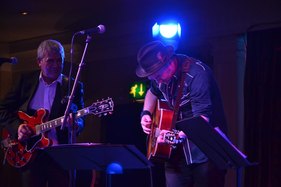
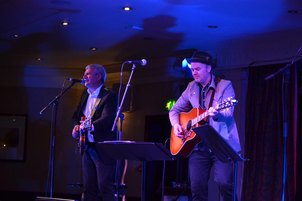
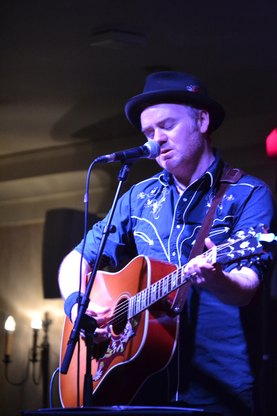
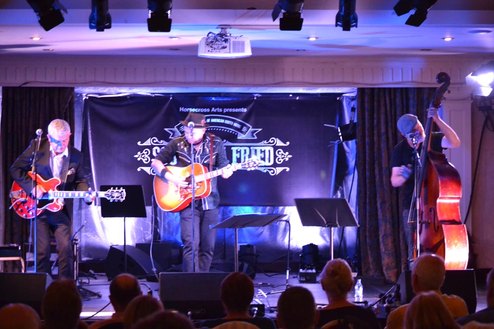
Dean Owens is a regular feature at Perth’s Southern Fried Festival where, in addition to hosting the late night Songwriter Sessions, he is a star attraction in his own right. Last year Owens and his band, The Whisky Hearts played a blinder of a show that drew heavily from his album Into The Sea, a finely crafted blend of Celtic Americana which received rave reviews across the board. This year Owens doffed his hat to one of his heroes, Hank Williams with a show that featured him in a trio setting, The Celtabilly Allstars along with guitar whizz Stuart Nesbit and his former Felsons’ band mate Kevin McGuire on double bass. As on a previous venture, his tribute to the man in black, Cashback, Owens and his compadres selected a bunch of Hank written and Hank related songs to perform along with a self penned number, Celebrate The Life that hymned Williams’ life and works.

DSC_0314

Despite the tears and tragedy of Williams’ words and life this was a joyous show. Stuart Nisbet’s lap steel playing along with McGuire’s dextrous bass work giving a fine hillbilly feel to the proceedings while Nesbit was in fine vocal form on the Gospel song Calling You. They opened with the excellent country lope and swagger of Setting The Woods on Fire which contrasted with the beer fuelled melancholy of You Were On My Mind, the music still at a fair clip but the youthful exuberance of Setting The Woods on Fire replaced by bitter experience. The show continued to alternate the exuberant side of Williams with his darker side. Hey Good Looking saw Nisbet switch from lap steel to his Gibson for a raucous ramble which was followed by a stellar version of Why Don’t You Love Me while My Bucket’s Got A Hole In It was a light humoured delight.

DSC_0270

Owens reminisced about his first encounter with Williams courtesy of a friend who owned a record shop back in the day who played him Ramblin’ Man, Owens’ version today quite excellent, his voice capturing Williams’ hi and lonesome vocal break on the line endings. He also recalled his attempt to write in Williams’ style when back in The Felsons on a song called Dave, a warning to a friend about a treacherous woman.  There were fine deliveries of Lost Highway and Your Cheatin’ Heart, the melancholia seeping through, Nisbet’s lap steel a mournful wail, before Owens sang his song, Celebrate The Life, a number delivered in the style of I Saw The Light with the audience joining in on the chorus as Owens entreated us to remember the “hillbilly Shakespeare” with his “songs of love and heartache, liquor, beer and tears“. The show ended with Owens alone on stage to deliver a spellbinding I’m So Lonesome I Could Cry, a reminder not just of William’s genius but also that Owens has matured into a masterful performer, his voice rich and emotive along with a whistling solo that was just superb.

DSC_0320

Dean Owens has several other shows lined up over the coming weeks (see here) but currently there are only two further outings for this Celtabilly Allstars show. One is tonight at Glasgow’s Glad Cafe and then in Edinburgh’s Queen’s Hall on Wednesday 24th August. Aside from being a tremendous show these will be the only opportunity to buy a limited edition CD that The Celtabilly Allstars have recorded of Hank’s songs, Settin’ The Woods on Fire (Songs I Learned From Hank) which features most of the songs from the show including Celebrate The Life. It’s a fine listen that enlivened our journey back from Perth.


Martha Fields. Southern White Lies

1468769994_folder

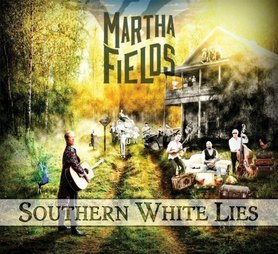
Martha Fields sprang to our attention last year under the guise of Texas Martha who, along with her band, The House Of Twang, released Long Way From Home, a terrific album of pedal steel driven twangy Texan honky tonk songs. Fields is indeed a Texan but she recorded the album in France with French musicians with only the very occasional lyric sung in French signalling that Ms. Fields was more likely to be sipping a Bordeaux rather than quaffing a bottle of Lone Star.  While the album was chockfull of barrelhouse road songs Fields reined it in on a couple of songs, most notably on Do As You Are Told, a song which verged on Southern Gothic. Tellingly this song reappears on Southern White Lies, an album which finds Fields reaching out to another aspect of her heritage, her mother’s Appalachian roots which lie deep in Kentucky and West Virginia.

Still based in France and still with her hotshot French pickers Fields forsakes the twang-fuelled telecasters and barrelling pedal steel for an acoustic set of numbers, fiddle, banjo, mandolin and Dobro fuelling the numbers. She refers to memories of back porch picking on her regular visits to her mother’s kinfolk but the music here is more muscular with bluegrass, blues and country all imbued with a Southern defiance, a sense of social justice, some God fearin’ good sense and a love of a good time. Fields has a gutsy voice that allows her to cover Janis Joplin’s What Good Can Drinkin’ Do You with  some aplomb as you reckon she might be able to match Pearl drink for drink. The traditional Lonesome Road Blues and Jimmy Rodgers’ California Blues allow Fields and band to show that they can still summon up the lure of the road unplugged with both songs ripping along finely, the solos as acute here as they were on the chrome plated Texas numbers of the previous albums.

The western dream of sun kissed bliss that’s invoked in California Blues, a bluesy hobo’s dream of escape to the coast reminds the listener of the hardscrabble times that have hit the poor denizens of the rural south time and time again. Fields allows for that other form of escape via The Good Lord on her cover of the spiritual What Are They Doing In Heaven but elsewhere she’s fired up at the way common folk are treated.  Over the course of seven songs she covers emotions ranging from despair (on the opening Soul On The Move) to a burning sense of anger on the title song. Do As You Are Told, Fields’ song about her aunt, retold from the previous album still packs a punch as it’s relayed this time as a frontier song, all rolling guitars, snake like Dobro and skirling fiddle. The closing song, American Hologram is perhaps the crowning achievement here as Fields and the band adopt a slight Texicana lilt, a cantina like tune that belies the anger behind the words. Here Fields spits out her diatribe against shock jocks who paint her people as poor white trash and politicians who use them as cannon fodder in foreign wars.

Southern White Lies is a brave album. One that packs a social message or as we used to say, protest songs but it’s no mere finger pointing. Fields has the sense to deliver her powerful words clothed in an incredibly attractive suit of rootsy finger picking. She’s not immune to the lure of the heart as heard in the fine and lilting Where Do We Go Now but overall she manages to combine the anthems of Woody Guthrie and the Southern documentation of Bobbie Gentry.

Good news is that Martha Fields makes her Scottish debut this weekend at Perth’s Southern Fried Festival.

Website

The Lowest Pair. Fern Girl & Iceman. Team Love Records

ferngirlandiceman

Some records just capture the essence of an old America, rooted in the hills and woods and the songs and tunes that early immigrants brought with them to the new world, sounds that informed the pioneers of what we now call country music. Generally it’s relatively unadorned, strings and a few other things, voices raw and elemental, spooky or life affirming, summoning up deep dark woods or back porch pickin’ and grinnin’. Blabber’n’Smoke has reviewed several artists who brilliantly  evoke this old time essence, Cahalen Morrison & Eli West, Pharis & Jason Romero and Anna & Elizabeth come to mind. Time then to add the duo of Kendl Winter and Palmer T. Lee, AKA The Lowest Pair to this club as Fern Girl & Iceman just oozes with that rarefied mountain air.

Basically a duellin’ banjo duet Winter and Lee are rooted in the Clinch Mountain musical style, one of the backbones of Appalachian music and listening to the album is somewhat akin to being near the clear mountain streams and wooded glens of Georgia. Recall if you will the early outdoors celebration of the river in Deliverance, the grand beauty of a wilderness and the music that grew out of it. The pair capture this perfectly with banjos strummed and picked, occasionally extended into virtuoso breaks, the vocals, Lee a rough-hewn tenor and Winter a little girl lost, her voice recalling Victoria Williams at times. In fact listening to her one can imagine that this is what Sissy Spacek would have sounded like if she had made a rootsy mountain album back in the seventies. Swapping lead vocals and harmonising excellently together the pair add guitar, tambourine and harmonica to their banjo playing while a spare backdrop of bass, drums, lap steel and fiddle offer occasional embroidery.

There are 11 songs here and all are of the highest quality. There’s the halting Stranger with its skeletal string picking, the old time waltz of Trick Candlelight with its delightful lap steel adornment and the driving ballad Sweet Breath which sounds like it came from the Child ballads. Waiting For The Taker is proof positive that a pair of banjos can summon up a storm of emotion as they flail together in a modal fashion which again recalls old time ballads of dread and doom. It’s chilling in its icy beauty with a tremendous instrumental break which recalls Indian sitar scales. The best is left to the end with the closing song How Can I Roll a perfect summation of the album, a frail cry into the wilderness with tentative picking, aching harmonies and ominous fiddle all folding into a plaintive lament. Overall Fern Girl & Iceman is an album that is fresh and timeless and they get extra points for naming themselves after an obscure John Hartford word poem. Check it out.

Website


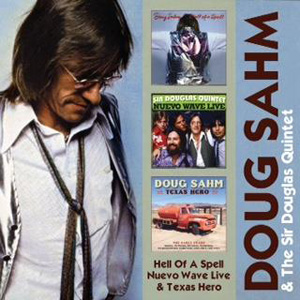
Doug Sahm and The Sir Douglas Quintet. Hell of A Spell/Nuevo Wave Live/Texas Hero. Floating World Records

1540

The late Doug Sahm has been woefully let down by the record industry in the years following his death. Aside from a  couple of decent compilations there hasn’t been (as far as I know) any attempt at a comprehensive retrospective or even a reasonable reissue programme of his major albums, solo, with The Sir Douglas Quintet or The Texas Tornados. Mind you, he recorded for a number of labels so the legal hurdles might just be too much to bear. In the meantime reissues are often slapdash, albums renamed, information scant, hidden away on back pages on Amazon.

This two disc CD (comprising three albums) is guilty on some counts. There’s little information on the musicians involved although there is an informative essay in the liner notes (written by Alan Robinson who also recounts a very brief encounter with the man).  On the plus side it’s reasonably priced and it does contain one bona fide gem from the Texan Groover.

Hell Of A Spell, originally released in 1980 finds Sahm paying tribute to Texas bluesmen (the album is dedicated to Guitar Slim) and although it wasn’t his swansong it’s perhaps his last major release before he formed the Texas Tornados (along with two decades of a variety of line ups playing the Sir Douglas Quintet hits).   With a fine horn section in tow Sahm offers up his “San Antonio blues album” covering Brook Benton, Junior Parker and, of course, Guitar Slim along with several of his own numbers. Produced by Dan Healy, The Grateful Dead’s soundman, it’s an excellent album, Sahm whoopin’ it up, his vocals fired, the band loose but not sloppy. There’s jump and jive and slow burning barrelhouse blues here. If you’re a Sahm fan and haven’t got this album then you can stop reading here and just go and buy it.

Nuevo Wave Live is credited to The Sir Douglas Quintet and it appears to be the same recording issued previously as Live Texas Tornado, an album recorded at the Whiskey-a-Go-Go in Hollywood and the Club Foot in Austin, Texas sometime in the early ’80’s. With the likes of  Joe ‘King’ Carrasco on the scene the Quintet’s parping Farfisa Tex-Mex sound was popular again and here the band give it their all on pumping versions of Wooly Bully, Who Were You Thinkin’ Of, Mendocino and the almighty She’s About A Mover. It’s short but sweet, a crisp live recording with Sahm’s rendition of Dylan’s Just Like Tom Thumb’s Blues an interesting diversion.

The second disc is a collection of early Sahm recordings delving back to 1958 many of which have been previously reissued on a variety of mongrel compilations. As far as I can see this is the most comprehensive collection so far with 25 songs gathered together.  The road to Hell Of A Spell is already mapped out on The Pharaohs’ bluesy I Can’t Believe You Want Me To Leave and Why, Why, Why, recorded with The Markays in 1060, Sahm, just leaving his teens, already a Texas bluesman. The first ten songs are all vintage rock and blues before Sahm delves into early Tex-Mex land and this is where it gets murky. There are four instrumentals credited to him but no evidence of his presence. Following this are sets of songs from Freddy Fender, Ernest Tubb and T Bone Walker, all fine but tangential to Mr. Sahm’s story. Apart from that it’s a fine disc of rudimentary rock, blues and country.

A quick cost benefit analysis might determine whether this release is destined for your shelves but overall it’s a fine opportunity to catch up on the man who once said, “You just can’t live in Texas if you don’t have a lot of soul”.

Buy the album here

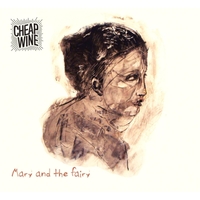
Cheap Wine. Mary and The Fairy.

cheapwine11

Blabber’n’Smoke has occasionally ventured into the world of American influenced Italian rock music with bands like Sacri Cuori and Lowlands proving that there’s a genuine feel for the sound in the boot heeled peninsula. Some time ago we spoke to Edward Abbiatti of Lowlands about this and he recommended a band, Cheap Wine and weirdly enough the very same crew recently reached out and sent us a copy of their latest album. A live affair, recorded in Pesaro, Italy it portrays the five piece band as a very accomplished bunch of rockers who inhabit that world frequented by the likes of Tom Waits and Nick Cave although they don’t have the gruffness of the former nor the grimness of the latter. In addition the band (named after an old Green On Red Song) have a definite touch of Steve Wynn’s Dream syndicate about them (Mr. Wynn has enjoyed playing live with them in the past) and there is a hint of E Street balladry, Velvet Underground streetsmarts and Waterboys’ epic sweep on some of the songs while their European heritage flickers into life here and there, a cafe come cabaret loucheness stalking them.

Mary and The Fairy (the title derived from two of the songs on the disc) features eight songs from the band’s back catalogue that they thought deserved to be captured for posterity, songs that in concert stretch out beyond the studio versions allowing the instruments space to shine. It’s a great recording, the sound crisp with only occasional audience applause to remind one that this is live music. The majority of the songs sit astride piano driven melodies with Marco Diamantini’s vocals well to the fore, the lyrics all in English, his accent only just noticeable, his voice slightly wearied. As the band stretch out there’s acres of fluid and fierce guitar soloing that adds fire to the songs making for some invigorating listening.

Three of the songs exceed the ten minute mark, all mini epics. Behind The Bars is a showcase for the excellent piano skills of Alesso Raffaelli with the song opening like a Springsteen jailhouse opera. The guitars flail away but the piano solo midway through is mesmerising. Mary opens with Diamantini describing the titular “queen of drop out street” as if he were Kevin Ayers or Lou Reed as the band creep around him creating an atmospheric milieu until a guttural guitar solo weighs in seven minutes into the song shredding away until the end. The Fairy Has Your Wings (for Valeria)  is another seesaw of intimate lyrics and gentle instrumentation interspersed with thunderous bursts of guitar fury with some excellent calm in the centre of the storm in the shape of another fine piano solo from Raffaelli.

Away from the Sturm und Drang of these longer numbers the band offer the effortless stroll of Based On Lies, the autumnal ballad of Dried Leaves and the nocturnal delights of the noirish waltz that is La Buveuse. The oddly named I Like Your Smell (you need to listen to the lyrics here) is a minor masterpiece with the addition of an accordion allowing the band to sound like an Italian version of The Felice Brothers.

For a live album this is a mighty fine listen even for anyone who isn’t aware of the original versions and for this reviewer a sweet invitation to delve into the band’s back catalogue.

website

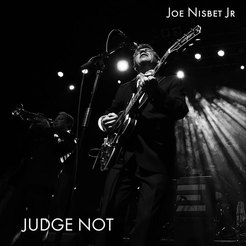
Joe Nisbet Jr. Judge Not

a1685843820_16
Last year Blabber’n’Smoke was intrigued by a singular release from Joe Nisbet Jr, one of Scotland’s premier guns for hire guitar players who regularly graces records and shows by the likes of The Proclaimers, Dick Gaughan, Justin Currie and Ags Connolly. His album, The Gospel According To Mr. Niz, is a collection of gospel songs which were originally recorded by quartets back in the 1940’s and ’50’s and was born out of Nisbet’s formative years when he accompanied his father, an evangelical preacher on a tour of the Southern US states. Encouraged by the album’s reception Mr. Niz has now decided to release his first self-penned composition, Judge Not, a song that again draws from the well of Gospel roots and adds his experiences in punk, jazz and blues over his adult years.

It’s an exuberant number, Nisbet’s guitar riding the rhythm with a nonchalant authority as he proclaims his sins. With hints of Ska and Mariarchi along with a hefty choral backing (featuring Andy May, Neil Weir, Bert Bertram and Justin Currie) it’s a jaunty take on tradition, as the man himself says, “although it sounds like a badly behaved gospel meeting in a New Orleans hip-hop club, it’s actually a punk record at heart.”
You can buy the song here but there’s a cracking video with the song set to a Betty Boop cartoon which will remind older readers of the good old days of The Old Grey Whistle Test, pre MTV.


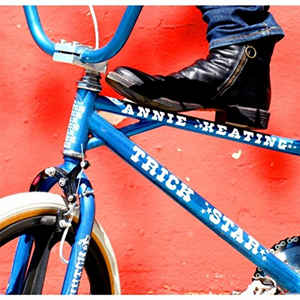
Annie Keating. Trick Star

r-8621855-1465322761-7485-jpeg

Despite being championed by Bob Harris Annie Keating still seems to be somewhat under the radar in the big old world of Americana. Undeterred she keeps plugging away with Trick Star her seventh album and one that ensures that those in the know including The Telegraph’s Martin Chilton and the Glasgow Americana festival, will continue to sing her praises.

Keating says of Trick Star that it’s about being raised up, torn down and finding the way back home. There’s certainly a lot of memories contained here, the title song is about her first bicycle (something like a BMX) and offers her the one opportunity on the album to rock out with snarly slide guitar over a solid organ groove and a fine Dylan subterranean blues rap in the middle. The remainder of the album however is classic Keating, her voice often tender, almost childlike in its vulnerability at times, the songs clusters of fully realised images and emotions. While there’s a Donovan like innocent frivolity on the trombone borne Creatures, Keating wishing for the freedom and peace of mind  she imagines the animal kingdom to enjoy, and a fine pop rock swirl on Time To Help Me Forget it’s on the more restrained and contemplative numbers where she truly shines.

In The Valley is a lilting number with sweet pedal steel and viola and a bittersweet lyric as Keating describes an Elysian field, a place to lay her head. Slow Waltz aches, recalling Patti Page’s Tennessee Waltz as it slowly wends its way, Keating recalling a summer night at a carnival many years ago with the opening lines again allude to death as she sings, “I’m over my head, I’m trying not to care, I’m six feet under the overpass where we first met”.  Regret and forgiveness is writ throughout the very tender Orchard and the winsome country stylings of Come and Go while Fool For You is a halting and intimate song of self recrimination.

Keating’s regular posse of musicians ((Steve Mayone, Jason Mercer, Chris Tarrow, Yuval Lion and Trina Hamlin) are credited by her as having been fully involved in the evolution and arrangement of the songs and throughout they are in fine form. They shine however on Lucky, a song that recalls the simple folkiness of John Prine in its lyrics as the band combine rippling acoustic strings with a fine curdled electric guitar.

According to Keating the seed of the album was sown at a concert at London’s Barbican Theatre when she heard the Brooklyn Youth Chorus performing Black Mountain Songs, a celebration of the North Carolina institute which in the 1930’s forged a blueprint for American alternative culture. Moved by the performance Keating wrote and has teamed up with the Chorus for the closing song here, Phoenix.  A celebration of the power of music and words, the rebirth of hope, an anthem of optimism it’s an addendum to the main body of the album but it’s also an anchor, ensuring that despite loss and hurt there’s always hope.

Website


Rummage. Something Else. Cannery Row Records

rummage_somewhere_else_cover-web-291x300

Despite the fact he’s from Scotland Mark Mulholland is a new name to Blabber’n’Smoke. Born in Glasgow he was involved in the Edinburgh scene in the eighties before becoming something of a globetrotter, residing for periods in Prague, Berlin, Paris, Haiti and currently Mali. On the course of his travels he became close to two other musicians in particular, James Finch and Rusty Miller, both of Jackpot, their shows sometimes colliding at festivals (in particular SXSW). Over the years the trio spoke about recording together and Finch worked with Mulholland on the latter’s 2011 solo album. Eventually the stars lined up and the trio recorded this album in California with Mulholland writing all songs (one a co write with the band), singing and playing guitar, bouzouki and banjo. Finch and Miller handled drums, bass, additional guitar and keyboards.

Collectively the trio have an eclectic CV as players having worked with the likes of Chuck Prophet, Jason Lytle, Nikki Sudden, Captain Sensible, dEUS and Tony Allen alongside their own work in Two Dollar Bash, Impure Thoughts, Jackpot and Nightgown. Admittedly the latter are hardly household names so it would be somewhat amiss to describe this collective as a super group but they have certainly paid their dues and there’s an undeniable sense of fun here as the three pals finally get to let loose in a studio.

Overall the album is a collection of songs that do recall the likes of Nikki Sudden, a loose limbed amalgamation of The Stones and The Byrds, Mulholland’s voice reedy but borne aloft by strong melodies and some fine playing. Guitars jangle, twang and erupt while there are faint echoes of Dylan, Big Star, garage rock and Paisley Underground here and there. Mulholland proves himself a dab hand at writing, his words perfectly attuned to the louche subterranean worlds of songsters such as Lou Reed and Kevin Ayers. Ayers in particular comes to mind on the late night ambience of Fucked Up Again, a cocktail jazz pastiche that discards the janglier rock’n’roll ambience of the album while Hoodathunkit, a fuzz driven scuzzy riff of a song with distorted vocals recalls Ayer’s own pastiche of the Velvet Underground on Stranger In Blue Suede Shoes from his excellent whatevershebringswesing album.

The album opens with the effervescent garage fuzz of Ebb and Flow before the wiry Give Me A Ride  with a Dylan & The Hawks like mercurial slink flows into view.  Dreaming Of Trains surely is somewhat ironic, the title and delivery recalling Robyn Hitchcock, another spangled guitar jangler,  if it’s not deliberate then it’s fine evidence of Happenstance. Listening to it again right now visions of Green on Red also swim into view. Half the fun of the album is in figuring out what band each song reminds one of especially if like Mulholland the eighties were the touch paper. He hits the target time and time again with the slightly awesome Trams and Trains and Aeroplanes standing out, wasted elegance indeed with a shambolic rock’n’roll heart while there’s some tumbledown country melancholy on Floods Of Memory.

website