Edinburgh’s janglemeisters Dropkick return to the recording fray after a Covid enforced break and they do so with their customary excellence. The Wireless Revolution finds the band trimmed down to a trio (Andrew Taylor, Alan Shields and Ian Grier) which allows the songs to be somewhat leaner than the more expansive outings on their last album The Scenic Route. It’s a concise collection of perfectly formed songs, all delivered within a radio friendly three minute time zone and, if there was any justice in the world, these bejangled jewels would be wafting from the nation’s airwaves and whipping up a storm, just in time really as the better weather calls for a slice of sunny side up pop /rock music.
The album opens on a high note with the yearning chimes of Don’t Give Yourself Away with Taylor channelling his inner Gene Clark on a song which ends, appropriately enough, with a Byrds’ like guitar outro. This fine blend of melancholia and harmonic uplift is revisited on Unwind, a winsome reflection on undoing past mistakes and on The Rolling Tide which is a highpoint of the album with its wispy delivery, as fragile as a dandelion clock buffeted by a gentle breeze, quite wonderful. Clouds, the penultimate song here is another highlight as the trio deliver a gossamer like confection with limpid guitars and multilayered harmonies.
Flexing their muscles a bit, the trio bite into power pop on Telephone and on No Difference, the latter standing out as Al Shields replaces Taylor on lead vocals adding a touch more grit to the song. Shields (a fine performer in his own right) also gets the opportunity to sing on his first song written for Dropkick on The Other Side. It shows that he’s well embedded in the Dropkick world of Byrds’ influenced jangled pop songs having taken on board that fine juxtaposition of uplifting melancholia.
Now well into his 80s and recuperating from a recent health scare, Chip Taylor shows no signs of slowing down with the release of The Cradle Of All Living Things, a two CD release containing no less than 28 songs. Delivered in Taylor’s now trademark and well worn spoken word delivery, his voice is suffused with a sense of wisdom and grace while the songs are almost homilies as Taylor remembers lost friends, seeks peace with the world and, overall, considers a philosophy that, while not exactly Candide like, does seek to find solace and hope even when all around is pretty crappy.
Much of this is laid out in the opening title song where Taylor essentially “blesses” a list of worthies – parents, workers, scientists – who strive to make the world better. It Is Written is in a similar vein with Taylor espousing the sentiment, “Don’t worry, just hurry/ And hold me tight ‘cause the book of love got it right” and love seems to be Taylor’s preferred panacea to the world’s troubles as evidenced on several of the songs here such as Someone To Live For and I Don’t Know Much. Meanwhile, one has to admire his sheer chutzpah on Planetary Scheme Of Things where he suggests that he doesn’t want his preferred lifestyle to interfere with any supreme being’s grand scheme of things. Most affecting of all is the supremely tender I Don’t Know Much, a song which serves both as a statement of love to Taylor’s wife and also a song to be sung to every child by their loving parents and grandparents.
Elsewhere there’s the excellent country waltz of Oh It Feels Kinda Different which finds Taylor name checking Elvis, John Prine and Kris Kristofferson on a song which pines for jukebox days and seems to be a swipe at music streaming for free. Anthony is a wonderful and moving tribute to the late Anthony Bourdain with Taylor extolling the virtues of good food and good faces, the joy of companionship. The album closes with what is just about an internal monologue on Why Didn’t I Think Of That Before with Taylor musing on life and mortality in a most moving manner, just as affecting as Johnny Cash’s last recordings. It’s a powerful ending to an album which is perfectly played and which finds Taylor, in his twilight years, a sage for all ages.
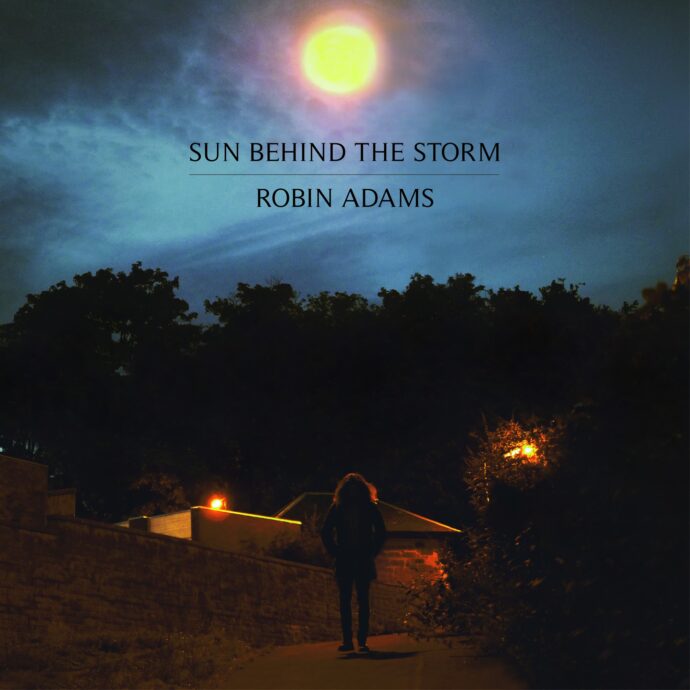
Following on from his hugely enjoyable foray into American hobo/boho folk’n’blues on Wrong Road Home, Glasgow’s Robin Adams returns to more familiar territory on Sun Behind The Storm, a brief eight song collection which is perhaps the most personal and elemental of his albums so far. It’s stark, just Adams and his guitar for the most part, yet within the bare bones of the songs there’s a sense of beauty and wonder, mixed with pools of despair and defiance. For those who suggest that Adams is following in the footsteps of singular singer/songwriters such as Nick Drake, John Martyn and Bert Jansch, the album goes a long way to confirm this.
There’s a sense that Adams is reflecting on the past here. The title song was originally released as a single 10 years ago but never made it onto an album until now. There’s also a song written when Adams was just 18 along with a song which first saw the light of day on an album, Refugee, curated by Adams back in 2016, a song which is increasingly pertinent today. There is certainly a nostalgic bent to the album for those of a certain age who remember the heyday of “bedsit” albums featuring earnest (and oft times tortured) young men pouring out their innermost thoughts. Having said that, Adams rises well above any such nostalgia, able to sit beside the likes of Will Oldham in his reclamation of folk music.
The album opens with the stunning title song. Adams’ guitar playing is quite beautiful here, so reminiscent of Jansch at times, while the song itself sees him finding solace in his belief that better days are ahead no matter how dark it seems. This slight sense of optimism is so fragile however that the overall feel of the song is one of uncertainty, of a hope that could easily be shattered, the singer withdrawing into a comfort zone of his own making. This inner world is further explored on Hit The Ground Running, a song which details the fragility of the balance between hope and despair as Adams sings “Doubt comes crashing down, breaking into fragments.” Catapult is a song written when a youthful Adams was struggling with depression. Closeted, agoraphobic, Adams rails defiantly against his dread mood, singing, “Don’t walk, don’t run, don’t go outside in the sun. Don’t have a life that goes beyond the thought of now – I don’t think so, somehow.”
The remainder of the songs are less introspective although several still pertain to personal experiences as on the charming To The Sea which Adams explains as being about the joy and anticipation one experiences whenever a seaside trip is planned. It’s a couthy Scots equivalent of all those CSN&Y songs which celebrate the ocean and is all the better for that. Sweet Sturnidae is the second song of the album which we would call stunning as Adams pulls out all of the stops, singing about the mesmerising spectacle of murmurations of starlings (Sturnidae being their orthinological name). Here he’s accompanied by Graham Smith (of String Driven Thing fame) on violin and Pete Harvey on cello and the song has a glorious autumnal feel.
Pushed And Pulled opens with a Dylan like harmonica wheeze as Adams goes into folk rock mode on a song which, with a Dylan like opaqueness, seems to refer to the plight of refugees. The song opens with the line, “We’re all ghosts floating out at sea, you and I and humanity” as Adams likens their plight to pawns on a political chessboard. It’s followed by the much more direct The Devil’s War And The Deep Blue Sea, originally recorded for a charity album. Sadly, it’s a powerful song which is even more pertinent today than when it was originally recorded. Overall, Sun Behind The Storm is quite breathtaking in its honesty and delivery.
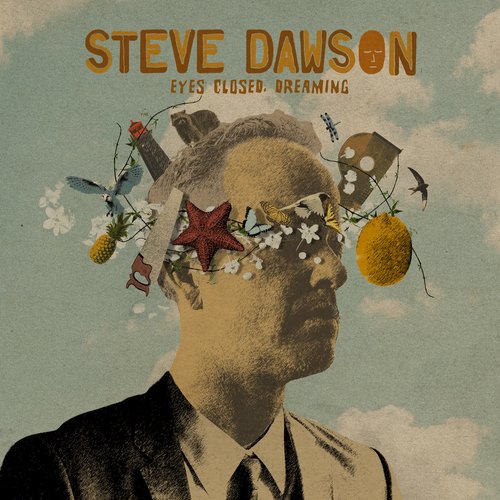
And so, the third of Steve Dawson’s “pandemic” trilogy hits the shelves, drawing to a close his year long release strategy on a very triumphant note. As with its predecessors, Eyes Closed, Dreaming was recorded remotely with musicians joining in from Nashville, Los Angeles, Toronto and Vancouver with never a join to be heard, the whole skilfully woven together by Dawson in the producer’s chair. In terms of the trilogy, Eyes Closed, Dreaming is a close cousin of the first release, Gone, Long Gong, both being a collection of songs excellently played and using both his fellow players and his undoubted guitars skills quite perfectly. And while Phantom Threshold, the middle release of the trilogy was an intriguing collection of instrumental music, it’s great to hear Dawson back on his rootsy song saddle.
More top heavy on covers than Gone, Long Gone, Eyes Closed, Dreaming nevertheless features four excellent songs written by Dawson and Matt Patershuck which easily equal those on the earlier album. Two of these find the writers delving into the area of Child ballads. A Gift is a beautiful song, tinged with a hint of danger and played with a tender sense of purity, the highlight being Dawson’s pedal steel playing. The Owl is not dissimilar although it harks more to the ensemble playing of the Pentangle in their heyday. Meanwhile Hemingway is an intimate reflection on the author with Dawson’s acoustic guitar opening recalling Bert Jansch before a string section billows in giving the song a very nice yet restrained sense of majesty. The best however is the gentle meditation on the nostalgia and affection contained within a simple Polaroid snapshot on the song titled Polaroid. The lyrics bring to life the experience of taking such a snap as Dawson sings of the picture “slowly fading into view” and the way that “light was reflected from your face and onto this very page.”
Elsewhere Dawson rewards those who love his gutbucket R’n’B with the opening song, Ian Tyson’s Long Time To Get Old which is suffused with his slide guitar licks while Allison Russell sings gustily along with him. There’s more of this Ry Cooder like humbucking on a grand cover of Jack Clement’s Guess Things Happen That Way while Cooder comes to mind again on the Hawaiian styled Waikiki Stonewall Rag and on the lazy swingtime of Singin’ The Blues, both allowing Dawson plenty of space to impress on Weissenborn, National guitar and ukulele.
Rounding up the covers, Dawson breathes new life into that old folk chestnut, House Carpenter. With Tim O’Brien on mandolin, Dawson performs it in a modern bluegrass fashion giving Billy Strings a run for his money. He closes the album with a solo performance of John Hartford’s Let Him Go On Mama which is perky and affectionate and, it goes without saying, perfectly performed.
Aside from a cover of Bobby Charles’ Small Town Talk which, for this reviewer, didn’t really take off, with Dawson straining to get the right vocal vibe, Eyes Closed, Dreaming is a further reminder that Dawson really deserves to be as well known for his solo endeavours as for his multitude of studio sessions and production work.
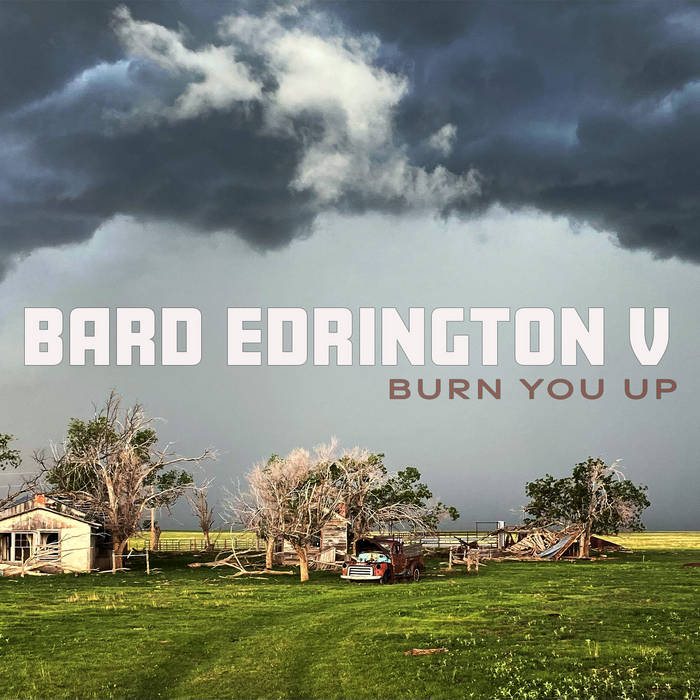
Fairly hot on the heels of his last release, the superb Two Days In Terlingua, Bard Edrington V returns with Burn You Up, a relatively slimmed down version of its predecessor which, nevertheless, is just as vital a slice of rural American folk music.
We say slimmed down as Edrington is here backed by a more straightforward line up than on Two Days In Terlingua. Basically it’s just him and The Blackbirds (brothers Bill and Jim Parker playing guitars, bass and drums) along with Karina Wilson on fiddle, a compact unit but one which can perfectly deliver tub thumpin’ country rock (as on All I Can Do) one moment and then lay down a song like the glistening Die Into It the next.
Edrington remains a master story teller whether singing of his father (“a truck driver and self made man”) on the opening song Sand And Gravel or recounting the role a bootlegged liquor played in 19th century New Mexico as it inflamed the settlers, leading to a revolt which resulted in the death of the then Governor of the state on Taos Lightning. He’s also acutely attuned to his surroundings. The album was recorded was in Santa Fe as a huge wildfire raged only some miles away and on Fire And Rain Edrington delivers a lovely reverie which muses on those opposite forces of nature.
The band snake through the gritty All I Can Do in an ornery mood which recalls the best of Waylon Jennings with Wilson delivering a fiery fiddle solo and Back Roads Of My Mind has a delightful sense of Western Swing meets cosmic country to it as Edrington extols the benefits of the occasional dose of psilocybin. Those hallucinogenic brown pellets also figure on Die Into It which comes across as a mongrel offspring of Carlos Castaneda and Sam Peckinpah, writing a song about an existential crisis. Speaking of Peckinpah, there are movie pickings galore in the glorious country skirls of Two Days In Terlingua which has echoes of Michael Hurley woven within it and on the evocative Chiapas, a delightful border country waltz which evokes, in its essence, Townes Van Zandt.
A veritable bard of American folklore, Edrington deserves to be heard and lauded, both for his solo work and for his albums with The Hoth Brothers. Burn You Up is, simply put, quite wonderful.
On her sixth album release Karen Jonas nudges further from the upbeat honky tonk and country sounds which populated her earlier albums. Much as on her last release, the four song EP Summer Songs, Jonas’ song writing here was informed by her time spent writing a book of poems, Gumball, which she has described as a “cathartic and confessional” experience. The songs have a gloss to them with Jonas’ regular band (guitarist Tim Bray, bassist and co-producer Seth Morrissey, drummer Seth Brown and multi-instrumentalist Jay Starling) gelling perfectly whether it be on the dark melodrama of Rock The Boat (with its shades of Calexico), the pummel and bustle of classic LA rock on Paris Breeze or the louché Parisian swing of That’s Not My Dream Couch.
With the band in such fine fettle, Jonas delivers a set of songs which, in the main, revolve around love, love lost and regret. There are trysts in Paris on two of the songs, Paris Breeze coming across as quite exhilarating while Elegantly Wasted is more of a comedown, the sparkle now more of a memory. Whether Lay Me Down pertains to these Parisian affairs is moot but on this powerful song Jonas delivers an intimate portrait of a woman unsure as to whether she is just “a casual romance” while We Could Be Lovers is like a daydream with Jonas wondering if she and her protagonist should “Be lovers or maybe just friends.” That she sings in it such a seductive fashion and with lyrics such as “Is it getting hot in here or is it just you, tell me what a nice girl is supposed to do, take off my sweater, are you getting warmer too” leads one to conclude that she is taking the lead here. It’s a wonderful song with both Jonas’ delivery and the slide guitar reminding one of Maria Muldaur.
There are some sassy southern soul licks on the tale of a stalkerish love struck belle on The Breakdown and an excellent and endearing love song in Forever, perfectly played on acoustic guitar and Dobro. But Jonas keeps the best to the last when she embarks on Throw Me To Wolves, a remarkable slice of country rock in which she comes across as an electrified Dolly Parton while the band sound as hot and sweaty as Waylon Jennings’ crew on Lonesome, On’ry and Mean.
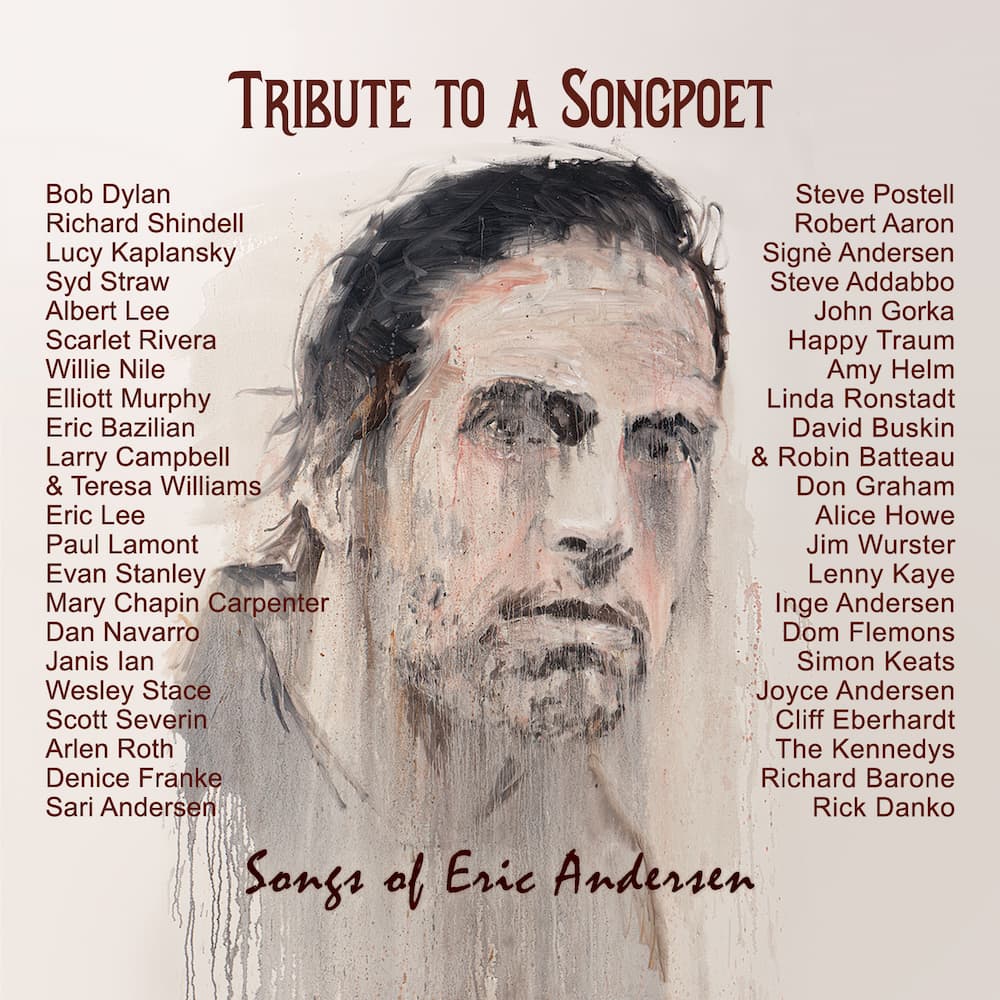
Most folk, including us here at Blabber’n’Smoke, aren’t too aware of Eric Andersen. He is perhaps THE cult artist of the Greenwich Village years, rubbing shoulders with his much better known contemporaries such as, well, Dylan, and the rest. His songs have been recorded by the likes of The Grateful Dead, Judy Collins, Fairport Convention, Gillian Welch, and Linda Thompson but, now aged 80, he remains pretty much a secret, perhaps in part because he’s never had that one killer song which rises above all others.
This album, a three disc affair on CD, does its best to remedy the situation as a host of famous fans perform his songs. Most of them have been recorded specifically for the album but there’s a clutch of vintage recordings included and it’s one of those which opens the album. From 1970, Bob Dylan sings Thirsty Boots, accompanied by Al Kooper on piano and David Bromberg on guitar with the song sounding as if it were an outtake from New Morning. It’s a swell start to the collection but not really indicative of what is to follow. The 1972 appearance of Linda Rondstadt (with her proto Eagles backing band) singing (I Ain’t Always Been) Faithful and Rick Danko’s live rendition of Blue River are most welcome, the latter particularly poignant, especially when it’s followed by Andersen himself singing Thirsty Boots at a club gig in 1982 which closes the album’s song cycle. Of the new recordings, they are much varied, several of them well removed from Andersen’s folkie perspective, but in the main they pay testament to his song writing skills.
Close The Door Lightly When You Go is perhaps the best known song here (thanks to Iain Matthews) and Richard Barone with Allison Moorer perform it quite deftly while Amy Helms delivers a soulful Blue River, the title song from his most successful album. Thereafter it’s pretty much a pick and mix affair as to what will capture one’s fancy but the doleful folk rock of Goin’ Gone by Richard Shindell stands out as does Foghorn by Larry Campbell & Teresa Williams along with Janis Ian’s powerful rendition of Hills Of Tuscany, a song which has a Dylan like intensity to it. Pick of the mix goes to Wesley Stace’s eight minutes of sparkling and jangled mystery on Time Run Like A Freight Train and Eyes Of The Immigrant by Lucy Kaplansky, a song written many moons ago but still relevant these days.
That leaves another couple of dozen songs we haven’t mentioned (and artists such as Willie Nile, Elliott Murphy, Happy Traum, Dom Flemons and Lenny Kaye) but, rest assured, all are worth exploring. What’s for certain is that this collection shines a welcome light on a mighty fine songwriter who has for too long has remained in the shadows.
It’s been a long time since Blabber’n’Smoke last heard of Ash Gray – nine years it turns out – but it also turns out that this Texan transplanted to Sheffield (his parents hailed from Yorkshire) has become a staple of the live scene in his adopted home and this live album finds him and his band, The Burners, somewhat on fire on their return to the stage as the Covid pandemic ebbed.
Live 55 was recorded in a Sheffield pub, the Dorothy Pax , not a venue we’re familiar with but seemingly a well managed music venue (their website proudly states they have hosted two musicians who played at Woodstock). Given that, it’s a ridiculously well recorded album with the band sounding warm and close up with the audience present enough to applaud the songs but absent as the band are playing. And what a band. A tight knit five piece comprised of Gray on guitar and vocals, Jim Widdop on pedal steel, Tom Jarvis lead guitar, Johnny Griff on bass and Tom Townsend on drums, Ash and his Burners pretty much tear through a fabulous set of cosmic country rockers, sounding at various times like reincarnations of The Grateful Dead, New Riders Of The Purple Sage, Poco, The Nitty Gritty Dirt Band and The Long Ryders. Towards the end they even toss in some 13th Floor Elevators Texan garage punk.
And while the band tear through the songs with a fine tie dyed in the wool vigour, Gray comes up with the goods on the songs. The opening number Jeremiah with its “Hey grandpa” refrain romps along in a breezy country-rock style with Widdop and Jarvis duelling excellently and Two Lane Blacktop has the band rolling along the highway with a skip in their step. While Gray’s not the strongest singer in the land he sounds quite impassioned throughout and he is most energised on the more dramatic numbers on show here. Billy, introduced by Gray as “a song about the old West,” is an excellent outlaw blues country tale with Widdop’s pedal steel snaking throughout and Chickenwire has a Calexico like dramatic sweep in its essence, the highlight of the album actually.
The addition of keyboard player Joe Newman and Liz Hanley on backing vocals add some more “oomph” to the last two songs. Back Alive snarls with a Texan proto punk attitude, the band attacking the song as if they were auditioning for a slot on Lenny Kaye’s Nuggets compilation. The closing song, When The Devil Comes Home, finds Gray at his most impassioned while, over its seven minutes, the band show off their chops ending with a maelstrom of sound which reminds one of the eastern scales pioneered by Kaleidoscope on their Beacon From Mars album.
As a live “warts and all” album, Live 55 is ridiculously good and definitely recommended. And if Gray and his Burners venture forth from Sheffield then get in the queue for tickets. You won’t be disappointed.
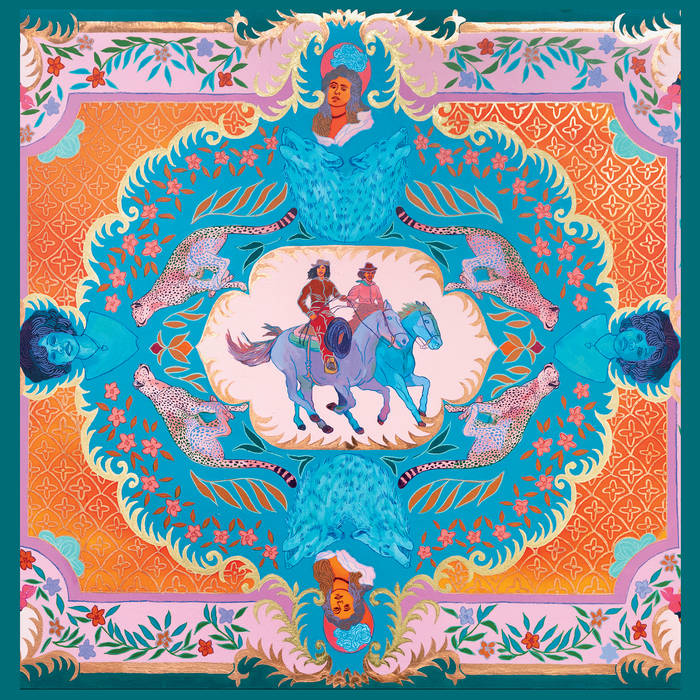
John Train was first of all a character dreamed up by Phil Ochs as he increasingly fell prey to delusional thoughts, telling interviewers he was Train and had killed the real Ochs. A sad story. This John Train are a bunch of Philadelphians who have been recording for several years with Cowboy Dreams their first album to be released on vinyl. It was released some months ago in the States and recently a copy arrived here at Blabber’n’Smoke. We always accord vinyl submissions the appropriate sense of respect but we were immediately taken by the album art by acclaimed artist Crystal Latimer, well known for her work celebrating Latin American culture. The cover reminds one of celebrated albums by The Byrds, the New Riders Of The Purple Sage and Poco and the music contained within doesn’t stray too far from the era of those bands.
Talking of the album, songwriter and lead singer John Houlon says that when the band went into the studio to record he decided to “Pull all of my horse related material together and call the collection Cowboy Dreams.” The band (Houlon – vocal, acoustic guitar, Mike Brenner – steel guitar, dobro, Mike Frank – bass, Bill Fergusson – mandolin, bouzouki, Mark Tucker – lap steel, various guitars, piano and Mark Schreiber – drums, shaky things) play in a loose limbed country-folk-roots fashion which reminds one at times of the acoustic Grateful Dead along with Jerry Garcia’s bluegrass combo Old And In The Way while Brenner and Tucker’s pedal and lap steel solos add a little more bite (and twang) into the equation.
The instrumental track, Sun Up At Belmont, sets the scene perfectly with a whiff of Calexico included, then Blood Horses races in with the band setting a cosmic country groove as Houlon sings of the thoroughbreds which run at the Kentucky Derby. A spiralling guitar solo cements the Dead connection. Closer to the Dead’s offshoot, The New Riders, there’s the sparkling trot which is Since She Started To Ride (a Jonathan Richmond song) while Further (written by David Halley) is a wonderfully slow paced country lament. Twister meanwhile is quite a jaunty number which sounds like an upbeat John Stewart.
Somewhat surprisingly the title song is actually a cover of a Paddy McAloon song and the band don’t dramatically change it, they just dial it down a bit while adding some honeyed lap steel. It fits right in here. Toss in a furious honky tonk instrumental (Cuttin’ Down on Cuttin’ Up, Tucker’s contribution to the album) and a closing riposte to the opening instrumental (Sun Down At Belmont) and you have an album which, were it a horse, would be a sure bet.
Cowboy Dreams is available on John Train’s Bandcamp page
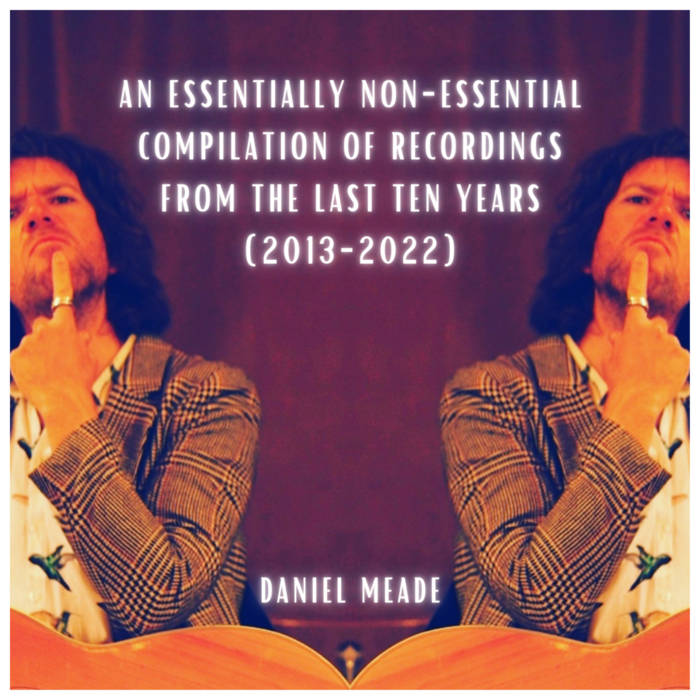
Whether you consider this generous helping of songs from the back catalogue of Glasgow’s Daniel Meade essential or not probably depends on how essential you consider Daniel Meade to be. Certainly, from Blabber’n’Smoke’s first encounter with the man (when he was supporting a then largely unknown Sturgill Simpson) we’ve been mightily impressed with him, as have a roll call of musicians such as the aforementioned Simpson along with Old Crow Medicine Show and Diana Jones.
A bit of a musical polymath, Meade, after an early encounter with the heady world of rock’n’roll with The Ronelles (who were big in Japan), formed The Meatmen and then The Flying Mules, both forging a great live reputation before he set off on a solo career with As Good As Bad Can Be, the starting point for this compilation. The 21 songs here, handpicked by Meade, ranging from barrel house roustabouts, tear stained country songs and a handsome dash of well jollied honky tonk sing-alongs and whether recorded in Nashville or in Meade’s own front room, make for a great album which serves as a fine introduction for those not already in the Meade camp and as a handy quick fix for those who have the albums these songs are garnered from.
The album opens with Keep Right Away, the title song of his 2015 album, recorded with members of Old Crow Medicine Show and featuring Joshua Hedley on fiddle. It’s a fine example of Meade’s ability to mix rock’n’roll with country as the band skiffle along and he plays some Jerry Lee Lewis piano runs. The following Juliette jumps with a juke box jive with Meade channelling New Orleans greats such as Fats Domino while his regular guitar foil, Lloyd Reid appears with some scintillating guitar runs. There’s more of a pop sensibility to the next song, These Things Happen which, according to Meade, was influenced by his time supporting The Proclaimers. In the liner notes he states that the song is “not quite as good obviously” as anything the twins have delivered but he does himself an injustice here as it’s a grand guitar and horn fuelled number which has the crowd pulling effect of the Reid’s and is given a rumbustious delivery.
Three songs in and three quite different styles already. It’s a mark of Meade’s magpie ability to pluck treasure from wherever he lands and the remainder of the album confirms this. There are rousing live versions of It’s Not Your Fault It’s Mine and What You Waiting For along with a superb Bullets And Bones which all have a rockabilly heart while songs such as Let Me Off At The Bottom, Not My Heart Again and Sleeping On The Streets Of Nashville are country delights while there’s even a touch of Motown/Stax mod grooviness on the stomping By The Book. Dialling it down, Meade can deliver intimate moments as on the plaintive Fixing Quicksand and the tender love song which is Shooting Stars & Tiny Tears but one of the best moments on the disc is the very simple and very excellent Cocaine Jane which, once again, features the excellent guitar playing of Lloyd Reid. All in all, an excellent collection of songs.