A Swede domiciled in the UK Benjamin Folke Thomas has been making a bit of a name for himself on the London scene as a singer/songwriter in the Dylan mould and an accomplished guitar picker. He released an EP in 2010 and now follows that up with his debut album Too Close To Here which does beg comparison with Mr. Zimmerman from time to time but allows him to shine as his own man albeit with a slew of influences and which raises a suspicion that had he been the next Dr. Who he would have set the Tardis to land on the cusp of the sixties and seventies.
Thomas wanders through various styles on the album with some songs reminiscent of the dexterity of Pentangle while there is a whiff of the romanticism of Al Stewart (before he went all FM) along with a hint of the American influenced pub rock that included Ducks Deluxe, Brinsley Schwartz,Sniff ‘n’ the Tears and even the early Dire Straits especially on the opening song, Someday. Love Somebody which follows has an endearing rough and ready delivery with the band teetering on the edge of losing the beat but always recovering just in time. Thomas next delivers his first killer song, Blues For You which mixes Dylan, Fred Neil and Davey Graham in equal measure as his gruff voice reaches back into sixties folk blues and comes up with a bittersweet love song that stands up well in comparison to many standards of that era with lines like ” my lungs are heavy and my skin feels weak my soul rattles every time you speak your eyes are pretty but all I see is sin.” Extend No Greeting is another superb song which recalls the raga guitar sagas folk listened to while wrapped up in fragrant smoke while the emotive Bye Bye Baby (Bye Bye) stands out by dint of the lyrics which name check Warren Zevon while recalling Bruce Springsteen over a backing which could have been laid down by the Band on Planet Waves.
All this talk of influences runs the risk of tagging Thomas as an “oldies” or tribute act but he has the talent to channel these influences into an album that’s vibrant and exciting so that the motor mouth talking blues of OK Blues takes Dylan by the throat and drags him into the 21st Century while I’m Alive resurrects Ronnie Lane for one more whirl around the campfire. In the meantime a song like Let Her Down, the centrepiece of the album that has a spine chilling feel as the guitars summon up supernatural sounds is proof that Thomas can update a folk ballad tradition and add his own lyrical sparkle to it. Superb stuff.
A few weeks back Blabber’n’Smoke reviewed a Fairport Convention reissue that appeared in the post. Now Fairport were one of our favourite bands back in the early seventies and they do fit the Blabber’n’Smoke mission statement (N.B. there is no mission statement here, we do as we like) so we listened and grooved to it and then wrote about it. Hell’s bells! The viewing stats went through the roof (helped by No Depression featuring the review) and we had our moment in the sun. Very tempting then to churn out more reviews of fairly well known bands (and we will from time to time) but we exist to benefit from and to raise awareness of the multitude of acts out there who work at the coal face of contemporary Americana type music. Some are well kent to aficionados (like Sam Baker, Dave Alvin or the genius that is Howe Gelb) while others may be local legends who have the opportunity to wax on wax (or plastic as it were) and whose offerings end up in our postbag.
So today we celebrate the unknowns with a pair of releases that are top notch and will probably be mentioned in blogs here and there and get a few radio plays especially on the continent where Americana type music has a deep fanatical following. There’s a whole load of moaning going on about the internet destroying music but without it there’s no doubt that we wouldn’t have the opportunity to sings these guys praises. Bo Porter and Rod Balch are no spring chickens , they fit the Hollywood stereotype of self made men, raised on Harley Davidsons, braving audiences behind chicken wire, as able to fix an engine as to pen a song, tough as nails but with music in their veins with Texas being the primary infusion.
Bo Porter hits pay dirt with his Try It, You’ll Like It, a short sharp lesson in goodtime country, swing and rockabilly. With a shit hot crew in tow he could fill in for the Blasters if they failed to turn up on the night and you wouldn’t feel short-changed. His voice is stained with years of experience and his relaxed delivery even encompasses a chortle on She Likes Living In Texas as he delivers a list of things he likes about his partner. Starting off with a narrative in his best Sam Elliott style Porter tells of how “she likes smoking her breakfast when the sun comes up, local honey in her coffee cup” while the band deliver a wonderful Tex Mex accompaniment that is reminiscent of Willie Nelson, accordions and all. With a mixture of plangent ballads and rip roaring rockers featuring honky tonk guitar licks and rockin’ accordion probably the best way to describe this album is shitkicking and that means good. The closing song I Was Born Like This is the best Waylon Jennings song that Waylon never wrote.
Next up is Rod Balch, a Fort Worth resident who actually fixes Harley Davidsons for a living and plays the local clubs at night. He’s been doing this for years but now he’s got an itch to expand his frontiers and this album, Fort Worth 76102 is his calling card for promoters and listeners worldwide to open their doors and offer him the chance to entertain them. As such it’s an excellent showcase for his eclectic vision of Texas music which encompasses folk, country and blues much as the late lamented ambassador for Texas music, Doug Sahm did. Teaming up with NewTex Records head honcho Steve Satterwhite (who wrote the majority of the songs here and produced) they’ve gathered a small multitude of local luminaries who between them have played with the likes of Jerry Garcia, Delbert McClinton, Bobby Bare, Freddie King, John Mayall, David Bromberg, Waylon Jennings and George strait, a pedigree that’s apparent in the easy way they all swing into action with a tremendous sense of ensemble playing and some zinging solos popping up all over the place. Balch sings with an easy voice with a very slight sense of early Kristofferson cool detachment while the band swings along behind him sounding at times like Asleep At the Wheel, Commander Cody’s Lost Planet Airmen or The Lost Gonzo Band, Texas music at its best. As for the songs there are 16 packed into less than an hour here and everyone is a belter and each time we’ve listened to the album a new favourite emerges. Balch celebrates the usual suspects of booze(Rehab Rendevous, The Bar Song, Beer Here) , hard times (The Red Truck), girls (Blood In My Eyes) and prison (Jesus In Jail). Be they beer stained laments or rocket fuelled Texas tornadoes they’re all minor masterpieces and its astounding at times to remind oneself that this is an album by a Texas bike mechanic who plays music in his spare time. Special mention (at least on this latest listen) for a few of the songs. Carla’s Room is the story of Karla Faye Tucker (whom Mary Gauthier has also written about), a tale of drug abuse and murder and its given a suitably grave delivery. The Alamo is a classic country rock glide where folk live their lives through the silver screen but top of the list right now is Vagabond Magazine Blues which corrals Woody Guthrie as if he wrote for the Hollywood Reporter. All in all this is an excellent listen and hopefully Balch will make it over here at some point.
The good folk at NewTex Records have given us a spare copy of Rod Balch’s album for one lucky reader so if you want it pop over to our Facebook page and tell us why you want it.
It’s been a while since we’ve come across a record label has the feel of being a trademark of quality in that it’s a fair bet that if they release a disc then it’ll be well worth exploring. Elektra, Stiff, SST, Bloodshot have all had their moments in the sun when this was true of them. This Is American Music (or TIAM), a labour of love for some Americana fans in the deep south has in the three years it’s been running built a solid reputation with releases from Glossary, The District Attorneys, Great peacock and Hurray For The Riff Raff. They’ve a slew of new releases hammering to be heard including Bonnie Whitmore, Have Gun Will travel and this offering, as fine a slice of dusty deadbeat songs as we’ve heard in a while.
Based in Kentucky Doc Feldman is a local veteran of several bands and Sundowning At the Station is his solo debut following the demise of his last band Good Saints. We say solo but he’s assembled a studio crew called the LD50 (go look it up) consisting of James Jackson Toth (AKA Wooden Wand), David Chapman and Jeremiah Floyd and produced a minor masterpiece of reproaches and recriminations. With Feldman at the helm proclaiming like a soiled preacher the band offer a muted support sounding like a wounded Crazy Horse (on Alive For Now) or lost in a sea of fuzz (Battle Hymn), overall there’s a sense of numbness, of howling at the moon, railing against life’s calamities.
Ready opens the album, a banjo riddled riposte to the country rock popularised by Neil Young’s Harvest taking Young’s sound and diving headlong into the ditch as Feldman pleads to be given a lethal dose to end it all. Texas Moan is a novel in miniature as the band conjure up the sound of Little Feat on Sailing Shoes. Alive For Now opens with portentous guitars and drum washes before settling down into a pared down cousin to Neil Young’s Zuma as guitars slow burn and the rhythm section churns away like the muddy Mississippi. On some of the songs the sound is pared back leaving Feldman to stand naked as it were with Let It Go recalling Steve Earle in his rehab days while Cold Tile Floor brims with menace. There are snatches of found sounds scattered throughout the album but they are most effective on the solo dirge that is Only Light where Feldman picks up his guitar and delivers a magnificent mea culpa.
Downbeat and dreary may be the order of the day here but ultimately the delivery is exciting with some shiver worthy moments and as we said earlier a fine addition to the TIAM catalogue.
Canadian duo Madison Violet are no strangers to these shores and in advance of yet another foray into the UK including two Glasgow appearances they’ve released this live album which captures their show with a fine degree of accuracy. While their last two studio albums have been relatively polished affairs with their writing and vocal harmonies well to the fore here they stand naked (so to speak) armed only with those voices and their multi instrumental efforts assisted only by Adrian Lawryshyn’s double bass. Recorded at the Kulturkirche in Cologne towards the end of 2011 it features for the most part songs from their back catalogue with a few less familiar offerings including a version of a Kurt Cobain song, All Apologies and is available in two formats, a filmed version on DVD or bog standard audio on CD. Our review copy didn’t include the DVD but some Googling reveals that the DVD includes spoken intros to several songs which aren’t included on the CD which is a pity, a small quibble but somewhat annoying.
Apart from that they are in top form here while the audience deserve a mention providing as they do mass harmonies on Small Of My Heart (perhaps prompted beforehand) while they provide the sounds of many hands clapping on some of the numbers, a feature that does detract on a song such as Come As You Are. The duo (Lisa MacIsaac and Brenley MacEachern) are both in fine voice, individually and in harmony while the sound is bright without much evidence of studio polish post taping. With 17 songs packed into a little over an hour it’s a good approximation of a live show as they inject a degree of passion into songs such as The Ransom, Fallen By The Wayside and Best Part of Your Love while Prayed and The Woodshop are given reverential hushed treatments that chill the spine. Overall a fine souvenir if you’ve seen them live or a fine introduction if you are about to.
Madison Violet are touring the UK in October and have two shows in Glasgow under the Glasgow Americana banner, dates here.
Sam Baker appeared seemingly from nowhere around 2007 with an album, pretty world that just about devastated everyone who heard it. There had been a bit of a buzz about him after Gurf Morlix had handed Bob Harris a copy of Baker’s debut, mercy a short while earlier. For fans of well worn Texan tales there was a new kid on the block except this kid was middle aged, bruised and battered with a back story that astonished and a sense of humility that was in itself humbling for all who encountered him live or on disc. Having survived a terrorist bomb in Peru in 1986 Baker had been mangled and his road to recovery and eventually to recording informed and suffused his songs and there was universal agreement that he was a worthy successor to the likes of John Prine and Townes Van Zandt. say grace is his fourth album and it’s safe to say that it’s as good as his first three and it’s tempting to say that its actually better. His bare melodies have been draped in some fine arrangements, more so than on pretty world and cotton and thankfully they have survived and even benefited from being dressed in their Sunday best. While there are still stark moments (with The Tattooed Woman and Migrants standing out) and the mood remains sombre throughout there is a richness and depth here that surpasses the earlier releases. In the meantime his unique voice continues to sound vulnerable, hurt and passionate, tugging at the emotions.
Baker paints portraits of characters for whom bad luck and trouble is a way of life as an old woman sees her mother in the mirror (Say Grace) and Mexican migrants are left to rot in the desert (Migrants). The worker in Ditch complains bitterly “the crew’s a bunch of stoners, the boss is a shit, be a miracle if one of us does not get hit by a ton of pipe on a cheap ass chain swinging round the sky in this pouring ass rain”
but Baker allows these folk some ways out of their despair in the shape of either sex or religion. Isn’t Love Great tells the tale of a pair of unlikely lovers who are pillars of the community but who have kinky sex while Button by Button is a unlikely Romany tinged companion to Randy Newman’s You Can keep Your Hat On.
When these worlds collide as on Feast (where a deacon has what seems to be a wet dream) it inspires confusion and rapture, both captured on the song by stabs of angry guitar and a heavenly chorus. One can imagine Sweet Hour of Prayer by which follows being whispered urgently by the confused deacon but here Baker hands the vocals over to Chris Baker-Davies and Raina Rose for this devotional song which features some excellent piano from Steve Conn. Baker closes the album with another prayer, Go In Peace which resonates with his own life story. These last two songs were not written by Baker but presumably their faith and hope reflects that of his own, a faith and hope that has allowed him to triumph from adversity. One of the best albums we’ve heard this year.
Sam Baker is appearing at Glasgow Americana at St Andrew’s In The Square on Thursday 5th September. He always sells out so grab a ticket fast.
By 1974 Fairport Convention were far removed from their trailblazing days as the band which largely introduced folk rock spawning a whole new rock subculture. A revolving door syndrome had seen members come and go and the departure of Simon Nicol in 1971 saw them with no original members. Fiddler Dave Swarbrick took up the baton of leadership for a few albums before the arrival of guitarist Jerry Donahue and guitarist/vocalist Trevor Lucas (both from Fotheringay, the band Sandy Denny had formed on her departure from Fairport) introduced a less folky sound and even some transatlantic influences courtesy of Donahue’s guitar. The return of Denny to the fold in ’74 produced a frisson of delight in the music press with high hopes for this gifted line up and their new album. Sadly Rising For The Moon was beset with difficulties with drummer Dave Mattacks quitting during recording and it turned out to be the swansong for Fairport Convention with their next album credited to Fairport which saw an end to their time on Island records.
Island Records have unveiled this “deluxe” edition of the Rising For The Moon album having given facelifts to many of its predecessors. It comprises the original album along with demos and unreleased songs coupled with a complete live set from the LA Troubadour that apart from some Denny songs has never been officially released. Listening today to the album there’s a schism between the songs Denny brought to the sessions and the earthy folkiness of Swarbrick’s offerings. Swarbrick continues in the vein of his Babbacombe Lee or Rosie songs with his distinctive voice and fiddle playing to the fore although there are no jigs or reels on offer here. Denny on the other hand lends a majestic feel on the seven songs credited to her as the band abandon the Brummy Swarbrick’s inflections and go into full fledged FM rock mode. The closing song on the album One More Chance is a would be epic with flailing guitars and it’s not too fancy to imagine that had this been picked up on then Fairport rather than Fleetwood Mac could have become a colossus in the States. Stranger To Himself is a nod back to classic Fairport as Denny delivers a folky narrative over a martial beat while Dawn and What Is True build on the style she forged on her solo albums. Strangely enough the song chosen as a single release and perhaps the most successful one here is the Swarbrick penned White Dress, a delicate love song that has Denny singing at her lilting best. A live studio rendition of White Dress is the highlight of the additional material on the studio disc showcasing Denny’s vocals perfectly while the band excel in supporting her while the alternate version of Dawn is less dramatic allowing Denny’s voice to shine.
The live disc is a welcome addition to the ever increasing Fairport archive and while it features some vintage material such as a cracking version of Matty Groves, a Swarbrick driven Hen’s March Trough The Midden and an excellent She Moves Through The Fair they spend much of their time delving into Dylan’s dustbin coming up with fine versions of Down In The Flood and Knocking On Heavens Door. Denny sings several songs from her solo albums including Solo and Like An Old Fashioned Waltz. Trevor Lucas waltzes in for The Ballad of Ned Kelly (a song from his Fortheringay days) and has a go at introducing our American cousins to the genius of Richard Thompson with a rendition of Down Where The Drunkards Roll. Their version of John The Gun pulls out all the stops and is the best live version from them that we’ve heard with Swarbrick’s fiddle rasping away. Topping it off they offer rollickingly good versions of That’ll Be The Day and Six Days on The Road that sound as if they would have had the audience on their feet and allow Donaghue to show off his chops.
While this release is probably a must for any Fairport completist it’s fair to say that the live album is a glistening bait for any waverers and on a personal note it reminds us of seeing this very line up at Glasgow Uni where we were surprised to hear them playing Six Days On The Road expecting to be dancing to fiddle tunes for most of the night.
Anyone who’s seen The Wilders will know Betse Ellis, the pint sized ball of energy who wields her mean fiddle for the Kansas City quartet. Well the Wilders have been quiet of late and Betse has gone and made her own album and a fine beast it is. A mixture of her own songs, some traditional tunes and a few covers it features several fine fiddle tunes such as Dry and Dusty, Elk River Blues, Stamper and Long Time To Get There where Ellis displays her undoubted prowess on the old bow and is ably supported by guitar and banjo. Her fiddle features alone on the traditional Queen of the Earth and Child of the Skies which has Celtic roots but sounds as if its roiling out of the mountain mists of the Ozarks while When Sorrows Encompass Me ‘Round will remind listeners of her solo slots on Wilders gigs as she sings heartily while accompanying herself on fiddle and again it spookily sounds as if it was summoned from the past. No surprise really as Ellis has studied traditional folk and country sounds for the past twenty years gaining the ability to sound as old as the hills. What is surprising is the contemporary sound of many of the remaining songs which feature a full band sound with bass, electric and lap steel guitars and percussion played by several of her Kansas City peers.
Opening song The Traveller breezes in like a light zephyr with rippling guitars and banjo although there is an instrumental overkill as Ellis weighs in with violin, viola and massed cellos on the chorus. No such problem on the following Golden Road which has Ellis on guitar and vocal along with her compadres. With some excellent lap steel playing from Michael Stover Ellis and the band deliver a traditional sounding (although penned by Ellis) song that captures perfectly the stoical religious beliefs of worn out rural workers from way back in the last century. The Collector has some crunchy electric guitar as Ellis takes us on a slow jaunt through her past as she sings about the hold old music has on her and the band almost falls into a waltz, lovely stuff indeed. Question to Lay Your Burdon Down is full blown country rock as Ellis sings a song she describes as a response to a song by Trouble In Mind, a Missouri band who kick-started a local “rural grit” movement several years ago and whose Mark Smeltzer sings on here. Ellis digs deep here and delivers her most soulful vocals of the album while the band whip up a fine dust storm.
The most surprising inclusion on the album is a cover of The Clash’s Straight To Hell and on first seeing this on the album cover we have to admit to some trepidation as to how this would work out. However as Ellis points out on her album notes Joe Strummer was a folk singer and she grew up with this song and she gives it a good go. The drums and Ellis’ incessant and throbbing fiddle give the song impetus and her impassioned vocals capture some of Strummer’s anger and angst and while it’s not as successful as Rachid Taha’s reworking of Rock The Casbah it does pack a powerful punch. Also packing a punch but perhaps somewhat out of place here is the ferocious two minute thrash of The Complainer. It is a cowpunk belter that comes screaming out of the speakers but ultimately disturbs the overall sense of the album, perhaps best shifted to a bonus “secret” track to be accessed only by those who reckon Betse could have been in The Ramones.
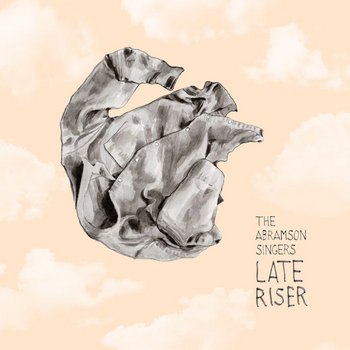
The Abramson Singers, a collection of various Vancouver musicians fronted by the gloriously gifted voice(s) of Leah Abramson deliver here an almost perfect confection of expertly crafted songs that ring out clear as a bell with Abramson’s crystal delivery supported by some excellent arrangements and empathetic playing. It’s an album that offers some striking folk tinged songs cosseted by wafts of accordion and pipe organ and then flies into the stratosphere of sunshine pop harmonies with chiming guitars and sixties styled keyboard accompaniment. Above all else it’s a celebration of the art of the singer with Abramson multitracked at times and at others supported by some well chosen harmony singers.
A tantalisingly short instrumental, Factory Reprise raises the curtain before the acapella Liftoff Canon features Abramson’s kaleidoscopic multitracked vocals set over a male voiced backing sounding for all the world like the vocoded part of Laurie Anderson’s Oh Superman. The fresh faced Jack Of Diamonds follows, a jetliner of a song as it soars boosted by some gutsy guitar fills as Abramson proves that she can out do Kathleen Edwards in the shiny pop song stakes. She repeats this on Lose-Lose where Tyson Naylor’s throbbing keyboards add a layer of mild psychedelia reminiscent of seventies psych folk. And folk music is at the heart of the album as Abramson delivers some lovely laidback reveries that recall the likes of Shelagh McDonald or even on occasion the weird world of Judy Henske and Jerry Yester’s Farewell Aldebaran. Finally Abramson delivers the stunning Drowning Man which marries the traditional method with the laid back organ fuelled groove of The Band which again recalls the heady days of the seventies when John and Beverly Martyn recorded with Garth Hudson and his buddies.
Never one to be filed under “easy listening” Johnny Dowd’s latest album is a blistering power trio fuelled blast. Do The Gargon features Dowd on guitar and vocals along with Michael Stark on keyboards and Willie B. on drums and bass pedals. The twelve songs all relate to Gargon, in Dowd’s words “Who the hell is Gargon? All I can say is: look around, look in the mirror, look at me. He is the beast within who got his feelings hurt (boo hoo). The recurring theme of my new record is an incident in my (or was it Gargon’s?) past. A young boy is abandoned at a filling station in 1953. Did this happen? Is it a memory, a dream, or a lie he told himself to justify all the nonsense that followed?”
Gargon is like a rock’n’roll Zelig as he (or Dowd) propels the band through ZZ Top styled blues burners, ersatz disco, dance crazes, funk and guitar heroics. Dowd’s unique vocal delivery unites the songs sounding robotic at times as he forensically dissects moments in Gargon’s life. While this might sound, on paper at least, as if we have a po faced concept album on our hands Dowd’s customary dark humour is never far from the surface whether it be in the lyrics or the deconstruction of familiar musical types. This is probably best realised on the title song which Dowd says was inspired by The Monster Mash. Dowd kick-starts the song “Alright kids, this is Johnny Dowd , I got a brand new dance for you, it’s called Do The Gargon” and indeed he offers instructions on the dance moves in between relating a tale of an abandoned kid who delivers death to those who take him in. You could dance to this I suppose but zombie makeup would be a requisite. While several of the songs strain to maintain this level with Butterflies and Unicorns in particular collapsing into a parodic prog rock black hole Dowd hits more than he misses. Nancy Sinatra is a fuzz fuelled miniature gem where Gargon sashays down the strip in a dress and Go Go Boots borrowed from the lady while Gargon’s Disco Balls has a funky keyboard intro and a ferocious riff as Dowd again recounts the 1953 abandonment. Pretty Boy is the most direct reference to ZZ Top as Gargon hangs out with Billy while waiting for the bus and declares himself prettier than his mother over a mutant blues boogie. Girl In A Suitcase is the one song that doesn’t bludgeon the listener into submission as Dowd and band slip into freaky nightclub territory (a David Lynch type nightclub) as Gargon falls in love with disastrous results. However the highlight here has to be the eight minute opening song, Gargon Gets All Biblical. It’s as if ZZ Top were fronted by a psychotic charismatic preacher ( who sounds like Bill Burroughs) with the guitar transformed into writhing venomous snakes before morphing into a Black Sabbath leaden riff.
So not an easy listen but there are moments here that are quite thrilling and one wonders how this material will translate into the live experience. Dowd is penned in for UK dates in September so there may be an opportunity to find out.
Glasgow based trio Sparrow and the Workshop have trod the “indie” path for some years now, regulars on radio sessions, supporting name bands and popping up at festivals but never managing to garner the acclaim accorded to the likes of Frightened Rabbit. It’s fitting perhaps that their third album, Murderopolis is released by Edinburgh’s independent label Song, by Toad, a label that grew from a blog that has consistently been a solid barometer of all that’s good (and cool) in the Scottish independent scene.
Partly because of their name and really only being familiar with some early radio sessions we had kind of filed the band under the “gothic folk inspired” tab but their second album Spitting Daggers featured some tub thumping rocking and on Murderopolis they beef up the sound with Gregor Donaldson’s drums dominating many of the songs while the guitars from Nick Packer are jagged and razor sharp while an array of instruments and effects add mood, often dark and sinister. Peering over this menacing soundtrack Jill O’Sullivan shrieks, cajoles and glowers dominating the proceedings.
It’s not a perfect set with the title song in particular coming across as somewhat confused with the band playing a melody that could have come from Stereolab only to interrupt it with sub Orff vocal interjections. However the rampant mutant blues rock of Valley of Death, The Faster You Spin and Darkness are somewhat exhilarating with O’Sullivan’s voice cold and steely. Water Won’t Fall is a glistening glimmer of Americana as it was produced by Lee Hazlewood and Nancy Sinatra back in the days. They’re at their best on the roller coaster Odessa which starts off as a rumbling ballad in the manner of the Cowboy Junkies and gradually builds up to a thundering climax.
You can catch them live at the forthcoming Pale Imitation Festival, curated by Song, by Toad in Edinburgh on Saturday 10th August.