Sleepy Driver, Arlan Feiles & The Broken Hearted, The Mystix

Sleepy Driver. In A Low dark Light.

Back in 2010 we liked Sleepy Driver’s debut album, Steady Now, mentioning the surge of guitar and organ that propelled the songs and likening them to the old “Paisley underground” bands. Two years on and they’ve maintained their thrust with a strong selection of songs that veer away from the slight country sounds on the debut moving somewhat into the mainstream. Having garnered numerous awards in their native Canada including single and album of the year it appears that they’re determined to repeat these feats with the result that In A Low Dark Light is a smoother, shinier beast than its predecessor. While some of the country elements remain particularly on Silverback Dog and Long Time Coming Home which features the fine pedal steel playing of guest Dave Palmer the primary deal here is a big punchy sound, melodic with occasional Neil Young/Crazy Horse chunks thrown in. While Peter Hicks writes and sings all of the songs the star of the show is guitarist Ethan Young-Lai who towers throughout the album with biting, piercing, squalling and corkscrewing solos that may at times hark back to the seventies but pack a tremendous punch.

website

Arlan Feiles & The Broken Hearted. Weeds Kill The Wild Flowers.

Arlan Feiles has a colourful back-story of near brushes with fame and encounters with the likes of Levon Helm, Tom Dowds, Chris Blackwell and Dave Grohl. His 2007 album, Come Sunday Morning, found him in a New York state of mind with a set of songs played solo that recalled the spirit of Springsteen with a dash of Phil Ochs and was rightly hailed as a breakthrough. He returns here, tooled up with his band The Broken Hearted, with a grittier, hard edged sound that complements his somewhat sardonic take on life. In fact the album sounds what one might imagine Steely Dan might have sounded like if they had forgone the jazz sheen and remained funky. Feiles’ keyboards lead the songs but Joel Schantz’s guitar provides the muscle especially on the impressive Hard Line. Although Feiles has a tendency to lapse into a generic piano ballad style on a few songs elsewhere he produces the goods. Katie Truly is a misleadingly jaunty soul inspired hop camouflaging a burnt out guy who has “been taking down minutes and minutes of bullshit.” The ensemble playing here is spectacular as the band lock down into a groove and there’s even a weird Beatles feel to some of the instrumentation and the backing vocals. Viola, a revisit of a song from Come Sunday Morning and inspired by Viola Gregg Liuzzo, a sixties civil rights activist shot dead by Klansmen captures some of the spirit of the late Levon Helm. Feiles throws in a curve ball with the closing song Mix Tape, a bizarre talking blues that tells of how Bono from U2 saved a relationship. Odd but affecting.

website

The Mystix. Mighty Tone.

The Mystix are a grizzled bunch of veterans who between them have played with a galaxy of musicians including Mary J. Blige, Jerry Lee Lewis, Gary Burton, Duke Robillard, John Hammond, Edgar Winter, Duke Robillard, Susan Tedeschi and Peter Wolf. As can be surmised their chops are together and much of the fun to be had on this, their fourth album, is simply listening to a great bunch of musicians locking into a groove and bouncing off of each other. The other delight is in front man Jo Lily’s vocals which accommodate Chicago style blues and Opry styled country effortlessly.
The album is described as a journey into “the past of Americana music, from the minstrel era to the white & black blues of the 20’s, to the powerful spiritual songbook,” and features covers of Jimmie Rogers, Ernest Tubbs, Pop Staples and Willie Dixon along with two traditional songs and three originals. While they have a great time with the self penned country gospel of Mighty Tone which features some fine fiddling and turn in a rollicking rag time Jelly Roll their heart (and soul) is in the blues. Mean Woman Blues and Keep On Walking are embellished primarily with acoustic instruments including Dobro and lap steel and recall the likes of J.J. Cale. However the band are at their best when they limber up and adopt the classic Chicago blues sound. Assisting them in this task is Jerry Portnoy on harmonica who played with Muddy Waters and it’s Muddy’s classic 50’s sides that provide the touchstone here. With slow burning electric guitar which occasionally flashes like a switchblade, biting harp and piano flourishes they transport the listener to the glory days of Chess records. Mighty Love is a spellbinding fix as the band simmer and burn. Wave My Hand struts proudly as Portnoy’s harp squeals while Just To Be With You shows the band at their almost telepathic best. Guitar, harmonica, vocals and piano combine to create a fantastic time machine that transports the listener to a sweaty juke joint on the south side of Chicago circa 1960. Oddly enough it also reminds this listener of Bob Dylan circa Time Out of Mind. Plus ca change.
website

Kelly Joe Phelps. Brother Sinner & The Whale

Kelly Joe Phelps is one of the premier acoustic blues guitarists of the last decade or so with a brace of albums featuring his lap steel playing and refreshing the traditions of the Reverend Gary Davis, Mississippi John Hurt and even John Fahey. His latest album Brother Sinner & the Whale sees him continue in this fashion however here he plays bottleneck acoustic guitar and the songs stem from what appears to be have been a period of spiritual reawakening for him. Whatever crisis has caused him to reflect and embrace a Christian approach is neither here nor there but it’s led him to record these 12 songs which are steeped in the gospel blues tradition and in the main relate to the biblical tale of Jonah and the Whale. The tale of a prophet, Jonah, who initially spurns god and is thrown into the sea only to be saved inside the belly of a whale and then goes about god’s business may be a metaphor for Phelps’ own journey, certainly he appears to have wholly embraced the concept with several pages on his website detailing the lyrics to this album and the biblical quotations corresponding to each song. That’s not to say that this is an album to be relegated to the “spiritual” section of record stores. Phelps is indeed carrying on the tradition of incorporating religion into his music, a tradition as old and as wide as the Mississippi and as such the music can be enjoyed and appreciated in a secular sense much as one would listen to old spirituals, the Staple Singers or even Mr. Dylan’s born again albums.
As for the music Phelps is a wizard guitar player and the album is chock-full of delicate picking and bottleneck slide and concludes with a fine instrumental, Brother Pilgrim, that recalls the majesty of John Fahey. His voice is a smooth huskied croon which allows him to sound comfortable in his skin and the combination of voice and guitar makes for a stimulating listen with several of the songs outstanding. Pilgrim’s Reach is a fine flowing flourish of fingerpicking guitar while Spit Me Outta the Whale is a masterclass in bottleneck playing. If you want to listen to an old time gospel blues album without the sonic imperfections of shellac then go dig this. Wonderful.

website

Sacri Cuori. Rosario.

This album has been in heavy rotation here at Blabber’n’Smoke ever since we were able to get a copy at Sacri Cuori‘s superb gig with Dan Stuart at King Tuts last month. From Italy and primarily an instrumental band press releases and record label notes would lead one to expect a spaghetti western version of Calexico and that’s a little bit unfair on the band as they have much more to offer than dust blown soundtracks to non existent cowboy movies.
Having said that there’s no doubt that they are influenced by the sounds of the American south west. Their first album, Douglas & Dawn was recorded in Tucson with some of Giant Sand and Calexico in attendance and John Convertino appears here. However there is a heavy European influence also present which is dominated by the music of Nino Rota, best known for his film scores for Fellini and The Godfather theme, with whirls of circus like tumbles and mournful swollen horns such as tuba recalling his dizzying work. Elsewhere there are glimpses of Joe Meek’s clockwork science fiction sounds and occasional glimmers of Krzysztof Komeda.
Essentially a trio (Antonio Gramentieri, guitars, Christian Ravaglioli, various keyboards and wind instruments and Francesco Giampaoli, bass) Sacri Cuori are expanded here with Diego Sapignoli providing various percussive effects and sound samples while Enrico Mao Bocchini drums on several tracks while Denis Valentini adds percussion and horns. Ravaglioli and Sapignoli in particular beaver away on so many instruments with the result that the album is a multilayered cornucopia of delights while Gramantieri evokes surf music, Santo and Johnny’s Sleepwalk, The Lounge Lizards jazz noire and Link Wray. While they proved at King Tuts that they can pull this off live as a quartet on the album they are joined by a stellar cast of supporting players including Convertino, Jim Keltner, David Hidalgo, Stephen McCarthy, JD Foster and Marc Ribot.
Although this is essentially an instrumental album another star guest opens the proceedings as Isobel Campbell sings the opening Silver Dollar. With her trademark whispy voice Campbell croons as the band swoon around her in a dreamlike state with keening lap steel and banjo from Stephen McCarthy. Like a Lee Hazlewood song scored by Angelo Badalmenti it’s a fine curtain raiser. Campbell reappears and does another fine job on Garrett, East, a relatively unadorned song featuring Dobro and prepared piano that is delicate as gossamer. It’s worth noting that Campbell wrote the lyrics for both songs.
The remainder of the album is an atmospheric broth of tunes with only occasional voices, sampled or sung, to add colour. While each and every one has its own beauty and repeated listens reveal new delights a few gems merit mention. The stately slow tango of Fortuna has some outstanding guitar work from Gramantieri while Lido recalls the Cuban sensuality captured so well by Ry Cooder and Manuel Galban on their album Mambo Sinuendo. Sipario’s swirling keyboards revisit the heady delights of Rota’s Amacord while Teresita starts off with Tex-Mex keyboards before the song swirls into outer space. Finally the juggernaut drive of Sei takes the listener down dark menacing highways with squalls of guitar, screeching horns and a disembodied voice. Short and to the point if David Lynch decides to remake Lost Highway he’s got his opening song right here.
This album is ridiculously good. As we have said it repays repeated listens as the ear discovers and hones in on yet another fine detail and the mind paints pictures to go with the music. Hopefully it won’t be long before these Italian suoni maghi are back in Glasgow to thrill and delight us.

website
buy it here

Mary Gauthier. Live at Blue Rock.

Mary Gauthier is a particular favourite of Glasgow Americana fans having appeared here regularly and always beguiling the audience with her world weary observations, her trials and tribulations. So news of a live album caused some excitement at the Blabber’n’Smoke newsdesk and having finally arrived it proudly sits, a true, fly on the wall, unenhanced capture of a show, warts and all. Gauthier bares her soul, intense, emotionally connected to the characters she sings about. Supported by Tania Elizabeth on fiddle and Mike Meadows on percussion this almost amounts to a greatest hits compilation with selections from most of her albums although surprisingly only one from The Foundling, her autobiographical and award winning album.
With all of the songs well delivered its difficult to select highlights although one has to mention the sterling work by Tania Elizabeth whose fiddle playing is superb with a raw tortured feel about it adding a sense of drama to what are already fairly dramatic songs. However Gauthier’s delivery of Last Of The Hobo Kings is spinechilling while Our Lady Of the Shooting Stars is on a par with the best of Leonard Cohen’s sixties output. Our personal favourite here is Karla Faye, the stark tale of a drug raddled Texan prostitute who ended up on death row. The trio absolutely gels here wringing all the emotion out of the song. Karla Faye is followed by Gauthier’s most famous song, I Drink which again sounds superb with excellent fiddle from Elizabeth. The album ends on a raucous note with a spirited rendition of Wheel Inside The Wheel with dervish fiddling and Gauthier totally in command vocally. Cool and assured she rocks here with a vengeance. A great end to a great album although there is an unlisted (and very fine) version of Mercy Now with gospel sounding backing vocals which acts as an encore. An essential buy for Gauthier fans. She’s coming over to play some gigs promoting the album, unfortunately no Scottish dates mentioned so far.
Oct 11th. Bush Hall, London
Oct 13th.The Malbank Studio Theatre, Cheshire
Oct 14th. The Live Theatre, Newcastle

Website

The Ballachulish Hellhounds. Red Eye’s Motorcycle Blues.

More homegrown Americana this time from the well kent (if you frequented The Captain’s Rest or attended any Scottish “bijoux” festivals over the past few years) Ballachulish Hellhounds. The Hellhounds are another band in thrall to old time American music and live they whip up a storm. Their debut album in 2010, Songs from The Great Atlantic Ocean was a fine mix of traditional and self penned songs that celebrated the long standing connection between the folk traditions of the old and new worlds. Our only quibble with the album was that it seemed a mite thin in the production failing to quite capture the energy and sparkle of their live shows. No problems this time around as Red Eye’s Motorcycle Blues positively jumps out of the speakers with a fire in its belly.
With six songs and only available as a digital download this mini album is intended to bridge the gap between the release of their debut and their next all original long player (promised for next year). One thinks the Hellhounds are short-changing themselves here as it stands up to scrutiny while promising much for the next album. In particular the title song, written by the band, is a fine tale of a farm boy itching to join some motorcycle rebels and failing. Delivered with a sly drawled vocal from Zander McFarlane it has a jaunty old time country feel and one can imagine Ry Cooder or Mike Wilhelm having great fun with this. Iron Horse/Born To Lose which, believe it or not, is a cover of a Motorhead song is the other stand out here. In the absence of power amps the Hellhounds drench the song in swathes of acoustic guitar in a melancholy mode with a sixties Byrds type feel although its not the jingle jangle Byrds, more like David Crosby’s internal meanderings.
The remainder of the album is of a traditional nature. Long Gone and Rabbit In A Log are fast and furious with the banjo and mandolin frantically flailing away. Lonesome Without You is a Carter family type singalong. Expertly delivered it recalls the likes of The Louvin Brothers and other greats of country music tradition. Bury Me Beneath The Willow which closes the disc is another old time tune which has been recorded by everyone and his uncle and the Hellhounds deliver a great version with some great solos on Dobro and mandolin but overall it’s the ensemble playing and fine harmonising that show that they truly capture the essence of old time Americana. All in all a great little album.
You can buy the album here

Website

The Kingmakers. Last Night In Nashville.

The Kingmakers are yet another Canadian group who have picked up the baton of Americana and carried it over the 49th parallel. However unlike the majority of acts we’ve reviewed here who delve into bluegrass, singer/songwriter musings or country music The Kingmakers are unashamedly rockabilly and proud of the retro tag that comes with this. So proud in fact that they’ve recorded in the Sun Studios in Memphis in the past and on this, their third album, shifted to Nashville to record the album at Cowboy Jack Clement’s studio, Clement being the man who recorded and produced much of Jerry Lee Lewis’ Sun output. In addition they’ve persuaded The Jordonaires to sing on a few of the songs while JM Van Eaton, Jerry Lee’s drummer joins in on the fun.
First thing to say is that this is great fun. Pump up the speakers and pretty soon it’s difficult to stay seated as they run through some amped up rockers and swingingly good fifties teen toe tappers. With only one cover, Van Eaton’s Memphis In ’55, their songs, mainly written by bass player Steve Donnelly, have an authentic touch that we’ve not heard since The Blasters announced their mission to reclaim American music. Indeed the opener Well Well Michelle and Johnny Green could sit comfortably on a Blasters album while Beale St. Memphis TN Morning After Blues, a deliciously loose and slinky blues number has the Alvin brothers stamped all over it. To show however that they are no mere copyists the band have a fine zydeco influenced number in Women and Weather while Prom Night Car Crash is a great Johnny Tillotson type death song. Great fun.

website

Coyote Grace Now Take Flight.

A Seattle based trio Coyote Grace began as a duo busking at the famous Pike Place Fish Market while more recently their profile was raised on several tours in the States supporting the Indigo Girls. Now Take Flight, their fifth album, certainly supports their claim to wider acclaim packed as it is with some fine playing and above all excellent songs. The trio (Joe Stevens, Ingrid Elizabeth and Michael Connolly) impress with some fantastic harmonies while Stevens and Elizabeth both have distinctive and attractive voices. The overall sound is not too far removed from the likes of Larkin Poe, Old Crow Medicine Show or indeed the Indigo Girls themselves. Acoustic based with plenty of frills in the shape of mandolin, banjo, ukulele, accordion and fiddle these are not country songs but a very pleasant set of intelligent songs that have a radio friendly approach that would please those whose idea of roots music is the Avett Brothers.
The main strength here however is in the songwriting. Stevens produces several gems including the delicate Flowers and the superb These Gray Days which captures perfectly the feel of winter malaise and which features some very impressive upright bass playing by Connolly. Elizabeth is no slouch in the songwriting stakes although she favours an earthier touch which is apparent in the bluesy stroll of Born Blind while she gets downright dirty on the slinky organ driven Kansas which manages to reference the Wizard of Oz on a tale of a groupie chasing her chosen star. Fact is all of these songs are great including a choice cover of Springsteen’s I’m On Fire. Well recommended.

website

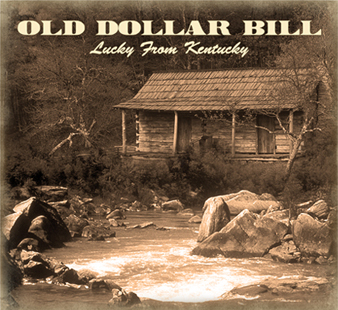
Old Dollar Bill. Lucky From Kentucky.

It was Neil Young who sang “ Homegrown is the way it should be. Homegrown is a good thing. Plant that bell and let it ring.” Old Neil might have been singing about something else altogether (answers on a postcard!) but it’s gratifying to find that there’s a good deal of homegrown bands and songsters in the best wee nation in the world who can take on Americana type music and deliver their own take on it with a degree of authenticity but more importantly portraying their feeling and affection for the genre.
Bands such as The Wyntown Marshals, Dropkick, The Ballchulish Hellhounds and the late lamented Southpaw are all fine examples of Scots bands who can deliver the real thing and the list can be expanded almost ad infinitum if one looks at the likes of Teenage Fanclub and The Vaselines who exported the proverbial coals to Newcastle.
Old Dollar Bill are a grand addition to the local canon of Scots combos who can summon up a genuine feel for American music. In their case it’s old time good time stringband hoe-downs and rollicking country songs. Their debut album was as fine a piece of Scots Americana as we’ve heard in a long time and now on their second release Lucky From Kentucky they consolidate their sound, relying less on their undoubted instrumental prowess with the inclusion of several fine songs that broaden their appeal.
Comprised of Stephen Clark (guitar, mandolin, banjo and Dobro) and Ed Henry (Cajon, drums and percussion) (supplemented by Edinburgh musicians Martyn McQuade on double bass, Neil Pearlman, piano, Tom McAweaney, fiddle, Owen McAlpine, harmonica and Gill Swan, harmony vocals on various cuts) Old Dollar Bill cut a fine cloth with ten songs all self written that range from the swamp blues of My Love She Did Wear A Disguise to the triumphant closing good time swing of Lucky From Kentucky. My Love she Did Wear A Disguise is a great opener with Clark snarling a tale of betrayal that cleaves to a folk tradition but with the menacing Dobro and clattering percussion relocates it to a swamp ridden murky voodoo land. One More Shot To Kill The Pain is a straightforward country stomp with fine harp and piano playing with the lyrics appearing to portray a typical Edinburgh bar although there’s no hard drinking “Rebus” type detective propping up the bar along with the unemployed graduate and the war veteran. The Man With The Hurtin’ Smile slinks along gracefully with some nice Dobro and mandolin fills while McQuade’s bass burbles along nicely. Henry takes over the vocals on the heartworn tale of a John fleeced by a pretty girl and excusing her as he says “I see the pain in her eyes/where she’s cut off social ties/she doesn’t look too well/she’s living in her own little hell.” This is a great little song with expressive harmonica, intricate percussion and excellent guitar, Dobro and mandolin; it’s reminiscent of The Nitty Gritty Dirt Band circa Hollywood Dream which is no bad thing. The Place is another roustabout country ditty while Hey Y’all plants the fiddle firmly in the foreground for what is a fiercely danceable hoe-down. Clark returns to the fore vocally on the fine This Feeling with his mandolin propelling the band as Henry’s percussion adds to the drive. The Last Good Time is a departure of sorts for the band as they rein in the toe tapping vibes and deliver an emotive ballad that has rippling piano and female harmony vocals. It comes across almost like a Bruce Cockburn type song, plaintive and affecting it sounds great here. Home Lovin’ Man which follows seems to be another attempt to add an extra dimension to the band. A pared back stumble with emotive harmonica it has a fine lazy feel but the intrusive finger clicks that feature throughout are somewhat distracting. They close the album with the title song (aided and abetted by Woody Pines and members of The Wilders). Lucky From Kentucky is a barnstorming closer that must go down a storm live with its opportunities for the singers and instrumentalists to add to the energy that is already present on the recorded version. Old Dollar Bill play regularly in the drinking dens of Edinburgh and on the strength of this should be seen well before any ghost tours.

website

Malcolm Holcombe. Down The River

Slowly but surely North Carolina bred singer and songwriter Malcolm Holcombe has carved a reputation over the years as a fine purveyor of rootsy country blues with his albums and live shows almost universally praised. Despite this he remains a bit of a hidden gem, known only to the cognoscenti but there’s a chance this might change with the release of this, his ninth album.
Having been on several labels (including Geffen who refused to release the album he recorded for them) he’s self released Down The River and it’s a measure of the respect he’s held in that he’s gathered a grand set of musicians to assist him. The band include Darrell Scott, Ken Coomer and Viktor Krauss while vocals are supplied by Kim Richey, Emmylou Harris and Steve Earle. In addition the album is produced by Steve Earle’s sometime producer Ray Kennedy. The result is a stellar collection of songs that feature Holcombe’s amazing growl of a voice and his deft guitar picking with truckloads of banjo, steel guitar, mandolin, fiddle and Dobro backing him up. The effect is very similar to that of Earle’s “come back” album Train A Coming.
In addition to the excellent playing Holcombe writes with a fine sense of anger at the modern ways of the world railing against injustice but also celebrating the eternal optimism of the human spirit most pointedly in The Crossing, one of the more tender songs here. With some fine lilting fiddle this is a beautiful spiritual lament. The Door continues in this vein as Holcombe reins in his voice while pedal steel (by Russ Pahl) glides and weaves. Both of these songs are cloaked in mystery as Holcombe sings of people who seem to be lost and desolate but who are buttressed by hope and pride. The starkness of The Empty Jar is the culmination of this; delicate guitar and viola paint a lonely picture as Holcombe sings “an empty jar but full of eyes/ that see you here pourin’ perfect comfort /for thirsty silent tears.” The effect is similar to the grim determination seen in the photography of Dorothea Lange. The duet with Emmylou Harris In Your Mercy is lighter in its delivery but again tells of an abandoned soul clinging to pride and memories.
All of these songs are beautiful and had the album stuck with this style it would be very impressive indeed. However Holcombe adds a topping of righteous indignation and launches his full bear growl on a clutch of songs that damn those in control who cause misery and loss. Butcher In Town opens the album like a boxer jumping out on the bell. Darrell Scott’s Dobro is excellent here as Holcombe proclaims “I don’t claim a thing/not a two bit clue/but somebody whispered/war kills the truth” while on Twisted Arms he almost spits out the words. Whitewash Job nails the politicians with an undisguised glee with Holcombe sounding not unlike Baby Gramps with his piratical “har hars” over a fine chugging rhythm. The duet with Steve Earle, Trail O’ Money is the most direct diatribe as Holcombe declares “all the noise from the crowd/breakin’ hearts with deceit/all you war hungry bastards/bloodthirsty with greed.” Despite the vitriol in the words the song itself is a wonderful recreation of the sound of Bob Dylan circa 1970 with lonesome harp and a nice country lope. Holcombe sums up the album and his thoughts on the closing title song, a fine old fashioned number with female backing vocals and an uplifting beat as he sings “the hard times makes us stronger to get by/and leave this world behind/down the river.”

website

Leyla Fences. Itty Bitty Twang Twang

Honky Tonk Heaven says the press release and for once we believe it as it was Blabber’n’Smoke who said it. We loved Leyla’s first album, Liars, Cheats and Fools back in 2010 with its gritty mix of tough talking attitude and the excellent honky tonk delivery likening it to an aural equivalent of Thelma and Louise (without the fatalistic ending however). Two years later Fences springs back into action with Itty Bitty Twang Twang (presumably punning on that movie about the flying car, at least it’s restricted to the album’s name with no song in sight). For anyone who has heard its predecessor there’s nothing here that will surprise but there’s plenty to delight as she tears through a solid collection of songs that define and refine Texan honky tonk music from a woman’s perspective.
Vocally in command at all times with her slightly nasal twang Fences is admirably served by her backing band with some great playing. The guitars bite and the piano rolls while the pedal steel sweeps and soars. Fiddle and mandolin add colour here and there, overall they’re a pretty rocking combo. Her writing has come on leaps and bounds and there’s a couple of songs here that could and should become standards. All of the songs are about the male/female struggle with Fences writing from the woman’s point of view. She is in turn bitter, triumphant, sad, yearning and vengeful as her characters go through all sorts of emotions while suffering from the slings and arrows of deceitful men who drink, cheat and in the case of Trophy Wife remake her via plastic surgery and dentistry into a real life Barbie. Fences successfully portrays a sense of poor self esteem in Something Right and Pain Relief and captures the lengths some woman go to in order to keep a relationship going on We’ll Just Figure It Out. However she celebrates those hardy characters who stand up for themselves and say enough is enough on I’ll Stop My Whining, Pretty Lies and Too Far Gone. She excels on The Next Time which is a classic country ballad in the Tammy Wynette mode. Beautifully delivered it takes some time to realise that the heroine is being advised to soup up her lovemaking in order to keep her man. Almost as good and grand enough to earn the honky tonk heaven accolade is One More Honky Tonk where drinking is seen as the salve to recover from a failed relationship. Classic in its delivery Fences throws in a nice euphemism as she sings
I get dressed up but you hardly look/Opening my door? /I guess that’s a thing of the past/Yeah, that honeymoon was sure over fast.
Overall this is a great album for anyone who digs the likes of Wayne “The Train” Hancock, Loretta Lynn or even Tammy Wynette. Leyla Fences lives and breathes this music it seems and tops it up with a fine, sassy and at times barbed feminist slant. Great stuff.

website
One More Honky Tonk