Blabber’n’Smoke enjoys string band music. Fingers flying over stringed instruments, banjos, mandolins, ukuleles, guitars. Fiddles and saws bowed. Played with virtuosity or wonderfully shambolic, old time or bang up to date, we dig it. So we were very happy to hear that the very fine San Francisco troupe, For Fear The Hearts Of Men Are Failing were having a Kickstarter campaign to fund their second album having loved the previous release City Music. We were even more happy and intrigued that the band were looking for the princely sum of $1000 in order to unleash this beast. Having achieved their target the result is The Wonderful Clatter, an almost onomatopoeic title for this cracking collection of songs and tunes that teeter on the edge of craziness and totter like a drunk rambling home.
The forebears of FFTHOM are bands like The Holy Modal Rounders and The Incredible String Band. They’re immersed in the sounds and songs of vintage rural Americana and come up with what is a fairly unique style that will scare off casual listeners with its harum scarum scapperings. For anyone however who can trace the lineage of rough hewn American folk music from the early days, captured by Harry Smith on his definitive anthology, they are gold dust.
The album opens with the speed freak banjo and pell mell vocals of Ghosts and Dreams, a wonderful clatter indeed. A great segue into the childlike naiveté of Up Jumped The Devil is inspired and its clear here that despite their apparent randomness they do take time to arrange their songs as the glockenspiel and melodica backdrop support the fine yet ragged harmonies on a song that could have been on one of The Incredible String Band’s early albums.
While The Meadow and One Thing I Know are relatively straightforward country romps (although with FFTHOM nothing is really straightforward) the true delights are on the definitely quirkier songs. No Point To Life (with guest accordionist Skyler Fell) is an existential trip that sounds as if it’s being sung by a bunch of Russian Nihilists (and is reminiscent then of the late great Tuli Kupferberg). Devon Doesn’t Like The Beatles playfully describes a troubled teen who grudgingly acknowledges that The Beatles exist because “they’re Lemmy’s favourite band,” a delightful ditty. Aside from the whimsy they can pull out of their collective hat the gorgeous Bad Dreams (written and sung by Meg Ruth King) that has a haunting quality and sounds like a lost outtake from Karen Dalton.
The Wonderful Clatter is a fine successor to City Music then and one which deserves to be heard far and wide by those who love traditional music and those who like to walk on the wild side.
Category Archives: Reviews
Petunia & The Vipers.
“Imagine that David Lynch and Nick Cave had a hillbilly baby. A hillbilly baby that yodelled.” Well imagine no more because that absurd description just about sums up the extraordinary Canadian artist Petunia although it misses out on the Godparents. Jimmy Rogers, Willie nelson, Slim Whitman, Lux Interior, Ray Condo and Tom Waits among others. An eclectic mix but stir them all together, add a soupcon of Elvis and even a hint of Pokey Lafarge and you might end up with this enigmatic character.
Although he has released several albums in Canada this is the first to get a push here and as such it stands as a great introduction to his left field genius.
Petunia (a name given to him by a mysterious lady friend) emerged from a Vancouver post punk scene and embraced country music. Picking up the Vipers, composed of the cream of the local crop including members of the late Ray Condo’s band, he can deliver straightahead country pop that can thrill and exhilarate as on the closing cut here It Ain’t where the band cut loose with a jitterbug frug with guitars a flaying and a propulsive swing that comes across a little like Jimmie Dale Gilmore fronting The Mavericks. This song alone should propel Petunia to playlists across the land and grace wedding dances galore such is its feelgood factor and if more folk had good taste. However its simply the last in a collection of songs that blast from the past and then are given a unique twist courtesy of Petunia’s slightly warped vision.
Opening with the cowboy yodelling of The Cricket Song the listener is lulled into a false sense of security as the fifties’ sheen, the tin pan alley chorus, the comforting pedal steel playing all add up to a song that could possibly kill Martians. In the midst of this radio hour comfort Petunia however tosses in a slice of discord as he reveals that he has left his “baby” almost as an aside. As a result this picture perfect description of a beautiful moonlit Canadian night hides a darker story. The darkness comes to the fore on the following song Mercy. “If Tom Waits could yodel and I bet that he can” sings Petunia as he launches into a Waits inspired carnival with the previous sumptuousness of the music replaced with the clash and clatter one expects from Waits while the guitarists produce some fine Marc Ribot inspired licks. The breathless rockabilly rant of Maybe Baby Amy follows on sounding like a country version of The Cramps, a trick repeated on Gitterbug where fat pedal steel replace fuzz guitar. There’s a Latin sound to Bright Light and Che (Guevara’s Diary) and a return to a more conventional approach on Yes Baby Yes, a western swing type number. A cover of Hoagy Carmichael’s Stardust is almost conventional and crooned superbly but at the heart of the album there is a darker core with The Ballad of Handsome Ned a highlight. A cinematic introduction leads into an atmospheric obituary for a local musician who inspired Petunia and offers the band the opportunity to stretch out. This is trumped however by the spectral majesty of Broken Down Love. A lament graced by some incredible saw playing by Doug Tielli it is wonderfully evocative of dark skies with a shivering loneliness and as it stutters and almost halts the sobbing guitar, the spooky saw, the lyrics and Petunia’s voice all add up to something close to perfection.
One of the best releases of the year you really should try to hear this.
Shu Nakamura A Day Of Dreams
Shu Nakamura is a Japanese born guitarist who is these days ensconced in New York and is a member of Joe Cassady’s band The West End Sound. Blabber’n’Smoke really liked the album he released with Cassady under the name Joshua last year. That album was a dark and cantankerous collection of odd sounds and weird imagery, somewhat removed from Cassady’s regular beat poetry rock. Now Nakamura adds another string to his bow with this solo release. The eleven pieces have a lighter touch for the most part with acoustic guitar prominent and an intriguing mixture of Eastern and Western sounds reflecting his journey. The album is bookended by a pair of instrumentals which capture this mix. The opening East To West starts off with glass bells and oriental sounding stringed instruments before a fuzzy guitar refrain heralds the new world. By the end of the album on The Other Side of Memory Nakamura is firmly in America, the West to be precise. This is a brooding and dusty piece, an imagined soundtrack to a movie much like A Small Good Thing’s album Slim Westerns. Although the oriental feel remains this conjures up images of deserts, cacti and a shimmering heat, a great piece.
Throughout the album this continental divide is evident with Nakamura delivering the simple folk pop of Ima Koko Ni and the intricate guitar tapestry of Lion and Mary in Japanese. His guitar playing is a delight throughout, Mountain Dreams, another mystical reverie, features some fine acoustic picking as does the title track. The use of percussion in these tunes (and elsewhere) is superb with bells and wood blocks constantly adding another dimension. To cap all of this Nakamura delivers a killer in Train Song. With a percussive hammered sound reminiscent of Ry Cooder’s version of Jesus On The Mainline keeping the song on the tracks, slide guitar and a lush rhythm carry his laid-back vocal on this fine slice of gospel influenced Americana, it’s a truly beautiful delivery.
Overall this might not signal Nakamura as Japan’s version of Bert Jansch but listening to this one is reminded of some of Jansch’s work. Another comparison is with that of another New York guitar master, Gary Lucas whose eclectic approach is resembled here. A well crafted and at times scintillating listen.
Larkin Poe Thick as Thieves.
Following on from their four seasonal themed EP’s released in 2010-11 the Lovell sisters return with another EP, Thick As Thieves, (really a mini album with seven songs), that continues their route from bluegrass to a very listenable country and soul tinged folk rock. The addition of keyboards (by Will Robertson) adds an almost funky Little Feat shuffle while new guitarist Rick Lollar reinforces this with some fine playing. In conjunction with the Dobro and lap steel playing of sister Megan there is a more Southern feel to these songs than on the previous releases. Apart from the almost Dixieland On The Fritz (which features some quirky guitar licks from Lollar as well as soprano sax) the songs are rooted in the folk/country/pop idiom (which is as good a way of saying I’m not sure how to describe them). Nevertheless the opening duo of Fox and Play On are certainly very radio friendly with catchy hooks with the latter being particularly impressive. While Celebrate is a little too riff heavy the soul/rock groove of Love or Money is the must successful song here, the band lock down and Rebecca Lovell’s vocals are suitably sultry. The closing song, Russian Roulette is another success although it does seem to bear a debt to The Beatles’ Eleanor Rigby at times.
Overall the sound is that of a pair of accomplished singer songwriters edging towards the mainstream and it might dismay some who have enjoyed their live appearances which have tended to feature Rebecca’s voice and mandolin playing along with Megan’s very accomplished guitar playing. The good news then is that you can purchase a special edition of the disc which has a DVD of a concert they performed on Norway last year. With just long time drummer Chad Melton and guitarist Lollar it is stripped back and features several songs from the Seasons EPs as well as much of the newer material. Rebecca literally has to roll up her sleeves as for some reason the band wear medieval garb and her bell-bottom sleeve hides her mandolin. Despite a fairly static set of camera angles and far too much time spent on “atmospheric” close ups of the candles and carvings adorning this small hall it’s a fine capture of where they were at last year.
Larkin Poe are currently touring the UK, catch the remaining dates here.
Eugene Twist. The Boy Who had Everything.
A debut album from a Glasgow singer and songwriter is something that happens almost every week these days. It’s been some time however since we’ve heard anything as unique and well crafted as this offering from Eugene Twist. Everything from the Dickensian name to the packaging and the production of the music reeks of quality and then there’s the music. A sumptuous collection of songs that are almost orchestral in their delivery with a hint of the chanson stylings of the late Jacques Brel as delivered by Scott Walker. A touch misleading perhaps as Twist doesn’t actually sound like Brel (or Walker) but the drama, the big occasion, the sweeping vistas are all here. You might want to call it baroque pop.
The album opens with a frenzied sax driven New York noire jazz sound with Latin undertones on If There’s Love Where I’m Going. A cracking start where Twist’s boho lyrics could easily be steaming from underground grates in NY or Paris, nighttime subterranean poetry reaching for air. The song is delivered with the force of a hurricane. Unfortunately the other songs don’t approach the sheer gusto of the opener but they all have their moments. Twist writes well in a surrealistic style, half Breton, half Lear and delivers his lyrics with a sardonic air, able to sound tender or tough. His ballads such as Tough Act To Follow and Actress On A Mattress are dreamlike swoons with delicate pillowings of guitars and keyboards on a somnambulistic outing. The tittle song starts off with this shimmering sense before a crashing guitar breaks in the song left turns into a Bad Seeds fantasy. It’s Down To You has a slight touch of Dylan with its whirling organ sound while Gauguin is a soaring pop song that has hooks aplenty and a sixties jet sound that is simply fabulous.
A multi layered album in its lyrics and instrumentation this repays repeated listens and grows each time and presents its author as a major talent. He could be huge, in the meantime however he’s still gigging around Glasgow so perhaps it would be well to catch him soon.
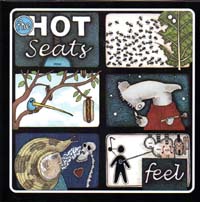
The Hot Seats. Feel.

Hot on the heels of their live album recorded at a coffee shop in Ashland Virginia last year here’s a new studio album from The Hot Seats. They unveiled several of the songs and tunes on the album when they played here in May and anyone who knows the band will know what to expect here. That’s not to say that they are repeating themselves or going through the motions. Rather it’s another opportunity to marvel at their musical dexterity and to revel in their essential mixture of reverence and goofiness. Driving string driven workouts such as No Plans and Here To Get My Baby Out of Jail swing like hell and allow for plenty of inspired fiddle, banjo and guitar licks while the instrumental interludes (Rattletrap, Mineola Rag, Beasties In The Sugar, Hell and Scissors) almost inspire one to start a barn dance in front of the old desk. While the sheer vim and vigour of this whirlwind of plucking and picking makes The Hot Seats a must see live attraction their more restrained jug band side excels on the recorded medium. The rather risqué Peaches (unofficially accorded the title of the top song of the Shetland Folk Festival they recently played) allows Josh Bearman to fully wallow in the potential lasciviousness of this entendre laden ditty while the band slink along with a devilish mischievousness. Bearman carries on in this vein on Reminisce and Damaged Goods while his erstwhile bandmates strum and pick excellently along. The album culminates in the wonderfully titled I Wouldn’t Take Her To a Dog Fight, a song recorded by country singer Charlie Walker which for some might seem a tag misogynist. A great rendition by the band with all of their signature elements it’s a fine end to the album however we must say that on finding out that Walker’s version of this was recorded in 1967 was a surprise as the attitudes contained therein are somewhat antediluvian.
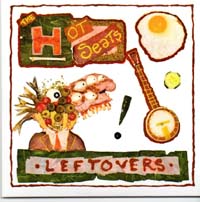
We must mention here that due to the sweet talking of the band members’ Blabber’n’Smoke was cajoled into buying a companion disc to this album at their gig in the Universal in May. Titled Leftovers it has six pieces they recorded but didn’t put on Feel. No barrel scraping here with Yonder Comes A Sucker a fine addition to the canon while they positively buzz on the instrumental Shaking Down The Acorns. Benjo is a measured and almost stately banjo rag with some rugged guitar and washboard backing. Ragged But Right is a fine piece of country braggadocio and Texas Gals is a veritable hurricane of ensemble playing with fingers flying and strings a buzzin’. A hidden song at the end has one of the band singing a plaintive cowboy trail type song, a little out of character for the band but a neat little addendum for fans.
Reminiscing
John Murry. The Graceless Age
Back in 2006 John Murry teamed up with Bob Frank to record World Without End, a blood soaked album of murder ballads that impressed all right minded folk who heard it. Now, five years in the making, is his solo debut, an album that astonishes in its depth and nakedness, miles removed from tales of trappers and killers and such. The Graceless Age strips the artist bare then clothes him in a wonderful sonic tapestry that ranges from pained piano led confessionals to sumptuous narcotic pillows of sound that swirl and beguile the listener. Murry appears to be a man with his own demons to deal with. Prone to narcotics, truculent, likely to disappear on a whim, this document is testament to the faith and guidance of his co producer on the album, Tim Mooney, who forged it from the various sessions over several years and the release is overshadowed by the untimely and tragic death of Mooney last month. With Mooney perhaps best known as the drummer with American Music Club it’s tempting to overvalue the similarities here with Mark Eitzel’s miserablism particularly given Murry’s vocal similarity to Eitzel. Overall however this tapestry is more akin to the dark and disturbed world of Mark Linkhouse’s dark and disturbing world view.
From the South but exiled in California Murry exhibits a love hate relationship with the past and the present. A descendent of William Faukner he’s happy to mix in an excerpt of Faulkner’s Nobel Prize acceptance speech as proof of his Southern roots but he also equates the South with tragedy and despair as on Things We Lost in The Fire (stating in his on-line notes that his house actually burned down), an episode mentioned again on Photograph. If I’m To Blame is a bitter and caustic acceptance that his behaviour is ingrained and responsible for ruining a relationship while Southern Sky pursues this concept of fire and retribution being forever close by. The closing song, a cover of Bobby Whitlock’s Thorn Tree In The Garden epitomises the idea of evil growing in a Southern paradise.
Away from the South California fares no better with Murry glinting and blinded by the sun and telling his partner that it’s not her but “California I can’t stand.” A cracked tolling bell introduces this song California before a pneumatic bass line pumps the song into a druggy rhythm, an aural equivalent of the lassitude induced by heat and sun. Murry’s vocals however rail against this with an anger that however seems to be fairly impotent as it’s dulled by tranquillisers. This sense of a hypnagogic hallucination weaves throughout songs like The Ballad Of The Pajama Kid while Penny Nail encapsulates a nihilistic world view with references to Thomas Bernhard’s novel The Loser (about artists who when they realise they can never achieve the height of genius they contemplate suicide).
Heavy stuff indeed but at a roots level this is an album of immaculately realised songs. Doom laden they may be but the beautiful guitar parts, the occasional orchestration and overall lushness of it all makes for a wonderful noise and one that repays repeated listening. A dark cousin to Brian Wilsons’ California dreaming perhaps with the dense and elaborate Southern Sky a contender for song of the year as it pounds and insinuates its way into the listener’s brain. Little Coloured Balloons could easily fit into Neil Young’s lost trilogy while Photograph trumps anything Son Volt released. As a portrait of the artist it is at times frightening but one hopes that a catharsis of sorts results and Murry continues to achieve the heights he hits here. It’s fair here to point one in the direction of his blog where Murry chews over the album with the assistance of some fairly candid observations from his colleagues including Chuck Prophet. A unique opportunity to delve into his muse.
California
Grant Peeples. Prior Convictions.
Peeples’ follow-up to the sinewy folk tales on his last release, Okra and Ecclesiastes, serves to cement his position as a worthy carrier of the torch previously held by the likes of Guy Clark and John Prine. Singing everyday tales of everyday folk Peeples can come across as a bit of a musical chameleon here with various songs reminiscent of those who came before but his writing and delivery is spot on and ensures that he is no mere copycat. Sounding grizzled and wise he delivers songs that rock and songs that are more akin to talking blues with lyrics that are evocative and provocative. Throughout all of this he is ably assisted by his producer and accompanist, the great Gurf Morlix who plays some fine guitar and bass along with banjo, pedal steel and keyboards.
Opening with a cover of Dylan’s Things Have Changed, a slow bluesy groove with some sublime guitar by Morlix, it features a fine vocal appearance from Ruthie Foster. A late (2000) Dylan song Peeples dresses it up in the gospel style of Dylan’s born again period which is in keeping with the biblical references he often uses and it’s one of the best Dylan covers we’ve heard in a long time. Had the remainder of the album continued in this style then we wouldn’t feel short changed. However Peeples changes tack with the second song Patriot Act which places him firmly in the earthy Texas outlaw tradition. Dedicated to Dave Hickey, an author and art critic who recorded some songs in the early seventies and whose volume of short stories provides the album’s title this song is like a time machine for anyone who knows early Guy Clark.
The remainder of the album is delivered in pretty much the same style with gritty vocals and pedal steel guitar predominant although each song has its individual style. It’s a testament to Peeples’ character that he even manages to deliver a cover of eighties new wave band Shriekback’s Gunning For The Buddha as if it was written in a Texan barrelhouse. The gentle paced Market Town is a tremendous portrait of a slave auction with the ugly scenes described delivered with a terrible beauty in the handsome tune and delicate playing. The accordion playing of Joel Guzmen adds a fine filigree here and later on he adds atmosphere to Last Night I Dreamed in Spanish, a song about Peeples’ sojourn in Nicaragua which Willie Nelson would have been proud to have written had he the chance. The wonderful Road To Damascus with some fine banjo and nasty guitar licks from Morlix stomps along as Peeples dissects St. Paul and unveils him as an opportunistic carpetbagger. Sad Naked Woman is a voyeuristic soul search which recalls Terry Allen’s Lubbock On Everything.
The provocative Nigger Lover demonstrates the power of language with Peeples at pains to point out that he ensured Ruthie Foster would approve of its presence here. Ironically scored out on the album cover the N word rings loud on what appears to be an autobiographical account of the travails visited on the young Peeples and how nowadays bigots might temper their words but still harbour the same prejudices. It’s delivered in a world wearied voice with a spare accompaniment and is very much a twin to the recent song by Chip Taylor, Fuck All The Perfect People. This theme of outward respectability covering all sorts of hypocrisy is nailed in the final and solo acoustic song Last Honest Man which references Diogenes’ mocking search for honesty by shinng a lamp in daylight to highlight the futility of it all.
In summary then we have an album that is an excellent example of country folk tales delivered in the style of the extraordinary collection of talents that gathered in Texas in the early seventies. Added to this is the unique and intriguing philosophical viewpoint of Peebles which rails against modern mores and harks back to a simpler time. Even simpler, this is brilliant.
Patriot Act
Mark Lucas. Uncle Bones.
This is a fine collection of tales from Kentuckian Mark Lucas. Bare boned musically for the most part the dominant sounds are Dobro (from Bleu Mortensen) and fiddle (Jenee Fleenor) with occasional banjo and mandolin. Lucas sings of a dark and mysterious world where death and the devil lurk and where strange things happen in the shadows although he tosses in a few lighter hearted rambles to sweeten the mix. Every Day I Have The Greens is a Guy Clark styled jolly romp that does for veg what Clark did for home grown tomatoes while Grits and Redeye Gravy is a wonderful paean to a diner peopled with a vibrant list of characters.
“Mac taps his skullbone, they all fought in Korea, Mac took some lead, he’s got a steel-plate that can tell the weather, he picks up Louisiana Hayride in his head.”
Fine and jolly as these are they are merely the gravy for the meat of this album. The jaunty banjo introduction to the opening title song leads us into a tale as old as the Greek myths as Lucas tells of fiddler Orphie Coulter who begs the Devil to return his lover but who makes the fatal mistake of looking back and ends up fiddling in Hell for eternity. Superbly delivered with Flenee’s fiddle playing full of fire it’s a cracking opener. Lucas slows the tempo for the scintillating Take Me Back, Water where the Dobro shines like a light in the darkness highlighting a sad tale of a nymph tortured for her ability to shed tears of pearls and who ultimately escapes.
“Rocks sewn in the pockets of her coat, she walked down to the river, got in a boat. A hunter’s moon shone, the oars creaked and moaned and a song echoed out through the cove. Take me back, water, take me back home, wash off this flesh and bleach out the bones, hold me down like a stone, take me back, take me home.” Great stuff.
Elsewhere there’s the archetypal tale of a traveller meeting the Grim Reaper on the woozy waltz that is Hezekiah while Big Bad Love is a chilling description of the tragic end to a troubled couple who fight and fuck. With sinister pedal steel and a gritty blues feel this is the aural equivalent of a Weegee Crime scene picture. The bluesy vibe continues on Pick Up which tells of a spurned wife who poisons her philandering husband and which cleverly uses the McGuffin of mobile phones which allow her to know he’s cheating and affords her a cold revenge as she calls his phone which is buried with him.
With a firm strong voice and some superb playing from his band Lucas has delivered a gem of an album which deserves to be held in the same respect as those by the likes of Gurf Morlix or Ray Wylie
Hubbard.
Uncle Bones
Magnolia Mountain. Town and Country
A Cincinnati based eight piece country rock combo Magnolia Mountain are very much the brainchild of Mark Utley, a big man with a big sound and judging by this a big talent. Singer, guitar and banjo player and writer of all but two of the 18 songs here one senses that Utley is steeped in rock, country and blues with the result that the album is a smorgasbord of delights. Fiddle laced romps sit side by side with slide driven rockers and devilish blues moans, an eclectic mix indeed and it goes some way to explain the dichotomy of the album’s title.
The country side is evident from the start with Black Mollie where a rustic fiddle leads into a Celtic influenced jaunt with banjo and mandolin sprinkled throughout. One Waking Moment continues with this mandolin and fiddle country style but with a smoother approach and some nice Bakersfield type electric guitar flourishes.The Old Ways ripples along with some fine fiddle soloing from Kathy Woods that is spinechilling. This is a thrilling song that sounds as old as the hills and ably demonstrates Utley’s ability to capture in his lyrics age-old worries. He brings this bang up to date however on the tremendous Hand of Man, a great folk song that rails against the despoliation of the country by mining companies who are “greedy for that coal” and the consequences of their greed.
“White Star Holler was my home. Shared the crops that we had grown, Shared the water from our well, Shared the life we loved so well, Coal men brought the mountain down, Leaked their poison underground, Mother, neighbour, friend, and son, Cancer took them, every one.”
Delivered with a fiery passion and with some great harmony singing by Melissa English and Renee Frye the song blazes with a righteous indignation fuelled by the real life protest against mountain top mining in the Appalachians that led Utley to compile a protest album Music For The Mountains. The sweeter All My Numbered Days runs like a clear mountain stream and is reminiscent of John Hartford with its country pop sensibility.
Back in the grittier side of town life Magnolia Mountain prove themselves to be capable of some fine urban grooves and bluesy slinks. Baby Let’s Pretend is like a blue-collar version of The Mavericks while Set On Fire grinds its loins lustily. The Southern soul groove of Rainmaker is rousing and sexy with an infectious dance feel while The Devil We Know is an impressionistic and spooky film noire set to music. Guest vocalist Lydia Loveless adds some fire and brimstone to the fast paced and slide guitar driven duet that is Shotgun Divorce where Utley and Loveless toss insults and threats as if they were trailer park descendants of Lee Hazlwood and Nancy Sinatra.
There’s ’s a temptation to conjure up the word “epic” to describe this but this is partly because it arrived as a beautiful double vinyl album package and compared to the usual CD review copies it just seems, well, big. While I’d recommend the vinyl it is available in digital form. Whatever format you go for it’s a great album.