Mark Eitzel. Broadcast, Glasgow. Saturday 16th August with Jim Dead and Ally Kerr.

P1020595
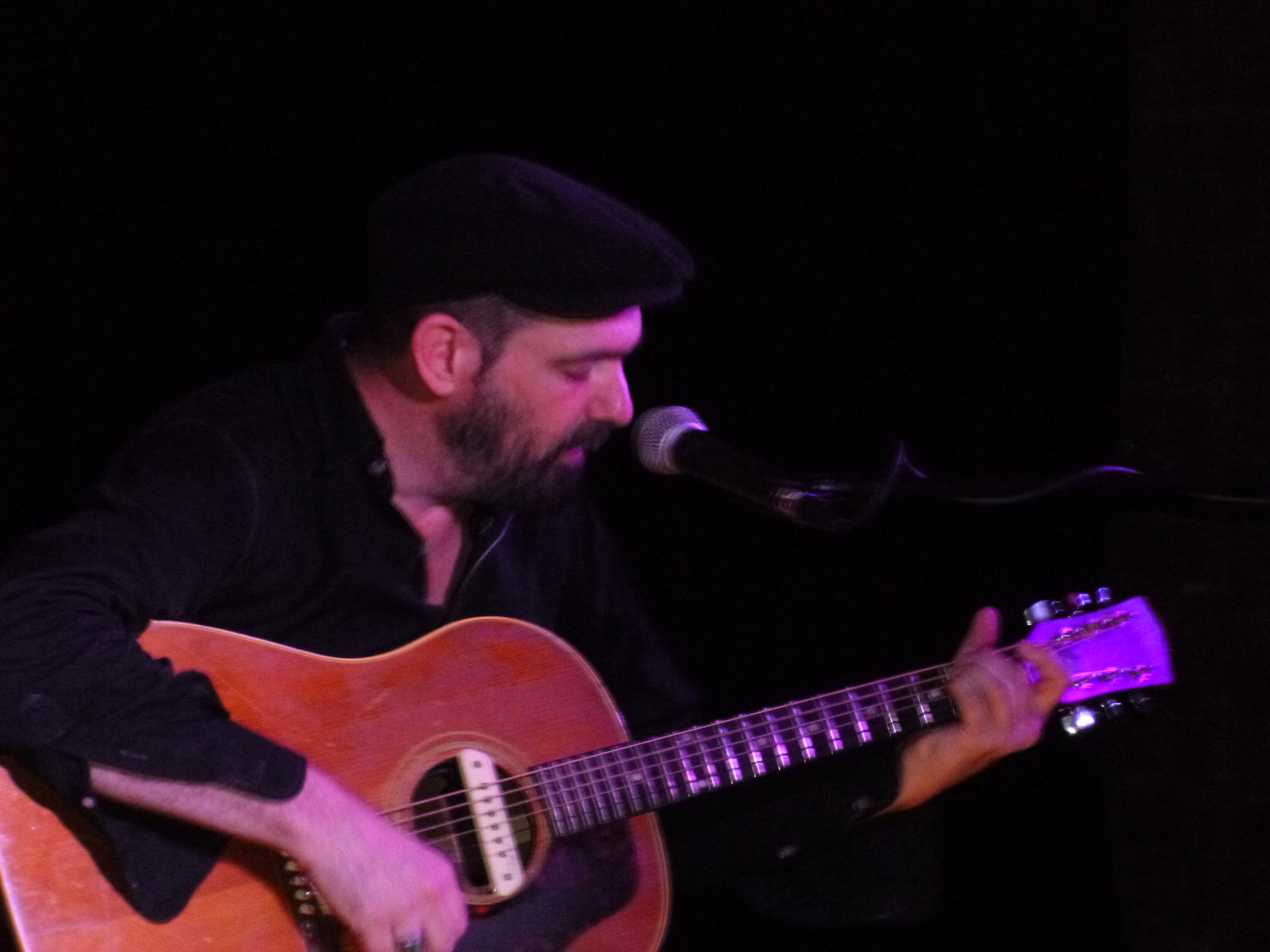
I’ve heard some folk call Mark Eitzel the best songwriter in the world today. While that might be moot there’s no doubting that over the course of thirty odd years he’s delivered some of the most powerful, stark and emotionally naked songs of his generation. The songs might be sweetened by his excellent warm honey toned voice (which has seen him covering classics from the American Songbook very successfully) and there was even a moment back in the early nineties when his band, American Music Club seemed about to breakthrough to the mainstream with the financial backing of Reprise and Virgin and their album Mercury. It was not to be however and AMC went into a hiatus with Eitzel setting off on his solo career which has seen him offering electronica, morbid folk songs and sweeping melodrama over the years. Tonight he’s solo and when he gangles onto the small stage looking quite limber for his 50 plus years he immediately is engaging with a wry, dark humour which is somewhat at odds with his awkward body language as he wrapped himself around his guitar. No matter as the moment he launches into I Love You But You’re Dead it’s apparent to all that we are in the hands of a bleak genius, Scott Walker meets Leonard Cohen, with the opening lines Let’s go toast the twilight at the old horror house setting the tone for much of the night although All My Love which followed allowed the audience a glimpse into the transcendent world of Eitzel with its dreamy delivery, his voice clear as a bell and his guitar work outstanding. A tortured rendition of I’ve Been A Mess was a fine example of Eitzel’s ability to transform his agonising into art, a genuinely pin drop moment as he transfixed the audience with his vocal contortions however his clown persona then surfaced as he noted that someone at his previous concert had tweeted that this was tuneless wailing before he went into a ribald story about pitching a song to Celine Dion’s handlers.

He then went on to dedicate the next song to the UK comedy character Mr. Humphries from Are You Being Served. Firefly was given full rein, powerful and dramatic with Eitzel straining at the leash but on the next song Eitzel, tied into his work, was thrown off course by the flash photography of an audience member to the extent that he stopped mid song and requested it stop. Full disclosure here that it was this reviewer who screwed up the momentum Eitzel had built up. He soon recovered and within a few songs was back on course but it did screw up my concentration to the extent that the rest of the night was a bit of a blur however I Spent The Last ten Years Trying To Waste a Half an Hour and a new song along with a crammed encore with a curfew in place again had the audience enthralled as Eitzel seemed to spill his soul out on stage. You can argue till the cows come home whether he’s the best but on this form he certainly is riveting.

Prior to Eitzel the show commenced with a short set from local hero Jim Dead who delivered his dry and dusty ballads with sombre guitar and bleak words, bleached and burned like a Peckinpah movie left out in the sun. Ally Kerr provided some Al Stewart like folk songs with a tender touch and fine accompaniment from violinist Caroline Evans.

Chuck Lemonds. The Rivers Call. Live In Trees Music.

An American artist domiciled in Austria, Chuck Lemonds is a new name to Blabber’n’Smoke although The Rivers Call is apparently his ninth album. Originally from St. Louis, Missouri, Lemonds has an interesting back history, detailed on his website, which anticipates a dyed in the wool old time feel to his music but instead he inhabits a world where poetry and lyricism marry fluid and supple instrumentation with a light, airy, almost Joni Mitchell feel. Billowing bass lines, rippling acoustic guitars with occasional electric solos, heavenly harmonies and meandering melodies feature throughout as Lemonds’ laid back and unhurried vocals brush against the microphone.
It’s all very reminiscent of an earlier and more innocent age when songwriters were planting the first seeds of post psychedelic American music, examining folk, blues, gospel and country and coming up with a modern indigenous music. So the likes of Neil Young, Ritchie Havens, Tim Buckley and Tim Hardin are all in here along with a smattering of Van Morrison’s sunkissed California days and given the prominence of acoustic double bass (played with some excellence throughout the album by Peter Herbert, veteran of Woody Shaw, Art Farmer and Paul Simon sessions) there’s a fair bet that Lemonds has listened to the numerous recordings featuring the doyen of double bass, Danny Thompson).

The gospel feel is apparent immediately on the opener, Let’s Go Down Stream, a song co written with his late father that oozes the blue eyed soul feel of the early seventies with Mary Gaines taking the place of Claudia Lennear. There’s a Ronnie Lane jaunt to Bringing Mary K Home with mandolin galore while To Bee or Not To Bee (poor pun mind you) features an awesome bowed bass solo introduction that is woody and organic and sets up the bucolic nature of this paean to the humble bumble bee. The title song has some sly lap guitar from Arkadiy Yushin along with some booming bass work and again it recalls the rustic Ronnie Lane skipping down country byways. The Joni Mitchell influence is apparent in The Letter Home, an adaptation of two poets, John Weir and Petra Schaller as the bass burbles and percussion splashes as Lemonds sings a song of regret for lives lost needlessly. There’s some more southern slinking with Gottfried Gferer on National steel guitar on Put A Good Word In For Me, another song that recalls early seventies excursions into swamp blues and a very fine instrumental featuring Lemonds on guitar with just bass and piano that recalls Ry Coder’s film work before Lemonds wraps it up with his solo rendition of Patty Griffin’s Top of the World. Top of the World is a song that has amassed a weight of interpretation through its authors’ and The Dixie Chicks renditions. Here Lemonds lays it down straight with just the right amount of pathos with no need for any other instrumental embroidery. A stark classic to end a fine album.

website

Listen here

Gene Clark. The Byrd Who Flew Alone. DVD

It’s been gratifying over the past few years to see the rise of the “rockumentary” detailing the life’s and music of numerous musicians with more and more vintage footage unearthed. BBC4 may have staked its claim to be the natural home of these although honourable mentions must be given to the likes of Alan Yentob’s Imagine series. Once the province of occasional late night cultural backwaters such as Omnibus these days you can spend just about every Friday night reliving rock history. Unfortunately for every gem there’s a shed load of cheap and nasty shock docs peopled by a pool of talking heads who turn up spouting their opinions on just about anything even if their closest acquaintance with the subject was when their agent called to ask if they were interested in appearing. That said there have been some superb examples over the years. Aside from the fly on the wall type (Don’t Look Back, Cracked Actor, Dig!) there’s the historical document (No Direction Home, MC5: A True Testimonial, Oil City Confidential).

The Byrd Who Flew Alone is in the second camp, a two hour trip through time looking at the career of Gene Clark. Clark was the primary songwriter in the first incarnation of The Byrds and by all accounts was expected to be a massive solo star following his departure from them. The film documents his failure to achieve that fame as his ex bandmate David Crosby was the one who soared while his pioneering efforts in country rock were overshadowed by Gram Parsons who made the ultimate “career move” in dying young at the top of his powers.
Produced and co-directed by Paul Kendall, ex ZigZag writer, the film takes us from Clark’s humble rural beginnings in Tipton, Missouri to his untimely death at the age of 46. While there’s live footage of his brief stint with the New Christy Minstrels and The Byrds (of course) there’s a gap until the early eighties when there was a brief reunion with McGuinn and Hillman. Footage of Clark with Carla Olson however confirms that he remained a compelling performer and despite the lack of live action it’s great to have what little footage remains gathered together. While Clark is heard being interviewed there is no visual footage of him talking.

McGuinn, Crosby and Hillman are all interviewed with Hillman especially providing insights into their tumultuous relationship over the years. Taj Mahal, Carla Olson, Jerry Moss (the M in A&M) offer their recollections while Byrds biographer Johnny Rogan and standard bearer for the Clark legend, Sid Griffin, offer their explanations for the bad luck that dogged Clark as each time he was poised to leap ahead of the game he faltered. Clark is recalled almost as a Jekyll and Hyde character, a country boy with a sunny disposition when away from the bright lights of L.A. but prone to alcohol and drug abuse with a temper to match when in Sin City, a temper that proved disastrous when he tried to punch out David Geffen following Geffen’s displeasure with the No Other album. A more intimate picture of Clark is painted by interviews with family (Mendocino buddies, his brother, sister, sons and widow, Carlie) which offer us a glimpse of the man behind the rock star and a sense of the personal hurt they suffered as Clark indulged in his demons.

Above all there’s the music and the generous running time allows space for fuller discussions of his groundbreaking efforts. The first post Byrds album with the Gosdin Brothers, the pioneering country rock of the Dillard and Clark albums, The Byrds reunion, the pieced together and excellent Roadmaster, the template for the singer/songwriter era that was the “White Light” album and the pinnacle, the exotic and almost triumphant No Other are all detailed along with his last major label release, Two Sides to Every Story, released on Robert Stigwood’s label RSO (with Clark of course eventually insulting Stigwood) which featured a bearded avuncular hippie Clark on the cover just as punk was taking off. Olson, John York and Pat Robinson take us into Clark’s latter years although there’s little or no mention of their recorded output which Clarkophiles will argue was as good as the earlier work. The DVD also includes over an hour of special features with extended interviews, two complete performances and a directors’ commentary. We can’t comment on these at present as the review copy was of the film alone, one reason why Santa will be bringing a fully fledged Byrd related package come the day.
Gene Clark fans have been salivating ever since this film was mentioned however even if you have never heard Clark before it’s an important document in the development of Americana type music and best of all you will be amazed by the quality of his music. His voice, his writing haunts and will continue to do so.

Buy it here

Cahalen Morrison & Eli West Our Lady of the Tall Trees

When Morrison and West released their debut The Holy Coming of The Storm in early 2011 it received almost universal acclaim and ended up in many a top ten album list at the end of the year. Their unique blend of studied antiquity with their songwriting skills and superb picking and singing struck a chord with listeners and they topped it off with a triumphant Celtic Connections appearance.
18 months later and we have the follow up, Our Lady of the Tall Trees, an album that continues in much the same vein as its predecessor which is tantamount to saying that it’s essential listening. Morrison continues to write the bulk of the material here with one traditional song offered up. However this time around there are three contemporary cover versions included, the very familiar Townes Van Zandt’s Loretta, Norman Blake’s Church St. Blues and closing the album Garry Harrison’s Red prairie Dawn, a nice touch as it serves to pay tribute to Harrison, an Illinois fiddler and lover of old time music who sadly died earlier this year.
It’s a measure of how successful Morrison and West are in creating their sepia toned world that their version of Loretta jars the impression that we are listening to an archived recording from the dusty old days. Theirs is a fine reading but the familiarity of the song accords it an outsider status, a glitch in the matrix if you like, however the instrumental Red Prairie Dawn ends the album with a flourish, a beautiful tune lovingly picked and plucked on banjo and mandolin it captures the essence of old time country music.
As on the debut album however it’s Morrison’s songs that support any claim to greatness here. He has the ability to capture and recreate old time ballads, tales as strong as an Oak with language that seems to be hewn from ancient timber. It’s reminiscent of the best of the English folk rock revival of the seventies when tales of yore were married to a contemporary sound. Morrison and West however eschew drums and amplification creating their tapestries using guitar, banjo, mandolin and bouzouki. The words do hark back to the richness and poetry embodied in the King James Bible. When they sing

“Although starched your apron may now be, it’ll lose it’s shape in the water. But go swimmeth thee to the anchor most near, a lady does not often falter. Oh the winds they blow and the tide she swells, brings life into the beaches. Oh that seem between the Earth & Tide, from land that sea is not quite so wide”

one could be reading from that old good book. Morrison packs his songs with such lyrics on A Lady Does Not Often falter, All I Can Do and All For The Sake of Day. Meanwhile the front porch plucking on their instruments offers some fine moments of beauty with the mandolin solo on All For The Sake of Day especially standing out.
Ancient and modern, homespun and literate, it’s a standout album from a pair who astonish and exhilarate. Do give it a listen.

website

Pokey Lafarge and the South City Three. Rob Heron and the Tea Pad Orchestra

Seems like every time we mention Pokey LaFarge and the South City Three here they’ve added another feather to their cap. Pokey recently had a song featured on the American TV series Empire Boardwalk, a rendition of Lovesick Blues (and there’s a great story behind this involving Jiminy Cricket, see here). In addition the band have been supporting jack White to huge audiences in the states including the famous Red Rocks Amphitheatre and Radio City Music Hall. It’s great to see that they are gracing our shores again over the next few weeks and even better to hear their latest release Live In Holland that captures their rip roaring act perfectly.
Recorded at the Paradiso in Amsterdam the 14 cuts will be familiar to anyone who’s seen the band recently. Culled from the band’s two albums and singles and Pokey’s solo releases Marmalade and Beat Move and Shake along with a cracking version of Bob Wills’ Devil ain’t Lazy the live setting allows the band to cut loose and Pokey to holler and play the audience, wisecracking and adlibbing. It all adds up to a rollickingly good listen with the band seemingly enjoying themselves as much as the audience. It’s almost impossible to pick out highlights as throughout the album Ryan Koenig blitzes the crowd with his harmonica wizardry while Adam Hoskins’ guitar zips and slides splendidly. Joey Glynn on bass gets his moments to shine also especially on the raucous In The Graveyard. While Pokey, the ringmaster, ushers in the solos and is in fine booming voice the band deliver great harmonies and vocal asides that add to the vaudevillian element they create. Almost a perfect document of one of the most exciting bands around right now if this doesn’t move you then you should call a doctor

website

Newcastle band, Rob Heron and the Tea Pad Orchestra are supporting Pokey and his gang on the upcoming UK tour just in time to promote their debut album Money isn’t Everything. While Newcastle isn’t St. Louis musically the tea pads inhabit much the same territory as the south city three, old time blues, ragtime and jazz with some Cajun riffs thrown in. While Heron tends to croon and scat rather than holler the syncopated rhythms and jazzy vamps are all there and executed with finesse, Ben Fitzgerald on guitar in particular plays some scintillating Django type runs. With three songs rerecorded from their EP including the mini epic Great Fire of Byker (about a huge conflagration on Tyneside) there’s a dramatic improvement in the sound and they come across as much more confidant and assured. Heron writes most of the songs although it’s hard to believe that they’ve not been dredged up from some archive of old time Americana. A version of Bob Miller’s Bank Failures from the 1930s nestles comfortably with Heron’s songs particularly the title track, in fact the album could have been called Songs For the New Depression and one wouldn’t have been surprised to find Buddy Can You Spare a Dime here, maybe they’ll do it live. With songs of escapism (the sousaphone led thump of Rich man Blues), booze (Hangover Blues) and exotica (the south American styled Biarro Alto) there’s a definite retro feel here that harks back to the dichotomy of the jazz age when the bright young things partied and the working class worked. A great debut and on the strength of this a great double bill on the forthcoming tour.

website

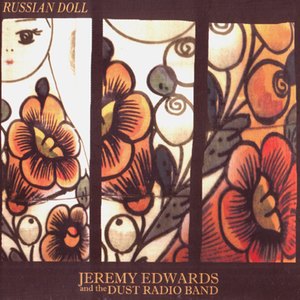
Jeremy Edwards and the Dust Radio Band. Russian Doll.


Blabber’n’Smoke first encountered Australian band Jeremy Edwards and the Dust Radio Band way back in 2008 when their album Stay Hungry knocked us out. The album was an almost perfect example of well crafted and brilliantly played Americana, taking elements from as far back as Gram and Emmylou up to the Jayhawks’ melancholic majesty with a pinch of Steve Earle’s political bluster. Four years on and Russian Doll arrives in the in tray and it was with high expectations that we played the platter. From the first it was comforting to find that the Dust Radio Band are unchanged. Ben Edwards and George Brugmans, bass and drums respectively continue to lay claim as one of the best rhythm sections around. Tight, grounded, unobtrusive but powerful they lay the foundations for a cracking selection of songs. Julianne Henry’s fine voice remains a great foil for Edwards’ resigned vocals which can sound vulnerable and frail at times but above all burn with emotion. Finally Roy Payne’s guitar, pedal steel and Dobro, along with Edwards own fretwork burns and buzzes throughout making this a fine follow-up to the grand edifice that was Stay Hungry.
Edwards writes all ten songs here and each and every one is a potential winner. The title song, Russian Doll is a lascivious slide guitar driven boogie very much in the vein of Lowell George’s Little Feat. This murky blues’ feel permeates the album with Holy Ground, the album opener slithering and buzzing like a rattlesnake as a biting guitar underpins a mandolin riff before some delicious soloing. The guitars on Misery Loves Company are like shards of steel being hammered as the hard as nails rhythm section piledrive on a pulverising song that just begs to be played loud. The invigorating Bring the Family Around is a fast paced jaunt that recalls (strangely enough) the gutsy feel of John Hiatt’s Bring the Family album and has a great guitar lift at the end. There are moments when the band are not so sure-footed with Between Hell and the Highway failing to live up to its opening AC/DC type intro, while it’s a fine song it fails to stand up in comparison to its companions.
They do turn down the amps on several of the songs. The melancholic ballad Sing has a fine dynamic with sweet pedal steel and an excellent vocal performance from Edwards. Better Than Me is half Cajun, half Lowell George with slide guitar and fiddle duelling. Edwards picks up the mandolin again for the final song Pulled an Angel Down which references Thomas Gray but more importantly is a potent mix of acoustic playing with upright bass, Dobro and fiddle coalescing into an almost perfect sound.
Overall this is an album where all of the pieces just fall into place. Edwards and band deliver some classic songs in the classic style much as the likes of the Jayhawks and others. Do give it a listen.

website

Sing

Lies, damn lies and statistics.

The kind folk at wordpress sent me this. An “annual report” detailing activity on the site. So in the interests of transparency you can read it below. And after the seasonal break expect more reviews and if I can summon up the energy some choice live gig reports. As always thanks to all who read this blog and special thanks to all artists who have considered us worthy enough to comment on their fine efforts.

Here’s an excerpt:

The concert hall at the Sydney Opera House holds 2,700 people. This blog was viewed about 9,600 times in 2011. If it were a concert at Sydney Opera House, it would take about 4 sold-out performances for that many people to see it.

Click here to see the complete report.

September Songs

Gwendolyn. Bright Light

A child of California, Gwendolyn first came to Blabber’n’Smoke’s attention when she released Lower Mill Road, a 2007 album recorded in Scotland with players such as Chris Drever and John McCusker. With this, her fourth album she’s left the Incredible String Band influences evident on Lower Mill Road behind and welcomed country music with open arms. With a voice that is a cross between Melanie Safka and Dolly Parton she’s joined by her regular band who play an idiosyncratic selection of instruments including found percussion and glass harmonica. Despite this the overall sound is fairly traditional and throughout the album there is an impish and infectious sense of joy. The songs range from the Bakersfield country pop sound of Tater Tots and Whiskey Shots to the Nanci Griffith like Discover Me. Ably assisted by a clutch of guests including Tony Gilkyson, Josh Grange and some of I See Hawks in LA there are snatches of fiddle and guitars, both steel and twang, popping up when one least expects it. With all of the songs written by Gwendolyn she has produced an excellent set that harks back to tradition while stamping her own quirky personality all over. Listening to this I was reminded of Michelle Shocked’s Arkansas Traveller, another album that explored country roots. Gwendolyn’s effort is just as ambitious and overall is a tremendous listen with repeated hearings unveiling new delights. Well worth checking out.
website
Bright Light

Rum Drum Ramblers. Mean Scene

At the last Pokey LaFarge and the South City Three gig in Glasgow, washboard and harmonica player, Ryan Koenig pressed into my hand this fine album. Recorded by him and fellow South City Three member, Joey Glynn (upright bass) with Mat Wilson on guitar and vocals this will delight anyone who enjoys Pokey’s blend of old time swing and blues. The vibe is essentially the same and the third member of the South City Three, Adam Hoskins appears on slide guitar. The addition of the Funky Butt Brass Band on several songs offers a more pronounced jellyroll type jazz sound while Wilson’s vocals are mellower than Pokey’s. Comparisons aside the Ramblers are indeed a mean machine with some magnificent interplay between the instruments, a sly jive talking style and an obvious love of their influences. All 12 songs are gems with the standouts being Jack and Tom, a rattling introduction to the album, If It Have To Be with its vintage sounding blues guitar licks and Do You which has a decided Michael Hurley feel to it.
Well below the radar you’ll need to go to CD baby or Amazon to buy or download this but it’s a guaranteed winner.
http://www.myspace.com/rumdrumramblers
Jack and Tom

Old Dollar Bill. Across The Tracks

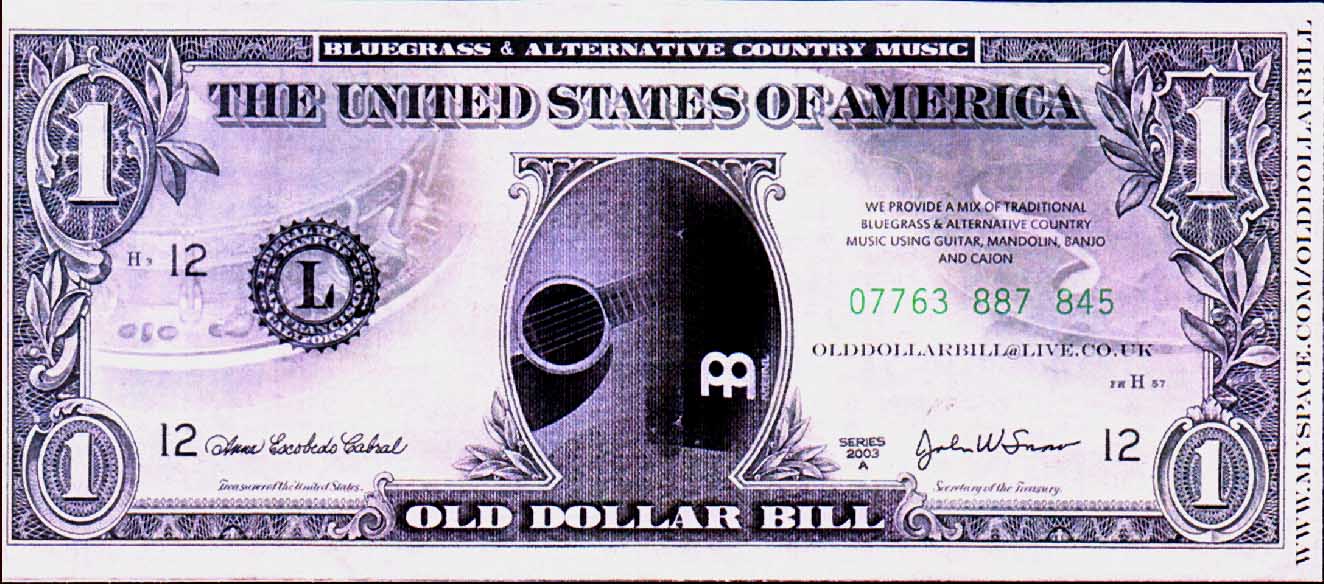
When what appeared to be cash money came tumbling out of the envelope we thought that at last someone had figured out that payola should not be restricted to members of parliament. Unfortunately it was a fake dollar bill from our old friends in the east, Old Dollar Bill, the mighty Edinburgh duo of Ed Henry and Stephen Clark. Hot on the heels of their collaboration with the Wilders and Woody Pines comes this four song EP. Maintaining their expanded palette with guest musicians from the Edinburgh folk scene (Martin McQuade on double bass, Owen McAlpine, harmonica, Mairi Orr, harmony vocals and Tom McAweaney, an old, old friend of Blabber’n’Smoke on fiddle) Old Dollar Bill deliver a great little bundle of tunes that sound as if they could have been played by bunch of genuine hillbillies. Clark excels on mandolin, Dobro and banjo while Henry’s percussion and especially his use of the Cajon adds an extra layer of enjoyment to what are already fine songs.
The EP opens with Move On, a driving romp that warns of the perils of gold digging women. Bright Light is drawn from the tradition of Appalachian dirges such as Oh Death and has some spine tingling vocals and fiddle playing. Hats Off to Begg (dedicated to the late Bryan Begg, a musical compadre of the Bill) is a heartfelt tribute that has a soulful southern blues slink to it. The EP closes with The Cold Gin Waltz, an instrumental that highlights the Celtic influence on Americana and could easily have featured in a movie such as Cold Mountain.
Old Dollar Bill seem to grow in stature with each release and this one is well recommended. .
Myspace page
The offending Old Dollar Bill

Move On

Mat Gibson. Forest Fire.

Five years ago English songwriter Mat Gibson cut a very impressive album in Philadelphia with his band The Broken Hearts. Packed full with fine guitar slinging Gibson came across as a UK equivalent of Ryan Adams at times. Since then he seemed to disappear from view until this re-emergence as a solo artist on Clubhouse Records. In the interim it appears that he spent several years in Quebec and something of the Canadian landscape (or mindscape) appears to have returned with him as Forest Fire is a set of stark, minimalist songs which sound as if they were conjured up on freezing plains with the writer isolated, miles from anywhere. The sound of the North Country (think of The Jayhawks here) also appears to have had some influence. This is most evident on Yonder Burning Tree where Gibson’s harmonica and guitar could have come straight from Hollywood Town Hall. Gibson plays all of the instruments sticking in the main to acoustic guitar with sparse accompaniment from his harp and occasional keyboards. There are some other embellishments, the slide guitar on the opening song Lord Only Knows, played by Jonathan Berry lends a plaintive air to what is an excellent song. Forest Fire drips like an icicle, a pale fire indeed as Gibson sings of seeing forest fires sending plumes of smoke into the air as he flew back from Quebec. On this elegiac song with heartrending vocals and a perfect marriage of guitar and strings Gibson’s lyrics cast a perfect light on the stress and strain and regret left behind when a relationship ends. The aeroplane metaphor is revisited in Icebergs where Gibson sings of having nowhere to land, buffeted by the forces of nature conspiring against him. An airborne version of Titanic, Gibson sings of “the band playing silently on” as the ‘plane circles endlessly.
After the glacial outpourings of the previous songs the final cut, Where Demons Go, adds some muscle with some electric guitar thrashing. Almost an exorcism after the confessional nature of what came before it Gibson asks “won’t you give me one more chance to make things right with us.” Whatever the answer there’s no doubt that that this album marks the return of a major talent to our shores and it’s to be hoped that we don’t have to wait five years for the follow-up.
Website
Lord Only Knows

Jim Dead. Ten Fires

What is Americana? The simple answer might be that it’s music (or literature, art) that refers to America, in particular to that continent’s (primarily the US of A) heritage. So a broad church with country, bluegrass, jazz, swing and god knows how many others getting a shout in. But are, for example, Kings of Leon Americana? U2? Jack Johnston? The answer of course is yes and no. Or rather, it depends. It depends on the singer, the song, the listener, the situation and for an awful lot of folk in the end it doesn’t matter. And perhaps therein is the rub. For if it does matter to you then you probably know the answer already.
Americana is a feel, an intuition, a knowledge of and respect for, well, Americana. It has depth, history, tradition. Tradition that harks back to the great immigrations that peopled the USA, that recalls the natives who were displaced by the newcomers, the poverty and violence experienced by the Negro slaves, the violence of the civil war, the culture that grew out of all of these. The tradition continued in modern times, the civil rights struggles, the protest songs, the discovery of their own culture by the late sixties generation which fed into the No Depression generation of the eighties which in itself reached back into the distant past also.
It’s easy for anyone anywhere in the world to be captivated by Hollywood cowboys, Lonnie Donegan records or books by Cormac McCarthy. Dig deeper and chances are you’ll find Americana, a fabulous land with a fabulous story. And best of all you don’t have to be American.
Jim Dead is a man who I reckon has done his fair share of digging. So much so that he inhabits a mythical Americana hometown, Deadsville. Deadsville is a mixture of all of the above however Dead has sculpted it into shape. A dust blown dread place with frontier justice, where gunslingers are replaced by guitar slingers, where the blues are amplified and dragged from the past and shot into Technicolor glory.
Calling up a new version of his band The Doubters consisting of Craig Hughes on guitar, James Duffin on bass and Tommy Duffin on percussion and harmonica, Dead offers up twelve songs that portray Deadsville as a scary place to be. Telling stories of lynchings, drugs and death the band walk throughout the landscape with a powerful swagger. Several of the songs here reach epic proportions both in length and delivery. The combination of Dead’s and Hughes’ guitars conjure up visions of Crazy Horse and the Drive By Truckers. While there are quieter moments such as the opening song Silence has No Place Here, Hotel, (with a touch of Willie Vlautin about it) and My Heavy Heart, My Aching Bones, there remains a sense of doom, of hopelessness in them. However the big hitters here are when the band plug in. The loping Bone Blue Moon has the feel of hank Williams backed by Creedence Clearwater, the song does indeed feel as if Dead is howling at the moon. Untitled has some spooky, almost psychedelic tinges, when Dead repeats the refrain Baby, Baby there is a sense of what could have been if Led Zeppelin were an American band. Hughes’ playing on this epic is spectacular, full of menace, coiled, ready to kill. Mean–Eyed River Snake is a mean tale of the death of a girl as retold by a confused, possibly pilled up youth who may have seen too many drive in horrors. It ends in a confusion of babbling while Hughes’ guitar rumbles in the background. The Hallelujah Revolver perhaps tries too hard here to achieve a proper dynamic, a gospel song from hell it’s the one song where the feel is muddied, Having seen a gobsmackingly good live version done by this line up of the band it’s possible we were spoiled beforehand. Honours must go to the stand out song here however. Jim Landstrom Must Die is a killer track. A deceptively jaunty riff leads into a sorry tale of a jive travelling salesman who gets lynched after selling bottles with “stars that fell from from the sky.” Peckinpaw in parts, “ hang him up by his legs, slit his throat so the streets turn ruby red” the band really gel with some tremendous bass playing and a cracking vocal performance from Dead.
If this album was by a crew from the south west of the USA chances are it would be hailed to the heavens. As it is it’s perhaps the best example I’ve heard so far of a local band setting up residence in that fabled Americana. Definitely one to buy.
website

Jim Landstrom Must Die