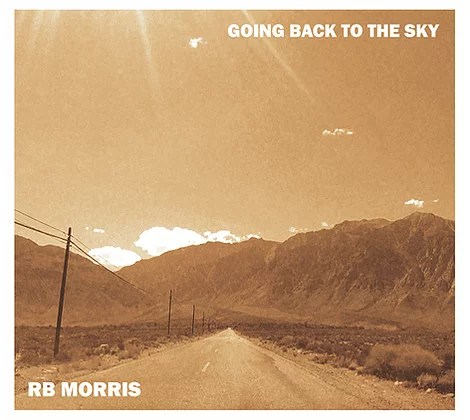
RB Morris. Going Back To The Sky. Singular Recordings

We’re a bit confused by this album. Not the music, that’s quite swell, but the release date. There are mentions of this disc going back a year to September 2000 but it arrived in our mailbox a short while ago with a press release proclaiming a release date of September 2021. It seems that initially this was an independent release but it has now been picked up by a label.  This is really just a roundabout way of saying that we haven’t sat on Mr. Morris for a year, no sir, we’re bang up to date.

Anyhow, RB Morris has a fair amount of well-known fans willing to proclaim his genius and while this often isn’t any guarantee of excellence, on this occasion, they are right. He comes from that dusty troupe of well-travelled songwriters who can tell a tale and evoke vibrant images and scenarios through their words and music. Butch Hancock and Guy Clark come to mind almost immediately and there’s also a fair whiff of Roger Miller’s loose-limbed narratives. Morris says this is his “dustbowl album” but he’s not trying to emulate Woody Guthrie, rather, he’s reciting a set of songs inspired by his “early road trips out west.” He has surrounded himself with a top class band who are able to match their playing with the various environs visited. There’s the menacing highway blues of Montana Moon – a song which rivals Dave Alvin, the sly and somewhat louche fatback guitar fuelled Me And My Wife Ruth and the Dylan meets Cash mash up of That’s Just The Way I Do.

Morris truly inhabits the songs also. He sounds quite insouciant on the bouncy brilliance of Six Black Horses And A 72 Oz. Steak, a road song about a 1000-mile trip which tips into odd dreams about Audie Murphy alongside other weird encounters. The Zen like Missouri River Hat Blowing Incident (a contender for song title of the year) finds Morris chasing the titular hat and realising his travels have truly started. There’s a sense of wonder also and it’s highlighted by the spare ambient and cosmic country sounds conjured by the band at times. The title song glistens with atmospheric pedal steel and there are several instrumental interludes which serve to thread the various narratives together. Overall, the songs and preludes knit together perfectly, the album can be listened to as a travelogue with the songs acting as the stops and encounters on the way, and Morris proves that he is indeed quite an excellent writer and performer. Well recommended if you missed it last year.
Website

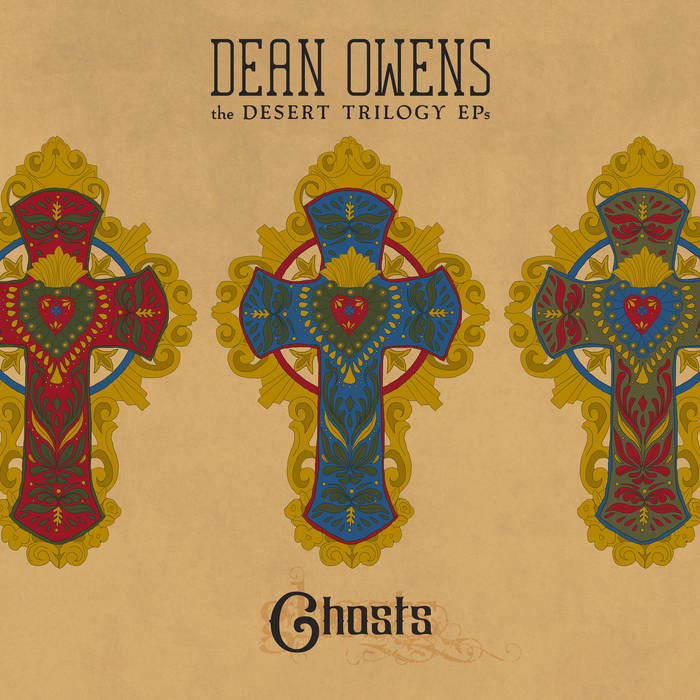
Dean Owens. The Desert Trilogy EPs – Vol 3 Ghosts

a3166553620_16

All good things must come to an end and so it happens that Ghosts is the final piece to be slotted into Dean Owens’ Desert Trilogy slipcase. A quick recap. Having recorded an album, Sinner’s Shrine, with Calexico in Tucson, Owens’ plans for its release were scuppered by Covid. Undeterred, the Edinburgh based artist used his lockdown time to record another bunch of songs with various members of Calexico and other Tucson luminaries and he’s been releasing them via this highly desirable collection.

All the EPs have a song from the album but Owens was keen not to short-change his fans so, overall, they contain eight new songs, all cut from the same cloth which inspired the original recordings, Owens’ love of the American Southwest. So far there has been critical acclaim for this new direction and Ghosts is certain to bask in similar glory.

As with the other EPs, it’s a song from Sinner’s Shrine, which leads off. The Hopeless Ghosts is very much in the vein of Calexico’s hot, dusty and claustrophobic desert shuffles. John Convertino’s drumming is instantly recognisable as is Jacob Valenzuela’s soaring trumpet and Paul Niehaus weighs in with his swooning pedal steel. As Calexico do much of the time, Owens achieves a cinematic effect here with visions of movies by Leone and Peckinpah summoned by the music and the words – there’s drama by the dirtload. It’s haunting (as most songs with Ghosts in the title should be), as Owens comes across like some high plains drifter, condemned to forever travel. In a nice touch, Owens explains that the idea of hopeless ghosts comes from a Townes van Zandt description of his songs. Anyhow, the song is a towering achievement which is lifted further aloft when Grant-Lee Phillips joins Owens on harmony vocals, especially when the pair vocally pirouette towards the end of the song.

Mother Road is much more restrained as Owens delivers a wearied narrative, inspired by a 93 year old barber who had a shop on Route 66, a road now seldom travelled once the Interstate opened. It’s a sepia stained portrait of past times, replete with lonesome pedal steel and mournful trumpet and it’s a fine example of how Owens can transport his evocative portraits of his home town to a foreign land. Even When I’m Gone finds Owens on his own on a song which was recorded in Tucson but which was inspired by walks with his dog in the woods near Edinburgh. Again, there’s a sense of desolation here although it’s tempered by the thought that once we pass, life will go on. The EP ends with a murder ballad which Owens says he had written for Johnny Cash but, with the man in black gone, he has to sing himself. Owens recorded his basic track in Scotland with Kevin McGuire on double bass before Convertino, Martin Wenk, Tom Hagerman and Naim Amor sent in their contributions from various locations. Fittingly, as the last song on this trilogy, it’s called The End and, yes, one can imagine Cash singing it on one of his latter albums. Like some Dostoevskian anti-hero on the eve of his execution, Owens reflects and ruminates on a life of crime as a baleful trumpet and tasteful shards of guitar lead him towards the gallows. It’s a very impressive song.

So, trilogy wrapped up, all we can do is wait for Sinner’s Shrine. The main course after these wonderful appetizers.  

Website

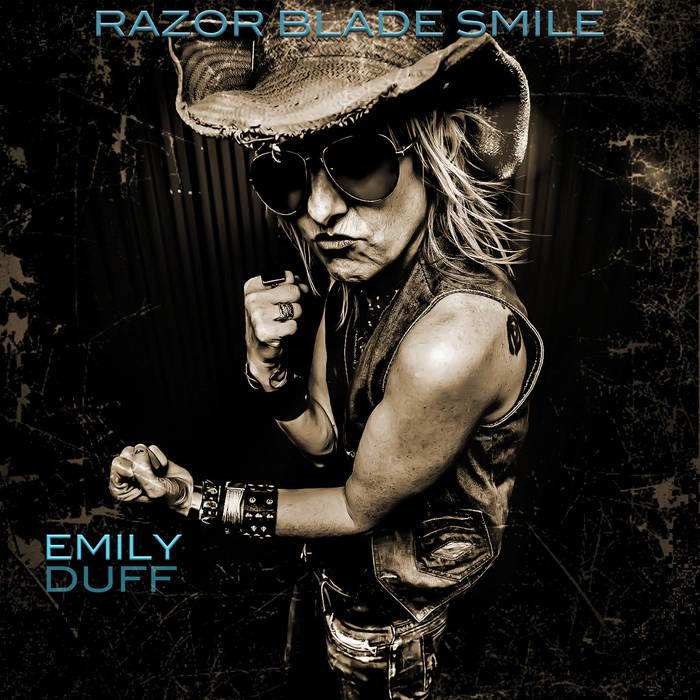
Emily Duff. Razor Blade Smile.

Having abandoned Muscle Shoals for New York on her last album, Born On The Ground – released on the eve of the pandemic – Emily Duff really didn’t have much choice regarding the recording location of her latest album, Razor Blade Smile. In fact, the album was birthed in her cramped Greenwich Village tenement (shared with husband, teenage kids, a dog and a few dozen guitars!) as Duff took time out on the fire escape and wrote these songs.

As has often been the case recently, Duff’s fire escape songs found their way into the studio once Covid restrictions relaxed as she and producer Eric “Roscoe” Ambel recorded her acoustic versions. The basic tracks laid down, Ambel then assembled a band and grafted them onto Duff’s originals with nary a join to be seen or heard. The result is a kickass set of songs with a New York attitude which at times has a Patti Smith toughness along with nods to alt country and some of that southern grit displayed on her earlier albums.

It’s the south which is summoned first of all as the gutsy finger picked guitar intro to Go Fast Don’t Die is rapidly joined by a kaleidoscopic Band -like country funk while Duff comes across like a foul mouthed Bobbie Gentry. It’s only two minutes long but it packs a powerful punch. Next up is the more conventional and fleet footed Gimme Back My Love which reminds this writer of Bruce Springsteen, but then the album gets down and dirty on the slow groove of Done And Done with Ambel’s guitars rumbling and growling alongside Charlie Giordano’s swelling keyboards. Duff’s in her element here, her strong voice weighted with portent like an iron fist in a velvet glove and she revisits this on the melodramatic Don’t Hang The Moon which dives deep into a witchy woman vision of dark country rock music. The title song is a scuzzy slice of punk rock and Another Goodbye recalls the high priestess of punk, Patti Smith. Duff here sounds more guarded and, indeed, paranoid, as the band slide between punk reggae and New York organ grooves.

Sidling closer to country towards the end of the disc, we find Giordano abandoning his keyboards for accordion on Feelin’ Alright which is given a fine country lope while Nicotine & Waiting is quite tremendous. It’s a tear stained slow country waltz with weeping pedal steel and accordion, burnished by Ambel’s guitar glimmerings. Duff here shows why some folk compare her to the like of Lucinda Williams.

Website

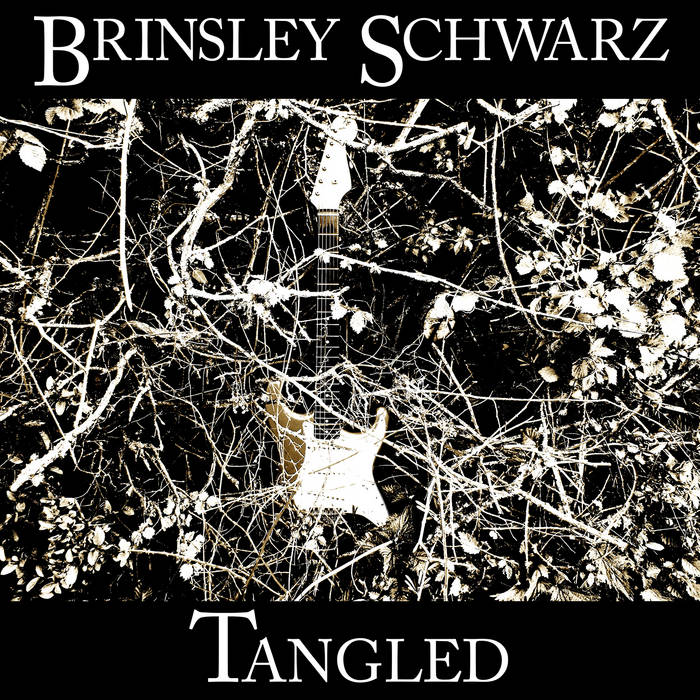
Brinsley Schwarz. Tangled. Fretsore Records

Yes, that Brinsley Schwarz whose name launched a thousand pub rock bands (and almost sank them when his eponymous group had a disastrous U.S. launch). The band Brinsley Schwarz included, alongside our subject here, the fabulous Nick Lowe, and they somehow survived their inglorious start to become a well-loved band on the nascent pub rock circuit. As punk rock began to invade their space, Lowe and Schwarz were canny enough to catch a ride on this new wave, Lowe producing The Damned while Schwarz went on to become Graham Parker’s wing man.

Tangled is Schwarz’s second solo album (following 2016’s Unexpected) and, as befits a musician of his vintage, there’s a sense of elegy in several of the songs. Crazy World is a fine example as Schwarz’s tender voice sings over graceful piano and mournful strings as he tries to reach out and to make some sense of recent events. Stranded is in a similar fashion although it’s a more personal song and it is given an excellent band build up climaxing with Schwarz playing an elegant and moving guitar solo. He takes Your Breath Away follows suit with more sublime fatback guitar thrills and, in addition, Schwarz throws in an excellent reading of Graham Parker’s Love Gets You Twisted.

There’s an echo of the Brinsley band’s country influences on the laid-back confluences of You Drive Me To Drink while Game On is a jangled jaunt which, once again, recalls those early efforts of UK bands to approximate the sunny sounds beaming in from California although Schwarz here delivers it with a finely balanced sense of resignation. Storm In The Hills, a grand retro rocker with groovy barrelhouse piano and tasty guitar licks, finds Schwarz once again getting tangled up in the modern world, and the environment is the subject of his slightly Tex-Mex influenced You Can’t Take It Back. Schwarz ends the album on an optimistic bent with the sunny side up thoughts of All Day which starts with just him and what sounds like a ukulele, before the band kicks in for a fine, pub rock like coda.

Tangled is an album which contains the benefits of a life well lived and the sage reflections gathered therein. It’s much like a well-loved old friend inviting you in for a warm and cosy evening full of top entertainment.

Website

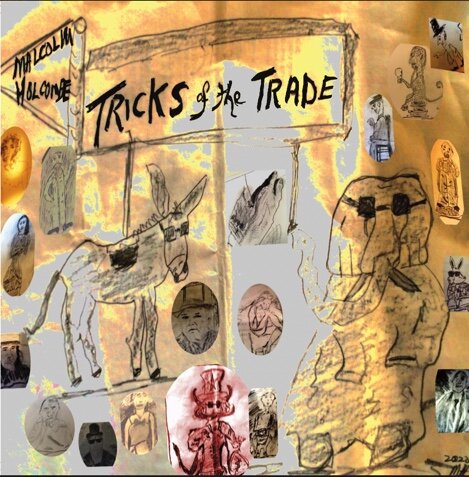
Malcolm Holcombe. Tricks Of The Trade. Need To Know Music.

Praise be the world when, in the midst of a pandemic and other shit storms, a new Malcolm Holcombe album arrives. It’s like a rock to hold onto as mayhem rushes by, with Holcombe’s gruff voice, his command of visceral country blues, and lyrical acuity, sure to hold you fast.

Tricks Of The Trade is classic Holcombe – raw, sinewy and vibrant. He growls magnificently over a set of songs, which, on this occasion, are amped up somewhat while never letting go of his North Carolina roots. He’s aided by long time companions, Jared Tyler and Dave Roe with Roe’s son, Jerry, taking on the drum role, and together they rustle up a mighty rumble. While it’s Holcombe’s voice and words that are first and foremost, it’s the hustle and bustle of the stringed instruments – guitar, slide, Dobro – snaking throughout the album which capture attention. At times the interplay is quite hypnotic as on the Townes Van Zandt like Damn Rainy Day which, for this reviewer, could have lasted for twice as long and still tempt one to press the replay button.

It’s timeless music, as old as the hills but bang up to date also as Holcombe addresses some issues of the day. Crazy Man Blues doesn’t go so far as to name the man but it’s evident who Holcombe is weighing into here. The opening Money Train is suffused with blues and gospel as it satirises the worship of Mammon and Your Kin is surely a condemnation of US border forces as they straddle Mexico and separate families.

Elsewhere, Holcombe just waxes wonderfully on eternal themes. On Tennessee Land is akin to Woody Guthrie’s dustbowl ballads while Misery Loves Company is a rare upbeat number belying its title, as Holcombe and crew (including backing singer Mary Gauthier) turn in a joyous country number. There’s more joy to be had in the title song which uses a circus theme to suggest that we are still in thrall to the bread and circuses the Romans used to placate their citizens. If Holcombe is suggesting that his songs are just a similar trick of the trade, the discerning listener would surely refute that. You need to dig deep to find artists of the calibre of Holcombe, even within these days of music on demand, and, once found, he is surely more than mere entertainment. Dig deep and dig him so that this breed of tried and true truth tellers and musicians can survive.

Website

Karen Jonas. Summer Songs EP.

Here at Blabber’n’Smoke we hugely enjoyed Karen Jonas’ last album, the excellent The Southwest Sky & Other Dreams, so we were excited to receive this latest disc, albeit an EP with only four songs on it. So be it, it will tide us over for the time being.

Jonas, from Fredericksburg, Virginia, has over the course of five albums, proved to be adept at updating honky tonk songs and the Bakersfield sound while her song writing has grown to encompass the wide range of themes she tackled on The Southwest Sky. There’s more than a smidgeon of this on the EP but she opens with a bit of a surprise, her take on the Don Henley hit, The Boys Of Summer. First thoughts on this were, admittedly, that this was somewhat redundant, but listening to Jonas’ fine countrified rock version and then comparing it to the ‘80s synth ridden original, one has to admit that she quite owns the song. Her voice is in total control over the driving beat and swooping pedal steel and she kind of returns some of the song back to its original co-writer, Mike Campbell of The Heartbreakers.

Jonas seemingly was inclined to record this while grabbed by a writing frenzy earlier in the year which has resulted in an upcoming poetry collection, Gumballs, due out soon. Full of personal memories it led to her revisiting snippets of songs she’d started earlier but never completed. Going back to her notebooks, she chose three to accompany the Henley hit, going with a summer theme.

Summer’s Hard For Love is a nostalgic listen. Bathed in a languid and laid-back accompaniment with lazy acoustic guitars and slowly swooning pedal steel it has a touch of Neil Young’s Harvest Moon to it. Jonas sings it kind of sultry, kind of a mix of Patsy Cline and torch ballad singer. Thunder On The Battery, as its title suggests, is more portentous as the band limber up to create an atmospheric rumble. It’s akin to some of the songs on the last album. The EP closes with just Jonas and her guitar on Summer Moon. Close miked, it’s an intimate recording which proves she has the voice and song writing chops to place her amidst the top echelons of our favourite singer songwriters.

website

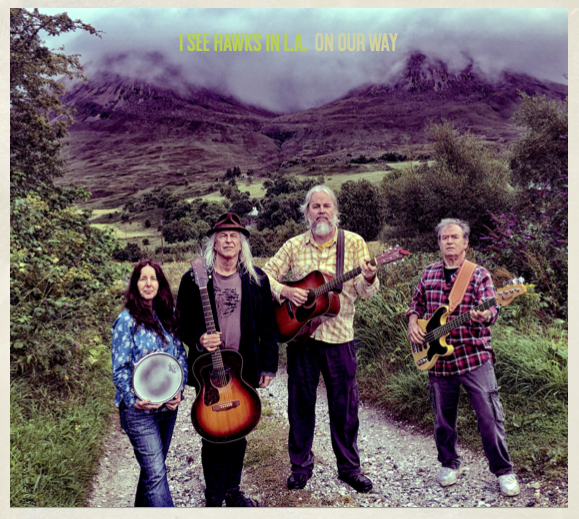
I See Hawks In L.A. On Our Way

Stuck in pandemic land, I See Hawks In L.A. essentially underwent a crash course in remote recording for their latest album, On Our Way. As the band say, they “began the studio game. ProTools, trial by error, error in abundance…Can we use an iPhone recording?”  Well, it’s graduation day today as they unveil the album and we can safely say that, were we marking it, it would get an A+.

On Our Way maintains the high standard set on previous releases by these wayward California hippies with their signature notes of high tide lines left behind by the likes of The Dead remaining intact. There is cosmic country, as on the pedal steel infused Geronimo, laid back musings on Stealing (which recalls classic Laurel Canyon days) and even some grungy junkyard ramblings on Mississippi Gas Station Blues which sounds like a mash up of Los Lobos and The Doors.

They set their stall out quite firmly on the flighty country rock of the opening song, Might have Been Me, which ripples along quite excellently and which is followed by the title track which has a slight touch of The Byrds to it in its chime. There’s a lengthy and somewhat freaky fiddle intro to Know Just What To Do which eventually subsides as the song sweetly flows into a fireside like homily. Warm and comforting for sure, but that fiddle buzz eventually returns as the song wavers between comfort and sonic malevolence. It’s as if John Cale had happened upon a David Crosby recording session. This sense of adventure is highlighted on the closing number, How You Gonna Know, an elongated eight minute trip dominated by intricate drum patterns accompanied with antipodean interruptions which eventually erupts into a tribal whelp.

Much more straightforward is the impressive Kentucky Jesus, a song which celebrates Muhammed Ali’s anti draft stance, and drummer Victoria Jacobs offers us the paisley patterned psychedelia of Kensington Market, revisiting territory she explored on the Hawks last album. If it’s Americana then there has to be a travelogue song and the band deliver another excellent slice of cosmic country rock on If I Move which swoops along quite excellently name checking fast food joints chock-full of memories of a lost love, the narrator lost in an endless highway, fuelled by despair. Quite wonderful.

Website

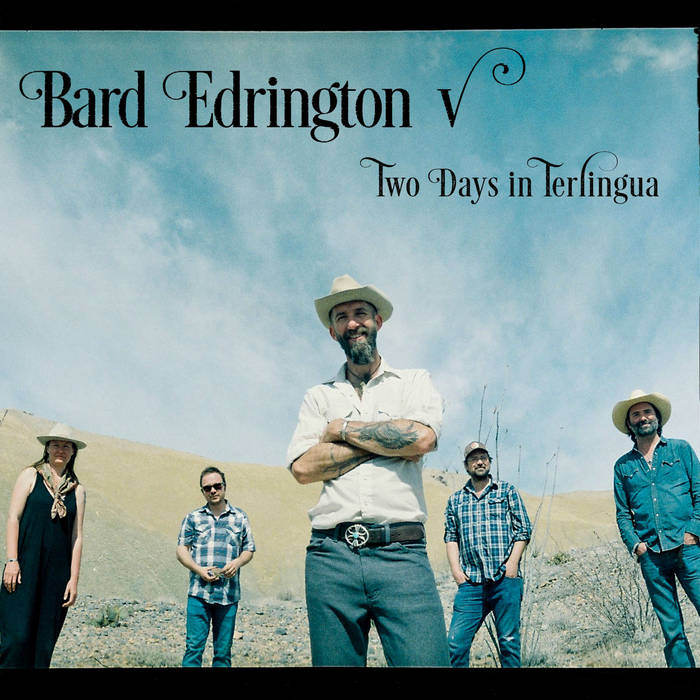
Bard Edrington V. Two Days In Terlingua.

Terlingua, situated in south Texas, might only have a population of 58 but it has featured in movies (including Paris, Texas) and has acquired the title of being Texas’ ghost town. Its abandoned mine works are a tourist attraction for hardy tourists, willing to endure the desert heat and, amidst its parched buildings, there’s a one hundred year old church still standing. This church was the location selected by Bard Edrington V to record this album in as live a manner as he could. The songs were all recorded live in a matter of two days, the band in a circle, playing to each other, no overdubs, the real deal.

Edrington has, over the past couple of years, proved himself to be quite a superior songwriter, both on solo outings and as one half of the Hoth Brothers. Here he excels himself. Having gathered a tremendous set of players to accompany him (Karina Wilson on vocals and violins, brothers Bill  and Jim Palmer on bass and drums, Alex McMahon on pedal steel, banjo and guitar and Zoe Wilcox on backing vocals) he digs deep into traditional American folk themes and comes up with a startling selection of songs. The band meanwhile gel so well it’s difficult to believe that this is a “fly on the wall” recording and, while there are moments which recall the likes of Townes Van Zandt, there are others where the band delve into electric folk blues as practised by The Cowboy Junkies on their acclaimed Trinity Sessions album.

Opening with Ramblin’ Kind, a title which surely nods towards to Hank Williams, Edrington leads the band on a jaunty folk number with twirling fiddle to the fore which introduces a character who seems to haunt much of the album. A drifter – jobs here and there, sleeping rough and prone to wallowing in booze. He’s an American Everyman, down on his luck, and much of the album is about his compatriots and their share of bad luck and struggle. The mood darkens on the grungy Dylan like Property Lines which has Wilson sawing away like Scarlett Rivera as the band plunge into muddy waters, guitars wailing and flailing away to keep from drowning. It’s an epic song and is given an epic treatment.

Similar tales of bad luck and trouble fall into place throughout the album such as on the bittersweet country styling of Shut The Screen Door, the loping country blues of A New Day On The Farm and the stark death rattle of Black Coal Lung. All of these are quite excellent but Edrington tops them with a couple of songs which just about defy description. Nevertheless, here we go. Bard And The Bears is an ancient sounding song of the type we are used to from Michael Hurley. The song scrapes along as Edrington inhabits the flora and fauna of his youth while the band slowly pile in with jagged guitar and an insistent fiddle motif gradually taking over. Strange Balloon meanwhile finds Edrington musing on the night sky and the possibility of life out there, over a quite intoxicating rumble of guitars, fiddle and percussion.

Coming back to earth, Masterpiece Of St. Mark’s Square seems to be an impressionistic painting of some happy times in Venice while Athena’s Gaze is a full blown flowing folk rock number which alludes to the power of ancient Greek myths. A more recent past is visited on Dog Tags 1942, a song written by Edrington’s grandmother about her son going off to war. It’s a fine front porch slice of Appalachian music and it’s followed by the album closer, No Reason, which meanders through its seven minute duration quite wonderfully as Edrington burrows into his very own happy place while the band expertly nudge him along. Their telepathic playing is a Texas equivalent of the groundbreaking sounds conjured by Fairport Convention when they unleashed A Sailor’s Life. It’s a perfect way to close a brilliant album.

Website

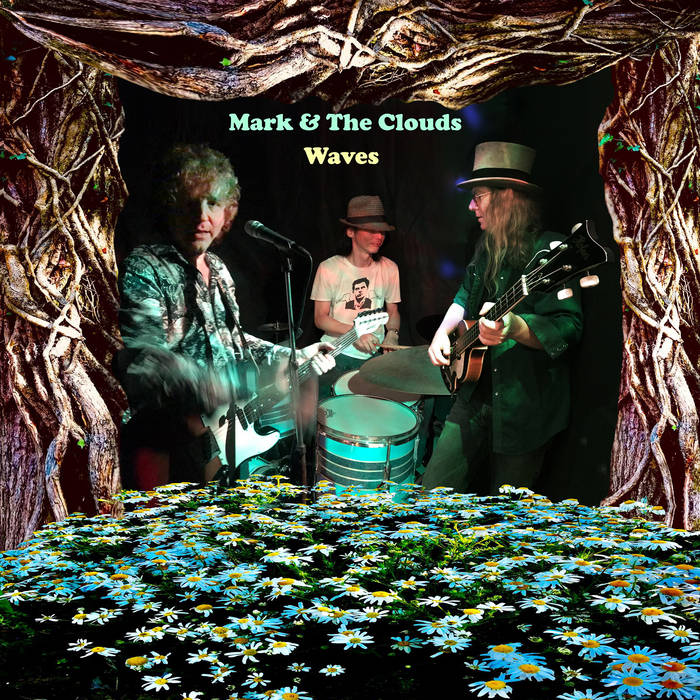
Mark & The Clouds. Waves. Gare du Nord Records

Marco Magnani is an Italian who, since the 90s,’ has been surfing the London neo psychedelic scene. I don’t know too much about this scene but presumably, it’s centred around small pubs populated by folk who buy magazines such as Shindig, in itself, no bad thing. The question here is can Marco (or Mark) cut the mustard on disc so let’s find out.

A basic trio with several guests adding additional colour, Mark & The Clouds kick off the album in fine fashion on the trippy You & Me In Space which reminds one of The Rain Parade’s debut album, a definite plus in this reviewer’s opinion. With guitars which sound like sitars played backwards along with church like organ and cymbal splashes galore, it’s the real deal. It’s the high point (if you get my drift) of the album as thereafter they roam throughout various styles – harmonic psych pop, pastoral revelries and beat freak all feature. Overall they manage to satisfy that sixth sense which most folk who experienced either the first wave of psychedelia, the so called Paisley Underground or the new wave of psychedelic rock (hands up if you own a copy of A Splash of Colour) have.

So, take your pick from the floating vocals and swooning guitars of Free Me Now, the acoustic tapestry of the title song or the punchy San Francisco punk of Peace Not Religion for a quick fix, and then relax amidst the cosmic strains of Back In Time and the harmonies of The Same Old Dream. These are all quite fine in their own right and the band are quite acute in their recall of classic psychedelic pop. Ultimately however, they never match that tremendous opening song although the closing galloping guitar epic, Somebody Else, has the makings of a great live favourite.

Website

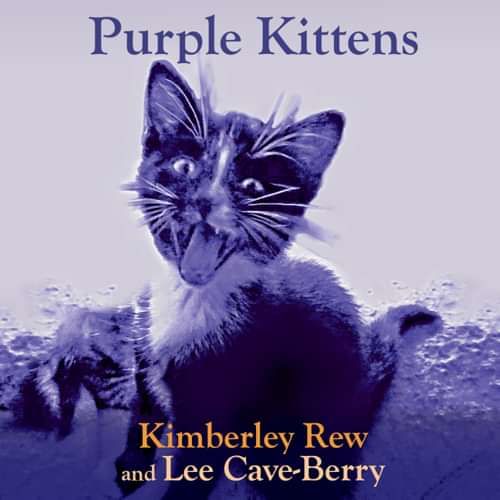
Kimberley Rew and Lee Cave-Berry. Purple Kittens

Purple Kittens is the latest album from ex Soft Boys/Katrina & The Waves Kimberley Rew and his partner, Lee Cave Berry and, as expected, it’s packed with excellent songs and some really groovy guitar. The latter is apparent from the off as Rew corkscrews some tremendous soloing into the album’s opening track, Penny The Ragman. On a song which is as quintessentially English as The Kinks’ Village Green Preservation Society, Rew celebrates a relative who was the cornerstone of her village’s social life and imbues it with a tremendous sense of mid sixties rock with its freak beat ending.

There’s much of the album which recalls earlier days. The flute which warbles amidst the slow-burn groove of Wrong Song recalls Traffic and Raspberry Ripple Ice Cream, with its circular riff and repetitive lyrics, is Rew’s attempt to emulate early sixties dance crazes which were often, for some reason, named after food or drink. I’m not too sure if you could actually dance to this as there’s a lengthy guitar solo, seemingly beamed  in from Mars, midway, but it certainly rips and roars and, who knows, it might be, right now, a dance hit in a Martian night club as they probably have different moves. Lee Cave Berry leans into this retro love as she lays out I Can Be Any Woman which was apparently inspired by her love of early Star Trek and which finds her in a sultry Eastern mood. Fittingly, here the band hit the Orient with Carnatic guitar and modalities, meandering into Donovan territory (without the tweeness) while Cave-Berry comes across as a less menacing Grace Slick. Digging in to his own past, Rew also unleashes a rabid cover of that Soft Boys staple, Kingdom Of Love with his guitar unearthing new sonic possibilities excavated from the original.

Elsewhere, the pair can delve into folk as on Too Much Love or pet loving whimsy on Unsatisfactory Cats while Growing Up Song is an acute and tenderly delivered rumination on the perils of instant digital gratification as “enjoyed” by the kids of today. Speaking of the kids of today, there’s a song here which speaks to recent losses due to covid. Black Ribbon is a gnarly rock’n’roll roustabout based on lyrics written by the grand kids of a friend of the duo who had succumbed to Covid. The words describe their grand dad well and Rew and Cave-Berry hopefully do them proud on this rendition. It is a homely element in this swell collection of songs which deserves to be heard far and wide as Rew and Cave-Berry continue to carve their idiosyncratic career.

Website