Just as we’re on the cusp of getting back to see real live musicians playing real live gigs in real live spaces, along comes an album which packs all the punch of being at a live concert, an immersive and revitalising dive into what was described as a “ragged, sweaty and emotional performance, caught on tape.” Recorded in Asturias, Spain in 2018, Los Campeones En Vivo captures Danny Wilson and his band of Champs at the top of their form and shows their progress since their previous live recording which was captured in 2014.
The set list leans heavily on the band’s two last studio albums, What Kind Of Love and Brilliant Light, two albums which found them inhabiting more of a country soul world than their previous releases. Memories of seeing them around this time allowed that they were akin to seeing a soul revue and that’s confirmed here, especially when they stretch out on a 12-minute rendition of You’ll Remember Me with Danny cajoling and seducing the audience wonderfully as the band go all Stax-Volt on us.
From the off, it’s clear that the band are champing (sorry) at the bit to be set loose. A tumultuous torrent of guitars and percussion is the curtain opener for Let The Water Wash Over You (Don’t You Know) which is turbo charged in relation to its studio version. It’s followed by an another tsunami of noise introducing Consider Me, another song which here flexes its muscles, throwing sand in the eyes of the recorded version. By now, one is getting an idea that the band are on fire on this occasion and there are moments which are quite astonishing such as the breath taking close to Coley Point where they come across like a threshing machine driven by thunderous percussion and Paul Lush’s wailing guitar.
There is space for some old favourites such as (Never Stop Building) That Old Space Rocket, Every Beat Of My Heart and Restless Feet along with Brothers In The Night – here delivered with a hefty dollop of Sweet Jane stirred in. But overall, the two discs here are a perfect capture of a thoroughly road tested band, proud of their whole catalogue and enjoying showing it off. The sound is excellent while there is some humour to be found in Danny’s mixture of Essex and Spanglish in between songs while bassist Chris Clarke is allowed to show off his command of the language (which consists of gracias and cerveza). Best of all is the sense that as the songs progress we are hearing an unedited live set, which captures the excitement of the night. A storming version of Clear Water is followed by a farewell rendition of (Never Stop Building) That Old Space Rocket after which the audience shout for more. What they get is a rollicking Faces’ like knees up on Everything We Need with Tom Collison’s keyboards rocking the joint before they launch into a sinewy Little Feat like delivery of Long Distance Tears. An anthemic Restless Feet, Danny Champ’s paean to restless heroes and, well, rock’n’roll, closes the set with the crowd singing along and Danny urging them to have a few beers with the band once they’re off the stage. A brilliant close to one of the best live albums we’ve heard in a long time.
As the press release reminds us, Blabber’n’Smoke once described MG Boulter as the poet laureate of the Thames estuary, a land of faded glory and tattered seaside resorts. Boulter has sung about this Essex coastline, its history and characters over his career, be it within the muscular strokes of his band, The Lucky Strikes, or on his mellower and pastoral solo recordings. Clifftown finds him focussing on a mythical resort, almost certainly based on his home town of Southend On Sea, but which could stand for just about any faded seaside town in this blighted nation. Promenades trading on past glories, dependent on tourists and good weather and deserted in winter months, a Martin Parr photo essay in song.
Although Boulter is singing about decline, the album is a joyous delight. His airy voice has never sounded better and he has assembled a top-flight notch of musicians who give wing to the songs. Together they weave a glorious concoction of sounds ranging from whimsical folk sounds and bed sit ruminations to elaborately arranged anthems and even one chunk of rock’n’roll. Throughout the album, Boulter breathes life into his cast of characters while Clifftown glowers balefully behind them. Midway through the disc, a song, The Slow Decline, is perhaps the exemplar here as Boulter remembers a woman who dreamed of being a star only to end up singing in a seaside show. Her failed dream is then followed by his mention of “corner bums sleeping under the archways tonight” accompanied by a sardonic lyrical steal from The Loving Spoonful’s Summer In The City.
Opening with the winsome Midnight Movies, Boulter immediately offers a sense of nostalgia as he summons up a tale of late adolescence seeking excitement in rain swept neon lit streets despite the inherent dangers. Soft White Belly then clamours in with some raucous guitar charging away as Boulter initially observes an old lady feeding arcade slot machines , comparing her limited horizons to his adventures abroad before the song culminates in a glimpse of more ancient grandeurs. Here, memories, Boutler suggests, are as malleable as history and subject to the whims of whoever wrote that history. More down to earth, the title song is almost like a “fly on the wall” documentary as Boulter observes the exodus of youths from their dreary Clifftown lifes (the Co-Op is the only shop open on a Sunday), enticed by the nearby gateway to the world, London town. There are those who choose to remain however and Fan Of The Band is delivered from the perspective of one who wasn’t enticed by the bright lights but who remembers the heyday of Canvey Island rock’n’roll – a salute to a survivor and his memories which he is happy to share over a pint or two.
Hugely enjoyable is The Author Of All Things, She Speaks, with its audacious and wonderfully performed arrangement. Flighty guitars and bustling percussion drive this glorious song which finds Boulter in a transcendental bind. Meanwhile, Nights At The Aquarium finds Boulter in territory not dissimilar to that of Blue Rose Code, a band he has played with in the past as, with a fine sense of wearied acceptance, Boulter sums up the hum drum routine of life in Clifftown, enlivened only by aqua blue dreams. It’s quite hypnotic in its limpid delivery and there’s more of that in the closing song, Pilate. Recorded back in 2016 for the fledging Hudson Records, it closes the album on a high note with its fluttering strings, gentle waves of percussion and occasional guitar murmurings.
If you have a chance, listen to MG Boulter talking about the album and some of the history of Southend On Sea with his label mate, Jenny Sturgeon via this podcast while he offers his very own guide to Clifftown here.
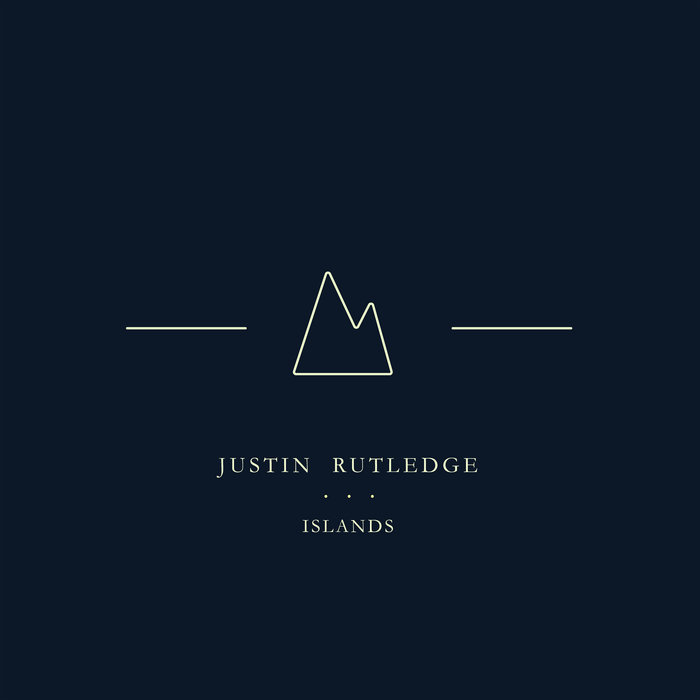
Canada’s Justin Rutledge’s latest album is like a gift to his fans. A lockdown album conceived before lockdown, it features Rutledge plucking songs from his back catalogue and delivering them in appealing stripped back versions, the main instruments here being his voice and guitar. Recorded in three days in early 2020 it has a warm and immersive feel to it with echo and reverb used to great effect, the songs ringing loud and clear while additional sounds, especially some sublime electric guitar warblings, add some heft to the overall yearning.
With most of the songs hovering around the five-minute mark, the album allows for a fine wallow in Rutledge’s bruised thoughts, the only upbeat moment coming at the end of the disc with Rutledge’s echoed voices singing the audience favourite, Jellybean, the first time that he’s recorded it actually. The remaining songs are much more introspective and the opening song, Come Summertime, is one of the starker deliveries here. Nonetheless, it sets the stall out for what is to come as it steadily builds in grandeur as piano and grave electric guitar kick in. Good Man is more folk like in its structure as Rutledge hymns a troubled soul while the mournful This Is War is an icy dissection of frozen relationships with appropriate arctic blasts of ambient sounds. Out Of The Woods is another chilly song with its references to snow but is more remarkable for its gusts of gutsy guitar which bellow and growl however Rutledge then warms us up with the wonderfully relaxed Federal Mail which retains its Ry Cooder like bar room lilt but is here delivered as an instrumental.
There is one cover song here as Rutledge takes on a song by the Canadian band, The Tragically Hip. Nautical Disaster was written by the late Gord Downie whose death in 2017 was widely felt in Canada. Rutledge strips the song of its rock bombast, transforming it into a chilling elegy for drowned souls. . The standout song on the album however is the finely crafted Alberta Breeze which has a touch of Dylan in its delivery and Van Morrison in its lyrics.
Jack Law is a bit of an unsung veteran of Scots music. Way back in the 70’s he was a member of Greenmantle, a band who shared a stage (including the infamous Green’s Playhouse, later The Apollo) with the likes of Billy Connolly, Gallagher and Lyle, Donovan and even Wishbone Ash. Greenmantle ended in 1976 but Law retained his interest in music and began recording again with a reformed Greenmantle and a new outfit, Raging Twilight, in the 2010’s, accompanied by a successful return to the stage.
Like many of his peers, Law wrote his songs through a prism of American music – Dylan and late 60’s LA Canyon especially – while basing many of his later recordings on his own trips to the States. He describes himself as a storyteller but, with the onset of Corona virus and the resultant lockdown, he found that he was drawn to writing about more inner journeys. As he says of the pandemic, “Small things became larger… our past has become the focus of our attention, remodelling and reshaping our understanding.”
Recording at home, Law has embarked on a series of more personal and introspective songs which he plans to release in instalments over the coming months. Shock Of The Blue is the first of these offerings, a three song EP which, to our mind, contains his best songs to date. Playing guitars and bass, with keyboards on one song by Duncan Sloan, Law comes across as a seasoned and wise troubadour, wandering through his thoughts and his past.
Lonesome Avenue trickles out – bedecked with piano, organ and some sly guitar licks – for all the world like a mournful Rolling Stones ballad from their glory days, while Law’s wearied voice comes across in a similar manner to that of grizzled rock’n’roll veteran, Ian Hunter. It’s quite wonderful, poignant and full of regret. Down From The Hill finds Law utilising his home studio set up to great effect. A rudimentary percussive backing (which is somewhat wayward at times) is appealingly naive and sits wonderfully behind Law’s labyrinthine thickets of guitars and sound effects which give the song a slight psychedelic edge, an edge amplified by the vocal effects which recall the whimsy of Syd Barrett.
There’s a definite whiff of nostalgia in both of those songs and the final number, Love, Lies, Bleeding is no different. Here, Law returns to his original roots in the 60’s when he and his peers were picking up on the mantle of Dylan and the folk revival. Part talking blues, part poetic, the song manages to accomplish the difficult task of sounding as if it could have been performed by the original Incredible String Band or Rab Noakes, had they been given a very advanced copy of Dylan’s Blood On The Tracks. It does portray its origins, but it’s performed magnificently and is a fine closer to a grand little release and we look forward to hearing the next instalment.
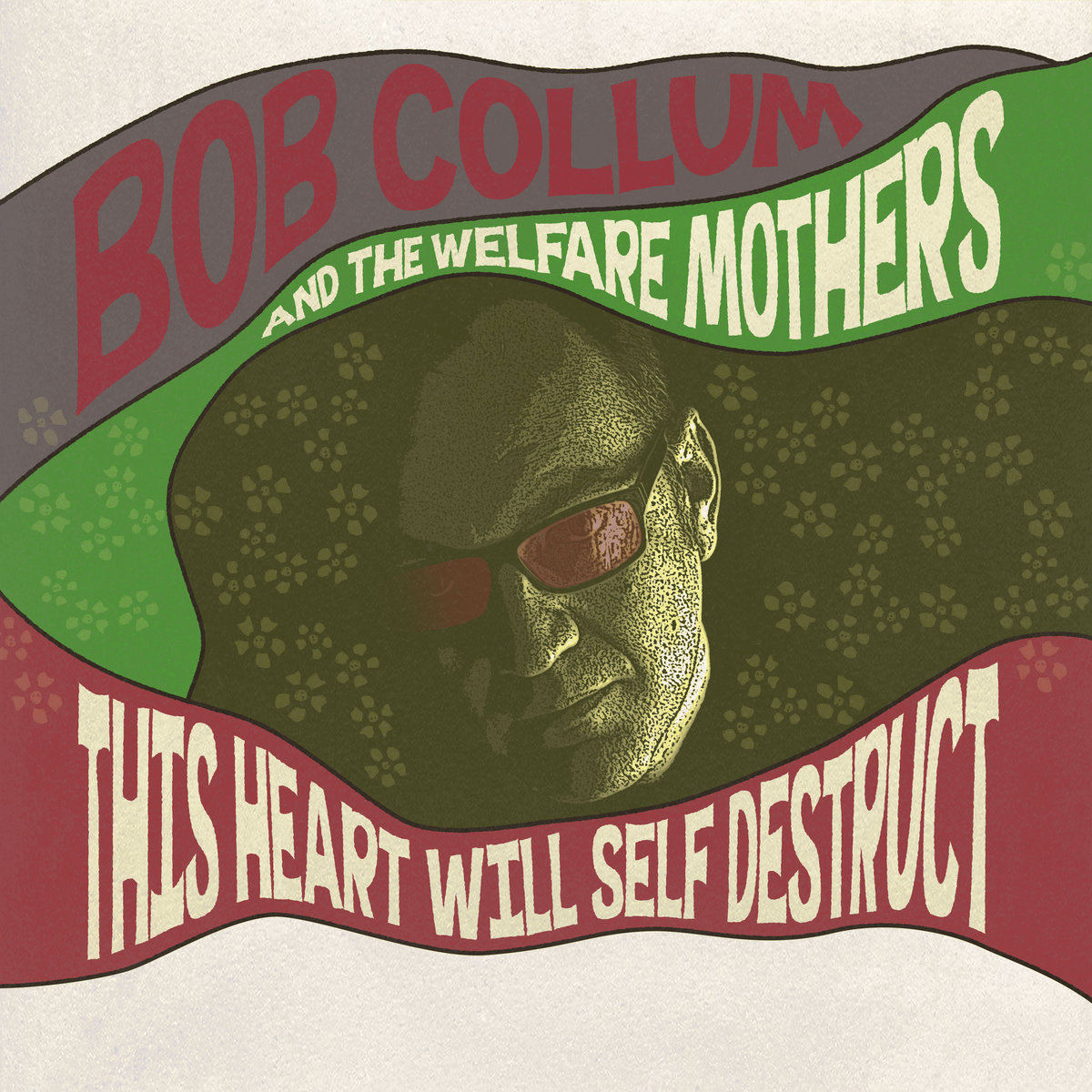
Last time Blabber’n’Smoke encountered Bob Collum, born in Oklahoma and now based in Essex, we remarked on his similarity to the pioneering efforts of bands such as Roogalator, The Kursall Flyers and others who paved the way for the likes of Elvis Costello and Nick Lowe. This Heart Will Self Destruct retains elements of his affinity with those heady days of proto UK country rock roots music, but adds a healthy dash of more country flavoured numbers and Bob Wills’ styled Western Swing.
There’s a fine and gentle introduction to the album as Parachute glides in with a foot-tapping country rock sway, enlivened by Mags Layton’s fiddle break. Guest guitarist, Martin Belmont, adds some delicious licks towards the end of a song which is quite a palate cleanser. Another guest, this time Peter Holsapple, is on fine and funky form on B3 Hammond organ adding a Garth Hudson like presence to the slinky soul of Spare Me, one of the album’s highlights. Tall Glass Of Muddy Water is up next and it’s another standout as Collum and the band vamp their way through a song which variously recalls chain gang work songs, New Orleans voodoo hoodoo and good old fashioned film noir menace.
A raucous and hugely enjoyable romp through Leiber & Stoller’s Saved allows the band to let their hair down before they launch into a darker theme on From Birmingham. It’s a fulsome country tearjerker song with weeping fiddle and mournful accordion leading the way as Collum sings of a frustrated love affair and more of this on future recordings would be greatly appreciated. As it is, the remainder of the album returns to more upbeat tempos with the title song reviving the toe taps of the opening number while Giving Up is perhaps the song best suited here to sum up Collum’s ability to update the nervy new wave approach to country music. And just as those ex hippies tucked into skinny jeans matured and perfected their craft, two songs towards the end of the album allow Collum and the band to show how well they manage their version of country rock. Second Fiddle comes out of the country gate, approaching rock with its muscular rhythm section while sounding for all the while as if it were a song by The Nitty Gritty Dirt Band while Shake It Loose is a hip swaying dance song with twang guitar duelling with Layton’s excellent fiddle playing.
It’s been a while since we heard from Son Of The Velvet Rat, the intriguingly named duo of Georg Altziebler and Heike Binder, originally from Austria, but ensconced in the Mojave Desert’s Joshua Tree for several years. Their 2017 album Dorado was a fine set of noirish (and beautifully sluggish) songs which transported a European sense of faded grandeur into a gothic American landscape with hints of The Walkabouts and The Handsome Family allied to visions of David Lynch movies.
Solitary Company finds the pair digging deeper into their new American roots while retaining a foothold in the old country. They open with Alicia, a song which recalls Leonard Cohen, both in its arrangement and its lyrics as Altziebler’s wizened voice intones, “I’m the paint brush, not the painter…I am just the singer not the song” – a more Cohen like set of words we’ve yet to hear. The title track follows and immediately we’re in deeper territory as the dense arrangement (including hammered piano, glockenspiel, violin and viola) is hypnotic and bewildering with the band sounding as if they were Calexico suffering from an attack of the bends having dived too deep. Calexico come to mind again on the whistled intro to Stardust but, as the band rattle on, it’s more the dry and dusty desert rock of the much-missed Thin White Rope which is the template here. Whatever, it’s a full throttled driving rock song and they repeat this later on when the funky beats of Beautiful Disarray heave into view. Borne aloft by some tremendous organ and harmonica interplay, this could be a hit on a hip radio station with its sinuous savvy.
Altzbeiber’s voice is well worn and not a million years away from that of Bob Dylan’s these days and as such it’s difficult not to imagine some of the songs here as being drawn from the same well as Dylan sucked from on Rough And Rowdy Ways, albeit with a fuller musical palette. When The Lights Go Down is a twilight song to delight with lonesome harmonica, slow shuffling beat and guttural guitar grunts, as Altzbeiber creates a wonderful crepuscular world. Remember Me limps along wonderfully with Binder conjuring some amazingly atmospheric sounds from her assorted keyboards while 11 & 9 (the date of Altzbeiber’s and Binder’s wedding) draws also from Dylan although here it’s more akin to his New Morning period. All in all, Solitary Company deserves a listen from anyone interested in a kaleidoscopic immersion into Americana’s hinterlands.
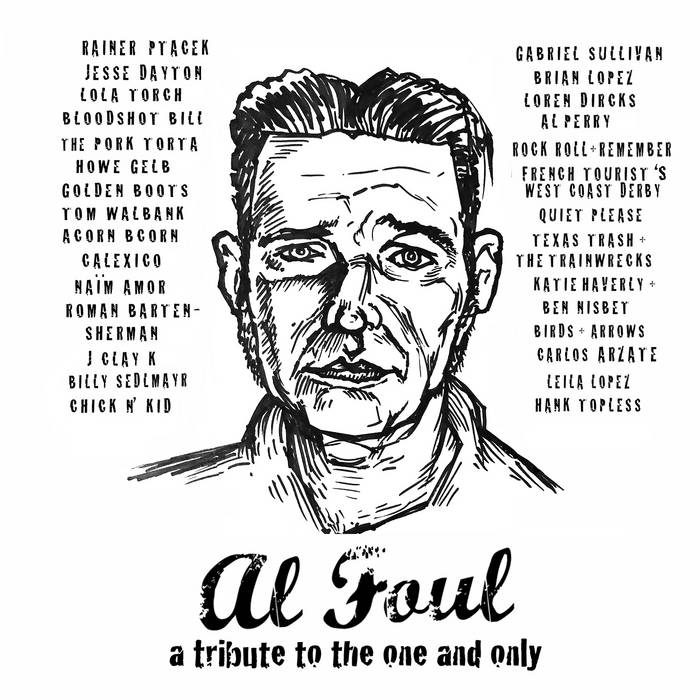
While it doesn’t get the acclaim afforded to Nashville, Arizona’s Tucson is home to a vibrant musical community and has been the launch point for a host of Blabber’n’Smoke favourites including Giant Sand, Rainer Ptacek, Calexico and, more recently, XIXA. We were intrigued therefore when we heard of a new collection of songs recorded by a host of Tucson musicians in order to raise funds for Al Foul, a local legend, who was recently diagnosed with cancer and faced a hefty bill for medical treatment.
Al Foul – A Tribute To The One And Only is a digital album available from Bandcamp and features 29 songs, most written by Foul, performed by familiar names such as Howe Gelb, Jesse Dayton, Calexico, Kid Congo Powers and Gabriel Sullivan, along with a variety of acts previously unknown to us. While all were recorded in the past few weeks, there is also the poignant presence of a performance by Rainer Ptacek who succumbed to a brain cancer back in 1997.
Al Foul himself has been a fixture of Tucson’s music scene since moving there from Boston in the late 1990’s, playing in a rockabilly/ hard country style, often as a one man band. Like many US musicians, he also has a loyal following in some European countries, in particular France. When he disclosed his diagnosis recently, Tom Walbank, a friend and, like Foul, an immigrant to Tucson where he has established himself as a blues artist, reached out to fellow artists and began collecting the songs which make up the album. Local studios (including Gabriel Sullivan’s Dust + Stone and Jim Waters’ Waterworks) opened their doors and donated free time to record while Walbank comments, “I realized that because it’s a pandemic, not everyone wants to go to the studio and not everyone had a home studio, so it was a little tricky. So there are some songs which are done very intimate on iPhones and stuff like that.”
One of the many musicians contributing is Naim Amor who appears on two songs. French born, Amor relocated to Tucson in 1997 and he has since released several solo albums and soundtracks and has also played live with and appeared on record with too many acts to mention here. He has had a long association with Foul and he was happy to talk to Blabber’n’Smoke to support the tribute album’s release. First off, we asked him about Al as he’s not that well known over here in the UK.
Al’s originally from Boston, he moved to Tucson as a young adult. Although I’m not sure of the year, it was around the time I moved out here so he has been part of the Tucson music scene since the early 90’s. He is known a bit in France because of particular connections and friends. He can go to France and actually make money, he never had any offers in the UK that would make it worthwhile. Al plays as a one-man band, it largely depends on budget… he could have a bass player or a guitar player or both. Sometimes it’s a four piece band with drums. I have been Al’s friend since the late 90’s and started playing with him in the mid 2000’s. I also recorded several of his albums.
You appear on two songs on the album. Where did you record them given Tom Walbank’s comments on the general rush, in the midst of a pandemic, to get the recordings done?
I have a recording studio on my own that is located at Jim Waters studio (Waterworks). We have lots of space here, lots of studios.
Your first appearance is with Lola Torch on Shitty Little World. From what I’ve read about Al it seems somewhat autobiographical and his original is very like Johnny Cash singing a Shel Silverstein song but I love the way you and Lola perform it. How did that come about?
Lola is a friend. She is a singer, a burlesque performer and a seamstress (Hi Tiger Lingerie). She wanted to do that song, but she had no plans on how to do it as she doesn’t play any musical instruments. I immediately thought about a song which we quite often cover together “ Is That All There Is “ by Peggy Lee. I thought we could give Al’s song the same treatment and that worked out nicely. We thought about changing the person singing to a “He” instead of “I,” given it’s the story of a boy. But Lola decided to keep it in its original gender which in turn bends the gender in a surprisingly very natural way.
You also perform Flying Saucer with Thoger Lund and John Convertino. Why did you choose this song?
Well, there’s a limited number of songs and they had to be recorded pretty quick. But I always loved that song, I can give it a bit of a swing feel, jazz it up. It’s also a sweet song that is so typical of Al’s humor.
I was quite impressed by the wealth of collaboration on show on the album. Is Tucson the kind of place where all the music acts know each other and there’s a lot of cross-fertilization in terms of playing together?
Definitely! It’s not a really big city, but it’s an American city, 1 million people. However, the music community feels like a village. Lot’s of people play in different bands. It ends up creating a culture of how things happen, how people work.
On that note, how is the music community in Tucson coping with Covid and how have you been spending your time?
There’s no live music so people record, practice, start new projects. That’s my case, I have been practicing guitar like crazy and working with my jazz Trio, I learned and memorized nearly 90 jazz standards. We play in backyard. I also recorded an album with John Convertino last summer (Correspondents) that was released in Japan in the fall. Shaun Hendry is talking about putting it out in the UK on vinyl. I’m currently recording a project with Kid Congo Powers, a “rockabilly/drum machines” kind of thing.
Both of Naim’s contributions to the album are pretty swell but the same can be said of all 29 songs, all of which point to Foul being quite a pointed and direct songwriter. There’s delta blues, rockabilly, country and swamp rock and a good dose of Tucson idiosyncrasy. The album is available for the measly sum of Ten Dollars on Bandcamp and all proceeds go towards Al Foul’s medical expenses. We’ll leave the final words to Foul himself.
“The thought of everyone getting together to produce this tribute for me is beyond touching. Often people share negative memes on social media or express the attitude that choosing to be a working musician is some form of folly or a loser’s game…driving to the ends of the earth for nothing. But the outpouring of love I have received proves to me, that is absolutely wrong. Now I see that thirty years of playing music has left me with something so absolutely pure, beautiful, and beyond priceless that I will never see the craft the same way. I am so humbled by the love that I feel now. Those words ring true more every day.”
Al Foul – A Tribute To The One And Only is available here.
Here’s Al Foul singing Shitty Little World
And here’s the version by Lola Torch and Naim Amor
A short while ago, Blabber’n’Smoke praised Set Your Sights Towards The Sun, a delightful album from The Lost Doves, a collaboration between Ian M Bailey and Charlotte Newman. Now we have to hand an EP recorded by Bailey and which snuck out in January. The title suggests that Bailey still has his controls set for the heart of the sun, not in a Pink Floyd context, but delving ever deeper in the sun infused pop and rock of California in the ‘60s and early ‘70s.
As with Set Your Sights, Bailey has worked in collaboration with another musician, in this case Glasgow’s Daniel Wylie, ex of Cosmic Rough Riders and no slouch himself when it comes to delivering sun speckled jangly rock. While it’s Bailey who sings and plays all the instruments on the four songs here, all are co-authored with Wylie, with Bailey giving Wylie credit for the initial seeds which eventually flourished into what we can hear now.
Unabashedly retro and with 12 string Rickenbacker often to the fore, the songs here are genuine nuggets, although there is enough variety on show to enable each one to stand alone. The opening track, Take It Or Leave It, has its chiming 12-string surge but is also adorned with piping organ providing brass like flourishes allowing for a kind of melange of baroque pop and new wave energy. What’s happening Now is much more mellow as it floats along with an ethereal air, recalling elements of David Crosby circa Younger Than Yesterday with Bailey adding a lovely backwards sounding guitar solo midway. His three part harmonies here are spot on and, in a blindfold test, it would be hard not to consider this a long lost ‘60s gem.
Slow Down River packs more of a punch as it zips along, recalling the likes of Teenage Fanclub or Dropkick in its zest and handclapping propulsion but it kind of pales in comparison to its companions, especially the excellent closing number. Everything Will Be Alright gathers together much of what made early ‘70s LA rock so popular and in particular, it hones in on a band, America, who were initially considered copyists even back then with their Neil Young sound-alike songs. Hitching a lift on Ventura Highway, Bailey positively glides along this sun blissed two-lane blacktop with joyous inspiration.
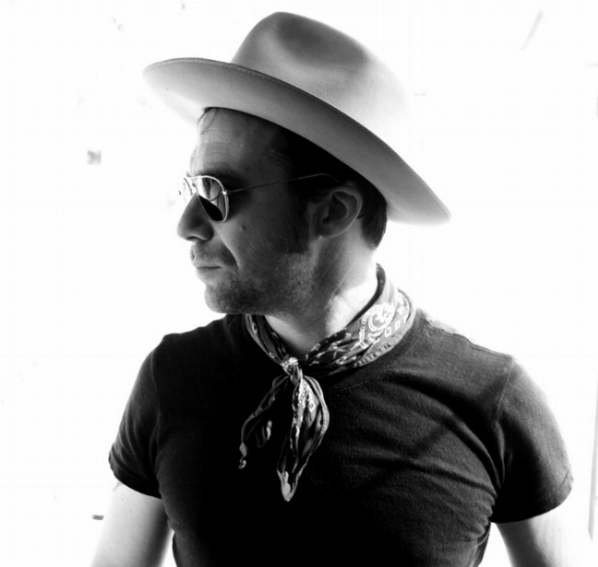
This immensely talented and hugely enjoyable trio are a timely reminder of the recuperative powers of music. Tell Me How You Feel, the Hoth Brothers Band‘s second album, is not only a joy to listen to but leaves the listener in a much better place after listening, kind of like a back porch Zen session. It’s string band music – acoustic guitars, banjo, mandolin, double bass all to the fore, along with occasional percussion and some very impressive harmony singing. It’s also old time music despite all but one of the songs being written by band members Boris McCutcheon and Bard Edrington V. Absent from the writing credits but as much of a brother as her bandmates is Sarah Ferrell whose bass playing is impressive and who contributes hugely to the vocal interplay.
Hailing from New Mexico, the trio have been known to describe their music as “Salt Cured New Mexicana,” a term which works for us. Fittingly the album closes with a tribute to the late New Mexican songwriter Lewie Wickham on a cover of his autobiographical song, Rough Ragged Edge. Beautifully delivered on guitar and mandolin, the song evokes the old wild western spirit of this rugged landscape. However, while New Mexico pulsates throughout the album the trio roam freely throughout the States in various styles including acoustic blues, Appalachia and Child ballads while evoking memories of acts such as The Carter Family and The Band.
Just as New Mexico is the setting for the closing song, they open with another paean for the wide open spaces of their home state on Judith, which tells the tale of a New Mexico artist living in a mountain village who refuses to go to the city to be cared for when she falls ill. It’s a breezy introduction to the album, a wonderful ripple of acoustic instruments and Carter Family like harmonies and it nails firmly to the mast, the Hoth’s preferences for the wide open spaces where “every day is a holy day,” as opposed to a place where “people wearing dark clothes, looking down, (are) running to the subways underground.” The joys of nature and sunshine are evident in the delightfully delicate Cliff Fendler and the old time jollity of Honeyguide but the magnificent country rock of Slickhorn has a much more elemental feel coursing through its veins. Here the band sing of the rocks and canyons and mystery of the ancient Anasazi settlement of Slickhorn canyon in the Cedar Mesa with the same depth of feeling and sense of history one remembers from The Band.
Whether they are delivering a dust bowl ballad on Poor Man’s Light, recalling the river men of the frontier on Sam Hill or kicking up some Texas dust on the waltz time Dyin’ For Diane, the trio are ever impressive and the songs a delight. Ferrell has an opportunity to sing lead on Wilding Of Robby which is a prelude of sorts to the band’s outlaw ballad, Wild Robby, which appeared on their first album and which should surely point to her getting more opportunities to sing lead as the band progress. Elsewhere, Passage is a haunting and pataphysical rumination on freedom and fear which recalls John Hartford in its gentle delivery while Boogieman Mesa is a grand and cantankerous junkyard of jagged folk blues.
Finally, just as on their first album, Workin’ And Dreamin’, there is a dash of up to date social commentary. They ragged on Trump back then but on this occasion, their target is the Corona virus. One Hard Rain is delivered acapella, three voices in harmony as they sing of the virus flying over the world like Santa Claus and highlight our precarious position in nature’s pecking order.
Tell Me How You Feel, like its predecessor, is a lengthy album, but its 17 songs flow so well that before you know it, it’s over. That we felt compelled to listen again, not once or twice but oftimes, is a measure of how good this album is. And it is indeed, a solid balm for these troubled times.
When you consider the list of topics which routinely pop up in albums we review, it’s mostly a litany of love stories, often lost love with loneliness and sorrow following in its wake. There’s also plenty of drinking and searching and travelling, highs and lows and sometimes jubilation. Cowboys, cosmic or otherwise, often pop up, but the fate of the American Native tribes is relatively rare, so this album, the second solo release from ex-Pines man, David Huckfelt is a welcome addition to those few we have had occasion to cover.
Huckfelt, a former theology student, already had an interest in “spiritual” themes when he met and became friends with the late John Trudell in 2005. Trudell was a Native American activist, musician and writer and he infused in Huckfelt an appreciation of Native American culture and beliefs, many of which have informed this album. Huckfelt is at pains to say that Room Enough, Time Enough is not a concept album but rather, “a “tribute” to Native history, politics, and spirituality that integrates the “vocabulary of American folk music” with the rich vision of Native life.” In particular, he notes that modern America has lost sight of traditional values as espoused by Native Americans and the immigrants who created American folk music. He treads here in the footsteps of Johnny Cash who released an album inspired by Native American lore, Bitter Tears: Ballads of the American Indian, back in 1964 and it is indeed, bitter, that Native Americans are still under attack by the state over issues such as water rights.
Huckfelt recorded the album in Tucson, close to the traditional territory of the Navajo, their name for that territory giving the album its title. There are familiar names from the Tucson musical community involved, including Howe Gelb, Billy Sedlmayer and Winston Watson from the Giant Sand axis while erstwhile Calexico players, Jon Villa and Connor Gallaher are onboard. Importantly, Huckfelt invited several Native American artists to cement the line up, primarily Keith Secola, who contributes lyrics to several of the songs, Jackie Bird on vocals, and, a major foil of the late Trudell, the Warm Springs Nation Native singer Milton “Quiltman” Sahme whose vocal chants are the most obvious connection to Native American influences.
The album itself is quite exquisite. Huckfelt sets the scene from the off with the mellow Better To See The Face which positively glows with that ambient sound one associates with Daniel Lanois, a glimmer of guitar effects over a sturdy country folk backing with Huckfelt’s deep vocals summoning up nature and spirits. This lambent feel is repeated on several songs such as the cover of Satisfied Mind and especially, on the magnificent Book Of Life, written by Secola and which is the centrepiece of the album, while Land of Room Enough, Time Enough is a Dylan like epic with a pedal steel solo and is quite cosmic. Dylan’s shadow can be glimpsed again in the tangled guitars and Gypsy violin of Gambler’s Dharma and his forebear, Woody Guthrie, comes to mind on the frontier tale which is Cole Younger where Huckfelt shares vocals with Billy Sedlmayer whose voice sounds as old as the hills. The old west also features on a grand take of Bury Me Not On The Lone Prairie which bustles with the cinematic grandeur of Calexico at their best, guttural guitars and soaring horns all in place while Journey To The Spirit World is a fine slice of unhinged desert rock
Lyrically, Huckfelt cleaves close to themes regarding the environment and the ancient tribal beliefs throughout the album but his dedication to a Native American philosophy is most clearly pronounced towards the end of the album. He covers Patti Smith’s Ghost Dance, a song inspired by the Lakota Sioux rebellion of the 1890s, and which, with Quiltman’s chants heavily featured, packs a much more powerful punch than the original. Finally, Calling Thunderbird Blues is a ferocious polemic which recalls John Trudell’s work as it drills into a jagged blues meltdown of distorted guitars, wailing harmonica and, the last voice to be heard on the album, Quiltman, singing for his ancestors.