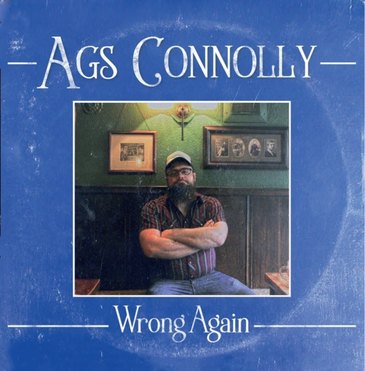
Ags Connolly. Wrong Again. Finstock Music

unnamed-16There’s no doubt really that Ags Connolly is the premier exponent of dyed in the wool traditional country music here in the UK. Since his 2014 debut album, How About Now, he’s carried the flag up and down the country becoming a firm live favourite while he has a growing following in Europe and also across the pond with his latest fan, none other than Tom Russell, singing his praises. Connolly’s allied to the Ameripolitan movement, helmed by Dale Watson, which champions traditional country as opposed to the pop acts who were taking over Music Row a few years back. There’s been some hope recently that the tide is turning as traditional acts such as Sturgill Simpson (initially), Tyler Childers, Joshua Hedley and, most recently, Jason James are becoming more prominent and, if that’s the case, then Connolly is perfectly placed to ride this wave.

Wrong Again won’t surprise anyone familiar to Connolly’s music. There’s the usual bucketful of tears and beers sad songs, all excellently delivered. Then And Now is essentially just Connolly and his guitar and it’s no exaggeration to say that this sounds like a long lost George Jones number as Connolly’s voice tugs at the heartstrings. In a similar manner, although with fiddle and pedal steel woven into a full band sound, The Meaning Of The Word is honky tonk perfection as is Wrong Again (You Lose A Life). Meanwhile, there’s a hint of the outlaw country of Waylon Jennings in the driving What Were You Going To Do About It with plenty of twang guitar along with swell pedal steel from Joe Harvey- Whyte (who plays a blinder throughout the album).

The Maverick’s accordionist, Michael Guerra, appeared on Connolly’s last album and he reappears here as Connolly delves into Tex-Mex on several songs. The opening number, I’ll Say When, sways with an intoxicating, south of the border, blend of exotic rhythm, liquid guitar and accordion as Connolly finds himself in yet another bar, surviving day to day in this foreign clime. On Say It Out Loud, Connolly magically transports miles of driving in his dearly departed Honda Civic from the M1 to Interstate 10 as he recalls passengers including a fellow troubadour down on his luck and a femme fatale of sorts. Finally, there’s the magnificent Lonely Nights in Austin , a song bathed in pathos with Guerra squeezing all the emotion he can out of his accordion.

Connolly throws in a cover of Gordon Lightfoot’s Early Morning Rain which fits into the album’s general sense of loss and sorrow. It’s a grand version with some excellent fiddle playing but its familiarity kind of makes it stick out like a sore thumb here especially as it’s much more folky than the surrounding numbers. However, he wraps the album up with what is possibly the most upbeat number he has recorded so far as Sad Songs Forever rides along with a powerful western swing element to it with jazz guitar licks, lyrical pedal steel and sawing fiddle all adding up to a grand finale.
website

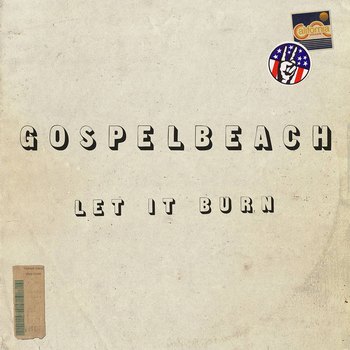
GospelbeacH. Let It Burn. Alive Natural Sound

a1627587888_16Let It Burn, GospelbeacH’s fourth album, is a thing of beauty tinged with incredible sadness. Shortly before its release, Neal Casal, who had recently rejoined the band, took his own life, a fact which can’t be ignored as one listens to the album. The opening number, Bad Habits, rams this home as the band sway through this sad ballad which is blessed with a beautifully realised and lyrical guitar solo while the lyrics, unintentionally of course, could serve as an epitaph for a troubled mind.
Casal had played on Gospelbeach’s first album but, with a finger in many pies, had only recently come back to the fold for the recording of Let It Burn. His presence is but one aspect here which allows one to suggest that the album is the best so far from Brent Rademaker’s reimagined California cosmic crew. There’s still plenty of punchy power pop and rock as evidenced on the excellent Tom Petty groove of Dark Angel, the snarling blend of new wave punk and west coast rock of I’m So High, and the organ swelled barrelhouse roustabout of Nothing Ever Changes while the closing song, Hoarder, slinks and shimmies with a Little Feat like sinuosity. Much of the album however is more considered and introspective with less of the jingle jangle as Rademaker and fellow songwriter, Trevor Beld Jiminez, delve into darker territory.

Good Kid is a badlands narrative delivered with a Steely Dan like flow but the meat of the disc is in three songs tucked away in the middle of the album. Baby (It’s All Your Fault) and Get It All Back are infused with the melancholic pop sensibility of Alex Chilton back in his Big Star days. The former has some wonderful guitar moments, George Harrison like slide alongside pedal steel, while the latter glides gracefully over swathes of mellotron. Fighter cries out with a defiant peal as Rademaker plays the outsider who refuses to lie down. It’s a big production number, swathed in strings with rippling piano and voice effects before closing with another epic guitar solo from Casal, a fitting legacy.

Website


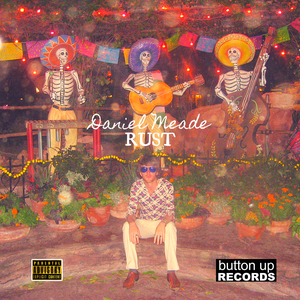
Daniel Meade. Rust. Button Up Records

frontcovervinylGlasgow’s very own “Americana” star, Daniel Meade, returns to the fray with his latest release Rust, an album which finds him moving further away from the countrified songs which populated his breakthrough album, Keep Right Away, which was populated with a bevy of Nashville stars. While songs such as Always Close To Tears prove that Meade is well schooled in the way of honky tonk country, he’s always had more up his sleeve. Having cut his teeth on the rock circuit with his first band, The Ronelles, he moved into rockabilly and old time rock’n’roll with his band The Flying Mules and his cluster of album releases, whether solo or with various band combinations have always had an interesting mix of styles.
Rust follows in the wake of When Was The Last Time, an album on which Meade beefed up his sound, especially on the guitar front, with Townsend like chords and jangly power pop driving the songs. This time around, the guitars, while still in attendance, take second place to Meade’s first love, the piano, with the songs here bashed out at his home on his old joanna and recorded by him and then embellished with overdubs, all played by Meade himself. He says that many of these numbers were either written some time ago or were percolating in his head for a while, just waiting for the right time and circumstances to record them and, having exorcised some demons via the previous album, the time was now right. In addition, Meade has reached back to some of his original influences, rock’n’rollers and writers such as The Proclaimers and Gerry Rafferty and he even delivers several numbers in an unashamed Scots accent.

For a home produced and self-played album, Rust is quite astonishing. There’s layers and layers unfolding on many of the songs. Funny How The World Turns opens with some slick piano, not too far removed from Blue Note cool, before fuzzed guitar and trumpet like arpeggios take us into sixties psychedelia and Dreams Grow On Trees likewise has a warm fuzzy sixties feel to it with its massed voices. Elsewhere, Meade dives into fat sounding rock’n’roll bliss as on the rollicking Same Kind Of Crazy and the roadhouse blues of Another Conversation while the barrelling piano and guitar intro to Fanny Fanny Bang Bang is quite exhilarating. A “nonsense song,” according to Meade, Fanny Fanny Bang Bang is the sort of song which will appeal to anyone who thinks that the finest sentence ever written is, “A-wop-bop-a-loo-bop-a-wop-bam-boom!”

It’s surprising to hear Meade open the album with the bar room piano jaunt Anywhy Anywhere Anyhow which he sings with his Glasgow accent (and vernacular) well to the front. But, with his curt dismissal of much that poses for Americana these days, it’s a fitting curtain opener to some of the preoccupations which populate the album. Meade’s been through the mill and seen the damage done and much of Rust is a farewell to those days. These Things Happen is a joyous song buoyed on parping horns, inspired by Meade’s time on the road with The Proclaimers and the title song is a glorious amalgamation of honky tonk piano and gnarly guitar al la The Stones with an uplifting chorus. Meade nails it however on the one stripped back song here. There’s just his guitar and voice on Workin’ On An Old Song, a manifesto of sorts as he sings “It’s good to run with old ghosts.” It’s comparable to Neil Young’s infamous Borrowed Song in some respects with Meade setting out his wares for all to hear.

Rust is available now and there is an official launch party for the album this week at Glasgow’s Rum Shack. All details here.

Website

My Darling Clementine with Steve Nieve. Country Darkness Vol. 1. Fretstore Records

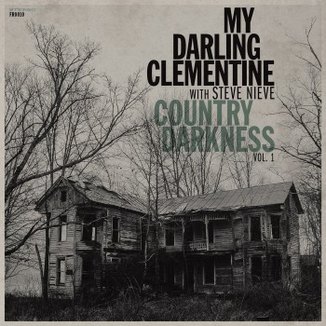
mdc_country-darkness_cover_m-350x350The UK’s foremost country duo, My Darling Clementine, have been delivering their singular take on the popular male/female country duet since 2011. Over the years and with four albums under their belt, the duo, married couple Lou Dalgleish and Michael Weston King, have moved far beyond the affectionate tributes of their first release, How Do You Plead. Their last release, Still Testifying, while maintaining their hard-core love of classic country, had shades of soul and sixties pop in its grooves with the pair’s song writing  having more gravitas, more light and shade to it than when they started out.
Their latest project, as hinted at by the title, might be delving into darker corners of the country psyche but, more surprisingly, it also delves into the psyche of Elvis Costello as My Darling Clementine have taken to leafing through the great man’s songbook in order to record their choice picks. It’s an ongoing project and this four song EP is only the first fruit, but for anyone who, hearing of this, expected to hear a simulation of Costello’s most overtly country album, Almost Blue, prepare to be surprised. This is deep cut territory.

Joining My Darling Clementine on this voyage of Elvis discovery is none other than Steve Nieve, perhaps Costello’s longest serving accomplice. An Attraction and an Imposter, Nieve deservedly gets his name on the sleeve, his playing here a neat link to the originals aside from it being impeccable.

The EP opens with Heart Shaped Bruise, originally on Costello’s The Delivery Man with Emmylou Harris adding her vocals. My Darling Clementine and Nieve strip the original of its bar room country blush to expose its nerves. Nieve’s magnificent piano leads into strings, muted drum rolls and  dramatic vocals which take the song in the direction of mid sixties pop melodrama, The Walker Brothers, Roy Orbison and Dusty Springfield coming to mind. Next up is Stranger In The House, a vintage Costello song dating back to his first album sessions but best known as a duet on a George Jones album. It’s classic Costello country and also classic My Darling Clementine fodder with the added bonus of some delicious keyboard swirlings from Nieve which recall those early Attractions days.

Digging deeper into Costello’s catalogue, My Darling Clementine come up with a Paul McCartney co-write, That Day Is Done. Here they cleave more to Costello’s idea of the song (which he performed with The Fairfield Four) as they delve into gospel soul on a horn-laden powerhouse version. The final song is another co-write, this time with Loretta Lynn, a song which was snuck away on a little known Costello album, Secret, Profane & Sugarcane. I Felt The Chill Before The Winter Came finds Dalgleish given a more prominent role than Lynn on the original while the song is a perfect vehicle for the duo’s trademark duetting.

The frustration here is that the disc has only four songs but it’s a tantalising tease for the remainder of the project. In the meantime, it’s available on vinyl and we should mention here the artwork and design of the sleeve which perfectly captures the mood. In addition, My Darling Clementine have been in the habit of copying the old EMI habit of classifying albums in a “file under” direction on the back sleeve. Here the copy reads, “File Under: Country (Costello Country). A nice touch.

Website

Doghouse Roses. We Are Made Of Light.

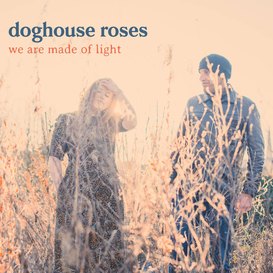
a0481311133_16As winter beckons, it’s just the right time to draw the curtains, stoke the fire and listen to the comforting sounds of Doghouse Roses. One of Scotland’s most acclaimed pairings, Iona MacDonald and Paul Tasker excel in delivering songs which are intimate and warm, MacDonald’s honeyed voice and Tasker’s superb picking skills are just what you’d want to listen to in a perfect folk session in a perfect pub.

We Are Made Of Light, their fourth album, fits this bill just perfectly. While their previous album, Lost Is Not Losing, was a varied affair which even had some rockabilly on it, here the pair build on  the foundations of classic folk rock from years bygone, fitting as the album features several songs which have been in their repertoire for some years but never captured in the studio. Often compared to the likes of Sandy Denny era Fairport Convention along with other luminaries from that era, Doghouse Roses here grasp the bull by the horns and turn in an amazing album which utilises their affinity with those past times while remaining contemporary in much of their subject matter.

While much of the album features just the duo, there are dashes of keyboards, percussion and strings on several numbers. The opening song Low is a gently flowing ballad, garlanded with strings over a sturdy rhythm section with Tasker’s low harmonies buttressing MacDonald’s voice. It’s reminiscent of Richard and Linda Thompson which is no bad thing, sharing that pair’s sense of pathos. Arsenic, their take on climate change, is not only a clarion call regarding this all too important topic but it revisits the spirit of protest from the sixties with the song having a fine west coast vibe to it, a mixture of The Youngbloods and Jefferson Airplane. Their mood darkens on the edgy Why We Fight which is another protest song of sorts but delivered here in a more pugilistic mode, the violins darting and screeching throughout as MacDonald turns in a sterling vocal which, at times, hits the sardonic excellence of Grace Slick. This full band approach reaches its pinnacle on the epic The Reckoning, a glorious conglomeration of percussion and strings, hammering and sawing away, as Tasker frantically picks on his guitar.

Away from the Sturm und Drang of a song such as The Reckoning, MacDonald and Tasker discard the band trappings allowing them to shine as a duo. One More For The Road is loaded with regret and opportunities missed, that next drink never taken, MacDonald’s voice peerless as Tasker performs several excellent acoustic guitar solos. First Of April is a shimmering elegy to the men killed in an infamous helicopter crash off the shores of Aberdeen while Elegy For A Seaside Town, a delightful banjo fuelled outing, recalls the lost glories of a day out. Tasker’s banjo also features on the album’s most adventurous moment, The Fermi Paradox, a band number which has MacDonald singing of the lure of a beckoning light, a beacon for the displaced. As the song builds in its intensity, it morphs into a unique version of Fleetwood Mac’s Oh Well, a showcase for Tasker’s skills which is quite dramatic.

The album closes with a song which just about encapsulates the Doghouse Roses experience. All My Days glistens with Tasker’s guitars and MacDonald’s crystal voice. A bucolic number, it sums them up perfectly.

Doghouse Roses have an album launch show on Saturday at Glasgow’s CCA, details here, while they also play at Aberdeen’s The Blue Lamp this Friday.

Website


Dumb Instrument. Doubt. Bad Tool Records

a3786848051_16Back in 2014 when the Scottish referendum debate was at fever pitch, there was an oasis of calm within its midst. For sure, it was quite a surreal oasis but Dumb Instrument’s Suffering From Scottishness, a wonderfully absurd and deadpan hymn to the nation was, for a while, the unofficial Scottish anthem. It’s too soon of course to say whether another bid for independence is on the cards but Dumb Instrument have gone ahead and released their third album, tired of waiting perhaps?
Anyhow, it’s great to be able to say that on Doubt (the title and album cover a joke in itself), Dumb Instrument remain stoically Scottish and singer Tom Murray’s humour is as pawkish as ever. The band, a seven-piece outfit led by co -founder Mikey Grant on piano and supplemented by a string section, provide some excellent ornamentation for Murray’s vocals. They delve into a breathtaking Latin styled workout on LadeDa and on Backwards Is The New Ways Forwards they’re next door neighbours to Robert Wyatt while That’s The way To Do It is an exhausting Klezmer like knees up full of parping horns and melodramatic keyboard flourishes sounding as if they were lifted from early Hollywood cliff-hangers.

Above all however, it’s Murray’s words which draw the listener in. Many of the songs are vignettes, some spinning into a tenement version of magical realism as on the driving opening song, High Jumper which is stuffed full of musical references in the lyrics amidst worrying references to skyscrapers and window ledges while the music is dizzying enough to induce a sense of vertigo. Backwards Is The New Forwards comes across as if one were reading James Kelman’s How Late It Was How Late backwards and Drunk In The Playground is an excellent capture of an incarcerated father imagining he’s waiting for his child as the bell rings. Perhaps the best of all on offer here is the excellently named, That Stupid Wee Lassie From Elderslie, an incredibly imaginative song. Here the protagonist is haunted by and goaded by a plooky wee schoolmate who wasn’t worthy of attention then. Almost in the same league is the simple guitar and vocals of Venus In A Cardigan which could be a mash up of Billy Connolly, Ivor Cutler and The Incredible String Band.

It’s important to say that Dumb Instrument are not doing comedy. There’s dark humour aplenty here but overall Doubt is an immersive experience, the music’s great and Murray has a winning way with his lightly spoken vocals. They don’t sound at all similar, but imagine if you can, if Ian Dury and The Blockheads came from the west of Scotland rather than Billericay or Upminster or where ever Dury pretended to be from, and then consider Dumb Instrument.

Doubt is available now and there is an album launch show on Saturday 19th October in Glasgow’s CCA where Dumb Instrument will unveil the album in conjunction with Doghouse Roses’ own album release.

Nathan Bell. The Right Reverend Crow Sings New American Folk and Blues

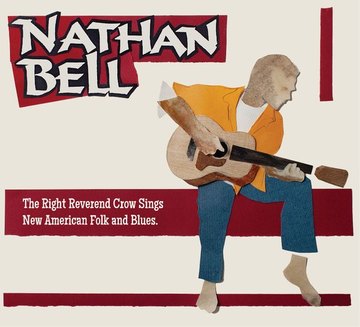
bell-right-reverend-coverTaking some time out from his superlative run of Family Man themed albums which salute the American dream and excoriate the mess it’s become, Nathan Bell has taken a feather from Hank Williams’ cap for this eight-song disc. Williams adopted the pseudonym, Luke The Drifter, for a series of songs which were not his usual honky tonk jukebox fare. In a similar manner, Bell becomes The Right Reverend Crow as he indulges his love of country blues and folk.
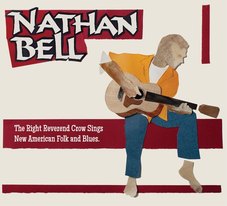
He opens with a tribute to that irascible Texas bluesman, Lightnin’ Hopkins, the subject of one of Bell’s usual on stage interludes. Retread Cadillac (Lightnin’) copies Hopkins spooky spoken word style along with his slyly brilliant walking blues guitar as Bell offers a condensed history of Hopkins’ career. Another Texas bluesman, Johnny Winters, features next as Bell delivers a magisterial solo performance on a series of vignettes all ending with him driving down the highway as Johnny Winter plays the blues. There’s some grand piedmont guitar picking on the jaunty New Cocaine Blues while Rolling Blues mucks around in early Muddy Waters before he became all electrified.

Bell’s on more familiar territory as he moves on to the folk side of the Right Reverend, the songs here not dissimilar to those which have seen him mentioned as a worthy successor to Guthrie, Van Zandt and Springsteen. Poisonous Snake inhabits the weird world of Pentecostal snake handling with Bell delivering it in true southern gothic style as if he were singing a short story from Donald Ray Pollack. The Ballad Of Bill Spaceman Lee has some Dylan like harmonica rasping from Bell on a song which has classic stamped all over it with its capture of youthful aspirations and their eventual dimming. The album closes with a retread of The Big Old American Dream, originally released on  Love>Fear which serves to remind us that Bell can write a grand narrative in the grand tradition of writers such as Guy Clark and imbue it with a true sense of from the ground up nobility.

Nathan Bell hits the ground running this week for a short trip around the UK and an appearance at Rambling Roots Festival in Utrecht. We shouldn’t need to say that if you are anywhere in the vicinity of a gig then you should go as you’ll be blown away. In addition, Bell will have the first copies of The Right Reverend Crow Sings New American Folk and Blues on sale at the shows along with a very limited edition 7” single featuring two new songs, Heavy As A Talent (Billy Shakespeares’s Blues) and
To Each Of Us (A Shadow).

Website

Nathan Bell tour and record news

P1080035 copy

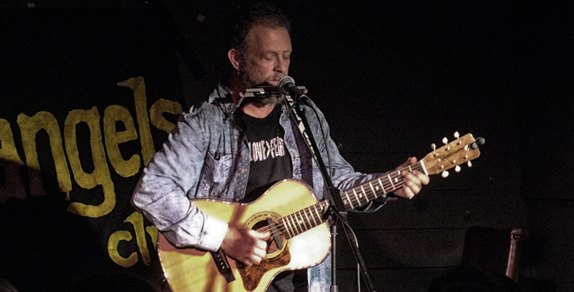
A firm favourite of Blabber’n’Smoke, Nathan Bell returns to the UK and Europe for a short tour commencing on 9th October. We first came across Bell when his third album, I Don’t Do This For Love, I Do This For Love was released in 2016 but, grand as it is, the album didn’t prepare us for the intensity of his live act which we first experienced at Celtic Connections in 2017. Since then, we’ve seen him live on several occasions and he continues to astound. He has also released three more albums (one a live recording) which confirm that the readers of Americana UK were spot on when they voted him Male Artist of the Year at the tail end of 2017, and then as the runner up to Jason Isbell in the same category in 2018. We can pretty much guarantee that if you catch Bell on one of the upcoming dates you’ll be blown away. Trust us.

bell-right-reverend-coverAs an additional lure, Bell will have copies of a very limited edition 7” vinyl single for sale at the shows, along with a new eight track EP. The single, on yellow vinyl, is a tour exclusive and features two previously unrecorded Bell originals – ‘Heavy As A Talent (Billy Shakespeares’s Blues)’ and ‘To Each Of Us (A Shadow)’, recorded in Santa Cruz, California. The same studio sessions also spawned the EP, titled The Right Reverend Crow Sings New American Folk And Blues, which finds Bell inheriting the mantle of revered characters such as Woody Guthrie and Lightnin’ Hopkins (if you’ve seen Bell live you’ll know that he reveres old Lightnin’).  Co-producer Brian Brinkerhoff says of the EP, “Rarely does an album title give you a perfect depiction of the music contained within. There’s a Blues side and a Folk side here – four songs that fit into each of those broad categories and yet hang together seamlessly.”

We’ve had a sneak preview of The Right Reverend Crow Sings New American Folk And Blues and can confirm that Brinkerhoff is correct as Bell delves into classic acoustic blues and folk territory. It bodes well for these upcoming dates.

Website

Tour Dates:


WED OCT 9 KINGSMEAD HOUSE, HIGH WYCOMBE
FRI 11 PI GIGS @ CAFÉ CWTCH, PEMBROKE DOCK*
SUN 13 HARBOUR ARTS CENTRE, IRVINE*
MON 14 TRAVERSE THEATRE, EDINBURGH*
TUES 15 PERFORMING ARTS CENTRE, KILBARCHAN*
WED 16 THE BLUE LAMP, ABERDEEN*
THURS 17 FALLEN ANGELS CLUB AT THE ADMIRAL, GLASGOW*
SAT 19 RAMBLIN’ ROOTS FESTIVAL, UTRECHT

* with Canadian singer-songwriter
DAVID LEASK in support

Amy Speace. Me And The Ghost Of Charlemagne. Proper Records

as.ccdcoverprintListening to the title song which opens Amy Speace’s latest album, one could be forgiven for thinking that this is a newly discovered relic from the heydays of singer/songwriters, that halcyon time when Joni Mitchell, Laura Nyro and Judee Sill were really at the cutting edge. Me And The Ghost Of Charlemagne is a starkly beautiful piano ballad with a striking string arrangement, written when Speace was in the city of Aachen where the bones of the emperor are entombed. It’s a magnificent capture of road travel weariness, the comedown after the gig, asking ultimately the question, why?
Aside from the singer/songwriters mentioned above, the treatment of the song recalls the baroque folk of Judy Collins who is credited with discovering Speace many moons ago and this album confirms once and for all that Collins is a talent spotter par excellence, remember, she “discovered” Leonard Cohen. Anyhow, Me And The Ghost Of Charlemagne, coming after a string of excellent albums from Speace, is perhaps her pinnacle. Recorded in the final days of her first pregnancy (she dedicates the album to her son, “In my belly as I was recording”) it is at times quite intense as she rails against various injustices or soul searches, while there are also some sublimely tender occasions, some of those however having a sting in the tail. Listen to the initial 60’s folk like naiveté of Pretty Girls which finally erupts with crashing guitars as Speace obliquely comments on this Instagram age.

There’s a defiant grandeur in the wonderfully recorded pulsations of the “protest” song, Standing Rock Standing Here, her commentary on the long standing Native American tribe’s struggle with the US government at Standing Rock. Back In Abilene strips back the music to just acoustic guitar and sparse piano in a snapshot of the days following the assassination of JFK. Meanwhile there are more intimate moments as when Speace uses words written by Emily Dickinson on This And My Heart Beside to create a pastoral love letter while the closing song, her version of Ben Glover’s Kindness (described by Speace in the liner notes as, “the most beautiful lullaby I’ve ever heard”) probably touched her then unborn child’s heart as much as it will you, the listener.

Produced by Neilson Hubbard and with contributions from Will Kimbrough, Beth Neilson Chapman, Ben Glover and Eamon McLoughan, Me And The Ghost of Charlemagne is the work of an artist who is at her prime. Mature, thoughtful, engaging, and it sounds wonderful.

Website


The Orphan Brigade. To The Edge Of The World.

orphan-sleeveAs if they were following some musical ley line, The Orphan Brigade – Neilson Hubbard, Ben Glover and Joshua Britt- have, since their formation, recorded in the field in various locations. They inhabit a location, drink in the associated history and legends and transform these into singular songs, leaving their mark and adding to the legend. To date they have dwelled in a supposedly haunted civil war plantation house for their first album, Soundtrack To A Ghost Story (and taking their name from the  Confederate troops stationed there) and gone all troglodyte in ancient caves situated under a small Italian town on Heart Of The Cave. There was also a slight detour when Hubbard and Britt joined Dean Owens and Audrey Spillman to record Buffalo Blood in the native American heartlands of New Mexico.

To The Edge Of The World finds this intrepid trio perched on the briny coastline of Antrim in Northern Ireland, Glover’s homeland. As is their wont, they burrowed into the local scene, the rugged locations, the stories told over the years and set down to writing their impressions before recording the album in a 15th century church. As with the previous albums they haul in collaborators although here, there are fewer celebrities. Aside from John Prine and The Henry Girls, they turn to local musicians and even a primary school choir to garland their songs, giving the album a firm sense of its birth land with Hibernian undertones pulsing throughout The Brigade’s take on this mystic Irish coastland.

They set the scene immediately as a brief snatch of an Uilleann pipe tune wafts in from the mist before a clattering Bo Diddley beat leads into the driving Madman’s Window. A glorious amalgamation of rootsy American thrust and skirling Irish pipes,  Glover recounts the tale of an Irish youth who remained at the location of his sweetheart’s drowning for the rest of his life. The song was written at the actual location where this supposed tale occurred and several other songs on the album are tied into stories and places they visited. Under the Chestnut Tree sprang into life as the trio visited The Armada Tree, the burial place of a Spanish nobleman, drowned as the doomed Spanish Armada came to grief in the Irish coastline as they fled after defeat. Again, the band deliver a rousing blend of bustling mandolin driven Americana with a whiff of Celtic mysticism and it’s this winning combination which gives the album much of its drive. The title song is a muscular and pulsating modern folk rock song with echoes of Nick Cave while Banshee swings with a junkyard beat as if Tom Waits were wandering through an Irish graveyard. Fairhead’s Daughter, inspired by a location used in Game of Thrones, thrashes around somewhat excellently with big Townsend like guitar bashing.

While these rambunctious offerings are quite exhilarating, there’s a welter of songs here which, while just as stirring, cleave more to a folk idiom. Captain’s Song (Sorley Boy) finds John Prine adding his voice to a dirge like shanty and Isabella is blessed with some wondrous harmony singing as they bring the Appalachians to Ireland. On a similar note, St. Patrick On Slemish Mountain rings out an with old time Americana sound but it’s the closing song, Mind The Road, which really hammers home the band’s affiliation to the Celtic muses they encountered on this road trip. It’s a breathy and whispered confection of fluttering flute over a bustling double bass with rippling guitars and mandolin dipping in and out. It’s reminiscent of Van Morrison’s glorious Veedon Fleece and as such, sets the seal on The Orphan Brigade’s immersion into the myths and legends of this rugged and untamed historic coastline.

Website