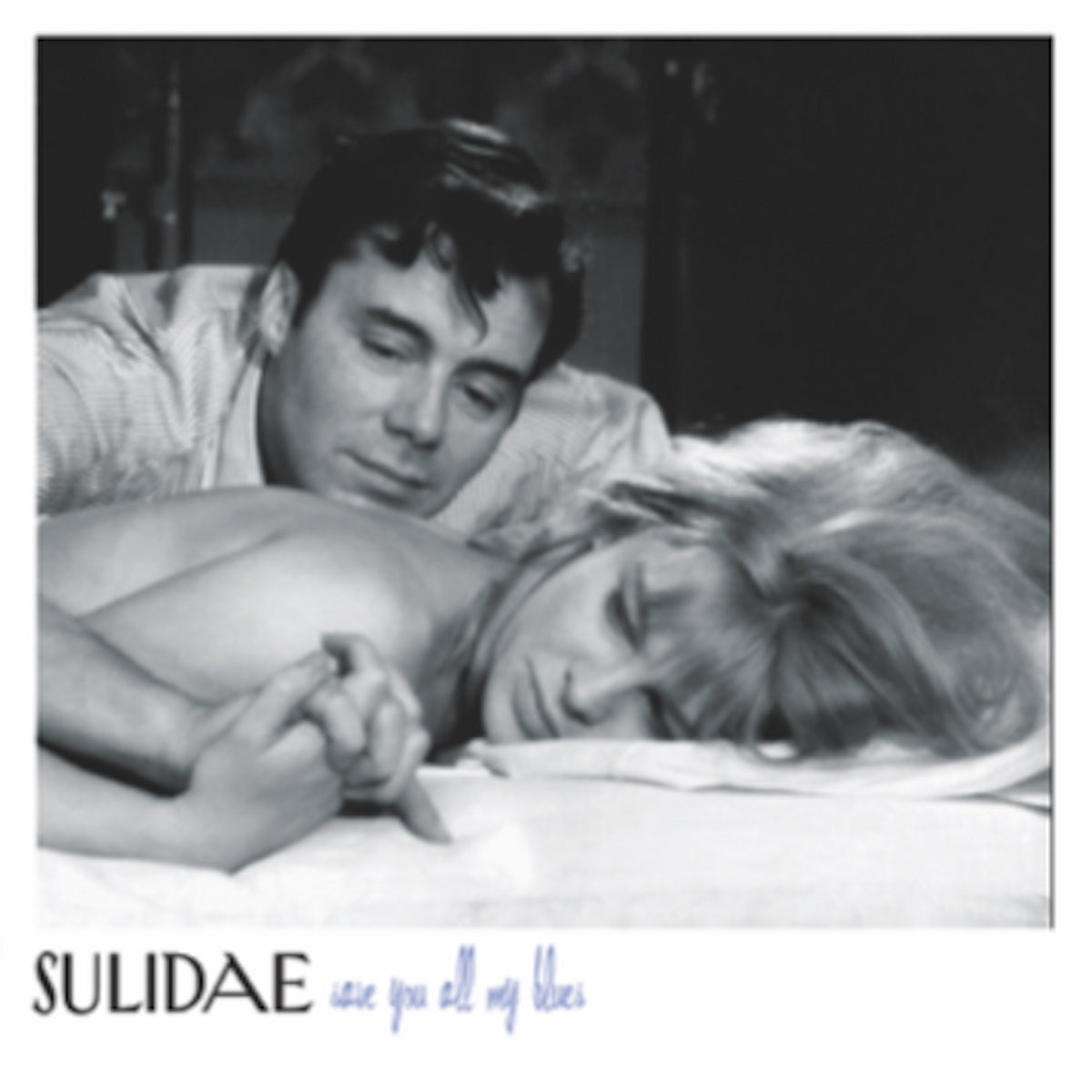
Blabber’n’Smoke was much taken with Sulidae’s second album … Invincible Summer and we were fortunate enough to catch one of the launch gigs for the album in Glasgow’s Glad Café. Today sees the release as a single (with accompanying video) of one its outstanding songs. Co-written by Bobby Motherwell (AKA Sulidae), James Grant and Bobby Bluebell (some well kent names for sure), Save You All My Blues was filmed with the three songwriters (along with the legend that is Fraser Speirs) at the Britannia Panopticon in Glasgow and on location in Motherwell’s home base of Howwood.
It’s a gorgeous song and a gorgeous video, an extremely tempting invite to investigate the album for those unfortunate enough to have not heard it yet. Of the song itself, Motherwell explains, “The song was written as a resolve to A Letter and a Blessing (the first single from the first album Kitchen Sink Dharma) which was a breakup song. I wanted the couple who broke up so bitterly in A Letter and a Blessing to come together again at some point further down the line and realise that there was still a flame that burned, and that each couldn’t ‘countenance a life without you’. I wanted a happy ending I suppose”. We’re not too sure about that “happy ending” but there’s no doubt that this is a song which speaks to the heart.
Aside from Save You All My Blues, the single’s B side contains four songs recorded at the Edinburgh album launch. Accompanied by Blue Rose Coders’ Lyle Watt and Andy Lucas, Motherwell delivers that initial breakup song (A Letter And A Blessing) along with Why Are All The God Guys Gone?, That Moment and Lochwinnoch/Parting Glass, all four songs a fine souvenir for anyone who went to either of the launch shows.
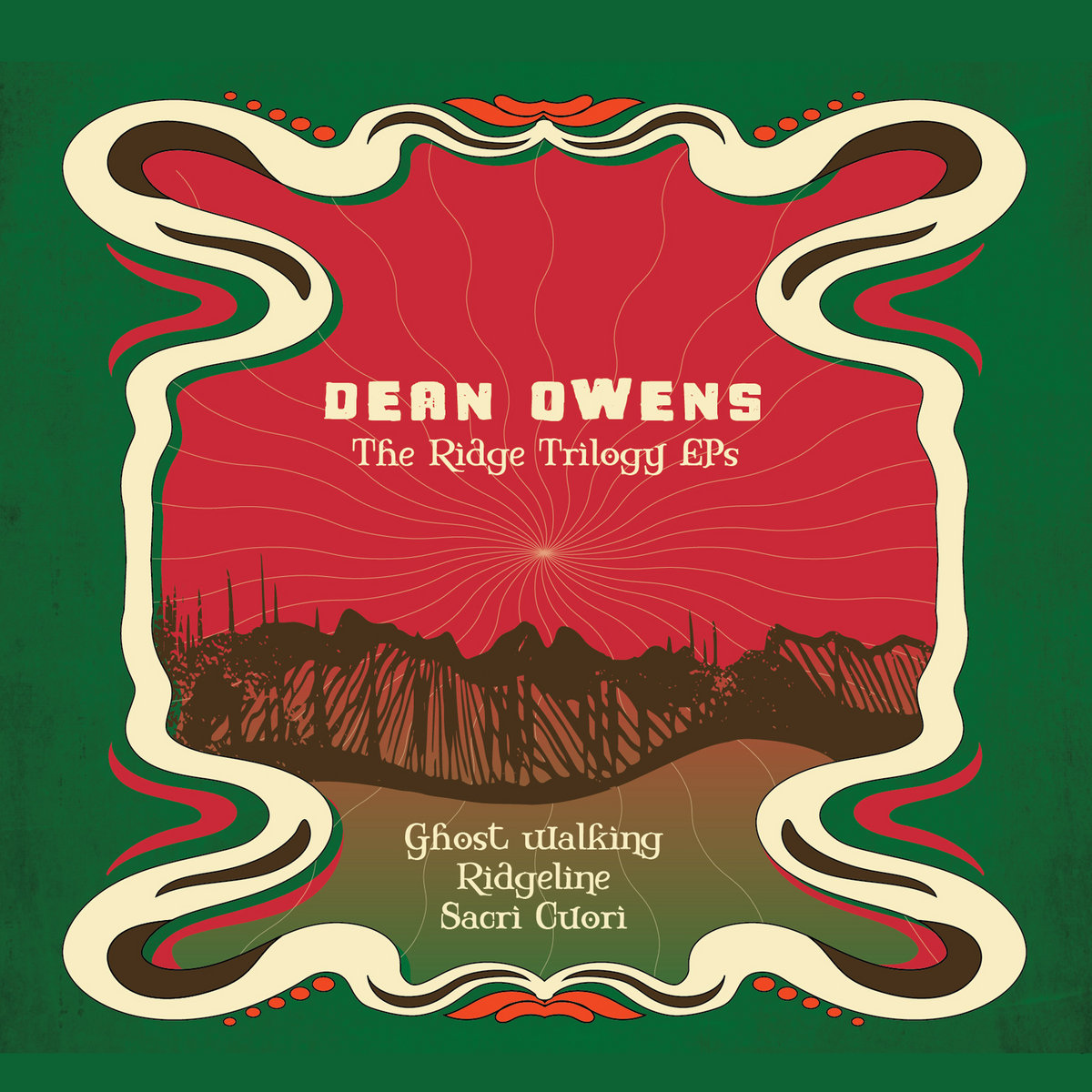
Remember when, during a maths exam, you were asked not only to provide an answer but to show your workings? In a musical sense that’s what Dean Owens has done here. We await the final answer in the shape of his forthcoming album, Spirit Ridge (due out in February and to be premiered at Celtic Connections) but The Ridge Trilogy ( three EPs released separately and now combined into one package) are his workings, laid out in full in the expectation of top marks.
Owens pioneered this approach in the run up to his 2022 album, Sinner’s Shrine, recorded with members of Calexico in Tucson. This was a pre and post pandemic album in that the basic tracks were recorded before the world shut down, leading to a frustrating long wait before the album was eventually released. In the interim, the ever restless Owens decided to, well, show his workings over the course of three EPs, each containing a song from the eventual album along with demos and works in progress. These were eventually gathered together in a stand-alone release, a companion disc to Sinner’s Shrine. It was an astute move as fans flocked to buy what has become a somewhat collectible artefact.
In the wake of Sinner’s Shrine, Owens was introduced to Italy’s Antonio Gramentieri by their mutual friend, John Convertino of Calexico. Gramentieri, better known these days as Don Antonio, is the mastermind behind the astonishing Sacri Cuori and a collaborator with Alejandro Escovedo, Richard Buckner and Dan Stuart amidst many others. He has a kaleidoscopic musical vision, connecting the likes of Nino Rota and Ennio Morricone’s cinema scores, Euro pop, tango, surf music and a nod to the subversive pop genius of Serge Gainsbourg. The pair hit it off, Owens Italian lineage part of the connection, and soon enough he was off to Italy to record his next album in Don Antonio’s studio in Crinale, close to Bologna. Crinale translates to Ridge, hence the title of the forthcoming album and this curtain raiser.
The Ridge Trilogy consists of three EPs, (Ghost Walking, Ridgeline and Sacri Cuori) released over the past three months and now gathered together in a bespoke package. Each contains a song from the forthcoming album along with demos and alternative takes (Overall there are 13 tracks on the CDs. Four from the upcoming Spirit Ridge album, five from the album sessions and four acoustic demos) and it is a limited edition so best to snap one up before they head into Discogs purgatory. There’s quality control present throughout, the demos as urgent as the finished songs, so, in essence, the trilogy is a companion album to its big brother, arriving soon.
The trilogy kicks off with My Beloved Hills, a song destined for the album. It’s a classic Owens song, awash with the calm and grace and serenity one can find within nature. It’s a peace of mind which Owens’ has sung about on many occasions. His creative spirit seems to grow wings when he’s roaming hills, glens or, in this case, an Italian ridge, giving him free rein to recall past times, his family and friends. The song is given an almost imperial procession with its sweeping strings and billowing horns while Gramentieri’s guitar adds a powerful undertow, tethering the song to earth. As a taster for the album, it’s irresistible as are the other songs previewed here. Light This World is a propulsive smorgasbord of driving guitars, urgent string sections and John Barry like keyboards while Owens sounds like a frenzied update of Scott Walker’s melodramatic sixties songs. Spirit Of Us slowly uncoils itself as Owens revives a song from his past, an intimate portrait of family love, while Tame The Lion again recalls Owens’ lion taming ancestor who, uncannily, came to Scotland from the very same region of Italy where Don Antonio now resides. A powerful song it’s given a slightly funky delivery with some Memphis southern soul in its fibre.
Of the fully realised songs which seem to have not made the final cut, it’s somewhat astounding that Come With Me doesn’t seem to appear on the album. It’s quite tremendous as Owens croons over Gramentieri’s trembling guitars on a grimy spytastic 70s soundtrack song with Kirsten Adamson adding some magnificent harmonies. The same can be said for True Of You which is a sensational brew of wicked guitars and ecstatic fiddling which boils and bubbles with grim intent over a sensational five and a half minutes. These two songs are worth the price of admission on their own but you can add to that the grungy Tex Mex of El Minuto (which harks back to Sinner’s Shrine) before Owens keenly ties up all connections on the short, whistled, tune, Sergio’s Kitchen, allowing him to acknowledge the ties between the iconic dusty desert spaghetti westerns which were alluded to on Sinner’s Shrine and their Italian origins.
Of the demos, there’s more whistling on the sublime The Gloaming which finds Owens’ impressive pursing of his lips surrounded by an ethereal chorus while Sinner Of Sinners, The Buzzard & The Crow and A Divine Tragedy are all solo deliveries of songs which will be fleshed out on the forthcoming album. All three are quite compelling in their delivery even without any bells and whistles he and Don Antonio have decided to adorn them with once they emerge fully fledged on Spirit Ridge.
A taster then, but much more than that. All three EPs stand proud on their own merit and this collection of all of them is a significant release. The EPs are all available digitally and if are quick enough, you might be able to grab one of the very limited CD digipacks which contains all of them. And, after that, be prepared for the album release in early February.
And, by the way, Owens gets top marks here for showing all of his workings.
Here’s a radical idea. Take a bunch of academics (garnered from Glasgow University) and marry them to a hotchpotch of Glasgow musicians to launch a band which seeks to portray the oft hidden underbelly of Glasgow’s radical history in song. Such is the idea behind The Tenementals, their name a tribute to the grim but also handsome stone terraces which housed the majority of Glaswegians until the modernist clearances of the 1960s.
Fuelled by a history of rebellious rock and the sloganeering of groups such as The Situationists, The Tenementals hark back to numerous antecedents. Spanish Republican songs, protest songs of the 60s and the agit punk rock of the 70s are all brought to mind here. Front man David Archibald, whose day job is Professor of Political Cinemas at the University of Glasgow, states that “While our project has academic roots, it lives and breathes as a rock band, turning fragments of the city’s radical past into provocations for radical futures. We hope the songs operate as thought bombs, provocations to think and act in a radical way.” It’s a bold claim but it’s one which is largely delivered on their debut album. The subtitle, Vol. I of VI, hints at more to come but in essence it’s kind of an in-joke, referring to Foucault’s Histoire De La Sexualité which was supposed to be followed by several other volumes.
So far, so heady. Add to this the information that the opening song, The Owl Of Minerva was partially inspired by a passage from Hegel and we’re in danger of wandering into the intellectual ivory tower from which the 1980s NME fired its barbs, when a familiarity with Derrida and Barthes was required to comprehend their singles reviews. Fear not however. From the opening blast of The Owl Of Minerva, riffing like Iggy & The Stooges in their prime, The Tenementals never forget their primary aim, to entertain. While Archibald might have Hegel’s owl in mind, the song was inspired by the fact that Glasgow’s Titan Crane (featured on the album’s cover) is sited at the end of Minerva Street. From there, he takes a flight of fancy, a bird’s (owls) eye view of Glasgow, howling out the words as he flies north, south, east and west, delivering a pyschogeographical map of the city. It’s incredibly clever but it’s also exhilarating, best listened to with the volume at 11.
While other songs share this raw and raucous approach there is a fine degree of light and shade on the album, reflected in the next song, A Passion Flower’s Lament. Sung by Jen Cunnion, it’s a gentle, Spanish inflected acoustic number as Cunnion sings from the perspective of Isidora Dolores Ibárruri Gómez otherwise known as La Pasionaria, a statue of whom resides on the banks of the Clyde in Glasgow’s city centre. Her Spanish Republican war cry, No Pasarán! is reflected in the song’s lyrics which commemorate the 65 Glaswegians who died as members of the International Brigade.
An earlier and more local rebellion is at the heart of the driving rock harmonies of Peter Pike Or Pink, the titular character being one of those who was executed for his participation in the Radical War (or Scottish Insurrection) of 1820. That his name is unsure on his memorial finds the band wondering about his life and his reasons for becoming a rebel along with a pondering on why this insurrection is not more celebrated. A more well kent rebel is at the heart of Universal Alienation (We’re Not Rats) which is about the celebrated union leader Jimmy Reid who led the Upper Clyde Shipbuilders sit in and who was elected as Rector of Glasgow University. The song features a sample of his famous inaugural speech (“a rat race is for rats, we’re not rats, we’re human beings) and opens with a grand line about his appearance at the august institution as he is described as “Robed In Ermine, seventies sideburns magisterial”.
Whether the band are inhabiting a post punk, almost Nick Cave like vibe on Pentimento, growling about the Glasgow Council’s addiction to becoming a Hollywood set on Post Production or turning a trip to Victoria Park’s prehistoric Fossil Grove into a groovy folk rock number with intimations of how short our life spans are in comparison to these 11 petrified stumps, there’s no doubt that the history, the radicalism and, indeed, the lifeblood of Glasgow’s past and present is present throughout the album.
They close with an anthem of sorts. People Make Glasgow is a slogan of course. If you approach the city centre from the south it’s hard to avoid seeing it emblazoned on the high rise building which used to be the Glasgow College of Building and Printing. The slogan was placed there when Glasgow hosted the Commonwealth Games back in 2014 although the building has been unoccupied since before then. It’s fitting then that it kicks off this litany of Glasgow history delivered with a cool yet angry rock’n’roll attitude, a fitting end to the album.
Whether Vol. 2 (or 3-6) ever appears, The Tenementals are to be congratulated for their revival of a radical Glasgow spirit. For this writer, listening to the album reminded one of the times when we named streets after Nelson Mandela and The People’s Palace was considered by Glasgow’s Tories as a hotbed of left wing subversion.
Glasgow: A History (Vol. I of VI) is available on vinyl and digitally. A CD release is in the offing. The band launch the album at Glasgow’s Oran Mor on 27th November. It’s a free gig but ticketed, you can apply for tickets here.
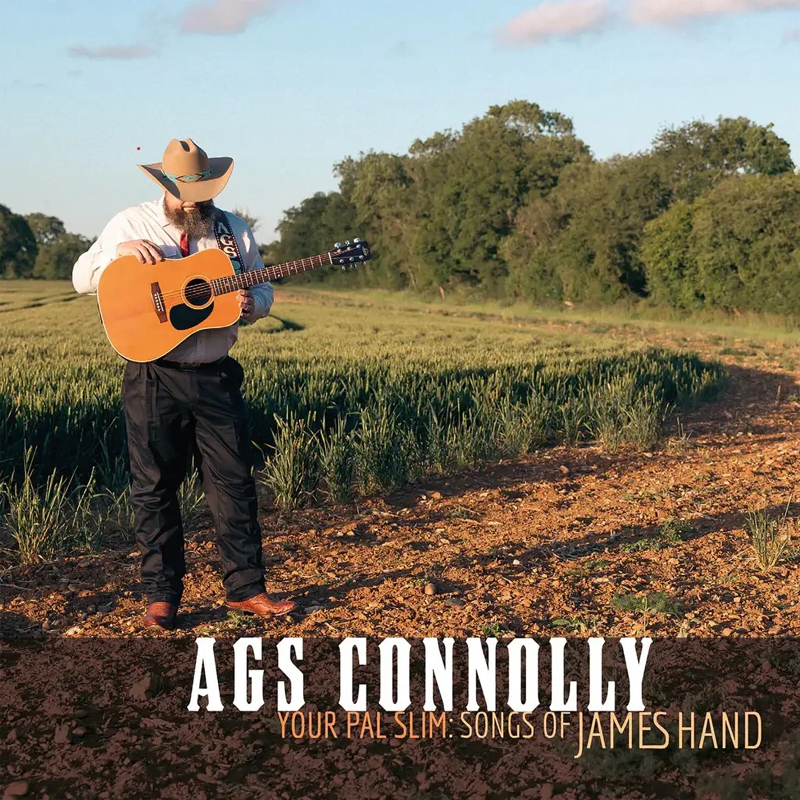
From the very start of his career, Ags Connolly has made no secret of his admiration for the late James Hand. Connolly’s debut album (released in 2014) featured a song he’d written called I Saw James Hand, a song which has remained in his set list to this day, always introduced with the tale of how Ags played the song at a gig in Nashville, expecting to have Hand in the audience only to find that his hero was running late and missed the song.
Hand died, aged 67, in 2020. By then he and Connolly had become acquainted, to the extent that they had planned to write some songs together. Alas, that never transpired. Instead, we have this lovingly crafted tribute to Hand, a collection of 11 songs garnered from Hand’s six albums and recorded by Connolly along with musicians who played with Hand. A twelfth song, Corner Of The Street, was written by Connolly in expectation of taking it to Hand for their proposed collaboration.
So, who exactly was James Hand? A Texan, he played music from an early age becoming a local star on the honky tonk circuit while tackling various jobs including being a horse trainer and a truck driver. His natural reticence and humility kind of held him back with one writer saying of him, “James is even uncomfortable selling you a CD after a show. He thinks that if you give him $15, he should come over and mow your lawn.” He didn’t record an album until he was in his forties and his unrequited allegiance to the grand tradition of old fashioned country music won him few fans outside of Texas. He did garner some famous fans, Willie Nelson and Kris Kristofferson included but, to the end, he remained, as one article described him, a hidden Texas Honky Tonk treasure. It’s of note that, prior to Connolly’s homage, Charlie Crockett, another huge admirer of the man, recorded an album of Hand’s songs, Lil’ G.L. Presents: 10 For Slim – Charley Crockett Sings James Hand (sharing three songs with Connolly’s album).
It has to be said that Connolly takes to Hand like a duck takes to water. The songs are tailor made for a singer who revels in what has come to be called Ameripolitan, a movement to reclaim traditional country from the tosh which populates the country charts these days. From the opening bars of In the Corner, At The Table, By The Jukebox we’re in a bar room heaven, the ghost of Hank Williams sitting side by side with Hand as pedal steel and fiddle adorn the song. Baby, Baby Don’t Tell Me That sashays with the verve of the early Sun Records forays into country music while Shadows Where The Magic Was finds Connolly using the Johnny Cash chika boom rhythm on a song which displays Hand’s writing at its best on a song which has an almost biblical fear built within it as he revisits his past. Topping that is Connolly’s delivery of Lesson In Depression, here given a slight border sway with its luxurious pedal steel.
The album closes with Connolly’s sole write here, Corner Of My Street, originally penned as a possible collaboration with Hand. That was not to be but this hangdog country lament serves as a fitting close to the legend of Hand and to Connolly’s affection for him.
It’s not often that church music (other than that of the American south gospel variety) reaches out to us but when we listened to the five songs (or meditations perhaps) which constitute the latest release from Ghostwriter we were somewhat spellbound. Helmed by Mark Brend (who plays most of the instruments) and featuring the assorted talents of My Darling Clementine’s Michael Weston King, folk singer Suzy Mangion and Anglican Bishop Andrew Rumsey, the disc is an immersive dive into a dread fuelled world, the heavy hand of God and the fear of Hell manning the tiller. Brend’s skilful mix of wheezing organs and ambient sounds provide the vaulting heights of awe and wonder one experiences when visiting a grand gothic cathedral while much of the settings remind one of the heydays of the more esoteric shores of freak folk.
While memories of such as The Incredible String Band, along with a whiff of Robert Wyatt, are evoked, the song which most came to mind when listening to Tremulant was the brief Fairport Convention number, The Lord Is In This Place, from their 1969 album What We Did On Our Holidays. Musically they are miles apart but they share a mood.
The album opens with Weston King singing Satan, Your Kingdom must Come Down, a song most folk here might associate with uncle Tupelo. Here, it comes across with the power of a slavery era spiritual wail. It’s followed by the lengthy pipe organ hymnal I Stand Amazed, drawn from a 1905 hymn which celebrates the death of Christ on the Calvary Cross and his resurrection. There’s a hushed and reverential mood here as the song, oh so slowly, treads a path between old English folk idioms and church rituals. It’s a calming presence, a balm for the soul if you are ever in need of one.
There’s a brief instrumental aside (which most reminds one of the aforementioned Fairport Convention number) on Here before the ambient sounds of Often Forfeit tumble out, the introduction eventually leading into another wheezy organ filled ancient hymn with a coda which seems to owe much to the eccentric sounds of Harry Partch. The disc ends with another lengthy song on The Anchor. It opens with Weston King in vicar mode, blessing his ship faring congregation before the most conventional folk sounds on the disc briefly appear. Thereafter, it’s a collage of sounds and songs all blended within its 16 minutes with Mangion delivering a hauntingly beautiful interlude. Harking back to Fairport Convention, The Anchor, while not resembling it in any way, reminds one of their seafaring adventure on A Sailor’s Life in that both songs take a tradition and cast it anew, albeit in drastically different directions.
It’s not an album you would bring to a party but Tremulant is certainly food for thought in these troubled times. Even the most secular listener should find some calm within its grooves, stick it on a playlist to follow on from Gavin Bryars’ Jesus’ Blood Never Failed Me Yet.
Released back in August, Felix Hatfield’s third album, House Of The Artist, recently came to the top of our pending pile and it’s a shame that we didn’t get our act together at the time to salute it. Having said that, he’s not touring the album and it’s as available now as when it was released so, have a read and then go out and buy it. You won’t be disappointed.
Hatfield is probably best described as an “outlier” these days. He paints and makes films alongside his music, music which might be considered as “primitive” given its home made patina and the somewhat ramshackle approach to melody and rhythm. He’s akin to the likes of Michael Hurley, another songwriter who also paints and who finds inspiration in the old time music of America. In addition, Hurley and Hatfield can conjure magic in the most humdrum of affairs, witness Hatfield’s song T-Shirt on this album. It’s almost a dirge, the instruments wheezing and puffing as Hatfield drily relates the fallout from a broken relationship, “I’ve been there, I’ve done that, I’ve got the T-Shirt” he sings.
He opens the album with the croaky homespun wisdom of Somethin That I Know, a song which goes around in circles, alluding perhaps to gossip. Whatever it is that he or they know and don’t know is never explained. Lemon Rinds is more straightforward, albeit in a strange and quizzical way, as Hatfield, an outsider from the start (I left the theatre during E.T., I couldn’t handle the corn scene), offers advice to those who find the world not easy to take, adopting the late Oregon blues player Eagle Park Slim’s motto, There Ain’t No Time For Hope and ending with “I think we can agree that life is pink and purple with strife.” This sense of optimism is then replaced by the desolate Weepin Willow, an intimate wail of a song.
Hatfield, amidst his primitivism, has always been acute when writing about relationships and this is brought to the fore on the halting, and quite lovely, lost love song, You Said You Loved Me. Sounding like Jim Reeves coming across the ether via a Ouija board this is miserabilism at its best. Bound To Lose (Sleep) finds Hatfield in thrall to a partner with whom he made love to after tripping out on Hieronymus Bosch books, the pair of them revelling in their garden of delights. A rudimentary and scratchy guitar rings throughout a portrait of a formidable companion on Joan, a woman who “doesn’t give a fuck” while the closing, title song, comes across as possibly autobiographical as Hatfield describes his safe space as “a workshop…the house…a graveyard of visions where heartbreaks reminisce.”
Despite the off kilter approach here, Hatfield’s songs are immersive and quite moving, akin to the likes of Will Oldham, Vic Chesnutt and the aforementioned Hurley. Do yourself a favour and have a listen.
Of late, Bard Edrington V has been our go to guy for a hefty dollop of good old fashioned American roots music. Via albums with The Hoth Brothers and his own solo efforts, Edrington drills into the heart and soul of old time American music, be it from the heights of Appalachia to the parched deserts of New Mexico. Tired & Branded finds him back in the saddle, surrounded by a fine set of players, all of whom have appeared on his previous efforts (including Bill Palmer, Jim Palmer and Alex McMahon, along with Sarah Ferrell and Karina Wilson – both of whom appeared live with Edrington on his most recent UK tour) and this ensemble (now christened The Blackbirds) sound like they have a great time recording, be it on a stripped back session in the ghost town of Terlingua (as heard on Two Days In Terlingua) or in a studio on the banks of the Rio Grande in Alamosa, Colorado where this album was recorded.
The album opens with the slightly ramshackle strains of Sometimes I Do It Wrong (and that’s ramshackle in a positive sense by the way) as the band just seem to amble in and start playing. It’s the sort of song The Deslondes do so well with an easy sway and strut, ladles of creamy pedal steel, country fiddle and laid back harmonies. Edrington’s easy vocals, along with the harmonies with Ferrell and Wilson are the cream on this cake. Vertigo is more tightly strung, a banjo rattled number with a strident fiddle and an insistent beat with Edrington sounding not a million miles removed from the protagonist in Porter Waggoner’s Rubber Room. Much less claustrophobic is the wide open vista of Dance Across The Desert Like Rain, a great title and a great song and played with a beautifully light touch.
Edrington writes and sings brilliantly about the frontier and songs such as Tired And Branded and Taos Lightning (a reworked version of a song about illicit Tequila which first appeared on Burn You Up) are pitch perfect and he’s just as able when he writes about his own experiences as on Torcido, a song about an old bull elk in its dying throes, a creature Edrington came across and now immortalised in this excellent and tender ballad. There’s the spritely Spring In New Mexico which features Wilson’s fiddle and she’s also prominent on the chugging train song 489, the delivery of which reminds one of the heyday of The Nitty Gritty Dirt Band. Bassist Sarah Ferrell gets the chance to shine when she takes over the singing on Down River, a song which is more bluesy than the rest of the album, recalling Maria Muldaur’s forays into old time music. And for those who like a good old fashioned swampy country song there’s the hip swaying gumbo of Dancing To Your Song which snakes along with a Waylon Jennings’ like bounce.
There’s one song which steps away from Edrington’s usual haunts as Stonewalls Of Dent was inspired by time spent in the town of Dent in the Yorkshire Dales where he was admiring the art of drystone walling. In the grand tradition of the Child Ballads, he weaves a song of forbidden love between a shepherd and a fair maiden with Wilson’s fiddle giving the song an authentic English folk song touch.
It’s a tremendous album which deserves to be heard far and wide. Edrington has been on a winning streak with his previous albums and on Tired & Branded he just gets better.
Sulidae, the solo project of musician, writer and photographer Bobby Motherwell, impressed all who heard their debut album, Kitchen Sink Dharma, released almost exactly two years ago. That album was warm and engaging and steeped in the human condition (and all that entails). …an invincible summer (all lower case) finds Motherwell still engrossed in the minutiae of life, be it the benefits of communing with nature, the strength of family and friends and traversing the inevitable tragedies which must befall all of us from time to time. It’s both more personal and more open with Motherwell sharing some writing duties with his musicians.
As on Kitchen Sink Dharma Motherwell is supported by an excellent group of musicians. Kirsten Adamson returns on vocals and Andy Lucas and Duncan Lyall are retained from the debut album while another Blue Rose Code alumnus, Lyle Watt adds his guitar skills. In addition, James Grant, Fraser Speirs and Bobby Bluebell all appear and Seonaid Aitken plays violin. They’re well picked as their skills allow the songs to shine throughout the album, be they heroic songs of steadfastness or spoken word tales of couthy behaviour. The album flows wonderfully with sounds of nature often included adding a fine bucolic (and yes, a healing) feel to it.
Motherwell opens the album with the bustle and sounds of wide open spaces on the spoken word The Wild Garlic And Bluebell Way with Lyle Watt’s guitar adding a grand ambient sense of serenity. Motherwell practises “walking meditation,” and here he captures the peace and joy one can experience through the simple act of walking in the wild. There is a sadness to the song as Motherwell’s faithful pal on many of his walks, his canine companion, Dennis, has sadly departed this world. There’s more contemplation on the following song, Wind And White Horses, which is borne aloft by Aitken’s violin and Lucas’s buoyant keyboards as Motherwell hails the western isles with Adamson wonderfully singing along with a breathy whisper. Speaking of whispers, there’s a slight hint of Dylan in both the lyrics and the delivery of Save You All My Blues and Healing Light positively resonates with the most yearning aspects of songwriters ranging from Van Morrison, Jackie Leven and Ross Wilson. This song is the pulsating heart of the album but it’s closely followed by the irresistible heartfelt memories and final farewells which fuel Why Are All The Good Guys Gone? Aside from Motherwell’s canine companion, the album is dedicated to three of his friends who have recently passed on and also to their respective partners. Three Women, a companion song to Why Are All The Good Guys Gone? is a moving tribute to them. Here Adamson and Motherwell’s voices are joined at the hip while Aitken’s emotive violin tugs at the heart.
There’s a nod to local history on Wilson’s Lament, a song inspired by the life of a man considered as the father of American ornithology. Alexander Wilson came from Motherwell’s home town and had to flee Scotland in 1794 after publishing what were considered to be libellous poems about local mill owners. Motherwell brings this story to life with an arrangement which is quite stunning with the ensemble sounding as if The Band had come from Paisley. An absurd claim perhaps, but listen to the song and tell me that claim is not at least half true. Whatever, it’s a glorious performance and it’s followed by another. The words of Ordinary Day are by Liz Kentish who was a participant in a letter writing project for those living with cancer. Motherwell takes her words and weaves them into a gorgeous song which, and we’re running out of superlatives here, deserves to held in the highest regard. Again, the players are exemplary as they gingerly support this fragile song, piano and violin especially so and there’s a sublime moment towards the end, a key shift, a slight flourish as Motherwell repeats the mantra of “What you’ve heard and what you’ve seen, what you’ve done and where you’ve been.” The title track follows, a short instrumental showcase from guitarist Lyle Watt which adds a transcendent shimmer to the previous song.
Dotted throughout the album Motherwell looks back on his past with several spoken word interludes which pitch him firmly in a flinty Scottish hinterland. Fraser Speirs’ earthy harmonica underpins these narratives while Watt’s spectral guitar allows one to imagine that if Paris Texas was set in the west of Scotland that it would be Motherwell instead of Harry Dean Stanton striding out. Van Morrison once asked “did ye get healed?” Sulidae do their best here to answer in the affirmative.
The release of …an invincible summer will be celebrated at two album launch gigs in Glasgow (October 4th at The Glad Cafe as part of the Glasgow Americana Festival) and Edinburgh (October 7th at The Thistle Bar). Glasgow tickets are available here, Edinburgh tickets here.
Although he’s rarely mentioned these days, Paul Williams, was one of the most successful singer/songwriters of his era. Like his contemporary, Jimmy Webb, Williams’ songs were best known for being covered by successful chart acts –Webb had Glen Campbell, Williams had The Carpenters. But, unlike Webb, Williams also had a public face, appearing in movies, the best known being his appearance as the villain in Brian De Palma’s Phantom Of The Paradise. The film initially flopped but Williams gained an Oscar nomination (for the music, not his acting) and it went on to become a cult favourite on the late night film circuit.
Aside from writing The Carpenters’ hits, We’ve Only Just Begun and Rainy Days And Mondays, Williams was covered by a host of acts – Three Dog Night, Helen Reddy, The Muppets (!) and Barbra Streisand among others. His song, Evergreen (co-written with Streisand) won an Oscar, A Golden Globe and Grammy Award for Best Song. We should also note his score for the ever popular Alan Parker film, Bugsy Malone.
Williams’ heyday was in the first half of the 1970s when he released a series of albums on the A&M label and these are about to be reissued by East Central One. There are seven in total. his original albums, Just An Old Fashioned Love Song, Life Goes On , Here Comes Inspiration , A Little Bit Of Love and Ordinary Fool, are joined by the soundtrack for Phantom Of The Paradise along with this compilation, The Best Of Paul Williams. For record fans, The Best Of and Just An Old Fashioned Love Song get a vinyl release alongside their CD twins. While none of these charted high at the time they deserve to be heard again. Although Williams was more in touch with Tin Pan Alley/Brill Building pop than acts such as Harry Nilsson or Randy Newman, he sits quite comfortably alongside them, recording with the cream of LA sessioners of the time.
For this review we have The Best Of Paul Williams to peruse. Originally released in 1974 it collects ten songs gathered from his five preceding albums. To be precise, it’s a gorgeous listen. Williams sings quite wonderfully and the arrangements, some by Tom Scott (of LA Express and Joni Mitchell fame) are exquisite. Those Carpenters’ hits are included with We’ve Only Just Begun a perfectly pared back production, Williams sings over a piano, acoustic guitar and base backing, giving the song a much more melancholic air than the hit version. Meanwhile, Rainy Days And Mondays is much less syrupy than The Carpenters’ version with Art Munson’s guitar packing a punch while the string arrangement at the end is sublime. The other familiar song is An Old Fashioned Love Song, a hit for Ten Dog Night back in the days but Williams’ original delivery knocks Ten Dog Night into the boondocks with its jug band interlude and New Orleans swing.
Of the remaining, lesser known songs, they portray Williams as a master of the easy going, well written and hook laden song, a sure contender to be included in the Great American Songbook. Inspiration resounds with a dizzy mix of vaudeville and New Orleans swing while Nice To Be Around and You And Me Against The World have some of the doomed romanticism of Jacques Brel (who had been popularised in the States via Mort Shuman’s Jacques Brel Is Alive and Well and Living in Paris, a Broadway hit). That’s Enough For Me is perhaps the ultimate listen here as its delicate arrangement and Williams’ hushed voice transport the listener into a dreamlike status, only to be aroused by the slow crescendo at the end of the song.
The album is a short, but essential, introduction to the genius that is Paul Williams, at least in his heyday. We’re pretty sure that having listened to it, you’ll be tempted to investigate the remainder of the albums in this series of reissues.
It’s been a while since we heard from Andrew Combs, a man we described back in 2017 as “mining a rich seam of sixties melodicism inspired by the likes of Roy Orbison and Jimmy Webb.” On Dream Pictures, his sixth release, he eschews the broad sweep which informed many of the songs on previous discs and opts instead for a much more intimate listen. Performed by Combs and his collaborator, drummer Dom Billet (along with Spencer Collum on occasional pedal steel), the songs were written late at night in his garage, a place to retreat to after his kids were in bed and where he could play his guitar, paint and quietly contemplate.
And contemplation is as good a place to start off from regarding Dream Pictures. Listening to the 12 cuts here is, one the one hand, a relaxing experience, a balm for these heady days as the simple but perfectly arranged songs, in the main very laid back with gentle percussion, delicate guitar and creamy pedal steel, wash over you. On the other hand there’s an undercurrent, a heart of darkness, which adds a sense of edge to several of the songs. Electronic burblings and vague echoes of Krautrock percussion percolate throughout the album culminating in the wake up call which is To Love a song which which halfway through erupts in a blaze of guitars and banshee vocals. Much less dramatic but almost as unsettling is the Sparklehorse like Table For Blue with its throbbing keyboards and off kilter pedal steel interludes, the end result somewhat akin to a David Lynch like dream vista.
From the start Combs signposts that some of his dream pictures might not be a source of comfort as such and, at times, might actually be somewhat unsettling. The album kicks off with a short instrumental, Fly In My Wine, an atmospheric piece with its lonesome saloon bar piano, droning pedal steel and ambient sounds signalling that things can, sometimes, be more weird than you expect. However any sense of anxiety is immediately dispelled with the soothing (and quite wonderful) tones of Eventide but the following song, Point Across, while still quite beguiling in its delivery, has its shades as does Heavy The Heart which is quite a gorgeous song although all of Combs’ la la la’s can’t disguise the emotional hurt it describes. While Combs can offer Nilsson like pop on Mary Gold or sweet psychedelic vibes on Your Eyes And Me his contemplation seems to have led him to a bitter sweet acceptance of the darker side of life, a world removed from his family haven. The two closing songs, The Sea In Me and Dream Pictures cement this idea with the latter particularly memorable, resembling as it does the likes of Tim Buckley and Fred Neil.
So, quite a gorgeous listen, an album to wallow in but with darker tones for those who listen closely.