 History is much more interesting on record than in a dusty museum and it seems that recently there’s been a slew of discs which reach back into the past in order to enlighten and entertain us. It’s certainly the case with Riverland, this trio’s collection of songs inspired by Mississippi, the state and the river, described in the liner notes thus, “Mississippi is a broken place. It is America’s Eden, if instead of banishment, God chose to flood the garden and wipe flat every last splinter that Adam and Eve ever erected.” It’s certainly central to much of the history and culture of the States, a state of mind as much as a place of mud, floods and slavery, and Brace, Cooper and Jutz do the legends and stories justice on this fascinating listen.
Avoiding the temptation to delve into delta blues the trio deliver a handsome set which doesn’t avoid civil rights issues but gives space to poverty stricken folk who tried to live off the land and some of the artists who have defined some of the Mississippi spirit in book and in song. Acoustic for the most part with resonator guitar well to the fore, they sing of pre steamboat punt driven keelboats, the devastation wrought by floods and the aftermath of the civil war when Ulysses S Grant besieged Vicksburg, the town capitulating on the 4th July leading to them refusing to celebrate the national holiday thereafter. The disc is chockfull of information like this and a handsome booklet leads the listener through the stories behind the songs.
The album opens with River City, a melancholic diorama describing the trials and temptations of the bright lights. It’s next on to the quick step old timey King Of The Keel Boat Men and then the powerful drama of Win Along The River, the Grant song, delivered with weeping fiddle and aching mandolin. There’s not many upbeat songs here, Southern Mule jaunts along in a mild western swing style while Fort Defiance, a song sitting towards the end of the disc, is simply a description of the delights to be had boat watching at the confluence of the Ohio and Mississippi rivers although even here there’s a tug of melancholia in the song. They celebrate a renowned civil rights activist and preacher, Rev. Will D. Campbell, on the banjo speckled Old Tom T And Brother Will which is about his friendship with Tom T Hall and Campbell comes alive on the most powerful song on the album, Mississippi Magic, which concerns the enrolment of James Meredith as the first black student at the University of Mississippi. Elsewhere the Nobel Laureate, William Faulkner is recalled in It Might Be Hollywood and there’s a grand nod to John Hartford (and Mark Twain) on the Hartford inspired To Be A Steamboat Man (Hartford himself qualified as a steamboat pilot). The album closes with an elegy of sorts on Mississippi, Rest My Soul, a song which finds a son of the soil clinging to his stained heritage despite an exodus to the cities by his peers. It ties the album up as, from the excitement at the beginning through the trials and eventual tired present day, this talented trio really do sum up this blighted land.
 Last week The Americana Music Association UK (AMA-UK) held it’s fourth annual awards ceremony. Over those four years it’s become a big deal attracting stars such as Robert Plant, John Oates, and the recipient of this years Lifetime Achievement award, Graham Nash. The MC for the occasion was the “godfather” of UK Americana and country, Whisperin’ Bob Harris. So it’s great to relate that the winner of the UK Song of the Year was Scotland’s very own Dean Owens, a lad from Leith who is now the owner of a much coveted “Woody,” a handcrafted wooden facsimile of a 7″ disc, commemorating his win.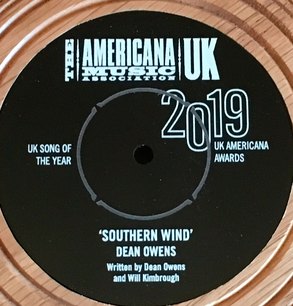
 Mayonnaise is a bit of a pic’n’mix album from Rhode Island’s alt rockers, Deer Tick. It’s comprised of some alternate versions of songs released on 2017’s double disc offering, Deer Tick Vol. 1 and Vol. 2, six new numbers and a brace of cover songs they were prone to playing as they toured around the 2017 release. As on the two self-titled 2017 discs they switch from sensitive alt folk numbers to rockier affairs with ease which certainly adds variety to the album and posits it as a fine introduction to those not aware so far of the band.
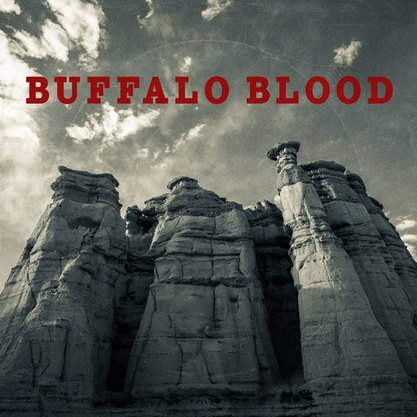 Buffalo Blood is the collaborative work of three American musicians and a Scot who set out to capture some of the legend and history of Native Americans, victims of a genocide which rivals that of the Nazi’s against the Jews. The collective – Dean Owens, Neilson Hubbard, Joshua Britt and Audrey Spillman – were drawn to the project after Owens, a man from Leith, raised on cowboy movies but lured to the plight of the Native Americans after visiting their sacred lands, mentioned a batch of songs he had written as a result of his fascination, to Hubbard. Hubbard, a Grammy nominated producer and, along with Britt and Spillman, a member of The Orphan Brigade, a band who seek out unusual recording opportunities, got on board and the newly formed quartet decided to collaborate in the writing and recording of what became Buffalo Blood. A project long in the making, it eventually saw all four decamp to New Mexico, along with sound engineer and photographer, Jim DeMain, to record the album in several iconic locations. Aside from the recording, they captured the outdoor performances on film as they followed what is known as the trail of tears, the historical forced marches of Native Americans from their ancestral lands to reservations. The resulting album is heavy on atmosphere with ambient sounds trickling into the songs, many of which reflect the arid conditions of the New Mexico desert.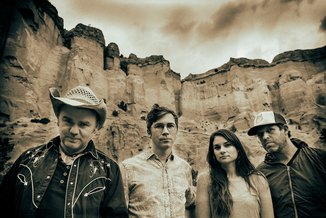
 Some folk here might be familiar with the rootsy charms of Underhill Rose, a fine banjo and guitar duo who we have written about before and who we saw play an excellent set at last year’s
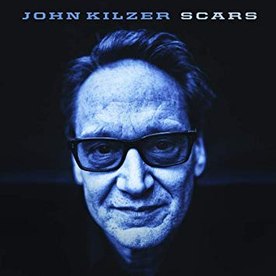 Blowing in from Memphis, John Kilzer has a ton of baggage tailing him. An academic and a Minister of Divinity, he’s known hard times with substance abuse but has also had some success with several of his songs covered by various luminaries. Scars finds him in pensive mood, reflecting on his past and ruminating on the current state of affairs in his homeland, in a manner which reminds one at times of a combination of John Hiatt and Paul McCartney.