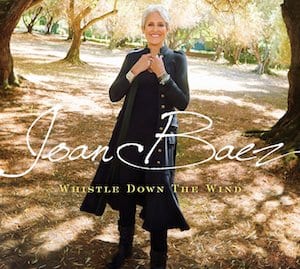
 What can one say about Joan Baez that hasn’t already been said? An icon of the folk and protest movement of the sixties, she moved into the seventies on a roll charting with The Night They Drove Old Dixie Down and releasing what was perhaps her most accomplished album, Diamonds & Rust, while reuniting with her old buddy Bob on The Rolling Thunder tour. Since then she’s continued to record and continued to be an activist, garnering awards and accolades across the globe. Her last release, Day After Tomorrow, from 2008, showed that she still had her finger on the musical pulse produced as it was by Steve Earle and featuring songs written by Tom Waits, Elvis Costello and Earle himself.
Ten years later and Baez is bowing out (at the age of 77) with what she says will be her final album (accompanied by a lengthy farewell tour). Whistle Down The Wind, if it is her final release, sees her leaving on a definite high note as it is an incredibly accomplished piece of work. Baez’s once piercing soprano voice is now a finely burnished thing of beauty, still recognisably her but a little bit weathered and worn and perfectly suited for some of the songs here. In addition, producer Joe Henry captures Baez and her players with astonishing clarity and warmth while the musicians are truly inspired with some of the playing and arrangements just breathtaking.
In the current political climate it would be easy for Ms. Baez to return to her roots and turn in a collection of protest songs, it would certainly be understandable. Instead, the album is a mature and reflective document with Baez still denouncing war and injustice while acknowledging that it’s time to pass the baton on. Her handpicked songs do include some which address issues directly but elsewhere there’s a valedictory feel.
The sense of a long life and one lived well is evident in the two songs here written by Tom Waits and Kathleen Brennan. Whistle Down The Wind maintains the hobo feel of Waits’ original while smoothing it out as the band play in slow waltz time with a wheezy organ and lonesome singing saw adding a fine patina. Last Leaf is given a stately old time delivery with Greg Leisz playing an antique Weissenborn and one wonders if Baez chose to sing this song just because it includes the lyrics, “I’ve been here since Eisenhower and I’ve outlived even he.” There are more reflections in the dappled version of Josh Ritter’s Be Of Good Heart and Mary Chapin Carpenter’s The Things That We are Made Of while her cover of Anthony & The Johnson’s Another World (with just Baez and her guitar with percussion from her son Gabriel) is a powerful performance.
More directly, Baez sings producer Joe Henry’s Civil War, a song which spans the ages and acknowledges those at home as well as those on the front while Eliza Gilkyson’s The Great Correction harks back to the grand tradition of the likes of Phil Ochs. Another Ritter song, Silver Blade, finds Baez visiting old time ballads as she sings of a maiden ravaged and taking her revenge, a nod perhaps to the current clime of #metoo and the closing song, I Wish All The Wars Were All Over, is another folk ballad with Celtic roots, which, aside from its excellent delivery, is a fitting farewell from this champion of the oppressed and downtrodden.
We can’t ignore the one song here which stabs to the heart and which nails Baez to her sixties civil rights roots while acting as a bit of a slap to the present POTUS. The President Sang Amazing Grace, written by Zoe Mulford, is a straightforward account of the shooting by a white supremacist of nine people in a church in Charleston and of Obama’s moving eulogy thereafter. Baez sings as if in a church, the band swelling behind her with an incredibly moving arrangement, the only pity here being that she still has to sing of events such as this fifty years after she first started to.
Whistle Down The Wind, aside from the legend, is a powerful and moving album, as topical as today’s weather and it bodes well for the singer’s farewell tour. Do give it a listen.
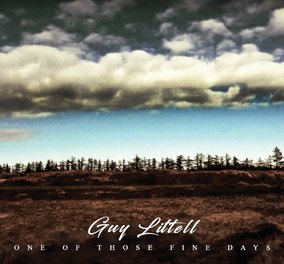 We first encountered Italian Guy Littell back on 2014 with his laid back release,
  Texan Keegan McInroe has had enough and he lets us know on his aptly titled album with nine songs delivered the way Woody Guthrie, Pete Seeger and even Bob Dylan used to do it. Talking blues, gritty political protest and even some humour rub shoulders here as McInroe takes the world to task. He goes us back to the trenches of 1914 with a splendid narrative on the famous Christmas truce on Christmas 1914 while Bombing For Peace points out its evident contradiction with as much fervour and profanity as The Fugs, indeed the spoken word Nietzsche Wore Boots could have been ranted by Ed Sanders back in the days. Big Old River casts a cold eye on the current state of affairs accompanied by a gritty and gloomy organ groove and, presumably with a view to irony, McInroe uses a Kristofferson melody to cast his story of a young Egyptian radicalised on The Ballad Of Timmy Johnson’s Living Brother as a Western ballad. The opening Talking Talking Head Blues is a superb stab at the media prophesising catastrophe and setting up bogeymen while feeding us with celebrity trivia and there’s a very brief return to this format on the one minute long Bastards & Bitches. McInroe does end the album on a defiant note with the upbeat anthem, Keegan’s Beautiful Dream, his very own We Shall Overcome. Old fashioned but incredibly topical the album is a tremendous listen and you can get it on a pay what you like basis from his
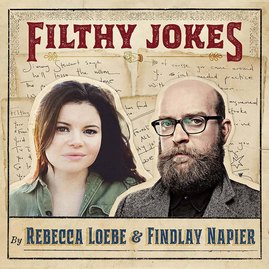 Hot on the heels of his Glasgow album Findlay Napier has teamed up with American songwriter Rebecca Loebe for this six song EP, released to coincide with their current UK tour. They met at a song writing retreat back in 2016 and just clicked and it shows here. All the songs are co-written and both take a turn on lead vocals while their harmonies are spot on. Four of the songs seem to concern romance whether failed or hopeful. Napier offers some Glasgow based locations on the rueful Bad Medicine while Option To Buy, a delightfully woozy ramble, has him reluctant to tie the knot. Loebe meanwhile gives us the achingly beautiful Kilimanjaro which is somewhat opaque but to this listener seems like a settled couple having their youthful aspirations realised via their daughter’s use of Photoshop. Filthy Jokes is another attention grabber as Loebe sings of her wonder at a relative (or friend), a bit of a slob it seems whose sole talent was for telling filthy jokes (including that one about the aristocrats), finally getting hitched. An excellent strum-along it has brilliant ending with Ms. Loebe almost chuckling before a banjo plinks the song out. The EP is topped and tailed with two versions of a New Year song, Joy To The World, I Guess, the pair wrote with Loebe singing the opening version and Napier the latter. A bit late right now but this is a song to flag up once the festive season comes around again (and surely that’s the mark of a great festive song). Loebe’s version is lightly sparkling, a Prosecco dappled version with the guitars bright and the harmonies sweet while Napier’s is more desolate with a true wintry feel. Both end in a brief rendition of Auld Lang Syne and both are wonderful in their own ways. It’s definitely a temptation to see this pair on their brief dates this week on the basis of this EP. Meanwhile it’s available free (or for the price of a coffee)
 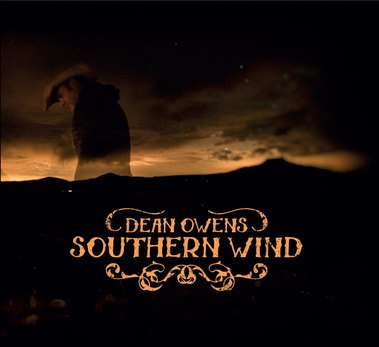 Launched at a fabulous live gig at the tail end of Celtic Connections and officially released last week, Southern Wind is the latest instalment in Dean Owens steady rise towards the top echelons of Scots musicians. As with 2015’s
 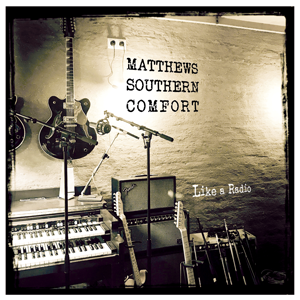 The name certainly transports us back to 1970 when Matthews Southern Comfort hit the number one spot in the charts with their cover of Joni Mitchell’s Woodstock, perhaps the first record featuring pedal steel that Blabber’n’Smoke bought. A rare moment in the spotlight for singer/songwriter Iain Matthews, Woodstock is merely the tip of the iceberg when it comes to his illustrious career. A founder member of Fairport Convention, he released three albums under the Southern Comfort band name before going solo and releasing a magnificent series of solo albums commencing with If You Saw Thro’ My Eyes including a collaboration with Mike Nesmith on Valley Hi. Alongside this he was a member of Plainsong who released one of the best “forgotten” albums of the seventies, In Search Of Amelia Earhart, (do search it out) but as time progressed changing fashions and record label shenanigans led to him take more of a back seat in the industry. Moving to The Netherlands in the early noughties Matthews has been involved in various reincarnations of his past bands over the past decade and this album finds him working with guitar wizard B.J. Baartmans along with Bart de Win on keyboards and guitarist Eric Devries.
 The first thing folk might notice about this band (and this album) is the name, Casey Kristofferson, nestled in the band line up. Yes, she’s the daughter of Kris and Rita and she’s one third of this unassuming trio from North Carolina. She sings and writes several of the songs along with Hunter Begley who also sings and plays guitar while lap steel player Charlie Willis completes the band. It’s Begley who is at the helm, his voice the lead on many of the songs and he takes the trio down some dusty roads, his tired and weary take on life’s hiccups somewhat splendid while the overall sound is laid back with a winning lack of polish. Willis’ lap steel gives the album a sweet curl, sounding almost like Leon McAuliffe (of The Texas Playboys) while a slew of guest players (especially fiddler Lindsay Pruett and pianist Matthew Rowland) allow them to gently rock out on a couple of the songs with the rhythm section of Herschel VanDyke and Robert Parks unobtrusively pushing the songs along.
 OK, this album’s been kicking around since last October but it’s only recently that Blabber’n’Smoke acquired a copy and one listen propelled it straight to the top of the reviews bundle. Malojian is essentially Irishman Stevie Scullion and Let Your Weirdness Carry You Home is his fourth long player. It finds him moving on from the melodic folk based songs of his early albums to a full blown psychedelic fuzziness souped up with a fine dose of power pop. There are healthy nods to Beatles whimsy, Donovan dippiness and Jeff Lynne’s grasp of pop with Scullion wrapping them all up into a very attractive package.
 Our friend in Edinburgh, David Ferguson, writes about the wonderful new album from Hannah Read…
 We were introduced to Rich Krueger last year via his EP Overpass (reviewed
 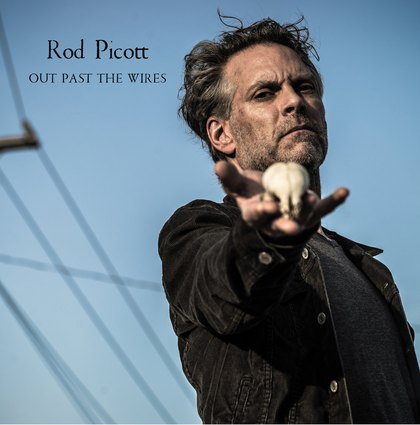 Whetting our appetite for his upcoming tour of the UK, Rod Picott releases his most ambitious album yet, the sprawling double disc (on CD and also on vinyl!) Out Past The Wires, 22 songs carved from his usual cast of blue collar workers, hard luck losers and folk living on the edge. Picott seems to have been extraordinarily prolific in the last year, the songs on the album whittled down from a long list of 78 to 32 serviceable ones, the ten spare songs expected to surface at some point. In addition he has released a collection of his poetry (
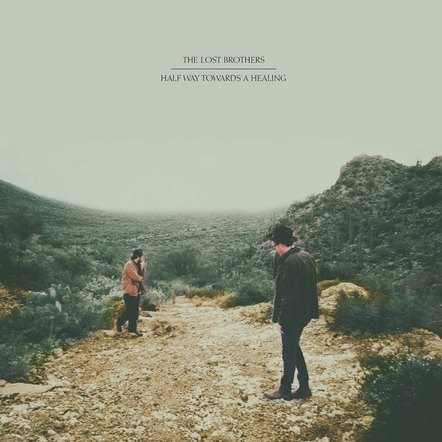 Oisin Leech and Mark McCausland, the Irishmen who sing so beautifully together as The Lost Brothers, headed to the arid lands of Tucson, Arizona for their latest instalment of wonderfully crepuscular songs. The pair have a penchant for choosing a specific location for each of their recordings (including Liverpool, where they started off as a duo, Sheffield, Portland Oregon and Nashville) and often a particular producer, believing that it’s key to attaining the “magic.” For Halfway Towards A Healing they recorded in Dust and Stone Studios with owner Gabriel Sullivan and the legendary Howe Gelb overseeing the production and sure enough, some of the Giant Sand man’s sonic drizzle percolates throughout the album.