Yesterday we received the news that Ryan Koenig, the harmonica and washboard player in Pokey Lafarge’s band, was in a serious accident. He’s in stable condition in hospital and is expected to recover. Over the years Blabber’n’Smoke has met Ryan several times. He’s always been very gracious taking time to chat and keen to share his love of old time and country music with us. He recently released his first album under his own name (Two Different Worlds) and we were expecting to see him again when Pokey tours the UK early next year, looks like he won’t be making those shows.
Anyway, given the state of US healthcare, he’s facing huge bills for his treatment and recuperation and his record label, Big Muddy Records has set up a funding page to help him out. Our best wishes and hopes for a swift and full recovery go out to Ryan, his wife, Kellie, his family and friends.
The Ryan Koenig Recovery Fund
Here’s the official press release from Big Muddy Records:
On Tuesday, December 5, beloved St. Louis musician Ryan Koenig was seriously injured in an accident in Charleston, South Carolina. He was struck by a vehicle on the sidewalk and has been hospitalized. He is stable and recovering. Ryan and his family would like to extend their gratitude and appreciation for the outpour of love and support. They also ask that the privacy of Ryan and his family be respected throughout this difficult time.
At the time of the accident, Koenig was on tour with Pokey LaFarge. Pokey said the following in a statement released on Facebook:
“Ryan will not be able to continue with us on this tour. Come out; dance and sing and help us play these shows without – but in honor of Ryan.”
Pokey and his band have stated that they will also be initiating their own fundraising efforts at upcoming concerts.
Koenig is a strong contributor to the St. Louis music scene and, in addition to being a full-time member of Pokey LaFarge’s band, he is known for his contributions to Rum Drum Ramblers, Southwest Watson Sweethearts, Jack Grelle, the Hooten Hallers, and more. He recently released his first full-length solo LP on Big Muddy Records.
Big Muddy Records would again like to extend the Koenig family’s appreciation to Ryan’s community and fans for their love and support. Any further inquiries can be directed to the press information below.
PRESS CONTACT:
Chris Baricevic
chris@bigmuddyrecords.com
618-978-3561
Sometimes the story behind an album is just too slick, as if it’s pilfered from a film script – music moguls discover the next big thing by accident as he sings his songs in a late night bar – too Hollywood for real surely. Well, whether Daniel Gadd is the next big thing we don’t know yet but it’s true that this young South African was playing in a bar in London one night where two PR chaps happened to be. Impressed, they followed up and discovered that Gadd had an album already recorded and just waiting to be released here. The result of their talks is this release which Gadd had recorded by the ocean at Cape Town a few years earlier and it’s very impressive. A truly solo effort, just Gadd, guitar and harmonica, bohemian folkies and lovers of that Greenwich Village troubadour sound of the sixties will surely be queuing up to buy this album once they a whiff of it.
There’s no escaping the overall feel of early Dylan and Cohen which underpins the eight songs here. Gadd’s melodies are simple, folk based, reminiscent of the unadorned yet intriguing tunes which Dylan was pilfering in his early days. His guitar playing is quite accomplished, more akin to the UK folkies of the time while his voice is somewhat lonesome and beguiling, evoking both Tim Hardin and the nascent Cohen. Lyrically he hits all the spots. Deeply romantic in a bedsit fashion, the elements, nature, a restless highway urge, lovers lost, lovers remembered, they all feature here.
All eight songs are impressive but there’s something of a dichotomy here. When Gadd picks up his harmonica and forlornly blows into it, Dylan immediately springs to mind. Sleep Turns Her Face and Just Like The Road are prime examples, lovely songs but the harmonica breaks are just too Dylanesque. The closing song, Somedays Down a Highway, resolves this as the harmonica is fully woven into this quintessentially weary slice of folk existentialism. However when it’s just voice and guitar Gadd really shines. Siri Lynn, which opens the album, is as tender, poetic and romantic as Cohen’s Suzanne while Some Time Ago (On A Cold Winter’s Night) is a chilling song which harks back to Child Ballad tales of beguiling sea creatures with the stark melody and delivery recalling Lennon’s Working Class Hero, a strange mix but it works. Perhaps the best song here is The Trail I’m Tracking which manages to join the early romantic Dylan to his later work on Time Out of Mind, a simple guitar motif repeated as Gadd, sounding wonderfully weary, tries to find his way.
As If In A Dream I Drifted At Sea is an astonishing work coming, as it does, from a young unknown artist. It’s a late night reverie, a bedsit delight, and hopefully just the first from this very promising young songwriter.
A Scottish band who claim they play, “rootsy pop for grownups,” davesnewbike are the vehicle for Tom Houston’s song writing with his literate words propped up by the guitar of Kris Jozatis (The Folk Devils) along with bass and percussion from Sam Wilson and Simon Jaquet respectively, both of them having a folk background. The Tin Can And The Flood is one of those albums that draws the listener in over repeated plays, there are no immediate hooks or singalong choruses, however there is an attractive mix of European cool and street level Scots poesy allied to some driving rhythms. One gets whiffs of Brel and Cohen occasionally along with a baser note of Scottishness reminiscent of Arab Strap.
The opening title song is a slow tango which is darkly romantic with big boned guitar flourishes and a siren wail and it recalls Tav Falco’s fascination with a Harry Lime themed Europe. Candy Floss has a similar approach although here it’s more waltz like with the lyrics adding a slight fairground air despite their somewhat voyeuristic element. Hanging On Like Salt directly addresses Cohen, alluding to Suzanne in the opening words before moving in a more Brel like direction while No. 26 throbs with incipient drama as Houston inhabits a morose bus traveller railing against the other half and their “soft French cheese and wind frickin’farms.” One gets the sense here that, with its epic reach and dramatic dynamics, No. 26 is a live highlight.
In a jauntier mood, The Cobbler finds Houston in impish form boasting, albeit with a thinly veiled sense of menace, as the band deliver a skittish update on rockabilly with Jozatis’ guitar thrilling on his solo. In My Face is a new wave like romp which at times reminds one of Rockpile although surely neither Dave Edmunds nor nick Lowe would have sung repeatedly, “pishing with rain.” Nevertheless it’s a cracking number that invites one to dance along to it and has some of the best lines regarding a doctor’s diagnosis we’ve heard in some time.
Elsewhere the band don’t always hit the target. Lady Macbeth And Me attempts to marry Houston’s narrative with a bustling and too busy folk rock arrangement that has too little folk and too much rock while Black Box is marred by its reggae beat. However there is the very nice Stone, a song that sits somewhat out with the rest of the album in terms of style, but, with its dappled psychedelic sheen and Byrds guitar licks, serves well as a note of missed opportunity for anyone who has wished they were at Woodstock or the heyday of hippie music.
On his three previous albums Tennessean Hans Chew marked himself as a piano playing rootsy musician, happy to hammer out an engaging blend of good old fashioned R’nB shoehorned into a contemporary sound. Open Sea finds him ditching this for a new approach although it’s still a good old fashioned approach. Seems that Chew’s been hunkered down listening to a bunch of live albums from the early seventies – The Dead, NY & Crazy Horse and The Allmans along with some feted singer songwriters from that era – and decided that he could pretty much do that. Although his piano playing is still featured, Open Sea finds him fretting away, in collaboration and in competition with Dave Cavallo, the pair of them duetting and duelling on guitar on several of the songs here. Talking to Uncut magazine Chew explained, “I read a couple of bios (on Neil Young and Bert Jansch) and they really inspired me to start playing a lot more guitar. I’d also been hanging out with Michael Chapman who showed me an open C tuning of his, hence the album title.”
The album therefore is an intriguing blend of Chew’s recent influences. Cruickshanks, the second number, rolls out like a cross between The Allmans and The Doobie Brothers (back when they rocked) while Freely’s gossamer guitar lines recall Richard Thompson’s liquid guitar work in primetime Fairport Convention, Chew’s piano (at its most prominent here) brings to mind the Witchseason productions of Joe Boyd. At nine minutes long, Freely meanders wonderfully, Chew’s personal Sailor’s Life. The majority of the songs are somewhat lengthy allowing Chew and Cavallo plenty of space to extemporise, indeed the closing skirl of Freely can be compared to Television’s Verlaine and Lloyd duel guitar attack.
Give Up the Ghost is perhaps the most perfect hybrid on show here. With Chew’s pronounced drawl rooting the song in a southern vein it opens as a gritty acoustic Americana ballad on drug addiction before the band weigh in with some Garcia like cosmic guitar licks over the funky rhythm section. It’s a perfect opener with its whiffs of Leon Russell and Dave Mason intoxicating for anyone familiar with their 70’s work. While the title song flows as freely as a hippie’s hair in the wind over the SF Bay area, Who Am your Love could easily sit on a Steve Stills album. The closing song, Extra Mile, is a bit of a barrelhouse bluesy rocker – again it stirs memories, this time of Sal Valentino’s Stoneground- as Chew’s voice approaches a Gospel fervour on a song written about his father who died when Chew was just a youngster.
Open Sea might be an album replete with its seventies antecedents but it’s an invigorating listen. Definitely recommended for anyone who recognises the many names scattered throughout this review (and on rereading I’ll add Steve Winwood’s singing on the Blind Faith album) but it is well capable of standing on its own two feet.
Another one of those bands who are taking Bluegrass into a more formal arena, Head For The Hills, a Colorado four piece, eschew the frantic scrubbing and speedy solos one associates with the tradition. In some ways they are similar to The Punch Brothers although nowhere near as formal and there is a warmth at the heart of their playing, something which this writer feels is sometimes absent from Chris Thile’s crew. This is perhaps most apparent on the title song which has a strong musical architecture – the melody flows, the harmonies are great, the playing refined yet delivered with a fine zest – and there’s a sly humour in the lyrics with singer, Adam Kinghorn, admitting that the potions and poisons in question include candy, coffee, cocaine and coitus!
Several of the songs do have that Punch Brothers’ habit of changing time signatures in a song while the instruments approximate the various sections of an orchestra in miniature. The woody timbre of the fiddle (and occasional cello and viola) is used to great effect but there’s less debt to classical composers with more than a hint of Tin Pan Alley here and there, Telling Me Lies being a good example. The opening song, Afraid Of The Dark, is a murky gun fuelled tale that might be a murder ballad although the words are somewhat opaque. The overall sense of menace is relieved by a weird waltz time instrumental break (with a backwards sound effect included) towards the end. Suit And Tie is zippier with the band taking flight on their strings and things despite the morbid lyrical content. Give Me A Reason is a sturdy foray into lost love with the guitars predominant amid an Appalachian air while Kings And Cowards opens as if it were a singer/songwriter confessional before a lovely string arrangement weighs in transforming the song into a mock baroque folk song with Bonnie Paine (from Elephant Revival) adding some wonderful harmonies. Bitter Black Coffee is almost a sister song to the aforementioned Potions And Poisons although here it’s a song about the difficulties of resisting temptation.
While there’s much to delight (and to think about) throughout the songs herein the band do offer up two extremely fine instrumentals in the shape of Floodwaters and Bucker (which closes the album). Again there’s a sense of refinement around these, no instrumental abandon but a display of virtuosity in the playing and, most importantly, a real sense of an ensemble who are in touch with each other.
Blabber’n’Smoke reviewed an excellent live album from the Italian band, Cheap Wine, back in 2016, and, impressed by it, we delved onto their catalogue discovering several albums steeped in a serious American music jag. Steve Wynn and The Dream Syndicate loomed large in their sound along with E Street urban menace and even some of The Doors’ doomed romance. Now along comes Dreams, their latest studio missive, and it’s clear that they’re continuing to pursue their particular take on the American Dream. However they are no mere copyists, their take on what is by now, a traditional sound (some of their influences go back 40 years- if this were the seventies they’d be sourcing 1930s music) is elevated by the grace and fluency of their playing and, importantly the quality of band leader, Marco Diamantini’s, writing along with his vocals.
Dreams is actually the third of a trilogy of sorts. Previous albums, Based On Lies and Beggar Town reflected the turmoil of the economic crisis with the former quite relevant in these days of “fake news.” Dreams is, at times, an Arcadian vision of the future with Diamantini’s songs obliquely optimistic, dreams being, he says, “The magic wand that free us from the limit of the physical body.” As such he sings of reveries such as walking naked down a road on Naked while Cradling My Mind is a somnambulistic affair as Diamantini describes an idyllic car journey as the band gently press the accelerator.
Much of the album is in a similar vein to Cradling My Mind. The Wise Man’s Finger opens with Doors’ like electric piano and wah wah guitar effects before it unwinds over five hypnotic minutes. I Wish I Were The Rainbow’s arpeggio of rippling guitars and swoonful organ create a mood over which Diamamtini calmly declaims his opaque words. Reflection is a shimmering slice of bucolic acoustic guitars and gentle cello which harks back to English folk psychedelia while the title song, buoyed on another gentle tide of acoustic guitars and sympathetic keyboards has Diamantini speaking in a winning whisper of hope eternal, “Never be afraid of falling down or being wrong ’cause your mistakes will be your guide.” It’s a song which could easily fall into a schmaltzy sentimentalism a la Desiderata but instead it’s delivered with sincerity while the lengthy outro, graced with a fine guitar solo, has a grandiose sweep without sounding pompous. It’s tempting to say that this song would have sounded wonderful coming from the voice of Leonard Cohen. I do believe he would have liked a verse like this, “And remember, the greatest works of art were made for you. Dive into this great adventure and grow, baby, grow. And, most of all, always follow your dreams.”
There are a couple of spikier moments. The opening Full Of Glow is a barbed Paisley Underground rocker and Naked stumbles into view with a Crazy Horse like chunk of rhythm. The band even return to the band that gave them their name on the Farfisa organ fuelled grunge of For The Brave which does sound as if it was buried in an early Green On Red release. Quite wonderful.
Two years ago Neilson Hubbard, Ben Glover and Josh Britt got together to record The Orphan Brigade – Soundtrack to a Ghost Story, an album recorded in a “haunted” antebellum mansion on a civil war battle site. Touring the album in Europe they landed in Osimo, Italy, a town with its own ghostly past and a warren of ancient caves under its streets to boot. Taken by the place they returned for a ten day stay later and recorded this album in those caves with Glover explaining, “I had a profound sense that we were stepping into the past, into a mysterious and ancient world.” As on the previous album the trio enlist assistance (Gretchen Peters, Barry Walsh, Kris & Heather Donegan, Dan Mitchell, Dean Marold, Will Kimbrough, Natalie Schabs, Eamon McLoughlin, Audrey Spillman and Kira Small) and while many of the songs relate directly to the history and myths of Osimo they retain their distinctly American sound that resonated throughout the earlier album. Mandolin and softly strummed guitars predominate although there are strings and horns and some wonderful vocal arrangements.
Although it opens with a brace of spritely numbers the album overall is dark and reflective. The opening Pile Of Bones is a primeval workout, a chant over scrubbed instruments and a tribal thump as a massed chorus sings, “we ain’t leaving but a pile of bones” An invitation to reflect on our mortality and not dissimilar to Patti Smith’s Ghost Dance. Town Of A Hundred Churches is resolutely set in the Italian town they’re in but it swings with a fine mid western breeze and, as the notes state, could as easily have been written about Nashville. Similarly their song about a 17th century local mystic who could levitate, Flying Joe, is given a fine string band gospel arrangement. There’s a return to a primeval stomp on Alchemy but the remainder of the album is of a darker hue.
Osimo (Come To Life) has the pace of a funeral procession and is suffused with images of death being just a gateway to a new life with its final refrain a nod to the many carvings in the walls of the caves. Meanwhile Pain Is Gone, a hushed affair sung over a simple acoustic guitar for the most part, again delves into the mysteries of death. This flirtation with mortality might be partly explained by the fact that as the band were recording the album Italy suffered several earthquakes with loss of life. This may have informed the pair of songs, The Birds Are Silent and The Bells Are Ringing, that sit at the centre, the former has the earth shaking and urgent descriptions of people clawing at ruins looking for survivors in a chilling song that rattles along like a south western bandit ballad full of cinematic drama. The Bells Are Ringing, by contrast, is a firm rejoinder to celebrate the destructive power of nature and is given a rapturous delivery.
The album closes with four powerful songs. Sweet Cecilia is moored firmly in that dark Americana vein populated by ghosts and dead lovers while Meet Me in The Shadows is a dolorous affair, ghostly voices singing from Stygian depths. That glimmer of hope that death is the not the end is revisited on There’s A Light That Never Goes Out, the one song here that sounds truly cavernous with the piano and percussion reverberating amidst ominous sound effects with the ghost of Leonard Cohen hovering somewhere nearby. Donna Sacra, with a wordless female voice, is a rapture of sorts. A close to the album emphasised by the final sound snippet of an Italian train service announcement as the band come back to the surface.
A bit of a dark horse himself when he was a member of Old Crow Medicine Show, Gill Landry seemed uncomfortable with the crowd pleasing antics of the band, preferring to deliver a more complex and somewhat darker vision via a series of acclaimed solo albums. Love Rides A Dark Horse was written in the aftermath of a time when Landry had, “destroyed all the pillars of my life intentionally and by accident.” A broken romance and disillusion with OCMS led to some revaluation with Landry thinking of the future as, “looking like an exhaustingly long walk through a knee-deep tunnel of shit ending in death,” however he describes the album as “more of ‘a map out of the darkness’ than ‘an invitation to it’.” Over the course of nine songs his attractive baritone leads the listener into a world of mournful reflection, a slew of ballads smoked in the ashes of loss, embellished with softly murmured arrangements, organ, lonesome harp and pedal steel to the fore.
There’s a rich velvet feel on the opening song, Denver Girls, with Landry delivering a tale that seems steeped in the past as the band add a cinematic feel not dissimilar to early Calexico. Taken at a fair clip, it’s the most up tempo song here with the remainder of the album slowing down allowing Landry to wallow in some fine miserablism. Bird In A Cage, a halting and haunting number with weeping pedal steel, finds Landry imprisoned in a downtown bar ruminating on where it all went wrong while Broken Hearts & The Things We’ll Never Know sets his failed romance as a screenplay replete with sorrowful fiddle. This sense of life being a screenplay is revisited in Scripted Love with Landry unable to live up to his lover’s romantic notions while there’s a plea to rise above this in The Woman You Are, an optimistic yet gloomy reverie with Landry singing, “remember when you asked where were going and I thought that I followed you.” The refrain, “you whispered soft in my ear, let’s get the fuck out of here” as simple and wishful as a get out of jail card.
Berlin is a brief respite from the wallow as it returns to the brisk tempo of the opening number with gliding pedal steel and fine keyboard work adding to the atmosphere. The One Who Won The War finds Landry sounding strangely like Billy Bragg at times on a trumpet infused number which dissects the aftermath of an affair. The Only Game In Town is a crack in the darkness as Landry considers, tentatively, a future love, his lyrics again referring to a “movie in the mind,” as he recommends a slow start. The album closes with a return to the cinematic feel of the opener. A lengthy instrumental introduction to The Real Deal Died, Spanish guitar and pedal steel offering a borderline landscape, leads into Landry’s one verse on this five minute song. He sings briefly of a man robbed of his identity although his essence remains. Listening to this one can’t help but think of the image of Travis Henderson stumbling through the desert in the opening scene of Paris Texas.
It may have been conceived in a dark place but on Love Rides A Dark Horse Landry has delivered a rich and sumptuous slice of melancholia. As the late L Cohen said, “There is a crack, a crack in everything. That’s how the light gets in.”
One of the highlights of the recent Glasgow Americana festival was a night celebrating the late, great Townes Van Zandt. A host of musicians queued up to pay tribute to the man who is surely the lodestone of Americana singers and songwriters, the queue including Norrie McCulloch who sang his own tribute, Mountain Blues, along with his versions of Townes’ songs.
McCulloch has released three sublime albums which pitch him as one of the best artists to have emerged in the Scottish folk/Americana scene over the past few years. The title song of his second album was written beside Townes’ gravesite which McCulloch visited while on a stateside trip and it was when he managed to find a rare copy of a Van Zandt songbook that he embarked on this limited edition EP of Townes’ songs. Recorded back in January, twenty years almost to the day of his demise, the disc is an emotional and affectionate salute to the man famously described by Steve Earle as “the best songwriter in the whole world.”
With Dave McGowan, Shane Connolly, Iain Thompson, Stuart Kidd and Marco Rea constituting The Fireside Sessions, the disc rattles into view with a rollicking version of Dollar Bill Blues, scattershot guitar, banjo and growling electric guitar skittering over some tremendous percussion and double bass, the drums almost jazz like as if Terry Cox from Pentangle was in the drum seat while McCulloch’s gruff Scots’ brogue spits out the words. It’s a magnificent interpretation of an excellent song.
There’s always been a touch of the late sixties folk rock sound in McCulloch’s music and he sprinkles this over No Place To Fall with the result that one can imagine this as a long lost Fairport Convention outtake from Unhalfbricking. Again the drums are a wonder, a splash of cymbals while the guitar is as liquid as Richard Thompson’s back in the day. Flying Shoes follows and McCulloch sticks more firmly to the original in his vocal delivery although the sublime piano playing adds a sense of grandeur to the song. Thus far the songs covered are probably familiar to anyone with a passing interest in Townes. McCulloch next covers a deep cut, the waltz time Don’t You Take It Too Bad, a song perfectly suited for his vocal delivery and given a delicate, mandolin dappled delivery. It’s short, it’s sweet, and just about perfect.
The EP closes with a new version of Mountain Blues, McCulloch’s poignant paean to the man. Although it’s not too dissimilar from the original version it seems here to be more stately, more measured. The piano still strides majestically over the rolling percussion and McCulloch sings with a passion while there’s a brief reprise of the song after several seconds delay with McCulloch leading a singalong of the song’s refrain.
All in all Townes Blues is a splendid although brief snapshot of McCulloch’s undoubted admiration for the man. It’s available as a limited edition EP with handcrafted sleeve and there’s a smaller run of the CD along with a signed and numbered print of McCulloch’s portrait of Townes Van Zandt, a very nice artefact. Details of how to get these are here.
Blue Rose Code is the shape shifting ensemble chosen by Ross Wilson to deliver his songs, the vehicle for “that fusion of folk and jazz and where it intersects with song writing,” as he said in an interview with The Herald. Since coming to prominence in 2014 when his second album, The Ballads Of Peckham Rye, was nominated for the Scottish Album Of The Year Award, Wilson has blazed a trail across the country, constantly touring, the band swelling from three to ten or so members depending on who is available and where that night’s gig is. This musical caravan has picked up many fellow travellers along the way and on TheWater Of Leith, the fourth album from Blue Rose Code, Wilson has assembled a fine array of them to assist him on what is probably his most assured piece of work so far, the album an almost transcendental journey into the hinterlands of his Hibernian soul.
An exile from his native Scotland for several years, Wilson returned home in 2015. Despite his years away there was always a “hameland” aspect to his songs while he has always used his mellow Scots burr when singing (a perfect example; True Ways Of Knowing from The Ballads Of Peckham Rye). The Water Of Leith is a culmination of this prodigal son’s return with much of the album rooted in a Celtic twilight vision while elements of two of his musical heroes, Van Morrison and John Martyn, loom large. Morrison, after a six year absence from his native Ireland, recorded his wondrous stream of Irish consciousness, Veedon Fleece, following a rest and recuperation holiday in the south of the island. Martyn, originally a folkie, increasingly immersed himself in improvisation, adding free jazz drummer John Stevens to his live shows for a period of time, the results a spontaneous explosion of musical exploration. Here Wilson follows in their footsteps, the album a hymn to his native land while it is, at the same time, sonically adventurous. His plaintive ballads surrounded by sweeping epics with string arrangements and horn and wind charts. An Odyssey of sorts charting a newfound domestic comfort and the pull of a mystical land of glens and lochs, a land of seers and Kelpies; the sweep of the album is just majestic.
The album opens with just Wilson and piano gently introducing the concept of being home again on Over The Fields, the song gently swelling as female harmonies (from Beth Nielson Chapman and Eliza Wren Payne) join in along with a very delicate band and string arrangement. It’s difficult to describe just how powerful an emotional tug this song is. Suffice to say that Wilson sings wonderfully, the Morrison comparisons, as on his emotive Listen To The Lion, surely fitting here. Dedicated to the late John Wetton who played bass on Peckham Rye, it’s a magnificent song. The warm tones of Bluebell follow, the band inhabiting a fluent mix of jazz and folk as Wilson delivers a belated love song soaked in memories, good and bad, the band soaring towards the end while the vocals again recall Morrison’s Celtic scat murmurings. Ebb & Flow rides on a more formal horn section blowing like a soul band on a jauntier number which, and apologies for bringing up the name again, recalls Morrison’s lighter numbers such as Cleaning Windows.
Wilson absents himself allowing the haunting Gaelic voice of Kathleen MacInnes, astride acoustic guitar, accordion and fiddle, to paint a gentle evocation of the Scottish hinterland on Passing Places which then flows gently into Wilson’s masterful pastoral impression of boat journeys along the west coast islands on Sandaig. Here Wilson breathes new life into an old kailyard tradition, his words transforming stereotypical Scottish scenes into a hopeful new future, a clarion call for a bold new country. Pushing the boat out Wilson offers several songs and instrumentals that are impressionistic. The ten minutes of The Water, another occasion where he absents himself, allows James Lindsay on double bass, John Lowrie on piano and Colin Steele on trumpet full rein to inhabit a fine mixture of Debussy like piano and Miles Davis Lift To The Scaffold jazz noire while To The Shore, the twin song to The Water, aches with Wilson’s hopes for the future, a new life on the way after a tumultuous voyage. An 18 minute song suite combined, the two numbers are an audacious assault on the three minute pop song but the tumultuous Hispanic jazz leanings on the latter song (another nod to Miles Davis?) complement the noirish tones of the former.
Julie Fowlis pops up on the fiddle fuelled folk remedy of Love Is… while On The Hill Remains A Heart is an energetic swirl enlivened by the whistles and pipes of Ross Ainslie as Wilson sings of war widows, both examples of Wilson’s canny ability to write a fine melody with some heft to its heart. He closes the album with the affecting Child. Another straight from the heart song, similar to Pokesdown Waltz, with a heart in the throat like wallop. Here Wilson hunches over his piano like a Scottish version of Randy Newman, a true humanitarian singing from the depths of his soul.
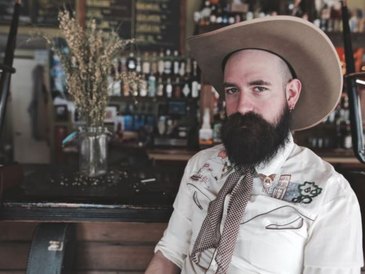 Yesterday we received the news that Ryan Koenig, the harmonica and washboard player in Pokey Lafarge’s band, was in a serious accident. He’s in stable condition in hospital and is expected to recover. Over the years Blabber’n’Smoke has met Ryan several times. He’s always been very gracious taking time to chat and keen to share his love of old time and country music with us. He recently released his first album under his own name (Two Different Worlds) and we were expecting to see him again when Pokey tours the UK early next year, looks like he won’t be making those shows.
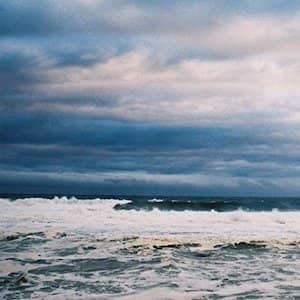 Sometimes the story behind an album is just too slick, as if it’s pilfered from a film script – music moguls discover the next big thing by accident as he sings his songs in a late night bar – too Hollywood for real surely. Well, whether Daniel Gadd is the next big thing we don’t know yet but it’s true that this young South African was playing in a bar in London one night where two PR chaps happened to be. Impressed, they followed up and discovered that Gadd had an album already recorded and just waiting to be released here. The result of their talks is this release which Gadd had recorded by the ocean at Cape Town a few years earlier and it’s very impressive. A truly solo effort, just Gadd, guitar and harmonica, bohemian folkies and lovers of that Greenwich Village troubadour sound of the sixties will surely be queuing up to buy this album once they a whiff of it.
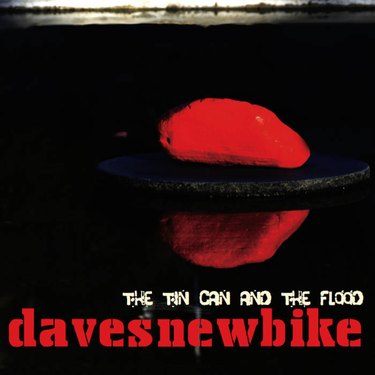 A Scottish band who claim they play, “rootsy pop for grownups,” davesnewbike are the vehicle for Tom Houston’s song writing with his literate words propped up by the guitar of Kris Jozatis (The Folk Devils) along with bass and percussion from Sam Wilson and Simon Jaquet respectively, both of them having a folk background. The Tin Can And The Flood is one of those albums that draws the listener in over repeated plays, there are no immediate hooks or singalong choruses, however there is an attractive mix of European cool and street level Scots poesy allied to some driving rhythms. One gets whiffs of Brel and Cohen occasionally along with a baser note of Scottishness reminiscent of Arab Strap.
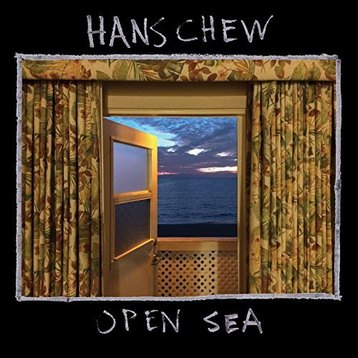 On his three previous albums Tennessean Hans Chew marked himself as a piano playing rootsy musician, happy to hammer out an engaging blend of good old fashioned R’nB shoehorned into a contemporary sound. Open Sea finds him ditching this for a new approach although it’s still a good old fashioned approach. Seems that Chew’s been hunkered down listening to a bunch of live albums from the early seventies – The Dead, NY & Crazy Horse and The Allmans along with some feted singer songwriters from that era – and decided that he could pretty much do that. Although his piano playing is still featured, Open Sea finds him fretting away, in collaboration and in competition with Dave Cavallo, the pair of them duetting and duelling on guitar on several of the songs here. Talking to Uncut magazine Chew explained, “I read a couple of bios (on Neil Young and Bert Jansch) and they really inspired me to start playing a lot more guitar. I’d also been hanging out with Michael Chapman who showed me an open C tuning of his, hence the album title.”
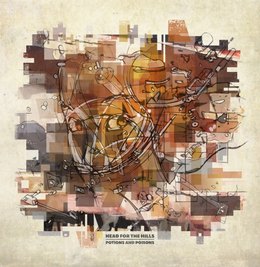 Another one of those bands who are taking Bluegrass into a more formal arena, Head For The Hills, a Colorado four piece, eschew the frantic scrubbing and speedy solos one associates with the tradition. In some ways they are similar to The Punch Brothers although nowhere near as formal and there is a warmth at the heart of their playing, something which this writer feels is sometimes absent from Chris Thile’s crew. This is perhaps most apparent on the title song which has a strong musical architecture – the melody flows, the harmonies are great, the playing refined yet delivered with a fine zest – and there’s a sly humour in the lyrics with singer, Adam Kinghorn, admitting that the potions and poisons in question include candy, coffee, cocaine and coitus!
 Blabber’n’Smoke reviewed an excellent
 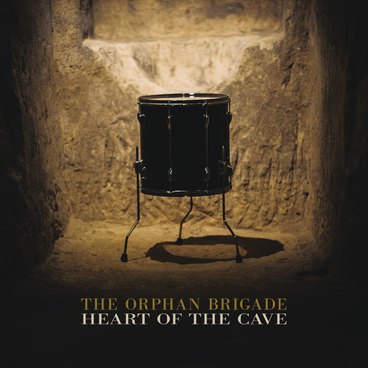 Two years ago Neilson Hubbard, Ben Glover and Josh Britt got together to record
 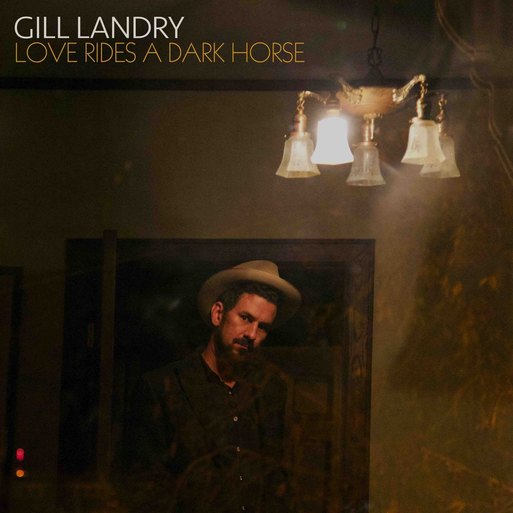 A bit of a dark horse himself when he was a member of Old Crow Medicine Show, Gill Landry seemed uncomfortable with the crowd pleasing antics of the band, preferring to deliver a more complex and somewhat darker vision via a series of acclaimed solo albums. Love Rides A Dark Horse was written in the aftermath of a time when Landry had, “destroyed all the pillars of my life intentionally and by accident.” A broken romance and disillusion with OCMS led to some revaluation with Landry thinking of the future as, “looking like an exhaustingly long walk through a knee-deep tunnel of shit ending in death,” however he describes the album as “more of ‘a map out of the darkness’ than ‘an invitation to it’.” Over the course of nine songs his attractive baritone leads the listener into a world of mournful reflection, a slew of ballads smoked in the ashes of loss, embellished with softly murmured arrangements, organ, lonesome harp and pedal steel to the fore.
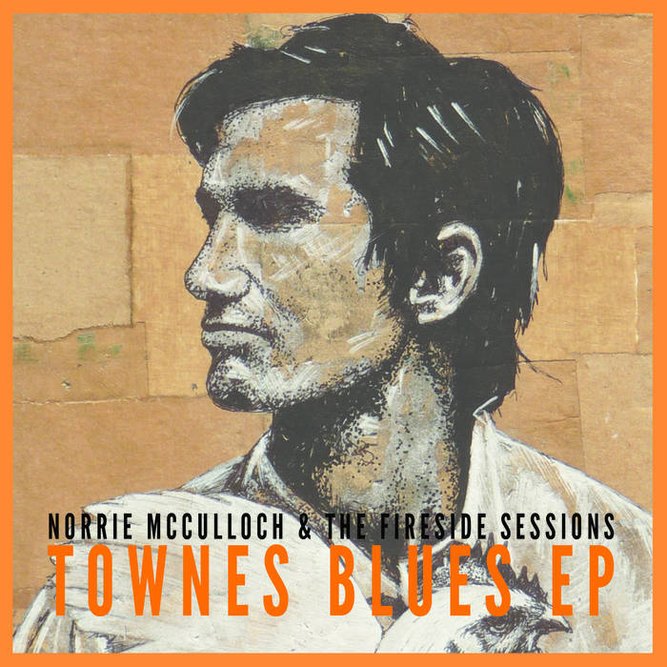 One of the highlights of the recent Glasgow Americana festival was a night celebrating the late, great Townes Van Zandt. A host of musicians queued up to pay tribute to the man who is surely the lodestone of Americana singers and songwriters, the queue including Norrie McCulloch who sang his own tribute, Mountain Blues, along with his versions of Townes’ songs.
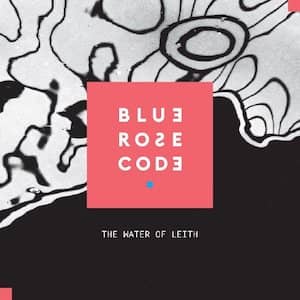 Blue Rose Code is the shape shifting ensemble chosen by Ross Wilson to deliver his songs, the vehicle for “that fusion of folk and jazz and where it intersects with song writing,” as he said in an interview with The Herald. Since coming to prominence in 2014 when his second album, The Ballads Of Peckham Rye, was nominated for the Scottish Album Of The Year Award, Wilson has blazed a trail across the country, constantly touring, the band swelling from three to ten or so members depending on who is available and where that night’s gig is. This musical caravan has picked up many fellow travellers along the way and on The Water Of Leith, the fourth album from Blue Rose Code, Wilson has assembled a fine array of them to assist him on what is probably his most assured piece of work so far, the album an almost transcendental journey into the hinterlands of his Hibernian soul.