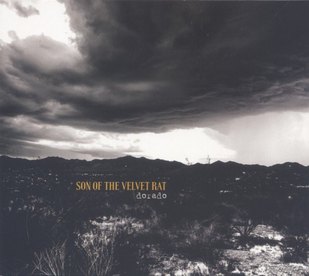
Son Of The Velvet Rat. Dorado. Fluff & Gravy Records

dorado

The arrestingly titled Son Of The Velvet Rat are husband and wife duo Georg Altziebler and Heike Binder, both Austrian but now domiciled in Joshua Tree in the Californian desert. Like that other married duo, The Handsome Family, Son Of The Velvet Rat inhabit a somewhat gothic twilight zone, a crepuscular portrait of a sometimes dark and eerie landscape with their muted tones reminiscent of rituals and murky deeds. Producer Joe Henry evokes well the atmosphere in his liner notes which portray a motel, part Bates, part Lynch, all mystery.

The songs slouch forward for the most part with Georg’s voice a haunting half sung threnody (which recalls Chip Taylor’s recent efforts) while the music floats on drifts of organ, accordion and splintered guitar with occasional decoration from pedal steel and violin.  A couple of the songs have a pulse beat beyond moribund with Blood Red Shoes a fine upholstered ride along a dark highway with additional vocals from the much missed Victoria Williams while Surfer Joe is like Springsteen taking time out to hang with some Repo Men with an alien in the trunk of their car. Starlight Motel opens with an evocative Spanish guitar trill and spooky harmonica but gradually picks up speed as the gears shift up with Georg on the run from a mystery crime. Part gangster story, part metaphysics, it glows with an evil neon malice, guitars shimmering in the reflection.

The meat of the album is in the slow procession of darkness exemplified by the opening Carry On, a funereal number with weeping violin. Copper Hill is suffused with mournful horns as the song slowly advances again like a funeral but here with a New Orleans like dignity. Love’s The Devil’s Foe rests upon a plaintive organ note before an impassioned plea from Georg to his succubus has the band evoking the elements with splashes of piano and percussion  and Shadow Song creeps along with a sinister bass line with occasional flurries of violin, spooky indeed. Sweet Angela is a love song with a twist as the singer sits in the glow of a TV, his remote control out of reach but deciding that an anonymous woman on the screen would be the perfect replacement for “that bitch in Berlin”. The album closes with the claustrophobic existentialism of Franklin Avenue with Georg reimagining an encounter as the band achieve a perfect sense of bathos, a dreamlike evocation.

Dorado is a dark trip into the American psyche and should delight those who admire The Handsome Family and The Walkabouts, a band who infused a dark European feel into their lonesome laments.
Website


Starry Eyed & Laughing. To Try For The Sun. Aurora Records

tryforthesuncover-digipak-front-300


Back in January  2015 Blabber’n’Smoke indulged in a bout of reminiscence courtesy of Starry Eyed & Laughing when Forever Young, a fantastic scrapbook of previously unreleased songs and radio sessions compiled by the band’s guitarist and singer Tony Poole was released. Rather than repeat their story you can read the review here. Poole had previously gathered together the band’s two albums and single releases on That Was Then, This Is Now (also on Aurora Records) and that was that, the two releases a comprehensive history of a great band who flamed and burned for a few short years in the seventies. But Poole has continued to delve into the archives and amazingly enough has come up with another album’s worth of songs, 20 to be precise, 14 alternate recordings of songs we know and six previously unreleased. More to the point there’s no sense here of barrels being scraped as the album more than holds its own in comparison to the previous releases. It’s apparent from the glorious Byrds’ like opening song, a cover of Donovan’s To Try For The Sun which does for the Maryhill pixie what McGuinn did for Dylan.

Bearing in mind that the band were in thrall to the American West Coast sound (The Byrds and Dylan, Buffalo Springfield, Moby Grape, CSN&Y) the album is replete with reflections of their forebears and the transition from cover versions to their own songs mirrors that of Forever Young. Thus we get the aforementioned jangle fest of the title song, a lively take on Jackie DeShannon’s When You Walk In The Room as done by The Searchers and a moody For What It’s Worth, performed in a live session with some scorching guitar recalling Clarence White’s work on the live sides of The Byrds’ Untitled album. There’s a nice surprise as they cast their sights on Al Stewart, back then a UK bedsit folkie (way before Year Of The Cat), and subject his Old Compton Street Blues with its Jacques Brel like romanticism to a full on Byrds jingle jangle treatment, Brel replaced by the romanticism of Gene Clark. Clark himself is covered as the band abandon the 1967 string arrangements of Echoes transforming it with an Eastern styled psychedelic fuzz as if Clark was still on board for Younger Than Yesterday and Crosby was in charge of the droning guitars. It’s a fabulous version and proof that Starry Eyed & Laughing were deep into their influences as back then Clark was barely on the horizon and copies of his sixties albums were as rare as hen’s teeth.

The first sessions for the first album offer up a sparkling Going Down, still a rush after all these years, a brisk 50/50 Better Stop Now and a very fine version of Money Is No Friend Of Mine. To my mind this tops the version that ended up on the album, it’s less jaunty and more akin to the spirit of Woody Guthrie’s Do Re Mi with some fine twang guitar thrown in. Alternate takes or radio sessions of songs such as Closer To You Now, Nobody Home,  Down The Street and Oh What are welcome additions to the canon and the album closes with the previously unheard Sea Comes At Its Edges, an elegiac sweep of spangled guitars, folk song and modern technology which captures the visions of McGuinn and Crosby perfectly.

On a sad note, as Tony Poole was readying this album for release it was announced that Starry Eyed & Laughing drummer Michael Wackford had died and the album is dedicated to his memory.

Website


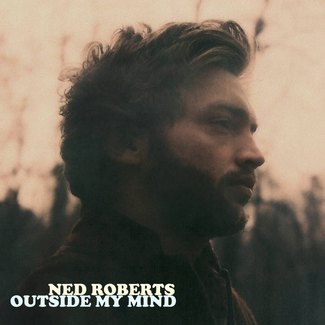
Ned Roberts. Outside My Mind. Aveline Records

a1150682164_16

Outside My Mind is the second album from London based singer/songwriter Ned Roberts. Recorded in LA in old fashioned style (direct to tape, an attempt to capture the spontaneity of the band in the studio) with producer Luther Russell on drums, electric guitar and piano there’s a spare and intimate feel to the album allowing Roberts’ songs plenty of space to impress. And impressive it is as Roberts turns in a set that is warm and mellow recalling Greenwich Village folkies and their UK counterparts’ bucolic ramblings. Roberts’ voice is closely miked with his slightly nasal delivery reminiscent of James Taylor at times, his acoustic guitar playing ripples like a rustic stream and his harmonica wheezes just like Dylan’s did. While the album does evoke hazy memories of sixties troubadours Roberts manages to capture the timeless aspect of the best of that oeuvre with Outside My Mind a contemporary album built on solid foundations. In this respect Roberts marks himself as an artist on a par with the excellent (and sorely missed) Hobotalk along with current artists such as Norrie McCulloch and Blue Rose Code.

It’s apparent from the opening song that Roberts is plucking from the branches of the fruitful sixties as Drifting Down tumbles slowly (and wonderfully) along lines set down by the likes of Bert Jansch and early Fairport Convention with Russell’s curled guitar in particular recalling very early Richard Thompson. Through The Arches rolls along in a similar vein with Russell’s piano and skittering drums evoking the jazzy folk feel that was Joe Boyd’s trademark. The title song (which closes the album) revisits this sound with Jason Hiller’s bass playing here rumbling throughout the song in a manner that I’m sure Danny Thompson would approve of. Elsewhere Roberts mirrors the genius that was Tim Hardin on Letter Home with its doomed romanticism and delicate string arrangement while Lights On The River is borne aloft on a soulful organ groove with Roberts here sounding like Dylan circa Self Portrait and the band sounding like, well, The Band.

Lyrically the album is a collection of love songs which, in the main, are melancholic, wistful recollections, hopeful murmurings with nature often invoked. Rivers and rushing waters, snow and rain, coats held tightly against a breeze the backdrop for Roberts’ musings. The whole is a wonderful collection of late night listening delight as the vocals and arrangements wash over a tired but soon to be satisfied mind.

Prior to his album launch on 29th March Ned Roberts is playing a few gigs in the UK including one at the Fallen Angels Club on Tuesday 21st March at The Admiral Bar and an Edinburgh show the following night at The Leith Depot.

Website


Mark Eitzel with Fernando @ The Fallen Angels Club. The Admiral Bar, Glasgow. Sunday 12th March 2017


ME


Hailed by The Guardian some years ago as “America’s greatest living lyricist” Mark Eitzel has toiled at the coalface for around 30 years gathering a fiercely loyal following but steadfastly remaining under the radar of mainstream acceptance. There have been brushes with fame (when his band American Music Club almost charted in the early 90’s) and a brush with death when he suffered a major heart attack seven years ago.  Throughout all this Eitzel has released a series of albums that, aside from occasional forays into electronica, portray him as a poet of the streets with a mellifluous voice, an amalgam of Scott Walker and Jean Genet sometimes surrounded by an almost middle of the road musical swell. His latest album Hey Mr. Ferryman, produced by Bernard Butler, has been acclaimed as one of his best, a return to form although it’s a fair bet that the majority of the packed crowd tonight would argue that Eitzel has never lost his form.

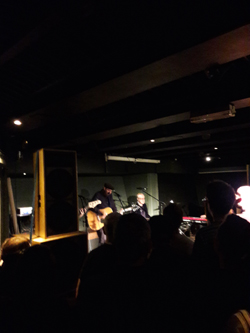
It’s a sold out show and as we said, packed. Eitzel is playing with his band and Glasgow hasn’t seen that for some time now. The only problem tonight is that with such a full house and no stage as such the only folk who are able to see the band are those who arrived sharp and got to the front. A minor quibble however as there’s an intimacy to the show, an almost palpable sense of connection to the man who rewards the audience with a wonderful balancing act, his edgy, sometimes angst ridden songs leavened by a deliciously dark and at times ribald commentary. The band (Gareth Huw Davies, Patrick Nicholson and Stephen Hiscock) are well attuned to the tunes after six weeks of touring, tonight the last show of their European trek. They capture the sonic swells and dips of his music, his smoky croons and nervy rock squalls all perfectly delivered. Eitzel himself apologises for his perceived vocal limitations believing his voice shot after so many shows but to our mind he was still in fine voice as he closed the show with Jesus’ Hands (accompanied by the audience) and the threnody of Western Sky.

There was the LA smog ridden Mission Rock Resort and the cymbal splashed torch song of What Holds The World Together (introduced by Eitzel as “a song that doesn’t make sense, even to me”). A triumphant I Love You But You’re Dead showcased Eitzel’s mordant way with words as it slouched slowly from the band while a song from the new album, In My Role As A Professional Singer and Ham shimmered and burned with a visceral force. From the old days Firefly fired up the crowd and from the new album, The Last Ten Years was a defiant declaration that Eitzel can deliver soaring melodic rock.

f

Opening the evening was the Portland Oregon based songwriter Fernando. Since overcoming a chronic illness two years ago Fernando has been touring like fury and this was his second visit to the city in just over a year. On record he is supported by friends such as Peter Buck and Paul Brainard dishing up rootsy rock not dissimilar to that of Alejandro Escovido. His melancholic opening number, White Trees set the scene for much of his 40 minute slot, his tender guitar and clear voice floating through the audience. The Devil’s In The Sky was another plaintive number showcasing Fernando’s talent for capturing emotions and setting them within a dark Western vista. Como Sueno, sung in Spanish, was a tribute to his union organiser aunt who defied Argentinian authorities in dangerous days while The Dogs was a blasted heath story worthy of Cormac McCarthy. His late colleague Jimmy Boyer was celebrated with a fine delivery of Three Sheets To The Wind, a slowly loping country song before Fernando returned to his own catalogue for the lonesome strains of Watchtower and a poignant Kingdom Come before closing with Fade Out, a song dedicated tonight to his grandfather and played with a quiet dignity. Altogether a wonderful opening set.


Alison Krauss. Windy City.

homepage_large-ad7a4b20

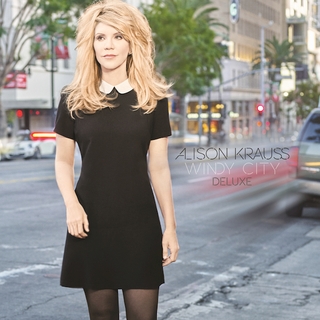
It kind of takes your breath away when the first thing you read in the PR blurb for an album is that the artist is the recipient of 27 Grammy Awards. Apparently that’s the case with Alison Krauss and it ties her with Quincy Jones as second most winner (Conductor George Solti is at the top with 31). Krauss of course has won most of these in the Bluegrass category, her work with her band Union Station considered to have been a major force in the recent resurgence of Bluegrass especially via her contributions to the soundtracks of Oh Brother, Where Art Thou? and Cold Mountain. Originally it was her fiddle playing that made people stand to attention but increasingly she has concentrated on singing with her album recorded with Robert Plant, Raising Sand, a major success.

Windy City is her first solo album in 17 years and it marks another signpost in her career. In tandem with her producer, the Nashville veteran Buddy Cannon, Krauss has selected ten songs that sing to her for various reasons, the majority of them recorded before she was born. The result places Krauss in pole position if we ever need a replacement for Dolly Parton, a singer with significant country chops but who is able to offer up radio friendly fodder without descending into mindless pop. A couple of the songs here are delivered in a mainstream ballad style (both of them  associated with Brenda Lee, Losing You and All Alone Am I) that are just a wee bit too stage musical for comfort and  Roger Miller’s River In The Rain  taxes her voice at times but elsewhere Krauss and Cannon deliver the goods.

The delightful honky tonk drive of It’s Goodbye And So Long To You with its curling pedal steel and rinky dink piano offer Krauss an opportunity to dive in with an unalloyed joy before she delves into the classic tear stained Windy City. Dream Of Me is a fine slice of Nashville pop with the band expertly delivering some twang guitar, sweet pedal steel and nifty piano as Krauss croons the lyrics. Apparently this was a song she chose not knowing that it was written by producer Cannon and once decided on Cannon and his daughter Melanie sing the background vocals. Whatever, it’s a perfect vehicle for Krauss as is Poison Love, another pedal steel fuelled swoon of a song with some added exotica in the Mexican stylings of the guitar solos. While the majority of these covers might be considered somewhat obscure Krauss breaks out two that will be familiar to most. John Hartford’s Gentle On My Mind is given a fine run through with the arrangement more in tune with Hartford’s original as opposed to Glen Campbell’s version and Krauss manages it with flying colours. Willie Nelson’s I Never Cared For You is given an appropriately dramatic arrangement, the vocals soaring over this darkly romantic song. Closing the album Krauss revisits the ballad treatment we dismissed earlier on but on You Don’t Know Me (recorded by Eddy Arnold and Ray Charles), she dips into Patsy Cline territory as she swoons and croons and the band lay down a tearful country backdrop.

Website


Adriana Spina. Let Out The Dark. Ragged Road Records

a1208076189_16

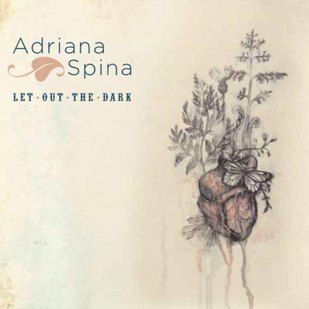
It’s hard to believe that it was back in 2005 when Blabber’n’Smoke first heard Adriana Spina when her debut EP, A Thousand Lives was released. Since then the Scots singer/songwriter has been on the road gradually working her way up the ladder to the point where she has landed prestigious support slots for the likes of Joan Armatrading, Eddi Reader, Dar Williams and Sheryl Crow. On the recording front, she released her debut album in 2011 and now, after a successful crowd funding campaign, she unveils its follow-up, the highly accomplished Let Out The Dark with its lead single, Sparkle named as a single of the week by Radio Scotland’s Janice Forsyth.

Spina sits comfortably within the sphere of artists such as Mary Chapin Carpenter, her songs are modern folk tales set within arrangements that can be subtle or rock out with some finesse as on the radio friendly Disappear which appears towards the end of Let Out the Dark. With its surging guitars and Spina’s dynamic voice which manages the twists and turns of the song excellently it’s perfect for spinning on the road on a sunlit day. Hear It From You is another rocker that just fails to capture the heights of Disappear but it belts along with some vigour while there’s an REM glimmer to the guitars on Spina’s ode to refugees on See Another Day. There’s a similar brooding guitar delivery on the love gone cold tale of The Same Drum, a song that matches the best of many of her US contemporaries.

There are more introspective moments and the album opens with perhaps the best one, the slow toll beat of Home with Spina pondering on a relationship that’s perhaps damaged beyond repair. Her voice here is a delight, multitracked to provide her own harmonies while the band (Stuart MacLeod and Ross McFarlane) with Spina on acoustic guitar spin a delicate web that recalls some of Richard Thompson’s darker work reminding one of the album Shoot Out The Lights. Two Steps has a cold Northern feel to the music which is amplified by some of the images in the lyrics with Spina again reflecting on love lost and while one might initially think that Don’t Recognise Me, a delightfully simple rendition with only Spina and her guitar on show, is yet another ode to lost love the lyrics seem to allude to childhood and adolescent years with a family member.

Sparkle is a miniature gem, a Christmas song of sorts but one that finds Spina forlorn as the strains of Band Aid on the radio signal another year over and she ponders on whether she should surrender to the myths and jollity of the season. Throughout the album there’s a thread of abandonment and the closing song Where You Are  is a bare boned bedsit wallow with Spina turning the blame for a failed romance on herself as she echoes early Joni Mitchell in some of her phrasing. A lovely end to a very fine album.

To celebrate the release of the album Adriana Spina has a launch party at Glasgow’s The Flying Duck on March 24th before embarking on a brief tour around the UK. All dates here.

Website


The Sadies. Northern Passages. Yep Roc Records

thesadies_northernpassages_cover-350x350

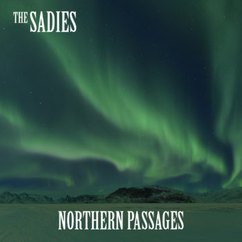
It’s always been difficult to pin The Sadies down. They came tearing out of Canada in the 90’s with a fine mash up of instrumental rock and alt country detouring to collaborate with soul singer Andre Williams (and eventually becoming as well known for further collaborations as their own efforts). Gradually the instrumentals took second place to harmonic vocals and their 2007 album New Seasons is generally regarded as a minor classic and with Northern Passages they’ve assembled another album that at the very least deserves to be considered on a par with New Seasons and in this writer’s consideration is a far more assured affair. While they still offer up an agglomeration of influences The Sadies transcend them as they gather together sixties psychedelic country, proto punk aggro, Paisley Underground and college rock; the parts welded into a sleek well tuned machine.

They open with the trippy psych folk of Riverview Fog channelling the Byrds circa The Notorious Byrds Brothers before barrelling into the Detroit metal ramalama of Another Season Again fuelled by snotty MC5 like arrogance. This dichotomy runs throughout the album with dips into country rock countered by all out freakouts with power chords and feedback well to the fore, at times this occurs within the one song, witness the astounding There Are No Words and the powerful The Elements Song which is a wonderful wall of sound infused with incense, peppermints and incendiary guitars. There are wide open vistas on the frantic acoustic drive that is peppered with Morricone like guitar flashes  which is Through Strange Eyes while God Bless The Years is (almost) straightforward country rock with pedal steel almost tongue in cheek here (and recalling again The Byrds on Drug Store Truck Driving Man). The Good Years is a narrative that could have been penned by Paul Simon back in the days and delivered as if Simon and his buddy Art were perhaps on those pep pills so popular back then while As Above, So Below has a sixties like baroque pop groove.

There’s fuzz guitar and feedback. Melody and mayhem. Psych pop and strutting grooves. The curious amalgam of Gene Clark and The Yardbirds that is Questions I’ve Never Asked perhaps the best example of the duality on show here but overall Northern Passages is a thrilling ride and perhaps the best Sadies album so far.

Website

Benjamin Folke Thomas. Copenhagen.

414ee0_1d75be3a6d754d2fa8f8f1cf80ad3e4fmv2

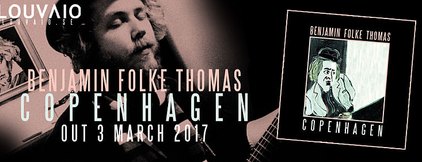
Copenhagen finds Scandinavian artist Benjamin Folke Thomas continuing his journey from folkie (admired as much for his finger picking skills as his songs) to melodic rock band leader. Recorded with the same line up as on Rogue State Of Mind the album is less punchy than its predecessor with Thomas’s attractive baritone well to the fore over a backing that rarely lets loose but is more sonically adventurous. The opening song, Good Enough For Me, is a prime example as the band settle into a mid tempo shuffle with Thomas almost talking through the Dylan like lyrics before his refrain is amplified by muted guitar swirls. As the song progresses the guitars muster some energy before breaking out into a Thin Lizzy type duality without disturbing the neighbours. The following Rhythm And Blues is sparkier with an acoustic guitar thrash and is the first of several songs that address relationships. The band are in fine folk rock form here but the passion emanates from Thomas’s vocals.

There’s a great deal of passion involved here but again it’s down to Thomas’s  voice or his lyrics with one song, Hold On particularly scathing as Thomas tears into some rock idols and their predilection for youthful flesh. The soulful intro in Good Friend Again finds Thomas recovering from the night before and disturbed by the neighbours, “fucking through the wall” before he goes on to scourge himself for his failings while the band slowly ramp up the tension. Bad News finds Thomas approximating Leonard Cohen’s apocalyptic pronouncements on his The Future album down to Cohen’s use of keyboards and programmed drums on an enigmatic song that might refer to the global banking crisis that still has us bailing out the banks.

Nestled within these songs are some gems. Finn is a trilogy of tributes to three people in his life that wafts wonderfully with the band finely pulsating and sending out some barbed guitar shards that swell towards the end as a chorus of backing vocals come in and then fade leaving only a beating drum. Copenhagen 30/6 is lighter fare with as its almost bossa nova beat finds Thomas recalling a rock’n’roll romance threatened by poor gigs and too much booze but with a hopeful ending. Struck Gold is about salvation via a muse and again the band gently propel the song along with a funereal beat and slivers of guitar. The song itself is one that had it been written back then might have been selected by Johnny Cash for one of his valedictory albums. The album closes with Thomas revisiting his earlier folk persona with Gimme A Smile recalling the work of Tom Paxton.

The album’s released this Friday and Benjamin Folke Thomas starts a short UK and Europe tour tonight, dates here.


Brigitte DeMeyer & Will Kimbrough. Mockingbird Soul.

brigitte-demeyer-will-kimbrough-mockingbird-soul-cover-300dpi-1040x930

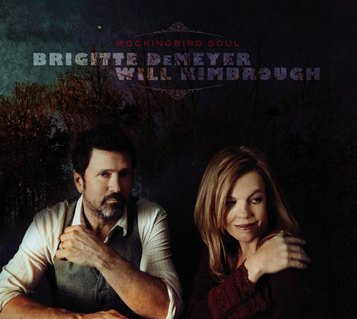
He may not be a household name but it’s a fair bet that most Blabber’n’Smoke readers will have several albums that have benefited from the presence of Will Kimbrough as a player or producer, often both. Included in his extensive CV are Brigitte DeMeyer’s last two albums and the pair have toured together extensively. It makes sense then that the pair have decided to record Mockingbird Soul, a set of songs written by the duo and set firmly in the Southern traditions of country, blues and soul. Their shared playing experience has certainly honed their harmonising with the duet’s singing throughout the album superb and they’ve had the good sense to keep it simple, the majority of the songs featuring Kimbrough’s guitar along with double bass (Chris Donohue) with spare percussion on the odd occasion. The result is an album that will surely delight followers of the likes of Mavis Staples and Ry Cooder along with anyone who is a sucker for well crafted male/female harmonies.

A couple of the songs are relatively straightforward retreads of familiar tropes. The Juke is a country blues number which allows Kimbrough plenty of space for his fine slide playing and excellent harmonica as DeMeyer comes across like an amalgam of Bonnie Raitt and Bobbie Gentry. Running Round is another country blues jaunt that recalls the likes of The Loving Spoonful or Taj Mahal while Honey Bee harks back to the days of innuendo laden viperish jazz torch songs (think of Betty Boop).  DeMeyer milks the song for all it’s worth as Kimbrough adds a wonderfully lazy backbeat. All three are excellent but they are but crumbs in comparison to the main course on offer here.

The album opens with Everything, Kimbrough’s delicate acoustic guitar leading into an enchanting song of enduring love that immediately showcases their vocal empathy. Broken Fences is more spirited with Kimbrough’s voice to the fore on a frontier number with gutsy guitar runs on a song that might have sprung from the pen of Steve Young. There’s some Dr. John like gumbo on the sultry Rainy Day (with Chris Woods taking on the double bass role here with some gusto) and speaking of Dr John New Orleans is the subject of one of the highlights here. An impressionistic take on the Crescent City with Kimbrough’s sole guitar strumming beneath the pair’s breathy vocals, Little Easy is suffused with sensations of the city, the shining stars, reflections on the water, muddy banks and a hot and heavy breeze. It’s a wonderful song and the pair match it with the snapshot of a street seller in Carpet Beggar’s Lullaby, again a song that is delicate and empathetic. The title track meanwhile is a soulful number with Kimbrough picking some fat and curly guitar like Pops Staples as DeMeyer testifies.

The album ends with a surprise as the pair tackle an old Incredible String Band Song from 1966, October Song. A Kimbrough suggestion apparently but one which reminded DeMeyer of Townes Van Zandt when she first heard the guitar part. It’s a breathtaking reinvention of the song transporting it from the cold climes of an Edinburgh winter high into the Appalachians. Kimbrough’s guitar cascades throughout with frills and runs as he and DeMeyer hit some high lonesome notes with their performance here rivalling the best of Gillian Welch and David Rawlings. It’s simply wonderful.

Mockingbird Soul is one of those albums that will surely grow in stature as word of its excellence spreads. Helping to spread the word Kimbrough and DeMeyer are touring the UK in March and the good news is that they visit Glasgow on 24th March for a Sounds In The Suburbs show at a new venue, the Fox Star Club in The Argyll Hotel, 973 Sauchiehall St. A gig not to be missed.

Will Kimbrough website

Brigitte DeMeyer website


Norrie McCulloch. Bare Along The Branches Album Launch. The State Bar, Glasgow. Friday 24th February 2017

20170224_230811-copy

With some excellent reviews rolling in for his third album, Bare Along The Branches, Stirling based Norrie McCulloch held three consecutive launch gigs in Stirling, Glasgow and Edinburgh, each one unique with a revolving cast of musicians. Those attending the Glasgow show saw McCulloch joined by two of the musicians featured on the recording, Marco Rae on bass and Stuart Kidd on drums along with Stirling musicians Craig Ferrie, Keiran Hughes and Scott William Urquhart at various moments. Playing together for the first time the ensemble had a bit of a raggle taggle approach to the songs but this  added to the informal feel of the evening with the ever affable McCulloch in fine form on and off the stage greeting each of the audience as they arrived, his huge grin ever present. I’m sure that the epithet raggle taggle will cause no offense as it relates to the late Ronnie Lane’s tag for his band Slim Chance and when the band opened with Shutter, the first song on the album, there was a touch of that gypsy caravan about them reinforced by the song’s affiliation to Van Morrison’s Celtic soul music. McCulloch was in fine voice, a touch wearied but with a hint of joyousness in the rousing refrain. Little Boat continues to mine the Morrison comparisons on the record with its soulful organ but tonight it was delivered as a plangent ballad with the band delicately prodding McCulloch’s warm voice. There was a nod to the previous album with a fine delivery of Ordinary Joe before the more upbeat Frozen River cheered up the audience as a mandolin was introduced into the mix.

20170224_222051-copy

From here on in the band members came and went and there were stripped down deliveries of the poignant Safe Keeping, Townes Van Zandt’s Dollar Bill Blues and McCulloch’s tribute to Townes, These Mountain Blues. His solo performance of Turn To Dust, written shortly after his mother’s death was mesmerising, the audience transfixed. The band gradually reassembled for the lonesome harmonica led Around The Bend, a dusty masterpiece that limped along wonderfully with a Neil Young bent before the chilling epic of Beggars Wood with a lonesome McCulloch gradually enveloped by languid guitars over a doom laden beat. Show over McCulloch returned for a masterful encore of When She Is Crying Too, a song that surely proves he is one of our foremost songwriters.

For tonight McCulloch graciously offered opening slots to two of his band compadres. Craig Ferrie AKA December 91 suffered from some audience chatter unfortunately, his elvin appearance failing to capture their attention but from the front his mix of freak folk and indie rock was somewhat intriguing.20170224_204452-copy

While he sounded at times like Eef Barzelay his songs wandered into a weird world of naiveté and psychodrama deserving of a much more dedicated listen (which is possible if you visit here).

p1060849-copy

Scott William Urquhart was a revelation, a guitarist obviously in thrall to the likes of John Fahey and Leo Kottke, he mesmerised the audience with several instrumentals that, had some joss sticks been available would have had us all back in the scented sixties. Again this was intriguing, the man himself admitting that this was the first time he’d played outwith Stirling. Do check him out if this stirs up any interest, he even sells small run bespoke vinyl editions of some of his tunes. I thought he was wonderful.