Round about this time last year we were quite impressed by an album from a duo called Fiddle & Banjo. Their album, Tunes From The North, Songs From the South was an impressive sepia toned investigation into old time music by the duo of Karrnnel Sawitsky (fiddle) and Daniel Koulack (banjo) and when they came to Celtic Connections in January of 2016 we described them as “ghosts from the past,” their renditions of traditional tunes at times chilling.
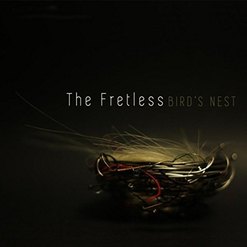
The Fretless is another Sawitsky project, a string quartet which again has its roots in traditional music and then adds a more formal discipline to the tunes in the manner of a classical quartet. Sawitsky plays fiddle and viola as does Trent Freeman (who also appeared at the Celtic Connections gig) and Ivonne Hernandez while Eric Wright adds cello. It’s a measure of the band’s excellence that over the past four years they have swept the boards of various Canadian music awards named as ensemble of the year and best instrumental group while their two previous albums have won Best Instrumental Album of their respective years from the Western Canadian Music Awards. Bird’s Nest looks set to follow in that tradition as the band continue to straddle the folk and classical worlds, the debut performance of the album taking place in Cologne’s Philharmonic Orchestra Hall in October.
It may seem a daunting prospect, an instrumental album of fiddles, viola and cello. However for folk followers there is a seam of traditional lures throughout the album with a definite Celtic air lingering here and there. Most of the tunes are originals but there are traditional tunes also with The Kylebrack Rambler an energetic closer to Freeman’s Jig Of The Blue Moon while a flighty Maids Of Castlebar is conjoined with Sawitsky’s Le Reel de Samuel. There’s toe tapping aplenty and even some jigs so it’s not the sort of polite string quartet you’ll hear while browsing in a quaint old bookshop. Indeed there’s a sharply dynamic quality to the album, the thrust of the fiddlers combined quite thrilling at times while the woody timbre of the cello is perfectly captured. Wonderfully textured it’s warm and engaging and it should thrill the socks off of anyone who is even slightly interested in folk fiddle playing. A bold, brave and ultimately satisfying adventure.
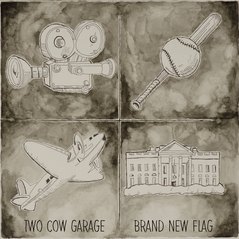
Based in Columbus, Ohio, Two Cow Garage are commonly referred to as one of the hardest working bands in the States. Certainly their name crops up repeatedly on several lists Blabber’n’Smoke subscribes to and they have a fiercely devoted following over there; when their tour bus broke down a few years ago an unsolicited fan based fundraiser quickly had them back on the road again. Despite this they remain somewhat under the popular radar especially on this side of the pond, a shame really as they are one of the best proponents of that mash up of country, punk and melodic rock that was born from the No Depression movement of the nineties. In addition they are firmly on the side of the righteous. That is they sing about the human condition, injustice, the daily struggle against the powerful and it’s ironic that Brand New Flag is unleashed just as Americans (and others) shift uneasily awaiting the new order that’s just been given the keys to The White House.
Brand New Flag is a raw album. It blasts from the speakers for most of the time. Churning melodies and amped up guitars hammer through many of the songs at times with the urgency of a Springsteen fist clencher, the clincher being Continental Distance which even has a Roy Bittan like piano break. This Little Light is a noirish account of a mugging and not a million miles away from Drive By Truckers territory while History Now could become an anthem for the Occupy movement as could the title song where they rail against the establishment singing, “I don’t believe in anything”. In addition they plant their feet firmly on the side of diversity with the life line described in the words of Let The Boys Be Girls, a defiant and proud refutation of “fitting in” as they dismiss God, schooling and military service with the defiant cry of, “we don’t need old white rich men to tell us who we can kiss goodnight”.
It’s all stirring stuff but they do let off on the throttle on a few songs. The opening song Movies is a dry as dirt “alt-country” stumble with all four band members singing about their childhood dreams while A Lullaby Of Sorts is a marvellous dissection of teenage neurosis with the narrator alarmed by a gun bearing customer at a roadside stop and pondering on the obscenity of wearing an $800 leather jacket. There’s fear and loathing on the dirge like guitar squall of I Promise which is like an internal dialogue fuelled by self doubt and harried by schizophrenic like other voices. The tune itself eventually collapses into mayhem, a deranged horn section recalling the free form jazz of Albert Ayler.
An album then that is and is not easy to listen to. It’s invigorating. An alternative state of the nation address that seeks ways to survive against the oncoming tsunami of small mindedness.
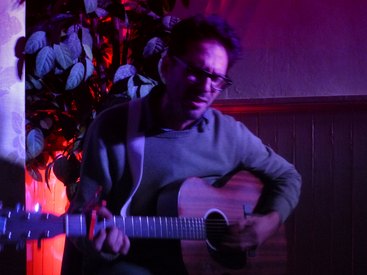
Glasgow’s foremost community radio station dipped into the burgeoning world of house concert hosting this week, opening the doors of their south side studios for an intimate evening with the esteemed Eef Barzelay. A bit of a catch for what might be the first of an occasional series of close up concerts, Barzelay with his band Clem Snide were one of the finest confections to come out of the States in the nineties. His light and resigned voice allied to music that was somewhat akin to a mash up of grungy power pop, folk rock and string quartet, the arrangements complex at times, the lyrics ranging from the confessional to absurd and surreal juxtapositions not unlike those of Robyn Hitchcock. Another in a long line of bands whose name was inspired by the writings of William Burroughs Clem Snide were probably too clever to catch on despite the occasional brush with fame as when their song Moment in the Sun was used as the theme song for a TV series. The band carry on having split and reignited on several occasions while Eef has forged on with his solo recordings creating a devoted fan base via his Bandcamp releases; he’s a prime candidate for The Guardian’s Cult Heroes column.
A canny decision then to have a bona fide cult hero play in your parlour and the cognoscenti responded well. The room filled with people spilling into the hall, those in the front seats almost inches away from the man, a situation Eef explained as we spoke during the interval that he enjoys, much of his time these days spent in concerts like this. A chance to play his songs to his fans out with the promotional circuit, up close, a meet and greet event even though he is no stranger to larger festival crowds still. On these occasions it’s personal, just him and his guitar, the audience transfixed with no bar sounds or coming and going during his sets.
Playing on the intimacy of the occasion Barzelay opened with a joke as he mentioned that he’d heard that Willie Nelson would lock into eye contact with an audience member and play just for her (it was usually a her) as he scanned the front rows before confessing he was kidding. His humour was a large element of the night, self deprecating, oddball and endearing. Humour seeped into some of the songs also but overall this was a master class in songwriting with Barzelay taking subjects on and applying his unique vision. At times reminiscent of the younger Loudon Wainwright particularly when he applied his mournful scat like mock trumpet he regaled the audience with bittersweet love songs recalling walking along Central Avenue high on ecstasy while his song The Ballad Of Bitter Honey (inspired by MTV viewing while on tour) was soaked in Wainwright’s acerbic wit. A new song, Angeline (another song with a TV link, in this instance the US show Catfish) was an anguished and powerful depiction of damaged people.
An accomplished performer and obviously very comfortable in such close quarters Barzelay had the audience in stitches with his coupling of Jews For Jesus Blues, written from his perspective as an Israeli born Jew who sings “fake country music” followed by God Answers Back. Finding an audience member who actually came from San Jose he delivered a wonderful version of Bacharach and David’s Do You Know The Way To San Jose with a bossa nova beat and ran through Elizabeth Cotton’s old chestnut Freight Train with evident delight. He closed the night with his “almost hit” Moment In The Sun capturing the allure and perils of fleeting fame, a perfect summary of his ability to turn a song inside out with neurosis shining through a beautiful tune, before segueing into The Velvet Underground’s Who Needs The Sun, a perfect companion to his own song.
It was a great evening and a great opportunity to see, hear and meet a world class musician. Hopefully Celtic Music radio will continue to plough this not so lonely furrow.
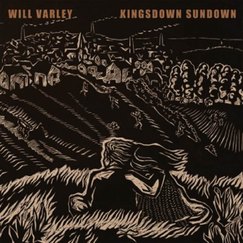
Will Varley is one of those “finger pointing” musicians singing the types of song that Dylan renounced around the time of My Back Pages. Of course, Dylan has pointed his finger at various injustices since those days and folk music has a powerful tradition of protest ranging from simple sloganeering to well-crafted lamentations on injustice and the human condition. On Kingsdown Sundown Varley certainly falls into the latter camp with the album a stark meditation on several woes, the environment, US politics and daily striving all featuring.
Varley’s vulnerable husk of a voice and his intricate guitar skills are the bare bones of the album with an occasional muffled percussive boom punctuating several of the songs. In the main acoustic but with electric guitar buried in the mix on Let Your Guard Down and then growling throughout We Want Our Planet Back, a strong environmental protest. Along with the opening song To Build A Wall there’s a strong sense that much of Varley’s ire is directed at the goings on in the US and although obviously recorded before this week’s election result listening to them is a reminder that the struggle, despite setbacks, must go on. To Build A Wall joins a long list of songs that allude to the possibility of a new Berlin like wall being built in the USA with Varley delicately reminding the listener of the consequences of such an action. He’s more direct on the Dylan like Something Is Breaking which is like a clarion call from the sixties while When She Wakes, a dark puddle of a song with lyrics which weave urban squalor into a folk like lament has sparks of guitar which recall the likes of Bert Jansch.
Dipping into an almost surreal netherworld on Let Your Guard Down and waxing poetically on the wintry and bucolic February Snow Varley is an excellent exemplar for those who support the argument that lyrics can be literature as realised by Dylan’s recent prize. Varley rails against injustice throughout the album but he does so in a beguiling and ultimately disarming fashion.
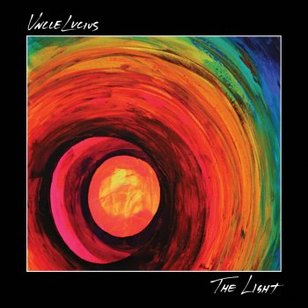
From Austin Texas Uncle Lucius are a five piece band who have a busload of talent on board, various members writing and singing lead on their songs which are steeped in the South and feature inventive keyboards and sly guitar. Sound familiar? It’s tempting to compare them to The Band, especially when the horns kick in on the soulful organ push of The Age Of Reason, the second song here. It’s a comparison that can be deadly as it’s unlikely that we’ll ever get another collision of talent as existed in The Band but on their own terms Uncle Lucius deserve at least to be considered along with further comparisons to the likes of The Allman’s and even Barefoot Jerry and Little Feat.
From the opening title song which moves from an acoustic strum into a full barrelled piano romp to the closing full tilt boogie of Someday Is A Far Cry the band roam through a series of thought provoking songs. At times the lyrics are positively existential as on Nothing To Save’s, “Reality’s a battle when fought in the mind, mind is a tool best used to measure time, time is a concept, a construct of man, man could very well be wrong again.” Heady stuff indeed but it’s delivered over a hypnotic and powerful swirl of Stax like balladeering and throughout the album the band manage this mix of swampy rock and questing lyrics. For those who want to indulge in the words there’s a lyric sheet included which will provide hours of scrutinising but overall the band deliver a fine set of invigorating songs that sway mightily, the cool melt of tom toms and swirling guitars on Flood Then Fade Away perhaps the highlight here.
The band are currently on tour in the UK and play in Glasgow on Sunday 6th November at The Hug & Pint.
One half of the Grammy Award winning duo The Civil Wars, John Paul White returns to the fray two years after the shock ending of his musical partnership with Joy Williams. For a while he concentrated on his record label (Single Lock Records) producing the sublime Donnie Fritts album Oh My Goodness. Beulah doesn’t directly address the issue of the band’s split but it contains several songs described by White as ones he “tried to avoid but I realised the only way I was going to get rid of them was if I wrote them down,” the title refers to William Blake’s concept of the subconscious; the source of poetic inspiration and of dreams.
It’s an album that pokes into dark spaces, even on a creamy country love song such as I‘ve Been Over This Before (with harmonies by The Secret Sisters) there’s a tale of desertion and heartbreak. With simple acoustic based ballads and fuller arrangements that betray White’s love of Southern rock he alternately sounds angry and desolate, the opener Black Leaf a delicate recrimination with White’s acoustic picking to the fore backed by a sensitive keyboard and horn arrangement. It’s followed by the abrasive and swampy What’s So with White almost howling at times, pained by “the difference between what should be and what’s so.” White remains on this path for much of the album. There’s an almost Nick Drake like sound to The Once And Future Queen, apparently written for his daughter, while I Want To Make You Cry is simultaneously creepy and tender, the baroque folk backing adding to the sense of displacement here.
While songs such as I’ll Fight For You and The Martyr veer dangerously close to stereotypical “radio friendly angst rock” White can yank out a tremendous heartfelt apology on the lyrical folksy lament Hate The Way I Love You and he closes the album with another winner on the breathy close miked I’ll Get Even, a song whose lyrics are open to discussion.
John Paul White plays Manchester and London on the 7th and 8th November, details here
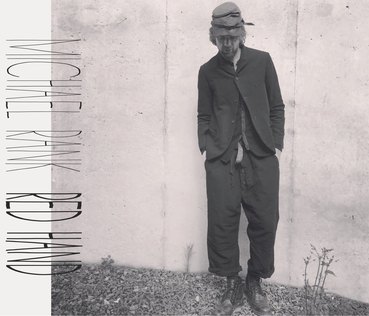
A Blabber’n’Smoke favourite, Michael Rank continues his unfettered exploration into the hinterlands of bare boned Americana on Red Hand, his sixth album in four years. Over the course of these albums his husk of a voice has drifted over music that has Appalachian roots but also recalls a grizzled alt country sound that goes back to The Band and The Stones’ occasional forays into country music while elements of The Grateful Dead, Neil Young and The Jacobites have been woven into the thread at times. The slow drizzle of guitars, plaintive fiddle and tentative mandolin with occasional licks of pedal steel that have characterised his latter work have also included an increasing use of a female vocal foil with Emily Frantz and Skylar Gudasz previously featured. His last album Horsehair found him singing with Heather McEntire (of Mount Moriah) and she returns here singing on all of the songs, the pair of them a wonderfully fractured duo, an alternative George and Tammy if you will.
In his press interviews for Red Hand Rank has spoken of his introduction to music back in the seventies and his liking of “soft rock” troubadours such as Cat Stevens, the PR blurb saying it’s like “70’s radio filtered through a Civil War fiddle.” However there’s no Moonshadow type meanderings here as Rank continues to dig into the sinews of deep dark and weird Americana, a perfect embodiment of what Greil Marcus was hinting at when he described The Basement Tapes as “palavers with a community of ghosts.” Rank and McEntire sing like a pair of revenants, wraiths gathered around a microphone whispering their covenants, the band wrapped around them like a Kudzu plant.
That Civil War fiddle opens and closes the first song River Road, a plaintive intro to a gutsy song that does indeed recall the more muscular Cat Stevens of Can’t Keep It In as Rank’s usual skeletal backing is adorned by the Wurlitzer playing of James Wallace adding a bit of oomph. There’s more of that oomph on the horn backed 1964, a swampy ooze of a song but the following Jacob, a magnificent swoon of a song with creamy pedal steel stamps Rank’s standing as a major player. It’s a perfect song suffused with emotion, the vocals stained with an authenticity that beggar’s belief as they strain to connect generations. There’s a heartbreak woven into the fabric of the album with Milkweed a dreamlike recollection of carnal love lost set to a mournful, almost Celtic, lament while The Lord He Take Away is a powerful and intricate assemblage of sawed fiddle and plaintive pedal steel supporting a tale that could be straight from the likes of Cold Mountain. Forever And A Day is a devastating love song as Rank and McEntire sing in unison of their hopes for a wedding day but the music and their delivery seems to suggest that it’s a forlorn hope. Again this song just weeps with emotion, Rank a puppet master of emotive string pulling delivering slivers of painful beauty.
Red Hand confirms Blabber’n’Smoke’s belief that Michael Rank is an artist of the first degree. Six albums in with all of them somewhat magnificent he deserves to be heard far and wide. Currently he doesn’t travel out with North Carolina but videos of his performances locally show that he can carry off his superb concoction of stained and strained melancholic country laments with ease. Have a listen and then buy the albums, you won’t regret it.
And here’s an older piece from Rank, one that we think shows off his particular talent.
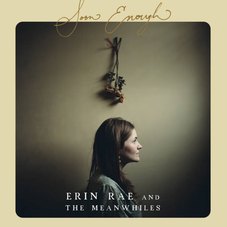
Erin Rae’s album debut album Soon Enough, released on Clubhouse Records earlier this year was a reminder (as if we needed one) that Nashville is not only an inexhaustible well of talent but it also has the ability to surprise us. I don’t think that anyone would categorise Ms. Rae as typically Nashville, a song like the excellent Clean Slate seeming to cling more to the era of LA troubadours.
With some excellent reviews for the album under her belt Rae is embarking on a major tour of the UK over the next four weeks (all dates here) which will include some shows with her label mate Cale Tyson. On the eve of embarking for the tour she took some time out to talk to Blabber’n’Smoke.
Hi there,
Can I ask you about the opening and closing tracks on the album? They bookend it really well but there’s a different feel, I think, to them than the rest of the album, the vocals more elaborate. Was that deliberate?
Hi! Yes, Light Parts 1 & 2 I think came from a different side of my writing from several years ago. My friend John Furr initially created this beautiful arrangement of the song on his own and surprised me with it. So when we started planning a record I knew I wanted to use that song to tie the whole thing together. The sentiment of the song is empathy for another person’s experience, which is a lot of the basis of the entire record. Cori Bechler, one of the first people I collaborated with creatively, wrote the vocal parts for Part 2. There is also a nod to the first EP Crazy talk.
You seem to mix an “introspective” type of song writing with a sweet, countrified rhythm, a sound that really comes to the fore on the title song to Soon Enough. I was reminded of Janis Ian and The McGarrigles at times. Are these artists you’ve listened to?
I have not heard The McGarrigles as yet though since the release of our album in the UK I have heard a few folks say there is a similar feeling. I’ll have to listen to them now before we arrive. Janis Ian was not someone I was super familiar with until I was 20 or so. My voice teacher and mentor Phoebe Binkley was a friend of hers and I actually have a signed copy of Janis’s autobiography on my shelf that she gave to Phoebe. The more I’ve learned about her, the greater the compliment of a comparison is. What a brave artist. I hope I can channel some of that.
The album was apparently recorded “live” over just two days. Had you and the band been playing the songs for a while?
We had! Most of the songs we had played for at least a year, some of them a little longer but on a couple of them we hadn’t played them before. However, we had been playing together for about 5 years at that point, so even on the newer tunes they felt good pretty quick.
There was a five year gap between your EP release and the album. Was this a case of trying to get a record deal or getting enough songs together for an album?
I think it was a case of early “adulthood”:) Or late childhood depending on the perspective. I was in the midst of writing songs while also living out my early 20s and learning a ton about how to be a person. It’s a messy age, so it just took a while. I think it took about that long for me to shape complete ideas and live those stories out enough to write them. And I think it was just a three year gap! Maybe four for the UK audience.
Are many of the songs “autobiographical?” I’m thinking of Sleep Away and Minolta for example.
For sure. Most of the songs are, with the exception of Pretty Thing which is a story built from a feeling.
You grew up in a musical family. What are your earliest memories of hearing music and can you say who your main influences are?
My earliest memories of music are my dad playing with his friend Willie X at Davis Kidd and events around Jackson, TN, and then with my mom in our kitchen. My dad used to do this song called “Smoke, Smoke, Smoke” and I got up at Davis Kidd to sing with him when I was five. “Smoke, Smoke, Smoke that cigarette. Puff, puff, puff until you puff yourself to death! Tell Saint Peter at the pearly gates, that you hate to make him wait, you just gotta have another cigarette”. Hahaha! These little old ladies laughed so hard and tipped us like 20 dollars each.
I think my main influences are my parents along with Greg brown, Kate Campbell, Gillian & Dave, and all those artists that my parents sang songs by. There’s also Nanci Griffith, John Prine, Kate Wolf and Doc Watson. So many!
You are touring the UK soon. Have you played here before and will you have a band playing with you?
I have only played a couple of shows in Scotland (with Louis of Admiral Fallow) and I played in Switzerland in years past. This will actually be my first time to England and my first official tour in Scotland and I’m so excited about it. I’ll have my trusted friends and players Dominic Billett & Jerry Bernhardt with me for all the dates. Can’t wait!
Erin Rae’s tour starts October 25th in High Wycombe and it concludes with four Scottish dates in November where she will be appearing with Cale Tyson.
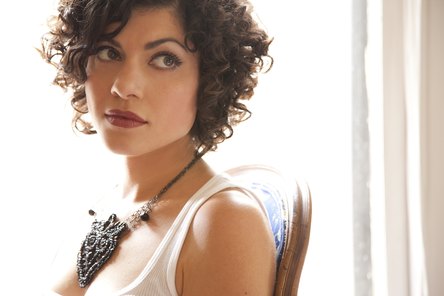
Texan Carrie Rodriguez first came to most folks’ attention when she teamed up with Chip Taylor back in the early noughties, the pair recording four albums together. She then carved out a successful solo career with her debut album, 2006’s Seven Angels On A Bicycle quickly followed by another six discs leading one writer to describe her as perhaps, “The hardest-working woman in American roots music.” An appellation that’s borne out when you dig around into the background of her latest (and in the opinion of many, her best) album, Lola, released earlier this year. The album is a result of Rodriguez delving into her Mexican family roots, a project she has been considering for some time, the fact that she was more than midway through a pregnancy when she recorded the album no hindrance. Happily, she and her partner Luke Jacobs are now the proud parents of their son Cruz while Lola, their sonic offspring is also thriving.
Lola consists of Rodriguez’s settings of classic Mexican songs; rancheras and boleros, reclaimed from the past along with several of her own songs which were inspired and informed by her listening to the crackly past. The originals are sung in Spanish, her own songs in Spanish and English. The result a collection of songs, some languid, some passionate, all delivered by her crack assemblage, The Sacred Hearts who include Jacobs, Bill Frisell and Viktor Krauss. It’s a magnificent celebration of her Mexican heritage, not dissimilar from some of Ry Cooder’s recent efforts, while it’s not afraid to address current issues that have been stirred up concerning the plight and fortunes of Mexican American citizens.
Ms. Rodriguez is coming to the UK in November offering us a chance to hear these remarkable songs in a live setting and she took some time out to talk to Blabber’n’Smoke about the album and its conception. It all started when she was given a collection of songs recorded by her great aunt, Eva Garza, back in the 1940’s. So first of all we asked her about this and why it eventually led to Lola.
Eva was my grandmother’s older sister and she got her start singing on a programme in the ’40s called Voice of America. It was a radio show that was broadcast all over the world where American troops were stationed and her first gigs were at Radio City Music Hall singing in Spanish. I didn’t really get to hear her music until my grandmother gave me a bunch of her songs taken from old scratchy recordings that had been transferred onto CD. She gave me them when I was in my early twenties and I remember I was living in New York at the time and the moment I heard them I was literally brought to tears. She has this gorgeous big alto voice and the type of music she was singing was very dramatic, ballads and boleros with very melodramatic lyrics and big orchestras behind her, strings, woodwind, trumpets. I was completely blown away that this was my relative although I never met her. She was quite a bit older than my grandmother and she died very young, just in her early forties when she passed away. She was a family legend of course but I probably thought that my grandmother had exaggerated her until I actually heard her and I was just so moved by her music and her passion so that’s what started my journey into thinking about singing in Spanish. It’s been many years, I started singing one song in Spanish as an encore in my shows and little by little I got braver, I added some more songs in and eventually I worked up to the place where I could make this record.
So the album has been in the making in your mind for a number of years then?
Yes. Maybe for the past seven or eight years I’ve been thinking about doing this, making an album of Spanish songs but I didn’t quite feel ready. I really didn’t know what it would be, I knew I wanted to record an album and I had started to dig into some old songs and I really did think that the album would all be in Spanish. In the end however I wound up writing half of the songs because it just didn’t feel quite authentic to me to make an entire album of classic songs even though they’re adorable to me, these old ranchera songs. I thought I had to introduce more of myself into the album and so I added my songs which in the end turned out to be sort of “Spanglish.”
The album opens with Perfidia, a song that’s fairly well known as its been covered by the likes of Glenn Miller and Linda Rondstadt but the other covers are much more obscure. How did you go about selecting the songs?
Well after listening to my great aunt, I started researching into these old songs and learning more about other artists of her time. I’d listen to her singing and see who wrote the song, say, Cuco Sanchez, one of the greatest Mexican writers so I’d look up Cuco Sanchez and see who else had covered his songs. Just through listening to my great aunt I discovered so many wonderful artists that I now listen to all the time, people like Chavela Vargas, Lydia Mendoza, Javier Solis and Lola Beltran. It really was a golden era of Mexican music that went all the way through to the sixties, they called it “Época de Oro“, the golden era and it wasn’t just the music, Mexican films were being made in Hollywood, really big productions and the music was part of that. So I dug through all of that and found my favourite songs which weren’t necessarily the most popular ones. But Perfidia is definitely the most recognisable one and the version I find most inspiring is the one by Trio Los Panchos which has the most incredible harmonies all the way through. And from the moment I knew I wanted to cover Perfidia I also knew that I wanted Raul Malo to sing with me on it. I just thought it has to be Raul and of course he did it. I was so thrilled that he said yes.
Of course the words for these songs are in Spanish and they often tell a tale, usually fuelled by love, lust or treachery. When you’re playing them live do you explain the stories to the audience?
I do because I don’t expect everyone to be fluent in Spanish. So I explain the story and one of the interesting things that came to me over the course of doing the album was how many parallels there are between Mexican ranchera music and American country music. For example I did a song called Que Manera De Perder which means What A Way To Lose. It’s a bilingual duet on the album and the first time I heard it I couldn’t believe how much it sounded like a Merle Haggard song, one of his really sad songs like Today I Started Loving You Again. You know, the kind of song that makes you want to stay up too late and drink and cry and look at old photos. So I like explaining the songs and pointing out the similarities. I think that these days it’s really important to point out the similarities between our countries because we’re just so insanely divided right now.
There are a couple of your songs that address these issues head on. Llano Estacado is about the plight of immigrants into the USA and West Side recalls a sort of schoolyard apartheid with Mexican kids shunned by the white kids. Why did you put these songs into what is essentially an album of old love songs?
Diving into the older songs and singing them in Spanish brought about some feelings, memories and such that I really wasn’t aware were in there. Thinking about how I grew up, what it was like when I was growing up, what it felt like to be half Mexican American, half Anglo American and living on the west side which was the Anglo side of the tracks. I hadn’t thought about my school since I was a kid but as I was working on the record the memory came back and I sat down and wrote the song (West Side) in like 10 minutes. It was something that had been sitting there but hadn’t been brought to the surface until I started looking back at these old songs and it kind of got mixed in with the way things are right now. So some of the songs do have that sort of political slant and even though it’s kind of strange to have them there along with these romantic ballads I think the album is a reflection of who I am, my culture, my roots. I think it’s an authentic representation of me.
And of course Chip Taylor has just released a new song with you, Who’s Gonna Build That Wall, which addresses one of these issues head on.
That’s an amazing song. Chip just wrote that recently and we were touring Canada and decided to record it because it’s so timely. We really wanted people to hear it so I know Chip’s doing everything he can to get it out there before the election.
The album is beautifully played and sung and very evocative of the images and sounds that many of us have of Mexico. Images gleaned from Hollywood of hot cantinas and Latin passion. How long did you and the band spend on working up the arrangements?
Luke and I did a lot of the work together before the band showed up so we had the basic arrangements. Luke’s background is more rock and pop so it was a nice juxtaposition for these classic Mexican songs. I wanted to have a “mariachi” sound of sorts but I also wanted it to be something modern, kind of culturally mixed up. I didn’t want to just play the songs as they originally sounded so we started off with the arrangements Luke and I did and then the band got together for about four or five days before we went and recorded the songs live in the studio. The only overdubs were a little bit of pedal steel at the end. It was so much fun and this is the first record I’ve made where I didn’t need to fix any vocals afterwards, it’s all just live takes as I was inspired by the music and the band around me. I was also seven months pregnant and I think that also inspired me having this little life in my belly dancing around as I was singing.
The album certainly reminds me of some of Ry Cooder’s recent work, Chavez Ravine and his album with the Cuban Manuel Galbán, Mambo Sinuendo.
I have’t heard those albums but I’ve got Ry Cooder’s Talking Timbuktu which he recorded with Ali Farka Touré and of course Buena Vista. So I don’t know too much about his work but I like the comparison. The idea of getting Bill Frisell in was too make something completely new and to take these classic songs into outer space. For example, on the instrumental take of Si No Te Vas I worked up an arrangement where I was thinking of a Phillip glass type figure in it that took it somewhere else, like we were up there with no ground to stand on and when we recorded it just exceeded my expectations of it, it does sound otherworldly to me.
We’re looking forward to hearing these songs when you tour the UK in November. Who will be playing with you on stage?
It will be Luke and me. We’ve toured as a duo in the UK many times and we’ve been playing these songs as a duo over here in the States. They come across really well and of course Luke’s got his lap steel which adds a lot of atmosphere. So it’s Luke and me and we’re bring our son, Cruz and my mom who is the granny nanny, it’s a family affair
Carrie’s UK tour starts in Birmingham on 3rd November ending in Edinburgh on 17th with a Glasgow show on the 16th November. All dates are here.
On paper, it seems an odd match. Indiana based outlaw country and California inspired jangled rock, Austin Lucas, “the tattooed George Jones,” backed by the 12 string fabulations of Oxford’s The Dreaming Spires. Sure, they share a record label in common but this could be something like Willie Nelson backed by Big Star which, when you think about it actually doesn’t seem like a bad idea so maybe the folks at At The Helm Records were “thinking out of the box” when they dreamed this one up. It helps of course that Lucas’s latest album has several songs that have a silvery sheen to them, a cross between Sturgill Simpson’s metaphysical moments and Gene Clark’s cosmic wanderings and a sound which The Spires were well equipped to provide in the live setting along with the tougher Bakersfield type songs.
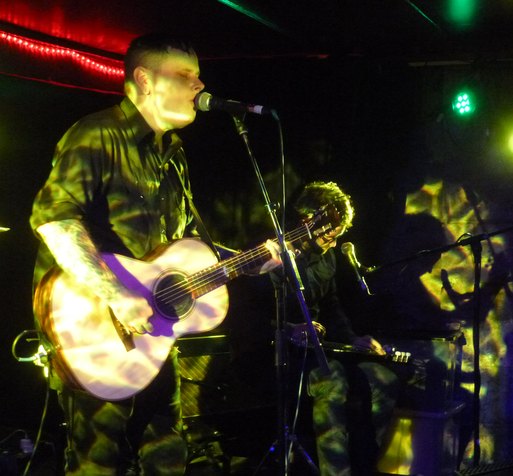
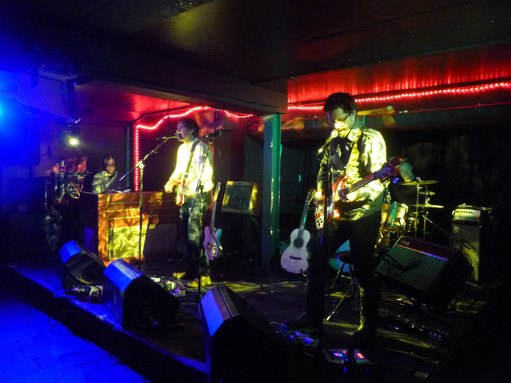
Akin to the old “package” tours, we got two acts for the price of one tonight with The Dreaming Spires playing a set before backing Lucas. From the off there was a powerful thump in the rhythm section to back Robin Bennett’s jangled Rickenbacker on Everything All The Time, a glorious swatch of Paisley Underground/Overground rock (and not a womble in sight). The cowbell intro to Strange Glue hinted at a Stones type raunch but instead we were led into a slightly surrealistic wordy perambulation backed by a fuzzy Big Star like Memphis soul sound mashed up with the percussive drive of Cornershop. There was a sense of the baroque Gene Clark in the keening Road Less Travelled, a mild venture into psychedelia on Strength Of Strings (dedicated to Dylan’s Nobel prize) which slowly built up into a crescendo before they crashed into Harbuton Mead which thrashed around with an energy that recalled the halcyon days of The Long Ryders. House Of Elsinore was a throwback to long lost days of hippie minstrels channelling ye olde folke songs with electric 12 strings supplanting lutes as Shakespeare and Bach like riffs floated from the stage before ending with a sly nod to The Who’s psychedelic masterpiece, I Can See For Miles.
Far away from being a whimsical recreation of jingle jangle times The Spires thrummed and throbbed with keyboard swells and Eastern accents from Tom Collison while Jamie Dawson powered away on drums along with Joe Bennett’s supple and melodic bass playing. Their climatic Dusty In Memphis was a fine salute to the power of rock and soul while Searching For Supertruth was a blizzard of strings and things.
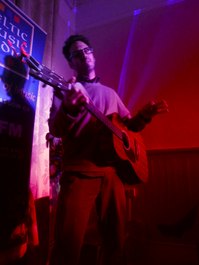
After a short break, Austin Lucas took to the stage for a feisty couple of solo numbers starting with a powerful rendition of Go West. With gutsy vocals and a dramatic habit of snapping his guitar strings he immediately grabbed our attention. Somebody Loves You was a ferocious example of high mountain folk allied to a punk like snarl with his guitar playing reminiscent of Michael Chapman’s fluid fingertips. The band then came on, Telecaster in place for a muscular Ain’t We Free and a rousing Kristie Rae with The Spires locking into Lucas’s hard-boiled country sound, their harmonies opening the song, but it was back to the Rickenbacker chimes for Thunder Rail, a welcome reminder that Lucas can write soaring pop tinged anthems. Unbroken Hearts, the opening song from the latest album, Between The Moon and The Midwest made the case for the evening’s pairing, the band capturing excellently the glossy sheen of the recorded version and adding a soulful groove with some fine organ playing. Likewise Wrong Side Of The Dream and Alone In Memphis hit a fine and soulful country groove but there was a step into a deeper country mode when lap steel was added for the keening country lament Pray For Rain. Here Lucas showed why he has been compared with George Jones, the sadness of the song at one with Lucas’s recent loss of his dog Sally, an event which had soured his arrival in Europe. Despite this Lucas was in fine form jesting with the audience and the band.
All too soon we were near the end of the night with the band departing leaving Lucas asking the audience what he should play next. Amid a plethora of requests the overwhelming winner was Shoulders, so, perched on the edge of the stage, Lucas tentatively began this moving song off mic, slowly building up into a spellbinding rendition with some of the crowd singing along. For the last song the band returned for a blistering Call The Doctor, a vibrant slash of spangled joyous rock’n’roll and a perfect end to a perfect night.