Over the course of five albums Annie Keating has crept up on the inside to come level with peers such as Patty Griffin, Gretchen Peters and Suzy Boguss and Make Believing is perhaps her most accomplished album to date. At first listening it’s more upbeat than its predecessors with a sunny disposition contained in many of the songs thanks to the well tempered playing, in particular the wonderful harmonica playing of Trina Hamlin which summons up memories of sun dappled days listening to country rock such as The Nitty Gritty Dirt Band. Keating continues to sing wonderfully, her voice occasionally a wounded flutter (Blabber’n’Smoke even likened her to Melanie here) but for the most part she’s a seemingly effortless, almost sultry delight.
Recorded live for the most part over one weekend there’s a cohesiveness to the playing, a fine organic rooting through country and even soul on the organ drenched Still Broken. The opening song, Coney Island sets the scene with harmonica, rippling guitars and mandolin evoking carefree times as Keating conjures up the sense of dizziness experienced by young lovers on a day out in funland, a perfect aural equivalent to the faded Kodachrome snapshot of the big wheel that adorns the album cover. Sunny Dirt Road waltzes in with a country fiddle flourish and again Keating seems to be reminiscing about young love, this time in a honeysuckled south, but from here on in this youthful sense of optimism is lost as Keating moves into a more introspective mode more akin to her earlier albums. While Foxes, Know How To Fall and One Good Morning are all delivered with a skip in the step the lyrics are darker with the latter a forlorn yearning for one day with no bad news. Sink Or Swim is a gutsy riposte to bad news with a damned if we do, damned if we don’t attitude and a breezy delivery while Just Up Ahead is a sublime swoon of a song laden with plaintive guitar as Keating hunkers down and decries the futility of optimism. The arc of youthful joy to adult acceptance is completed in the Peter Pan like Lost Girls, a fantasy attempt to recapture lost innocence and again a wonderful performance with harmonica huffing away over a tremendous glistening sheen of guitar. Towards the end there’s the aforementioned gospel tones of Still Broken which is almost a confessional, an admission of failure as Keating sings “they say that time heals all but I’m still broken today, my guitar’s in the corner, I don’t want to play, my throat is so dry, I can’t seem to sing anyway.” Reminiscent of Satisfied Mind with organ swirls and a slow building climax and sounding as if were recorded in Muscle Shoals Still Broken is a minor masterpiece.
Whether this is a concept album that goes around like the wheel on the cover we don’t know but it’s certainly a powerful jolt of an album that should assure Ms. Keating’s ascendancy to the top ranks of Americana singer songwriters.
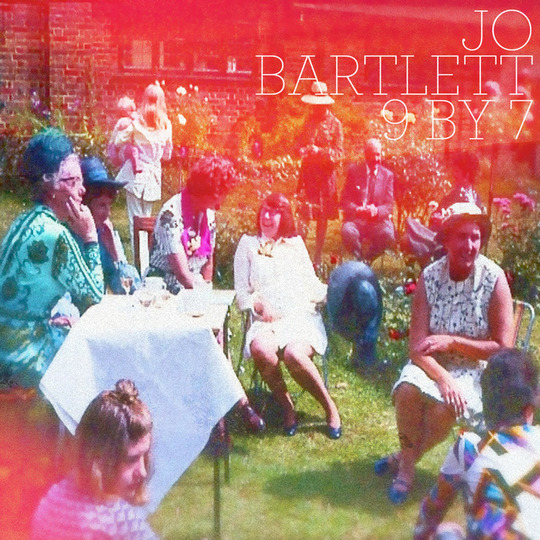
Jo Bartlett was a co founder of The Green Man Festival (held in Wales) back in 2003 and with partner Danny Hagan has released four albums as It’s Jo and Danny along with fronting a “psychedelic” instrumental band, The Yellow Moon Band. 9 x7 is her second solo album, deriving its title from the nine songs performed by seven musicians contained therein. With her past music described as “folktronica” in the press release it was somewhat disappointing to hear the opening song here, Dying Kiss, washed as it is under swathes of electronic keyboards with programmed percussion pinging and popping as if the eighties never went away. A pity, as the song and Bartlett’s voice are actually quite fine. Fortunately over the course of the album Bartlett relegates the synth like noises to the background allowing her songs some room to breathe although they never quite go away.
Measure Of the Storm has some proper strings and rippling guitars to guide it as Bartlett sets out on a folk rock voyage which has some of the urgency and dynamics of seventies folk rock about it. She repeats this on the breathless Rising To The Bait which has some rich guitar undercurrents churning under the lyrics. There’s a return to the rubber band percussion pops and synth strikes on Driven Away and again there’s a sense that unadorned this would pass muster, a feeling reinforced by the following ballad, Highway Found, which is delivered almost as if Sandy Denny were singing it and Jerry Donahue playing the guitar solo. A triumph then for this song and Bartlett follows it up with the superb instrumental Olympic which is an acrobatic tumult of strings and guitars that would not be out of place on an old Pentangle album. What Do You Say To That is a bold experiment with Bartlett’s voice echoed over gnarly guitar and insistent percussion that has its roots in John Martyn’s echoplex ruminations but it just doesn’t take flight. Advent is more successful as Bartlett revisits early Fairport territory when the Fairport’s were trying to be the UK equivalent of Jefferson Airplane or The Byrds. There’s a shimmer to the guitars, some sproinks and oinks from the electronic gizmos and a great throbbing bass line. To cap it all the album ends with the airy and billowing Suitable Drama which again bears comparison to the late Denny. Overall 9 x 7 is indicative of a fine singer and songwriter who has to decide which side of the fence she is on.
It’s surprising that Blabber’n’Smoke hasn’t featured Gretchen Peters before now. Recently inducted into the Nashville Songwriters Hall Of Fame Peters has steadily built up her reputation as a writer for other singers and a solid performer in her own right. A frequent visitor to these shores Ms. Peters returns in spring and on the strength of Blackbirds she’s well worth seeing. The album is billed in the promotional literature as being about loss and ageing following a bleak period two years ago when she attended three memorial services in short order. However Blackbirds isn’t a morbid listen, instead it’s a defiant and at times uplifting experience. This is partly down to the music here as Peters and her players (who include Jason Isbell, Jimmy LaFave, Will Kimborough, Kim Richey, Suzy Boguss and Jerry Douglas) offer some sterling country rock romps with When All You Got Is A Hammer, a song about a war veteran’s fragile state, ripping away with electric guitar and Dobro zipping about over a mandolin driven rhythm. Black Ribbons has a folkier feel with accordion added to the mandolin although there’s a bubbling undercurrent of churning guitars which add a sense of danger. This sense of danger is apparent from the opening title song which has a chunky guitar bite that recalls Neil Young’s Harvest era as Peters unfolds a grim murderous tale, one she repeats at the close of the album (on an uncredited extra track) however on this occasion it’s much starker with an acoustic accompaniment that reflects the back cover of the album which is like an alt country version of Hitchcock’s Birds.
Peters says that when writing this album she spent time listening to 70’s singer songwriters and this is apparent on the Joni Mitchell influenced Pretty Things which opens like an outtake from Ladies Of The Canyon with Peters singing “I knew a girl who said that beauty kills, dulled the pain with wine and pills, took that slow ride down the hill to nowhere.” A female chorus and reverential keyboards drape the song but the Mitchell influence remains strong throughout and this is repeated on Everything Falls Away although here the template is Blue. Again Peters embroiders what might have been a stark offering from Mitchell with swathes of chords and strings to come up with her own triumphant song. It would be unfair to say that Peters is simply channelling Mitchell and her contemporaries and this is made apparent on the magnificent The House On Auburn Street, a song that captures in words a perfect picture of a past event that left a mark. Peters sings evocatively while the musicians weave a delicate sound tapestry with brushed drums and rippling strings that recalls the groundbreaking work of Fairport Convention on A Sailor’s Life.
In a simpler vein there’s a fine duet with Jimmy LaFave on the yearning When You Coming Home while the stark piano and strings of Jubilee is akin to the best of Jackson Browne in its mesmerising simplicity and awe. The closing song, The Cure For The Pain is another simple unadorned song, perfectly executed and the most sombre note here as Peters defiantly cocks a snoot at whatever life throws at us.
Ms. Peters is bringing a band over for the first time in the UK. Tour dates here
Celtic Connections is a beacon of light in the dark days of January in what is generally a cold and damp Glasgow. The festival started in 1994 in an attempt to fill scheduling gaps in the city’s Royal Concert Hall. Since then it has grown to the point that this year there will be 2,100 artists (at 300 events in 20 venues) with major artists from Folk and World music appearing. There’s always been a strong Americana presence at Celtic Connections over the years and this year is no exception with Jeff Tweedy, Calexico and Lambchop appearing along with a host of others. One of the delights of Celtic Connections is the connection element as it draws together numerous roots traditions and styles, matching and pairing unlikely combinations for some astonishing “mash ups” while musicians will tell you that the late night Festival Club and the local hotels are fertile breeding grounds for jams that can see Scots’ fiddlers and African tin whistlers cosying up to Zydeco musicians or Appalachian foot stompers.
Roaming Roots is a relatively new addition to the Festival growing out of a 70th birthday tribute to Bob Dylan four years ago. Now firmly established as a highlight it’s a musical revue hosted by Scots musician Roddy Hart and his band The Lonesome Fire as a variety of guests join them in a celebration of music with each year having a different theme. Last year’s tribute to the music of Laurel Canyon was a blast and with that in mind Blabber’n’Smoke contacted Roddy and asked him about the concept and what to expect this year.
As far as I can see, the prototype for The Roaming Roots Revue was the 2011 70th birthday celebration for Bob Dylan while 2012 saw a tribute to the late Gerry Rafferty. The format has been yourself and The Lonesome Fire acting as the house band for various artists to interpret the songs. Roaming Roots itself came about in 2012 with a concert in memory of Levon Helm. How did the Dylan venture come about in the first place and whose idea was it to continue with the format?
Musically, I was at a real crossroads back in 2010. I had released three solo records in almost as many years, but I was finding it hard to get noticed as an independent artist and was becoming a little despondent. The band as it is now (The Lonesome Fire) was in its early stages of forming, and one thing I had absolute confidence in was just how musically talented these players were. In a way, I wanted to show them off! I’m a lifelong Dylan fan, and had noticed that he was approaching his 70th Birthday in 2011, but that no one was mooting any sort of celebration for it. That felt wrong to me. A few years earlier I had been involved in a Leonard Cohen tribute in Canada, which used a house band to anchor the show and back the diverse array of artists taking part. That format struck me as perfect because logistically these shows can be a nightmare – the artists are almost certain to be arriving only a day or two before the show and so rehearsal time is limited. It’s also really expensive to fly a whole band in. So it struck me as a good thing to do for the band: we could invite artists over as a solo act or a duo and – with proper organisation and rehearsal – learn up the Dylan songs they felt like tackling. I pitched that show to Donald Shaw at Celtic Connections and he told me that if I could get some artists interested in doing it then we had a show. I got lucky straight away: I had opened for Rosanne Cash the previous year and so chanced my arm by sending her an email to ask if she was interested. She said yes immediately and the whole thing just took off. Other artists came on board, and the event sold out really quickly: we were really fortunate that people just connected with the idea straight away.
The Rafferty night in 2012 was different in that it was organised by Gerry’s friend Rab Noakes – who had been a guest, and one of the highlights, at our Dylan show – and he kindly asked us back as house band. That proved a really useful show in the end, because other musicians were added to the mix and it was a really complicated set to navigate both musically and logistically. I learned a lot from both of those shows.
As a result, I talked with the band and we decided that we wanted to create a new show that would be about more than just paying tribute to music of the past. Part of the show would still have artists covering songs that you might not get to see or hear elsewhere, but we felt particularly strongly that their own songs should be in there too – it felt a bit of a shame not to celebrate the incredible music that so many of them make. We also thought there should be an emphasis on making the show about lesser known younger emerging artists who might not get the opportunity to play these kind of concerts every day.
Last year was a celebration of the spirit of Laurel Canyon. Was this an attempt to widen the net somewhat as opposed to focussing on one artist and why was Laurel Canyon chosen?
Definitely. We adored doing the Dylan concert and, as a fan, I loved pulling it all together and coming up with a set list. But there are certain limitations to using the songs of only one artist for a whole show: there’s only one Bob Dylan, and only a handful of artists who can match that songbook. Our first Roaming Roots was the exception because Levon Helm had recently passed away, and that felt like such an important thing to pay tribute to. His daughter Amy wanted to be there for it, and so that pretty much set the tone for our inaugural show. Because it was a new type of gig no one really knew it was going on – we didn’t even sell out the downstairs part of the Concert Hall – but it was one of the most special shows we’ve ever played as band. Beth Orton, Low Anthem, LAU and many others playing and singing their own music and doffing their cap to Levon’s music with The Band really provided the blueprint for the event and proved to me that the odd combination of original music and something from a themed songbook could work together. That was something I worried wouldn’t compute with audiences, but the opposite was true: they completely got the link between the music of the past and the music of the future, and just how important it is to celebrate both.
We chose Laurel Canyon to try and widen the net, and because we were conscious that we’d played two tribute shows in two years that had marked the death of a musician. That can be a difficult and emotionally charged thing to be a part of, and so it felt right to settle on a songbook that wasn’t about one artist. Laurel Canyon was so emblematic of that feeling of unique collaboration and togetherness that Roaming Roots is trying to create that it seemed perfect and we all had our own favourite artists from that era so I knew we wouldn’t struggle for songs. Happily, the show connected with the audience too.
Presumably, the preparation for the shows is complicated with upwards of a dozen other acts involved. Who’s involved in the planning and do you wait to see who’s playing the festival and then start to plan or do you have a wish list of folk you want to invite? I know that Dawes came over specifically for four songs at last year’s show.
It’s very complicated! Essentially, I “curate” the show. So, I’ll do the initial ground work: deciding on artists who I think might work for the concert, enquiring about their availability, talking with the confirmed acts about song choices, pulling together a set list that I think has a good dynamic and would work on the night. There’s always a wish list of artists – ranging from the sublime to the ridiculous – and Donald Shaw and the Celtic Connections team are always totally brilliant at trying to make that list happen (within reason). Even if the artists are interested in the theme, there can be a million reasons actually confirming them might be complicated – scheduling, money, or management/agent difficulties understanding what the format of the show actually is, for example – but quite often it’s solved by simply speaking to them directly. Once we have our artists confirmed it then moves to the band rehearsal stage. Although I’m involved in the hosting and all the admin for the event, it’s no understatement to say that when it comes down to it it’s all about the boys in the band: I couldn’t do it without their innate skill and ability to tackle such a diverse and constantly changing set of songs.
How much opportunity do you have to rehearse the show? I guess some folk are just off the ‘plane or have their own gig to worry about.
We score up music charts together as a band and after I get word from the artists as to the songs they’re happy to perform and the keys they’ll be singing them in, then we have a few tentative rehearsals in December before work begins in earnest in January. Christmas is always a difficult time to get people together, so it’s pretty much a write-off. I try to get the Scottish artists on the bill in for rehearsals in good time in January, because it’s always completely mental when the overseas artists arrive. If we’re lucky we get them all for an hour the day before the show, and then for a brief sound check on the day (maybe 20 minutes) and then it’sshowtime! It’s stressful and tiring, but completely worth it in the end.
Any particularly scary moments when it looked as something might not happen as planned?
We’ve had plenty of near-misses with artists we really wanted to take part but couldn’t quite confirm in the end for whatever reason. That’s always frustrating, because you can spend a lot of time chasing ghosts, but you can’t get too hung up on it. We’ll get them for a show in the end I hope! Ben Knox Miller from the Low Anthem was one of the highlights of our first Roaming Roots, but he almost didn’t make it due to a mix up with the offer. Beth Orton told us the wrong key for a couple of songs she was due to perform and we only had an hour to relearn them in the new key (which has happened quite a few times!). But for all the stress and worry, it always seems to come together on the night, and it adds a certain excitement to the whole thing. Last year was a voyage into the unknown with Dawes simply because we’ve never had another full band on the show – logistically it’s pretty difficult. But I really wanted them there to represent what’s happening in Laurel Canyon in a modern context, and so we went for it with a two-band set up on stage: turning round to see two drummers (Dawes’ Griffin and The Lonesome Fire’s Scott) playing on the finale alongside nearly 30 other musicians was pretty special made up for the pre-show headache.
Celtic Connections has always been a very broad church and from the start has embraced artists from all over the world. The Revue has featured local artists such as Edi Reader, Rab Noakes, James Grant, Trash Can Sinatras, Siobhan Wilson, Kris Drever and Lau along with US acts including Roseanne Cash, Jerry Douglas, Thea Gilmore, Cory Chisel and Dawes. As curator do you have in mind a particular balance, thoughts of interesting pairings? What input do the artists have in the song selection and who they will be playing with?
The bottom line is I don’t want the artists to have to sing anything they’re not comfortable with, so there is always an open dialogue with them right from the start. But I also have to think about the dynamic of the night and have a responsibility to the audience to create a show that has moments of both discovery and familiarity. They need to be able to respond to the show as a whole. When we decided on Laurel Canyon as a theme in 2014 that meant we could go for the obscure stuff like Judee Sill, but I also knew that we had to tackle some of the big songs like the Eagles’ Hotel California. I had to convince Cory Chisel that it was a good idea, because he was the only one with the range to sing it, and I’m glad he agreed –ubiquitous as that song may be, he nailed it and it was a complete thrill to play on the night. We all had huge grins on our faces for that one. This year we have a couple of collaborations taking place, but because of the theme most of the artists are already established acts
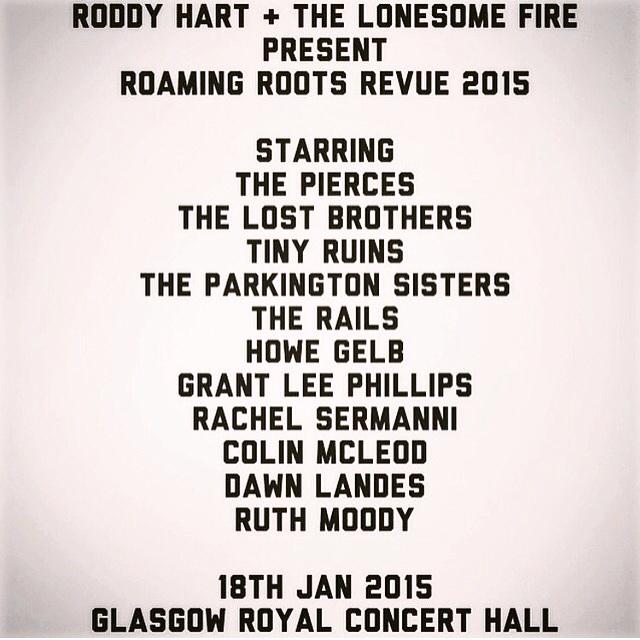
This year’s theme is harmony, as in singing and we’re promised selections from the Everlys, Simon & Garfunkel, The Beach Boys, The Beatles, Big Star and Teenage Fanclub. Is there any particular reason this theme was chosen, does it guide you to ask certain acts such as The Lost Brothers to participate?
There were a few ideas in the pot (some that we may return to in future if we do it again!), but after the death of Phil Everly this year we talked a lot about the magic of close harmony singing and just how special it can be. It’s a dark art. I thought it would be interesting to investigate the idea of a kind of history of close harmony. So, instead of being about a specific time and place, this would be more about a style of music. It excites me that as well as hearing some of the artists sing classic songs from Simon and Garfunkel or The Beatles, you may also get to hear them taking on something more recent like Teenage Fanclub. I think it’s an interesting road to go down, but we’re also well aware that it’s a challenge and so it definitely dictated the type of artist we approached to be involved. I was mindful of making sure we booked artists already well versed in the art of singing harmony together, because things can go spectacularly wrong if you team up artists that look good on paper but don’t work so well when they finally meet to rehearse the day before the show.
So far the line up includes Grant-Lee Phillips, Howe Gelb, Rachel Sermanni, Colin MacLeod, The Pierces, The Lost Brothers, Ruth Moody. Dawn Landes and Tiny Ruins. It’s a tantalising prospect. Will there be more names to come and, without spoiling any surprises for those attending, is there anything in particular that you are looking forward to on the night?
I’m really pleased with the line-up so far, and we’ve just confirmed The Rails who are a great male/female harmony group from England fresh from being named as MOJO’s folk album of the year. There may be a few more names to come, but it’s still a little uncertain and dependent on a few different factors. We certainly have some of my favourite artists of recent years with us, so it’s shaping up to be an exciting show. I’m currently working my way through the set list to make sure the balance is right – although it’s always liable to change right up until the day of the show – but as with any Roaming Roots Revue anything can happen and I’m just looking forward to that post-show beer!
Roaming Roots Revue is at The Glasgow Royal Concert Hall on Sunday 18th January.
Here’s a snapshot of last year’s Roaming Roots Revue
It’s coming up time for Celtic Connections and one of the highlights will surely be the much-anticipated appearance by Justin Townes Earle, indeed, his show at Oran Mor on 17th January was so swamped by demand that it’s been shifted to the larger O2ABC. Four days earlier sees the release of Absent Fathers, the unexpected companion piece to his last album, Single Mothers released only three months ago. A Yin/Yan concept of sorts the splitting of the releases reflects Earle’s own background as a child of separated parents and there is surely a temptation to hone in on his relationship with his father, Steve Earle. An eight times married man, drug addict and ex jailbird, hard enough to cope with never mind the fact that Earle senior has surmounted his own devils to become one of the most respected Americana artists around, one who regularly relates anecdotes about Justin at his live shows. With his own addiction issues to deal with in the past Earle junior could easily have got lost in some Freudian fog and crash-landed. Instead he’s one of the few rock’n’roll offspring who have made their own mark with five well respected albums under his belt allowing him to come out from under his father’s shadow.
Recorded simultaneously with Single Mothers, Absent Fathers maintains the loose country rock styled approach with just a hint of rockabilly at the edges, a step away from the swinging jauntiness of Harlem River Blues and Nothing’s Gonna Change the Way You Feel About Me Now. Despite the parental background there’s no Wainright like psychodrama here. While several of the songs reference momma’s and father’s it’s in the context of Earle’s ongoing relationship difficulties with none of the pointedness evident on Single Mothers where he sang “Absent father, is long gone now” on the title song. Paul Niehaus’ pedal steel is to the fore on many of the tracks adding to the resigned, melancholic air that pervades the album with Day And Night standing out with Earle’s guitar picking and plaintive voice floating over the keening pedal steel.
Opening with the bittersweet kick of Farther From Me with some fine guitar licks from Niehaus Earle is in fine voice, relaxed and resigned as he sings of detachment and loneliness. Why is jauntier in its delivery but again the subject is lost love. It leads to the old fashioned country lament of Least I Got the Blues which sounds like Hank Williams on downers. Call Ya Momma adds a rock beat to the mix adding up to a chunky mea culpa as Earle regrets his treatment of a partner adding a sob to his voice at the end. Round The Bend recalls the earthy R’n’B of Tim Buckley on Greetings from LA as it churns and snakes away while Someone Will Pay is another bruised and slinky rocker as Earle plots to get even with those who’ve let him down. There’s a southern soul feel to When The One You Love Loses Faith which echoes Otis Redding in its hurt and pain with Earle well able to convey this in his vocals. He wraps the album up with a solo rendition of Looking For A Place To Land, a song that is probably the most autobiographical here as he uses a metaphor to describe learning to fly at too young an age and its attendant dangers. Wishing to land despite a fear that in doing so he’ll never fly again he eventually touches down, safe despite the past. Apparently now clean and sober and in a relationship it’s safe to say that on the evidence here Earle is still capable of flying high with Absent Fathers a superb album overall.
Tying up these siblings Loose Music. have announced that Single Mothers and Absent Fathers will be released as a double vinyl set, a lovely notion that on plastic at least sees Earle’s family reunited.
The concert hall at the Sydney Opera House holds 2,700 people. This blog was viewed about 28,000 times in 2014. If it were a concert at Sydney Opera House, it would take about 10 sold-out performances for that many people to see it.
There’s a lot or pros and cons when it comes to listing end of year best ofs or favourites. Two years ago Blabber’n’Smoke eventually plumbed for the pros outweighing the cons so this is the third time we’ve presented what, when it comes down to it, is an arbitrary choice of remembered listen. Albums that have stood the test of (a relatively short) time, the ones we’ve returned to or recommended to others in the pub. Above all it’s been fun to look back, read the reviews and see if they still stand. So with this in mind the following are the official Blabber’n’Smoke 2014 picks, in alphabetical order.
Blue Rose Code. Ballads Of Peckham Rye
Birds Of Chicago. Live From Space
Fire Mountain. All Dies Down
Bradford lee Folk and The Bluegrass Playboys. Somewhere Far Away
Cahalen Morrison & Eli West. I’ll Swing My Hammer With Both My Hands
Jim Keaveny. Out Of Time
Parker Millsap. Parker Millsap
Michael Rank & Stag. Deadstock
Sturgill Simpson. Metamodern Sounds In Country Music
John Southworth. Niagara
Random honourable mentions go to
Lucinda Williams Down Where the Spirit Meets The Bone,
The Johnny Cash Native American album reboot, Look Again To The Wind,
Danny and The Champions Of The World’s Live Champs!
Dan Michealson & The Coastguards Distance
Cale Tyson’s EP, High On Lonesome,
Luke Tuchsherer’s debut You Get So Alone at Times It makes Sense,
Petunia’s Inside Of You,
Ags Connolly How about Now,
Chris Cacavas & Edward Abbiati. Me And The Devil along with Abbiati’s band Lowlands who delivered the excellent Love Etc.,
Zoe Muth. World Of Strangers,
Hank Wangford & The Lost Cowboys. Save Me The Waltz .
Grant Peeples and the Peeples Rebublic. Punishing The Myth.
Simone Felice. Strangers.
Bronwynne Brent. Stardust.
Sylvie Simmons. Sylvie (allowing an honorary mention here for Howe Gelb who produced).
The War On Drugs. Lost In The Dream.
Lynne Hanson. River Of Sand.
Gal Holiday & The Honky Tonk Revue. Last To Leave.
And finally John Murry’s EP, Califorlonia which is brilliant and hopefully just an appetiser for his follow up to the majestic Graceless Age.
Digging through the archives it’s been noticeable that there’s been a fine contribution this year from Scottish acts who dip into or draw from an Americana well to a greater or lesser extent. While Blue Rose Code’s Ballads Of Peckam Rye features above the following are all stellar contributions to the local scene.
Dropkick. Homeward
Dumb Instrument. The Silent Beard (with the Scottish song of the year, Suffering from Scottishness).
John Hinshelwood. Lowering The Tone.
The David Latto Band. Here Today, Ghost Tomorrow EP
Norrie McCulloch. Old Lovers Junkyard
The New Madrids. Through the Heart of Town.
Red Pine Timber Company. Different Lonesome
The Rulers Of The Root. Porky Dreams
Ten Gallon Bratz. Tales From The Long Shadows
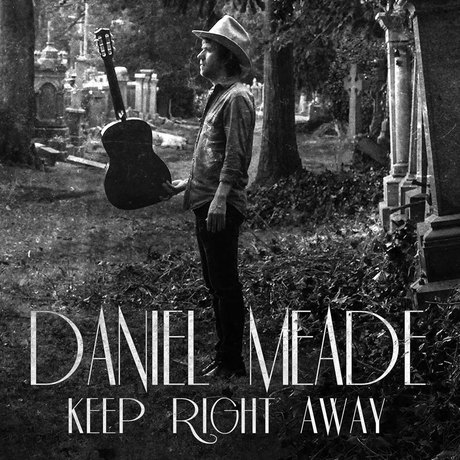
Although his album, Little Glass Box came out in 2012, Fraser Anderson is a major find of the year while another local lad, Daniel Meade unleashes his Nashville recorded Keep Right Away in January. Hopefully folk will have long enough memories to recall this when it comes to compiling the 2015 lists. In the meantime it can be first on the New Year shopping list.
2014’s been quite a year for Glasgow based country and roots rocker, Daniel Meade. His debut album, As Good As Bad Can Be, released last year, had led to BBC Radio Scotland airplay and a video of his radio session came to the attention of Old Crow Medicine Show’s bassist, Morgan Jahnig. Sensing a kindred spirit Jahnig set wheels in motion leading to Meade travelling to Nashville to record Keep Right Away. In the interim Meade played a support slot for the then relatively unknown Sturgill Simpson and the pair hit it off with Simpson, who is now just about the hottest ticket in Country music, asking Meade to accompany him on his subsequent tour and then for Meade’s band, The Flying Mules, to play the support slot on his third and all conquering trip around the UK. To cap all this Meade is sitting at home back in October when his phone rings. It’s his new pals, the Old Crow guys. Their support act for their sold out Glasgow show is stuck in Ireland with the ferries cancelled. Could Daniel oblige? Several hours later, Meade and his guitarist, Lloyd Reid are astride the ABC stage as several thousand Glaswegians roar their approval.
You almost couldn’t make this up but it’s testament to Meade’s talent that guys of the calibre of Simpson and OCMS are first in line to recognise it. In addition his own work rate and dogged determination is now paying off. While it might seem that he’s sprung from nowhere Meade has beavered away with a past that includes a brief shot at rock stardom with The Ronelles. Hooked on The Beatles from the age of 13 he delved into the past to discover artists such as Hank Williams, Big Bill Broonzy, Robert Johnson, Muddy Waters and Jerry lee Lewis before hooking into current acts that shared his love of this music such as Old Crow Medicine Show, Justin Townes Earle, and Pokey LaFarge. When he’s not touring he can be found playing several nights a week in local bars and clubs, solo, as a duo or with a band, honing his skills. Blabber’n’Smoke can testify, having seen him several times with audiences ranging from four folk and a dog to a room of 50 folk, a hall for 500 or a concert for 2500, that he delivers every time.
Testimonial over, what of the album? True to his word Jahnig produced and conjured up a dream team including fellow Old Crow members Chance McCoy and Cory Younts, BR549’s Chris Scruggs, Joshua Hedley, fiddle player for Justin Townes Earle and Aaron Oliva. Meanwhile Meade’s long time guitar associate, Lloyd Reid, another Glasgow chap, adds his fine skills to the mix while there are guest appearances from Diana Jones and Shelly Colvin. The result is an untrammelled success with Meade delivering 13 songs that draw deep from the well of traditional American acoustic roots music with honky tonk, sad waltzes, string band stomps and rockabilly all featured. While his debut album had all these, here the bar is raised both in the writing and the performance with the players lifting it up to another level. Perhaps the best example is the rollicking country romp of Gimme A Draw with its honky tonk piano, harmonica vamps, talking blues vocals and western swing delivery. Similar in style (and content) to Smoke, Smoke, Smoke That Cigarette it swings mightily. Swing and rockabilly and at times even skiffle, inhabit the uptempo numbers here with the opening number Long Gone Wrong a classic take on 50’s rock’n’roll when country musicians were shoved into studios with quiffed young studs and Gospel quartets. Trying, Rising River Blues and Livin’ On Tootsie Time are all cracking skillet lickin’ country romps with a lick of rock and string band shenanigans thrown in with Meade particularly impressive on the tongue twisting vocals of the latter as he barn dances and barrels along and the band scoot magnificently. Meade releases the throttle to deliver Always Close To Tears which cleaves to the Hank Williams’ songbook with a fine swagger while Not My Heart Again (with Shelly Colvin on vocals) is classic Williams’ honky tonking with some fine humbucking guitar licks from Reid. The Hangman Blues is probably the song here that owes most to the influence of the Old Crow players as it twists and turns with sly slide guitars while Keep Right Away recalls The Nitty Gritty Dirt Band back in the seventies.
So far so good but the album excels when Meade gets maudlin and weary. Sometime’s A Fool’s The Last To Know is a tears in a bottle, Charlie Pride like, countrypolitan lament, Always Close To Tears could have come from the George Jones songbook while Mexico‘s accordion colourings remind one of Freddy Fender. The jewel here is the astounding duet with Diana Jones, Help Me Tonight, as Meade visits saloon bar territory with tacky piano stuttering along to this wearied love song that stands tall against comparisons to the great country duets with an antebellum feel and a sepia stained sound. Finally we need to mention Meade’s tribute to his forebears on Sing It Loud, a very fine loose limbed and fiddle laced shamble of a song that nails his colours to the mast and harks back to the outlaw country days.
Keep Right Away is released in January and already it’s looking to be one of the top albums of the year, certainly from a home raised musician. Meade will be touring in support of the release and the dates are here. In the meantime local folk should check their listings as it might be that soon enough Mr. Meade might not be so local if things go well for him.
Back in 2011 Blabber’n’Smoke reviewed The Primevals‘ “comeback” album, Disinhibitor describing the band thus, “wired to the mainframe, sucking from the teats of The Cramps, The Gun Club, The Saints and Mike Wilhelm’s biker rock with a healthy dose of Captain Beefheart and some free jazz from the likes of Sun Ra and Pharaoh Saunders included”. They followed this with 2012’s Heavy War, another blitzkrieg of ferocious and trippy garage rock which saw the band digging into the grooves of bands such as The Seeds and the Doors with a healthy sneer and a ton of attitude. Live, the band turn in a breathtaking set that is literally visceral as their sheer noise attack assaults the ears and gut, feedback squalls and twin guitar combat rendering the listener helpless leaving their body like jelly on the bone. This aural attack continues on Tales Of Endless Bliss which, and it almost goes without saying, is best listened to loud. The Primevals have had one major lineup change since the last album with bassist John Honeyman leaving the fold. His replacement, Ady Gillespie mans the four strings here but it’s neat to see that Honeyman remains involved credited with backing vocals on the album.
And what of the album? Well, to paraphrase Bette Davis in All About Eve, “fasten your seatbelts, It’s going to be a bumpy ride.” From the start The Primevals take us on a rollercoaster ride with the thrills and spills supplied by some magnificent riffs, audacious key changes, pell mell rants and mind melting freakouts. Towering above this maelstrom is singer Michael Rooney whose vocal swagger exudes a cool sense of sang froid. There’s a languid menace in his voice, a mix of Robert Mitchum’s evil preacher, Iggy Pop’s glower and Lux Interior’s abandonment. Caged within the band’s swirling and mesmeric chaos Rooney rises to the occasion throughout while adding to the mix with some demented harp playing and snakelike alto sax on Crisis A-Go-Go.
Tales Of Endless Bliss is a short album, less than 30 minutes (and some folk will argue that’s the perfect length for a prime slice of vinyl) but within those minutes the band tackle pile driving Cramps’ like sleaze on Pink Cloud, freakbeat blues on Tell It Now (which flies into the stratosphere towards the end), Creation like pop art noisenik on You’re Not Here Now (with drummer Paul Bridges pummelling away and the guitars going apeshit). They even throw in some Texan psychedelia on Re-Frame It which channels The 13th Floor Elevators but despite the obvious forebears there’s no doubt here that The Primevals are a band that, while rooted in the rock’n’roll family tree that leads to leather, cult, garage and punk, are well able to stamp their own personality. If this lot came from Detroit they’d be legends.
First thing to say here is that Look Again To The Wind is a perfect Christmas present for anyone who has any interest in American country music. Like the soundtrack to Oh Brother Where Art Thou it’s crammed full of excellent songs, excellently played by some of the best artists around. As a concept it’s interesting, as an album it’s little short of magnificent.
The album is a recreation of Johnny Cash‘s 1964 LP, Bitter Tears: Ballads of The American Indian. The original shows Cash at the cutting edge of the civil rights movement, the Civil Rights act was published that year in response to coloured Americans battles against segregation but Native American Indians were still primarily seen as fodder for John Wayne’s cavalry. Cash set out to highlight their cause although it’s not a political set as such. With five tracks penned by Peter La Farge, two by Cash himself and one by Johnny Horton (writer of The Battle Of New Orleans) it celebrates a culture while highlighting injustice such as on its most famous song, The Ballad Of Ira Hayes or the dangers of miscegenation as on White Girl.
Look Again To The Wind was produced by Joe Henry who picked the artists for the album, in particular Gillian Welch and David Rawlings who appear on several of the songs. Norman Blake, who played on the original, contributes as does his wife Nancy while Emmylou Harris, Steve Earle, Kris Kristofferson, The Milk Carton Kids and Rhiannon Giddens (of The Carolina Chocolate Drops) all perform. As such the delivery is impeccable, the songs transformed from the rough-hewn Cash originals into intricate tapestries with hints of bluegrass and country. Kristofferson towers on Ira Hayes while Earle offers a fine talking blues dissection of Custer. Nancy Blake, Emmylou Harris and Welch are delightful on The Talking Leaves while Giddens wails wonderfully on The Vanishing Race. The highlight however is the nine minute version of the opening title song of the original LP by Welch and Rawlings which opens here and almost spoils the album as it begs to be repeated as soon as it’s ended.
The track list follows the original with three exceptions. Apache Tears and As Long As The Grass Shall grow are reprised towards the end while another of Lafarge’s Native American songs, Look Again To The Wind, not featured on the original, is sung by Native American Bill Miller, a valedictorian statement that closes the album on a poignant note.
you can hear Gillian Welch and David Rawlings sing As Long As The Grass Shall Grow here