Aside from being an excellent platform for a multitude of musicians to descend on Glasgow in the dark winter nights Celtic Connections has a reputation for commissioning or being a focal point for unique events; collaborations, celebrations, tributes, meetings of minds and songs. This year has seen the “Celtic” appropriation of Joni Mitchell’s Hejira and tribute is paid to the late Bert Jansch. The plight of Britain’s lost children is commemorated with The Ballads of Child Migration concert and Roaming Roots continues its multifaceted memories of songwriters and troubadours.
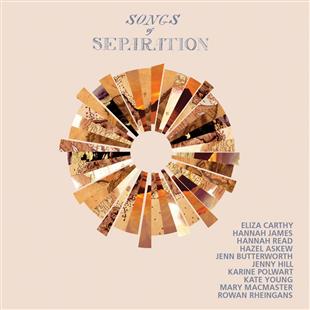
Today we’re paying attention to an album released in tandem with the Scottish premier of its live setting on Sunday 24th January at The Mitchell Theatre. Songs of Separation is a magnificent collaborative effort from ten of the UK’s leading female folk artists who gathered together on the Isle of Eigg in the Inner Hebrides last year. Separation was the theme and the stroke of genius was to offer it to a female cast as throughout history it has been women who have carried the burden of carrying on as children and men folk have left them, off to war, to sea, seeking fortune or fame or into the grave. The memories carved into song by the womenfolk who stoically carry on. The original idea was conceived by Jenny Hill as the turbulent waters of the Scottish Independence Referendum washed over the land. A travelling musician, she saw the differing views offered north to south, the idea of separation welcomed or decried hence her wish to investigate the concept.
The ten (Eliza Carthy, Karine Polwart, Mary Macmaster, Rowan Rheingans, Hazel Askew, Hannah James, Kate Young, Hannah Read, Jenn Butterworth and Jen Hill) have certainly risen to the occasion. The 12 songs here, traditional and new, sung in English or Gaelic, don’t fly any political flag and indeed, concept put aside, the album is, at base, a gorgeous collection of traditional sounding folk songs that is somewhat sublime. From the opening croak of the titular endangered bird on Echo Mocks The Corncrake (with Polwart taking the vocal here) to the closing birdsong on Road Less Travelled there’s a sense that the album was conceived in communion with nature. Indeed several of the pieces are “field recordings,” the ensemble gathering in Eigg’s Cathedral Cave for acapella renditions of Sad The Climbing and the Unst Boat Song, both haunting. Gathering songs and stories from Scotland and Yorkshire along with songs inspired by Danish and American poetry they relive the legend of the Pictish “big women of Eigg” on Soil and Soul, tell the tale of a mermaid unable to return to her land family on Sea King and recall a clan massacre on Sad The Climbing. London Lights sees Hazel Askew bemoaning the fate of single mothers with an almost music hall arrangement that recalls the warning songs of Victorian times, the sentimentality tempered by the sheer brilliance of the voices and arrangement. Eliza Carthy’s Cleaning The Stones visits similar territory musically while its lyrics are opaque and reminiscent of vintage Richard Thompson. Over The Border delves into traditional songs (including Flowers of The Forest) with Polwart pointing out the contemporary issue of refugees hindered here and there by borders that fail to see their desperate need.
It’s a wonderful album, soaked in history and tradition but bang up to date as we repeat the mistakes of the past. The singers and players excel themselves and it’s almost impossible to have a casual listen as the songs (along with a fine website) demand further investigation.
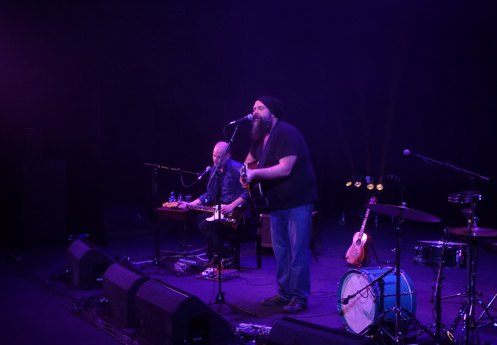
Cam Penner and his sonic wizard sidekick Jon Wood transformed the Tron theatre into a magical space for an evening, Wood setting up a constant thrum and throb with his array of tape loops and sound effects. Akin to the background ambience found in nature, birdsong, wind rustles, trees creaking, the eternal hum of Mother Nature, the effects underpinned the music played and framed the pair’s perambulations across the stage as they chose their instruments with Penner offering lengthy, wise and humorous introductions to several of the songs.
For music carved in a home built wood shed there’s a great deal of technical wizardry involved but at its heart is Penner’s voice which can change from a tender whisper to a threatening holler and Wood’s lap steel and jagged electric guitar playing. Rudimentary percussion is banged and kicked, Penner plucks a tiny guitar and the loops of sound loop on. The opening song, I’m Calling Out (from the new Sex & Politics album), evoked nothing less than the sweet soft country sound of Neil Young back in the days before it segued into the frenzied alarum of I Believe, Penner summoning ghosts of secular and sacred music hollers, Wood ripping notes from his guitar. Continuing with the new album Broke Down had Penner in a fragile state, his voice a croaked plea while Wood sprinkled the song with slight burbles of sound, almost like faint raindrops. Again the pair then shook up the atmosphere with anther howl of a song, the chain gang like wail of Hey You (Lovers of Music).
Four songs in before Penner addressed the audience who were by now desperate for a breather after this impressive opening. His beguiling tales of dick shaped missiles, his love for RL Burnside and Public Enemy and how he came to be featured on the BBC series Stonemouth punctuated the remainder of the set, his beaming grin and obvious joy at being on stage endearing him to the audience. A brace of songs from To Build A Fire were delights, House of Liars the aforementioned song from the telly and No Consequence a spooky wail dredged from the swamp. A rousing Bring Forth The Healing had the emotional heft and strength of ancient spirituals, Penner showing why some folk have described his music as shamanistic.
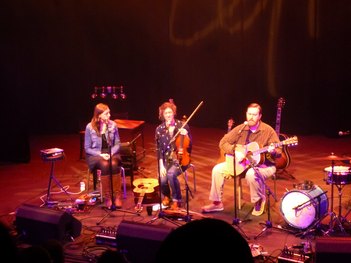
Support act, Rayna Gellert was a delight. Playing fiddle and guitar along with her partner Jeff Keith on guitar she epitomised the connection between Celtic music and the new world as she spoke of the Scottish settlers in North Carolina. Playing her own tunes and songs from Uncle Dave Macon and Washington Phillips she reminded one of John Hartford at times, her fiddle jigs and waltzes soaked in old time charm while her rendition of Black Eyed Susie, a favourite from her days in Uncle Earl (and arranged by her father Dan Gellert) was rousing. Singing more these days Gellert was joined on stage for several numbers by Scots singer Siobhan Miller who added some excellent harmonies to Phillips’ Take Your Burden To The Lord and a striking In The Ocean from her album Old Light.
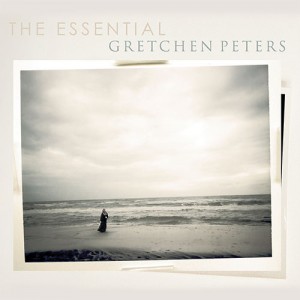
Gretchen Peters‘ career has been an interesting intersection of her song writing skills and her own performances. Initially she was successful as a writer, her songs providing hits and awards for country stars such as George Strait, Shania Twain, Trisha Yearwood and Patty Loveless. As a performer she found the going tougher, her early albums struggling to get recognition. Gritting her teeth she ploughed on and in part due to her frequent visits to these shores she gained momentum here, Bob Harris an early champion, and then in the States, eventually being inducted into the Songwriters Hall Of Fame. Her last album Blackbirds (reviewed here) is the pinnacle of her career so far, lauded far and wide. Now, on the eve of yet another UK tour she releases this handpicked two-disc overview of her work so far, not a “best of” but an intriguing collection of familiar songs, rarities and demos.
Disc one contains a selection of songs from her albums going back to 1996’s The Secret Of Life. It opens with the tremendous murder ballad Blackbirds, a bold move but the twelve songs that follow aren’t shadowed by it, indeed they cast light on the excellence of her work throughout her career along with her versatility. There is one previously unheard song here, a collaboration with Bryan Adams on When You Love Someone, an achingly tender duet in classic boy/girl country style, pedal steel weeping away. Elsewhere there’s no doubting the majesty of songs like Hello Cruel World and Sunday Morning (Up And Down My Street), the simple truth of If Heaven and the hypnotic pull of The Matador.
A fine selection but for any avid Peters’ fan the lure here is the second disc, the demos and live songs, many of which are unveiled for the first time. Here one can hear her own versions of The Chill Of An Early Fall (a hit for George Strait) and Independence Day (Martina McBride) while an early recording of Blackbirds with vocals shared by the co-writer, Ben Glover, is stunning. There’s a live recording of The Stone’s Wild Horses from the Wine Women and Song set up (Peters, Suzy Bogguss and Matraca Berg) with heavenly harmonies while Peters also covers John Lennon’s Love (from his Plastic Ono Band album) and sings a dreamlike When You Wish Upon A Star, originally recorded for a charity album some years ago. Best of all is the stark The Cruel Mother, a song that was included as a bonus track on some versions of Blackbirds. It’s a song soaked in tradition, Celtic and Americana, lilting and mournful and just wonderful.
Ms. Peters will be appearing at Celtic Connections on the 30th and 31st January as part of an extensive UK tour. Dates here
It’s that time of year again when the good folk of Glasgow (and elsewhere) brave the cold for the warm sup of Celtic Connections, better than chicken soup for the soul in these dark January nights.
There’s the usual array of star names. This year Lucinda Williams, Kris Kristofferson, Rickie Lee Jones, Jason Isbell and Sturgill Simpson are all on board while the likes of Rhiannon Gidding, John Grant and Patti Griffin should be familiar to readers. Over the next few posts Blabber’n’Smoke will be highlighting some acts we’ve reviewed who are appearing, perhaps less stellar in the billing but guaranteed to appeal.
Cam Penner Tron Theatre. Saturday 16th January
Penner (along with his musical wizard Jon Wood) brings his sparse, cold songs, steeped in nature and history to The Tron. His last album, To Build A Fire was universally lauded and two of its songs were used by the BBC for their series Stonemouth. He’s got a new album, Sex and Politics out this month so we can expect some of that to be aired. We reviewed his last Glasgow show here
The Mike and Ruthy Band/ Sawitsky & Koulack Old Fruitmarket Sunday 17th January
Looking forward to this one. Debut Celtic Connections performances for both acts with Mike and Ruthy bringing a full band including a horn section over for what should be a rollickingly good show. We noted that they have a solid propulsive folk rock sound on their album, Bright As You Can .Meanwhile Sawitsky & Koulack were responsible for the haunting old time guile of Fiddle & Banjo
We’ll look at some more of the hidden gems of Celtic Connections soon and see you if you’re at any of these shows.
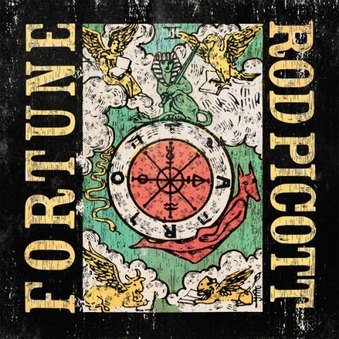
Steadily Rod Picott has come up on the inner track to catch up with his better known peers in the school of hard knocks singer/songwriter stakes. Welding Burns and Hang Your Hopes On A Crooked Nail were very fine albums, Picott weaving blue collar tales with a sense of grit and determination while able also to draw tender portraits of love gone wrong. Fortune builds on the strengths of those albums with Picott attempting to place more of himself into the songs as opposed to his snapshots of the current state of the ragged ass union. Fear not however, this is no exercise in navel gazing as several of the songs here maintain his ability to paint a vivid portrait as on the war widow’s farewell to her dead soldier on Jeremiah and the clattering tribute to the ‘ornery Uncle John.
Recorded quickly as Picott wanted to capture the immediacy of the performances in the studio the album seesaws between his gentler soloish performances and the gutsier band pieces. Here he’s ably assisted by the ubiquitous Will Kimborough on guitars (including oil can guitar!), Lex Price on bass and co-producer Neilson Hubbard (another name that is coming up increasingly) on drums. If there’s a theme to the album (and Picott says that the songs are about the sense of chance) then his view seems to be that we are playing with loaded dice as the players here all seem to be on the losing end. The suitor kneeling before his would be queen on the folky Maybe That’s What it Takes sees his dreams burned down while I was Not Worth Your Love is somewhat akin to a supplicant yelling I am not worthy before an idol not worthy of his praise. In a way Picott is furthering his broken love songs from the Crooked Nail album here, we mentioned back then that Roy Orbison seemed to inhabit the song All The Broken Parts and here Picott again plugs into that raw emotion on Secret Heart, his voice almost a crooner over his delicate guitar and Kimborough’s excellent and refrained shimmerings. Kimborough shines again on the wonderful closing song, Spare Change which, aside from the wonderful playing, captures Picott, the wordsmith, at his best.
There is some rollicking here and some humour. Uncle John “drinks his beer from a can cause bottles break/nine fingers from one mistake.”Elbow Grease has Picott mythologizing his life over a cracking country rock beat (with Kimborough again in fine form) as he recalls his failures and sings on the chorus “How’d a wreck like me even get this far/One more chance is all I need/I got a lucky charm and elbow grease.” We get some soulful blues on the slinky Until I’m Satisfied and a tremendous rewrite of Hank Williams’ Ramblin’ Man on the apocalyptic and surreal Drunken Barber’s Hand that is somewhat fabulous.
Rod Picott is touring the UK in January and February with a Celtic Connections appearance on 25th January at The Royal Concert Hall. All dates here
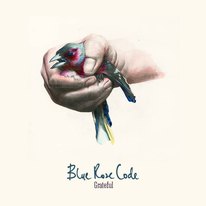
We’ve been eagerly awaiting the new album from Blue Rose Code and this week a taster was unveiled in the shape of a four song EP, Grateful, in anticipation of And Lo! The Bird Is On The Wing which will be released in January with a launch show at Celtic Connections. Following on from the acclaimed The Ballads Of Peckham Rye, Grateful is further evidence of Ross Wilson’s magisterial song writing while the performances are simply stunning.
The title song is a sumptuous slow-paced celebration of life with Wilson crooning in best John Martyn style over stately piano and keening pedal steel, his voice superbly buttressed by the graceful presence of Gospel singers, The McCrary Sisters. It weeps and exults equally and bodes well for the new album. A video of the song has been released comprising snippets sent to Wilson by fans who were asked to record their reasons for being grateful: it’s quite moving.
Midnight’s Mass In Suffolk’s Breast has a Christmas theme and its spritely pace with no sleigh bells in sight is reason enough to welcome it but again Wilson comes up with a winner. The jazz tinged folk verses recall Robert Kirby’s arrangements for Nick Drake especially on the piano playing while the chorus soars with celebration. My Heart, The Sun is a remix by James Yuill (who remixed Blue Rose Code’s Whitechapel some years ago), its throbbing beat and synthed sounds showcasing Wilson’s eclectic tastes while his words remain poetic. The EP closes with a magnificent performance of In The Morning recorded live for Radio Scotland’s Roddy Hart show. Playing as a six piece with piano, cello, drums, double bass and guitars the piece billows gently along on a perfect breeze of Celtic folk, it ripples and eddies wonderfully and captures well the live Blue Rose Code experience.
A fine taster then for the forthcoming album, the EP is available here and Blue Rose Code are launching it with shows in London and Glasgow on the 2nd and 3rd of December. All tour dates are here
OK, a bit late on this but for some reason this review wasn’t published when submitted originally. Given that it was Bronwynne’s UK debut and that Blabber’n’Smoke really dug her album I thought it worthwhile to revive it………
A UK debut here for Mississippi raised Bronwynne Brent and before we say anything else a triumph over adversity as Brent’s initial plan to bring over her own musicians (including her producer Johnny Sangster) fell apart leading to plan B, a scratch band who only met the singer/songwriter two days before the show. So it was that Euan Burton, double bass player with Kris Drever and guitarist Jamie Sturt from This Silent Forest were recruited, given some sound files to work with and a day’s rehearsal with Brent on her arrival on Scottish soil. Credit to them and to Brent as the trio excelled on stage sounding for all the world as if they were road veterans and companions, Burton’s bass warming the songs while Sturt was a revelation, coaxing some sublime sounds from his guitar and effects board, always sensitive to the moods of Brent’s songs.
As for Brent herself she appears on her album sleeves as a bit of a flower child, an image belied by the almost American Gothic sound of her songs. On stage she seems like an amalgamation of the younger Joni Mitchell and Emmylou Harris, long flaxen hair and hesitant presence. She admitted to being nervous but once she started to sing, her voice, world weary and stained with echoes of Karen Dalton and at times Amy Winehouse had the house in thrall. Roaming from the dark folk of Dark Highway to tumbledown blues such as Wrecked My Mind Brent impressed as she invoked the spooky Americana feel of acts such as the Handsome Family , a feel that was bolstered by Sturt’s inventive sounds effects and guitar. A measure of the trio’s cohesion was the compelling version of Bulletproof, on Brent’s Stardust album an organ infused blues jaunt but tonight delivered in a spare manner before Sturt’s guitar sparked into life scattering aural gunshots from the stage. For a singer who was keen after the show to seek reassurance that her nervousness wasn’t too apparent one only has to point to the excellent rendition of Don’t Tell Your Secrets To The Wind delivered earlier. Mixing chanson and Calexico’s Tex-Mex style Brent was both coquettish and confidant while Burton and Sturt filled all spaces absent from the recorded version.
After this stage debut the trio headed off for a short UK tour and a Bob Harris session due to be broadcast in March. In the meantime tonight was a wonderful opportunity to catch a very fine songwriter and performer who might soon outgrow the relative confines of the bijou setting tonight.
Jeffrey Foucault has built up a solid reputation over the course of four solo albums with Uncut magazine describing his songs as “beat-up troubadour folk, whittled to dolorous perfection.” Along with his solo work he’s been involved in several collaborative efforts including Redbird (with his wife, Kris Delmhorst, and Peter Mulvey), Cold Satellite with Foucault setting poet Lisa Olstein’s lyrics to raucous rock music and an album of murder ballads with Mark Erelli. A firm live favourite he commences a UK tour this week in anticipation of his latest release, Salt As Wolves. Commencing in Perth on Thursday 29th January he then plays Glasgow’s Celtic Connections on Friday before heading south for several dates ending in London on February 8th. Before heading on his way he was kind enough to speak with Blabber’n’Smoke.
You’ve got a new album, Salt as Wolves in the pipeline and you’re coming to the UK for an eleven date tour later in January and February with Billy Conway accompanying you on “suitcase drums.” What can we expect to hear and see at these shows?
Billy plays a suitcase kit and I play electric and acoustic guitars. I handle the singing and talking, though occasionally he says something under his breath, or moans in the middle of a song. We’ll cover all the territory between country and blues and the music that came from those forms.
From the three songs I’ve heard Salt As Wolves has a blues feel, quite gritty with plenty of electric guitar. I read in an interview you did with Americana UK a few years back that you were listening to Rainer Ptacek quite a bit. Was this an influence on the album?
Rainer has been a deep and ongoing influence on me, though I came late to his work. It’s his approach and the feeling of complete openness and intention in his playing that I can’t shake. My song ‘Rico’, which is nominally about the bass player on my Ghost Repeater album, is also about Rainer, and all the real ones who die with nothing half of the time.
You and your rhythm section (Billy Conway and Jeremy Moses Curtis) teamed up with Bo Ramsey for the album. Was this the first time you’ve played with Bo since Ghost Repeater and what was it like playing with a basic four piece band? Was there a temptation to go all “Crazy Horse?”
I got the Crazy Horse out of my system on the Cold Satellite records, and anyway that’s not at all what Bo does. Bo is an economical player, and the older he gets the less he plays. There’s a lesson there. He creates a lot of negative space and the interplay between the players on this record was the whole point of the ensemble. It’s a blues record – lean, dark, and tough.
I’ve been wondering about the title, Salt As Wolves. It seems to be a quotation from Othello referring to animals in heat. Care to elucidate on this?
The next line, ‘hot as monkeys’ is a reference to animals in heat. ‘Salt As wolves’ is reference to boldness taken out of context for the music of the phrase, for a record that I wanted only to be bold and loose in the making. I came across it in a compendium of literary references to wolves in Barry Lopez’s fine book, Of Wolves and Men.
You seem to have been busy in the producers chair with albums from Hayward Williams, John Statz and Caitlin Canty under your belt. Is this something you plan to pursue and if so are there any other folk you’d like to produce?
I’m sure I’ll produce a record now and then, when I hear something that moves me or that I can contribute to. It’s a hard job and if you would do it well you can’t do it for the money. I’d like to produce a record for my wife Kris Delmhorst, but I don’t think she’ll let me.
What’s the situation regarding Cold Satellite? Cavalcade was a great rambunctious mess of Faces’ like rock and blues. Do you and Lisa Olstein have any plans for a further collaboration?
We don’t. I love that band and I love those records, and I was pleased to collaborate and expand my sonic footprint that way. We may resurrect the band to get out and tour again sometime, if someone has about 5k they don’t know what to do with, but I’m more interested in writing and recording my own songs for now. I have so many kinds of records I want to make and there’s never enough time.
Along with Cold Satellite you regularly appear as part of Redbird with your wife, Kris Delmhorst and Peter Mulvey and tour with a variety of folk. Do you ever take time out or are you always thinking about the next project or tour?
I only tour about 1/3 of the year, and while the rest of time I have some work to get done, I spend time fishing and reading and doing chores, just trying to live as normal and human a life as is possible in this country and century.
Finally you’ve mentioned on your website that you’ve crammed for the UK tour by reading all twenty of Patrick O’Brian’s Aubrey/Maturin novels in order to be primed to discuss the British Navy’s role in the Napoleonic wars. Is this something that often comes up in conversation in the UK or are you just taking the mickey?
Well, I am taking the mickey, as you say, though I did just re-read all those O’Brian novels in sequence. Historical fiction doesn’t get much better. But I doubt the topic will come up.
SALT AS WOLVES, Foucault’s fifth collection of original songs featuring his longtime rhythm section Billy Conway (Morphine) on drums and Jeremy Moses Curtis (Booker T) on bass and legendary electric guitar player Bo Ramsey (Lucinda Williams, Greg Brown), will be released later in the year.
Tour dates
01.29.15,Perth Inchyra Arts Club
01.30.15 Glasgow Tron Theatre Celtic Connections Festival
Celtic Connections is a beacon of light in the dark days of January in what is generally a cold and damp Glasgow. The festival started in 1994 in an attempt to fill scheduling gaps in the city’s Royal Concert Hall. Since then it has grown to the point that this year there will be 2,100 artists (at 300 events in 20 venues) with major artists from Folk and World music appearing. There’s always been a strong Americana presence at Celtic Connections over the years and this year is no exception with Jeff Tweedy, Calexico and Lambchop appearing along with a host of others. One of the delights of Celtic Connections is the connection element as it draws together numerous roots traditions and styles, matching and pairing unlikely combinations for some astonishing “mash ups” while musicians will tell you that the late night Festival Club and the local hotels are fertile breeding grounds for jams that can see Scots’ fiddlers and African tin whistlers cosying up to Zydeco musicians or Appalachian foot stompers.
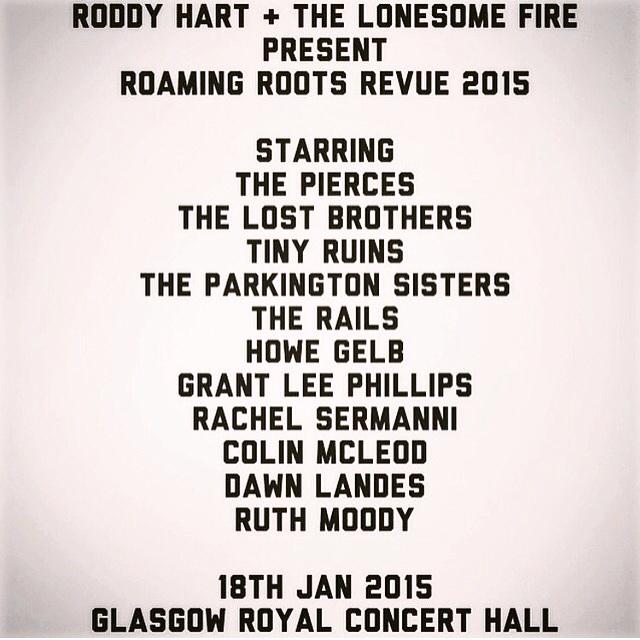
Roaming Roots is a relatively new addition to the Festival growing out of a 70th birthday tribute to Bob Dylan four years ago. Now firmly established as a highlight it’s a musical revue hosted by Scots musician Roddy Hart and his band The Lonesome Fire as a variety of guests join them in a celebration of music with each year having a different theme. Last year’s tribute to the music of Laurel Canyon was a blast and with that in mind Blabber’n’Smoke contacted Roddy and asked him about the concept and what to expect this year.
As far as I can see, the prototype for The Roaming Roots Revue was the 2011 70th birthday celebration for Bob Dylan while 2012 saw a tribute to the late Gerry Rafferty. The format has been yourself and The Lonesome Fire acting as the house band for various artists to interpret the songs. Roaming Roots itself came about in 2012 with a concert in memory of Levon Helm. How did the Dylan venture come about in the first place and whose idea was it to continue with the format?
Musically, I was at a real crossroads back in 2010. I had released three solo records in almost as many years, but I was finding it hard to get noticed as an independent artist and was becoming a little despondent. The band as it is now (The Lonesome Fire) was in its early stages of forming, and one thing I had absolute confidence in was just how musically talented these players were. In a way, I wanted to show them off! I’m a lifelong Dylan fan, and had noticed that he was approaching his 70th Birthday in 2011, but that no one was mooting any sort of celebration for it. That felt wrong to me. A few years earlier I had been involved in a Leonard Cohen tribute in Canada, which used a house band to anchor the show and back the diverse array of artists taking part. That format struck me as perfect because logistically these shows can be a nightmare – the artists are almost certain to be arriving only a day or two before the show and so rehearsal time is limited. It’s also really expensive to fly a whole band in. So it struck me as a good thing to do for the band: we could invite artists over as a solo act or a duo and – with proper organisation and rehearsal – learn up the Dylan songs they felt like tackling. I pitched that show to Donald Shaw at Celtic Connections and he told me that if I could get some artists interested in doing it then we had a show. I got lucky straight away: I had opened for Rosanne Cash the previous year and so chanced my arm by sending her an email to ask if she was interested. She said yes immediately and the whole thing just took off. Other artists came on board, and the event sold out really quickly: we were really fortunate that people just connected with the idea straight away.
The Rafferty night in 2012 was different in that it was organised by Gerry’s friend Rab Noakes – who had been a guest, and one of the highlights, at our Dylan show – and he kindly asked us back as house band. That proved a really useful show in the end, because other musicians were added to the mix and it was a really complicated set to navigate both musically and logistically. I learned a lot from both of those shows.
As a result, I talked with the band and we decided that we wanted to create a new show that would be about more than just paying tribute to music of the past. Part of the show would still have artists covering songs that you might not get to see or hear elsewhere, but we felt particularly strongly that their own songs should be in there too – it felt a bit of a shame not to celebrate the incredible music that so many of them make. We also thought there should be an emphasis on making the show about lesser known younger emerging artists who might not get the opportunity to play these kind of concerts every day.
Last year was a celebration of the spirit of Laurel Canyon. Was this an attempt to widen the net somewhat as opposed to focussing on one artist and why was Laurel Canyon chosen?
Definitely. We adored doing the Dylan concert and, as a fan, I loved pulling it all together and coming up with a set list. But there are certain limitations to using the songs of only one artist for a whole show: there’s only one Bob Dylan, and only a handful of artists who can match that songbook. Our first Roaming Roots was the exception because Levon Helm had recently passed away, and that felt like such an important thing to pay tribute to. His daughter Amy wanted to be there for it, and so that pretty much set the tone for our inaugural show. Because it was a new type of gig no one really knew it was going on – we didn’t even sell out the downstairs part of the Concert Hall – but it was one of the most special shows we’ve ever played as band. Beth Orton, Low Anthem, LAU and many others playing and singing their own music and doffing their cap to Levon’s music with The Band really provided the blueprint for the event and proved to me that the odd combination of original music and something from a themed songbook could work together. That was something I worried wouldn’t compute with audiences, but the opposite was true: they completely got the link between the music of the past and the music of the future, and just how important it is to celebrate both.
We chose Laurel Canyon to try and widen the net, and because we were conscious that we’d played two tribute shows in two years that had marked the death of a musician. That can be a difficult and emotionally charged thing to be a part of, and so it felt right to settle on a songbook that wasn’t about one artist. Laurel Canyon was so emblematic of that feeling of unique collaboration and togetherness that Roaming Roots is trying to create that it seemed perfect and we all had our own favourite artists from that era so I knew we wouldn’t struggle for songs. Happily, the show connected with the audience too.
Presumably, the preparation for the shows is complicated with upwards of a dozen other acts involved. Who’s involved in the planning and do you wait to see who’s playing the festival and then start to plan or do you have a wish list of folk you want to invite? I know that Dawes came over specifically for four songs at last year’s show.
It’s very complicated! Essentially, I “curate” the show. So, I’ll do the initial ground work: deciding on artists who I think might work for the concert, enquiring about their availability, talking with the confirmed acts about song choices, pulling together a set list that I think has a good dynamic and would work on the night. There’s always a wish list of artists – ranging from the sublime to the ridiculous – and Donald Shaw and the Celtic Connections team are always totally brilliant at trying to make that list happen (within reason). Even if the artists are interested in the theme, there can be a million reasons actually confirming them might be complicated – scheduling, money, or management/agent difficulties understanding what the format of the show actually is, for example – but quite often it’s solved by simply speaking to them directly. Once we have our artists confirmed it then moves to the band rehearsal stage. Although I’m involved in the hosting and all the admin for the event, it’s no understatement to say that when it comes down to it it’s all about the boys in the band: I couldn’t do it without their innate skill and ability to tackle such a diverse and constantly changing set of songs.
How much opportunity do you have to rehearse the show? I guess some folk are just off the ‘plane or have their own gig to worry about.
We score up music charts together as a band and after I get word from the artists as to the songs they’re happy to perform and the keys they’ll be singing them in, then we have a few tentative rehearsals in December before work begins in earnest in January. Christmas is always a difficult time to get people together, so it’s pretty much a write-off. I try to get the Scottish artists on the bill in for rehearsals in good time in January, because it’s always completely mental when the overseas artists arrive. If we’re lucky we get them all for an hour the day before the show, and then for a brief sound check on the day (maybe 20 minutes) and then it’sshowtime! It’s stressful and tiring, but completely worth it in the end.
Any particularly scary moments when it looked as something might not happen as planned?
We’ve had plenty of near-misses with artists we really wanted to take part but couldn’t quite confirm in the end for whatever reason. That’s always frustrating, because you can spend a lot of time chasing ghosts, but you can’t get too hung up on it. We’ll get them for a show in the end I hope! Ben Knox Miller from the Low Anthem was one of the highlights of our first Roaming Roots, but he almost didn’t make it due to a mix up with the offer. Beth Orton told us the wrong key for a couple of songs she was due to perform and we only had an hour to relearn them in the new key (which has happened quite a few times!). But for all the stress and worry, it always seems to come together on the night, and it adds a certain excitement to the whole thing. Last year was a voyage into the unknown with Dawes simply because we’ve never had another full band on the show – logistically it’s pretty difficult. But I really wanted them there to represent what’s happening in Laurel Canyon in a modern context, and so we went for it with a two-band set up on stage: turning round to see two drummers (Dawes’ Griffin and The Lonesome Fire’s Scott) playing on the finale alongside nearly 30 other musicians was pretty special made up for the pre-show headache.
Celtic Connections has always been a very broad church and from the start has embraced artists from all over the world. The Revue has featured local artists such as Edi Reader, Rab Noakes, James Grant, Trash Can Sinatras, Siobhan Wilson, Kris Drever and Lau along with US acts including Roseanne Cash, Jerry Douglas, Thea Gilmore, Cory Chisel and Dawes. As curator do you have in mind a particular balance, thoughts of interesting pairings? What input do the artists have in the song selection and who they will be playing with?
The bottom line is I don’t want the artists to have to sing anything they’re not comfortable with, so there is always an open dialogue with them right from the start. But I also have to think about the dynamic of the night and have a responsibility to the audience to create a show that has moments of both discovery and familiarity. They need to be able to respond to the show as a whole. When we decided on Laurel Canyon as a theme in 2014 that meant we could go for the obscure stuff like Judee Sill, but I also knew that we had to tackle some of the big songs like the Eagles’ Hotel California. I had to convince Cory Chisel that it was a good idea, because he was the only one with the range to sing it, and I’m glad he agreed –ubiquitous as that song may be, he nailed it and it was a complete thrill to play on the night. We all had huge grins on our faces for that one. This year we have a couple of collaborations taking place, but because of the theme most of the artists are already established acts
This year’s theme is harmony, as in singing and we’re promised selections from the Everlys, Simon & Garfunkel, The Beach Boys, The Beatles, Big Star and Teenage Fanclub. Is there any particular reason this theme was chosen, does it guide you to ask certain acts such as The Lost Brothers to participate?
There were a few ideas in the pot (some that we may return to in future if we do it again!), but after the death of Phil Everly this year we talked a lot about the magic of close harmony singing and just how special it can be. It’s a dark art. I thought it would be interesting to investigate the idea of a kind of history of close harmony. So, instead of being about a specific time and place, this would be more about a style of music. It excites me that as well as hearing some of the artists sing classic songs from Simon and Garfunkel or The Beatles, you may also get to hear them taking on something more recent like Teenage Fanclub. I think it’s an interesting road to go down, but we’re also well aware that it’s a challenge and so it definitely dictated the type of artist we approached to be involved. I was mindful of making sure we booked artists already well versed in the art of singing harmony together, because things can go spectacularly wrong if you team up artists that look good on paper but don’t work so well when they finally meet to rehearse the day before the show.
So far the line up includes Grant-Lee Phillips, Howe Gelb, Rachel Sermanni, Colin MacLeod, The Pierces, The Lost Brothers, Ruth Moody. Dawn Landes and Tiny Ruins. It’s a tantalising prospect. Will there be more names to come and, without spoiling any surprises for those attending, is there anything in particular that you are looking forward to on the night?
I’m really pleased with the line-up so far, and we’ve just confirmed The Rails who are a great male/female harmony group from England fresh from being named as MOJO’s folk album of the year. There may be a few more names to come, but it’s still a little uncertain and dependent on a few different factors. We certainly have some of my favourite artists of recent years with us, so it’s shaping up to be an exciting show. I’m currently working my way through the set list to make sure the balance is right – although it’s always liable to change right up until the day of the show – but as with any Roaming Roots Revue anything can happen and I’m just looking forward to that post-show beer!
Roaming Roots Revue is at The Glasgow Royal Concert Hall on Sunday 18th January.
Here’s a snapshot of last year’s Roaming Roots Revue
It’s coming up time for Celtic Connections and one of the highlights will surely be the much-anticipated appearance by Justin Townes Earle, indeed, his show at Oran Mor on 17th January was so swamped by demand that it’s been shifted to the larger O2ABC. Four days earlier sees the release of Absent Fathers, the unexpected companion piece to his last album, Single Mothers released only three months ago. A Yin/Yan concept of sorts the splitting of the releases reflects Earle’s own background as a child of separated parents and there is surely a temptation to hone in on his relationship with his father, Steve Earle. An eight times married man, drug addict and ex jailbird, hard enough to cope with never mind the fact that Earle senior has surmounted his own devils to become one of the most respected Americana artists around, one who regularly relates anecdotes about Justin at his live shows. With his own addiction issues to deal with in the past Earle junior could easily have got lost in some Freudian fog and crash-landed. Instead he’s one of the few rock’n’roll offspring who have made their own mark with five well respected albums under his belt allowing him to come out from under his father’s shadow.
Recorded simultaneously with Single Mothers, Absent Fathers maintains the loose country rock styled approach with just a hint of rockabilly at the edges, a step away from the swinging jauntiness of Harlem River Blues and Nothing’s Gonna Change the Way You Feel About Me Now. Despite the parental background there’s no Wainright like psychodrama here. While several of the songs reference momma’s and father’s it’s in the context of Earle’s ongoing relationship difficulties with none of the pointedness evident on Single Mothers where he sang “Absent father, is long gone now” on the title song. Paul Niehaus’ pedal steel is to the fore on many of the tracks adding to the resigned, melancholic air that pervades the album with Day And Night standing out with Earle’s guitar picking and plaintive voice floating over the keening pedal steel.
Opening with the bittersweet kick of Farther From Me with some fine guitar licks from Niehaus Earle is in fine voice, relaxed and resigned as he sings of detachment and loneliness. Why is jauntier in its delivery but again the subject is lost love. It leads to the old fashioned country lament of Least I Got the Blues which sounds like Hank Williams on downers. Call Ya Momma adds a rock beat to the mix adding up to a chunky mea culpa as Earle regrets his treatment of a partner adding a sob to his voice at the end. Round The Bend recalls the earthy R’n’B of Tim Buckley on Greetings from LA as it churns and snakes away while Someone Will Pay is another bruised and slinky rocker as Earle plots to get even with those who’ve let him down. There’s a southern soul feel to When The One You Love Loses Faith which echoes Otis Redding in its hurt and pain with Earle well able to convey this in his vocals. He wraps the album up with a solo rendition of Looking For A Place To Land, a song that is probably the most autobiographical here as he uses a metaphor to describe learning to fly at too young an age and its attendant dangers. Wishing to land despite a fear that in doing so he’ll never fly again he eventually touches down, safe despite the past. Apparently now clean and sober and in a relationship it’s safe to say that on the evidence here Earle is still capable of flying high with Absent Fathers a superb album overall.
Tying up these siblings Loose Music. have announced that Single Mothers and Absent Fathers will be released as a double vinyl set, a lovely notion that on plastic at least sees Earle’s family reunited.