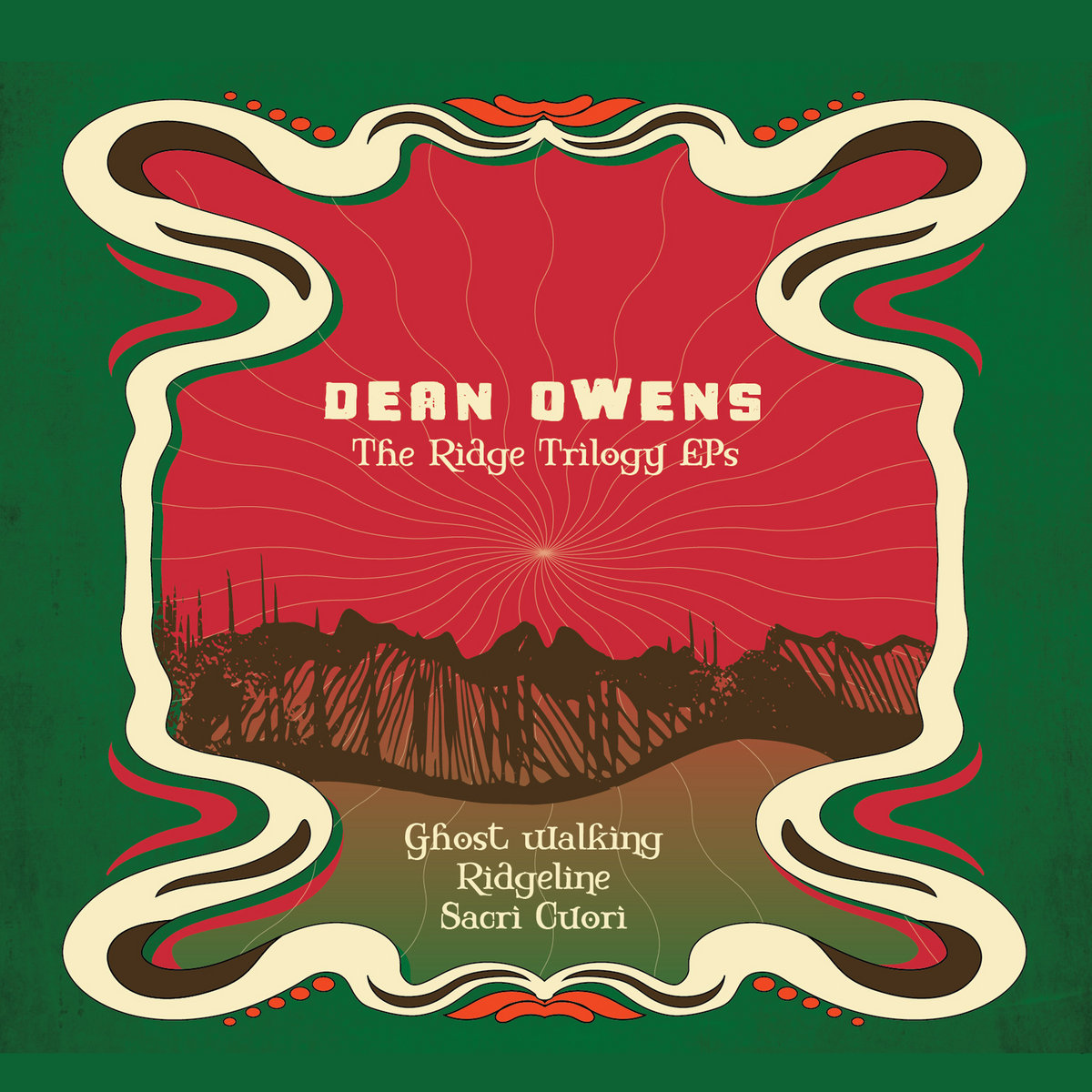
Dean Owens The Ridge Trilogy

Remember when, during a maths exam, you were asked not only to provide an answer but to show your workings? In a musical sense that’s what Dean Owens has done here. We await the final answer in the shape of his forthcoming album, Spirit Ridge (due out in February and to be premiered at Celtic Connections) but The Ridge Trilogy ( three EPs released separately and now combined into one package) are his workings, laid out in full in the expectation of top marks.

Owens pioneered this approach in the run up to his 2022 album, Sinner’s Shrine, recorded with members of Calexico in Tucson. This was a pre and post pandemic album in that the basic tracks were recorded before the world shut down, leading to a frustrating long wait before the album was eventually released. In the interim, the ever restless Owens decided to, well, show his workings over the course of three EPs, each containing a song from the eventual album along with demos and works in progress. These were eventually gathered together in a stand-alone release, a companion disc to Sinner’s Shrine. It was an astute move as fans flocked to buy what has become a somewhat collectible artefact.

In the wake of Sinner’s Shrine, Owens was introduced to Italy’s Antonio Gramentieri by their mutual friend, John Convertino of Calexico. Gramentieri, better known these days as Don Antonio, is the mastermind behind the astonishing Sacri Cuori and a collaborator with Alejandro Escovedo, Richard Buckner and Dan Stuart amidst many others. He has a kaleidoscopic musical vision, connecting the likes of Nino Rota and Ennio Morricone’s cinema scores, Euro pop, tango, surf music and a nod to the subversive pop genius of Serge Gainsbourg. The pair hit it off, Owens Italian lineage part of the connection, and soon enough he was off to Italy to record his next album in Don Antonio’s studio in Crinale, close to Bologna. Crinale translates to Ridge, hence the title of the forthcoming album and this curtain raiser.

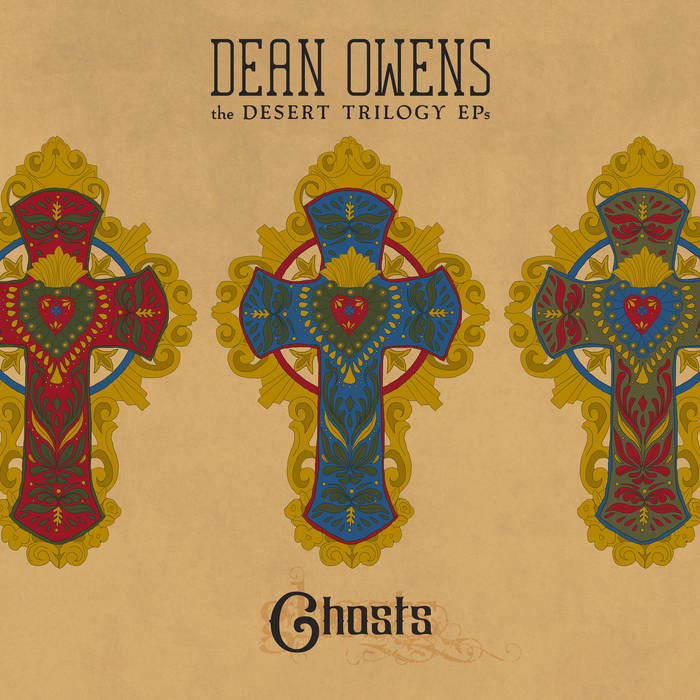
The Ridge Trilogy consists of three EPs, (Ghost Walking, Ridgeline and Sacri Cuori) released over the past three months and now gathered together in a bespoke package. Each contains a song from the forthcoming album along with demos and alternative takes (Overall there are 13 tracks on the CDs. Four from the upcoming Spirit Ridge album, five from the album sessions and four acoustic demos)  and it is a limited edition so best to snap one up before they head into Discogs purgatory. There’s quality control present throughout, the demos as urgent as the finished songs, so, in essence, the trilogy is a companion album to its big brother, arriving soon.

The trilogy kicks off with My Beloved Hills, a song destined for the album. It’s a classic Owens song, awash with the calm and grace and serenity one can find within nature. It’s a peace of mind which Owens’ has sung about on many occasions. His creative spirit seems to grow wings when he’s roaming hills, glens or, in this case, an Italian ridge, giving him free rein to recall past times, his family and friends. The song is given an almost imperial procession with its sweeping strings and billowing horns while Gramentieri’s guitar adds a powerful undertow, tethering the song to earth. As a taster for the album, it’s irresistible as are the other songs previewed here. Light This World is a propulsive smorgasbord of driving guitars, urgent string sections and John Barry like keyboards while Owens sounds like a frenzied update of Scott Walker’s melodramatic sixties songs. Spirit Of Us slowly uncoils itself as Owens revives a song from his past, an intimate portrait of family love, while Tame The Lion again recalls Owens’ lion taming ancestor who, uncannily, came to Scotland from the very same region of Italy where Don Antonio now resides. A powerful song it’s given a slightly funky delivery with some Memphis southern soul in its fibre.

Of the fully realised songs which seem to have not made the final cut, it’s somewhat astounding that Come With Me doesn’t seem to appear on the album. It’s quite tremendous as Owens croons over Gramentieri’s trembling guitars on a grimy spytastic 70s soundtrack song with Kirsten Adamson adding some magnificent harmonies. The same can be said for True Of You which is a sensational brew of wicked guitars and ecstatic fiddling which boils and bubbles with grim intent over a sensational five and a half minutes. These two songs are worth the price of admission on their own but you can add to that the grungy Tex Mex of El Minuto (which harks back to Sinner’s Shrine) before Owens keenly ties up all connections on the short, whistled, tune, Sergio’s Kitchen, allowing him to acknowledge the ties between the iconic dusty desert spaghetti westerns which were alluded to on Sinner’s Shrine and their Italian origins.

Of the demos, there’s more whistling on the sublime The Gloaming which finds Owens’ impressive pursing of his lips surrounded by an ethereal chorus while Sinner Of Sinners, The Buzzard & The Crow and A Divine Tragedy are all solo deliveries of songs which will be fleshed out on the forthcoming album. All three are quite compelling in their delivery even without any bells and whistles he and Don Antonio have decided to adorn them with once they emerge fully fledged on Spirit Ridge.

A taster then, but much more than that. All three EPs stand proud on their own merit and this collection of all of them is a significant release. The EPs are all available digitally and if are quick enough, you might be able to grab one of the very limited CD digipacks which contains all of them. And, after that, be prepared for the album release in early February.

And, by the way, Owens gets top marks here for showing all of his workings.

All three EPs are available here
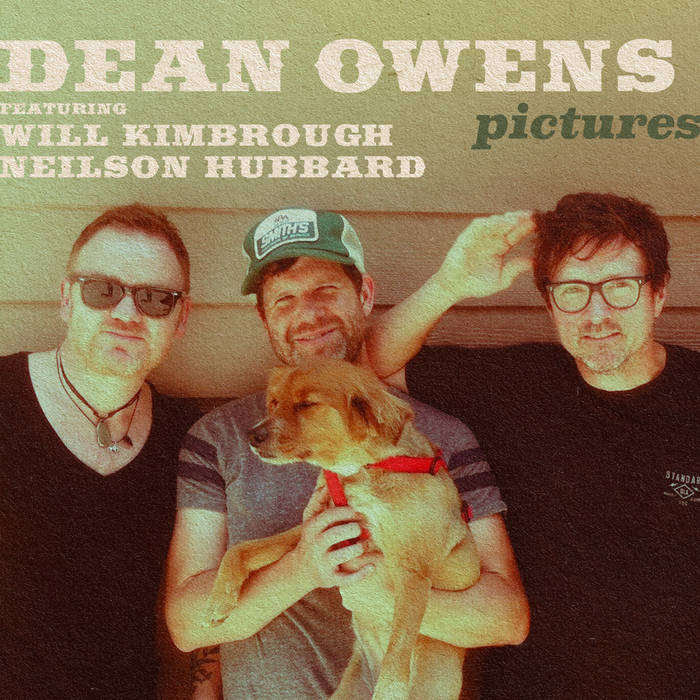
Dean Owens (featuring Will Kimbrough & Neilson Hubbard). Pictures. Songboy Records.

After his epic (and hugely rewarding) series of releases which dug deep into the sounds and legends of the American south west wilderness, aided by Calexico and other luminaries of the Tucson scene, Dean Owens returns to his own roots on Pictures, an album suffused with memories and personal reflections. It’s a welcome reminder that Owens, prior to his immersion into the torrid and dramatic Sonoran desert landscape, is equally as able to summon up the windswept romance of the Lothian hills and the daily grit of growing up in Leith, both detailed here with a huge sense of affection, almost rose tinted at times, tinged with regret for lost loved ones but leavened by some happy times.

Recorded during lockdown, Owens reached out to two of his erstwhile collaborators, Neilson Hubbard and Will Kimbrough who joined in on the endeavour from their Nashville base. Together, the trio hark back to the sound and feel of earlier albums such as Into The Sea and Whisky Hearts with Owens here firmly on home ground. A set of vintage photographs within the album cover are proof, if required, that this is a deeply personal album but we have to say that kudos are due to Hubbard and Kimbrough for their vibrant contributions (on guitars, keyboards and percussion),  giving the album a fully fledged band sound.

The album opens with Hills Of Home, a lilting slice of Celtic Americana if you wish, which finds Owens gliding over landmarks from his past as, presumably, he sets out on a transatlantic flight. His description of the bird’s eye view of his homeland soon migrates into a reminiscence of how he started off in the music business, back to the day when he first heard “the big music.”  He next dives deep into a love song, Pure Magic, on which he admits to his own blemishes, family traits from ancestors leading to mood swings (lion tamer and clown) and a hangover from his father’s stout (and much shared in the Scottish male) lack of patience. His salvation is in his relationship, his love, and it’s well expressed in a song which is gently borne along with sublime guitar and keyboards from his U.S. partners. In a similar vein, Neilson and Kimbrough add deft touches of piano and guitar to the sombre Sometime, a song which carries a seed of optimism and which can be seen as a thread of hope written when the world was, to all extents and purposes, shut down.

The spirit of Ronnie Lane looms large on Staring At The Lid (a song inspired by a saying of Owens’ father) which is enlivened by Kimbrough’s slide guitar and mandolin, perfectly evoking Lane’s raggle taggle travelling music and that mood is also present on Buffalo River, a delightful slice of whimsy which portrays Owens setting out on his adventures, protected by his ties to his homeland while Dalry Cemetery, an affectionate portrait of an ordinary but slightly eccentric  pair of characters is also reminiscent of Lane (and laden with Leithian lore). The past also looms large on Boxing Shorts, the most autobiographical song here on which Owens recalls his youthful endeavours as a boxer, paying tribute to his mentor with his band mates giving the song a slightly southern soul groove with punchy horns coming in at the end.

The album closes, much as it opened, on personal notes. Friend opens with Owens singing “We scattered your ashes in your favourite place…” as he offers a song soaked in loss, sadness and, ultimately, affection. It turns out that it’s a tribute to his late four legged friend, his much loved dog Alfie. Pictures, a slightly more upbeat number with the trio returning to the lilting airs of the opening song finds Owens commemorating his past adventures, his memories and his eternal ties to a friend (pictured on the album sleeve and to whom the album is dedicated) who has passed on. With a lonesome banjo dribbling out the last notes of the song it caps the album quite wonderfully. 

Website

Dean Owens. Sinner’s Shrine. Eel Pie Records

Good things come to those who wait and for Dean Owens and his fans, the release of Sinner’s Shrine has been a long time coming. Recorded two years ago but put in abeyance due to Covid, Sinner’s Shrine is the latest episode in Owens’ increasing immersion in American music. From his days in Edinburgh’s The Felsons, followed by a series of increasingly popular solo albums and collaborations, Owens has never shied away from his love of and indebtedness to the songs and culture of The States while always retaining elements of his Leith family roots. Look to the swampy Southern Wind (co -written with Will Kimbrough and winner of the AMAUK’s song of the year) which rubs shoulders with Elvis Was My Brother, a fine epistle to a childhood friend on 2018’s Southern Wind album. His collaborative album, Buffalo Blood, released a year later, was a full-blown American trip, recorded in the deserts of New Mexico and now, he returns to the arid southwest as Sinner’s Shrine finds Owens, this time in Tucson, giving full expression to his love of that border country’s music and myths.

The icing on the cake here is the presence of most of Calexico, perhaps the chief purveyors these days of those sun-blistered environs. A chance meeting with Calexico’s Joey Burns ended up with Owens travelling to Tucson with a handful of songs inspired by the polyrhythmic sounds of Calexico and his knowledge of the local lore. It’s a match made in heaven as Owens cleaves to the exotic sounds conjured by Burns and his compadres. With fellow Calexicans, John Convertino, Sergio Mendoza and Jacob Valenzuela all on board and with other Tucson luminaries on tap, Sinner’s Shrine is certainly the epitome of Owens career so far. It’s expansive, thrilling and, above all, authentic. That signature Calexico sound is ever present but is helmed by Owens’ ownership of the songs and this is perhaps most apparent in the reworking of New Mexico, a song originally recorded by Owens on his first solo album. Back then it was a low-key acoustic number, here it blossoms into a fully-fledged border ballad with grumbling guitar and soaring trumpet.

The history of, the romance, and the reality of living in these borderlands inform several of the songs. The opening song, Arizona, has a cluster of instruments including pedal steel (from Paul Niehaus) appearing as if through a heat haze as Owens explores the territory – the barrio, the titular sinner’s shrine – essentially the heart of the border music he has long admired and he admits that it has cast a wire around his own heart, drawing him in. Despite the notion of wide-open desert vistas, Arizona is quite claustrophobic in effect with the band coiled, but ready to strike. And strike out they do over the rest of the album. The Hopeless Ghosts, a song inspired by a Townes Van Zandt quote, is a tale of wanderlust, of dusty trails full of memories, while the aforementioned New Mexico positively jumps out of the speakers as Owens gets more romantic, singing of his “Sweet Maria,” a long lost lover. He gives it a lusty rendition on a song which one could easily imagine Johnny Cash singing.  Summer In Your Eyes is another romance which, with its mariachi horns, elegant piano and sleek guitars would not be out of place on a Mavericks’ album. Meanwhile, the short interlude which is Here Comes Paul Newman is Owens’ affectionate nod to the cowboy movies he loved while growing up. While it’s  Newman’s Hud he mentions in the notes, it’s Morricone’s spaghetti western soundtracks which he perfectly captures here with his assured whistling.

The title of the album is mentioned in the opening song but the sinner’s shrine also informs Compañera, a beautifully realised lament which is soaked in memories and tradition. Here, the band wallow wonderfully over a string arrangement which certainly pulls at the heart strings while Tony Pro, from the Mariachi band Luz De Luna, on guitarron, adds some gravity. Going back to cowboy movies, Compañera stands comparison to Dimitri Tiomkin’s score for that old John Wayne film, The Alamo, a favourite of mine when I was a kid.

Whilst it’s quite wonderful to wallow in Owens’ excellent capture of the romance and history of Tucson and the surrounding area, at the heart of the album there is a darker tone. On The Barbed Wire’s Still Weeping, the vocals are distorted, disembodied, while Burns and his cohort pull out the big guns. The song deals with the plight of the migrant population on the US/Mexico border, a theme common to both Owens and Burns, and they portray a parched and dread landscape with a thunderous sense of menace. La Lomita is in similar territory with Owens singing of a refuge on the border which was in danger of being demolished to make way for Trump’s infamous wall. The song is a full blown spectacle with Mendoza adding just about everything but the kitchen sink from his percussive box of tricks as it sways magnificently with stabs of trumpet and staccato guitar. It’s the most “Calexico” sounding number on the album and proof, if it be needed by now, that this pairing is just about perfect. Further proof of that perfection is to be had when Burns called in the Guatemalan singer, Gaby Moreno, to add her glorious voice to the sensuous swirl of Land Of The Hummingbird. Inspired by the rhythms of Cumbia it’s sexy and sultry while Mendoza’s piano playing reminds one of the majesty of the Buena Vista Social Club. That signature Calexico sound is given another airing on the tremendous thrust of the Farfisa infused We Need Us before the album closes with a nod to Owens’ past on After The Rain. A song which dates back to The Felsons, it was originally inspired by an Ansel Adams photograph and having heard Owens sing it, Burns demanded it be on the album. Here, it retains its quiet majesty while turned down a notch or two in terms of Owens’ singing, but it’s a fine valedictory to what is an extraordinarily great album.  

Website

Dean Owens. The Desert Trilogy EPs – Vol 3 Ghosts

a3166553620_16

All good things must come to an end and so it happens that Ghosts is the final piece to be slotted into Dean Owens’ Desert Trilogy slipcase. A quick recap. Having recorded an album, Sinner’s Shrine, with Calexico in Tucson, Owens’ plans for its release were scuppered by Covid. Undeterred, the Edinburgh based artist used his lockdown time to record another bunch of songs with various members of Calexico and other Tucson luminaries and he’s been releasing them via this highly desirable collection.

All the EPs have a song from the album but Owens was keen not to short-change his fans so, overall, they contain eight new songs, all cut from the same cloth which inspired the original recordings, Owens’ love of the American Southwest. So far there has been critical acclaim for this new direction and Ghosts is certain to bask in similar glory.

As with the other EPs, it’s a song from Sinner’s Shrine, which leads off. The Hopeless Ghosts is very much in the vein of Calexico’s hot, dusty and claustrophobic desert shuffles. John Convertino’s drumming is instantly recognisable as is Jacob Valenzuela’s soaring trumpet and Paul Niehaus weighs in with his swooning pedal steel. As Calexico do much of the time, Owens achieves a cinematic effect here with visions of movies by Leone and Peckinpah summoned by the music and the words – there’s drama by the dirtload. It’s haunting (as most songs with Ghosts in the title should be), as Owens comes across like some high plains drifter, condemned to forever travel. In a nice touch, Owens explains that the idea of hopeless ghosts comes from a Townes van Zandt description of his songs. Anyhow, the song is a towering achievement which is lifted further aloft when Grant-Lee Phillips joins Owens on harmony vocals, especially when the pair vocally pirouette towards the end of the song.

Mother Road is much more restrained as Owens delivers a wearied narrative, inspired by a 93 year old barber who had a shop on Route 66, a road now seldom travelled once the Interstate opened. It’s a sepia stained portrait of past times, replete with lonesome pedal steel and mournful trumpet and it’s a fine example of how Owens can transport his evocative portraits of his home town to a foreign land. Even When I’m Gone finds Owens on his own on a song which was recorded in Tucson but which was inspired by walks with his dog in the woods near Edinburgh. Again, there’s a sense of desolation here although it’s tempered by the thought that once we pass, life will go on. The EP ends with a murder ballad which Owens says he had written for Johnny Cash but, with the man in black gone, he has to sing himself. Owens recorded his basic track in Scotland with Kevin McGuire on double bass before Convertino, Martin Wenk, Tom Hagerman and Naim Amor sent in their contributions from various locations. Fittingly, as the last song on this trilogy, it’s called The End and, yes, one can imagine Cash singing it on one of his latter albums. Like some Dostoevskian anti-hero on the eve of his execution, Owens reflects and ruminates on a life of crime as a baleful trumpet and tasteful shards of guitar lead him towards the gallows. It’s a very impressive song.

So, trilogy wrapped up, all we can do is wait for Sinner’s Shrine. The main course after these wonderful appetizers.  

Website

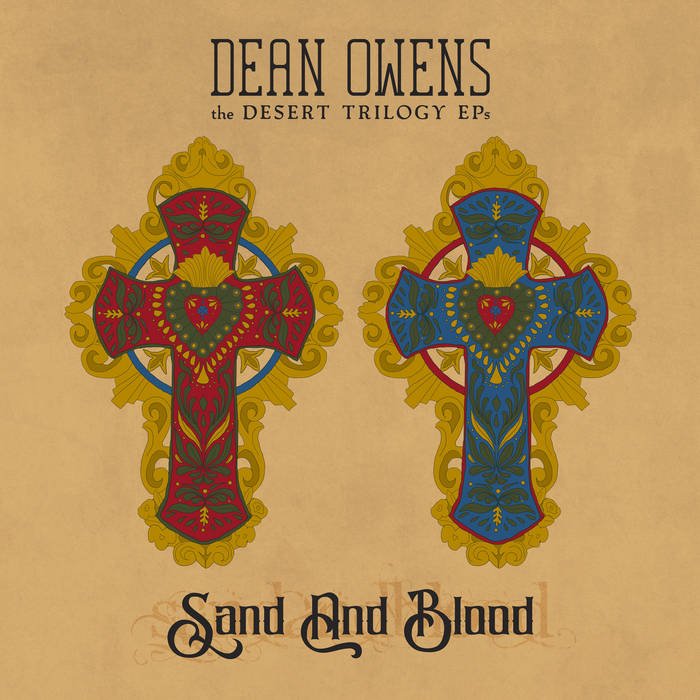
Dean Owens. The Desert Trilogy EPs Vol. 2 – Sand And Blood

Friday sees the much-anticipated release of the second volume of Dean Owens’ Desert Trilogy – three EPs which each feature a song from his even more anticipated Sinners Shrine album (due for release in September) along with other songs recorded in or inspired by his recent Tucson liaison with Calexico.

Sand And Blood opens with Land Of The Humming Bird, co-written with Gabriel Sullivan of Tucson rockers XIXA (this EP’s sneak preview of the album). It finds Owens fully embedded in the southwest borderlands on a dark romantic song played with an effortless sense of swing. Sergio Mendoza’s piano playing here is excellent while Naim Amor adds some neat guitar grumbles, but it’s Gaby Moreno, duetting with Owens on vocals, who really steals the show here. Owens has a thing for hummingbirds but he’s never made them sound so exotic as he does here.

Dolina casts a darker shadow as the Calexico chaps shift into their most moody groove with staccato trumpets bursts and shards of guitar thrown out like gravel from under a juggernaut’s wheels. The lyrics are menacing, the sand and blood of the EP’s title are to be found here, and the coruscating distortion of Owens’ voice midway through is quite gripping, like watching a cinema giallo unfolding before your eyes. Ashes & Dust is one of the songs worked up internationally during lockdown with the musicians zooming in from Scotland, Texas, Arizona and Berlin. You certainly can’t see (or hear) the joins as it fits in perfectly with the atmosphere summed up in the previous songs. It’s a dustier and drier vision of the desert, summoning up the stark adobe peppered barren landscapes of Leone’s own trilogy. With Owens capturing the inner thoughts of a blessed and cursed individual, like a funeral procession, the song proceeds slowly, the protagonist approaching his own personal Golgotha.

It has to be said that Dolina and Ashes & Dust are both quite tremendous and that neither of them are slated for inclusion on Sinners Shrine just makes one wonder how good that album is going to be. Anyhow, the EP concludes with She Was A Raven which is an alternative take of the opening song. Here they abandon the refined pace of the original and instead sweat it out. Gone is Gaby Moreno, and in her place are Jacob Valenzuela’s rip snorting trumpet trills and Joey Burn’s scathing guitar solo adding up to an almighty rumble.

Sand And Blood is available on a limited edition CD here. The third volume of the Desert Trilogy, Ghosts, will be released in July.

Website

Dean Owens & The Southerners, Leith Dockers Club, 13th March 2020

IMG_2006 copy

As Dean Owens & The Southerners thrashed into a fiery rendition of Last Song at the close of his set on what was a particularly memorable occasion, little did we know that it was to be one of the last songs everyone gathered here was to hear in a live setting for some time. Yes, this was a pre Corona lockdown show, just slipping under the wire before The Dockers club and every other venue in the land put up the shutters. That it was Friday the 13th was unnoticed at the time.  The gig was supposed to be the opening slot of a UK tour supporting the release of Owens’ retrospective compilation of his best songs, The Man From Leith, but that rapidly unravelled leaving this night as the sole date on the tour. As they say however, every cloud has a silver lining and at least Owens can take some comfort from the fact that this special night occurred. And it was a special night for several reasons.

This was Owens in his home territory, surrounded by family and friends. The eponymous man from Leith is Owens’ father, once a Leith docker and a long time member of the Leith Dockers Club which was established in 1946, one of the many social clubs established to afford a communal social space with affordable drinks for the industrial working masses. These days the only dockers here are long retired but the club is a vibrant community hub providing affordable entertainment although it, along with similar clubs, doesn’t often feature gigs by the likes of Owens. However, as Owens explained, it was on the very stage he was on tonight that he first performed in public (“Maybe a wedding, or a funeral, I can’t remember”) and so the stage was set for a triumphant return.

The audience was an odd mixture. There were Owens fans, keen to hear the songs and get their hands on the new LP at this official launch gig. They were outnumbered slightly by the usual denizens of the club, stalwarts all, more accustomed to having a dance and some bingo in the interval while there was also a large contingent of Owens’ family, there to see one of their own. To their credit, Owens and the Southerners satisfied all (aside from the bingo players) with glorious en masse dancing as the show ended.

IMG_1986 copyFamily featured heavily in the set list. The Man From Leith was of course delivered as was Owens’ song for his mother (with Owens fondly recalling her couthy sayings), a song for his daughter, the rarely performed Baby Fireworks, and his tribute to his late sister on Julie’s Moon.  The last was particularly poignant as many in the audience had known Julie and Owens, accompanied by Amy Geddes on fiddle, performed the song bravely. Reaching further back, Owens celebrated his history with a rousing Dora, accompanied by a terribly funny tale of researching the family tree.

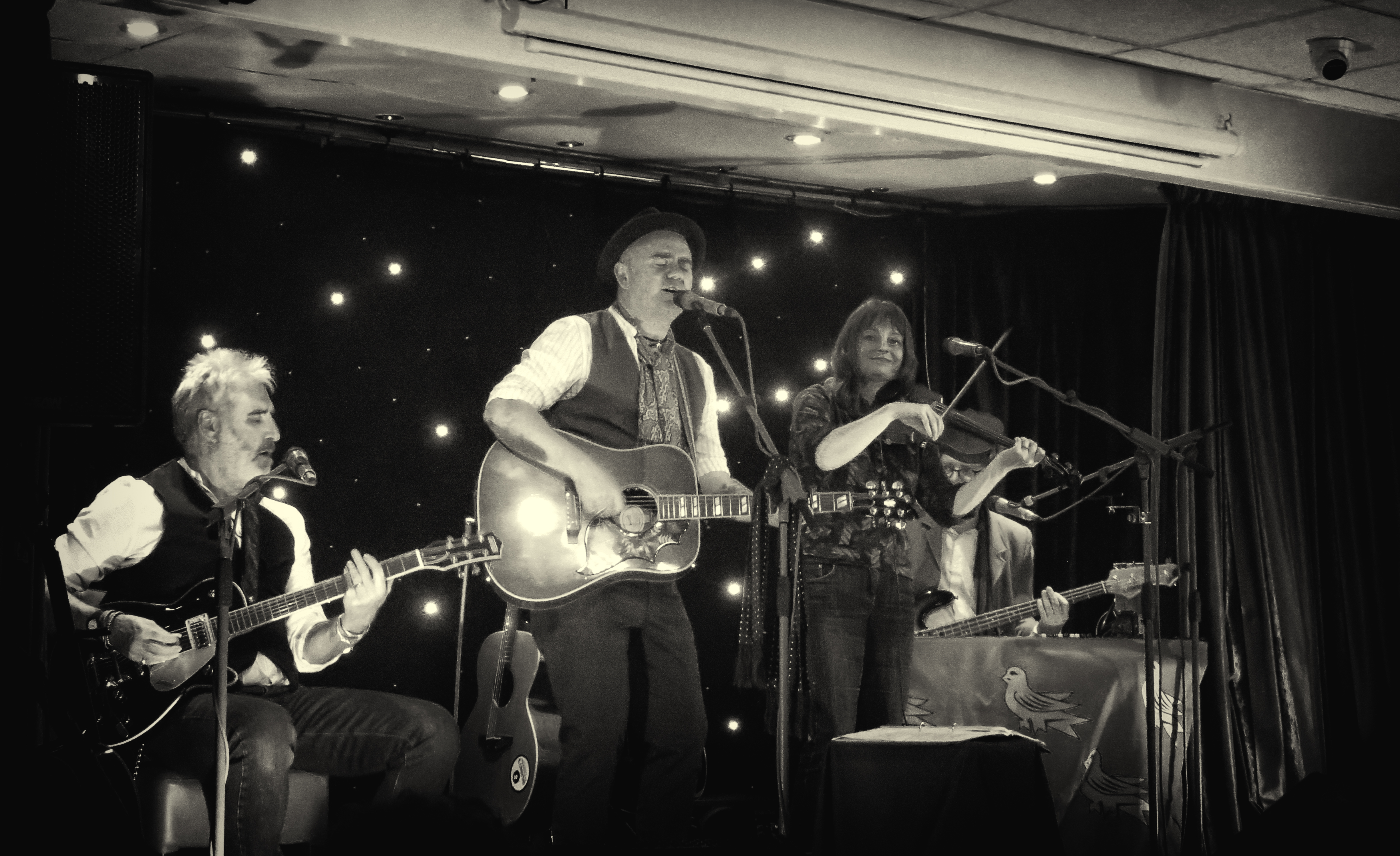
IMG_2015 copyThe Southerners, Jim Maving on guitars and Tom Collison on keyboards and bass, looked into the maw of The Dockers and survived. In fact, they seemed to thrive on the whole set up with lots of pictures on social media of them imbibing the cheap drink and embracing the regulars after the show ended. Augmented by Amy Geddes for the night, The Southerners played their hearts out with Maving waxing tremendously on slide guitar and having some great fun when he pulled out his mandolin for their delivery of Buffalo Blood’s Reservations. Added to the mix for this night, Geddes’ fiddle gave an extra dimension to The Southerners’ sound and was a fine vocal foil to Owens on Strangers Again.
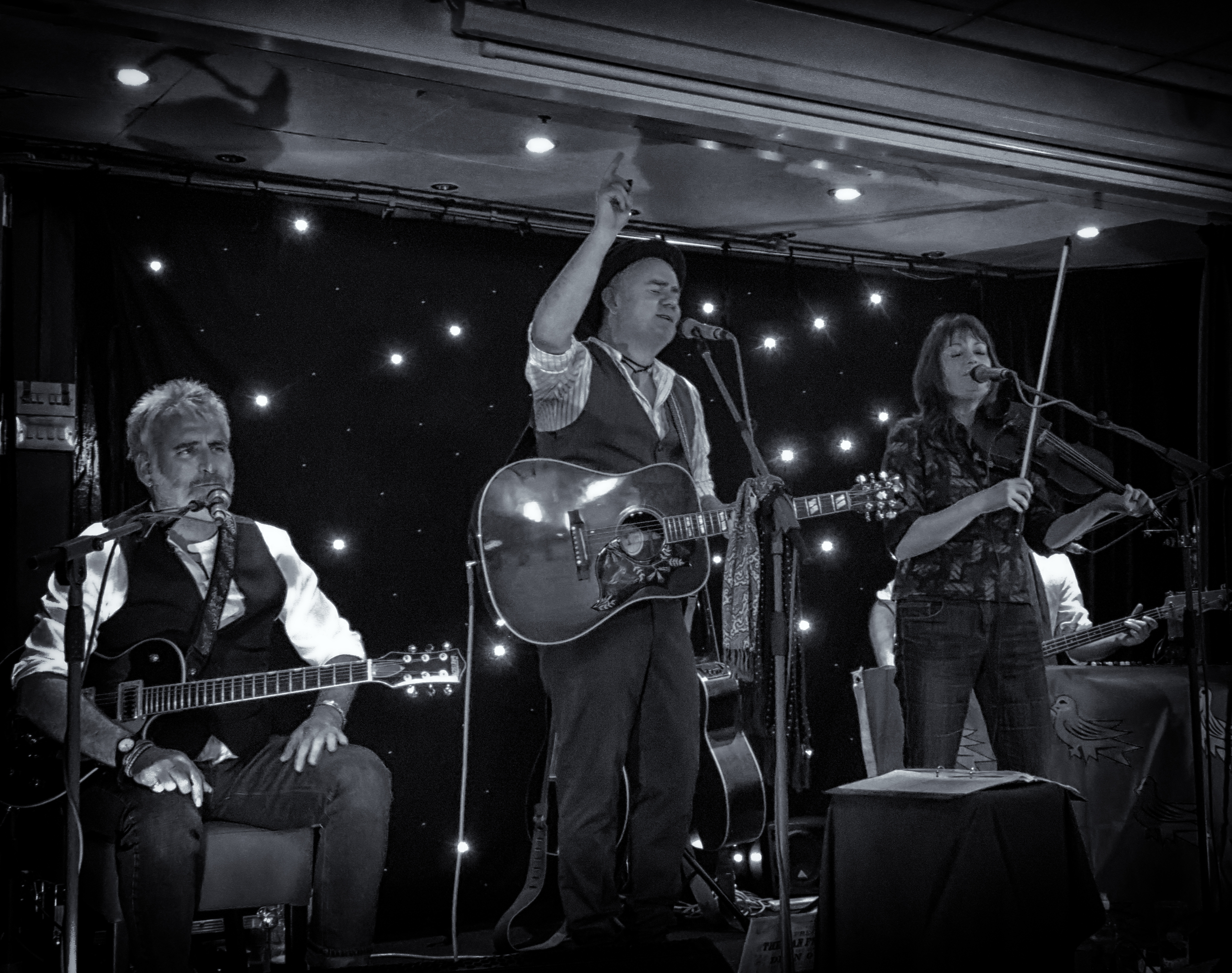

The crowd lapped up songs such as The Night Johnny Cash Played San Quentin and Up On The Hill and by the time Last Song rolled along there was dancing, led by an intrepid lady who was cajoling all in the front seats to join in. The band returned for an encore which kicked off with a song Owens had just written for the dockers and their love of dancing. The band didn’t know the song but they vamped along bravely as the dancers poured from their seats. There was brief respite as Raining In Glasgow reigned over the audience before Owens bowed to the crowd and sang one of their favourites, Neil Diamond’s Sweet Caroline ! Now, that’s probably an experience which will probably never be repeated and which added to the uniqueness of the night and it did what it was supposed to do as the dance floor filled and everyone joined in on the chorus. It was somewhat surreal but it cemented the band’s link to the audience and for this reviewer it was a moment to remember before the shutters came down. Hopefully, it won’t be too long before we can all dance and sing along together again.

IMG_2042 copy

Apologies to Dean and all for the wait for this review, stuff happens. See you all on the other side.


Dean Owens brings the spirit of Johnny Cash back to Fife

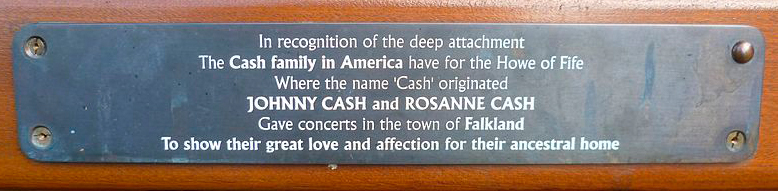
cashback posterCash Back In Fife is the latest addition to the Scottish roots music calendar, a weekend of music celebrating Johnny Cash’s links with the Kingdom of Fife. It’s the brainchild of Dean Owens who has always acknowledged his debt to the man in black. Taking place at The Woodside Hotel in Aberdour, Fife, the weekend extends the spirit of Owens’ album Cash Back (Songs I Learned From Johnny) and his resulting show which was a hit at the Edinburgh festival.  Aside from Owens, the weekend will feature musicians (many from Fife) who were equally inspired by the giant of country music.
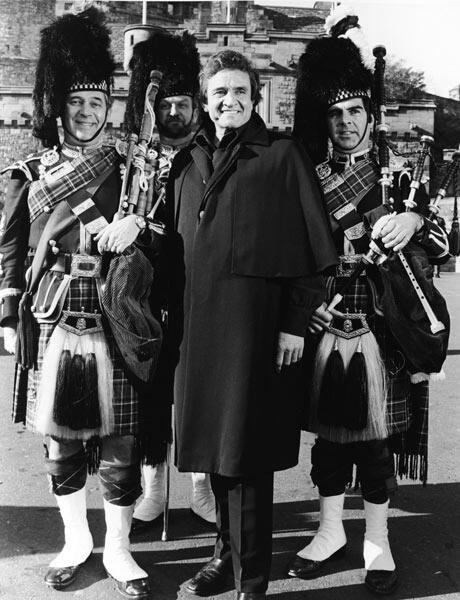

Owens’ a busy man these days. So far, in 2020 he’s been to Tucson to record with Calexico for his next solo release,  appeared at Folk Alliance in New Orleans and then jetted back to the UK to play with his latest line-up, The Southerners, at the AMAUK awards in February, revisiting his triumph of 2019 when he won song of the year for Southern Wind. He’s now gearing up to tour with The Southerners to promote the release of The Man From Leith, his career spanning collection which is released in March with a sold out launch gig in Leith. Before that however, there’s the simple task of curating Cash Back In Fife. In the midst of this whirlwind of activity, Dean took some time to talk to Blabber’n’Smoke on a wet and windy afternoon. We kicked off proceedings by asking him how he came up with the idea for this weekend of Cash inspired music.

Really, it all started when I played a gig at The Woodside Hotel in Aberdour last May. I’d never been there before even though when I was a kid we used to holiday further along the Fife coast. After my sound check I went for a short walk and was really impressed by this quaint little village and so after that I kept coming back just to enjoy the place. I’d take my dog, Alfie, there for long walks and both my wife and I just fell in love with the village. Anyhow, I came across an article about Johnny Cash’s association with the area, how he discovered that one of his ancestors came from Fife and so he became a regular visitor and even recorded one of his TV shows in Fife. Something clicked and I thought it would be nice to celebrate Cash’s connection with the area so initially I spoke to John McTaggart who owns The Woodside Hotel about it. He’s a passionate music fan and has been putting on some great shows at the hotel and he was up for it so, along with Morag, my manager, we started to see if we could get folk interested in playing.

800px-Cash_bench_plaque,_Falkland,_Fife

I suppose we should make it clear that it’s not going to be a tribute weekend of people playing and singing Johnny Cash songs.

No. We thought quite a bit about this. We wanted folk who had links with Fife but we also wanted to widen it out to others who just were appreciative of Cash in their own writings. It’s not a tribute band weekend, instead I’m hoping that it will just show that Cash’s influence reached out to so many performers over here but with many of the artists coming from Fife we’re going to highlight that specific connection.

tumblr_oitpzawkx81rabt81o1_500

I rooted around YouTube and saw some clips of Cash in Scotland and he seemed quite chuffed to have discovered that he might have some Scottish blood in him.

Yeah, it’s quite funny I suppose but it’s more that we Scots like to grab folk for our own  and claim them as Scottish so the idea of having Johnny Cash as an honorary Scot makes me smile.

So, who can we expect to see and hear over the weekend?

There are several folk who actually come from Fife, Rab Noakes, Ian Rankin, Fay Fife of The Rezillos (who is fae Dunfermline), David Latto and The Marriage featuring Stuart Adamson’s daughter, Kirsten. But we reached out a little further afield to people who have a fondness for Cash’s music so we have Hannah Rose Platt coming up from England and there’s Martha Healy and obviously I’m doing a couple of things. It’s small but as it’s the first time we’re doing it we wanted to keep it that way. It’s all under the one roof which is nice and it should be a fun weekend. People in the area are quite proud of the Cash Connection so we’re expecting a lot of local folk will be attending especially as John has been building up the hotel’s reputation by booking a lot of well-regarded acts.

On Friday night I’ll be playing with The Celtabilly Allstars who are people I’ve played with over the years including Amy Geddes on fiddle and Kevin McGuire, my old bass mate from The Felsons. We’ll also have Martha Healy playing. It’s a nice and easy way to open the weekend and there’ll definitely be a few Cash songs sung as it ties in with my album and show about Cash. On Saturday afternoon, Ian Rankin will present a talk about his favourite album by one of Fife’s greatest artists, Jackie Leven, the album being Elegy To Johnny Cash. It was actually Ian’s idea to do this and and I’m really happy that it’s happening. If Jackie were still with us I’d have definitely asked him to play. Then that evening we have a Nashville styled songwriter’s circle with me, Hannah Rose Platt and the legendary Rab Noakes. I’ve known Rab for a long time and of course he’s one of these guys who has been around for ever and is still making great music. He’s got a lot of knowledge of growing up in Fife just as Cash and these guys were starting out and it will be interesting to hear his stories on the night. Finally, there’s what we are calling Sunday Afternoon Coming Down with David Latto, Fay Fife with her country rock band The Countess of Fife, and The Marriage. I’ll just be hanging around and lending my support but it’s a lazy brunch in a lovely place so it should be great fun.

Cash back In Fife runs from 6th -8th March at The Woodside Hotel in Aberdour. Weekend tickets and tickets for individual shows are available here.

National Award for Scottish Singer Songwriter Dean Owens

Dean Owens with Graham Gouldman - AMA-UK 2019Last week The Americana Music Association UK (AMA-UK) held it’s fourth annual  awards ceremony.  Over those four years it’s become a big deal attracting stars such as Robert Plant, John Oates, and the recipient of this years Lifetime Achievement award, Graham Nash. The MC for the occasion was the “godfather” of UK Americana and country, Whisperin’ Bob Harris. So it’s great to relate that the winner of the UK Song of the Year was Scotland’s very own Dean Owens, a lad from Leith who is now the owner of a much coveted “Woody,” a handcrafted wooden facsimile of a 7″ disc, commemorating his win.

The song in question was the title number of his Southern Wind album (reviewed here) which Owens co-wrote with Will Kimbrough in Nashville. Commenting on the award Owens had this to say, “ I’m delighted, it was a complete surprise. As the first Scot to receive an award from AMA-UK, it feels really special, and a huge honour to bring this back to Scotland. Apart from a cup for being Boxer of the Year as a kid, this is the only award I’ve ever won. I’m still in shock to be honest!”

His co-writer chimed in from Nashville to add this regarding the song, “Dean and I wrote Southern Wind in a flurry of creativity. Ideas were flying. I am from so far south that Nashville is eight hours north. Dean is more of a northern man. My Southern Wind calls me to a long left behind home; I like to think that Dean’s Southern Wind calls him South to create in Nashville. The lure of home. The lure of the muse. Both romantic and hard to reach. That’s Southern Wind.”

the woody closeup

The award was presented to Owens at the star studded ceremony in London by Graham Gouldman, a founder of 10CC and writer of some of the most memorable songs of the sixties including Bus Stop which of course, was a hit for Graham Nash back when he was in The Hollies.

The Americana Music Association UK (AMA-UK) is a professional trade association representing and advocating for the voice of American roots music in the UK. Its membership comprises musicians, from the UK and overseas, plus professionals from all sectors of the music industry. https://theamauk.org/Nominees-2019


Buffalo Blood, Buffalo Blood, Eel Pie Records

album-cover-pic-smallBuffalo Blood is the collaborative work of three American musicians and a Scot who set out to capture some of the legend and history of Native Americans, victims of a genocide which rivals that of the Nazi’s against the Jews. The collective – Dean Owens, Neilson Hubbard, Joshua Britt and Audrey Spillman – were drawn to the project after Owens, a man from Leith, raised on cowboy movies but lured to the plight of the Native Americans after visiting their sacred lands, mentioned a batch of songs he had written as a result of his fascination, to Hubbard. Hubbard, a Grammy nominated producer and, along with Britt and Spillman, a member of The Orphan Brigade, a band who seek out unusual recording opportunities, got on board and the newly formed quartet decided to collaborate in the writing and recording of what became Buffalo Blood. A project long in the making, it eventually saw all four decamp to New Mexico, along with sound engineer and photographer, Jim DeMain, to record the album in several iconic locations. Aside from the recording, they captured the outdoor performances on film as they followed what is known as the trail of tears, the historical forced marches of Native Americans from their ancestral lands to reservations. The resulting album is heavy on atmosphere with ambient sounds trickling into the songs, many of which reflect the arid conditions of the New Mexico desert.
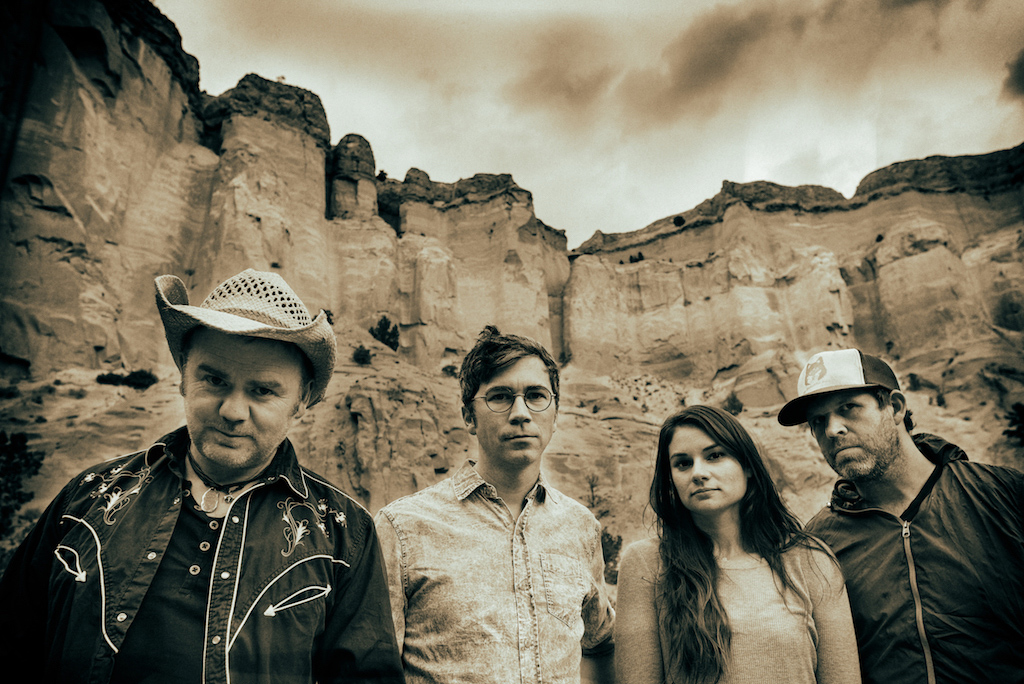
There’s no narrative as such although some numbers mention the likes of Custer and Crazy Horse (Land of Broken Promises) while others portray the repressive regime which tried to wipe out their culture as on Carry The Feather, inspired by the habit of forbidding Native Indian children to speak their own language at schools which taught a white curriculum. There are a couple of mood pieces. The excellent Ten Killer Ferry Lake (named after a reservoir on Cherokee land) opens the album and sets the scene perfectly combining a ghost dance like lament and mournful whistling. The whistling (by Owens) returns on Ghosts Of Wild Horses, a tune redolent of spaghetti western soundtracks, a sly nod perhaps to what, for most of us, was our first exposure to the American west via the movies. Whatever, it’s another strongly suggestive piece of music casting up images of sun blasted parched lands, bleached bones and the unique strangeness of the frontier. Similarly, Buffalo Thunder, a wordless chant with ambient wind sounds throughout, transports the listener to late night campfires among the tepees.

dean-josh-audrey-neilson-photo-by-jim-demain

There’s an inherent sense of drama throughout the album. War Among The Nations is portentous, warning of calamity ahead and Reservations bristles with indignity singing of the white men’s lies. Comanche Moon captures the fury of the tribes as they fight back against the white man who considers them “all just savages,” while Buffalo Blood is a powerful number which rings out with a fierce sense of pride amplified by the native chant which surrounds Owen’s strident vocal delivery. There’s a resigned air to Daughter Of The Sun, White River and Bones, songs which reflect the sense of loss and identity suffered by the Native Americans while Land Of Broken Promises just about sums up the series of injustices dealt to them as treaties were torn up and they were moved further westward.

Throughout the album the quartet perform excellently. The primary sound is of acoustic guitars and mandolin with percussion and keyboards filling out some of the numbers. The harmonies are wonderful as the band inhabit the spirituality of well-worn chants brilliantly. Owens says that as they recorded in the desert, under clear skies and amidst stunning red rock formations, they felt the presence of the spirits which permeate the locations. They capture this perfectly on Bones, an excellent song with a mournful organ base which is suffused with suffering and a simmering anger. Overall, Buffalo Blood is a bold venture which sets out to portray a particular injustice but it burns with a contemporary relevance as one realises that the plight of the Native Americans is not far removed from the forced migrations and exploitation of indigenous people which continues to this day. From the pipeline protests at Standing Rock to refugees fleeing brutality in Africa and South America, the story continues.

Buffalo Blood is released on February 15th as a download and, in the UK, a double vinyl album. £1 from the sale of each vinyl album will be donated to the Redhawk Native American Arts Council , an organisation which is dedicated to educating the general public about Native American heritage through song, dance, theater, works of art and other cultural forms of expression.

Celtic Connections will present the live world premiere of Buffalo Blood in performance tonight at The Mitchell Theatre. Details are here while the project’s website is here. For more information on the project check out this interview.


Dean Owens. Southern Wind. At The Helm Records

sw-front-coverLaunched at a fabulous live gig at the tail end of Celtic Connections and officially released last week, Southern Wind is the latest instalment in Dean Owens steady rise towards the top echelons of Scots musicians. As with 2015’s Into The Sea, Owens offers up a robust and perfectly formed album, the songs memorable and excellently played, the mix of punchy rock numbers and more introspective ballads over the course of its length finely balanced. And again, as on Into The Sea, Owens delves into his memories and his family for several of the songs while elsewhere he celebrates the joy of rock’n’roll and, significantly, mines the rich seam of Southern music from the States.

Recorded in the same Nashville studio as Into The Sea with the same team on board (Neilson Hubbard, producer and percussion plus bass, piano and “various bits & pieces, Will Kimbrough, guitars banjo, mandolin and Evan Hutchings, drums along with Dean Marold on bass) there’s one change from Owens’ usual habits in that several of the songs are co-written with Kimbrough and, as Owens recently told Blabber’n’Smoke, “I’d said to Neilson Hubbard, the producer, “I really want to make a swampy sounding record,” and that’s what he does really well. He’s from Mississippi and Will’s from Alabama as is Evan so they have that sound in their veins.” It’s recognisably a Dean Owens album but that Mississippi mud can’t help but seep into several of the numbers here.

The album opens with Owens’ clarion call to some musical heroes including Ronnie Lane, Ian McLagen, B. B. King and The Waterboys on The Last Song.  Given a delirious folk stomp and sounding like The Faces playing a particularly raucous pub gig it’s a delicious opener and acts almost as a bridge from the last album to the present one. There’s a further reflection of the previous album on Madeira Street, written (as was Evergreen) for Owens’ late sister, another example of how he can vividly cast his memories into song and, going further back, he finally offers his mother her own song, a counterpoint to his salute to his dad on Man From Leith, with Mother, a song co-written with Danny Wilson (from Danny & The Champs) and given a lilting, almost calypso beat along with an early sixties teen crooner charm, a rare ray of light in an album that at times is densely populated with loss and regret. Famous Last Words for example is a love song about the end of love while When The Whisky’s Not Enough is a fine addition to the canon of songs about being in your cups but still feeling pain, a real downer, it’s enlivened with zinging slide work from Kimbrough. Bad News is a slow burner with creeping organ and ominous guitars as Owens warns a woman not to go back to an abusive husband.

Owens has written songs inspired by his friends before but probably none as successful as Elvis Was My Brother where he takes on the words from a friend’s letter which explained that his transient childhood only had one true touchstone which was the Memphis Flash. Here, Owens and the band really excel, the song a wonderfully upbeat slice of rootsy pop with curling guitars and a rhythmic groove which recalls the splendid John Hiatt album, Bring The Family.  Owens was in Amarillo when he heard the news that Muhammad Ali had died. A hero of his since boyhood, he wrote Louisville Lip that night hunkered in his hotel room. The barest song here, just guitar and a mournful trumpet,  it pulls together Owens’ memories of watching Ali on the telly as a kid, an experience which led him to pulling on the gloves in his teens. Sentimental but the sentiment is heartfelt,  here Owens avoids any schmaltz with the song quite tugging actually.

Finally, there’s the Southern issue. The album is replete with swampy keyboards and Kimbrough’s snakelike guitar but Owens really dives into the Kudzu ridden culture on three songs here. Love Prevails, which closes the album, is loosely aligned with Rodney Crowell’s memoir, Chinaberry Sidewalks, as Owens summons up a Waltons’ in reverse, a family who fight and squabble but who are held together by their common bond – a universal theme perhaps but dignified by Kimbrough’s guitar licks and the mournful organ – the end result almost hymnal. His deepest delve into the South finds Owens accompanied by the powerful voice of Kira Small whose magnificent wailing elevates two songs here. The title song opens in a portentous manner with Owens evoking nature over interweaving guitars before thunderous tribal drums approach and Kimbrough unleashes his evil guitar sound. The song thrashes on with the guitar like a twister destroying all in its path until Owens, Small (and The Worry Dolls who were passing by) indulge in an orgy of shamanistic wailing. No Way Round It is prefaced by a very brief snatch of slide guitar and moaning (recalling Ry Cooder’s work in Performance) before its strident riff gets into its stride, pulsing like a heart about to burst as it progresses from a banjo driven skip to full throated guitar solo with Owens a lone soul wailing against nature’s barriers aided and abetted by Small’s magnificent voice which plays a similar role to that of Merry Clayton on The Stones’ Gimme Shelter. It’s an absolute belter of a song with Kimbrough’s guitar solo frenzied and outrageous while the dynamics of the song, the shifts from the banjo motif to squalls of sound are just superb. And, having seen Owens play this live with his Whisky Hearts band, we can confirm that it’s just as thrilling if not more so in a live setting.

Southern Wind finds Owens still proud of his roots in Leith but becoming more adventurous in his exploration of American music. That he can tie both ends of this transatlantic bridge with such confidence and, at times, swagger, is testament to his skill and to his ongoing relationship with his extremely talented American friends. We do look forward to the next instalment.

Website