
Jerry Joseph. The Beautiful Madness. Decor Records

jj_web_thebeautifulmadness_540xIt’s strange sometimes how the stars align. Jerry Joseph is a jobbing musician with around 30 albums under his belt but he’s hardly a household name. He has his fans and one of them turns out to be Patterson Hood of The Drive By Truckers who produced this album. That’s not all however as Hood enrolled the rest of The Truckers to play on the album (using a nom de plume, The Stiff Boys) while ex Trucker Jason Isbell (another fan, calling Joseph a triple threat – “a great singer, songwriter and performer”) joins in as well. Who knows if it was this star-studded line-up which prompted Joseph’s first official UK album release but we should all be grateful that the album, with all its righteous rage and acute observations, is getting its 15 minutes of fame.

In addition, there’s a serendipity around the album as Joseph rails against many of our current woes. Currently a native of Portland, he’s been in the thick of recent protests but several of the songs here, although recorded before Black Lives Matter exploded, address many of the issues relating to racism in the US. Central to this is his song Dead Confederate, the starkest number on the album which features Joseph along with Isbell on slide guitar. Eerily prescient, Joseph imagines the thoughts and memories of a Confederate statue, still adhering to his white supremacist values and scornful of those who wish to pull him down. It’s a powerful song with vivid imagery but Joseph skilfully undermines the so-called historical importance of such monuments as the statue, while relating antebellum racism, turns out to have been erected by racists in the 20th Century.

Standing tall alongside Dead Confederate is the dense and claustrophobic diatribe of Sugar Smacks. A deadly melange of fuzzed out rock with Death Valley banjo and kaleidoscopic keyboards, it has Joseph in an apocalyptic mood as he raps and rages against a dystopian world. As he rants about injustices around the world, celebrates heroes and cites so many instances, good and bad, that propel him, one would have to have a heart of stone not to be moved by the song’s visceral propulsion. It’s like a contemporary version of Allen Ginsberg’s Howl.

Surrounding these towering achievements, Joseph still aims and hits high. The opening Days Of Heaven, aside from its nod to the Malick movie, finds Joseph writing in the Mexican wilderness, a gun at his side in case any drug gangs get too close. San Acacia is like a Sam Peckinpah movie come to life while Good rises from swamp rock roots and Eureka limps along wonderfully as Joseph recalls the aching country rock of Chris Gaffney. Finally, there’s Joseph’s farewell to David Bowie on the sweet string infused Black Star Line which has echoes of Lou Reed threaded within and which eventually bursts out like a Roman candle with an incendiary guitar solo until an astoundingly well managed closing piano.

Having never heard of Joseph before, The Beautiful Madness is quite astounding. Kudos then to Patterson Hood for backing the man and hopefully this will raise his profile. It might seem daunting, but if this album hits you then there’s a wealth of back catalogue to explore. Mind you, Joseph is eclectic, but do dive in. In the meantime keep your fingers crossed for a purported Euro tour in 2021 and please have a look at this in depth interview on Americana UK where Joseph talks about the album and also the work he does across the globe in war torn regions.
https://www.jerryjoseph.com/

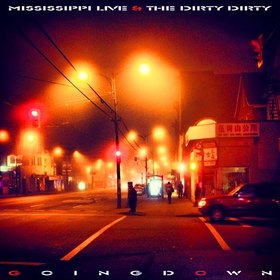
Mississippi Live & The Dirty Dirty. Going Down.

a1621425413_16

A Vancouver band, Mississippi Live & The Dirty Dirty are based around the talents of Mississippi born Connely Farr who, with his three Canadian band mates (Jay B. Johnson, drums; Ben Yardley, guitar and Jon Wood, bass, piano and organ) released a very fine slab of Southern rock on 2010’s Way Down Here. Going Down maintains the quality of its predecessor and in a similar fashion mines a sound more akin to the Deep South rather than what we might expect from the Canadian seaboard. As for Deep South we mean the guitar charged thrust of bands like The Drive By Truckers as opposed to soul or blues.

The album opens with the country rock strains of Trouble, a deceptive opener as thereafter we are in deep rock country but it’s a lovely song, Farr’s hoarse vocal delivery carrying just the right amount of hurt to counteract the sweet guitar lines. The title song follows and dives into a clangourous riff with a garage punk sneer; turn this one up as it will rattle the house. It’s So Easy pales in comparison with its relatively tame delivery although the sparring guitars midway are invigorating while Hurtin’ (written by Johnson) limits itself with a pile driving riff that recalls muddy seventies boogie bands without really going anywhere. Likewise Mexico, which despite some superb guitar squalls, lacks the originality and vigour of its compadre songs here.

All is forgiven however with the spectral guitars, gloomy organ and rolling drums of Dead & Gone and the brooding Country Boy which serves to deliver the heads of the Truckers and Neil Young on your platter. Here the guitars curl with a menace as the song heads into the swamps. Even better is Bad Bad Feeling where Jon Wood’s production recalls his work with Cam Penner, slide guitars sound as if they’re being scraped by rusty knives as Farr descends into an alcohol fuelled hell.

website


Jim Dead. Ten Fires

What is Americana? The simple answer might be that it’s music (or literature, art) that refers to America, in particular to that continent’s (primarily the US of A) heritage. So a broad church with country, bluegrass, jazz, swing and god knows how many others getting a shout in. But are, for example, Kings of Leon Americana? U2? Jack Johnston? The answer of course is yes and no. Or rather, it depends. It depends on the singer, the song, the listener, the situation and for an awful lot of folk in the end it doesn’t matter. And perhaps therein is the rub. For if it does matter to you then you probably know the answer already.
Americana is a feel, an intuition, a knowledge of and respect for, well, Americana. It has depth, history, tradition. Tradition that harks back to the great immigrations that peopled the USA, that recalls the natives who were displaced by the newcomers, the poverty and violence experienced by the Negro slaves, the violence of the civil war, the culture that grew out of all of these. The tradition continued in modern times, the civil rights struggles, the protest songs, the discovery of their own culture by the late sixties generation which fed into the No Depression generation of the eighties which in itself reached back into the distant past also.
It’s easy for anyone anywhere in the world to be captivated by Hollywood cowboys, Lonnie Donegan records or books by Cormac McCarthy. Dig deeper and chances are you’ll find Americana, a fabulous land with a fabulous story. And best of all you don’t have to be American.
Jim Dead is a man who I reckon has done his fair share of digging. So much so that he inhabits a mythical Americana hometown, Deadsville. Deadsville is a mixture of all of the above however Dead has sculpted it into shape. A dust blown dread place with frontier justice, where gunslingers are replaced by guitar slingers, where the blues are amplified and dragged from the past and shot into Technicolor glory.
Calling up a new version of his band The Doubters consisting of Craig Hughes on guitar, James Duffin on bass and Tommy Duffin on percussion and harmonica, Dead offers up twelve songs that portray Deadsville as a scary place to be. Telling stories of lynchings, drugs and death the band walk throughout the landscape with a powerful swagger. Several of the songs here reach epic proportions both in length and delivery. The combination of Dead’s and Hughes’ guitars conjure up visions of Crazy Horse and the Drive By Truckers. While there are quieter moments such as the opening song Silence has No Place Here, Hotel, (with a touch of Willie Vlautin about it) and My Heavy Heart, My Aching Bones, there remains a sense of doom, of hopelessness in them. However the big hitters here are when the band plug in. The loping Bone Blue Moon has the feel of hank Williams backed by Creedence Clearwater, the song does indeed feel as if Dead is howling at the moon. Untitled has some spooky, almost psychedelic tinges, when Dead repeats the refrain Baby, Baby there is a sense of what could have been if Led Zeppelin were an American band. Hughes’ playing on this epic is spectacular, full of menace, coiled, ready to kill. Mean–Eyed River Snake is a mean tale of the death of a girl as retold by a confused, possibly pilled up youth who may have seen too many drive in horrors. It ends in a confusion of babbling while Hughes’ guitar rumbles in the background. The Hallelujah Revolver perhaps tries too hard here to achieve a proper dynamic, a gospel song from hell it’s the one song where the feel is muddied, Having seen a gobsmackingly good live version done by this line up of the band it’s possible we were spoiled beforehand. Honours must go to the stand out song here however. Jim Landstrom Must Die is a killer track. A deceptively jaunty riff leads into a sorry tale of a jive travelling salesman who gets lynched after selling bottles with “stars that fell from from the sky.” Peckinpaw in parts, “ hang him up by his legs, slit his throat so the streets turn ruby red” the band really gel with some tremendous bass playing and a cracking vocal performance from Dead.
If this album was by a crew from the south west of the USA chances are it would be hailed to the heavens. As it is it’s perhaps the best example I’ve heard so far of a local band setting up residence in that fabled Americana. Definitely one to buy.
website

Jim Landstrom Must Die