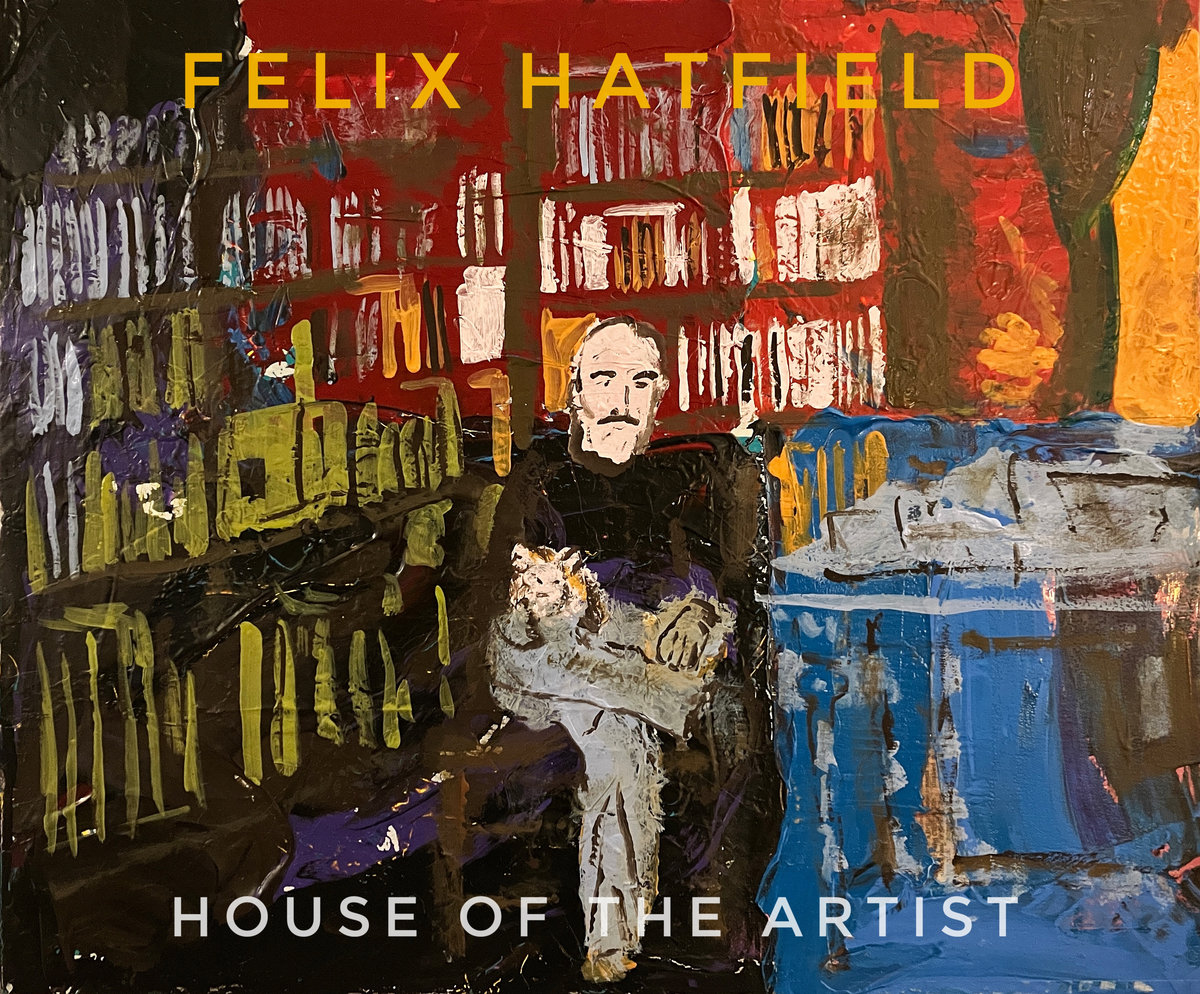
Felix Hatfield. House Of The Artist

Released back in August, Felix Hatfield’s third album, House Of The Artist, recently came to the top of our pending pile and it’s a shame that we didn’t get our act together at the time to salute it. Having said that, he’s not touring the album and it’s as available now as when it was released so, have a read and then go out and buy it. You won’t be disappointed.

Hatfield is probably best described as an “outlier” these days. He paints and makes films alongside his music, music which might be considered as “primitive” given its home made patina and the somewhat ramshackle approach to melody and rhythm. He’s akin to the likes of Michael Hurley, another songwriter who also paints and who finds inspiration in the old time music of America. In addition, Hurley and Hatfield can conjure magic in the most humdrum of affairs, witness Hatfield’s song T-Shirt on this album. It’s almost a dirge, the instruments wheezing and puffing as Hatfield drily relates the fallout from a broken relationship, “I’ve been there, I’ve done that, I’ve got the T-Shirt” he sings.

He opens the album with the croaky homespun wisdom of Somethin That I Know, a song which goes around in circles, alluding perhaps to gossip. Whatever it is that he or they know and don’t know is never explained. Lemon Rinds is more straightforward, albeit in a strange and quizzical way, as Hatfield, an outsider from the start (I left the theatre during E.T., I couldn’t handle the corn scene), offers advice to those who find the world not easy to take, adopting the late Oregon blues player Eagle Park Slim’s motto, There Ain’t No Time For Hope and ending with “I think we can agree that life is pink and purple with strife.” This sense of optimism is then replaced by the desolate Weepin Willow, an intimate wail of a song.

Hatfield, amidst his primitivism, has always been acute when writing about relationships and this is brought to the fore on the halting, and quite lovely, lost love song, You Said You Loved Me. Sounding like Jim Reeves coming across the ether via a Ouija board this is miserabilism at its best. Bound To Lose (Sleep) finds Hatfield in thrall to a partner with whom he made love to after tripping out on Hieronymus Bosch books, the pair of them revelling in their garden of delights. A rudimentary and scratchy guitar rings throughout a portrait of a formidable companion on Joan, a woman who “doesn’t give a fuck”  while the closing, title song, comes across as possibly autobiographical as Hatfield describes his safe space as “a workshop…the house…a graveyard of visions where heartbreaks reminisce.”

Despite the off kilter approach here, Hatfield’s songs are immersive and quite moving, akin to the likes of Will Oldham, Vic Chesnutt and the aforementioned Hurley. Do yourself a favour and have a listen.
Website

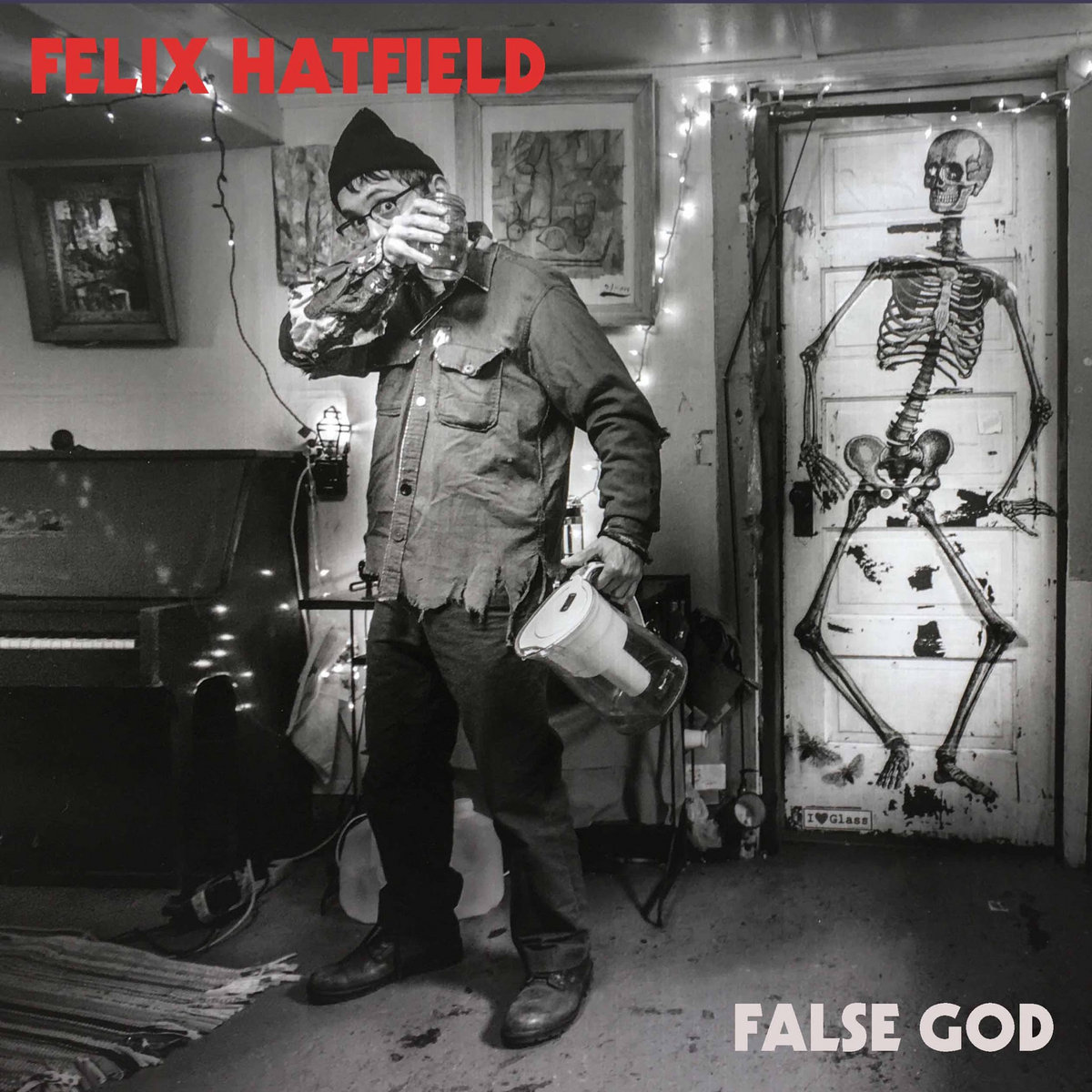
Felix Hatfield. False God. Fangbite Records

Boundaries, released in the UK in 2019, proved Felix Hatfield to be an exceptionally talented artist working in a field of one. A musician, painter and filmmaker who, if he can be classified might be considered surrealist (although Dadaist might be more appropriate), Hatfield donned the mantle of a hobo musician for Boundaries on a set of songs which offered a somewhat skewed summary of an odd love affair. Recalling old blues musicians such as Gus Cannon and Uncle Dave Macon along with comparisons to Michael Hurley, Boundaries was an excellent stripped back affair and one of our favourite albums of last year.

False God retains Hatfield’s cock-eyed view of the world but it finds him accompanied by a bunch of musicians who, oft times, resemble a late night New Orleans bar band, by now well juiced and hopped up. His wayward voice, languid and laidback, is sweetened on several occasions by harmonies from Jolie Holland and Esme Patterson, and throughout the album Hatfield surprises and delights with deft detours from this basic template.

Seeing Things sets the tone as a boozy sax introduces Hatfield’s waking dream world where Leonard Cohen is an echo in the canyon and images of death and destruction are entwined with reveries of physical intimacy. As was the case on Boundaries, the song references another on the album and it’s little touches like this which add to the attraction here. Sick With The Flu (how apt!) seems to be an anti-love song as Hatfield ponders on how he and his companion seem to suffer from love sick notions but acknowledges that theirs is a minor ailment in comparison to real hardships. These songs mirror many of the preoccupations of Boundaries and Hatfield maintains this on the retro sounding folkiness of Train To London and on the woozy ragtime of Nobody For Me. False God could be/probably is a salute to atheism with a sax parped velocity to it and there’s an insight to Hatfield’s live presence on the insanely vibrant Secret Society which comes across almost like a modern day Fugs.

Hatfield can whittle down a straightforward song as on the portrait of a grandmother reminiscing on her long past outrageous acts on the wonderful Her Crazy Days and deliver delicate love songs on That Kiss and Walking Distance, a song which recalls Will Oldham’s lofi approach. Picking up his banjo, he revisits the hobo mantle of Boundaries on Troubled Person which is truly sepia stained while Unicorn Woman finds Hatfield singing a wavering psychedelic folk song which is surely a finger pointing to some of his influences which we conclude would include Peter Stampfel and Ed Askew.

While Boundaries was one man, his guitar and his hobo leanings, False God has more variety but essentially, it’s still one man and his gifted outlook on life.

http://www.felixhatfield.com/