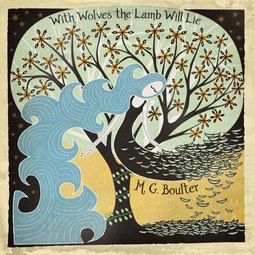
Aside from his duties with The Lucky Strikes and his in demand session player status (with Simone Felice and Blue Rose Code among others) M.G. Boulter is the poet laureate of the Thames estuary detailing the (often) sorry dreams and aspirations of those who populate the faded grandeur of Essex’s Southend and Clacton and hymning the meeting of water and land. His 2013 album The Water Or The Wave was a captivating collection of bittersweet songs with a somewhat folkish feel to several of the songs and with lyrics that at times recalled the sardonic strokes of Richard Thompson’s pen. For With Wolves The Lamb Will Lie Boulter has forsaken his estuary for a trip up north to Sheffield where he recorded the album with producer Andy Bell and a fuller backing band including woodwind and strings giving the album a more layered and at times sumptuous sound than its predecessor. Indeed much of the beauty here is in simply letting the arrangements wash over you while Bell has captured the bass and drum sound perfectly offering a solid base for the lilting and lifting guitars that float through the songs.
Boulter’s pedal steel colours the opening songs, both brisk, almost country rock numbers, their breeziness belying the dark lyrics contained within. Opener Sean or Patrick tells of a down and out character seeking refuge in booze and prone to grandiose notions comparing himself to Hemingway while the protagonist of In Sight of The Cellar is resigned to his delivery job, vicariously sharing life from outside bay windows with silent TV flickering but refusing to succumb to despair. This sunny side up musical mask is henceforth abandoned however as the music becomes more introspective and the arrangements more elaborate.
His Name Is Jean features a wonderful string arrangement over a fine woody double bass as Boulter sings of a parent reminiscing with pride regarding the son called Jean. Lyrically reminiscent of Loudon Wainwright there’s an ambiguity here with Jean/Gene’s gender not fully disclosed, nor is the manner of his “moving on” but there’s no doubting the tenderness and fragile beauty of the song. Lalita is a dreamlike trip into Boulter’s own memories, of a girl who followed his band and the murder of an acquaintance although the memories are vague and there’s a sense of regret that we don’t make more effort to know people. The string arrangement here is suffused with sadness, the vibraphone tying the song somewhat to sixties singer songwriters such as Tim Hardin.
There’s another burst of energy on the frantic The Last Song which races along with a fine soaring chorus and some nifty guitar work but the pop baroque keyboard of The Defeatist’s Hymn and rolling percussion amid the mysterious rhythms of Some Day The Waves are the highlights of the latter half of the album. Indeed Some Day The Waves throbs with mystery and slowly reaches its climax in a manner that suggests a weird combination of ESP act Pearls Before Swine and Fairport Convention circa A Sailor’s Life while the lyrics are poetic and again quite mysterious, WB Yeats sunk in ghosts and woods and trees. Nature and visions inform many of the songs. Starlings is a startling piece that is like Red Riding Hood reimagined as a self cutting girl at the mercy of men who prowl while Carmel Oakes is a girl sick of life who offers hope to a hopeless commuter who may be the man at the station referred to in Some Day The Waves.
Despite the grim subject matter Boulter offers glimpses of light. The promise that one day life will get better in Carmel Oakes and the cry to raise your sights and see the sun on Brother Uncles is reinforced on the closing Let Light In where he references the biblical quote the album is named for. It may be reading too much into the album but that’s the sense we get from the words, like Dylan they are open to discussion. However you approach it With Wolves The Lamb Will Lie is a beautiful listen and one that will repay repeated immersion in its wayward and woody intricacies.
