Jack Law. Shock Of The Blue

Jack Law is a bit of an unsung veteran of Scots music. Way back in the 70’s he was a member of Greenmantle, a band who shared a stage (including the infamous Green’s Playhouse, later The Apollo) with the likes of Billy Connolly, Gallagher and Lyle, Donovan and even Wishbone Ash. Greenmantle ended in 1976 but Law retained his interest in music and began recording again with a reformed Greenmantle and a new outfit, Raging Twilight, in the 2010’s, accompanied by a successful return to the stage.

Like many of his peers, Law wrote his songs through a prism of American music – Dylan and late 60’s LA Canyon especially – while basing many of his later recordings on his own trips to the States. He describes himself as a storyteller but, with the onset of Corona virus and the resultant lockdown, he found that he was drawn to writing about more inner journeys. As he says of the pandemic, “Small things became larger… our past has become the focus of our attention, remodelling and reshaping our understanding.”

Recording at home, Law has embarked on a series of more personal and introspective songs which he plans to release in instalments over the coming months. Shock Of The Blue is the first of these offerings, a three song EP which, to our mind, contains his best songs to date. Playing guitars and bass, with keyboards on one song by Duncan Sloan, Law comes across as a seasoned and wise troubadour, wandering through his thoughts and his past.

Lonesome Avenue trickles out – bedecked with piano, organ and some sly guitar licks – for all the world like a mournful Rolling Stones ballad from their glory days, while Law’s wearied voice comes across in a similar manner to that of grizzled rock’n’roll veteran, Ian Hunter. It’s quite wonderful, poignant and full of regret. Down From The Hill finds Law utilising his home studio set up to great effect. A rudimentary percussive backing (which is somewhat wayward at times) is appealingly naive and sits wonderfully behind Law’s labyrinthine thickets of guitars and sound effects which give the song a slight psychedelic edge, an edge amplified by the vocal effects which recall the whimsy of Syd Barrett.

There’s a definite whiff of nostalgia in both of those songs and the final number, Love, Lies, Bleeding is no different. Here, Law returns to his original roots in the 60’s when he and his peers were picking up on the mantle of Dylan and the folk revival. Part talking blues, part poetic, the song manages to accomplish the difficult task of sounding as if it could have been performed by the original Incredible String Band or Rab Noakes, had they been given a very advanced copy of Dylan’s Blood On The Tracks. It does portray its origins, but it’s performed magnificently and is a fine closer to a grand little release and we look forward to hearing the next instalment.
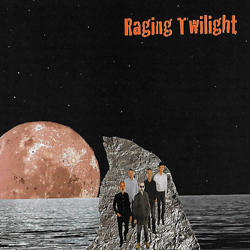
Raging Twilight. Raging Twilight.

ScanSupport your local sheriff, or at least your local bands so it’s hats off to Raging Twilight who are a five piece band of veteran musicians grouped around the song writing talents of Jack Law. Law, a seventies folk rock musician, returned to his music after a successful career in health and social care with a solo album before getting involved with Raging Twilight. It’s no secret that these guys (JC Danti, Dougie Harrison, Colin Robertson and Duncan Sloan) along with Law are no spring chickens (in fact two of them play in a band called Nae Spring Chickens) and surely the band name is a nod to Dylan Thomas’ entreaty to grow old disgracefully. Whatever, the band have had enough time to hone their chops and they display them well across the album.
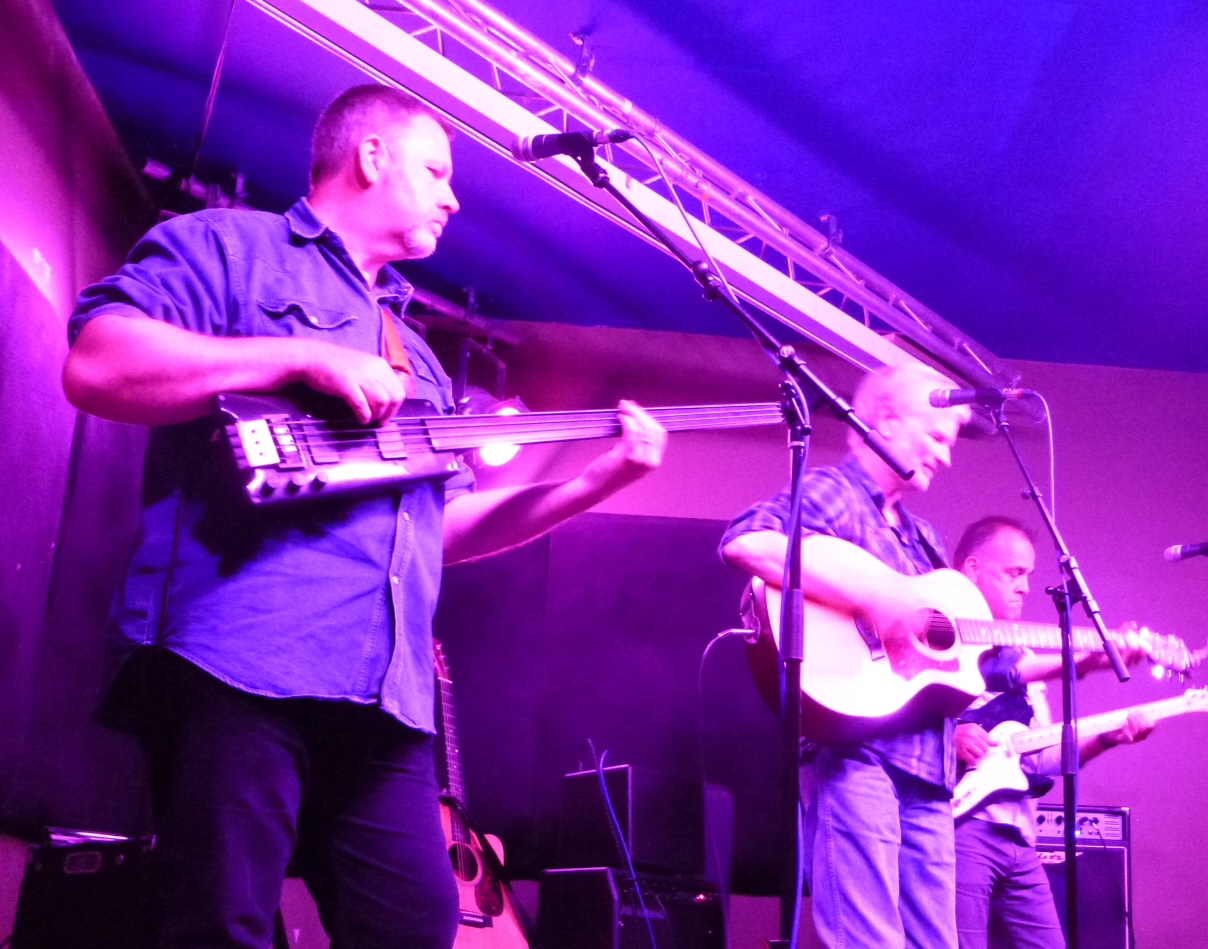
Law was inspired to write most of these songs on a trip to the States, in particular, Utah, New Mexico and Texas and his words convey a fine sense of the south west; farmers facing foreclosure, folk riding the rails and rivers, and characters named Hog Tie Charlie and Black Jack Ketchum. As befits his lyrics the band lay down for the most part a ramshackle conglomeration of bluesy swagger and folky abandon with a little bit of Gospel soul thrown in for good measure. At times they recall the looser elements of Lindisfarne (as on Dust Bowl Rust Belt Blues and Nothing’s There) and there are some moments that struggle with You Can Fall But you Can’t Stay Down failing to make its mind up as to whether it’s a full-bellied guitar boogie or a mandolin driven sing-along. Law’s folk influences are to the fore on The Slip, a powerful solo number that again recalls Alan Hull of Lindisfarne while Hope Sails The River could hail from The Tyne or The Clyde despite its mentions of New Mexico and its swirling Band like swing.

The band are at their best when they settle into their blusier side. The opening Don’t Want A Lover kicks off with some nasty slide guitar before the organ kicks in, the song a forlorn southern blues lament with a whiff of The Allmans about it. Old Glass Jar is a jaunty mandolin and harmonica driven hop that would go down a storm in an old fashioned barn dance while Iron Way finds Law deep into Western mythology as the band come across as if they were playing in an old saloon, the harmonica weeping and the piano as barroom as they come. Dead Horse Point, a lament for hard scrabbled farmers, is the closest the band get to classic LA country as laid down by Jackson Browne et al with its very fine piano playing and restrained guitar lines and although Law’s voice struggles with the high notes it’s a lovely song. They close the album with a more soulful feel. Hard Times Bad Times hums and hymns with the instruments almost toy like before organ and guitar sweep in while You Can’t Get To Heaven opens with a Gospel chorus before Law sweeps in with his take on the philosophy of life while the band play their best yet as they offer up their own take on The Band’s sweet soulful sound.

It’s not an album that will set the heather on fire but it’s a grand listen and given the band’s influences it will surely resonate with those of us who have been keeping the flame alive since those halcyon teenage years, just about the same time Jack Law was striding the boards.

Website


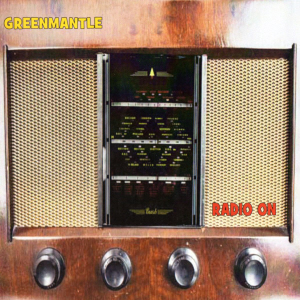
Greenmantle. Radio On

greenmantle cover
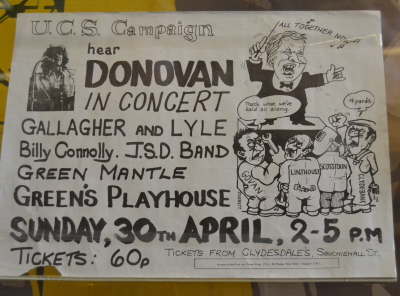
Blabbern’Smoke  first encountered Jack Law last year when he played a set at Glasgow’s Glad Cafe supporting John Hinshelwood.  An imposing character and no spring chicken (and I’m sure he won’t mind us saying this, he called his band the Spring Chickens on the night) Law turned out to have a very interesting past as a musician prior to a successful career in public health issues. As one half of the duo Greenmantle (the other half being Billy Campbell, a veteran of Glasgow’s sixties beat scene) Law criss-crossed the country playing folk clubs and the like from 1970 until ’76 when the band eventually parted. Influenced by the likes of CSN&Y and very much a part of the scene that produced Stealers Wheel and Gallagher & Lyle they were on the bill at Glasgow’s infamous Green’s Playhouse, later The Apollo, for a benefit concert for the Upper Clyde Shipbuilders, a gig that included Billy Connolly, Gallagher & Lyle, The JSD Band and Donovan. In fact there’s a handbill advertising the show on display at Glasgow’s Transport Museum.

UCS poster
Almost 40 years later Law and Campbell reconvened after a chance encounter and released an album, Two Hats, in 2011 which was well received and now they’ve come up with their second offering, Radio On. With producer George Burton collaborating musically Law and Campbell have taken the opportunity to record several of the songs they played endlessly on the road back in the seventies with Burton adding some studio sparkle and heft. The result is a full-blown band sound (with Dave Thomson on board) with horns and and some imaginative arrangements that, while harking back to the late sixties and early seventies, are impressive. The band describe the album as “a bow to the past, a wink to the present and a nod to the future.”  The past is when the songs where written while the present is the current arrangements and performance. It wouldn’t come as a huge surprise to discover that Law, Campbell and Burton might have been viewing old episodes of Top of The Pops prior to the venture as the overall feel is akin to those “respectable” bands who occasionally scored a hit and appeared amidst Pan’s People and teenybopper idols. The aforementioned Stealers Wheel and Gallagher & Lyle are obviously touchstones but on the album there are echoes of The Pretty Things on You Don’t Read my Mind with its psychedelic middle eight while Sad Cafe come to mind on Moviemaker. The nascent country rock of the early seventies is revived on Masters Of Rhyme and the twang fuelled Red Rosé And Ruined. Both Campbell and Law sing well and this is most evident on Fine day For Dying which delves into the Scottish soul movement of the seventies which saw groups such as Cado Belle and The Average white Band transporting Philadelphia to the Highlands. One of the highlights here, Fine Day For Dying uses a horn section to great effect and grooves with a healthy slink.
As for the nod to the future, the title track is a new song, worked up in the studio while they recorded the rest of the album. It’s the punchiest effort here with a power pop thrust as they strap on jangly guitars and celebrate the joys of music with the freewheelin’ feel of driving a convertible down a rock’n’roll highway. For a couple of veterans reunited after so long a time the album is testament to their experience and road tested chops and while it might not set the heather on fire it’s sure to please their fans and with luck strike a chord with a some new ones.

website

Southside Americana: The John Hinshelwood Band/Jack Law. The Glad Cafe. Sunday 29th June.

Hinshelwood

Law

Hot weather and world cup football on the telly aren’t particularly conducive to promoting gig attendance. So a big hurrah to those who turned out to see some local musicians in the intimate surroundings of Shawlands’ Glad Cafe.

John Hinshelwood has just released his excellent third album, Lowering The Tone and tonight (accompanied by guitarist Tim Black and bassist Ed McGlone) was a welcome opportunity to hear many of the songs from the album live albeit in a stripped down fashion along with a few selections from his previous albums. The opening Dangerous Journey (from Shattered Pleasures) immediately introduced us to the care free relaxed seventies LA vibe that Hinshelwod captures so well with the acoustic guitars strumming us along a desert highway, a feeling that was maintained on Radio Angel and A Few Shallow Moments. The band took a side step into Western Swing, no mean feat for a three piece (with Hinshelwood lamenting the lack of a fiddler here) on Tell Me Something with Black delivering a blistering solo (despite Hinshelwood’s “not too fast” aside to him as they launched into the song). American Lifestyle is one of Lowering The Tone’s highlights and tonight it proved to be one of the highlights of the set. With Black on mandolin it recalled Steve Earle’s Copperhead Road in its stompalong country delivery with an edge and had the requisite clapping and foot stomping from the audience.

While guitarist Black had the opportunity to shine on several of the songs with his Ry Cooder like slippery tone excelling on the JJ Cale groove of No Hiding Place (mixing too many musical metaphors here I know) bassist McGlone was a rock, anchoring the band and perplexing the audience when he strapped on his Chapman Stick, a wondrous looking contraption that offered depth and a woody warmth to the bass playing on several of the songs. Chapman

They had great fun duelling each other on the crowd-pleasing cover of Junior Brown’s My Wife Thinks You’re Dead whith Hinshelwood giving a fine deadpan delivery while the closing song, a cover of Smokey Robinson’s Tracks Of My Tears featured some very fine harmony vocals and a fine performance from Hinshelwood.

Support act Jack Law is a new name to Blabber’Smoke but it turns out he’s something of a veteran having been in a band called Greenmantle back in the seventies who appeared on a couple of occasions at the legendary Apollo. Now silver haired (and resembling Charlie Rich at times) Law has revived Greenmantle but tonight he was performing under his own name accompanied by Dougie Harrison on guitar and J.C. Dante on bass and mouth harp with the pair introduced by Law as “The No Spring Chickens.” Law’s roots in the past were evident from the opening when he offered a song written some years ago as a protest against the Iraq war. Powerful and polemic Law delivered it with gusto, veins a popping. He also railed against the Beeching cuts on Railroad Man, a bit late one might think but as he explained the railroad network has never recovered from this sixties butchery and the song itself was a fine railroad ballad with some neat slide guitar work from Harrison. There was more protest on As Any Fool Would Know which targeted the late and unlamented Maggie Thatcher recalling Lindisfarne in their heyday while the melody borrowed from Dylan’s You Ain’t Going Nowhere. Away from protest Law proved to be a fine writer with his paean to middle age romance, Heartache Ain’t For The Young a tremendous song with lyrics worthy of Loudon Wainwright III. With another country stomper delivered again on mandolin with some fine harp playing from J.C. on Old Glass Jar Law proved he still has plenty to deliver.

I think that Southside Americana is taking a summer break but Blabber’n’Smoke will post any news of forthcoming shows as they come in on the wire.

John Hinshelwood website

Jack Law website