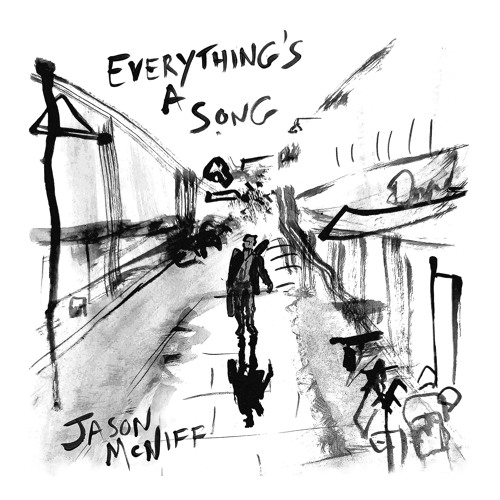
Jason McNiff. Everything’s A Song. Tombola Records

Blabber’n’Smoke has an undying regard for Jason McNiff, the Hastings based troubadour who combines his sublime guitar skills with acute song writing, talents which remain in evidence on his ninth release,  Everything’s A Song. McNiff is firmly based in that troubadour tradition which includes artists as varied as Bert Jansch, Leonard Cohen, Jacques Brel and Townes Van Zandt and is as spellbinding whether playing solo or fronting a band arrangement.

Everything’s A Song features McNiff playing guitars and Hammond organ, backed by the album’s producer, Matt Armstrong, on bass and drums with Richard Moore adding some very evocative violin to several of the songs. Much of the album cleaves to a romantic ideal, be it the childhood fantasy of running away with the circus or McNiff reimagining The Thames as akin to Mark Twain’s Mississippi but at its heart is the notion that any experience can be expressed in a song.

The album is bookended by two songs whose titles explicitly refer to this notion. Song Of Everything opens the album with a short frill of acoustic guitar before McNiff delivers a series of short vignettes which are both mysterious and darkly foreboding. The refrain, “This is my song of everything that the heart can take and the soul can sing…turn the page of wonder” finds McNiff as a sort of Greek chorus commenting on the tales. The closing title number (co-written with Gibraltar songwriter Gabriel Moreno) is a more jaunty affair with a full band arrangement (including mid 60s Dylan like organ) with McNiff waxing quite excellently, almost like Orwell at his most bucolic, on the inspirations gathered from nights in the pub, cricket on the lawn and fleeting moments of romance as he sings “In the night you see, a winking melody.”

In between, McNiff is on excellent form on songs such as Run Away With The Circus, a song draped in regret which rivals the work of Richard Thompson, McNiff’s guitar playing the icing on the cake here. My Mississippi flows quite sweetly, a Thames river travelogue delivered with starry eyes, while True Love, Freedom finds Mcniff playing solo, a showcase for his finger picking skills on an unconventional murder ballad. On another murderous note there’s the spritely Chef Song which is enlivened by the fiddle playing of Moore, adding a piratical touch to the song which is a grand salty tale of high seas derring-do, it’s followed by an instrumental, Wedding Dance, a wonderfully realised lop sided waltz with Moore’s fiddle again providing the pivotal colour.

It’s fitting that Mcniff, with his roots in 1960s folk rock and blues, should consider a protest song fit to be included here and so it is as he weighs into a Italian partisan song, Bella Ciao. Originally sung by downtrodden peasants in the 19th Century, it became a rallying call against fascism and his powerful delivery is quite apposite these days while one gets the impression that the late Leonard Cohen would surely approve of it. Appearing midway through the album’s track list, it’s a fulcrum of sorts, pinning Mciff’s belief that there’s a song in everything, including the direst of times. Overall, Everything’s A Song is an album which allows one to consider that McNiff is surely a hidden treasure, ripe for discovery.

Website

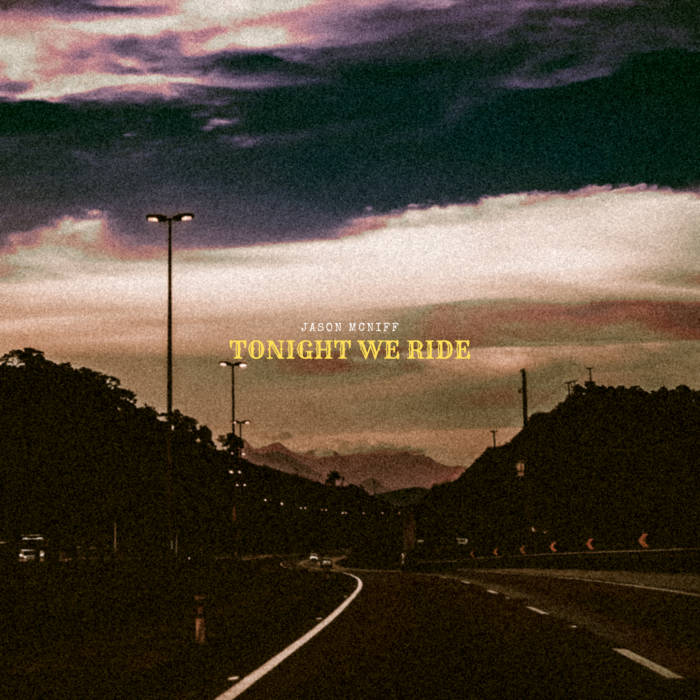
Jason McNiff. Tonight We Ride. Tombola Records

Having spent much of lockdown streaming his weekly Sundowner show (previously held in The Jenny Lind in Hastings), Jason McNiff grew to love the opportunity to play covers of songs he loved and those requested by his virtual audience. Hence, his first post pandemic release is this fine collection of handpicked covers. Given McNiff’s history there’s no surprise that two of his major inspirations, Dylan and Bert Jansch, feature twice and the inclusion of Townes Van Zandt won’t raise any eyebrows but the remainder are an eclectic bunch. What’s certain is that McNiff delivers all in his distinctive style, his wispy vocals, guitar wizardry and fleet footed folk rock are all present and correct and, just to remind you that he is a writer of some distinction, he includes two of his own songs, one of which actually stands out as the best of the album.

The songs feature McNiff  in solo mode and with a rhythm section (with two being more embellished) and much of the album highlights McNiff’s undoubted prowess on various variations of guitar – acoustic and electric, resonator and Spanish guitar. Lest one forget, one of the enduring tales of his formative years is that McNiff was a permanent fixture at the late Bert Jansch’s six month residency in London’s 12 Bar Club, soaking up the maestro’s style and so it’s fitting that the album opens with a song from Jansch, Running From Home, taken from his 1965 solo debut. It’s more jaunty than the original and flows with some zest, reminding one of the folk tradition blooming in the UK in the mid sixties in the wake of Dylan. In comparison, another Jansch song, The Open Road, originally recorded 30 years later is darker and much more rooted in a traditional folk idiom. McNiff, solo in this case, delivers a stark and chilling reading.

It’s interesting to hear McNiff sing a Townes Van Zandt song. The Texan’s gruff fatalism on My Proud Mountains seems more fragile and less defiant in McNiff’s rendition while the Texas dirt is replaced by a rainy London town feeling. Similarly, Dylan’s One Too Many Mornings, while it has a mid sixties organ swirl to it, sounds as if it would be more at home on a Pentangle album. Meanwhile, the other Dylan cover, Precious Angel (from Slow Train Coming), strips away the original’s sheen and is a delicately flecked confection of glistening guitars.

The guitarist on the original Precious Angel was Mark Knopfler and Dire Straits’ Tunnel of Love is one of the more surprising covers on show here. Suffice to say that McNiff performs much the same trick as on the Dylan number, the song stripped of its gloss and given a superb, primarily acoustic makeover. Even more stripped back is his resonator guitar led and gnarly rendition of The Waterboys’ Fisherman’s Blues which, having heard it means this reviewer need never go back to the original as this is just perfect. McNiff has a knack for reducing songs to their basic elements and he delivers a wonderful solo rendition of Leonard Cohen’s Moving On, his Spanish guitar encompassing all of the original’s Grecian dressings, while The Beatles’ Tomorrow Never Knows comes across like a hybrid from Donovan and the very early Jefferson Airplane. Reaching way back, a live rendition of Stephen Foster’s 19th Century song Hard Times harks back to Greenwich Village years, a delightful reminder of vintage times but, all too sadly, very pertinent to these present days.

The title number, a Tom Russell cover, is the most full on song here with the band in full flight. Less melodramatic than the original it’s more in keeping with Dylan’s Desire era outings. The band are also in fine fettle on McNiff’s own song, I Remember You. It’s a glorious song and played here with a sense of joy which, amidst some splendid song covers, might be considered to be the most memorable song here. Whatever, it’s the crown in what is an exceptionally fine album from an exceptionally fine artist.

Website

Blabber’n’Smoke’s Favourites of 2021

Well, farewell 2021. It was nice while it lasted but you were too much of a tease, really, for it to go on much longer. We started going out only towards the end and then, when it seemed that we were getting on an even keel, you done went and got all frosty again, gigs gone, Christmas and New Year all but cancelled. One thing you did provide was a bumper crop of albums and for that we do thank you.

Here’s a list of Blabber’n’Smoke’s favourite albums of 2021 (although there are probably a couple we’ve forgotten). There’s a top ten, but not in any particular order, along with a list of runners up and special mentions at the end. Where possible we’ve linked the album title to a review (or interview in one case) of ours.

Only four gigs this year! Hopefully 2022 will bring us more great albums but more importantly and despite the dismal start, allow live music to live and breathe again.

A huge thanks to all the artists, promoters, PR folk, venues and fellow fans who all help Blabber’n’Smoke limp along. Happy New Year.

The Felice Brothers – From Dreams To Dust

Allison Russell – Outside Child

Charley Crockett – Music City USA

Peter Bruntnell – Journey to the Sun

Steve Earle & The Dukes – JT

John Murry – The Stars Are God’s Bullet Holes

M. G. Boulter – Clifftown

Jason McNiff – Dust Of Yesterday

Malcolm Holcombe – Tricks Of The Trade

Robin Adams – Wrong Road Home

Also of note

Los Lobos – Native Sons
Sturgill Simpson – The Ballad of Dood & Juanita
Danny George Wilson – Another Place
David Huckfeldt – Room Enough, Time Enough
Maria Muldaur with Tuba Skinny – Let’s Get happy Together
JP Harris’s Dreadful Wind And Rain – Don’t You Marry No Railroad Man
Chris Eckman – Where The Spirit Rests
Bard Edrington V – Two Days In Terlingua
Steve Gunn – Other You
Nathan Bell – Red White And American Blues (It Couldn’t Happen Here)
Audrey Spillman – Neon Dream
Jenner Fox –Planet I’m From
Starry Eyed & Laughing – Bells Of Lightning
Aimee Mann – Queens Of The Summer Hotel
TK & The Holy Know Nothings – The Incredible Heat Machine

Although coming from vastly different directions, I really enjoyed these sets – Various Artists, Highway Butterfly- The Songs Of Neal Casal and Peter Stampfel’s, 20th Century In 100 Songs. There were also fine tributes in the shape of Party For Joey – A Sweet Relief Tribute To Joey Spampinato, and The Wanderer – A Tribute To Jackie Leven. Edinburgh’s Dean Owens appears on The Wanderer and he released three fine EPs this year, his Desert Trilogy, in conjunction with Calexico and various Tucson musicians- a taster for his forthcoming album, recorded with John and Joey and due out early next year.

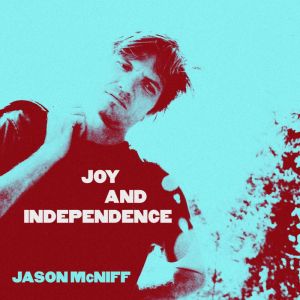
Jason McNiff. Joy and Independence. At The Helm Records

92c7aaaf254fbffea22531ec5e1fa7edLast year Jason McNiff released Rain Dries Your Eyes, a two disc compilation which charted his course over 15 years and six albums of relentless troubadouring and which proved that he is a bit of a gem when it comes to our native singer songwriters. Joy and Independence finds McNiff alone in the studio with just his guitar for company stripping away all the band trappings which have adorned many of his songs. As he says, the album is intended to be, “a homage to a golden era of the coffee house troubadour.” And while we agree with that notion it has to be said that Mr. McNiff could perhaps have added bedsits alongside coffee houses as Joy and Independence could easily sit beside albums by L Cohen, Al Stewart, Nick Drake and Bert Jansch in any self respecting student’s gloomy abode.

As with Dylan, McNiff’s distinctive voice may  inhibit the casual listener but as with many of the troubadours he admires his voice is an instrument which floats above his excellent guitar playing sounding at times like an innocent abroad, full of wonder and grace, almost like a male chanteuse. It’s perhaps heard at its best here on the tumble of words and flurries of guitar which is (There are no) Ordinary Days, an extraordinary song which is steeped in the sixties songwriter tradition mixed with the Gallic sensibilities of Momus. The storytelling element of those troubadours is to the fore on the lengthy Amanda, McNiff’s retelling of the trial of Amanda Knox in Italy which bears comparison with several Dylan songs from The Ballad of Hollis Brown to Hurricane and Joey. Midnight Shift meanwhile is a personal reminiscence of McNiff’s days playing the late night slot in the now closed Soho spot, the 12 Bar club while the title song is a picaresque tale of two lovers travelling through Italy in search of their dreams before going their separate ways with the song adorned by some gorgeous guitar playing.

McNiff hits the nail on the head with every song here. There’s a real sense of longing on Wind of Zaragoza and his reworking of Stuck in the Past is plaintive and moving with the sole use of piano here adding to the sense of nostalgia and loss. Been a Bad Day is a perfect down in the dumps song, McNiff the wounded lover stranded with his memories and regrets, but there is  joy of sorts in the uplifting Thoughts which has McNiff singing along with Lily Ramona. Finally McNiff offers us the magnificent And the Sun Comes Up on My Dreams which sits beside the aforementioned (There are no) Ordinary Days as the standout songs here. We’d previously reckoned that an earlier McNiff song, I Remember You, totally inhabited the freewheelin’ spirit of sixties Dylan and to our mind that’s also true of And the Sun Comes Up on My Dreams. It’s a joy and a wonder to listen to.

We need to mention the guitar playing here which is excellent and which befits a man who sat for six months watching Bert Jansch play in the 12 Bar club. McNiff in fact offers a fine recollection of his various guitars in the liner notes calling them, “these curvy shaped bits of wood…imbued with romance.” So true as a listen to this album will testify to.

Website