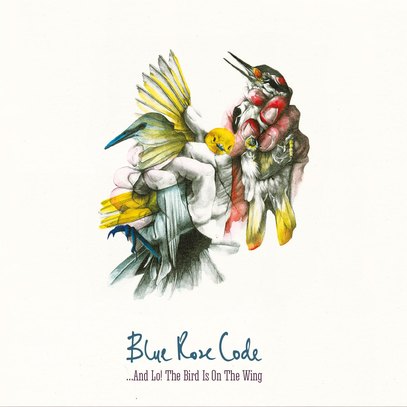
Blue Rose Code. And Lo! The Bird Is On The Wing

brc0011_birdwing_cd_press_front

The third instalment of Ross Wilson’s testament to the glories of life and living, And Lo! The Bird Is On The Wing is a magnificent listen; a collection of songs with a beating heart, flurries of melodies with Wilson’s voice an instrument in itself. There is hurt and heartbreak, emotions that give the album some of its most affecting moments, but above all there’s a sense of celebration, a celebration of just being alive, of seizing the moment. The album title (from The Rubaiyat of Omar Khayyam), a reminder that life is fleeting so be grateful for each day. Wilson and his cast of supremely talented musicians have crafted an album that dips and soars like a murmuration of starlings offering the listener a myriad of delights.

There’s an organic flow to the album, the songs almost weeping into each other, the opening glimpse of the majestic single, Grateful, here in an abridged state, setting out Wilson’s agenda. Thereafter it’s a thrilling ride through folk and jazz tinged celebrations and wallows, the sinewy bass note that opens the free flowing box of memories that is Brave Cedars & Pied Wagtails returning later on the free form closing moments of In The Morning Parts 1 & 2, a nod perhaps to one of Wilson’s heroes John Martyn and his experimentation on songs such as Bless The Weather. In The Morning returns in the guise of Part 3 as the closing song here, this time with Colin Steele’s trumpet leading into Wilson’s closing remarks which are blessed with harmonies from The McCrary Sisters, the Gospel troupe who raised Grateful from the great to the magnificent. There’s a thread here. Musically it’s Wilson’s debt to Martyn and Van Morrison (and if anything there are moments here which recall Veedon Fleece) while lyrically Wilson takes us from his first moments of recovery into his marital breakup and his current sense of purpose.

The billowing breeze of Brave Cedars & Pied Wagtails leads into the confessional My Heart, The Sun, a false dawn of hope, the gentle pummel of percussion and lonely trumpet harbingers of what is to come. Rebecca is a spritely love song with some fine guitar work from Wild Watt Wyatt, a respite of sorts as Wilson then heads into the brokedown palace of Pokesdown Waltz, his naked exploration of his marriage ending, a song that bursts with regret, the words so emotive, the delivery stunning. Steele’s lonesome trumpet and Danny Thompson’s burbling bass introduce the centrepiece of the album, Glasgow Rain, an impressionistic journey though the West End as desolate as watching rivulets of rain running down a window as a storm lashes around you. Here Wilson unleashes his love of jazz and experimental music, trumpet, double bass and piano delicately tracing his voice before swelling into a mild cacophony as John Lowrie’s scattered percussion and Lauren MacColl’s violin join in, a ghostly spoken part here delivered by actor, Ewan McGregor. The music then gradually subsiding into rain swept sound effects with a final farewell from the bass and piano washed away like chalk on a pavement. A song of misery and self loathing with Wilson pleading “I try and I try and I try but I told you darling, I’m no good” it’s elevated into a thing of beauty as his voice trembles and pleads, the repetition and phrasing recalling Van Morrison on classics such as Listen To The Lion and Linden Arden Stole The Highlights. Aside from Morrison the song recalls the work of Robert Wyatt and his collaborations with Michael Mantler and Carla Bley while its rain swept Glasgow vista will also beg comparisons to The Blue Nile.

It’s truly a testament to the wonder of this album that even after the emotional blitz and sonic adventure of Glasgow Rain the listener can be transfixed by the following songs. In The Morning Parts 1 & 2 returns to the spritely breeze of Brave Cedars and Rebecca, the band skipping along with a refreshing spring in their step as Wilson and Wrenne and The McCrary Sisters celebrate a new dawn, the words uplifting as Wilson describes a rebirth of sorts. It’s a joyous song and as it heads towards its dissolution in a welter of bowed bass, skittering keyboards and gliding pedal steel, the vocals just peeking through, there’s an undeniable sense of willing Wilson on,  urging him to carry on and cast his demons aside. The following track, Love, alleviates this concern as he delivers a most tender and affecting paean to Cupid’s arrow, the mournful, almost brass band opening giving way to a song that most recalls the late John Martyn with Wilson sounding at his most vulnerable. The chorus with Wrenne wrapping herself around Wilson’s voice like a bountiful siren is just gorgeous, the band’s playing hypnotic, a song to savour. Favourite Boy is an almost playful aside, a Harry Nilsson like ballad balancing shadow and light, hopeful for the future but with a sense of gloom ever present. Again The McCrary’s are on hand to enhance the song. The curtain draws with the closing In The Morning Part 3, Steele’s trumpet coolly recalling the likes of Miles Davis before Wilson looks to the future over a lonesome picked guitar, the band gradually joining in, fiddle to the fore and The McCrary’s back in the fold for the blossoming swell at the end. The words here, as throughout the album are poetic and inspiring, indeed, had we quoted some of the gems from the album this review would be twice as long. Suffice to say that Wilson here sings, My best days they still lie before me, a sentiment that his very dedicated following will surely subscribe to.

And Lo! The Bird Is On The Wing is an album of import, a personal statement from Ross Wilson which is suffused with a humanity and grace that one generally attributes to a great novelist. Wilson is a rare animal these days, his music vibrates with a life-force sadly missing in much of the music offered to us. On stage he has an uncanny ability to draw an audience into his world, an Odyssey of loss and redemption and the album does capture that. A definite contender here for album of the year.
website

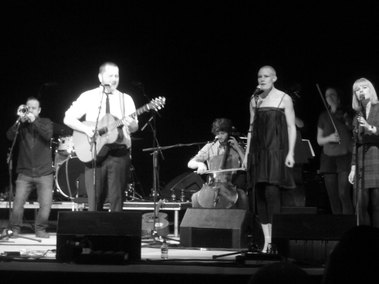
Blue Rose Code @Celtic Connections. Mitchell Theatre, Friday 29th January

Our last blast from this year’s Celtic Connections.

Blabber’n’Smoke is happy to stand on anyone’s coffee table in our scuffed boots to proclaim that Ross Wilson, AKA Blue Rose Code, is one of the most exciting acts to have emerged from the Scottish diaspora in the past few years. He simply is the best writer and performer about; having seen him in several guises (solo, small band, big band) he is a mesmerising performer while his songs are a continuation of all that was good about such luminaries as Van Morrison, John Martyn and Jackie Leven. Committed as we were to reviewing some Celtic Connection shows for Americana UK including this one we’re grateful to David Ferguson who sent us his review of what was a tremendous night.

P1040346

Blue Rose Code is the pseudonym of singer-songwriter, Ross Wilson, a native of Edinburgh and currently based in Bournemouth. 2015 was a particularly notable year for Blue Rose Code, including as it did a SAY Award nomination (Scottish Album of the Year) for The Ballads Of Peckham Rye, a series of successful tours, a number of sparkling performances on radio and television, lavish praise from celebrated broadcasters Ricky Ross, Roddy Hart and Edith Bowman, recognition from Ross Wilson’s beloved Hibernian Football Club and the acquisition of a celebrity fan in Ewan McGregor. The start of 2016 saw yet another ‘first’ for Blue Rose Code, in the shape of his first-ever headline gig at Celtic Connections, on 29th January in the elegant Mitchell Theatre. This special event had been arranged to enable Blue Rose Code to preview his forthcoming third album, …And Lo! The Bird Is On The Wing and to give fans the only opportunity to buy copies of the eagerly-awaited album prior to its general release in March.

Ross Wilson’s versatility is such that he is equally at home performing intimate solo gigs, as a trio or with a small band but, with up to eleven musicians on stage at any one time, this special gig was most definitely a case of “Blue Rose Code – max”. The line-up varied throughout the show, according to the arrangements and dynamics of each song. Ross Wilson revelled in the role of band leader, bringing the best out of the accompanying musicians and drawing great inspiration from them in return.

Ross’s customary beard was reduced, on this occasion, to a rather splendid pair of mutton-chop sideburns, all the better for the audience to witness his ever-widening smile as they roared their appreciation at the end of every single song. There was a richness and variety to the ten songs which make up the new album, yet they fitted together beautifully as a coherent whole. The set opened with an abridged version of the awe-inspiring gospel song, Grateful, featuring a quietly impassioned vocal from Ross Wilson, embellished by Angus Lyon’s elegant piano and feathery counterpoint vocals from Eliza Wren Payne. The majestic My Heart, The Sun featured pulsating rhythms, smoothly rippling trumpet and an anthemic chorus. The carefree swagger of Rebecca, a gentle country blues, gave way to one of the most achingly beautiful, tender and gracious break-up songs you will ever hear in Pokesdown Waltz, whose gently-whispered closing line surely brought a tear to the eye of most everyone in the room (”…the only regret that presides is that I do wish I’d kissed you goodbye…”). Ross Wilson then quipped that the next song, Glasgow Rain, would bring an end to “divorce corner” for the evening! This song was cinematic in scope, bringing a deeply soulful vocal from Ross (“…the rain fell like dominoes along Great Western Road….”) and a masterclass in cool and sweet jazz from the formidable combined talents of Colin Steele (trumpet), Nico Bruce (double bass), John Lowrie (drums) and Angus Lyon (piano).

In The Morning, Parts 1 and 2 was an extended tour de force, which started with the breezy country soul of part one and segued dreamily into the mesmerising ebb and flow of part two. The fragile beauty of Love, a perennial fans’ favourite which has finally made it onto an album, was notable for Ross’s ethereal vocal and delicate washes of cello, violin and trumpet. The free-flowing Favourite Boy was performed solo by Ross, with the rhythms provided by playful piano chords and foot-taps. In The Morning, Part 3 saw Ross’s vocals build gradually from pastoral lilt to passionate exhortation and featured an exquisite violin solo from Lauren MacColl and stunning ensemble playing from the full “caledonian soul orchestra”. At various points in the show, added musical textures and colours were provided by Graham Coe’s expressive cello and Signy Jakobsdottir’s bewildering array of percussion instruments and effects.

The main set came full circle to finish with an extended and intensified take on Grateful, with uplifting gospel choruses courtesy of Eliza Wren Payne and Emily Kelly, quicksilver blues guitar licks from “Wild” Lyle Watt and a series of beautifully-constructed and increasingly fiery trumpet solos from Colin Steele. There was still time to run through a couple of older favourites, including Edina, Ross Wilson’s affectionate and bittersweet tribute to his native city, which included another gorgeous violin solo. Sandaig was a quietly stirring and poetic evocation of the landscapes enjoyed by Ross during a memorable weekend spent in the Knoydart peninsula. As a final treat, and as this gig coincided with the seventh anniversary of John Martyn’s death, Ross Wilson paid a touching tribute to one of his musical heroes with a beautifully-judged cover of Fine Lines.

It was a sheer delight to hear the songs on the new Blue Rose Code album played in sequence, underlining the cohesion and uniform brilliance of this collection of songs. Having successfully come through several challenging periods in his life, Ross Wilson has attained a serenity which is reflected in the mellowness, elegance and grace of his songs and the warmth, assurance, charisma and inspiration which characterise his live performances. Ross Wilson’s instantly-recognisable brand of Caledonian Soul has reached a new level with this outstanding third album, which promises to elevate him to his rightful place among the elite of British singer-songwriters.

David Ferguson

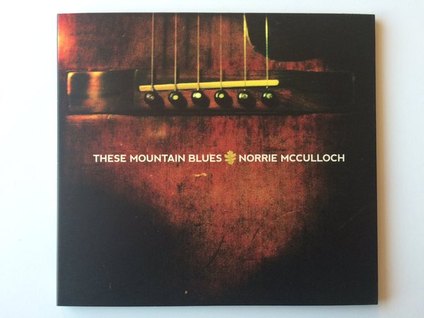
Norrie McCulloch. These Mountain Blues. Black Dust Records

cvjtasvxiay-rz4

Ayrshire man Norrie McCulloch’s 2014 album, Old Lovers Junkyard, remains possibly Blabber’n’Smoke’s favourite Scottish album of the decade. McCulloch, seemingly from nowhere, wove a magnificent tapestry of country and folk influenced sounds on the album, its creamy pedal steel to the fore. However, as we mentioned when reviewing the album, there was more than a hint of classic UK folk rock lurking in the grooves, in particular the slightly jazz inflected keyboard work that John Martyn and Nick Drake used to adorn their songs on the cusp of the sixties and seventies. These Mountain Blues, due for release in February, reverses the mix. Yes, there are some sublime songs here which could stand tall beside the works of Townes Van Zandt or Guy Clark, the pedal steel still warms but the prominent instrument here is the piano, its cascading notes colouring the album with an autumnal melancholy and offering an understated grandeur. A perfect accompaniment for McCulloch’s excellent sense of nostalgia and regret expressed through his songs and his very fine, slightly wearied, voice.

Recorded live to analogue tape in the space of three days at The Tolbooth in Stirling (which just happened to have a baby grand piano in situ), These Mountain Blues captures McCulloch and his band (Dave McGowan, upright bass, piano and pedal steel; Marco Rea, bass and piano and Stuart Kidd, drums) in fine fettle. There’s an intimate organic feel to the disc as if they were playing in your room conjuring the images from the songs in front of you. McCulloch’s writing is evocative as he sings of his landscapes, his forebears and his descriptions of outsiders trying to fit in as on the impressive New Joke.

The album opens with Calico Days, a punchy acoustic guitar riff, not dissimilar to Bert Jansch’s work with Pentangle, grabs you before the rhythm section and piano glide in. A hymn in praise of life and the power of music McCulloch welcomes “old friends,” urging them to “bring your stories and your grace on these Calico days.” It’s a wonderful breeze of a song and the most upbeat on the album although the sweeping Pass By My Door which follows is a close contender. Here McCulloch captures some of that heady mix of folk, blues and jazz which informed Van Morrison on songs such as Young Lovers Do on astral Weeks. The freewheeling vibrancy and joyousness of the song is really that good, the piano celebrant, the lyrics approaching Morrison’s stream of consciousness way back then.

However if there’s a template for this album then it’s a fair bet that John and Beverly Martyn’s Stormbringer would fit the bill. Recorded in Woodstock in 1970 with Levon Helm on drums that album was produced by Joe Boyd with arrangement by Paul Harris who also played the very elegant piano parts. The sound they created informs much of These Mountain Blues with the title song a fine example. It’s a poignant recollection of McCulloch’s visit to the grave of Townes Van Zandt and as it soars and weeps the piano chords are resonant amid the guitar balladry at the heart of the song. Hard To Be The Man You Are Not and New Joke follow in similar style, wearied songs almost limping along but buoyed up by the piano along with pedal steel on the latter and it’s pedal steel which predominates on the tremendous When She Is Crying Too, a song which fulfils the promise shown on Old Lovers Junkyard. It’s a beautiful song, expertly played; steel guitar gliding over the slow rhythm and rich piano playing as McCulloch turns in a great vocal and lyrics,

” when that thief nightime comes around and steals the stars before they’re even out / that’s not the only crime even when you’re not here/ all it takes is a song for the pieces of my heart to start to disappear.”

Wreathed in a forlorn LA country vibe, When She Is Crying Too has some of the emotional heft and melancholic beauty of Gene Clark in its veins and is the stand out song here. That’s not to dismiss the remainder as McCulloch sings of his grandfather’s travails in the coal mines on Black Dust, a song that is defiantly rooted in local folk roots while The Old Room is another heady bout of nostalgia delivered with a light touch. Cloudberry Flowers is suffused with jangling acoustic guitar and woody bass and again captures some of that late sixties folk vibe and the album closes with another superb song, the ethereal Heart’s Got To Be In The Right Place. This tale of a split family, mother and father separating, is given a superb arrangement, the instruments delicately tip toeing around each other as McCulloch sounds forlorn, it’s a song that tugs at the heartstrings.

Richly textured, warm and chilling, soaked in memories and delivered with its heart on its sleeve These Mountain Blues is proof that Norrie McCulloch is mining a rich seam of songwriting. He transcends his influences creating some beautiful music which deserves to be heard by all who care about music.

Release date 26th February but you will be able to pre order the album on CD or vinyl soon via Norrie’s website

Beverley Martyn. The Phoenix and the Turtle. Les Cousins Records

Remembered primarily as the late John Martyn’s wife and his musical companion on two albums in the early seventies, Beverley Martyn is the latest female folk singer to return from their wilderness years (think Vashti Bunyan, Shelagh McDonald, Linda Perhacs and Linda Thompson) with The Phoenix and the Turtle, her first release in 14 years. Although she’ll be forever linked with her ex husband (and indeed she retains his surname instead of reverting to her birth surname, Kutner) Beverley was the one first signed and recorded in the sixties, releasing singles on the Deram label but refusing to be marketed as the “UK Cher” by Denny Cordell. Instead she fell in with the folk crowd befriending Davey Graham, Bert Jansch (she’s pictured on the cover of Jansch’s 1965 album It Don’t Bother Me.) and Paul Simon with whom she went to the States, contributed to Bookends and appeared at the Monterey Pop festival. Meeting and marrying John Martyn led the pair to record as a duo with Stormbreaker, their first album being recorded in Woodstock with Levon Helm on drums followed swiftly by The Road To Ruin, both released in 1970. Thereafter Martyn forged his solo career while Beverley brought up the kids. Unfortunately it was a tempestuous relationship fraught with domestic violence eventually forcing her to flee, divorcing in 1980.

Aside from a solo album in 1998, No Frills, Martyn disappeared from the music scene. She credits producer and guitarist Mark Pavey for nurturing her return, hitching up with him in the studio after seeing his efforts to support Davie Graham in his final years. Now in her sixties Martyn’s voice shows signs of wear and tear however anyone who remembers her clarion voice on Sweet Honesty or Auntie Aviator all those years ago will still recognise her here. An autobiographical collection of sorts the album is comprised of songs gathered by Martyn throughout her career from folk blues with her first jug band, The Levee Breakers up to more recent songs that show she still revisits her time with her errant spouse.

The album kicks off with a song that has been somewhat newsworthy over the past few weeks, billed as a new and previously unrecorded Nick Drake song, Reckless Jane. The Martyn’s befriended Drake (with Solid Air generally considered to be a tribute to him) and Beverley co-wrote this song with Drake “as a bit of a joke.” That it takes pole position might be a canny marketing ploy while its languorous guitar and piano with Robert Kirby styled string arrangement certainly pitch for the Drake audience but aside from all of that its a handsome song and Martyn carries it off well. Potter’s Blues is much more Martyn’s song as she sings about and around Dennis Potter’s play Blue Remembered Hills introducing the concept of nostalgia and remembrance to the album. A sturdy modern folk song it wouldn’t be out of place on Dylan’s Time Out of Mind album as Martyn sings with the voice of experience and regret, a great song. She next dives into the past with Going To Germany, a Gus Cannon song she sang back in the sixties. Unfortunately her voice isn’t as flexible as it used to be and as a result the song suffers as does her other foray into her jug band past on Levee Breaks with the band stumbling on their take of the blues which is somewhat stilted. Sweet Joy was the first song Martyn recorded and here she sounds just a little bit like her contemporary Marianne Faithfull while the song is a neat snapshot of mid sixties folk innocence.

Women & Malt Whisky points the finger at her husband’s demons as Martyn recalls the good and bad times with a resigned air that can match Mary Gauthier, if the Coen brothers ever decide to make a movie on the sixties UK folk scene then their soundtrack starts here. The album closes with the most upbeat number, Jesse James, which is tempting to suppose is again about John as Beverley sings that she loves his face but recognises the danger he poses.

All in all The Phoenix & The Turtle (named after a Shakespeare poem on the death of an ideal love) is a well crafted album that should be welcomed by all who lend an ear to the UK folk legacy from the sixties with Beverley Martyn proving to be a survivor who still has things to say.

Website

Celtic Connections – Fraser Anderson.

Fraser Anderson appears to be a well kept secret. A Scottish songwriter who decamped to rural France several years ago he’s appearing with Wilson, Swarbrick, Gaughan & Ellis at Oran Mor on the 23rd January. His most recent album, Little Glass Box came out in 2012 and it’s a very fine, warm and woody wisp of an album. It’s perhaps lazy to describe it as sounding a little bit like John Martyn circa Grace and Danger but there are definite similarities in the vocal style. Anderson doesn’t have the mumble and stumble that Martyn occasionally employed and his voice definitely is not as gruff. However his sweetly strained falsetto does recall some of Martyn’s work. Add to this the always excellent Danny Thompson on bass (and he sounds great here) along with Max Middleton’s Rhodes piano and some flugelhorn from time to time and we have a musical landscape that Martyn also inhabited.

Perhaps too much comparison there so it’s important to say that Anderson is no mere copyist. He runs the gamut from pastoral folk to noirish jazz on the album while the title song is a curious hybrid of banjo frolics and tooting trumpet as he almost scats with a Scottish burr. Listening to this I was reminded of Paulo Nutini but without Nutini’s wearisome vocal mannerisms. The album opens strongly with Rag and Bones where Anderson’s guitar picking is enveloped by Thompson’s supple bass as the song unfolds at a sedate pace. Never Know recalls another lost soul, Nick Drake. It doesn’t sound like Drake per se but the mood and arrangement recall his melancholic style. It’s a restrained piece with some excellent interplay between guitar, keyboards and bass. Warhorse maintains this level of playing but slows the pace to a crawl, perfect late night listening here. This laid back midnight feel persists throughout for the most part although the aforementioned title song might be the time to get up and stretch for a moment or two. Anderson ends the album with an understated flourish. Run These Lines is a fragile and tender love song with bare accompaniment which shows that Anderson can captivate without the accoutrements which adorn the other songs. He backs this up with two unlisted songs that close the album. One is a showcase for his guitar playing and vocal acrobatics while the final piece is a minor beauty with wistful violin winding around his voice and guitar. I reckon if you’re heading to Oran Mor next Wednesday be sure to get there on time to catch him.

website

JOHN MARTYN ‘The Island Years’ 18 Disc Box Set

We don’t normally run straight press releases here but this is just too tempting. It’s not too long to Christmas after all and finding this in your stocking would be a tremendous present.

JOHN MARTYN
‘The Island Years’
18 Disc Box Set
Universal Music September 30th 2013

The Island Years box set is the most definitive collection celebrating John Martyn’s glory days on the Island Records label, beginning in 1967 with London Conversation and going all the way up to the last album he recorded for the label, The Apprentice in 1987.

The release date has now been confirmed as September 30th and the tracking listing has also been finalised and appears below.

This lavishly packaged box set contains 17 Audio CDs housed in 2 gatefold LP size holders and 1 DVD in a gatefold wallet and a120-Page hardcover book with brand new essay by John Martyn guru, John Hillarby, plus rare and previously unseen photographs.

Rare memorabilia also contained in the box set includes a reproduction of the 1978 Australian tour programme, a replica of the highly sought after 1980 UK tour poster and an Island Records Press folder containing A4 Press Release, A5 Flyers and a reproduction of one of John’s hand-written set list.

John Martyn’s Island Records recordings are presented in chronological order.

Disc One
London Conversation from 1967 and The Tumbler from 1968.

Disc Two
John and Beverley Martyn’s Stormbringer! from 1970, plus previously unreleased out-takes and demos and BBC sessions tracks.

Disc Three
John and Beverley Martyn’s final album, The Road To Ruin from 1970 now with alternate and unreleased takes.

Disc Four
Bless The Weather, John’s 3rd solo album from 1971 and contains 8 previously unreleased alternate-takes from the recording sessions.

Disc Five
Live at the Hanging Lamp. This is a real find in the form of a completely unreleased live solo concert recorded at the legendry Hanging Lamp folk club in Richmond. Recorded on 8th May 1972 it finds John running through songs from Bless The Weather and road testing songs from Solid Air. This is a fascinating historical document that showcases John getting to grips with his newly acquired Echoplex effects machine.

Disc Six
John’s seminal Solid Air from 1973 now with additional tracks and features 9 bonus songs – which have never been on CD before – and previously unreleased alternates.

Disc Seven
1973’s Inside Out, now with additional unreleased alternate-takes and BBC Radio session.

Disc Eight
The original version of the Live at Leeds album from 1975 plus live recordings from the London Palladium in March 1986 Glastonbury Festival in June 1986 that appear on CD for the first time.

Disc Nine
John’s 1975 album, Sunday’s Child with unreleased alternate-takes and BBC radio recording. Also included is a rare outing for John when he contributed guitar and vocals on John Stevens’ Away single, Anni Part 1 and Part 2 which make it onto CD for the first time.

Disc Ten
Another previously unreleased 10 track solo concert recorded Live in Sydney in August 1977 that finds John on absolutely blistering form.

Discs 11 and 12
Feature the original UK mix of One World from 1977 now with 15 previously unreleased alternate takes spread over the 2 discs plus the ultra-rare extended remix of Big Muff which John Martyn co-wrote and performed with reggae legend, Lee “Scratch” Perry and Anna the title track to the 1978 Australian movie.

Discs 13 and 14
Feature the 1980 album, Grace and Danger which John recorded with the help of his friend Phil Collins. There are a total of 12 previously unreleased alternate-takes including the never before heard cover-version of High Heal Sneakers and an untitled instrumental. Also present are the 7” dub version of Johnny Too Bad plus 7 songs recorded live for various BBC television programmes and at the London Palladium.

Disc Fifteen
1984’s album, Sapphire, which now boasts a previously unreleased song, Love In Your Life plus 6 songs recorded with and mixed by Andy Lydon, but never actually used.

Disc Sixteen
Piece By Piece, released in 1986 now comes expanded previously unreleased alternate-takes and 2 rare radio adverts for the album.

Disc Seventeen
Features John’s final album for Island, The Apprentice which was delivered to Island in 1987 but never released. Although the tracks finally saw the light of day in 1990 these earlier recordings have been sat in the archive since delivery and contain the previously unreleased song, Lifeline. Also included are songs recorded live at the Town and Country Club in London that same year, plus a rare performance of Patterns In The Rain recorded live at the Island Records Birthday Party in July 1988.

Disc Eighteen
This is a DVD that contains many rare BBC performances from the Old Grey Whistle Test, Sight and Sound – In Concert and A Little Night Music plus for the first time on DVD the 1986 VHS release of Foundations which captures John and his band live at the Town and Country, London.

Extra Special bonus features on the DVD are 3 ultra-rare songs which John performed after the credits rolled at the end of the concert recorded in January 1978 for The Old Grey Whistle Test plus 5 songs which didn’t make it on to the original Foundations VHS.

Mouthwateringly tempting, the full tracklist is available to see at the John Martyn website and you can pre order it here. Warning, it’s not cheap but it equates to less than a tenner for each disc and you get the assorted paraphernalia. As for that “ultra rare” extended remix of Big Muff I’m pretty sure I have that on a 12″ single which I’m going to hunt for.