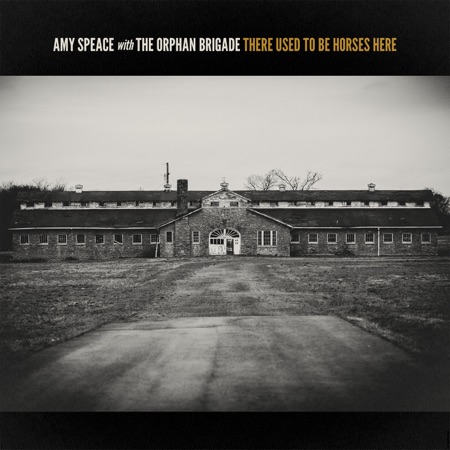
On this follow up to her award winning album, Me And The Ghost Of Charlemagne, Amy Speace delves into her personal space for a truly intimate album which was written in the space between two life changing events, her son’s first birthday and then the death of her father. One event life affirming, the other a loss, a dichotomy which informs the songs here which are suffused in memories, some happy, some less so.
Speace is accompanied throughout by The Orphan Brigade (Neilson Hubbard, Ben Glover and Joshua Britt), the accomplished trio whose own albums lend themselves to place and time and it’s a match made in heaven. Their delicate and impressive colourings caress the songs wonderfully while a string quartet adds to the quiet beauty of several of the songs here. One listen to the magnificent edifice of One Year will confirm that Speace has picked her musical partners well.
The album opens with sweeping strings and gentle mandolin ripples on Down The Trail as Speace heads back in time, recalling family journeys from her childhood. It’s as evocative as a faded old family photograph and sets the scene for much of what is to follow. There are echoes of Joni Mitchell in the writing, and her vocal delivery, from hushed to exclamatory, is quite brilliant. The title song is another snapshot from the past but within it there is a sense of anger as her childhood memories of pastures are confronted by the modern reality of urban blight – her father’s spirit no longer resides there. It does reside within yet another sepia toned memory on Father’s Day which is based on an actual photograph from a day out in 1972 with Speace reflecting on her fear that her memories will eventually fade and wishing that her father was still around to celebrate another father’s day. It was not to be and Grief Is A Lonely Land is an incredibly touching elegy which deserves to be heard far and wide as it knocks any Broadway melodrama off of its perch.
On a more affirmative note, there’s the bustling and bluesy skiffle of Hallelujah Train which can be considered as a kind of a grand send off to the deceased, gone but riding into glory. River Rise is delivered in a similar vein and Shotgun Hearts (with guitar from Will Kimbrough) is a defiant shout out with a little bit of Springsteen hidden within its pulse. Mother Is A Country, the second last song, returns to the personal as Speace waxes poetically on the havens a child can find in its mother’s embrace and love, while allowing for the mother’s sense of emotional turbulence in the wake of giving birth.
The album closes with a warm and cosy rendition of the late Warren Zevon’s Don’t Let Us Get Sick. It’s a come together anthem here, enlivened by the always excellent band playing and a fine two fingers to the pandemic which has blighted all of us. A fine end to an album which is full of the milk of human kindness and which is a glorious listen.
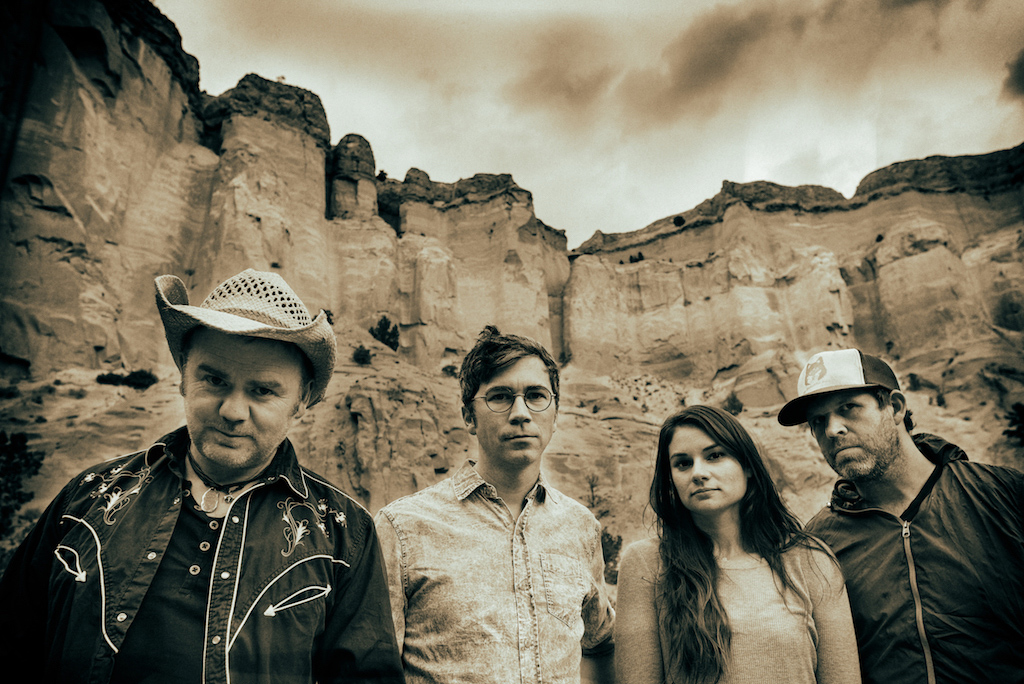
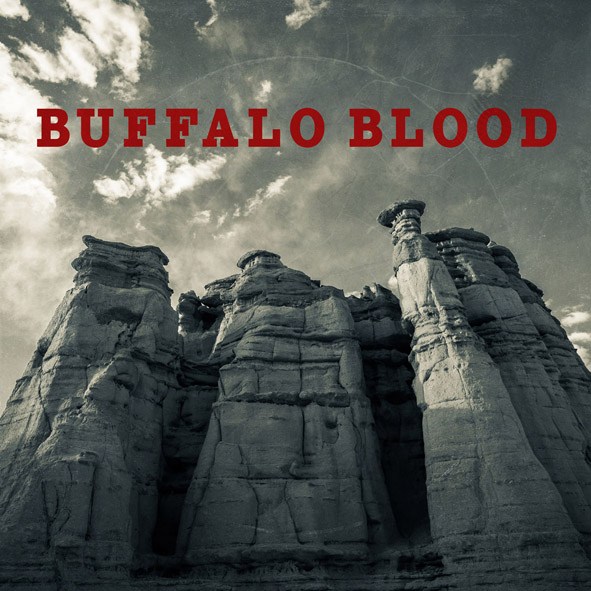 Buffalo Blood is the collaborative work of three American musicians and a Scot who set out to capture some of the legend and history of Native Americans, victims of a genocide which rivals that of the Nazi’s against the Jews. The collective – Dean Owens, Neilson Hubbard, Joshua Britt and Audrey Spillman – were drawn to the project after Owens, a man from Leith, raised on cowboy movies but lured to the plight of the Native Americans after visiting their sacred lands, mentioned a batch of songs he had written as a result of his fascination, to Hubbard. Hubbard, a Grammy nominated producer and, along with Britt and Spillman, a member of The Orphan Brigade, a band who seek out unusual recording opportunities, got on board and the newly formed quartet decided to collaborate in the writing and recording of what became Buffalo Blood. A project long in the making, it eventually saw all four decamp to New Mexico, along with sound engineer and photographer, Jim DeMain, to record the album in several iconic locations. Aside from the recording, they captured the outdoor performances on film as they followed what is known as the trail of tears, the historical forced marches of Native Americans from their ancestral lands to reservations. The resulting album is heavy on atmosphere with ambient sounds trickling into the songs, many of which reflect the arid conditions of the New Mexico desert.