JP Harris’ Dreadful Wind & Rain – Don’t You Marry No Railroad Man. Free Dirt Records

Noted as one of the best purveyors of amped up country mayhem in recent years, JP Harris puts away his telecaster and tube amps on this collection of pared to the bone traditional folk songs, partnered by an old chum, Chance McCoy. In his informative sleeve notes, Harris expresses his interest in old time banjo (to the extent that he learned how to build them) and his love of what he calls the repetitive archaic sound of old time music. We know it as the music of that old weird America (as Greil Marcus called it), songs tilled from the earth, dark and filled with portents of death and doom and first collected on the Harry Smith Anthology Of American Folk Music.

Don’t You Marry No Railroad Man finds Harris, on banjo and vocals, and McCoy, on fiddle and backing vocals, dive headlong into Harry Smith territory. Recorded in a “a hundred year old sharecropper’s shack, deceptively well-equipped with some world-class gear inside” the pair laid down these ten songs, all plucked from tradition and memory. Most will be familiar to aficionados of the genre via numerous archive recordings but the liner notes allow Harris to explain his own connections to the songs and the versions he knows. In essence, that world-class gear the pair employed not only allows the songs to shine but carries them back in time to paradoxically create a timeless album.

Prior to his music career, Harris was a carpenter and he includes two carpenter songs here. The hardy perennial, House Carpenter, opens the disc and sets the scene with its mournful and mystical content and goes some way to proving that the devil has the best tunes. Harris and McCoy claw and scratch at the song as they fall under its spell. Later on there’s The Little Carpenter, another sepia stained lament laden with portent and mystery. In the notes, Harris mentions that he took to it due to his being a carpenter, and recalls hearing it first on an Alan Lomax field recording of Blind James Howard of Harlan, KY, from 1933. The primitive picking and fiddling continues apace on Mole In The Ground and on an excellent rendition of Barbry Ellen, a song Harris learned from a Jean Ritchie recording. This gathers together so many strands of what eventually became American folk music – the Child Ballads, Scots and Irish traditions- indeed, Samuel Pepys refers to the song in his diary dated January 2, 1666!

There’s some hardscrabble jauntiness on the outlaw song, Otto Wood and Closer To The Mill rocks (in an old time square dance way) but two songs here really reach out. Wild Bill Jones is a murder ballad delivered by Harris and his banjo which is quite spellbinding. Old Bangum meanwhile, reminds us of a time when the folk revival was reaching out to all sorts as Harris first heard this on a Seeger Family album aimed at children. Harris here retains the wondrous naiveté and nonsensical sounds which Pete and Peggy Seeger excelled at. We were certainly too young to hear Blind James Howard but this song pricked our conscience and reminded us of earlier and simpler days.

All in all, Harris and McCoy have delivered a modern update on a classic sound which will surely be seen, in time, as an essential link in the chain of American folk music. Real time old time weird Americana indeed.

Website

JP Harris & The Tough Choices/Miss Tess/ Trusty Buck’s Lone Star Revue. Nice N Sleazy, Glasgow. Tuesday 13th November 2018

20181113_215000 copy

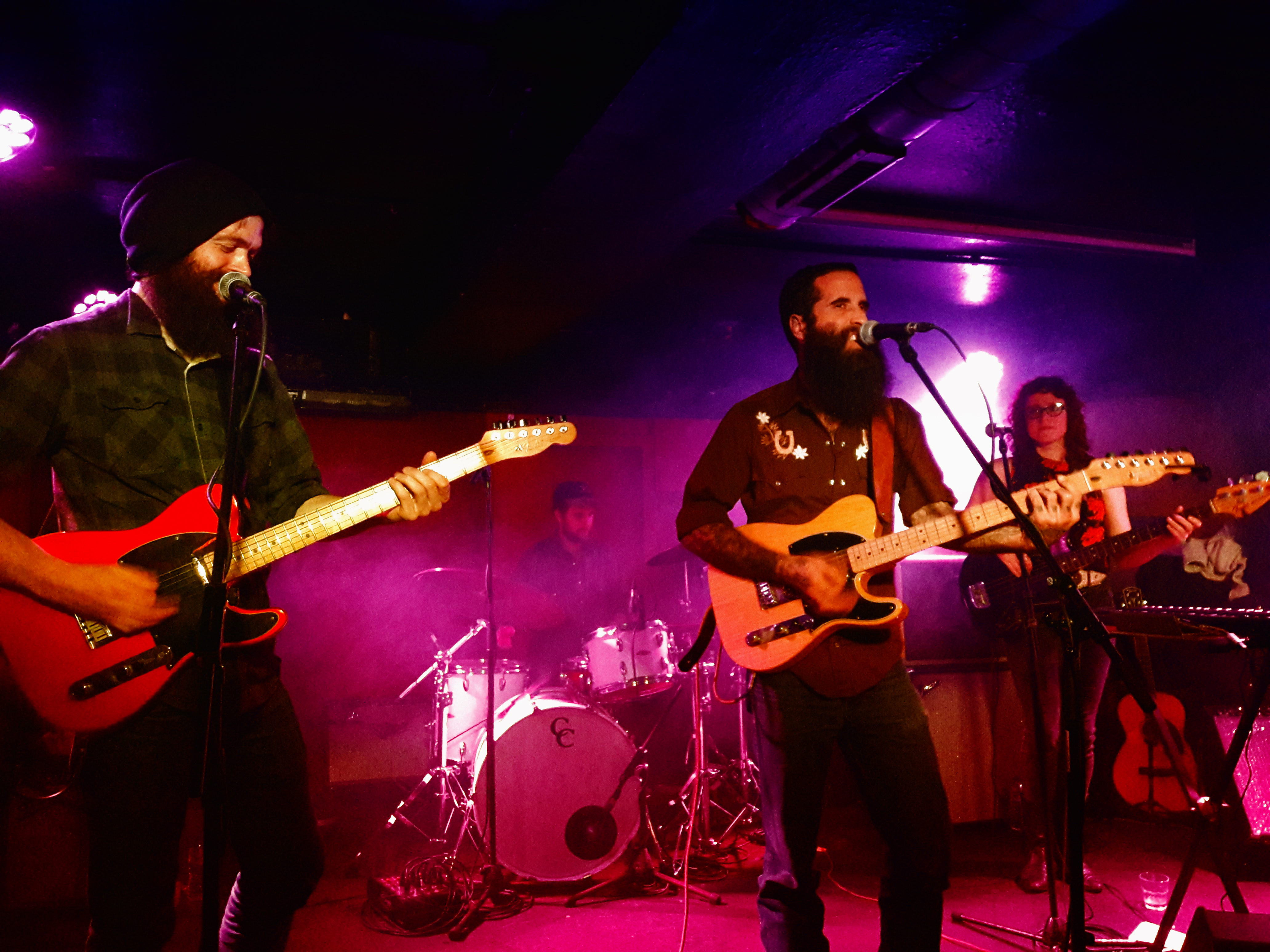
JP Harris tore into town for a night of hard-core country and honky tonk which just about blew the socks off of everyone at the show and dispelled all doubts about the current state of American roots music. Harris, originally from Alabama, is the real deal with a hobo background and who earns his crust by carpentry when he’s not riding the rails with his band. with a cracking new album, Sometimes Dogs Bark at Nothing, under his belt, and sporting one of the finest beards in captivity played a powerful and joyous show full of riveting lyrics and twangtastic guitar to an enthusiastic crowd in the bowels of Nice N Sleazy.

Honky tonk was on his mind as the band swung into Two For The Road with guitarist Justin Mahoney twanging away as pedal steel player Thomas Bryan Eaton deftly laid out his delicious curling licks. There was pure dirt stained country on Badly Bent while I Only Drink Alone, from the new album, was a fantastic nod to the tear stained waltzes so beloved of bygone Nashville artists such as Ray Price but Harris showed that he can shine on poppier material such as the sixties folk sound of Lady in The Spotlight. It’s hard however to imagine any band right now who can hammer through songs such as JP’s Florida Blues #1 and Gear Jammin’ Daddy with such ferocious energy. The latter song received the most enthusiastic response of the night and with Eaton fairly soaring away on pedal steel it was well deserved. With the songs all packing a punch in less than four minutes each Harris and his band roared through the set with commentary kept to a minimum (although he did take a poke at Trump at one point). An encore of Jerry Reed’s Freeborn Man topped the night as they ran through all the red lights with the brakes off, trucking the highway and riding the rails with a fury and, it has to be said, a great deal of gritty country style. As we said earlier, JP Harris is the real deal.

20181113_202630 copy.jpg


The evening opened with an inspired set from an impromptu conglomeration, a super group of sorts featuring local musicians from the Holy Smokes recording roster calling themselves Trusty Buck’s Lone Star Revue. A raggle taggle ensemble (composed of members of The Hoojamamas, Harry and the Hendersons, Awkward Family Portraits and Tom McGuire & The Brassholes – do check them all out), they played a short set which ranged from skiffle like numbers to Ronnie Lane inspired rambles. There was a wonderful song about flying to Peru which floated on some inspired lap steel guitar while there was a nod to local hero Les Johnson & Me (who was billed to appear but sadly didn’t) as they covered one of his songs. They finished with a fine version of The Stones’ Sweet Virginia with the audience singing along.

20181113_211712

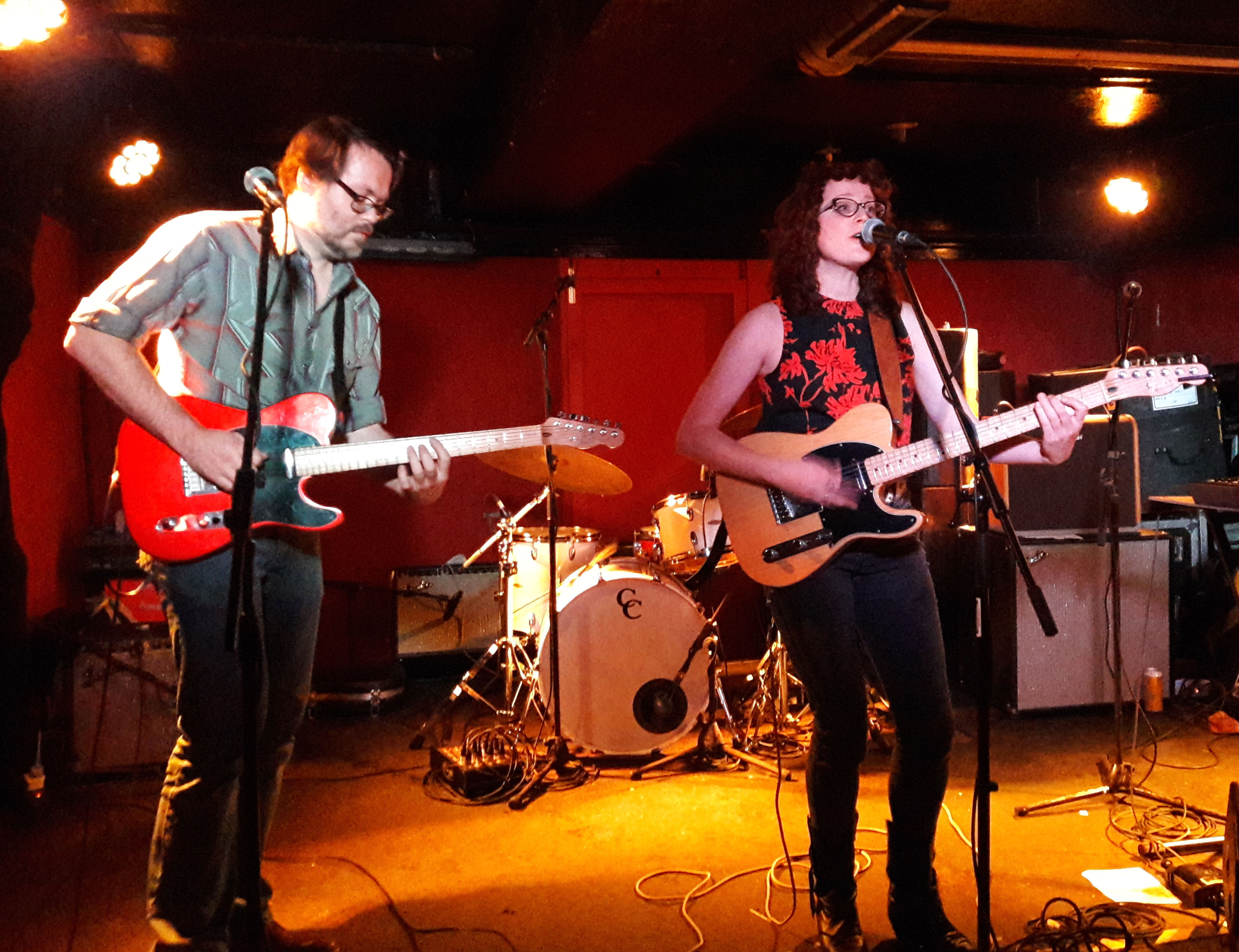
Squeezed in between Trusty Buck and JP Harris, Miss Tess (who was handling bass guitar duties with the Tough Choices) ran through a short set accompanied by Thomas Bryan Eaton on guitar. An established artist in her own right Miss Tess set the scene well for JP as she had a fine twangy guitar presence along with a finely hewed sense of neon lit sadness as in her opening number Going Downtown. On Moonshiner, with JP’s rhythm section sitting in, she romped through a rambunctious salute to old time rebels with some fine country picking from Eaton.


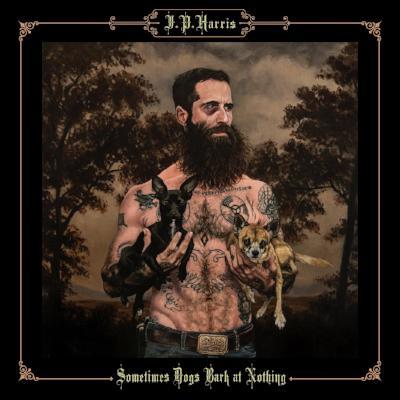
JP Harris. Sometimes Dogs Bark at Nothing. Free Dirt Records

jp_album_cover_2f1e6313-ea10-4e85-93db-fe41feac6945_1024x10242xJP Harris modestly describes himself as a carpenter who writes country songs. On his third album, Sometimes Dogs Bark at Nothing, he has indeed carved an excellent benchmark by which the remainder of this year’s releases should be measured. A colourful (and heavily tattooed) character, Harris has lived an itinerant life since leaving eighth grade class in Alabama, riding the rails and hitching lifts for a decade or so picking up labouring jobs for a spell and then moving on. This lifestyle informs several of his songs which he delivers with a raw authenticity whether they be hard driving honky tonkers or gritty ballads and on this album he even tackles some sweet Nashville countrypolitan sounds.

The album opens with the flat out pedal to the metal rocker, JP’s Florida Blues #1. Fuelled by some barrelling organ and fiery slide guitar the songs soars from the outset and with its female harmonies adding a southern swell to the ride this is like The Allmans’ on amphetamines. Anyone who has seen one of Harris’ incendiary live shows will know what to expect here and he delivers more hard drivin’ country on the truckin’ Hard Road which features some tightly coiled guitar and pedal steel licks while Jimmy’s Dead and Gone starts off in hard scrabble skiffle fashion before the band weigh in like a runaway locomotive as Harris turns in the best hobo train song in a long long time. Thrilling stuff indeed but Harris spends more time on the album showing us that he can rein it in and wax poetic in more delicate fashion.

Lady in the Spotlight is the tale of a disillusioned would be starlet that with its rippling guitars and folky melody could have been penned by Shel Silverstein or Tom T. Hall. Runaway meanwhile is a red dirt country slope with some fine Dobro playing as Harris inhabits similar territory as the late Guy Clark and to his credit stakes a fine claim regarding his right to be there adding the next song, Miss Jeanne-Marie, another plaintive ballad in similar fashion, just to be sure. In addition, Harris shows that he can rival Joshua Hedley in the drinking and sinking Nashville sad song category with the excellent pairing of When I Quit Drinking and I Only Drink Alone. Meanwhile the limpid croon of Long Ways Back with its satin smooth guitar  is just superb and it’s hard to believe that it wasn’t written by Willie Nelson.

The album’s curious title comes from the delightful homily of the same name which has Harris posing a series of questions the answer to all seemingly just because they can. A brief song featuring only acoustic guitar and Dobro it’s a fine distillation of Harris’ writing and singing talents which is nestled within an excellent set of songs making up what is essentially a fantastic album.

Website