Dan Stuart wears an alter ego, Marlowe Billings, in his “false memoir” The Deliverance of Marlowe Billings that relates his formative years and rock’n’roll life before his eventual deliverance to a psychiatric institution. Barcelona Blues, a book of poems by Stuart, ditches this conceit and nakedly opens with an introduction that details his Spanish wife’s infidelity in 2010 which led to another short spell in care before he headed to Barcelona for a prearranged gig in the midst of what he calls “a severe depressive episode.” So far, so fun. In Barcelona Stuart is supposed to play at a testimonial show arranged for a sick member of his wife’s cousin’s band. Paranoid and wasted he describes it as the worst night of his life. He stays on in Barcelona for a time, seeking refuge among Andalusian immigrants and in the red light district while falling for a local femme with whom he has “a short but intense affair.” His introduction ends “these poems are really for her.”
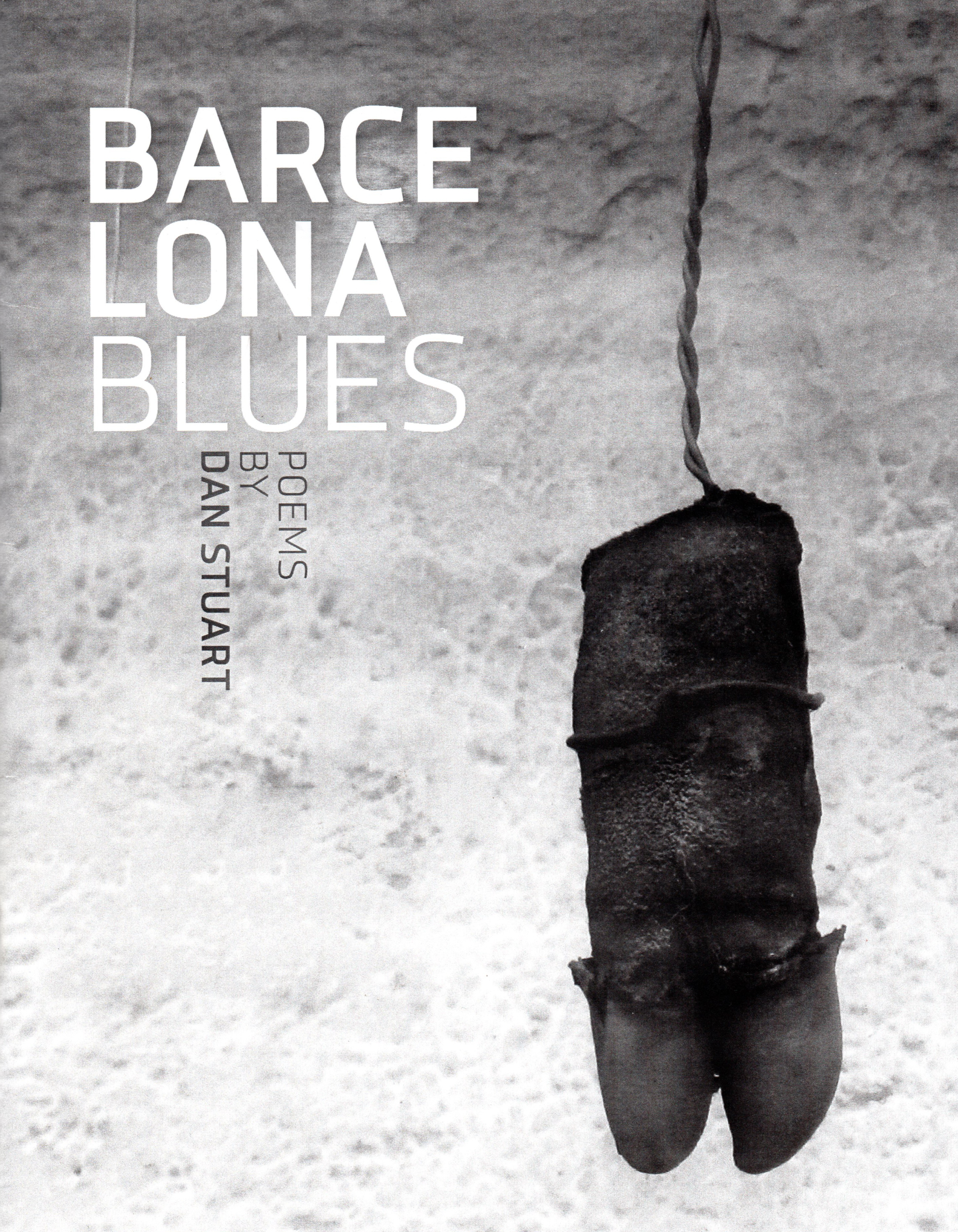
Stuart has written candidly about his marital problems in the sleeve notes for the magisterial reissue album, Arizona: 1993-95. Barcelona Blues catches him with the wounds raw and weeping, seeking solace and anonymity in a Barcelona tourists wouldn’t recognise. The cover features an ugly blackened pig foot that resembles a deformed penis strung on a wire found hanging outside a garage in a gypsy quarter. The poems feature Stuart for the most part in cafes and bars observing life around him, police assaulting suspects, young mothers with push up bras pushing baby strollers, sullen teenagers on the cusp of sensuality, oafish men whose primary pleasure is “futbol.” Odours of food and tobacco are vividly captured and there’s an overall sense of menace with Stuart, the outsider, having to tread carefully amongst these bruised people while frequent use of Spanish colloquialisms reinforce the sense of alienism. When he gets personal he tells us that his anti depressants cause impotence leading him to rely on a “blue pill” while overdoses and domestic violence cloud those he gets close to.
The book is a visceral rush urging the reader to pursue it to the end where Stuart seems to accept the scuzziness around him as preferable to the frigid Catholicism and brutality of the Franco regime While the title recalls Kerouac’s Mexico City Blues Stuart’s poems are not set out in verse form and there is none of Kerouac’s Zen mysticisms here. Instead Stuart captures the documentary style of a Kerouac poem such as Bowery Bums while Hemingway’s poems such as Montparnasse may be another influence. Another Hemingway piece, his recollection of his Paris days in A Moveable Feast might be more apposite to reference while Stuart’s current domicile in Oaxaca, Mexico inevitably leads one to recall Malcolm Lowry’s Under The Volcano. Stuart sets the poems in sections which appear to be named after geographical districts in and around Barcelona although each one can stand separately from the others. As with Beat poetry there is a sense that the words were written to be read aloud and fortunately Stuart has provided an example which you can hear below.
Barcelona Blues is just another piece of the jigsaw puzzle that is Dan Stuart these days. His Green On Red days are well documented, thereafter he seems to have had periods of calm and some very turbulent times. His recent reappearances, on record, live and by written word hopefully signal that he is coming to terms with the past and looking to the future.
