
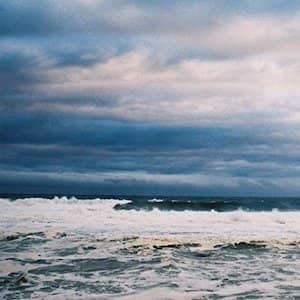
Daniel Gadd. As If In A Dream I Drifted At Sea.

daniel-gaddSometimes the story behind an album is just too slick, as if it’s pilfered from a film script – music moguls discover the next big thing by accident as he sings his songs in a late night bar – too Hollywood for real surely. Well, whether Daniel Gadd is the next big thing we don’t know yet but it’s true that this young South African was playing in a bar in London one night where two PR chaps happened to be. Impressed, they followed up and discovered that Gadd had an album already recorded and just waiting to be released here. The result of their talks is this release which Gadd had recorded by the ocean at Cape Town a few years earlier and it’s very impressive. A truly solo effort, just Gadd, guitar and harmonica, bohemian folkies and lovers of that Greenwich Village troubadour sound of the sixties will surely be queuing up to buy this album once they a whiff of it.

There’s no escaping the overall feel of early Dylan and Cohen which underpins the eight songs here. Gadd’s melodies are simple, folk based, reminiscent of the unadorned yet intriguing tunes which Dylan was pilfering in his early days. His guitar playing is quite accomplished, more akin to the UK folkies of the time while his voice is somewhat lonesome and beguiling, evoking both Tim Hardin and the nascent Cohen. Lyrically he hits all the spots. Deeply romantic in a bedsit fashion, the elements, nature, a restless highway urge, lovers lost, lovers remembered, they all feature here.

All eight songs are impressive but there’s something of a dichotomy here. When Gadd picks up his harmonica and forlornly blows into it, Dylan immediately springs to mind. Sleep Turns Her Face and Just Like The Road are prime examples, lovely songs but the harmonica breaks are just too Dylanesque. The closing song, Somedays Down a Highway, resolves this as the harmonica is fully woven into this quintessentially weary slice of folk existentialism.  However when it’s just voice and guitar Gadd really shines. Siri Lynn, which opens the album, is as tender, poetic and romantic as Cohen’s Suzanne while Some Time Ago (On A Cold Winter’s Night) is a chilling song which harks back to Child Ballad tales of beguiling sea creatures with the stark melody and delivery recalling Lennon’s Working Class Hero, a strange mix but it works.  Perhaps the best song here is The Trail I’m Tracking which manages to join the early romantic Dylan to his later work on Time Out of Mind, a simple guitar motif repeated as Gadd, sounding wonderfully weary, tries to find his way.

As If In A Dream I Drifted At Sea is an astonishing work coming, as it does, from a young unknown artist. It’s a late night reverie, a bedsit delight, and hopefully just the first from this very promising young songwriter.

website


Adam Cohen. We Go Home. Cooking Vinyl.

Cards on the table straight away. Adam Cohen is the son of Leonard Cohen. Might not be fair to instantly tar him with this association but Adam seems happy to remind folk of it throughout the album with allusions to Hallelujah and First We Take Manhattan in his lyrics and what appears to be a picture of an infant Adam with dad on the rear cover. So primed, the listener is on the lookout for similarities and there are moments here and there when Adam does recall Leonard vocally but more so in mannerism and delivery. Unlike fellow travellers, Rufus and Martha Wainright and Teddy Thompson, Cohen junior was in his late thirties before he made a mark on the world. His early recordings were unheralded and a serious crash derailed him for a while before he left music aside for several years. 2011’s Like A Man however saw him accept and embrace his paternal lineage and was well received. We Go Home is much in the same vein, and casting all thoughts of the father aside for a moment it stands up well on its own two feet but ultimately there’s no denying that Adam is following in Leonard’s footsteps.

The songs are for the most part simply arranged, acoustic guitar or piano with minimal rhythm section, a female chorus and occasional strings. The more successful songs are those delivered with the minimum of melodrama, Cohen seems to like dynamic changes in melody and mood and this leads to a song like Love Is where he comes across like a tasered Neil Diamond. Fortunately this is a one off and he manages to curtail the drama of What Kind Of Woman to an acceptable level although he ends up sounding like dad circa New Skin For The Old Ceremony.

As we said his simpler melodies are the best and the opening Song Of You And Me is a warm and affectionate paean to love while Too Real is a very fine love song that hovers between Dobro flavoured country funk and string adorned confessional. We Go Home is an up tempo sing-along number with scrubbed guitar and catchy chorus that perks up the album before Put Your Bags Down weighs in, one of the more portentous numbers here and begging to be considered as an offloading of emotional baggage. So Much To Learn is sprightlier, an attractive and simple acceptance of his heritage and so much the better for it while Fall Apart directly addresses the father-son relationship Cohen has experienced and here he offers a finely tuned summary of his life in an attractive setting with a fine degree of acceptance on a song that would sound fine on a Bill Callahan album, quite lovely. Cohen signs off with the short and simple Boats, a string fuelled miniature that throws up the notion that this album could more accurately have been titled A Voyage Round My Father.

website

Kevin Doherty. Seeing Things


A member of exuberant Irish folk group Four Men & A Dog, Kevin Doherty has had a fertile solo career running in tandem with his band work. He’s recorded with Levon Helm and Rick Danko and been described as a “Donegal Leonard Cohen.” Seeing Things is his fourth solo affair and immediately one can hear the reason for the Cohen comparison on the opening song, To Begin and on the excellent I’m Going Now which begs comparison with Cohen circa New Skin For The Old Ceremony. However it’s unfair to labour this point as throughout the album Doherty shows kinship with such excellent tunesmiths as Harry Nilsson, Paul McCartney, Randy Newman and, going back a century and a half, Stephen Foster. Although there’s a slight brogue in his voice there’s little to suggest that this is the work of an Irishman (musically I mean, lyrically it’s loaded with the Emerald Isle) and there’s nary a sight nor sound of a fiddle, banjo or bodhran. In their place we get a suite of intimate songs which drizzle out of the speakers like snowflakes, gently fluttering and caressing as they fall. With some excellent string arrangements by Michael Heaney the album is bare boned with guitar, piano and occasional accordion the primary instruments while Doherty’s fine vocals are supported on two of the songs by Charley Webb (of the Webb Sisters) and Lise O’Neill. As for the words Doherty is a great writer with a poet’s touch and almost every song has an arresting or striking lyric contained within it while there are nods and allusions to Dylan Thomas, John Donne, James Joyce, Paul Bowles and in the title song Seamus Heaney. Doherty’s online notes on the songs are especially worth reading.

With the exception of I Wish I Was On A Train which sounds somewhat underdeveloped all of the songs here are almost perfect examples of the songwriter’s craft. The miniature morning song of To Begin, the tender Latin American tinged Esplendido Corazon, the Cohanesque (sorry) Rambling Irishman would deserve attention anywhere. Doherty however excels himself on two songs that elevate the album into a contender for the annual best of lists at the end of the year. The title song Seeing Things opens with the arresting line “We’re slamming through clouds in a loud piece of shining steel” as Doherty slides into a wine fuelled reverie on a flight. The baleful horn and gentle backing support the song like billowing clouds. New York City (Going Back) has a subtle laid back organ groove with some muted horn and is an impressionistic report on meetings and encounters in the Big Apple with Philip Roth and John Henry offered walk on parts. So far we’ve avoided mentioning Van Morrison but Doherty’s vocal manner and lyrics here recall Morrison’s as Doherty slips oh so easily into the big feller’s stream. A magnificent song.

Simone Dinnerstein & Tift Merritt. Night.

Mention of marrying rock or pop music with the classical world tends to conjure up versions of caped and costumed prog rockers playing at demons and dungeons with strings attached. however there is a more refined strain that has a fine pedigree and which ditches the pomposity for a genuine desire to build bridges twixt the two, witness Phillip Glass’s album Song’s From Liquid Days or Elvis Costello’s link up with the Brodsky Quartet. Correct me if I’m wrong but I’m not aware of many Americana styled artists dipping their toes into this rarefied world but Tift Merritt has taken the plunge with Night, an album in collaboration with classical pianist Simone Dinnerstein. The pair met in 2008 and over the years have built up this collection of songs that feature some classical compositions (by Schubert, Purcell and Bach), Merritt originals and some specially commissioned pieces. The end result is a brave and on the whole, successful, listening experience that leans toward the classics while Merritt’s offerings are gracefully adorned by Dinnerstein’s impeccable playing. Merritt sings wonderfully with Dinnerstein on occasion abandoning the keys to hammer at the piano strings adding a dulcimer type effect. The glacial purity of these songs reminds one of Joni Mitchell at times while their version of an old Billy Holiday number, Don’t Explain has Merritt invoking the spirit of Holiday and Lotte Lenya on an arrangement that could have come from the pen of Kurt Weill. Merritt’s vocal contributions to Henry Purcell’s Dido’s Lament and Schubert’s Night and Dreams are hushed and reverent and if one was unaware of their provenance you could assume that she penned the lyrics. Dinnerstein has the opportunity to shine on the brief instrumental Prelude In B Minor from the Clavier Buchhlein (something I never thought I would type here) by Johann Sebastian Bach while her performance of The Cohen Variations, a solo piano piece based on laughing Lenny’s song Suzanne is, quite simply, sublime. They add a very fine version of Wayfaring Stranger and an excellent rendition of the traditional song I Will Give My Love an Apple that is so fragile that the listener is afraid to breathe in case it breaks. This sense of fragility pervades the album but it avoids being a clinical exercise or a demonstration of musical technique. The closing song, a cover of Johnny Nash’s I Can see Clearly Now is the only let down, perhaps because of its familiarity but it’s a song that cries out for some abandon and here it’s tightly reined in.

buy it here
Tift Merritt
Simone Dinnerstein

Gregory Alan Isakov. This Empty Northern Hemisphere.

We’ve said it before and here we’ll say it again. One of the pleasures of reviewing albums sent from God knows where is that amidst the chaff there is always some wheat. An album that tumbles into our lap unannounced but which has that essence, that pull which reaffirms our belief that music can be transcendental, beautiful, moving.
From the moment Dandelion Wine poured from the speakers the ears perked up. A skeletal banjo joins a simple guitar line, mournful and desolate before a string section joins in. Isakov ‘s voice floats over this, warm and comforting before it is joined by his sometime vocal collaborator, Brandi Carlisle. A beautiful song it sets the scene for the remainder of this album which envelops the listener in an aural feast. Isakov cites Iron and Wine, Kelly Joe Phelps and Leonard Cohen as his influences but there are elements galore here of Tim Hardin, Nick Drake and the relatively unknown Hobotalk. Overall there is a sense of melancholy delivered with a resigned air as Isakov sings tales of lonely souls, travellers and lost lovers. His lyrics are rich but cloaked in poetic smoke and mirrors, his voice is for the most part wearied and relaxed and on several of the songs he is accompanied by Carlile who harmonises well. The true beauty of the album however is in the textures of the sound. For an album “recorded in many different locations, a closed down bookshop, my apartment, the studio and our friend Brandi Carlile’s house” there is a fantastic sense of dynamics. The songs ebb and flow with an organic feel and the playing is excellent. While most of the songs rest gently on an acoustic guitar bed the instrumental trimmings, be it piano, vibes, banjo, violin, viola or cello support and at times lift the songs into a sumptuous space that is at times mesmerising. He ends the album with a fine cover of a Leonard Cohen song, One Of Us Cannot Be Wrong where he and Carlile capture perfectly Cohen’s miserabilist approach.
Isakov is playing in the UK in June however at present there are no Scottish shows which is a pity.
(Edit) Been informed that there is a Glasgow gig at Brel on June 1st.
website
that Moon Song