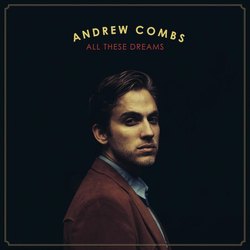
Andrew Combs‘ 2015 album, All these Dreams, catapulted him to the forefront of modern Nashville pop music. Away from the turgid embrace of the country bro’s he was mining a rich seam of sixties melodicism inspired by the likes of Roy Orbison and Jimmy Webb. His follow up, Canyons Of My Mind (a nod perhaps to Bob Lind’s mid sixties hit, Elusive Butterfly), is a more complicated affair, a heady mix of his tried and tested melodies with strings along with a tougher, punchier approach. This is evident from the beginning as Heart Of Wonder opens the album in dramatic fashion as his wavering voice proclaims, “I have run through the valley, I have stormed the shore” over a portentous beat. Like a storm cloud the song darkens, Combs glowers like an old testament prophet as a gnarly electric guitar starts to crackle before bursting into an angry solo over a insistent jangled piano. Riding the waves the song dips and rises before bowing out with a fierce sax solo leaving the listener somewhat exhausted.
It’s a bold start, an indication that Combs has something on his mind and it turns out that much of the album is inspired by his readings of the likes of Charles Wright and Jim Harrison, poets who have hymned the American wilderness. So while there are moments of countrypolitan bliss as on the free flowing Rose Coloured Blues (which recalls Glen Campbell) much of the album is darker, informed by ecological concerns and the current state of his nation. The lead single from the album, Dirty Rain exemplifies this as Combs sings of, “Poison River, muddy water…plastic people stacked in towers with nowhere to go.” That he sings the song in a plaintive voice over a building sweep of strings is dramatic, the end result like Roy Orbison singing a lyric by JG Ballard. Blood Hunters is a cold glimpse into a feral dystopia, the song fuelled by jagged shards of guitar while Bourgeois King is a parable which rails against the bourgeois king who wants to build a wall to keep us safe and promises to make the country great again. No prizes for guessing who this is about but Combs delivers it with a huge sonic palette starting the song out as a jagged bluesy wail before it descends into a smorgasbord of unleashed strings and flute recalling the free jazz of the sixties.
These diatribes sit within a brace of songs that continue in the vein of the previous album. Aside from the aforementioned Rose Coloured Blues there’s the Sixties gaslight romance of Hazel, part Greenwich Village, part Parisian chanson. Lauralee is unabashedly romantic recalling the sound of David Gates’ Bread while What It Means To You is a good old-fashioned country styled waltz. There’s a further twist as Combs slips in two songs, Sleepwalker and Better Way, which have a fine full bellied band sound with a prominent bass sound, the latter in particular indebted to the sound of Joni Mitchell circa Hejira. All together they add to the variety on offer but Better Way especially might nod to another direction this eclectic artist might follow.
Canyons Of My Mind is unquestionably a move on from its predecessor, a songwriter flexing his muscles and casting his eye around. Given the results Mr. Comb is shaping up to be considered in the same breath as the likes of Jackson Browne if he continues to forge ahead.
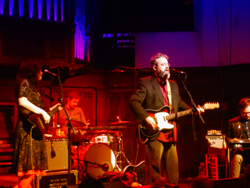
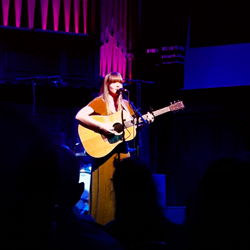
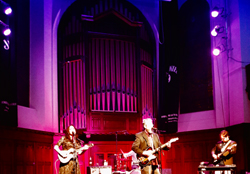
It was a welcome return to Glasgow for The Handsome Family and a solo debut performance tonight from fellow Loose Records artist Courtney Marie Andrews, the sold out show proof that even on a storm-ridden weekday there’s an audience for quality music in Glasgow.
Not her first time in Glasgow (she previously was here as a backing singer for Jimmy Eat World which she remembers primarily due to a beer swilling “taps aff” fan) Ms. Andrews’ appearance was keenly anticipated, many of the crowd seeming to be familiar with her latest release, Honest Life. Her set was short but compelling, her voice crystal clear, the songs lonesome reflections on life delivered perfectly. There was some tasty pedal steel accompaniment from Bryan Daste on several of the songs with Andrews’ guitar picking confident as displayed on the sublime delivery of Woman Of Many Colors (from her 2013 album On My Page). Rookie Dreaming and Table For One were somewhat sublime, the latter suffused with the loneliness of the long distance traveller and the song tonight that did recall the tundra like epistles of Joni Mitchell with whom Andrews has been often compared to. And while Andrews does court comparison with some sixties and seventies icons (I heard someone even say that in appearance tonight she looked a bit like Melanie) she has surely proved with Honest Life that she has moved on from such forebears, the emotional heft of Not the End which tonight sliced through the venue proof indeed. There were similarly powerful performances as she sang Honest Life and Put The Fire Out, the audience in her hand and it was a pity that we were allotted such a short time in her company. Whispers are that Ms. Andrews will be returning in the not too distant future, if so be sure to catch her, she is a gem.
Ah, The Handsome Family, the Morticia and Gomez Addams of Americana, a deliciously dark and twisted invite to visit an America peopled by freaks, mutant animals and fast food addicts getting their fix in lurid plastic palaces; they really have no equal. On record they continue to hone their audio alternative to David Lynch but live they open up with the songs punctuated by the superb (and achingly funny) repartee between Rennie and Brett, almost as if they were in a reality TV show featuring the battling Sparks family. Tonight, in-laws, depressing vacations and Brett’s mixture of lager and Lemsip (or Lemsick as Rennie renamed it) were running throughout the show, the pair bickering wonderfully. It was all hugely entertaining, at times rib tickling, but ultimately the repartee led into the songs which did not disappoint with a fine overview of their many albums including several from last year’s Unseen. They opened with the Gonzo reportage of Gold, a surreal tale of a robbery at their local Stop’n’Go (now closed) and the old favourite (and Christmas themed) Too Much Wine and then headed into the addled The Loneliness Of Magnets with Brett singing like Mel Torme on psilocybin, the song dedicated to an audience member’s birthday.
The favourites came and went. Back In My Day, Weightless Again, Bottomless Hole, Tiny Tina, all delivered brilliantly, Brett’s deadpan baritone backed by the very fine band setting. Rennie on ukulele bass or autoharp, percussionist Jason Toth and a new family member, Alex McMahon on guitar, pedal steel and plastic organ along with Brett’s dynamic guitar delivered dark Gothic spells and toytown magic equally well. And of course they visited that nugget which allowed them their moment in the sun (surely anathema for such a crepuscular couple) with a fine delivery of Far From Any Road, chosen as the theme song for True Detectives some years back. As Brett said tonight he watched the TV and saw into the future, more people coming to their gigs. Fortunately they have spurned the silver dollar and continue to purvey such eccentric songs as Octopus and Frogs, both delivered tonight and much more fun than listening to David Attenborough. The Handsome Family remain a singular delight and long may they do so.
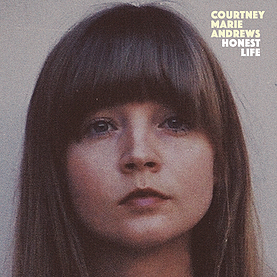
The grainy portrait of Courtney Marie Andrews (almost like those pictures of lost kids on American milk cartons) which adorns Honest Life’s cover is close up, intrusive. The grain suggests a zoomed in crop of a larger picture, the surroundings unseen, allowing the listener to imagine the background, the baggage that inevitably clutters most photographs. What is undeniable is that Ms. Andrews’ stare is unflinching, defiant almost. Here she sets out her wares, crafted by her own hand and hewn from her own experiences and this fierce independence infuses the album as she sings of trials and tribulations and offers a sense of dignity to the downtrodden.
Still only in her mid twenties Andrews has packed a lot into her ten years in the music business. There’s a back catalogue which is somewhat confusing with several albums withdrawn apparently. Aside from her own ventures she has been an in demand musician and singer for various artists including Damien Jurado and Jimmy Eat World, a gig that ended up with her residing in Belgium playing for several artists there. The genesis of Honest Life occurred in Belgium as Andrews broke up a relationship and returned to the States taking up a job as a barmaid in a small tavern several miles out of Seattle. Here she served tables and heard the tales of the tavern’s denizens, several of which have made their way onto the album. She strips the tales and her own experiences down to the bone, the Honest Life(s) of the title, no aggrandisement here, the result recalling the naked emotions stirred on Joni Mitchell’s Blue. Crafting the album Andrews courted several producers but felt that their ideas didn’t tally with her wish to deliver a raw and relatively unembellished record so she took the bull by the horns and produced it herself.
The result is an album of glacial purity with Andrews’ voice cool and clear over a subtle and perfectly executed band setting that has glistening guitars and warm pedal steel complemented by superb keyboard playing. The sound does hark back to Mitchell’s first forays into group arrangements and that “Ladies of the canyon” vibe so popular with the folk rock mafia of that time but such is the strength of the songs that Andrews surmounts any accusations of mere copyism. There’s a heart and soul to these songs which bleeds from the speakers with dignity. Irene is perhaps the best example as a powerful country rock pulse twitches with her forensic lyrics, “The heart is funny Irene, you can’t control who it wants to love, so let it love Irene, man or woman, or anyone it wants. You dream of the north Irene, well then that’s where you oughta be. But you gotta want it Irene, don’t follow any path half-heartedly.”
Paths and roads feature heavily on the album be it the routes (mainly dead end) leading to a local dive or the paths Andrews herself follows. The album opens and closes with ruminations on a journey. The opener Rookie Dreaming positing her as an ingénue with romantic notions of sixties movies in her mind as realises romance is not all sugar and spice. On the closing song Only In My Mind she’s somewhat wiser, able to recognise that the notion of a perfect love is mainly in the mind. In between there’s the winsome Not The End, a song that captures the transience of true love. Part of Andrew’s voyage is her time bar tending, her muse here the customers of the bar she worked in and she captures perfectly their dramas and woes on several of the songs. Table For One paints a picture of a lonesome traveller stopping off for liquid succour while How Quickly The Heart Mends is Andrews’ version of a honky tonk song with a sting in its tail as she sings,
“I can’t believe I got all made up, put on this dress that you love, only for you to go and pretend, like all those years meant nothin’. So go on and forget, act like we’ve never met, leave with your new friends, how quickly your heart mends. The jukebox is playin’ a sad country song, for all the ugly Americans. Now I feel like one of them dancin’ alone and broken by the freedom.”
The album is packed with such lyrical acuity and all the songs are gracefully delivered, the band excellent on all accounts. It’s early days but Honest Life is already a contender for one of the albums of the year.
Ms. Andrews will be touring in the UK (supporting The Handsome Family) at the end of February and she was available for a short chat with Blabber’n’Smoke at the tail end of last year. We started off by asking her about the writing process for Honest Life.
I started writing songs when I was really young, a teenager but for this album I started writing when I was in Belgium. Then I was a bartender in a small town bar in Washington State and that’s where I finished writing the songs.
They’re pretty sad songs
I was going through a hard time, a breakup.
Some folk think that breakup albums are some of the best ones
Yeah, well songs are a great way to express emotions, sometimes I think when you feel pain it’s easier to express that in a song.
There are lots of images of roads, trains and such. Is the album like an emotional journey?
I’d say that it is. I was talking to an interviewer a few months ago and we kind of came to the conclusion that even the sequencing of the songs was like a travelogue. The beginning, the opening song Rookie Dream is getting on the train, the beginning of the journey.
I take it that Rookie Dreaming is one of the earlier songs you wrote as you’re singing about moving too fast to see the paintings in Paris and the sunrise in Barcelona so presumably it was written in Europe.
Yeah. It was written way before all the other songs, that was actually a different time when I was in Europe some way back
I was going to ask you about your lyrics in that song when you say you felt like you were a 1960’s movie. Did you have a particular movie in mind?
No, I didn’t have any one movie in mind there. It’s more of a “feeling ” lyric if you know what I mean but now that you ask I wish that I did have one in mind, that’s a cool question.
Again, talking about paths and roads in Only In My Mind you sing, “life is a road without any turns” and I wondered if this is in any way related to the Robert Frost poem The Road Not Taken.
Well again, I didn’t have that in mind when I wrote that song but I love Robert Frost and it’s great that it has that effect on you when you listen to it.
Most of the album is just you and the band but there’s a string arrangement on Only In My Mind which is wonderful and sounds as if you had an orchestra in the studio with you.
That was my friend Andrew Joslyn. There’s a story behind that. He and a friend of mine were dating and they went on vacation and when they came back their house had burned down. I’d asked him to write an arrangement and it was only a couple of days after the house burned down so he said that he wrote it in a kind of fervour, feeling all the pain and hurt he had and he managed it all in under an hour. There’s a lot of emotion in it and it really adds to the song.
You produced the album yourself.
Yes. I spoke to a few people but they weren’t really in line with what I wanted it to be, at least for this batch of songs. I wanted it to be raw and real.
People have compared the album to Joni Mitchell and I certainly thought that were elements of her and artists like Judee Sill and Carol King, an early seventies singer songwriter feel to it.
Well those women are definitely huge influences on me and I respect and honour them but for me it wasn’t so much getting the sound of a certain time as getting a more timeless sound, one that you couldn’t pin down to a certain age. I think that when you have a more organic sound and instruments on a record that people think of an older time and an older sound just because that’s what those records had on them.
The album’s being released here in January but I believe that it’s been out in the States since last summer. Has it done well over there?
It’s quite a big gap between the two release dates so it’s been a slow ride but yeah, it’s done well and it’s been a good time for me
For some of the songs you drew on your time spent bar tending.
Yes. In these small time bars in America there’s all sorts of characters, people who don’t really seem to have many ambitions, not afraid to be themselves and especially when they’ve had a few drinks they’ll start to talk. They’ll tell you stories and I’m always willing to listen and be empathetic and try to connect with them. I think that everyone has a story in them but some are just more willing to tell you about it and those are the ones I wrote a song about.
In How Quickly Your Heart Mends you sing, “The jukebox plays a sad country song for all the ugly Americans.” It’s a very evocative lyric, a Hopper painting meeting a Tom Waits song.
Well when I played that song to some members of my family they were like, how can you say ugly Americans? But then it’s small town America and most city folk just don’t have the experience of being there. They don’t understand what that small town feel is. It’s people who have been stuck in a small town forever and that’s what I was trying to convey.
As we said Courtney Marie Andrews is touring the UK with Loose Music stable mates The Handsome Family. Dates are here
The Gomez and Morticia of Americana, Brett and Rennie Sparks AKA The Handsome Family have long delighted with their singular vision. Rennie able to spin words from weird dreams, bizarre history and extrapolated incidents, Brett voicing these in his monotone baritone, all wrapped up in a strangely comforting low key country styled exotica with ancient keyboards and autoharp nestling amid the guitar and banjo.
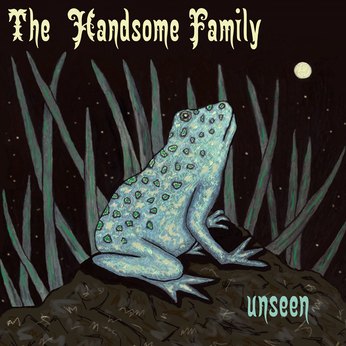
Critically acclaimed and with a devoted following The Handsome Family burst out of the niche world of Americana when their song Far From Any Road (from way back in 2003) was chosen as the theme music for the hit TV series True Detective. Online at least they were stars, downloads and viewings of the song hitting millions, a gratifying tale indeed and hopefully some of the moolah has found its way to them. Certainly when Blabber’n’Smoke last saw them they seemed somewhat gratified by the episode but, comfortable within their unique universe, their first album release since the brouhaha, Unseen, carries on as usual with no hint of cashing in with only one song approaching the lush desert storm of Far From Any Road. A case of Stay Calm and Stay Weird.
They open with that trademark sound on the glorious Gold, a border tale suffused with imagery, “Got a tattoo of a snake/And a ski mask on my face/But I woke up in a ditch/Behind the Stop-N-Go/Lying in the weeds with a bullet in my gut/Watching dollar bills go fly away in the dust.” An image sparked when a dollar bill blowin’ in the wind smacked Brett in the face in a car park, fine fodder for Rennie’s imagination. Indeed the album title came from another episode when Rennie, sitting in an airport seat was then sat upon by a businessman who failed to see her. Contemplating her invisibility, she writes as a detached, unseen observer, dreams, occurrences and false memories feeding her fantasies.
The Silver Light is a woozy neon lit country waltz which describes fly blown bar flies addicted to slot machines seeking nirvana in the reflected glow of the tumbling wheels hoping that their angels will line up. This netherworld, a reflection of hopes dashed appears again in The Red Door, a Hitchcock like admonition not to open the door under the stairs and on King Of Dust where the protagonist, hung upside down in his truck after a collision sees himself flying over the desert. Rather than going to a heaven all he sees is barren parched lands, bones bleached in the sand, an Icarus of despair.
Elsewhere they bemoan a lost innocence on Back In My Day and visit a funway in dashed expectations of seeing the world’s tiniest horse, the mournful fairground gaiety of Tiny Tina recalling a baleful clown’s sadness, a painted face hiding his pain. Gentlemen is true gothic, a song swaddled in the bizarre psychedelia of Farewell Aldebaran as Brett sings of a 19th century medium who hoped to vacuum up spirits like so much dust, inventing a machine to do just that. They close with the yearning romanticism of Green Willow Valley which comes across like a wraith tempting his love to cross over into his world, a mirror version of The Green Leaves Of Summer, a love song that graced the John Wayne movie The Alamo. Here it’s a skeletal Wayne beckoning from beyond the grave.
An album begging for epithets such as crepuscular and spooky it transcends these. In short it’s another trip into the odd and extremely attractive world of Brett and Rennie Sparks. The duo are lining up UK dates for early 2017 and in the meantime you can get Unseen on a limited edition transparent green vinyl LP here.
It’s a fair bet that readers of Blabber’n’Smoke will be familiar with Loose Music, the record label that’s been a cornerstone of the UK Americana scene since 1998, their roster packed with major US acts, home to Danny and The Champs and of course, the springboard for Sturgill Simpson’s world domination. Joana Serrat is their first Spanish artist and for Cross The Verge she has ventured from her Barcelona home to Montreal to record this vibrant slice of shimmering soundscapes soaked with some vibrant guitar work
Able to whip up a Calexico like storm on Desert Valley, Serrat can also sound like The Cocteau Twins or Julee Cruise, her voice melting into atmospheric keyboards and spiralling guitars as on the enchanting Lover. While the album as a whole veers more towards brash guitar driven Americana the opening song, Lonely Hearts Reverb is a Twin Peaks like calling card, Serrat sounding as tender and vulnerable as Cruise as guitars scintillate, keyboards swell and heavenly choruses erupt. There’s no evidence of Catalonian sunshine on the frosty slow drift of Oh, Winter Come, a delicate finger picked guitar ballad while the closing song, Your Gold Could Be Mine is another simple effort with a solitary acoustic guitar supporting Serrat’s vocals which here recall The Cowboy Junkies’ ice queen, Margo Timmins.
There’s a fine old fashioned country rock strut on Saskatoon (Break Of Dawn) and on I Follow You Child, the latter with a turbo charged thump as banjo and pedal steel whip up a storm over some clattering percussion. A lonesome pedal steel introduces Solitary Road which sashays with some style into an old fashioned waltz time emboldened with some twangy guitar fills. Elsewhere Serrat picks up some vocal partners. Neil Halstead joins her on the effervescent country pop of Cloudy Heart, the pair harmonising well on a song that is peppered with vibrant guitar and pedal steel breaks. Ryan Boldt (Deep Dark Woods) turns up on the dark melodrama of Black Lake as churning guitars and a sluggish rhythm recall the darker works of Will Oldham.
A welcome addition to the Loose roster, Serrat delivers an album that will surely appeal to those who like their Americana delivered with an air of mystery and sang froid, an approach best heard here on Flags, a song that marries a warm buttery pedal steel sound , guttural guitar and her delicate voice, a dreamlike cosmic American music.
Ms. Serrat is touring the UK in May with a Glasgow date on the 10th at Broadcast. Tour dates here
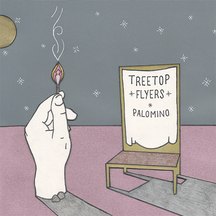
I must confess to really wanting to like Treetop Flyers. They hit all the right buttons, their name copped from a Steve Stills song, their vibe that West Coast seventies highway hum, the liquid guitars spiralling into the sunset. Palomino, their second full album, continues in the vein of its predecessor, 2013’s The Mountain Moves, the vocals recalling America’s Dewey Bunnell but at times the music is reminiscent of mid seventies bands who added soul music, Latin influences and jams to the initial clear air of the originals.
Several of these songs exceed the six minute mark and are dominated by whirling organ and guitar flourishes that cloud the quality of the songs. Live they may be quite exhilarating but on disc there’s a temptation at times to skip to the next track. Having said that the setting might be an issue here as when I listened to the album in the car on an hour plus drive it was quite invigorating and remained in the player for a second listen.
The album gets off to a fine start with the grand sweep of You, Darling, You, a song that does inhabit that same Ventura Highway that America ventured down but in this case instead of long hair flowing in the breeze of a convertible there’s a sense of claustrophobia, windows tight shut against the night, the road a lost highway. Sleepless Nights zips into action with Allman Brothers’ guitar like duelling as the band buckle up for another bumpy ride, turning off to Altamont instead of Woodstock with a fine pastoral coda acting like a rear mirror view of what could have been. There’s another left turn as Lady Luck tucks into another strand of yesteryear, UK post psychedelic rock, Canterbury bands such as Caravan. Here mellotron and guitar swirl around portentous lyrics, the song wouldn’t be out of place on an early King Crimson album. From here on in there’s a patchwork of sounds. A lysergic soul number in It’s A Shame, a Santana like rumble on the lengthy Dance Through The Night (which, if were a stick of rock, would have Fillmore West stamped throughout it) and on Never Been As Hard they dive into a submarine world of swooning guitars and soft mallet percussion as Reid Morrison plumbs emotional depths the likes of Mercury Rev could only imagine. There’s a magical end to this song as a discordant piano outro abruptly stops as the band launch immediately into their closer, Wild Winds.
Apparently, the album was recorded following a period of turmoil for the band members and this is reflected in the barest song here. St. Andrews Cross is a stark lament set to acoustic guitar, the harmonies casting some light on the darkness like a stained glass window in some dark cathedral. It starts wonderfully but like several of its siblings it could have done with some pruning. Overall, the album is a bold venture but it lacks focus although there are some killer songs in here that definitely grow with repeated listens and which are tailor made for the stage.
Fans of that old Hollywood hippie sound, the days of the blissed out David Crosby, tetchy Steve Stills and brooding Neil Young and the glorious nugget that is Gene Clark’s masterpiece, No Other, have recently had the opportunity to vicariously relive those days simply by purchasing a copy of Israel Nash’s latest album. Silver Season, released on Loose Records is a sun-blistered swathe of Topanga Canyon like songs, teased out on record, itching to be let loose live, the guitars crackling while pedal steel soars and swoops. Nash sings in a similar vein to a young Neil Young but it’s the music that is rooted in those bygone days, not a nostalgia trip but a feeling, espoused by Nash (who by the way is no relation to the fourth member of that supreme LA supergroup) that music can change, if not the world, then at least those who are listening to it. Recorded in his newly built home studio the album takes aim at gun crime (on Parlour Song) and delivers a wonderful hymn to the narcotic pull of Los Angeles on LA Lately and is a worthy follow up to Nash’s acclaimed 2013 release Rain Plains.
We caught up with Israel as he was heading to New York in the back of an RV. The phone line was tenuous to say the least but the following hopefully carries the gist of the talk which I opened by apologising in advance for the possibility of mentioning Neil Young et al ad nauseam. I asked him if he got fed up with the comparisons.
No, I’m alright with that. People like to talk about Neil Young anyway, he’s one of the big ones so go ahead.
Rain Plains and Silver Seasons seem to be much of a kin but Seasons is somewhat denser with a more psychedelic shimmer to it, would that be a fair enough description?
Well it wasn’t a major goal as such as it just developed that way. After Rain Plains we were playing the album live and it just got us into the way of looking at the album and taking it to another level so it’s like a transition. I look at the album and the music as a presentation. I think that I tried to blend myself as a listener and a writer with all the things I’ve been influenced by and that I’ve tried to grab the listener with everything I can – the artwork, the songs, the whole opportunity you have to suck a listener into this place for an hour.
It’s a huge sound, stratospheric one could say. I really dig the way the pedal steel plays around the electric guitars gliding here and there while the songs shimmer with a sort of heat haze.
That’s a big aspect of what we were working on, the balance between the melodic instruments, they just dance together throughout the record. Gram Parsons had this idea of cosmic American music and I guess the pilot’s just got a little more cosmic.
Parlour Song in particular reminds me of a couple of early Neil Young moments, the orchestrated Expecting To Fly from back in Buffalo Springfield days and towards the end the anger that was evident on Ohio with you shouting out. It’s quite visceral.
Yes, I think that over my years as a musician the songs have become more than just songs, I want to create a space that not only lets you listen to them but makes you go whoa! The beginning of that song is supposed to mimic a funeral precession and it’s really trying to get people in there and see what’s going on in their minds and what they feel like.
I was going to ask you about the introduction, it’s got a cinematic feel, like something from Morricone.
Well it’s inspired by The Godfather II. There’s a scene in it with young Vito in Sicily at his father’s funeral and Copolla does this cool shot with the sound of crickets and in the distance this rag tag band meandering through the hills. Those hills reminded me of the Hill Country in Texas and so I wanted to do something like that. So we recorded the crickets and then we tried to mimic the movie’s panned shot, we tried a bi aural set up, we put two microphones outside and played the track through speakers we carried as we marched about.
LA Lately is simply stunning and again there’s a short introductory passage which sets the scene.
That’s trying to introduce the emotional impact of leaving Texas and going to LA. It’s like, “where did all the hope go?” It’s trying to represent that feeling, a kind of brooding about getting ready to go out there but also the excitement of going away. And then LA represents that unease and unpredictability, again it’s an emotional journey. The song’s about our experience in LA. We played our first headline show there and we had a moment. It’s always exciting that I get to play music but I was overwhelmed that we had such a great show there. LA just has this thing, this history, like Steve Stills and Neil Young meeting on the freeway.
At the end of the album, on Rag and Bone you slip into a chorus of We Shall Overcome. Can I ask you why?
Well the rag and bone man, that’s a real British thing I read about. They seem to be like the least of us in society and to treat people like that, well for me there are a lot of themes across the album and one of them is the idea that there are so many things, man made conventions that we assume are important to society but which are actually not important at all in the grand scheme of things. Like money is made up, time is made up, all these things, they’re restraints that we’ve put on ourselves. The rag and bone men, well we just put them down but we should just change this with a little love, take a step back and make it a little simpler. It might seem like this is a hippie ideal but the older I get the more adamant I am about it, it’s not youthful foolish thinking because I’ve lived it. I’ve seen live shows with people around me catch this contagious atmosphere and as for the closing of the song the idea is that we can have a singalong at the end. I mean what’s wrong with a roomful of people singing we should love one another. It’s just another element of what I feel about music – it’s not just another guitar solo or some badass thing, it’s way bigger than that, it’s way bigger than just rock’n’roll, it’s relationships and it’s people
You recorded the album in your own home studio. Can you tell us about that?
Well we’ve got about 15 acres at Dripping Spring so that was always the plan to build a studio and it finally happened. I got a Quonset hut which is a metal building which has 20 arches and is held together by 3,500 bolts. The plan is to record my own music and produce other people’s records, a place where I can walk from my house straight to the studio to work on material.
That and your story of walking outside recording Parlour Song reminds me of Graham Nash’s story of Neil Young listening to the playback of Harvest using his house and his barn as speakers and yelling out More barn!
Yeah, that’s a cool Neil story.
I believe there are plans to come back over to Europe soon.
We’re going to go out, playing the album front to back, that’s what we have in store for Europe, playing the album as one full piece of music and we’re doing a London show early next year. Hopefully we’ll be back in the UK again after that.
Isreal Nash will be playing a set of European dates commencing in January 2016 with a London show on 15th February, all dates are here. Silver Season will be available on vinyl in November. You can read my review of the album here
Over the past few years Danny And the Champions Of The World’s live shows have increasingly resembled a country soul revue with the band incorporating elements of Motown and Stax into their invigorating music. While in the past Blabber’n’Smoke has noted that this mix has resembled van Morrison’s Caledonia Soul years the new album, What Kind Of Love, shows that the Champs have dived head first into soul territory with horn charts and full blown female backing singers accompanying Danny Wilson’s impassioned soulful vocals. While the obvious touchstones here are the likes of Otis Redding and Solomon Burke there’s a host of other singers who have been more associated with a country influenced take on soul, singers such as Arthur Alexander, William Bell, James Carr and Eddie James and it’s to them rather than the raucous Redding shows that the songs pay homage. In addition Wilson notes that some of his favourite singers are those sixties white guys who first heard Motown discs and immediately set up their own bands and whose voices proved perfect for strained and urgent R’nB. He cites Rod Stewart, Terry Reid, Paul Rodgers, Reg King, Frankie Miller, Steve Ellis, Van Morrison, Joe Cocker, Chris Farlowe and Eric Burden and there’s definitely a moment here on the title song What Kind Of Love when he sounds uncannily like prime Rod Stewart. Meanwhile Precious Cargo riffs mightily and not a million years away from Farlowe’s version of Out Of Time.
The decision to go down this route is not a huge departure for the band for anyone who has heard them playing Cold Cold World or Let’s Grab This World With Both Hands but the album is an unalloyed soulful wallow with huge horn riffs and Marvelettes like choruses which are most prominent on the one cover here, a version of Tyrone Davis’ Can I Change my Mind. Paul Lush’s clipped guitar drives the song along, the horns parp and the vocal interplay between Wilson and the backing singers is the most joyous we’ve heard since Laura Nyro and Labelle’s Gonna Take a Miracle album. Towards the end of the song Henry Senior’s pedal steel carries off the spectacular task of seeming to be part of the vocal harmonies.
While there’s a nod to the “classic” sound of the Champs on Words On The Wind with guitarist Paul Lush given full rein and sax man Free George wailing away, it fits neatly into the overall scheme of the album with Wilson channelling Steve Marriott and the sha la la refrain recalling the Small Faces. However it’s the slow sashay, the soulful strut, the reverential gospel tones of songs like Just Be Yourself and It’ll Be Alright In The End that confirm that the band have nailed the notion of recording a bona fide soul album. While all ten songs are bountiful mention should be made of Wilson’s magnificent vocal performance on This Is Not A Love Song (which of course it is). Curling pedal steel, a curt and magisterial guitar break and weeping organ sweep the song along as Wilson parries with the female chorus. The album ends with another cracker, The Sound Of A Train which moves on from the churchlike sixties soul sound to the urban sophistication of the seventies with mellow saxophone and jazzy guitar styling’s. Sounding like a nighttime version of The Rascals’ Groovin’ as performed by George Benson it winds the album up wonderfully with the only regret that the fade is not much much longer.
The album is out this week and The Champs are touring this month. The Glasgow show is on 20th June at Broadcast, the others are here. In the meantime, Danny Wilson has given a song by song account of the album which is a great read, have a gander here
First thing to say about this album, the second from Nashville artist Andrew Combs, is that we were expecting some kind of Roy Orbison doppelganger to come soaring from the speakers. Seems that comparisons to Orbison have been bandied about all over when folk write about the album but the similarities (if they are there) largely passed us by. Instead we were reminded of the lush arrangements of songs such as Gentle On My Mind and Everybody’s Talking as rippling guitars and sweet strings swept over the two opening songs, Rainy Day Song and Nothing To Lose. Throughout the album there’s a sense of late sixties popular country pop with Strange Bird recalling Mike Nesmith’s latter efforts with The Monkees before flying solo, poppy with hooks galore but with a sly intelligence in the lyrics (and some inspired whistling). On the title track Combs continues to deliver a radio friendly sound on another song that flows effortlessly with strings and a slightly twangy guitar in the middle eight while his slightly weathered voice, attractive throughout, has a passing comparison to Ryan Adams. We have to admit here that the song All These Dreams shares with Orbison’s latter efforts a sense of drama, however it’s the Orbison who was the senior figure in The Travelling Wilburys and of Mystery Girl who’s recalled here and much of that sound was down to Jeff Lynne. Whatever, the worst that can be said here is that Combs has the ability to write hooks as catchy as Lynne and that can’t be all bad.
The latter half of the album steps out from under the Nashville pop umbrella and is all the better for that. The ballad, In The name Of You stands tall next to similar efforts from John Fullbright while Slow Road To Jesus opens like a dusty Kristofferson song before heading into a mock baroque gospel tinged lament. Here Combs’ voice is hesitant and searching while the arrangement is wonderful, the guitars, keening pedal steel and spare percussion perfectly balanced with the swooping strings and brass that adorn the bridge. This is Jimmy Webb or Harry Nilsson territory and it’s executed brilliantly. Month Of Bad Habits has a slight bossa nova feel allied to a deep south sultriness and again it flows sweetly with a hint of menace in its undertones albeit sweetened again by the string arrangements. When the guitar and pedal steel cut loose halfway through the song toughens up and the extended outro is not a million miles away from some of Calexico’s work. Combs closes the album with another understated ballad, Suwannee County that is swathed in warm pedal steel work (from Steelism’s Spencer Cullum Jnr.) and demonstrates that while he’s a dab hand at channelling 1960’s Countrypolitan Nashville pop his stronger hand lies in darker territory.
It’s coming up time for Celtic Connections and one of the highlights will surely be the much-anticipated appearance by Justin Townes Earle, indeed, his show at Oran Mor on 17th January was so swamped by demand that it’s been shifted to the larger O2ABC. Four days earlier sees the release of Absent Fathers, the unexpected companion piece to his last album, Single Mothers released only three months ago. A Yin/Yan concept of sorts the splitting of the releases reflects Earle’s own background as a child of separated parents and there is surely a temptation to hone in on his relationship with his father, Steve Earle. An eight times married man, drug addict and ex jailbird, hard enough to cope with never mind the fact that Earle senior has surmounted his own devils to become one of the most respected Americana artists around, one who regularly relates anecdotes about Justin at his live shows. With his own addiction issues to deal with in the past Earle junior could easily have got lost in some Freudian fog and crash-landed. Instead he’s one of the few rock’n’roll offspring who have made their own mark with five well respected albums under his belt allowing him to come out from under his father’s shadow.
Recorded simultaneously with Single Mothers, Absent Fathers maintains the loose country rock styled approach with just a hint of rockabilly at the edges, a step away from the swinging jauntiness of Harlem River Blues and Nothing’s Gonna Change the Way You Feel About Me Now. Despite the parental background there’s no Wainright like psychodrama here. While several of the songs reference momma’s and father’s it’s in the context of Earle’s ongoing relationship difficulties with none of the pointedness evident on Single Mothers where he sang “Absent father, is long gone now” on the title song. Paul Niehaus’ pedal steel is to the fore on many of the tracks adding to the resigned, melancholic air that pervades the album with Day And Night standing out with Earle’s guitar picking and plaintive voice floating over the keening pedal steel.
Opening with the bittersweet kick of Farther From Me with some fine guitar licks from Niehaus Earle is in fine voice, relaxed and resigned as he sings of detachment and loneliness. Why is jauntier in its delivery but again the subject is lost love. It leads to the old fashioned country lament of Least I Got the Blues which sounds like Hank Williams on downers. Call Ya Momma adds a rock beat to the mix adding up to a chunky mea culpa as Earle regrets his treatment of a partner adding a sob to his voice at the end. Round The Bend recalls the earthy R’n’B of Tim Buckley on Greetings from LA as it churns and snakes away while Someone Will Pay is another bruised and slinky rocker as Earle plots to get even with those who’ve let him down. There’s a southern soul feel to When The One You Love Loses Faith which echoes Otis Redding in its hurt and pain with Earle well able to convey this in his vocals. He wraps the album up with a solo rendition of Looking For A Place To Land, a song that is probably the most autobiographical here as he uses a metaphor to describe learning to fly at too young an age and its attendant dangers. Wishing to land despite a fear that in doing so he’ll never fly again he eventually touches down, safe despite the past. Apparently now clean and sober and in a relationship it’s safe to say that on the evidence here Earle is still capable of flying high with Absent Fathers a superb album overall.
Tying up these siblings Loose Music. have announced that Single Mothers and Absent Fathers will be released as a double vinyl set, a lovely notion that on plastic at least sees Earle’s family reunited.
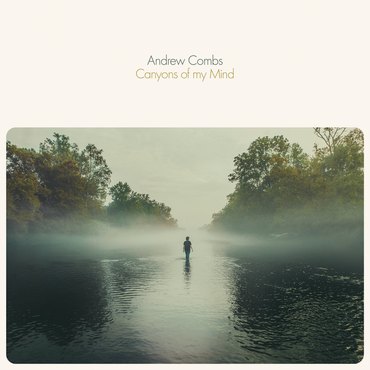 Andrew Combs‘ 2015 album, All these Dreams, catapulted him to the forefront of modern Nashville pop music. Away from the turgid embrace of the country bro’s he was mining a rich seam of sixties melodicism inspired by the likes of Roy Orbison and Jimmy Webb. His follow up, Canyons Of My Mind (a nod perhaps to Bob Lind’s mid sixties hit, Elusive Butterfly), is a more complicated affair, a heady mix of his tried and tested melodies with strings along with a tougher, punchier approach. This is evident from the beginning as Heart Of Wonder opens the album in dramatic fashion as his wavering voice proclaims, “I have run through the valley, I have stormed the shore” over a portentous beat. Like a storm cloud the song darkens, Combs glowers like an old testament prophet as a gnarly electric guitar starts to crackle before bursting into an angry solo over a insistent jangled piano. Riding the waves the song dips and rises before bowing out with a fierce sax solo leaving the listener somewhat exhausted.