Kassi Valazza. Kassi Valazza Knows Nothing. Loose Music

Raised in Arizona, currently residing in Portland, Kassi Valazza gravitates to the sunnier side of the west coast of the USA on her album, Kassi Valazza Knows Nothing. She not only gravitates, she time travels also as the album is liberally sprinkled with touches of psychedelia and freak folk (before it was even a thing). Her touchstones seem to be lesser known psych acts such as Pearls Before Swine along with the shimmering haze of Tim Buckley and while it might be tempting to compare her to someone like Linda Perhacs, Valazza is much more grounded and much less ethereal.

While Valazza has a glorious, seemingly effortless vocal delivery, her words coming across as quite honeyed, much of the album’s success lies in her choice of backing band. Portland’s TK & The Holy Know-Nothings (hence the somewhat punning album title) who play superbly throughout. There’s a chemistry between them, heard best on the album’s highlight, Watching Planes Go By, and it’s quite astonishing to read that Valazza essentially presented the songs to the band in the studio with no rehearsals beforehand, the band having to make it up as they went along.

The album opens with one of the more conventional songs here. Room In The City is a wearied country tinged waltz which opens with Valazza on the road but pining for her home comforts and a warm embrace. It drifts along quite wonderfully, her words wafted gently over some great harmonica playing. There’s a Neil Young Harvest touch to the music here and it’s a perfect album opener. This extremely pleasant (and almost narcotic) cosmic country sound reappears on Song For A Season and on Long Way From Home (I’ll Ride You Down), the latter finding Valazza quite dispassionate as she dissects a failing relationship while the band limp alongside her quite wonderfully. The Know-Nothings go on to stamp their personality on the guitar laden Smile, lifting Valazza’s tale here of regrets into yet another cosmic orbit.

Amidst these already glorious songs, there are a brace of numbers which just simply astonish. Rapture is a perfect balance between the singer and the band with their limpid playing just perfect in its delicacy. Canyon Lines, a delicate portrait of a woman in an existential crisis, worms its way into your head with its spectral organ and skeletal guitar lines. Chief of all is the astonishing Watching Planes Go By. It’s rare these days for a song to stop you in your tracks but when this reviewer first heard this song on a local radio station we were instantly transfixed. Here Valazza weaves a tale of enforced boredom which leads to flights of fancy while the band go full blown into lysergic acid folk rock – Country Joe and The Fish battling it out with The Grateful Dead if you wish. In any case, it’s quite mind blowing.

On an album which just about achieves perfection, closing it with a cover song might have been a letdown. But here Valazza comes up trumps again with her delivery of Michael Hurley’s Wildgeeses, allowing her and the band to pay tribute to their living legend neighbour. It wraps up an album which is poised to be one of the best we’ve heard this year.
Website

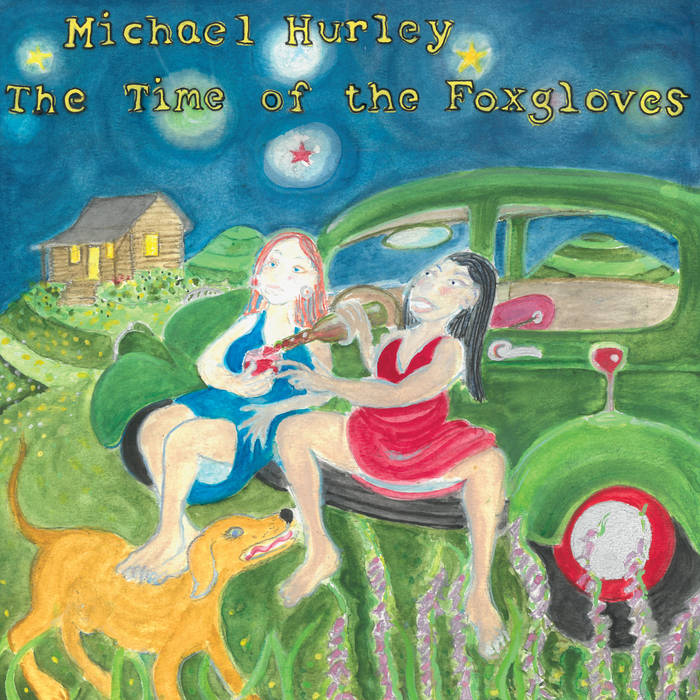
Michael Hurley. The Time Of The Foxgloves. No Quarter Records

Approaching his 80th turn around the sun, Michael Hurley shows no sign of letting up on this latest release, billed as less lo-fi than his usual recordings. If that’s the case it’s more to do with him having more folk than usual involved – Gil Landry makes an appearance on several songs – as the overall feel here remains that of Hurley messing around wonderfully in folk and blues and country, all indelibly stamped with his unique personality. One listen to the enchanting rendition of Se Fue En La Noche allows that this nocturnal ramble, replete with cooing background singers, laidback rusty guitar and knockabout percussion, could easily have appeared on any number of Hurley’s 60s or 70s (or 80s, 90s and 21st century) albums. It’s essentially him, the essence.

There’s actually nothing here which wouldn’t fit on an earlier album but that’s not to say that Hurley is resting on his laurels. He’s always recycled songs (Love Is The Closest Thing here is a new version of The Time Is Right from Ida Con Snock) and, in the main, he’s always breathed new life into them. The majority of the songs here are new examples of Hurley doing what he does best. That is, being Michael Hurley.

Fans will need no encouragement to buy this album but, if you are unfamiliar with Hurley, prepare to delve into songs which sound as old as the hills, have a peculiar presence to them and which root around in the best of American roots music over the last century. At the centre of the album is an instrumental, Knocko The Monk which features just banjo and pump organ and which paints a picture so evocative of an American past – equally sepia toned and wide screen cinematic – that it transports you into your own favourite old time American movie. It’s followed by what is perhaps the best song on show here, Jacob’s Ladder. A bass clarinet and xylophone, along with Josephine Foster’s rhapsodies, accompany Hurley in this magnificent and somewhat wonky front porch Gospel song which should surely be included with every Flannery O’Connor book.

The album opens with Hurley in classic Hurley form on the easy going folk blues of Are You Here For The Festival which, with its addition of fiddle, bass and banjo to Hurley’s captivating guitar and vocal does add some gloss. Alabama, written by The Louvin Brothers, sounds older than the brothers would be these days and another cover, Boulevard (written by Rob Keller) finds Hurley returning to the band sound he had on Snockgrass while Blondes And Redheads and Little Blue River feature Hurley on vintage keyboards (an area he explored on Blue Hills). The album ends with a new version of Lush Green Trees (originally on Wolfways) which is accorded a fuller arrangement and, as we’ve noted throughout, is an example of classic, revisited, updated and also timeless Hurley. On The Time Of The Foxgloves, Michael Hurley just proves, once more, that there is only one Michael Hurley and for that we should be grateful.

Website

Robin Adams. Wrong Road Home. Holy Smokes Records

Normally a Robin Adams album leads one to search a thesaurus looking for alternatives to winsome, melancholic, introspective, sensitive and words like that. Adams’ albums have portrayed him as a singer songwriter very much in the folk/bedsit tradition with luminaries such as Bert Jansch and Nick Drake often summoned to serve as comparisons. Wrong Road Home is however a splendid change of direction as Adams delivers a lively, sometimes  raucous, elsewhere tender, collection of songs, delivered in a folk  and country style with a decidedly American bent. It’s noted that Canadian folk duo Kacy and Clayton appear on several of the songs.

The album is inspired by some of Adams’ favourite American songwriters – people such as Hank Williams and Michael Hurley (we’d add Woody Guthrie, The Carter Family and Jimmie Rodgers to the pile) – while the music is a wonderful mix of string band excellence and hillbilly musings. Banjo, fiddle, mandolin, pedal steel, Dobro and, yip, a singing saw, all feature, giving the album an authentic patina of old time Americana and all that entails. There’s trains and crossroads and ghosts in these tales of bad luck and while the songs are a joy to hear there isn’t really a happy moment to be heard. Meanwhile, Adams’ drawings which adorn the sleeve and the lyric booklet are surely a nod to Hurley.

From the instance when lonesome banjo and harmonica wander in through the saloon like front door of the title song, sounding for all the world like two weary travellers looking for a drink, we’re transported to the old west as Adams wanders into a nether world peopled by talking dogs and crows and blind men shooting arrows at the stars. It leads him to what does seem to be a last chance saloon where, ordering beer, he is given absinthe while seated next to an artist with “a hole right through his chest” wondering why he isn’t dead. With ragged fiddle, lonesome pedal steel and a wearied lope in its stride it’s a tremendous opener. Deep Down follows in a similar style but it digs deeper into weird old Americana, freighted with menace emanating from “the old dark woods” where “gallows swing and the moon stays round.”

Listening to these two opening songs, the only clue that these haven’t been unearthed from some Appalachian archive is Adams’ voice which retains his Scots accent. It’s a fantastic balancing act which he maintains throughout the album and it offers the opportunity to think not only of the Americans he celebrates here but also those pioneers of the 60s such as Hamish Imlach and especially the original Incredible String Band. The fiddle sozzled blues of Broke Down Empire Blues here could surely sit on the first ISB album while the jug band like Nobody Blues is a song which Imlach would have had great fun with. The Scots-American union reaches its zenith when Adams transports Burns’ Tam O’Shanter to the Ozarks, yodelling away like Jimmie Rodgers on The Ballad Of Tommy Shanter. This is quite fabulous. The saw offers the requisite amount of spookiness but there’s so much else bustling away, the pedal steel, a fiddle sawing, swarms of accordion and burbling banjo, all jostle together and raise the song into the realms of greatness. It’s not hyperbole to say this really. If you doubt, then have a listen and keep an ear out for the way there’s a brilliantly brief burst of bowed double bass denoting danger towards the end.

Adams waltzes through the album excellently, unveiling gem after gem. Too Far Gone is a hum bucking slice of Western Swing and Hungry Bob reminds one of Burl Ives or Pete Seeger’s’ kiddie friendly songs (with a dollop of Shel Silverstein). While Your Games is a pretty, Jansch influenced, guitar trip which is more in line with his previous releases, Sing To Me As I Sleep is a trip into Carter Family territory and the closing song, Floorboard Blues is wonderfully rudimentary as Adams sings and yodels an old time waltz quite brilliantly.

It’s not often that an album stops you in your tracks but when we first heard this we were quite gobsmacked by how good it is. It’s a total diversion for Adams and it’s astounding that he’s pulled it off so brilliantly. It probably does help if you’re enamoured of old time Americana to begin with but, coming in at the tail end of the year, we reckon it’s one of our top ten contenders.  https://robinadams.bandcamp.com/album/wrong-road-home

Various Artists. Snockument – Songs by Michael Hurley. Blue Navigator Records

Long rumoured to be in the works, an album of Michael Hurley songs performed by others has finally emerged, blinking, into daylight. For those not aware of him, Hurley is one of the surviving links to, as Greil Marcus has it, that Old Weird Americana. From his first recordings in 1965 for Folkways, up until the present, Hurley has inhabited a domain where country, blues and folk collide and he has peopled it with an amazing array of characters, some grim and doomed such as his famed werewolf, others, cartoonish, bawdy and, at times, lascivious – check out Boone and Jocko. Above all, Hurley allows us to view his world via some stunningly beautiful songs. Some are raw, gnawed from his hinterland, while there are several which have a rich groove and then others which are just quite achingly tender. It’s no surprise really that such a unique artist has rarely troubled the mainstream but, equally unsurprising, he has gathered a cult following which has included a good number of musicians over the years.

Many of those musicians have paid tribute to Hurley on their respective albums, covers of his songs abound, especially amidst the weird folk movement pioneered by Devandra Banhart. Snockument, punningly named after one of his many alter egos, is however, the first bona fide collection of cover songs. It has Hurley’s stamp of approval, an important issue as previous attempts at delivering such an album were nixed by him. As he declared of one of the earlier submissions, “He didn’t have the melody, he didn’t have the words, so what did he have…? I didn’t want the song represented that way. I figured, ‘This is one of my best songs and I want it out there in the public like it is’.” So, the album gathers some songs from those previous attempts which did make the cut along with a couple of previously released covers and some recorded specifically for what we might call “Snockument – Take 3.”

Despite such disparate origins, the album is a joy to listen to and it flows wonderfully. Hurley has selected the songs and sequenced them such that there are no joins to be heard between sessions recorded back in the 1990’s to the present day. The 10 songs here are but a dip into Hurley’s immersive world but they will be more than familiar to fans and all are delivered with what appears to be a great sense of affection and connection with the man. There’s reverence and ribaldry here, quite fitting.

Cat Power’s version of Werewolf is probably the song which most folk will gravitate to immediately. Plucked from her 2003 album You Are Free, it is suitably spooky while Power deftly switches the werewolf’s gender so that it is a she who “loves the young man as I tear off his clothes.” If this sends folk back to Hurley’s stunningly crepuscular original version then the album has done its job. There are other familiar names on board. A 2004 Calexico offer a finely laid back Rue Of Ruby Whores which slides down the neck as easily as a glass of Knockando while Yo La Tengo transform Polynesia into a shimmering languid dream state and Cass McCombs, with guitarist Steve Gunn in tow, follows the original template of Sweet Lucy quite faithfully.

As befits Hurley’s underground reputation however, several of the acts involved here are hardly household names. Little Sue, a Portland singer, captures Hurley’s old time essence in her version of  Somebody To Say Goodbye To and another Portland outfit, The Hackles, hack excellently into Hurley’s sense of wonder on Oh My Stars. The Chicken Chokers give Watertrain a fine string band delivery and Chicago’s Vernon Tonges packs some punch vocally into his bracing and slightly lop sided version of I Still Could Not Forget You Then. Perhaps the most imaginative cover comes from Manchester’s Daniel Bridgwood-Hill, recording as dbh. He takes Hurley’s saw fiddled Hog Of The Forsaken (as heard on TV’s Deadwood) and transforms it into a guitar, fiddle and whistled Antebellum lament which reminds one of Jay Ungar’s Ashokan Farewell. It’s just lovely.

So there we have it, finally. Snockument comes in vinyl, dressed in a sleeve featuring a Hurley painting and with an illustrated gatefold booklet. There may be a CD release in the near future which might include an expanded set list but in the meantime, this handsome and very desirable limited edition is available from Dublin’s Blue Navigator Records

Michael Hurley

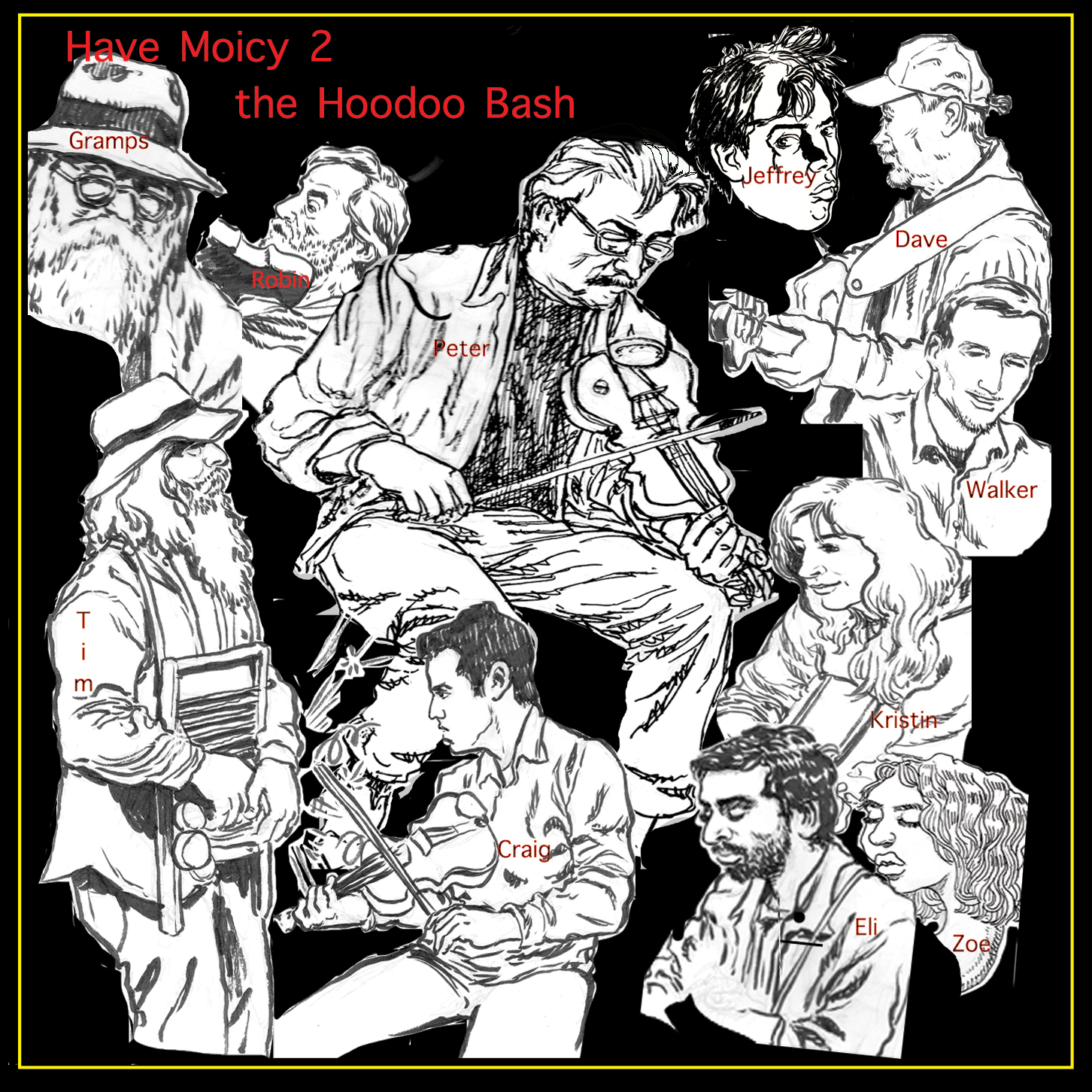
Have Moicy 2 The Hoodoo Bash Red Newt Records

hoodoo20bash-front20cover

The 1975 album Have Moicy! was the summit of what Greil Marcus has called The Old, Weird America, a term he coined to describe Dylan’s basement tapes which he saw as a continuation of the spirit of Harry Smith’s Anthology of American Folk Music. What Marcus missed was the true keepers of the spirit of Smith’s groundbreaking collection, the musical misfits, smokers and tokers who constituted the extended Holy Modal Rounders family and who were responsible for the delights contained in Have Moicy! After surviving the sixties (and leaving behind him a slew of discs that, among other things, added the word psychedelic to the folk lexicon, graced the soundtrack to Easy Rider and funked up The Fugs) Peter Stampfel regrouped the Rounders without Steve Weber and with Michael Hurley and Jeffrey Fredericks and his Clamtones recorded what critic Robert Christgau called “the greatest folk album of the rock era.” While in 1975 Neil Young was heading for the ditch, Stampfel and his allies were manning a gleeful and zany outpost armed with fiddles and guitars taking aim at the absurdities of the day. Songs about hamburgers, alimentary canals and robbing banks delivered with zest, rock’n’roll, doo wop and folk reimagined in their imaginary world.

Have Moicy! ended with the song Hoodoo Bash, a saw fiddle fuelled and surreal gathering of the tribes all bringing Thunderbird wine and a pound of hash. Stampfel sings, “Lovers or strangers we’ll all go through changes when we get the good old spirit down at the hoodoo bash.” Fittingly enough The Hoodoo Bash is the given title for this long waited follow up of sorts to the 1975 masterpiece. The genesis of the album is too long to be repeated here but Stampfel had been considering some sort of sequel for some time. With original collaborators Jeffrey Frederick and Paul Presti deceased and Michael Hurley eventually declining an invite Stampfel still had Robin Remailly and Dave Reisch from the original disc and in a reflection of the earlier sessions managed to marry New York and Oregon freakiness with his inspired invite to Baby Gramps and Jeffrey Lewis to join in, the stage then set for this second summit meeting.

It’s important to state that this is not an attempt to remake the earlier album. While that may have been Stampfel’s original vision, with Hurley, Frederick and Presti out of the equation it couldn’t be. Instead it has the same irreverent yet respectful take on old time American music going back to minstrel shows and up to early rock’n’roll. Recorded without overdubs and no chance to listen to the tapes (other than for producer Matt Sohn) it’s an unholy mess but wonderfully so. Instruments wheeze and splutter, plink and plonk with the rhythm wavering and voices appearing from nowhere on the choruses. The ensemble are completed by Kristin Andreassen, Zoe Stampfel and The Dustbusters and it’s a song by a member of The Dustbusters, Rich Man Poor Man that best displays the wonky groove they found and worked on while the instrumental Banjolina shows that there was indeed a lot of work put into rehearsals with the ensemble playing here incredibly tight. Scattered throughout the album, Stampfel’s goofiness, Lewis’ witticisms and Gramps’ seadog saltiness are all aired while all three Dustbusters contribute songs that sound as if they were written a century ago.

Stampfel opens the album with his reboot of Del Shannon’s Searchin’ complete with spooky hoodoo chorus voices while New Fiddler’s Dram is classic Stampfel weirdness adapting the old chestnut into a tale of, as he puts it, “a patricidal mother fucking skull fucking sociopath.” It works a treat as does Eat That Roadkill, originally a minstrel song called Carve Dat Possum, it has a similar macabre pull as those old racist cartoons that depicted black folk as simple folk happy just to sing.

Lewis in the main takes Stampfel tunes as a start point, he channels the sixties in Nonsense, a wonderful ditty that does recall the psychedelic sweetness of Random Canyon, Intelligent Design could have sat easily on a Fugs album and It’s No Good is a skeletal slice of beat freak folk, a Horse Badorties for our times. As for Baby Gramps, his songs are shanties of the utmost saltiness, his voice growling and burbling in fine fashion on Nailer’s Consumption and Crossbone Scully. While I’ve kind of separated the contributions here, throughout the album there’s a fine degree of cross fertilisation, lead vocals swapped and shared, a true collective effort.

A wonderful collection of songs that see saw away with Stampfel’s love for (and his long standing subversion of) old time music proudly at the helm, The Hoodoo Bash is an essential listen for anyone beguiled by the idea of old, weird Americana.

The album is available here

Peter Stampfel & The Ether Frolic Mob. The Sound of America. Red Newt Records

Peter Stampfel at 72 might be the grand old man of American string band music but anyone who has seen him play recently will attest to the fact that he is one of the “zingiest” characters you could ever hope to meet. He wears his years well and his infectious bonhomie and general zest for life and for music puts many younger musicians to shame. He is a bona fide Blabber’n’Smoke hero having accompanied, enlightened and thrilled us over 40 years of listening to music and he has a list of achievements which are way too numerous to mention here. We did list some these when we wrote about his last Glasgow gig here where he filled the room with a sense of joy. Over the past decade he has seemed revitalised with a slew of albums with various co conspirators and The Sound of America takes us bang up to date while offering Stampfel an opportunity to revisit his roots.
Never a man (in his youth) to swerve various intoxicants ( and the first to include the word psychedelic in a song, Hesitation Blues in 1964), Stampfel has named his latest line up after the habit in the 19th and early 20th centuries of performers using ether to enhance their and the audience’s enjoyment of their shows. Although he states that the current line up has “no druggies, alkies, people with major character flaws, ego problems, or douchiness of any variety” they manage to capture the essential irreverence , bawdiness and general mayhem that has characterised the best of Stampfel’s recordings which from the very beginning sounded as if they were being played by folk coming at you from another universe where oxygen was only one of the gasses they needed to live on. If you think that freak folk is the domain of Devandra Barnhart then a listen to Stampfel should dispel that notion forever. As he says he’s always taken great joy in bending and twisting traditional material.

The Sound of America is essentially an opportunity for Stampfel to visit the alternative American songbook surrounded by his latest conglomeration. The Ether Frolic Mob are a shape shifting bunch, a moveable feast depending on who is available and who turns up on the night. While their ages range from the twenties to the eighties they all buy in to Stampfel ‘s medicine show elixir which guarantees a good time for all with no hokum. Stampfel writes several songs while others are credited to Ether Frolickers John Cohen and Walker Shepherd (the latter a co write with his dad, Sam Shepard). The rest are either traditional or penned in the backwoods or tin pan alley. Stampfel mentions Harry Smith’s Anthology of American Folk Music as a touchstone while also acknowledging his supreme collaboration with Michael Hurley, Jeffrey Frederick and others on the fantastic Have Moicy album (indeed he promises in the album notes that the Frolics are in the process of creating Have Moicy 2). While his is the dominant voice and he is undoubtedly the driver here there this is a democratic show with various members taking lead vocal and all joining in on fiddle, banjo, percussion and general mayhem. It’s random, at times thoroughly unhinged with Memphis Shakedown and New Fortune marginally sharing the prize for out there wackiness. Stampfel howls and wails on the former as only he can do and listening to it one is transported back to the mid sixties and the Rounder’s Indian War Whoop. While there are several wonderful instrumentals that lurch and sway excellently as displayed on Wild Wagoner the songs allow the Mob to shine and particular mention must be made of Hubby Jenkin’s masterful interpretation of Charlie Patton’s Shake It Break It. Stampfel himself offers a hilarious mea culpa on Back Again while Gonna Make Me with John Cohen on vocals zips us back to the very first Holy Modal Rounder recordings in its simplicity. Hey-O is another comparatively uncluttered song where Stampfel inhabits a childlike innocence able to deliver insults that no one could take offence to.
The Ether Frolics Mob might embody an anarchic principle where it seems everyone can do what they want and there’s always the possibility of falling into chaos but at their heart they employ their talents to enhance the whole and when the full ensemble launches into Golden Slippers or Deep In The Heart of Texas there’s an exhilarating effect even without resorting to a sniff of ether. Such wild shenanigans are unlikely to ever bother the BBC playlists but Stampfel and The Ether Frolic Mob mine a fascinating vein of American music and deliver it with a passion that is inspirational and above all else enjoyable.
For further information on the songs check out the extended liner notes here while you can buy the album here

Holy Modelling

Peter Stampfel and Baby Gramps. Outertainment. Red Newt Records.


Way back in the 1960’s there were none so weird and way out as the Holy Modal Rounders. Initially an acoustic duo comprised of Peter Stampfel on banjo and fiddle and Steve Weber, guitar, they jerked songs featured on the Harry smith Anthology of American folk music into the psychedelic sixties. In a decade long musical odyssey they ganged up with the inflammatory Fugs for a few albums and featured on the Easy Rider soundtrack. With members coming and going (including both founders) at various times their journey culminated in a zenith with Have Moicy!, a collaboration with Michael Hurley and Jeffrey Frederick that is generally considered one of the lost treasures of the 1970’s. A Stampfel/Weber reunion in 1999 produced a fine album in Too Much Fun that revisited some of the glories of their first two albums.
Since then Weber has for the most part retreated from the music biz (although he has released some vintage live recordings recently). Stampfel however ploughs on and over the years has released albums with The Bottlenecks, The Du-Tels (with ex Beefheart guitarist, Gary Lucas) and as a solo act. No matter the format however he retains a goofy childlike sense of wonder and above all an enduring love for and knowledge of American folk music.
Here Stampfel teams up with a character who seems to be as idiosyncratic and, well, as goofy, as him. Baby Gramps is a Seattle institution having busked and played there since perhaps the sixties. A well kept secret until he appeared on Rogues’ Gallery, a collection of pirate themed sea chanteys a few years back, Gramps has a voice that has been described as Popeye like and he shares Stampfel’s irreverent and iconoclastic approach to the classics of old time American music.
The result is a triumph, the best album Stampfel has been involved in since Too Much Time,. As a duo they stamp their personalities on individual songs while complementing each other vocally. Indeed it’s not too far fetched to say that Stampfel has eventually found a replacement for his long lost soul mate Weber. While the overall sound and feel of the album owes more to Gramps’ grizzled approach which keeps Stampfel’s often hyperkinetic style in check there are moments when both do let loose. Blues, folk and tin pan alley songs all get the treatment. While Gramps starts the album in fine style with Buzzard on the Gut Wagon, a growled hammered blues with vocals that recall Beefheart, he excels on Monkeys have No Tails in Zamboanga, a nonsense song that uses a style similar to Bahamian guitarist Joseph Spence with some fantastic vocal interplay between the two, Gramps burbling and gurgling while Stampfel wails along, fantastic stuff. Stampfel’s contributions range from a wonderfully high and lonesome version of Heigh Ho (yes, the Disney song from Snow White with massed whistling) and a delightfully dotty ditty about the toilet habits of his puppy dog. He gets to showcase his fiddling chops on Wake Up Jacob which with Uncle Eph’s Got the Coon and Bar Bar is the nearest we get here to a Holy Modal traditional sound with Gramps taking the Weber part. The chalk and cheese pairing of their vocals is best seen on their rendition of Surfing Bird, the sixties garage punk staple which gets a demented outing here and demonstrates that there is no need for amped up fuzz guitar to create a cacophony. The album ends on a triumphant note with Ghost Train of Freak Mountain , described by Gramps in the liner notes as
“based on the mysterious legend of the ghost train running through Freak Mountain, which is a real place, but not found on any map.”
Well, no map perhaps but its topography is well described here.
While the likes of Seasick Steve have popularised traditional American folk blues recently this album portrays two artists who are steeped in the idiom but who present it through an unpolished, intensely personal viewpoint. It might not be pretty but it is pretty amazing. Special mention should be given to the unobtrusive bass playing of Dave Reisch who has served with Gramps, Stampfel and Michael Hurley over many years and who performs the same duties here and Curtis “King chamberlain who adds little touches of jaw harp, penny whistle and jug.

Norman Savitt and Friends.


Norman Ira Savitt is New York based guitarist who has long had an association with Peter Stampfel and their small circle of (mutual) friends. Armed with a deep knowledge of old time American music and familiar to those who frequent the websites and message boards of folk like the late Tuli Kupferberg (of The Fugs) he has released his first ever album, a meditative and peaceful collection of instrumentals based on his finger picking skills. Whether solo or accompanied by harmonica, cello, violin or penny whistle the result is wistful, at times elegiac with pieces dedicated to Ken Kesey and Chris Whitley (an old friend of Savitt’s).
It’s always tempting to mention John Fahey when a guitarist releases an album like this and although Savitt’s playing lacks Fahey’s baroque eclecticism and occasional dissonance the feeling generated when playing the album is similar to that of Fahey’s more straightforward pieces, Alex at Six in particular fits this bill. David Amram’s penny whistle on this tune evokes primitive cultures and the quills used by Canned Heat on Going Up The Country. Elsewhere Savitt, (with the aid of Eugene Friesen on cello) conjures up wintry English folksong on Prayer for Peace and Celtic mist on Alone. Howard Levy (from Bela Fleck’s band and who produced) adds some haunting harmonica to several tunes while violinist Susan Mitchell colours the tribute to the Reverend Gary Davis, One for the Rev where Savitt uses some Davis licks to great effect.
Savitt’s liner notes indicate his affinity to nature and the great outdoors and in an untutored, Carradine like zen mood, one could imagine that listening to this album is akin to watching a pebble fall into a still pond and digging the ripples long after they’ve gone.
Both albums are available here

Finally while we’re on things Rounder related a mention for Charlie Messing. Sprawling Epic. Charlie Messing was once a Rounder, late in the days but a member of that fabled troupe so a sneak preview of his forthcoming album was serendipitous. Apart from his part in the Rounders story Messing has played with Link Wray and Robert Gordon and backed up Loudon Wainwright. In addition he has a wealth of tales to tell of the New York scene from the boho sixties to the punk seventies and beyond which used to be available on his now defunct webpage. Indeed he’s like a musical Zelig, being there at fortuitous moments and this is reflected in his music.
Sprawling Epic looks to be a fairly eclectic pick of his own songs and a few choice covers (including Tom Waits, Michael Hurley, Dean Martin and Blind Willie McTell) all sung in his peculiar and endearing hangdog way. Low key and laid back it has a simple charm. Check back for news of the release date.

Peter Stampfel and Baby Gramps Bar Bar
Peter Stampfel and Baby Gramps Buzzard on the Gut Wagon
Norman Savitt and Friends Alex at Six

Michael Hurley

Sadly it seems as if Hurley is not going to be playing here this month as I reported earlier review of Ida Com Snock
Hopefully this will just be a temporary setback in his bid to conquer all right minded listeners and he’ll wing his way over at some point.

“Anyone who still believes that Michael Hurley will be touring in the UK in January and February ’10 is still believing the untrue. There had been plans of such but they fell thru. The new plan is about having him in the UK and Ireland in July of ’10.” Snockonews

Michael Hurley. Ida Con Snock. Gnomosong (Gong 13).

ida con snock

Michael Hurley (for those who don’t know of him) is a living link to the freakier side of American folk from the sixties and seventies. With fellow travellers The Holy Modal Rounders he took the essence of Harry Smith’s Anthology and ran with it. Thankfully he’s still around these days with his unique take on old Americana (for want of a better description). On his second release on Devandra Barnhart’s label he’s teamed up with American band Ida who provide a very sympathetic backing to his croons, yelps and mock trumpet. Comprised (as has been the case over the past few releases) of reworkings of some of his back catalogue coupled with a choice selection of new songs and covers Hurley weaves his magic with style.
With songs dark and light, singalong and introspective the album will delight fans and may prove more accessible to newcomers due to the smoother production and Ida’s contributions. While his older songs such as “Wildgeeses” and “Hog of The Forsaken” stand out his cover of “Rag Mop” is engaging and he even makes a decent fist of old chestnuts such as Molly Malone and the Bonnie Banks of Loch Lomond. Best song however is the opener, “It Must Be Gelatine” where Jean Cook’s violin shivers as Snock dismantles the old blues analogy of jelly and sex. As he slyly sings amid picked and plucked strings
“if it looks like jelly, if it shakes like jelly, then it must be gelatine.”
For a taste of the old world brought up to date you can’t do better than picking this up. Hurley is appearing in the UK early in the New Year.

Snockonews