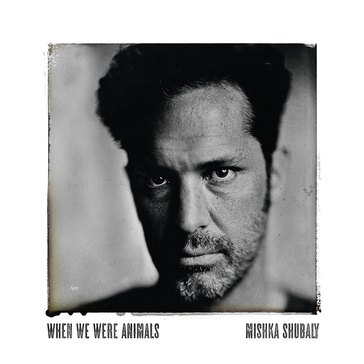
Mishka Shubaly. When We Were Animals

Art copyBack in 2015 we wrote about an album which seemed to epitomise that old Wildean quote, “We are all in the gutter, but some of us are looking at the stars.” That album was Mishka Shubaly’s Coward’s Path, a dark and at times shambolic collection of drug fuelled misanthropy compared to which the likes of Nick Cave and Mark Lanagan sounded like top 40 popsters. Well Shubaly, a man who has probably the most chequered past of anyone we’ve reviewed has done it again with When We Were Animals, another dive into the depths of despair and again delivered with a voice sounding like Barry McGuire has had throat surgery.

It’s not for the faint hearted. No radio station is ever going to play World’s Smallest Violin, a song which kicks off with a punk rock throb sounding like a testosteroned Lou Reed looking for a fight as Shubaly describes a pretty sordid carnal encounter in a bar seesawing between GG Allin like explicitness and wry humour. You just have to love a line like, “When I pulled down my pants, that look on your face like you had lost a bet, “showing that Shubaly is at least not going to boast of his penile prowess.

So, fair warned, what can one expect from the remainder of the album? Well, pretty much more of the same, the music ranging from a mutant form of freak folk to spikier rock songs but the subject matter pretty much focussed on degradation and regret. Never Drinking Again is a bluesy hangover filled with regret as Shubaly populates the song with an exhaustive list of substances that he’s never going to do again before singing, “I’m never going to talk to you again,” indicating a partner as destructive as the drugs. By the end however he’s still in thrall to this person, the relationship reminiscent of Bukowski’s Barfly. The opening song Forget About Me, another loutish punk like thrash sets out Shubaly’s take on relationships as he looks for a cross between an angel and a demon while Animal is a slow growler of a song with Shubaly joined by an anguished female singer as they sing about down and dirty coitus. There’s a hint of Jim Carroll’s Basketball Diaries in the drug fuelled night out recalled (or not as the case may be) on Death In Greenpoint with Shubaly again transforming a calamitous one night drug fuelled Odyssey via his fantastic words on the final lines, “Well I think I’m going to go with a headfull of blow, in a Polish disco, in Greenpoint.” Meanwhile there is a tender moment on the Farmer John referencing Destructible which, while remaining quite dark, reminds one of The Handsome Family.

Just in case you’re wondering how far entrenched into the drugs world Shubaly was engaged in he offers us a loaded cover version of Little Feat’s Willin. Whereas the original was a brilliant delivery of those days when smuggling drugs had a fine and breezy outlaw vibe to it, here Shubaly invests it with a menace more akin to the murder and mayhem we’ve seen via shows like Narco. Just brilliant.

Mishka Shubaly is currently touring the UK. All dates here including a show at the 13th Note in Glasgow this Saturday.


Mishka Shubaly. Coward’s Path. Invisible Hands Music


Mishka Shubaly seems too good to be true. A fantastical biography paints him almost as a child prodigy, a brilliant writer receiving a Dean’s Fellowship, the largest merit-based scholarship offered by Columbia University’s School of the Arts. Having achieved his degree he quit writing, survived a shipwreck, became a musician, an alcoholic and drug addict. He then got clean and started to get his highs from distance running while reviving his writing career going on to become a successful author with a series of candid autobiographical novellas released on the burgeoning Kindle market. More to the point he revisited the songs he was writing when his main occupation was waiting for the man and has been releasing them on a series of albums the latest of which is Coward’s Path.
The first thing to say here is that hopefully his writing continues to sell because it’s unlikely there will be queues of folk lining up to buy this. Shubaly doesn’t hold back when he describes the desperation, the degradation, the self loathing and bleakness of the addict. Expletives are common (with one song called Fuck Self Control) while his voice is of the non singing variety, a rough untutored vehicle that often seems out of control and about to crash, think of a collision between Ed Sanders (of The Fugs) and Barry McGuire (Eve Of Destruction) and you’re halfway there. The songs for the most part are ramshackle folky singer songwriter events thrashed out with occasional slide guitar, organ, percussion and fiddle adorning the bare boned acoustic guitar rhythms. All in all a recipe for a mess one might think.
Well, think again. Coward’s Path is wayward, bleak, rough and not easy listening but ultimately it uses these qualities to its advantage. Like some of the fabled cult albums of the sixties on the ESP label it has a mesmerising quality, a weird attraction as Shubaly draws the listener into his twilight world. The roughness becomes a faux naiveté, the arrangements begin to spark and repeated listens reveal melodies and a raw beauty in some of the songs. To cap this the lyrics are the diamonds in the mine with Shubaly challenging Bukowski for the title of sodden poet laureate. At his best he comes close to Cohen or Cave singing “that nightstand I built for you Is it lonely for me alone in your bedroom? Does it cry out at night or does it understand As you tremble underneath your new man’s hands?” on I Can’t Remember When You Were Mine. Your Stupid Dreams treads the same territory as Richard Thompson’s End Of The Rainbow with Shubaly warning an infant that life is shit “There You lay in your diaper, just as cute as could be Propped up on your elbows and smiling at me. I drove in for your birthday, your mother drove me away. But that woman taught you to crawl And that’ll come in handy some day.” “If my heart was a horse they would shoot it” he wails over a clattering percussive collection of ironmongery on Frankenstein Heart driving home the self disgust that permeates the disc but again it’s compulsive listening as the song lurches along and the lyrics become ever more visceral.
While Fuck Self-Control is a vitriolic and deluded salute to determined self-destruction there are some tender moments to be found with Depravity’s Rainbow a mock baroque folk song that resembles some of Tom Waits earlier work while New Jersey Valentine’s Day Orphan Blues is almost Latin in its rhythms. The best is kept to the last with the wonderful dirge that is Your Plus One at My Funeral as Shubaly reaches from beyond to ask “who’s going to walk you home when I’m rotting down below?” Again the song structure is simple, repetitive guitar strums throughout but producer Erik Nickerson adds a tremendous guitar solo that sounds as if it’s reaching for the sky along with percussive effects that again recall weird folk experiments of the sixties. Simply brilliant. Earlier however Shubaly actually emerges from his ditch to offer up a song that is fully formed and with any luck should be weaving its way through discerning radio playlists on I Can’t Remember When You Were Mine, a fine pop song fuelled by self despair.
In essence Coward’s Path is a vicarious, at times voyeuristic voyage into the life of an addict portrayed through a series of musical vignettes that burrow under the skin. It might be destined for cult status; at the very least it  begs to be heard at least once, it might turn into a habit.

website

Invisible Hands Music