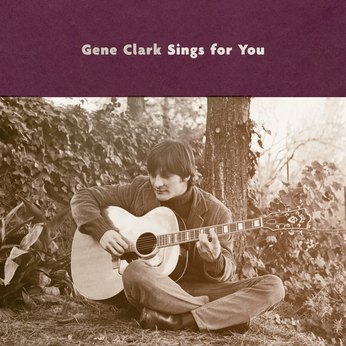
Gene Clark Sings for You/The Rose Garden – A Trip Through The Garden. Omnivore Recordings

clark-sings-for-you-ov-280The past couple of years have been a bit of a bonanza for fans of Gene Clark as previously unheard recordings have crept out of hiding, songs which have been discussed and analysed in print and on the net but always tantalisingly out of reach unless one was connected. Sings for You, an acetate of eight songs recorded in 1967, is described in the liner notes (by Clark’s biographer John Einarson) as the holy grail of lost Clark songs and they are accompanied here by a further five songs from the same year which Clark wrote for an LA combo, The Rose Garden, along with one other song he offered to them.

So 14 Gene Clark songs, recorded at the height of his post Byrds fame and none of them released elsewhere or refashioned on any of his albums. Whew! However it’s important to emphasise that these songs are sketches which were never polished for general release. The eight song acetate was recorded by Clark after he was let go by Columbia Records after his album with the Gosdin Brothers failed to sell as well as they expected and seemingly was intended to be sent to various labels as Clark looked for a new recording contract. He’s joined in the studio by bass and drums and occasional keyboards including a chamberlin (which was somewhat akin to a mellotron). Stripped of the baroque folk embellishments which embroidered the album with the Gosdins, Clark is in fine fettle here with the songs pointing in several future directions. On Her Own, Yesterday Am I Right and That’s Alright with Me are prime Clark melancholia, one can imagine them gracing White Light a few years later if one strips out the somewhat overenthusiastic drummer who is somewhat obtrusive. There’s a more balanced band sound on the other songs. Down on the Pier is a fantastic song which is only let down by its similarity to Dylan’s 4th Time Around (which of course was influenced by The Beatles’ Norwegian Wood) but the addition of calliope  makes it one of the more realised songs here. Past My Door and One Way Road meanwhile offer a glimpse into Clark’s next venture with the Dillards as they venture into early country rock territory.

It’s hard to believe but the next five songs, all recorded by Clark to offer to The Rose Garden, are even better than the fabled Sings For You songs. On Tenth Street and A Long Time are just Clark and his guitar in true 60’s troubadour mode, slightly Dylanish but totally Gene and totally brilliant while Understand Me Too would have made a brilliant Byrds song in the manner of Here Without You. The addition of a band on the Jimmy Reed like Big City Girl is great fun and the band also appear on the excellent Doctor Doctor which finds Clark in proto psychedelic mode sounding like a cross between the early Jefferson Airplane and indeed the Younger Than Yesterday Byrds. The band wig out as if they were shimmying in the background of a Roger Corman film scene and the guitar solo is pure Nuggets.
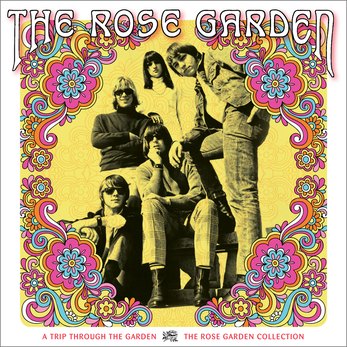
rose-garden-trip-through-the-garden-ov-281

It goes without saying that Sings For You is essential for any Gene Clark fan but Omnivore Records have a neat tie in which is The Rose Garden’s album, the band for whom Gene offered several of the songs above. Despite his interest they didn’t set the charts ablaze although they had some minor hits. A typical 60’s psychedelic pop sound, the album does have a period charm as the band channel Byrds’ like jangled guitar, folk rock and Mamas and Papas vocal harmonies on various songs. They do a great version of the traditional CC Rider (here just called Rider) with glorious harmonies and Flower Town just drips with psychedelic whimsy. The original 10 song album is enhanced by the addition of a further 16 songs culled from single releases and live cuts with some of them eclipsing the album songs as on If My World Falls Through, a song which approaches Brill building pop brilliance. It’s a curio but one which, for anyone who digs the more harmonic side of 60s psychedelia, is well worth getting.
Omnivore Recordings webpage


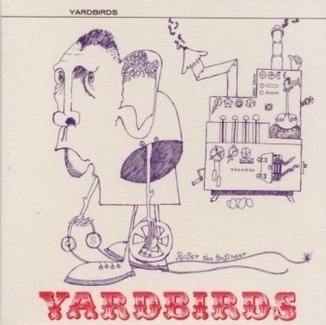
The Yardbirds. Yardbirds (AKA Roger The Engineer). Repertoire Records

r-3170165-1318937310-jpeg

The Yardbirds, considered by some to be one of the sixties key UK  bands, behind The Beatles and The Stones, slightly behind The Who and The Kinks, maybe keeping up with The Pretty Things and definitely ahead of The Creation and The Action. They had some hit singles but when did you last hear them on a golden oldies radio show? In their lifetime they released three albums proper, a live debut, this album and a final Mickie Most produced last stab at hitdom but when it all boils down Yardbirds is their only fully realised album project. Let’s face it, were it not for the fact that they featured the triumvirate of Clapton, Beck and Page respectively they would be even less well known. However, this (latest, possibly definitive) reissue of their second album offers a chance for the band to remind listeners that, despite a catalogue of woes, management problems and guitarist lurgy that rivals that of Spinal Tap’s drummer problem, The Yardbirds captured the zeitgeist of “swinging London” on the cusp of beatfreak and psychedelia.

Originally a blues band and successors to the Stone’s residency at The Crawdaddy Club they recorded a live album (Five Live Yardbirds) with Eric Clapton on guitar but after hooking up with writer Graham Gouldman (of later 10CC fame) for the hit, For Your Love, Clapton quit, the pop tune allegedly not in line with his blues purist pursuit. His successor, Jeff Beck, had no such qualms, the band scoring with two further singles, Heart Full of Soul and Evil Hearted You. And so in March 1966 the band went into the studios to record their first bona fide studio album. Despite some background noise in the shape of a management change, original manager Giorgio Gomelsky replaced by Simon Napier-Bell, and a simultaneous attempt at solo stardom from singer Keith Relf they emerged with what would be their most fully realised statement.

Commonly known as Roger The Engineer after the line drawing (by rhythm guitarist Chris Déjà) of studio engineer Roger Cameron which featured on the cover, Yardbirds (the official title) shows the band in full command of their blues powers (witness the excellently paced Rack My Mind), experimenting with the studio possibilities and delivering some frantic beat pop with a slight whiff of the emerging psychedelic sound. The latter is apparent from the beginning with Lost Woman opening with an Animals’ like bass driven boogie before opening out into a lengthy “freak out”, harmonica and guitar duelling with Beck delving into feedback and frenzied fretwork that rivals that of Townshend. Over, Under, Sideways, Down , released as a single, is a fine slice of sixties guitar pop dominated by Beck’s spiralling guitar riff and He’s Always There had the potential to be a chart topper but it’s let down by a flat production that lacks oomph despite Beck’s bravura soloing at the end. Finally on the freakbeat side there’s the very fine What Do you Want, a song that starts off like The Monkees but is elevated by the frequent interventions from Beck and, again, his soloing at the end of the song. Turn Into Earth retreads some of the territory of their single, Still I’m Sad, the vocals recalling Gregorian chant, a mantra of sorts.

Unable to shake off their blues roots there are several “adaptations” of familiar blues riffs and boogies. Aside from the aforementioned Rack My Mind the band offer a 12 bar boogie on The Nazz Are Blue which thrashes along finely and which surely would have had fans comparing Clapton and Beck when played live. Here Beck passes with flying colours, his long sustained note midway through just brilliant. Jeff’s Boogie is just that, his fingers flying as he runs through some Chuck Berry inspired riffs and just generally shows off.

That’s two thirds of the album and had the band kept up this quality then Yardbirds might be up there with Between The Buttons and The Who Sell Out but they do themselves no favours with I Can’t Make Your Way, a pedestrian song that recalls the likes of Freddie And The Dreamers or Herman’s Hermits despite Beck’s soaring solo break. Likewise the short Farewell, a brave but ultimately failed attempt at social commentary. They’re more successful on the jungle surf weirdness of Hot House Of Omagarashid, a kind of R’n’B Pink Floyd instrumental complete with wobble board. The album proper ends with some more social commentary, this time on the evils of money, on Ever Since The World Began, a song that combines some of the Gregorian chanting that had featured on Still I’m Sad before warping into an almost cabaret like guitar shuffle. More than anything these songs date the album, their shelf lives expired.

It’s tempting to ask what if? What if the band had stuck together and got back into the studio a year later with better equipment and even better songs? There’s a partial answer here with the inclusion of their masterpiece, recorded six months later and with Jimmy Page replacing Paul Samwell Smith in the line up. Happenings Ten Years Time Ago is a major event, the band defining their guitar freakout and burgeoning psychedelic sound. Sadly it was a one off, Beck soon departing, however there was a final opportunity to see/hear the twin guitar line up in the movie Blow Up and happily their rendition of Stroll On (a thinly disguised version of Train Kept A’ Rollin) is also included here. The Yardbirds continued as a four piece, touring America and by all accounts becoming a prototype Led Zeppelin. However, they were delivered into the hands of Mickie Most who produced their final album, filling it with slight pop songs played by session men with the band having little or no say. They slowly disintegrated leaving Page with nothing but the name.

This release (a double CD) contains the album in both its mono and stereo versions along with mono versions of Happenings Ten Years Time Ago, its B-side, Psycho Daisies, and Stroll On. In addition there are alternative stereo mixes of He’s Always There, Turn Into Earth and I Can’t Make Your Way. Finally there are the two singles released by Keith Relf in ’66, manager Napier-Bell apparently seeing him as a potential pop heart throb. Recorded with session men (including Jimmy Page) Mr. Zero, a Bob Lind song, is a period baroque folk pop number which just nudged into the top 50, the B-side , Knowing, written by Relf, continues in a similar vein. Shapes In My Mind, written by Napier- Bell, is somewhat more dramatic with a churchlike organ intro, Napier-Bell seemingly trying to fit Relf into a Manfred Mann/Paul Jones suit. The B-side for this single, Blue Sands, is an inconsequential harmonica led instrumental and apparently is by another band altogether (The Outsiders), indicative of the manager’s cavalier manner.

In all this package won’t effect any seismic shift in The Yardbirds standing in the roll call of sixties bands but it’s a fine and respectful look back at their big shot at posterity.

Buy it here


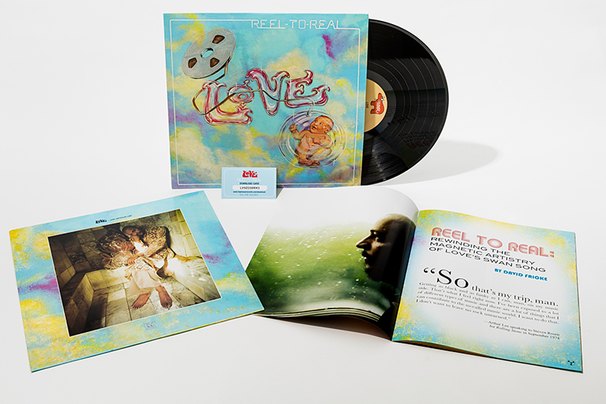
Love. Reel To Real. High Moon Records


hmrlp003w03

Arthur Lee, Love, Americana? Well, this blog is so named thanks to the great ZigZag magazine which informed much of this writer’s formative musical years (ears) and old Arthur was a ZigZag hero so news of a CD (and vinyl) release of the last “proper” Love album deserved some investigation.

By 1974 Lee was pretty much a done deal, his sixties glory days behind him and despite Love’s albums, in particular Forever Changes, considered classics of LA psychedelia, his band was gone, Bryan, Snoopy, Echols and DC cast to the wind. Lee himself was considered wayward and difficult but those fans of Forever Changes were desperate to will him into creating another masterpiece and so it was that RSO Records offered him a bunch of money to make another album. It sank like a stone.

So is Reel To Real worth a listen these days? Well, it’s the first time it’s been available on CD so diehards will go for it. In addition there’s a whopping 12 additional tracks and a 24 page booklet detailing the album’s genesis and ultimate death throes, more manna for Lovemaniaxs. It’s not Forever Changes, in fact it’s not remotely like any of the Elektra albums, but listened to in the clear light of day, preconceptions cast aside, it’s a sometimes thrilling and always intriguing slice of seventies funk, Lee not in rainbows anymore but Black and proud, digging Hendrix, Sly, Otis and Curtis Mayfield. There are some hypnotic grooves, fat horn riffs and clavinet propelled funk chunks that place the album firmly in its time, if this was an obscure act finally unearthed then I’m sure folk would be salivating over it and Quentin Tarantino would already be cueing it up for his next Blaxploitation flick.

There are shades of the super cool LA hipster on you Said You Would and Singing Cowboy (from Four Sail) gets a reprise but there’s a fascinating glimpse into what the moneymen (and fans) were wanting in the final track here. A previously unreleased rehearsal of a song that was written about the time of Forever changes, Wonder People has the vibe of that album, a freewheelin’, almost bossa nova swing as Lee half sings, half scats through the words. As it falters and ultimately fades out it’s a tantalising glimpse into an alternate world. Nevertheless there’s enough solid energy in the album itself to keep a listener satisfied. Time Is Like A River is a strong Gospel inflected churn similar to what Delaney and Bonnie and Leon Russell were popularising at the time. Who Are You? visits funk central, its busy horns, frenzied keys and percussion with some liquid guitar solos somewhat badass. With A Little Energy buzzes with its sloganeering tying it into the vibes of the time, all Wattstax and that and Be Thankful For What You Got is a gossamer glide into Curtis Mayfield territory.

Lee and Hendrix were apparently mutual fans and on Busted Feet Lee dives headlong into the distorted blues world of Hendrix coming up with a tremendous approximation of The Band Of Gypsies era. The original album had a truncated version and there’s an extended and indeed heavier take included here which is just sublime, Lee adlibbing as the guitars scatter and squall, the end result somewhat breathtaking.

So, a relic of sorts but an important addition to the Lee canon. Lee himself seemed reconciled to be forever tied to Forever Changes in his later years as he toured with his ensemble recreating those glorious sounds, a better ending to his turbulent and troubled life than many would have anticipated. Reel To Real however is another testament to his vitality. And while it’s cool that Reel To Real is at long last available on CD High Moon are also issuing it in a deluxe two disc vinyl edition.Go visit them if you’re interested.

High Moon Records

Oholics. Orbits.

Glasgow Americana and Swedish psychedelia might make for strange bedfellows but Blabber’n’Smoke is a broad church and has been a fan of the Oholics since hearing their first album a few years ago. While it had a whiff of the early Floyd and the Thirteenth Floor Elevators in its grooves this new episode cranks up the guitars to give it a harder sound that is reminiscent of Primal Scream at times particularly on the opening Transfer Orbit. While the space rock side is amply covered in Suzy Banyon Blues and Astara City the band visit Rain Parade territory with the thumping and spectral swoon that is Out of Track, a superb song with ringing guitar chiming throughout. Hambone W. N. is a rabble rousing garage surf punk rifferama while closing freak out Out of Nothing could sit proudly on the soundtrack of the movie Repo Man with its soaring guitar lines and otherworldly voices. An unlisted song at the very end, Great Hero Boys is another garage rocker with scrambled guitar and a punk sneer in Chtistoffer Rydestahl’s vocals.
Despite these laudable and successful stabs at incorporating a more traditional rock feel to their sound the band are at their best when they lock into a hypnotic groove and this is best heard on the stand out song here. Moonraker, released as a single, has a pummelling beat and sonic guitar wizardry which recalls Hawkwind in their heyday. With an exotic Eastern underlay it jangles the neurons in the listener’s brain. Add to this the ferocious rush that is Snowflakes and the jangled trippiness of The Truth and you have one excellent album.

website

Transfer Orbit