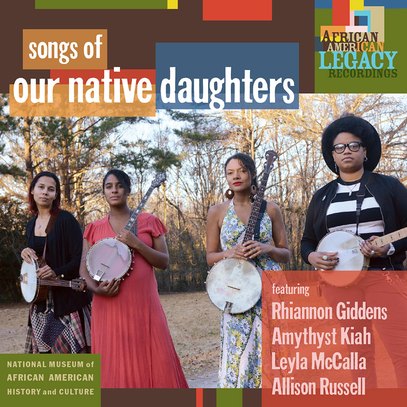
Songs Of Our Native Daughters. Smithsonian Folkways Recordings

sfw40232This album was released several weeks ago and the reason why it’s taken some time for Blabber’n’smoke to acknowledge its existence is that it’s taken several weeks to fully delve into the importance of this document. The music and the written words within this disc are described by Rhiannon Giddens as, “Shining new light on African American stories of struggle, resistance, and hope, pulling from and inspired by 17th-, 18th-, and 19th-century sources. Interpreting, changing, or creating new works from old ones.” More specifically Giddens notes that “There is surely racism in this country—it’s baked into our oldest institutions—just as there is sexism, millennia old. At the intersection of the two stands the African American woman. Used, abused, ignored and scorned, she has in the face of these things been unbelievably brave, groundbreaking and insistent. Black women have historically had the most to lose, and have therefore been the fiercest fighters for justice.”

The acorn of the album was planted when Giddens visited the Smithsonian National Museum of African American History and Culture in Washington, DC and was struck by a quotation from William Cowper, a noted abolitionist and satirist. It took further root during a screening of Nate Parker’s film, Birth Of A Nation when Giddens noted that in a scene depicting the rape of a slave woman, the camera lingered on the husband’s humiliation. All of this and much more is explained in the superb liner notes which detail Giddens’ invitations to her co-stars here, all of them black female banjo players, the banjo of import in several respects, again all explained in Giddens’ essay. Ultimately, Giddens wants the album to be seen as “Part of a larger movement to reclaim the black female history of this country.” As such, she and her sisters in song have succeeded as the album packs a powerful punch. The songs, all eminently memorable contain a litany of crimes, misdeeds and horrors visited upon their forebears while also celebrating the indomitable spirit which allowed them to survive and sometimes rise above such evil.

The Quartet performing Songs Of Our Native Daughters are Giddens, her former Carolina Chocolate Drops colleague Leyla McCalla, Alison Russell (of Po’ Girl and Birds Of Chicago) and Amythyst Kiah. Together they are a formidable force, writing or co-writing in various combinations and singing together in a spectacular fashion while producer Dirk Powell is acknowledged as an important ingredient in the mix. The songs range from powerful southern infused fury to glorious sun kissed Caribbean harmonising while Bob Marley is saluted in the cover of Slave Driver, the notes stating, “Marley sang about spirituality and sensuality but also about militant resistance to oppression… Like Martin Luther King his militancy has been whitewashed in the years since his death.” Like Marley, this album has songs to enjoy but which also contain a message.

Kiah kicks things off with her song Black Myself, her powerful voice driving the song just as much as the stinging electric guitar which gives the song a southern rock thump as she notes that there were considered degrees of “blackness.” Moon Meets The Sun follows, an almost calypso like song which is notable for the superb interplay of their voices but behind its sunny disposition the four are singing a defiant song, “Ah you steal our children but we’re dancing ah you make us hate our very skin but we’re dancing.” Giddens reads from the Cowper poem which so moved her in the haunting Barbados before Allison Russell hoves into view on what is possibly the most impressive song on the album. Quasheba, Quasheba grew from her own research into her family history uncovering this ancestor who was stolen in Africa and sold into slavery. Leyla McCalla meantime moves to the front for her salute to Etta Baker on I Knew I Could Fly, Baker being a blues guitarist who gave up playing when she married and only gained recognition in widowhood. The band then take great joy in upending the traditional John Henry, a song which celebrates the strength of the steel driving hero as they transfer him to a sick bed while his wife Polly Ann goes to work in his stead and survives.

The album is packed with memorable and moving songs. Mama’s Crying Long is a field holler telling of a slave who killed her rapist and was lynched. Better Git Yer Learnin’ is set to an 1885 banjo tune and commemorates the attempts to set up black schools after emancipation, many of which were simply blown up by whites. McCalla offers up a Haitian inspired number on Lavi Difisil and Kiah and Russell turn in a powerful diatribe regarding the hypocrisy of white slave owners who were happy to rape their slaves and then sell off their own black offspring on Blood & Bones, linking this to the misguided current white nationalist movement which has been revitalised under the current occupant of the White House. And it’s this linkage which lifts the album from being merely an incredibly well performed set of roots music, similar in fashion say to Ry Cooder’s or Taj Mahal’s best efforts. The stories and histories sung about here unfortunately reverberate through the ages and continue to impact. Black people and in particular black women are still discriminated against, look at #BlackLivesMatter for example. Writing as a white male in the first world one can’t begin to feel the ongoing pain, humiliation and real danger visited upon those who face these trials on a daily basis. The wonder of this album is that it might make more of us think about this more often. Buy it for the music as it is tremendous but take some time to investigate it as well. There’s even a bibliography to get you started. As well as being a contender for album of the year it’s probably the most important album of the year.

Website

Southern Fried. Perth. Thursday 30th July-Sunday 2nd August 2015. Part 1

Perth’s annual celebration of American soul, country and blues music, Southern Fried more than lived up to its title of Best Small Festival in Scotland (Scottish Events Awards) in this, its eighth year as a host of musicians descended on the city for four days of unalloyed musical joy. Blabber’n’Smoke attended and had a whale of a time, not only in seeing the acts (who also seemed to having a whale of a time also) but in meeting folk from last year’s event and , thanks to one of the sponsors Inveralmond Brewery, meeting various bloggers and journalists many of whom were but virtual friends on a computer screen. We compared notes and some drink was taken. Here’s the first report from the weekend.

Della Mae/The Red Pine Timber Co. The Twa Tams

DMTT

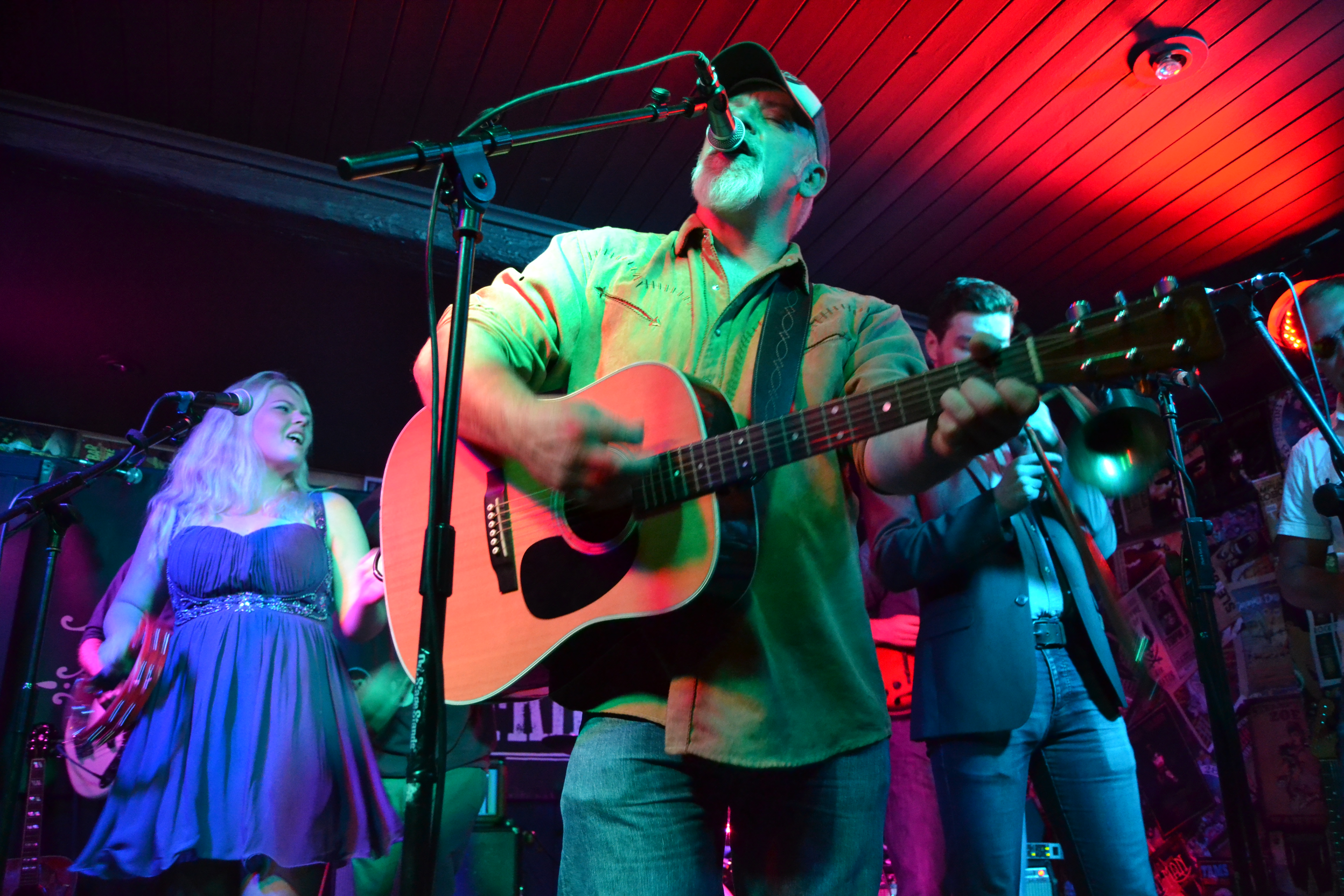
The festival started with a bang at a sold out Twa Tams concert on the Thursday evening with two sets from bands who exemplified the Southern Fried ethos, class acts from America and home grown talent. Della Mae, a bluegrass quintet, originally from Boston and now based in Nashville are a youthful crew who are making waves in the country world with their records released on Rounder. They were to be almost ubiquitous throughout the weekend playing another show at the late night Friday session and acting as the house band for the Because We’re Women Dolly Parton tribute show at the Concert Hall. At the Twa Tams they were on top form playing several songs from their current album including the excellent Boston Town along with covers of The Stones’ Factory Girl and The Everly’s Wake Up Little Susie. Singer Celia Woodsmith gave as good as she got from the rumbustious audience with a performance that at times recalled the vigour of the late Janis Joplin, not bad for a bluegrass band. The other band were local heroes, The Red Pine Timber Co. who were a perfect fit for the night with their mixture of self penned country songs and covers of classics such as Gram Parsons’ Las Vegas and Dylan’s You Ain’t Going Nowhere (with some John Martyn thrown in to good effect). The eight piece band, replete with trombone, sax and fiddle partied along with the crowd late into the night. A great start to the weekend. The Twa Tams hosted further shows over the weekend including a Glasgow based showcase for bluesman Dave Arcari along with bluegrass act The Dirty Beggars and a day long rockabilly show however Blabber’n’Smoke can only be in one place at a time so missed these.

red pine tt

Rhiannon Giddens/The Punch Brothers. Perth Concert Hall

As usual, Perth’s Concert Hall hosted  three main events on consecutive evenings. Friday saw Rhiannon Giddens offer a master class on American roots music opening with her haunting rendition of a revived Dylan song, Spanish Mary before going on to cover artists as diverse as Odetta, Dolly Parton, Jean Ritchie and Patsy Cline. Water Boy took us into the deep south of chain gangs while Cousin Emmy’s Ruby Are You Mad At Your Man was a bluegrass hoedown of the first order. The outstanding Black Is The Colour saw cellist Malcolm parson on melodica inserting some of John Coltrane’s A Love Supreme towards the end while Gidden’s fine Gaelic mouth music on Puirt a Beul had the audience on their feet. Pulling together the roots of what we might call Americana music Giddens took time to discuss many of the songs’ origins and explained that North Carolina has a large settlement of Scots Gaelic speakers. Charming and engaging Giddens set the bar high for the weekend.

The Punch Brothers were hampered initially by sound problems leading to several pauses in the show which Chris Thile managed to fill with some fine deprecatory quips. Eventually they abandoned their attempts to fix the sound and grouped around one microphone old style allowing their finely crafted style of chamber bluegrass to flow. While at times they can seem incredibly mannered, (a stately version of Debussy’s Passepied done bluegrass style?) there’s no doubting the instrumental prowess on show here and the crowd lapped up the virtuoso delivery of Movement and Location and Julep. However the frantic version of Jimmy Rodgers’ Brakeman Blues that closed the set showed that they can still play exciting rootsy music with a fervour with Thile’s vocal delivery most impressive.

Because We’re Women: The Songs of Dolly Parton. Perth Concert Hall

Dolly

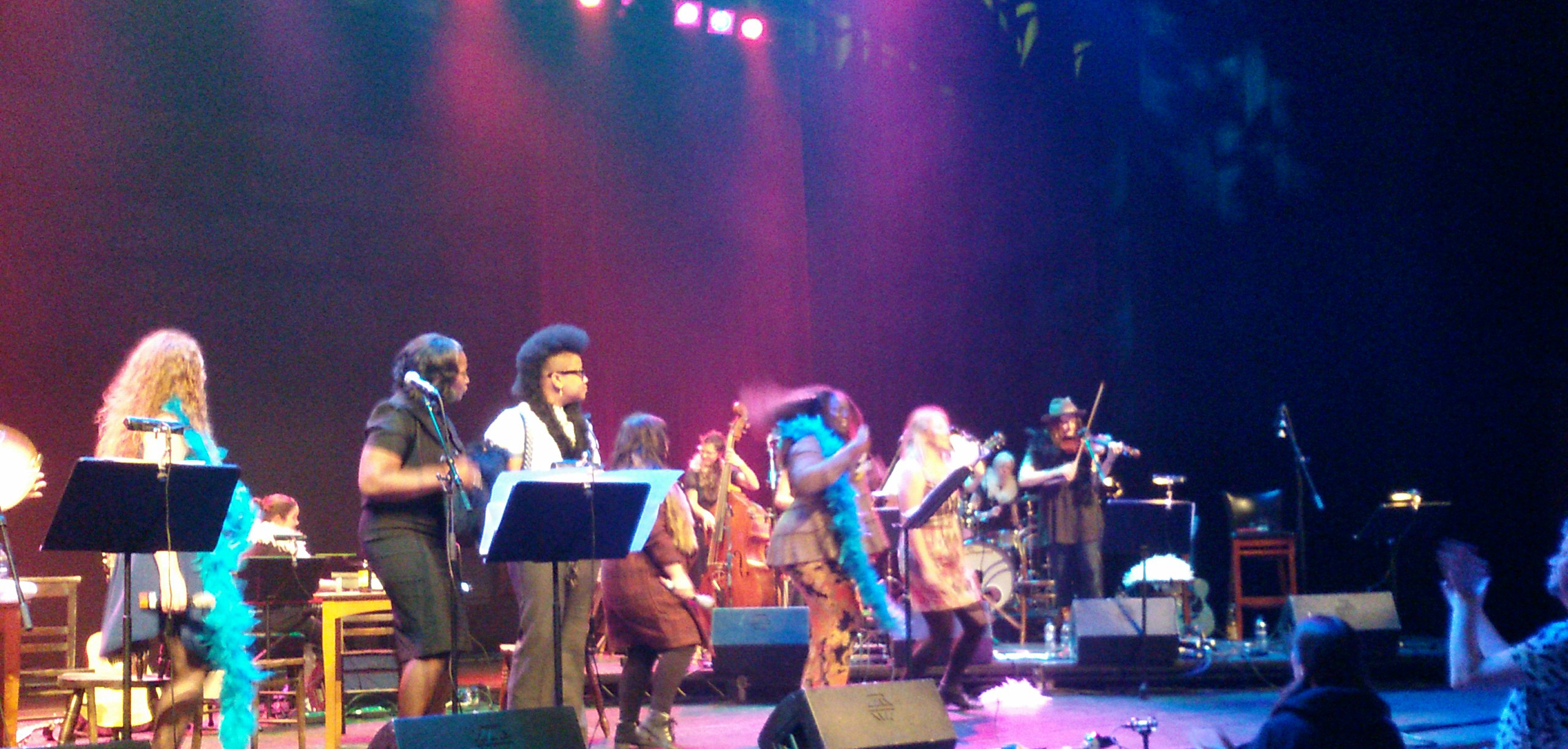
Saturday night was Dolly night. A concert dedicated to Ms. Parton and a reminder that away from the showbiz glitz and rhinestone guitars Dolly is at heart a great musician and songwriter. The sight of seventeen female artists gathered on stage was an impressive statement in itself. Della Mae were the house band, able to turn in bluegrass, soul and some good old rock and pop ably assisted by drummer Signy Jakobsdottir and Mhairi Hall on piano after some intensive rehearsals over the previous few days. In front (or sitting at the Dolly themed stage bar) were The McCrary Sisters, Meaghan Blanchard, Yola Carter, Lisa Mills, Samantha Crain and Amythyst Kiah. With three songs each from the Parton canon each of the performers added their own particular sparkle to the night. Yolanda Carter beaming a soulful joy, Meaghan Blanchard a fine country joy, Lisa Mills some bluesy charm, Samantha Crain an earthy folkiness and Amythyst Kiah a swampy grit. With the McCrary’s adding yet more soulful touches songs such as Applejack, Jolene, My Tennessee Mountain Home and Coat of Many Colours were all given an airing. The most poignant moment was a tender and moving version of The Grass Is Blue sung by Della Mae’s Jenni Lynn Gardner who seemed almost overwhelmed at the end of the song. A reminder then of Dolly’s place in the pantheon of country fame but her pop persona was not ignored with Alfreda McCrary delivering I Will Always Love you (occasioning some arm waving on stage and in the audience and a standing ovation) and an ensemble encore of Nine To Five which again had everyone on their feet. A great night.

Rock My Soul. Perth Concert Hall

rock my soul

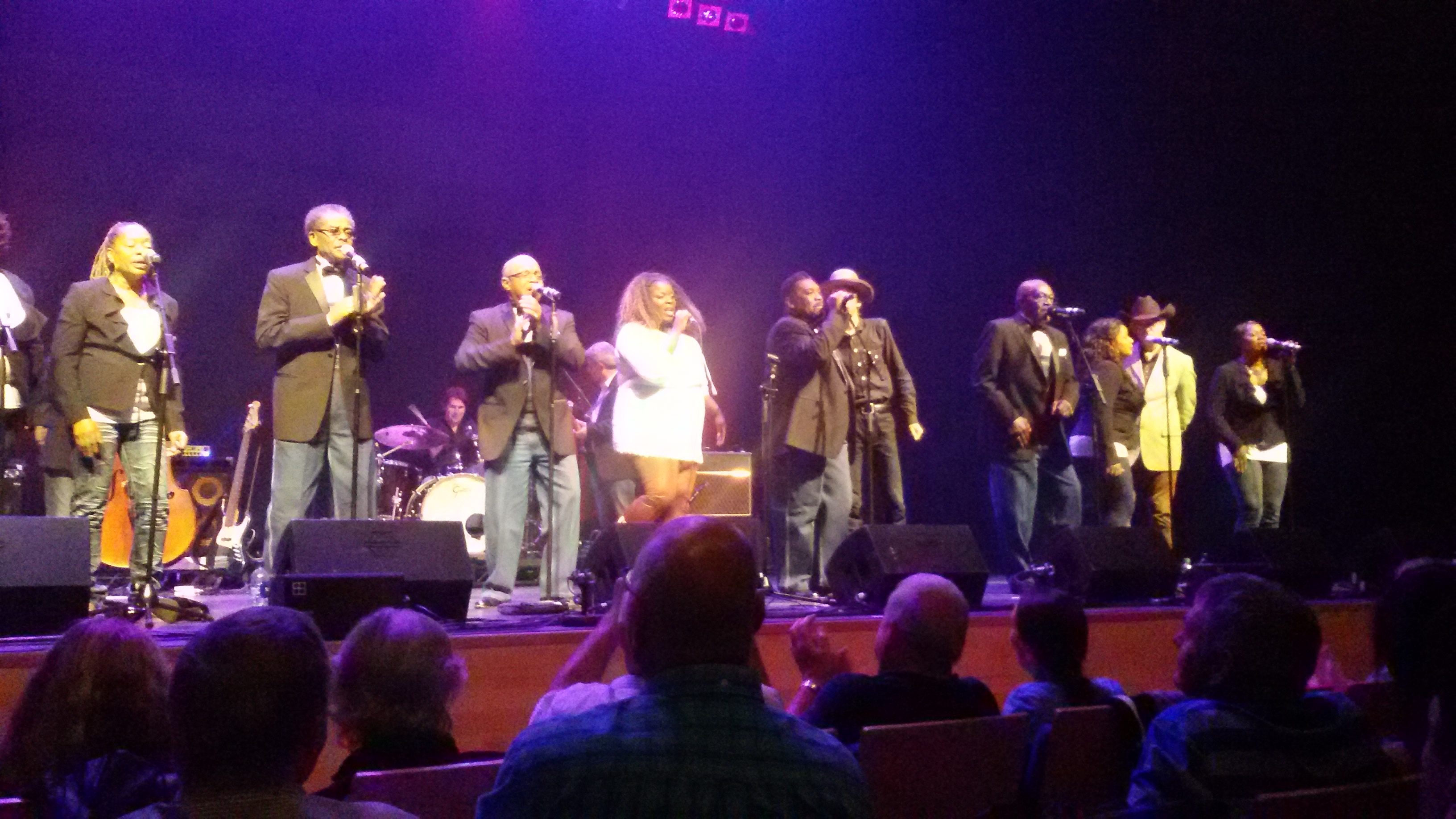
For the final concert hall event The Fairfield Four and The McCrary Sisters transformed the auditorium into a gospel tent for the evening. For the first song both ensembles delivered Come Into This House before the McCrary’s departed. Dressed in pressed dungarees and dinner jackets The Fairfield Four boomed impressively on songs such as Swing Low Sweet Chariot, Dese Bones and Children Go Where I Send Thee on which they were joined by Willie Watson. Their four voices meshed magnificently with Joe Thomson’s bass particularly impressive and while the exhortations to give thanks to the Lord seemed to affect primarily the front row by the time Levert Allison came down from the stage for the final number the audience was happy clapping along.
From the glories of the unaccompanied voices of The Fairfield Four The McCrary Sisters, although still delivering a sanctified message were soulful and grooving thanks to their well drilled back up band for the night. All Scots (Nico Bruce bass, Joe Nisbet guitar, Jim McDermott drums and Andy May keys), they were able to lock into a Stax-Volt backbeat with Nisbet throwing out some very fine Cropper like guitar licks on the bluesy This Train. Bringing up guests Yolanda Carter for two songs and Doug Seegers (taking the part of Buddy Miller on Hold The Wind) the sisters praised the Lord but also partied with abandon with Fire stoking up an Otis inspired frenzy and a cracking version of The Staples I’ll Take You There. The encore featured the Fairfield’s and the guests for an awesome Rock My Soul inciting the third standing ovation of the three concert hall nights.

For a limited period you can hear highlights of the shows from Rhiannon Giddens, The Punch Brothers and The Fairfield Four recorded by BBC Radio Scotland for Another Country with Ricky Ross here

Various Artists. Look Again To The Wind. Sony Masterworks

First thing to say here is that Look Again To The Wind is a perfect Christmas present for anyone who has any interest in American country music. Like the soundtrack to Oh Brother Where Art Thou it’s crammed full of excellent songs, excellently played by some of the best artists around. As a concept it’s interesting, as an album it’s little short of magnificent.

The album is a recreation of Johnny Cash‘s 1964 LP, Bitter Tears: Ballads of The American Indian. The original shows Cash at the cutting edge of the civil rights movement, the Civil Rights act was published that year in response to coloured Americans battles against segregation but Native American Indians were still primarily seen as fodder for John Wayne’s cavalry. Cash set out to highlight their cause although it’s not a political set as such. With five tracks penned by Peter La Farge, two by Cash himself and one by Johnny Horton (writer of The Battle Of New Orleans) it celebrates a culture while highlighting injustice such as on its most famous song, The Ballad Of Ira Hayes or the dangers of miscegenation as on White Girl.

Look Again To The Wind was produced by Joe Henry who picked the artists for the album, in particular Gillian Welch and David Rawlings who appear on several of the songs. Norman Blake, who played on the original, contributes as does his wife Nancy while Emmylou Harris, Steve Earle, Kris Kristofferson, The Milk Carton Kids and Rhiannon Giddens (of The Carolina Chocolate Drops) all perform. As such the delivery is impeccable, the songs transformed from the rough-hewn Cash originals into intricate tapestries with hints of bluegrass and country. Kristofferson towers on Ira Hayes while Earle offers a fine talking blues dissection of Custer. Nancy Blake, Emmylou Harris and Welch are delightful on The Talking Leaves while Giddens wails wonderfully on The Vanishing Race. The highlight however is the nine minute version of the opening title song of the original LP by Welch and Rawlings which opens here and almost spoils the album as it begs to be repeated as soon as it’s ended.

The track list follows the original with three exceptions. Apache Tears and As Long As The Grass Shall grow are reprised towards the end while another of Lafarge’s Native American songs, Look Again To The Wind, not featured on the original, is sung by Native American Bill Miller, a valedictorian statement that closes the album on a poignant note.

you can hear Gillian Welch and David Rawlings sing As Long As The Grass Shall Grow here