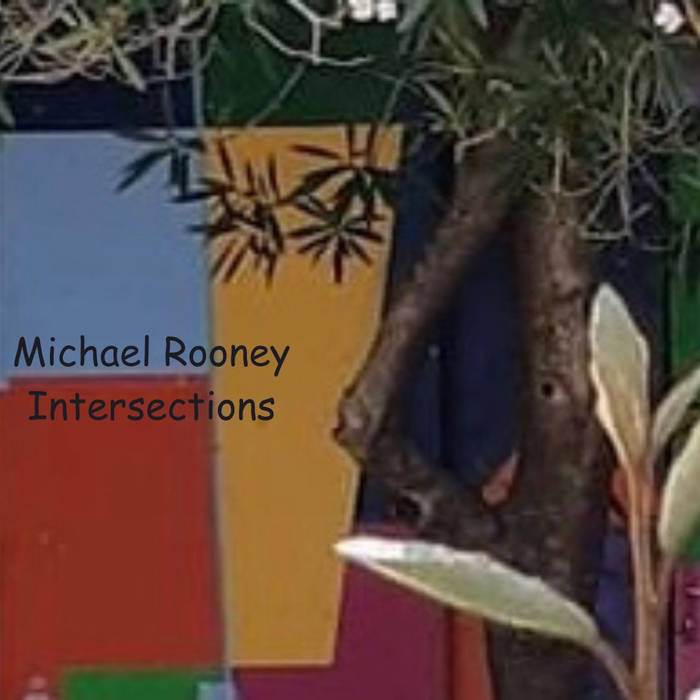
Michael Rooney. Intersections

While The Primevals, Glasgow’s premier garage rock psychedelic free jazz grunge band  have recently had a brush with fame due to a link up with Stuart Lee (““the world’s greatest living stand-up comedian” The Times”, as Lee always gleefully points out) via their song I’m The  Man-Wulf, their front man Michael Rooney has stealthily released a solo album.

Intersections is not a great departure from recent Primevals albums, primarily because Rooney’s dead pan, dead cool vocals are to the front and centre, but across the seven songs here he has the opportunity to spread out a bit while his band mates (assorted Primevals and like minded associates) contort themselves to accommodate the shifts. Thus we have the opening elemental skeletal blues of Rattlin’ Like A Ghost Train, surely a nod to the late Jeffrey Lee Pierce of The Gun Club. It’s a rattling good start to the disc but Rooney’s not constrained to post punk voodoo rock’nroll as exhibited by the closing number, Prisoner Of The Mind which sees his existential lyrics backed by the band vamping an excellent mix of a Doors’ like groove while the sax is halfway up the scaffold ladder alongside Miles Davis with Pharaoh Saunders looking in.

In between these there’s a wealth of juicy nuggets. Let The Past Go surges on a Stooges’ like blitzkrieg of guitars while a drum roll introduces the trance like undulations of Laughter And Fun, a song which just gets more twisted and discombobulated as it creeps on like some deadly slouching beast. Aside from its viper like guitar groove, Outside has a tenor sax pumping out the adrenalin as Rooney roams like a nightmarish night stalker and this sense of being an outsider is continued in the best song here, Leave The People Behind. Here Rooney is declaiming as opposed to singing as the band delve into grooves which characterised late 1960s black protest rock, soul and jazz.

It’s a short album (seven songs, 27 minutes) but Intersections contains multitudes which unfold on repeated listens and, in a just world, it would command some attention.

Website

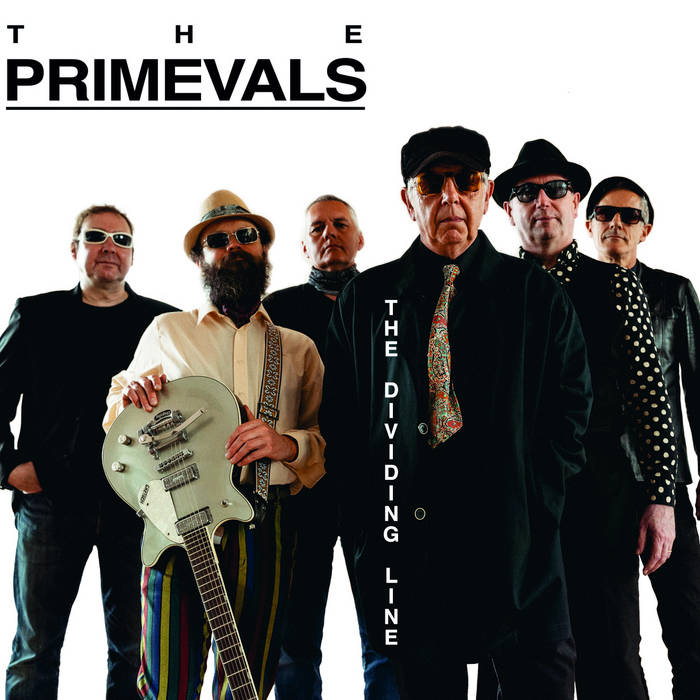
The Primevals. The Dividing Line. Triple Wide Records.

40 years on from their formation, Glasgow’s The Primevals remain committed to their original sins – a love of garage rock and the scuzzy underbelly of psychedelia along with hints of free jazz and kraut rock- on their latest release The Dividing Line. It’s the seventh album they’ve released since their relaunch in 2011 and, as with its predecessors, it  shows that the band are more than happy to grow old disgracefully with no gentle slipping into the night for them.

The album opens with a throbbing bass line and electric piano on The Drop, immediately reminding one of The Doors although Morrison and his chums never sounded as ferocious as this. They return to The Doors influence on Suckin’ On Nothing Street although here it’s the more poetic side of Morrison which is envisaged. Being The Primevals they can’t resist taking the song into a nihilistic underground and while singer Michael Rooney turns in his finest Morrison croon on the quieter moments (and just about admits to stealing the melody) a gargantuan riff dominates the song.

There’s a Beefheartian soul surely within the pumping pomp of Sonic Highway with Rooney wailing away about a beast on the loose as the band play like a Martian blues band high on whatever Martians get high on. Drifting Away is more straightforward as it’s propelled by the barrelling rhythm section with the guitars set to stun and Hang Loose hits you in a similar manner with the band whipping up a mighty storm fuelled by a stone cold solid organ groove and more guitars than you could shake a stick at. Grit & Grime opens this groove up somewhat with thrashed acoustic guitars and a massed vocal chorus popping up amidst the musical mayhem while Rest In Power, an obituary for a departed comrade, allows guitarists Tom Rafferty and Martyn Rodger to indulge in a brief moment of Eastern mysticism. As for the oblique title of WTFHTU, a truly demented rocker, listen closely to the freaky coda at the end for all to be revealed.

High Street is a rare moment of biography from Rooney as he recalls his Glasgow upbringing, close to a prison which was the scene of an infamous shoot out (years before he was around mind you). If you want to really want know who influenced him then listen to the litany of sixties icons he references here. Most striking is the apocalyptic creep of The Will Of The People, a close companion to the claustrophobic songs of Second Nature, the band’s pandemic album. Here they prowl and snarl with poisonous guitars snaking around the gritty urban background. The album closes with some Farfisa pumped garage rock on Walking At Night with all cylinders on fire. Here they approach the feral ferocity of The Gun Club on a grand close to what is another mighty album from The Primevals.

Website

The Primevals. New Trip. Triple Wide Records

While most folk ate out to help out the spread of the virus late last year, The Primevals decided to get back into the studio to record this swift follow up to Second Nature, the pandemic blues album they released in the summer of 2020. New Trip is simultaneously leaner and more expansive than its predecessor, Second Nature crammed 16 songs into 60 minutes, while here we have nine songs stretched out over 40. Still entrenched in the murkier depths of garage rock and the sonic blizzards of the likes of Sun Ra’s Arkestra, The Primevals remain vital and New Trip is both action packed and compulsive listening for anyone needing a shot of hoodoo voodoo grooves.

Hey Love smacks the album open with a crash of guitars and Farfisa organ as the band zoom down a scuzzy highway which knocks the socks off anything that Primal Scream ever laid down. Guitarists’ Tom Rafferty and Martyn Rogers have their guitars set to stun and vocalist Michael Rooney rides the sonic wave with an effortless sense of hip. This is amplified on the paranoid rush of Intrusive Thought, which riffs mightily, reminding one of Sky Saxon’s more unhinged moments while Searching In The Shadows is also rooted in the more feral garage bands of the 60s who missed out on being included on Nuggets but made up for it by being included on the Pebbles series.

Rooney gets all street political on The Euthanasia Of The Youth, coming across somewhat like a reincarnation of Mick Farren but he’s more to the point on the slippery and slide guitar driven The County Line where he captures the excitement and the danger young folk are exposed to these days. That sense of excitement is present in the twists and turns of Gimme Gimme Some Action, a call to arms of sorts which charges along before dissolving into a sixties freakbeat outro and there’s more of that in the wailing blues of Only You, which comes across like a turbocharged Yardbirds tussling with an evil synthesiser genius out to control your mind.

The album closes with the superb title song which is a reminder that The Pimevals can stretch out and surprise. A Teutonic propulsive rhythm section drives the song as snatches of Shaft like wah wah guitar briefly appear and a saxophone (played by Kornelijus Pukinskis) balefully moans before Rooney rides in, a modern Kim Fowley to the rescue if you like. The song drives on and the guitars  eventually erupt into Eastern scales entwined within soaring solos while battling with Pukinskis’ parping sax as they race to the pulverising end. It’s quite exhilarating as one tries to take it all in. We eventually plumped for saying it’s like a mash up of The Doors and Can but it is much more than that.

Website

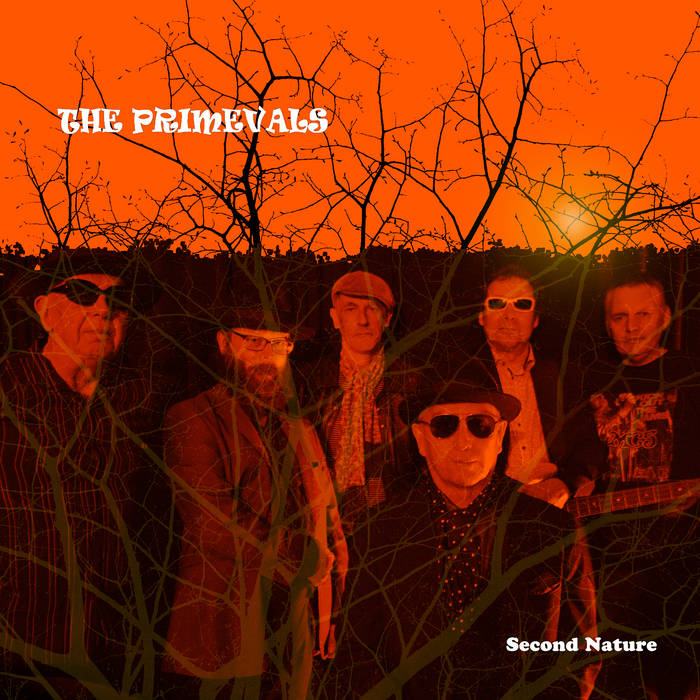
The Primevals. Second Nature. Triple Wide Records

a1867572021_16Launched in the midst of a global and deadly pandemic, it’s startling to hear the opening lines of The Primevals’ latest album as Michael Rooney gravely intones, “We die young here” on the opening song of the same name. Launched by spectral organ and twinned evil guitars over a driving beat, the song is a William Burroughs’ like nightmare as played by the electric horsemen of the apocalypse. It’s a compelling introduction to this intense slab of garage band rock which sees Glasgow’s Primevals hunkering down and getting back to basics which, in their case, means a rumble of menacing guitars, hoodoo keyboards and Rooney’s midnight ramblings. As the title hints at, the band are in familiar territory and their slash and burn approach allows for 16 songs in less than an hour.

With Rooney at the helm, Martyn Roger and Tom Rafferty man the guitars while ex bassist John Honeyman is now on keyboard duties. They’re driven by the pile driving rhythm section of Ady Gillespie and Paul Bridges on a set of songs which are less diverse than those on their last album, Dislocation. Here, there’s less swamp rock and more Nuggets and new wave punk attack on show – think Radio Birdman, The Modern Lovers and The Dictators – the latter especially on Best Days. Turned up LOUD this is quite exhilarating especially when the guitarists get to duelling on The Have Nots, giving the song a twist of Flamin’ Groovieness, while the defiant snarl of Hard Core just about defines where the band have been at for the past decade as they fly the flag for load and proud rock’n’roll. Having said that, they also hammer away perfectly on User with its wailing blues harp and on Powershake which has Stooges’ like snakehips. The wonderfully titled Heavy Freakout is an all out assault as the band rev up to top gear with the guitars twanging away and even a brief swerve into Morricone territory in the midst of it all.

On vocals, Rooney prowls over the songs like a harbinger of doom with many of his lyrics pessimistic if not nihilistic. It’s like a bad trip, man, and the band do get quite trippy on several of the songs including P.T.S.D. (which kicks off as if they were Iron Butterfly) and on the mesmerising exotica of Now Is The Time which features sitar and wah wah guitar. There’s more than a hint of The Doors in this and Jim Morrison’s ghost can also be glistened in the bluesy Wanna Be Loved, an antidote to Love Street.

Second Nature is powerful, heavy, trippy and hugely enjoyable. We should give thanks to the likes of The Primevals, bands who have kept the freak flag flying.

Second Nature is available on CD along with a limited edition 12 track vinyl version, both available here. Glasgow folk can also pick up the vinyl from the south side record store, Some Great Reward, and in these times, it’s important to support your local record store.


Tom Rafferty talks about his solo album and his guitar heroes. “Hit that long lunar note…and let it float.”

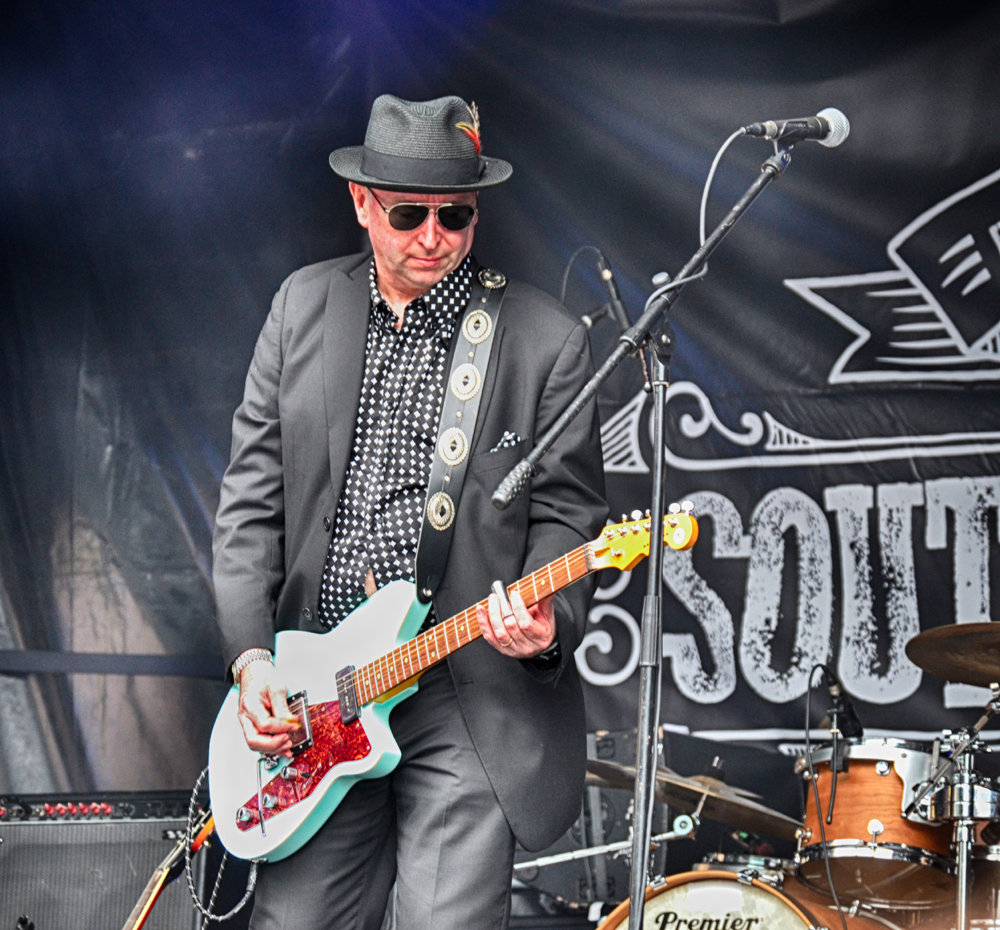
P1040776 copyWe’re sure that the name, Tom Rafferty, will be familiar to many readers of Blabber’n’Smoke, especially those who appreciate the rockier elements of Americana as opposed to the country element. Since the early 1980’s Rafferty has championed guitar based music on the local scene gaining an international profile via his work with seminal Glasgow garage rockers, The Primevals. Contemporaries of The Cramps and The Gun Club, The Primevals shared influences and stages with both of these bands and continue to perform and record with a ferocity which matches their more youthful efforts. Rafferty was also a founding member of Glasgow’s only “instrumental sixties surf-beat combo,” The Beat Poets, who were infamous for a while for appearing in tartan jackets and bow ties as they plied their Dick Dale influenced  raunch. Legend has it that when Link Wray was presented with a copy of their single, Rebel Surf, which featured their natty dress sense on the cover, he was baffled, asking, “These guys are, like, right now?”

The Beat Poets and The Primevals both continue to tread the boards even sharing a bill at Perth’s Southern Fried Festival a while back, a busy weekend indeed for Rafferty. Now, he has announced the release of his first solo album, More Guitars, a selection of guitar instrumentals that was unleashed digitally a few weeks back and is now available on CD. It’s a cracking collection of tunes which obviously showcase his guitar playing skills but it’s not what one might have expected, that is, an album packed with either twangy surf beats or grungy garage rock. There are aspects of both in the mix but overall it’s a much more mixed bag taking in atmospheric mood music and aspects of Mondo Hollywood psychedelia. Intrigued, Blabber’n’Smoke reached out to ask Tom some questions about the album and to ask about some his favourite guitar instrumentals.
DSC_0252

First off, you’ve been recording for around 40 years with your bands so why record an album of guitar instrumentals now? Have you been planning this for a while or did you just take a notion?

I’ve been playing and recording instrumentals for many years, so this was initially a way to collect my favourite home recordings of the last couple of years. Once I started that process, listening back and tidying up mixes, I wrote some more tunes and then thought it would be fun to do this as an album. Finally, another set of tunes flowed from that – Ward 9 and High Roller were both written after the first sequence I put together for this album.

I think a lot of folk would expect the album to be all turbo charged high-energy rumbles, sounding like Link Wray meets Dick Dale but that’s not the case. You do open with some weird “slide guitar from Mars” sounds on Glendale while Lumio has some fine twangy guitar and there’s a Stones’ like touch to Crystals, but thereafter it’s a much nuanced affair. What would you say influenced your writing on the tunes here?

That’s a reasonable expectation, for sure! It’s a long story. I’ve been listening to instrumental rock and roll for a long time and playing it in the Beat Poets since ’86. When the Beat Poets started, I was listening almost entirely to instrumental music, finding lost paths of rock and roll history. Dick Dale and Link Wray, of course, but also the Raybeats, Booker T & The MGs, Davie Allan and the Arrows, Jon & The Nightriders, the Strumming Mental series of compilations. That shaped my writing for many years, exploring surf music especially. It’s not easy for me to think of specific influences on this set of tunes- it’s mostly been following the sounds to see where they want to go, then adding some other instruments on top – some Hammond organ, some other guitars.

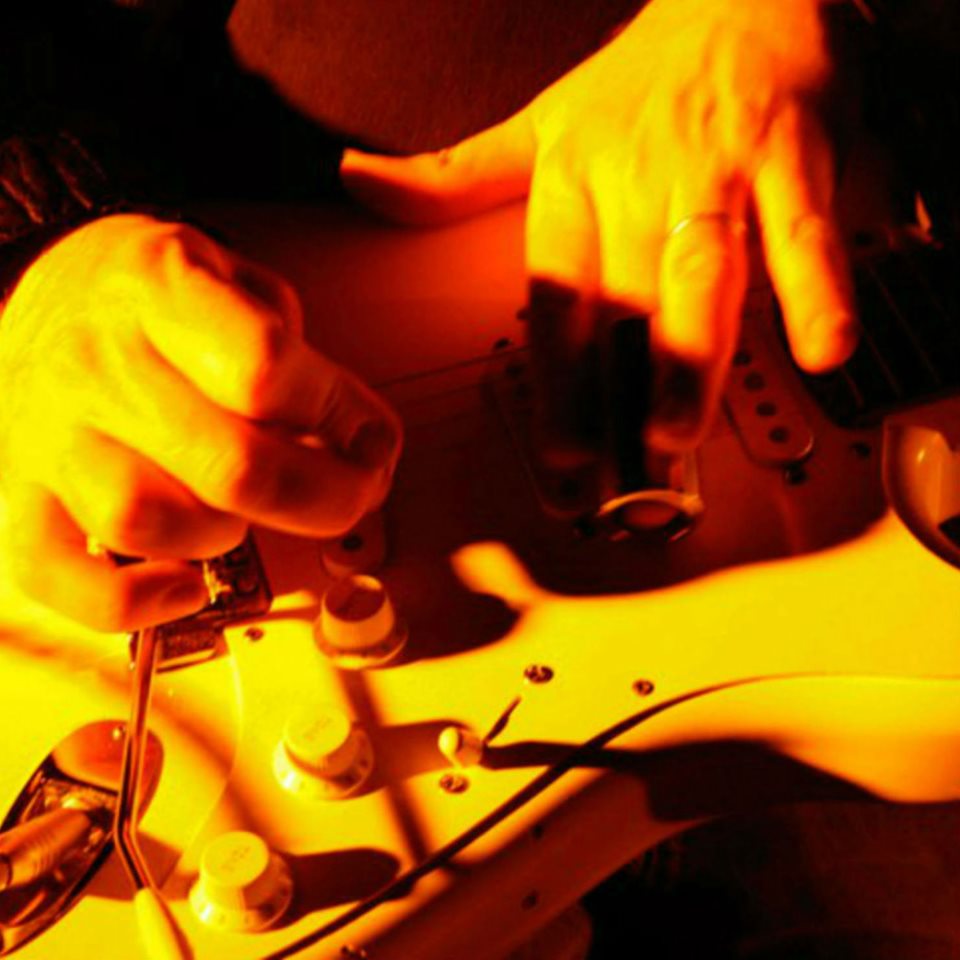
The writing process is pretty simple – I think of it as taking a guitar sound for a walk. I’ll play for a while, tweaking the vibrato or selecting different pickups, adjusting the drive and then settling on a sound that seems interesting. Then I’ll play guitar with that, looking for some changes that suit the sound. Sometimes a new tune falls off the end of that. Other times, I just make a din for a while. Then, with whatever comes out of that process, some are naturals for The Beat Poets, others are naturals for The Primevals. However, that left me with a bunch of tunes that didn’t have a destination, although when I started collecting them together there was some kind of common thread. It made sense to gather the pick of the bunch
front

Mata Hari is a great number, really evocative and reminiscent of some great TV theme songs. Do you give much store to non rock’n’roll writers such as Henry Mancini and Ron Grainger who wrote some great ones and do you have a favourite. I’m very partial to John Barry’s The Human Jungle.

Thanks! I love a twangy tune – Joe 90 and all those great TV themes. It’s a great attribute of many TV themes that they are packed with hooks – whether it is a regular piece of melody, a guitar shimmer, or a triangle figure, or a peculiar drum sound. The Beat Poets still play Randall & Hopkirk (Deceased) in our live set. I’d probably pick The Munsters as a favourite (and tomorrow it could be Captain Scarlet)

Staying with music to accompany visuals there are some psychedelic flourishes on Easterly while Ward 9 is pretty trippy, sounding like a song from a 60’s Roger Corman soundtrack. What would be your favourite mondo like soundtrack?

Good question! I’d pick Beyond the Valley of the Dolls – partly because I listened to it again after The Wards did a great version of Find It on their new EP. Get Carter is a great soundtrack too – not mondo, but full of singular sounds and great moods.
back

I presume you played all the guitars, who else can we hear? There’s bass, drums and, I think, keyboards on one number. And how many guitars were deployed in the process?

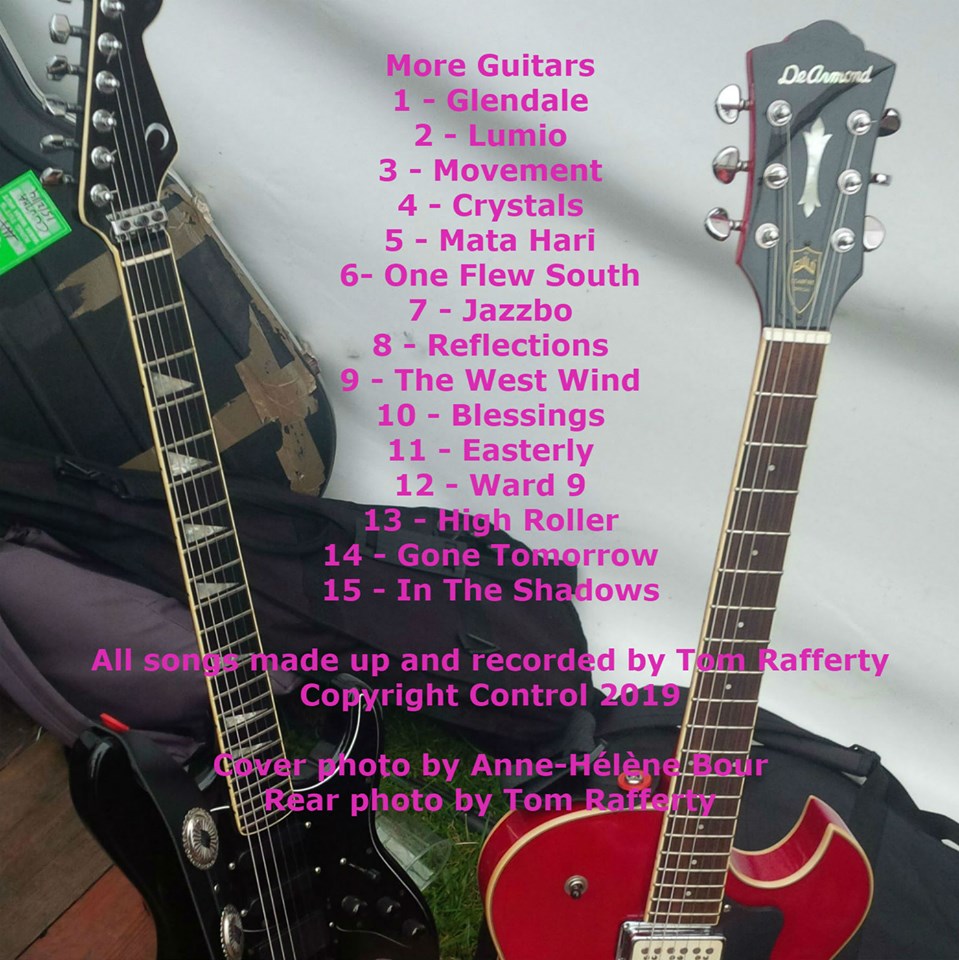
I played everything – not because I’m a megalomaniac, it was just easier to do it that way.  In most cases I didn’t know what I wanted to do with the tunes until I had done it. So I laid down all the guitars, the bass, sequenced the drums, picked some loops. I am a fairly limited keyboard player, but home recording allows me plenty of time to get a take. There’s a bit of Fender Rhodes on Jazzbo and on Easterly, and some Hammond on Blessings and In The Shadows. As for guitars, it was mainly the two pictured on the back sleeve. My 1986 Moon Guitars Strat, “Big Black”, which is a great workhorse, and a DeArmond Starfire (a reissue, not an original 60s model). And, since you asked, I counted it up – I used another nine guitars through the recording process (three of them have since moved on to other homes, you can’t keep them all!)

On One Flew South you manage to get your guitar to sound like a Theremin with a bad cold, how did you manage that?

That particular one was a combination of slow vibrato, delay, fuzz, and adjusting how hard I played until the weird noise coming out of the speakers was the noise I was after. The process overall involved a lot of trial and error, and some lucky mistakes, I remember thinking, “That’s not what I’m looking for now, but I’ll have to take a photo of the pedals and the settings so I can come back to it”

A couple of the numbers, High Roller and Gone Tomorrow in particular, remind me of a band called A Small Good Thing of whom I know very little apart from a tune they had on a compilation album called Guitars On Mars. They kind of summoned up a parched desert feeling so what kinds of mood (if any) were you going for here?

There’s a couple of moods I was aiming for with some of the tunes written as post-sundown surf music, music for chilling out in a beach hut. But Ward 9 and High Roller were both put together with desert thoughts so I’ll have to check out that band A Small Good Thing, thanks for the tip.

The album’s a download at present but I believe you are going to have some hard copies available soon.

Yes, physical copies are now in two of my favourite Glasgow record shops – Monorail and Love Music. Which is sweet, because Sandy who runs Love Music and Stephen who runs Monorail were the guys who ran 53rd & 3rd, the label which put out the first records by The Beat Poets all those years ago. The CD is also available by email direct from me – twrsurf@gmail.com, £6 plus postage.

Finally, aside from anyone we’ve mentioned above who are your favourite guitarists and, if it’s possible, what would be your favourite guitar instrumental album?

Here’s 10 guitarists who I have lifted me up –

Marc Ribot is always surprising, always a left turn, a singular hand.

James Williamson – slamming raw power.

Tom Verlaine – liquidity

Ry Cooder – floating, yet gritty.

Sonny Sharrock (especially Ask The Angels) – rage.

Jimmy Reed – swinging sincerity, great heart.

Hubert Sumlin – righteous blues.

Pops Staples – The Shimmering King, with the deftest touch.

Robert Quine – skronk and fury.

Earl Hooker – astonishing twang and slide.

As for a favourite guitar instrumental album it’s almost impossible – not least because some of my favourite Link Wray and Earl Hooker albums have some tracks with vocals! But here’s a few:

Raybeats – It’s Only A Movie

Link Wray & The Wraymen – Rock’n Roll Rumble (the one with the blue cover, on Charly)

David Torn – What Means Solid, Traveller?

Jon & the Nightriders – Live At The Whisky A Go Go

Earl Hooker – The Genius of Earl Hooker

More Guitars is available on CD from Love Music and Monorail or directly from Tom Rafferty (twrsurf@gmail.com). It’s also available as a digital download here.
The Primevals. Dislocation. Triple Wide

Primevals DislocationVeteran Glasgow rockers, The Primevals, have been hellbent for over 30 years in their quest to keep the heart of garage band rock’n’blues pumping, a task with which they have been spectacularly successful as they maintain their renaissance which began with 2011’s Disinhibitor after a fallow period at the beginning of the century. While their early contemporaries such as The Gun Club and The Cramps have gone the way of all things, Disinhibitor saw a revitalised band roar back into form and it was quickly followed by Heavy War and Tales Of Endless Bliss, both again superb slices of sound that, to coin a phrase, were groovetastic. Psychedelic swirls, evil slide guitar and hypnotic riffs all bundled into one very fine trip.

Dislocation is no disappointment as it sets its sights firmly on its antecedents with the band firing on all barrels. The twisting snarly slide guitar that kicks off the opening song Fever Zone serving notice that we’re back in Swampland on a classic Primevals’ song with singer Michael Rooney raving towards the end over the rushed beat and psychedelic organ. I Got Strong speeds along with a Seeds like velocity, the band pumping like adrenalized muscle tissue while Boho Baby is a Doors’ like seedy walk on a wild side, a vampish twilight zone of sputtering guitars and panther like stealth. All three songs are excellent and delivered with such a freewheeling ease that one imagines that the band and Rooney (who writes all the songs) could probably knock them off in their sleep, so ingrained in their musical DNA is this primal urge. However one of the delights of The Primevals is their ability to switch gears mid song, jump from garage rock to free jazz, localise a song or just freely associate and all of these come to play throughout the album.

East Campbell Street Breakdown opens with a brief lofi blaxploitation soundtrack soundalike before they go into a burnished speed riff not too far removed from Blue Oyster Cult as Rooney hones in on the plight of Glasgow’s homeless community.  Cuckoo Clocks, Chocolate And LSD manages the task of wedding Orson Wells, Forrest Gump and Albert Hoffman in a paranoid welter of scrambled vocals and razor sharp guitar scything. Meanwhile The Jump From Real To Weird adds trumpet from Robert Henderson over a pummelling riff as Rooney riffs on the lyrics almost scatting. Throughout the album the guitars of Tom Rafferty and Martyn Roger slash and burn but it’s in the frenetic Pleasures Past that they really excel as, apart from a short solo burst from one of them, they buzz and swarm like a pack of hornets. Slow Drip (a Rooney/Rafferty co-write) allows Rooney’s harmonica to add a crazed Yardbirds like R’n’B frenzy to the middle eight over some neat wah wah guitar and they close the album with another co write (with Richard Mazda) on another mighty example of Primevals music, a huge slab of noise, the guitars feral with Rooney in the throes of spiders in his bed hallucinations.

All in all Dislocation blasts the cobwebs from your ears  with the band again staking their claim to be the prime purveyors of swampy garage rock and the album is dedicated to the late Stewart Cruickshank who did so much to promote Scottish rock bands. The Primevals have an album launch gig this Friday at Glasgow’s Hug & Pint and it’s bound to be a great night of hi-octane sweaty rock’n’roll.

website

The Primevals. Tales Of Endless Bliss. Closer Records

Back in 2011 Blabber’n’Smoke reviewed The Primevals‘ “comeback” album, Disinhibitor describing the band thus, “wired to the mainframe, sucking from the teats of The Cramps, The Gun Club, The Saints and Mike Wilhelm’s biker rock with a healthy dose of Captain Beefheart and some free jazz from the likes of Sun Ra and Pharaoh Saunders included”. They followed this with 2012’s Heavy War, another blitzkrieg of ferocious and trippy garage rock which saw the band digging into the grooves of bands such as The Seeds and the Doors with a healthy sneer and a ton of attitude. Live, the band turn in a breathtaking set that is literally visceral as their sheer noise attack assaults the ears and gut, feedback squalls and twin guitar combat rendering the listener helpless leaving their body like jelly on the bone. This aural attack continues on Tales Of Endless Bliss which, and it almost goes without saying, is best listened to loud. The Primevals have had one major lineup change since the last album with bassist John Honeyman leaving the fold. His replacement, Ady Gillespie mans the four strings here but it’s neat to see that Honeyman remains involved credited with backing vocals on the album.

And what of the album? Well, to paraphrase Bette Davis in All About Eve, “fasten your seatbelts, It’s going to be a bumpy ride.” From the start The Primevals take us on a rollercoaster ride with the thrills and spills supplied by some magnificent riffs, audacious key changes, pell mell rants and mind melting freakouts. Towering above this maelstrom is singer Michael Rooney whose vocal swagger exudes a cool sense of sang froid. There’s a languid menace in his voice, a mix of Robert Mitchum’s evil preacher, Iggy Pop’s glower and Lux Interior’s abandonment. Caged within the band’s swirling and mesmeric chaos Rooney rises to the occasion throughout while adding to the mix with some demented harp playing and snakelike alto sax on Crisis A-Go-Go.

Tales Of Endless Bliss is a short album, less than 30 minutes (and some folk will argue that’s the perfect length for a prime slice of vinyl) but within those minutes the band tackle pile driving Cramps’ like sleaze on Pink Cloud, freakbeat blues on Tell It Now (which flies into the stratosphere towards the end), Creation like pop art noisenik on You’re Not Here Now (with drummer Paul Bridges pummelling away and the guitars going apeshit). They even throw in some Texan psychedelia on Re-Frame It which channels The 13th Floor Elevators but despite the obvious forebears there’s no doubt here that The Primevals are a band that, while rooted in the rock’n’roll family tree that leads to leather, cult, garage and punk, are well able to stamp their own personality. If this lot came from Detroit they’d be legends.

website

The Primevals. Disinhibitor

Back in the eighties Glasgow pop had one of its occasional high points with chart attacks from honey voiced crooners and literate jangle rockers. Lurking beneath the surface however was a tribe of rock ‘n’ rollers drinking from the well of primal beat. James King, The Kissing Bandits and The Cuban Heels all danced around this totem but chief of all and the only survivors are The Primevals. The Primevals were cooler, greasier. They were wired to the mainframe, sucking from the teats of The Cramps, The Gun Club, The Saints and Mike Wilhelm’s biker rock with a healthy dose of Captain Beefheart and some free jazz from the likes of Sun Ra and Pharaoh Saunders included. A heady mix indeed and one which offered them the opportunity to release several albums on the famed new Rose records and gain cult status in France, always appreciative of leather clad rock’n’rollers.
Recording throughout the eighties they petered out in the next decade but since 2000 have had sporadic reunions and live gigs with a release in 2007, ‘There Is No Other Life…And This Is It” on their own label , Triple Wide. A fabulous compilation of their New Rose recordings entitled ‘On the Red Eye’ came out around 2005 and is well recommended for anyone interested in a Glasgow take on garage rock or indeed anyone with a working nervous system. Now, four years down the line since their last offering The Primevals have a new disc out, Disinhibitor, a title Bobby Gillespie must be kicking himself for missing out on, and a short tour of old French haunts coming up.
So, thirty years on can the then young acolytes of rebel rock still cut the mustard. The answer is undoubtedly yes. Never ones to simply barrel down a basic route The Primevals here deliver a huge slab of sound which is rooted in sixties raunch with a punk attitude and a knowing wink to outsider music. Older and wiser perhaps but certainly more grizzled they pack a punch that from the off hits the listener in the gut. Anyone who digs the MC5 will be totally hooked by the two and a half minute maelstrom of Defying Science that opens the album. From here on in it’s a roller coaster of a ride with the band delivering visceral tunes such as American Road Trip and Venus Uncovered, the latter channelling the Cramps’ pile driver rhythm with an almost unhinged edge to it. Guitarist Malcolm McDonald is all over the album with screaming slide and howling feedback, his best moment perhaps on The Shape That Life Bent Me Into which almost out guns The Gun Club. In addition he plays some wild freakout organ on Someone To Love. With a rock solid rhythm section in Paul Bridges and John Honeyman song after song here drills into the listener. Ringmaster and vocalist Michael Rooney towers over the songs, full throated and super cool especially on Superfreak V11, a twisted psychedelic storm of a song. With 18 songs crammed into an hour there is no let up here for the listener, when the band temporarily abandon their blitzkrieg rock ‘n’ roll for a more “mellow” approach they hit you with waves of alto sax from the church of Albert Ayler.
Sixties band The Creation described their sound thus “ our music is red with purple flashes.” The Primevals are a modern day version of this but they do it in high definition. Overall a triumph and a must for anyone who equates rock ‘n’ roll with leather trousers and a bad attitude.
Website with tour dates

American Road Trip