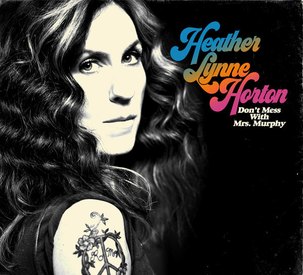
Heather Lynne Horton. Don’t Mess With Mrs. Murphy. At The Helm Records

hlh-dmwmm-cd-cover-final-copyBlabber’n’Smoke has showered praise on Michael McDermott and his band, The Westies, in the past and we even suggested that his wife, the other half of The Westies, Heather Horton should record an album of her songs after hearing the excellent Like You Used To Do on their Six On The Out album. Well, here it is only it’s not an album of dusty country hurt. Instead, Horton has another palette she uses here in conjunction with Lex Price who produces, the result a shimmering set of songs, some personal, some somewhat agitating or protesting. Horton addresses issues of disability on one song and in a wider sense proclaims her rights as a female although it would be wrong to describe the album as a feminist diatribe as indicated in some of the publicity material. Probably the most directly feminist statement is on the album artwork which pictures a naked and hi-heeled Horton chained to a supermarket trolley by a pearl necklace, her fiddle and a keg of beer in the trolley, a darkly humorous nod perhaps to how she might be seen by some.

On the album, Horton inhabits several characters. A loving mother, an outraged wife, a kid caught up in romantic dreams and a woman caught up in a doomed relationship. She does this several removes from The Westies, replacing their mean streets bluster for a more intimate feel, Price’s musical textures wrapped around her excellent voice recalling the more baroque moments of some vintage singer/songwriters. The opening Murphy’s Law ripples and pulses like late era Joni Mitchell as Horton describes a woman in thrall to a man who basically wipes his feet on her while Coffee Cup  sweeps along with a grand Laurel Canyon feel as she sings of two opposites trying to find common ground in what is eventually a kitchen sink drama. I Wanna Die In My Sleep finds Horton sounding innocent and childlike (recalling Victoria Williams) but here the message is hopeful and optimistic as she paints an idyllic romance. Meanwhile there’s a very fine pop sensibility on the bouncy Did You Fell That , a song that seems to about a messy sexual encounter.

While there’s a short detour into disability rights on Wheelchair Man, a delicate and daintily delivered delve into the obstacles faced by those bound to wheels instead of legs the flesh of the album seems to be Horton’s relationship with McDermott however obliquely it’s delivered. Save The Rain  is a lullaby of sorts  to their daughter, Rain, while Horton borrows a title from The Westies’ with her Pauper Sky a response of sorts to McDermott’s Springsteen  like tale of urban shenanigans. More directly she confronts a groupie on the sardonic F.U. which is a withering put down delivered with a fine and woozy country shuffle as Horton bares her claws in an excellent fashion. It’s all grist to the mill I suppose as the album signs off with a bit of a joke on the “hidden” final song where Horton and McDermott offer up their take on the ultimate couple song, You’re The One That I Want.  An acoustic scrabble and a fine example of the pair’s chemistry it’s a fine pointer to the fact that the pair are touring the UK over the next few weeks and it’s in this set up we’ll see them. A post modern Sonny & Cher?

Horton & McDermott are currently touring the UK, all dates here and they have their one Scottish appearance at Glasgow’s Glad Cafe on Wednesday 27th September.
Website


The Westies/Michael McDermott

sixontheout

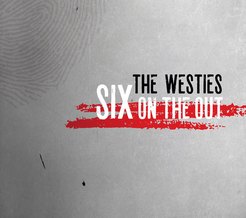
The Westies, a Chicago based outfit fronted by husband and wife Michael McDermott and Heather Horton are named after an Irish affiliated New York gang of the ’60s and 70’s whose home turf was Hell’s Kitchen. Their debut album, released last year was a powerful package of bruised and gritty urban tales which recalled the likes of Springsteen and Willie Niles. Six On The Out very much continues in this vein with McDermott saying, “I was focused on the story, a second instalment. What happens next to these characters?” What happens next is more tales of urban struggle, the outsider trying to fit in, damaged characters with traumatic pasts, physically and emotionally wounded, McDermott gives voice to them all with a grim authority that is partly drawn from his own back story.

As in a Peckinpah movie there is violence galore here but it’s delivered with panache, the blood and guts offered an artistic out, in this case the craftsmanship and, at times, the sheer beauty of the lyrics and music. For the most part there’s a muscular drive to  the songs which vary from pained country styled ballads to blue collar rock, Horton’s fiddle as much to the fore as guest Will Kimbrough’s guitar. The opener If I Had A Gun is a fine scene setter, the protagonist just released from jail straight back into the scene’s that sent him there in the first place.  A sinister piece with lashes of guitar over a slow beat as McDermott huskily narrates it’s dramatic and somewhat unnerving and he repeats this on several other songs on the album with the closing song Sirens  a raw tale of childhood violence, drugs and jail and car wrecks, as dark as the darkest hardboiled American authors.

While the lyrical content is not much lighter the band offer up the Irish influenced The Gang’s All Here, head into Bruce territory on the driving Santa Fe and retell the tale of Billy The Kid on Henry McCarty  (the Kid’s real name). Horton gets to sing lead on Like You Used To Do, a wonderful broken down country waltz, her voice so evocative as she sings about a relationship shattered by her man’s drinking, her voice echoed by a hurting guitar solo. Is it fair to ask that McDermott and Horton consider doing more of this as an album of hurt Heather Horton songs could be a winner.

mcd-willow-springs-cover-3000x3000

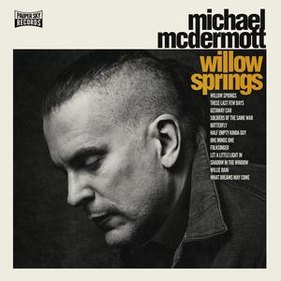
In the meantime it’s McDermott who has released a solo album, Willow Springs. Apparently it’s his tenth effort after being signed to a major label back in the early nineties. His bio is refreshingly honest in that, alongside the initial hype of the times, he screwed up, succumbing to booze and drugs,  eventually kind of limping along until he achieved sobriety. A couple of years clean now and with a wife and baby daughter egging him on he is on a roll with two albums from The Westies (along with his wife Heather Horton) under his belt and now this solo album. In fact many of the names on The Westies’ album reappear including Horton, Will Kimbrough and Lex Price and the difference between the albums is at times paper thin. McDermott still reminds one of Springsteen although in this case it’s the Springsteen who reminded folk of Dylan way back in the seventies. Lyrically the albums do differ, Willow Springs still contains its fair share of stories but they’re more opaque than the blood spattered city street tales of Six On The Out and one gets the sense that the romantic losers and redeemed rebels sung about here are McDermott’s way of making sense of his own journey.

While Getaway Car and Half Empty Kinda Guy press the pedal on the E Street highway a little too enthusiastically the opening title song points the finger at Dylan as McDermott fires out the alliterative lyrics with machine gun rapidity as he travels down his own desolation row. The venom at the beginning of the song is eventually supplanted by a sense of hope and the album follows suit almost with its closing songs portraying a man more comfortable in his own skin and able to manage his emotions. In between there is confusion on the brisk These Last few Days, a rebel without a cause on Getaway Car and on the haunting Soldiers Of The Same War casualties build up as folk try to run from their past.

They say before you can get up you have to hit bottom and on Butterfly McDermott paints a grim picture of addiction before seeing a light at the end of the tunnel on Half Empty Kind Of Guy and trepidatiously allowing himself to feel again on One Minus One. On the self mocking Folksinger McDermott is in control and able to poke some fun at the thought of him and Bono sitting on top of their millions and there’s a genuine sense of joy and relief in the sweet and soulful Let A Little Light In, a song that recalls Danny and The Champs country soul with its backing horn section. In the notes for the album McDermott says that in his turbulent years he also had to endure the death of his father and Shadow In The Window is an affectionate tribute to the man who raised him. Switching generations Willie Rain is a delightful ditty dedicated to his daughter (which opens with her saying “I love you daddy”) and it’s delivered with a jaunty country lope. McDermott closes the album with the grand sweep of What Dreams May Come, a powerful and emotive song of hope and dreams that again centres on his father but which also looks to the future. Sung and played with a dignified restraint the song avoids mawkishness and is a fine closing statement on what is a very fine album.

Website